Selecionar segmento
Estude com questões de diferentes segmentos
Atenção: Isso limpará todos os campos já preenchidos no filtro!
Foram encontradas 32.979 questões
Resolva questões gratuitamente!
Junte-se a mais de 4 milhões de concurseiros!


Ano: 2025
Banca:
Marinha
Órgão:
COLÉGIO NAVAL
Prova:
Marinha - 2025 - COLÉGIO NAVAL - Aluno - 1° dia |
Q3832783
Inglês
Texto associado
Read Text II to answer question.
TEXT II
France to trial ban on mobile phones at school for children
under 15
Kim Willsher - Paris
Tue 27 Aug 2024
France is to trial a ban on mobile phones at school
pupils who are younger than 15, seeking to give children a
"digital pause" that, if judged successful, could be rolled
out nationwide from January.
Just under 200 secondary schools will take place in the
experiment that will require youngsters to hand over
phones on arrival at reception. It takes the prohibition on
the devices further than a 2018 law that banned pupils at
primary and secondary schools from using their phones on
the premises but allowed them to keep possession of
them.
Announcing the trial on Tuesday, the acting education
minister, Nicole Belloubet, said the aim was to give
youngsters a "digital pause". If the trial proves successful,
the ban would be introduced in all schools from January,
Belloubet said.
A commission set up by the president, Emmanuel Macron,
expressed concern that the overexposure of children to
screens was having a detrimental effect on their health and
development.
A 140-page report published in March concluded there was
"a very clear consensus on the direct and indirect negative
effects of digital devices on sleep, on being sedentary - a
lack of physical activity and the risk of being overweight
and even obese - as well as on sight". It said the "hyper"
use of phones and other digital technology was not only
bad for children but also for "society and civilisation".
The report recommended children's use of mobile phones
be controlled in stages: no mobile phones before the age
of at least 11, mobiles without internet access between 11
and 13, phones with internet but no access to social media
before 15.
It also suggested children under three years old should not
be exposed at all to digital devices, which it said were "not
necessary for the healthy development of the child".
"We must put the digital tool in its place. Up to at least six
years old a child has no need for a digital device to
develop," Servane Mouton, a neurologist and
neurophysiologist who was on the commission, said. "We
have to teach parents once again how to play with their
children."
Banning phones in schools has long been debated across
Europe. In countries where bans exist this is most often
confined to their use and do not require children to hand
them over.
In Germany there are no formal restrictions but most
schools have prohibited the use of mobile phones and
digital devices in classrooms except for education
purposes. A quasi ban has been in place in Dutch
secondary school classrooms since the beginning of this
year, but as a recommendation and not a legal obligation.
From this school year the directive will also apply to
primary schools.
Italy was early to phone bans, introducing one in 2007,
easing it in 2017 and reimposing it in 2022. It applies to all
age groups.
In February this year, the British government issued
guidance for schools "on prohibiting the use of mobile
phones throughout the school day" but said it was for
individual head teachers and leaders to decide on phone
use policy.
Portugal is experimenting with a compromise by
introducing a number of phone-free days at schools each
month, while in Spain schools in some autonomous
regions have imposed a ban but there is no nationwide
prohibition.
Adapted from: <https://www.thequardian.com/world/article/2024/aug/27/franceto-trial-ban-on-mobile-phones-at-school-for-children-under-15>
According to the text:
Ano: 2025
Banca:
Marinha
Órgão:
COLÉGIO NAVAL
Prova:
Marinha - 2025 - COLÉGIO NAVAL - Aluno - 1° dia |
Q3832782
Inglês
Texto associado
Read Text II to answer question.
TEXT II
France to trial ban on mobile phones at school for children
under 15
Kim Willsher - Paris
Tue 27 Aug 2024
France is to trial a ban on mobile phones at school
pupils who are younger than 15, seeking to give children a
"digital pause" that, if judged successful, could be rolled
out nationwide from January.
Just under 200 secondary schools will take place in the
experiment that will require youngsters to hand over
phones on arrival at reception. It takes the prohibition on
the devices further than a 2018 law that banned pupils at
primary and secondary schools from using their phones on
the premises but allowed them to keep possession of
them.
Announcing the trial on Tuesday, the acting education
minister, Nicole Belloubet, said the aim was to give
youngsters a "digital pause". If the trial proves successful,
the ban would be introduced in all schools from January,
Belloubet said.
A commission set up by the president, Emmanuel Macron,
expressed concern that the overexposure of children to
screens was having a detrimental effect on their health and
development.
A 140-page report published in March concluded there was
"a very clear consensus on the direct and indirect negative
effects of digital devices on sleep, on being sedentary - a
lack of physical activity and the risk of being overweight
and even obese - as well as on sight". It said the "hyper"
use of phones and other digital technology was not only
bad for children but also for "society and civilisation".
The report recommended children's use of mobile phones
be controlled in stages: no mobile phones before the age
of at least 11, mobiles without internet access between 11
and 13, phones with internet but no access to social media
before 15.
It also suggested children under three years old should not
be exposed at all to digital devices, which it said were "not
necessary for the healthy development of the child".
"We must put the digital tool in its place. Up to at least six
years old a child has no need for a digital device to
develop," Servane Mouton, a neurologist and
neurophysiologist who was on the commission, said. "We
have to teach parents once again how to play with their
children."
Banning phones in schools has long been debated across
Europe. In countries where bans exist this is most often
confined to their use and do not require children to hand
them over.
In Germany there are no formal restrictions but most
schools have prohibited the use of mobile phones and
digital devices in classrooms except for education
purposes. A quasi ban has been in place in Dutch
secondary school classrooms since the beginning of this
year, but as a recommendation and not a legal obligation.
From this school year the directive will also apply to
primary schools.
Italy was early to phone bans, introducing one in 2007,
easing it in 2017 and reimposing it in 2022. It applies to all
age groups.
In February this year, the British government issued
guidance for schools "on prohibiting the use of mobile
phones throughout the school day" but said it was for
individual head teachers and leaders to decide on phone
use policy.
Portugal is experimenting with a compromise by
introducing a number of phone-free days at schools each
month, while in Spain schools in some autonomous
regions have imposed a ban but there is no nationwide
prohibition.
Adapted from: <https://www.thequardian.com/world/article/2024/aug/27/franceto-trial-ban-on-mobile-phones-at-school-for-children-under-15>
It is correct to infer that in France:
Ano: 2025
Banca:
Marinha
Órgão:
COLÉGIO NAVAL
Prova:
Marinha - 2025 - COLÉGIO NAVAL - Aluno - 1° dia |
Q3832781
Inglês
Texto associado
Read Text II to answer question.
TEXT II
France to trial ban on mobile phones at school for children
under 15
Kim Willsher - Paris
Tue 27 Aug 2024
France is to trial a ban on mobile phones at school
pupils who are younger than 15, seeking to give children a
"digital pause" that, if judged successful, could be rolled
out nationwide from January.
Just under 200 secondary schools will take place in the
experiment that will require youngsters to hand over
phones on arrival at reception. It takes the prohibition on
the devices further than a 2018 law that banned pupils at
primary and secondary schools from using their phones on
the premises but allowed them to keep possession of
them.
Announcing the trial on Tuesday, the acting education
minister, Nicole Belloubet, said the aim was to give
youngsters a "digital pause". If the trial proves successful,
the ban would be introduced in all schools from January,
Belloubet said.
A commission set up by the president, Emmanuel Macron,
expressed concern that the overexposure of children to
screens was having a detrimental effect on their health and
development.
A 140-page report published in March concluded there was
"a very clear consensus on the direct and indirect negative
effects of digital devices on sleep, on being sedentary - a
lack of physical activity and the risk of being overweight
and even obese - as well as on sight". It said the "hyper"
use of phones and other digital technology was not only
bad for children but also for "society and civilisation".
The report recommended children's use of mobile phones
be controlled in stages: no mobile phones before the age
of at least 11, mobiles without internet access between 11
and 13, phones with internet but no access to social media
before 15.
It also suggested children under three years old should not
be exposed at all to digital devices, which it said were "not
necessary for the healthy development of the child".
"We must put the digital tool in its place. Up to at least six
years old a child has no need for a digital device to
develop," Servane Mouton, a neurologist and
neurophysiologist who was on the commission, said. "We
have to teach parents once again how to play with their
children."
Banning phones in schools has long been debated across
Europe. In countries where bans exist this is most often
confined to their use and do not require children to hand
them over.
In Germany there are no formal restrictions but most
schools have prohibited the use of mobile phones and
digital devices in classrooms except for education
purposes. A quasi ban has been in place in Dutch
secondary school classrooms since the beginning of this
year, but as a recommendation and not a legal obligation.
From this school year the directive will also apply to
primary schools.
Italy was early to phone bans, introducing one in 2007,
easing it in 2017 and reimposing it in 2022. It applies to all
age groups.
In February this year, the British government issued
guidance for schools "on prohibiting the use of mobile
phones throughout the school day" but said it was for
individual head teachers and leaders to decide on phone
use policy.
Portugal is experimenting with a compromise by
introducing a number of phone-free days at schools each
month, while in Spain schools in some autonomous
regions have imposed a ban but there is no nationwide
prohibition.
Adapted from: <https://www.thequardian.com/world/article/2024/aug/27/franceto-trial-ban-on-mobile-phones-at-school-for-children-under-15>
The pronouns in the sentence "(...) but allowed them to
keep possession of them" (2nd paragraph) refer to,
respectively:
Ano: 2025
Banca:
Marinha
Órgão:
COLÉGIO NAVAL
Prova:
Marinha - 2025 - COLÉGIO NAVAL - Aluno - 1° dia |
Q3832780
Inglês
Texto associado
Read Text II to answer question.
TEXT II
France to trial ban on mobile phones at school for children
under 15
Kim Willsher - Paris
Tue 27 Aug 2024
France is to trial a ban on mobile phones at school
pupils who are younger than 15, seeking to give children a
"digital pause" that, if judged successful, could be rolled
out nationwide from January.
Just under 200 secondary schools will take place in the
experiment that will require youngsters to hand over
phones on arrival at reception. It takes the prohibition on
the devices further than a 2018 law that banned pupils at
primary and secondary schools from using their phones on
the premises but allowed them to keep possession of
them.
Announcing the trial on Tuesday, the acting education
minister, Nicole Belloubet, said the aim was to give
youngsters a "digital pause". If the trial proves successful,
the ban would be introduced in all schools from January,
Belloubet said.
A commission set up by the president, Emmanuel Macron,
expressed concern that the overexposure of children to
screens was having a detrimental effect on their health and
development.
A 140-page report published in March concluded there was
"a very clear consensus on the direct and indirect negative
effects of digital devices on sleep, on being sedentary - a
lack of physical activity and the risk of being overweight
and even obese - as well as on sight". It said the "hyper"
use of phones and other digital technology was not only
bad for children but also for "society and civilisation".
The report recommended children's use of mobile phones
be controlled in stages: no mobile phones before the age
of at least 11, mobiles without internet access between 11
and 13, phones with internet but no access to social media
before 15.
It also suggested children under three years old should not
be exposed at all to digital devices, which it said were "not
necessary for the healthy development of the child".
"We must put the digital tool in its place. Up to at least six
years old a child has no need for a digital device to
develop," Servane Mouton, a neurologist and
neurophysiologist who was on the commission, said. "We
have to teach parents once again how to play with their
children."
Banning phones in schools has long been debated across
Europe. In countries where bans exist this is most often
confined to their use and do not require children to hand
them over.
In Germany there are no formal restrictions but most
schools have prohibited the use of mobile phones and
digital devices in classrooms except for education
purposes. A quasi ban has been in place in Dutch
secondary school classrooms since the beginning of this
year, but as a recommendation and not a legal obligation.
From this school year the directive will also apply to
primary schools.
Italy was early to phone bans, introducing one in 2007,
easing it in 2017 and reimposing it in 2022. It applies to all
age groups.
In February this year, the British government issued
guidance for schools "on prohibiting the use of mobile
phones throughout the school day" but said it was for
individual head teachers and leaders to decide on phone
use policy.
Portugal is experimenting with a compromise by
introducing a number of phone-free days at schools each
month, while in Spain schools in some autonomous
regions have imposed a ban but there is no nationwide
prohibition.
Adapted from: <https://www.thequardian.com/world/article/2024/aug/27/franceto-trial-ban-on-mobile-phones-at-school-for-children-under-15>
Mark the option in which the extract from the text contains
an adverb in the comparative degree.
Ano: 2025
Banca:
Marinha
Órgão:
COLÉGIO NAVAL
Prova:
Marinha - 2025 - COLÉGIO NAVAL - Aluno - 1° dia |
Q3832779
Inglês
Texto associado
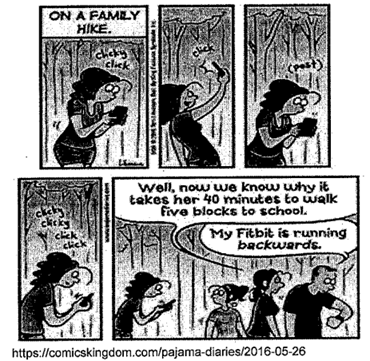
Read Text I to answer question
TEXT I
Mark the grammatically correct question for this sentence
extracted from the cartoon: "it takes her 40 minutes to walk
five blocks to school".
Ano: 2025
Banca:
Marinha
Órgão:
COLÉGIO NAVAL
Prova:
Marinha - 2025 - COLÉGIO NAVAL - Aluno - 1° dia |
Q3832778
Inglês
Texto associado
Read Text I to answer question
TEXT I
The mother finally realizes the reason why her daughter:
Ano: 2025
Banca:
Marinha
Órgão:
COLÉGIO NAVAL
Prova:
Marinha - 2025 - COLÉGIO NAVAL - Aluno - 1° dia |
Q3832777
Matemática
Sendo a, b, x e y números naturais, sabe-se que o produto x · y é ímpar, e que o valor de (x · y)% de a · b é igual a 17,6. Se a é um número primo, está correto afirmar que o número b escrito na base 3 é:
Ano: 2025
Banca:
Marinha
Órgão:
COLÉGIO NAVAL
Prova:
Marinha - 2025 - COLÉGIO NAVAL - Aluno - 1° dia |
Q3832776
Matemática
Observe o sistema abaixo.
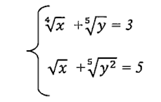
Existem dois pares ordenados A(X1,Y1) е В(Х2,Y2) que solucionam o sistema apresentado. Se representarmos os pontos A e B no sistema cartesiano é correto afirmar que a menor distância entre eles é igual a:
Existem dois pares ordenados A(X1,Y1) е В(Х2,Y2) que solucionam o sistema apresentado. Se representarmos os pontos A e B no sistema cartesiano é correto afirmar que a menor distância entre eles é igual a:
Ano: 2025
Banca:
Marinha
Órgão:
COLÉGIO NAVAL
Prova:
Marinha - 2025 - COLÉGIO NAVAL - Aluno - 1° dia |
Q3832775
Matemática
Analise a figura abaixo.
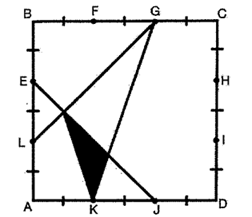
A figura acima apresenta um quadrado de lado igual a 6 unidades de comprimento. Considerando que o segmento com marcas iguais são congruentes, é correto afirmar que, em unidades de área, a área da região sombreada é igual a:
A figura acima apresenta um quadrado de lado igual a 6 unidades de comprimento. Considerando que o segmento com marcas iguais são congruentes, é correto afirmar que, em unidades de área, a área da região sombreada é igual a:
Ano: 2025
Banca:
Marinha
Órgão:
COLÉGIO NAVAL
Prova:
Marinha - 2025 - COLÉGIO NAVAL - Aluno - 1° dia |
Q3832774
Matemática
Considere , σ operador matemático, que associa a raiz quadrada do maior quadrado perfeito menor do que o produto dos fatores envolvidos, isto é 11σ 14 = 12 porque o maior quadrado perfeito menor do que o produto (11x14 = 154) é 144 e √144 = 12. Se A = {5 σ [ 6 σ (7 σ 8)]}2 σ 11 e B = {[(8 σ 6) σ 11] σ 8}3 σ 6, é correto afirmar que o valor de A σ B é igual a:
Ano: 2025
Banca:
Marinha
Órgão:
COLÉGIO NAVAL
Prova:
Marinha - 2025 - COLÉGIO NAVAL - Aluno - 1° dia |
Q3832773
Matemática
Se j, k, l e m são algarismos não nulos, ao simplificar a fração  é sempre verdade que:
Ano: 2025
Banca:
Marinha
Órgão:
COLÉGIO NAVAL
Prova:
Marinha - 2025 - COLÉGIO NAVAL - Aluno - 1° dia |
Q3832772
Matemática
Considere a igualdade A³ - A²z- A²y + Ayz - A²x + Axz + Axy - 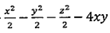 - 4yz - 4xz +xyz =0, e ainda que A³ = (x + y + z)3, B = xy + xz + yz e C = A2.
É correto afirmar que xyz é igual a:
- 4yz - 4xz +xyz =0, e ainda que A³ = (x + y + z)3, B = xy + xz + yz e C = A2. É correto afirmar que xyz é igual a:
Ano: 2025
Banca:
Marinha
Órgão:
COLÉGIO NAVAL
Prova:
Marinha - 2025 - COLÉGIO NAVAL - Aluno - 1° dia |
Q3832771
Matemática
Considere no campo dos números reais a equação
irracional a seguir:

É correto afirmar que o menor inteiro m, que faz parte de seu conjunto solução, é um número tal que m:
É correto afirmar que o menor inteiro m, que faz parte de seu conjunto solução, é um número tal que m:
Ano: 2025
Banca:
Marinha
Órgão:
COLÉGIO NAVAL
Prova:
Marinha - 2025 - COLÉGIO NAVAL - Aluno - 1° dia |
Q3832770
Matemática
Analise as afirmativas abaixo:
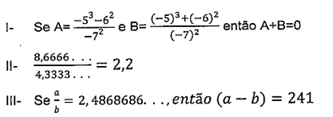
IV- A soma do número de casas decimais do número (0,2)12 com a soma de todos os seus algarismos é 35.
Assinale a opção correta.
IV- A soma do número de casas decimais do número (0,2)12 com a soma de todos os seus algarismos é 35.
Assinale a opção correta.
Ano: 2025
Banca:
Marinha
Órgão:
COLÉGIO NAVAL
Prova:
Marinha - 2025 - COLÉGIO NAVAL - Aluno - 1° dia |
Q3832769
Matemática
O conjunto solução S da inequação 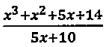 ≥ 1 é tal que S é dado pelo intervalo:
Ano: 2025
Banca:
Marinha
Órgão:
COLÉGIO NAVAL
Prova:
Marinha - 2025 - COLÉGIO NAVAL - Aluno - 1° dia |
Q3832768
Matemática
Num laboratório, certo teste é feito com duas cobaias em
um circuito circular. Uma cobaia percorre completamente
o circuito em 6 horas enquanto a outra o completa em 4
horas. Num determinado dia o cientista posiciona as duas
cobaias num mesmo ponto de partida e as faz percorrer o
circuito em sentidos opostos. Qual é a medida em
radianos do arco percorrido pela cobaia mais lenta ao
encontrar pela primeira vez a cobaia mais rápida?
Ano: 2025
Banca:
Marinha
Órgão:
COLÉGIO NAVAL
Prova:
Marinha - 2025 - COLÉGIO NAVAL - Aluno - 1° dia |
Q3832767
Matemática
O dono de uma hamburgueria vende um combo de
sucesso por R$ 35,00 cada e atinge uma média de
vendas de 200 combos por dia. Uma empresa de
consultoria mostrou para ele que, a cada real de desconto
que ele concedesse no preço do combo, sua média diária
aumentaria em 20 unidades. Num determinado mês, após
um período fazendo o que o consultor sugeriu, ele obteve
receita máxima diária, depois de conceder um certo valor
de desconto. É correto afirmar que nesse mês a receita
máxima diária com a venda desse combo foi de:
Ano: 2025
Banca:
Marinha
Órgão:
COLÉGIO NAVAL
Prova:
Marinha - 2025 - COLÉGIO NAVAL - Aluno - 1° dia |
Q3832766
Matemática
Analise a figura abaixо.
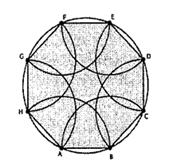
Na figura há, inscrito num círculo, um octógono regular com perímetro igual a 24 unidades de comprimento, е também uma rosácea. Se o perímetro 2P dessa rosácea é a soma de todos os arcos dos setores circulares com centro nos vértices do octógono, conforme se observa na sua construção, é correto afirmar que, em unidades de comprimento, 2P vale:
Na figura há, inscrito num círculo, um octógono regular com perímetro igual a 24 unidades de comprimento, е também uma rosácea. Se o perímetro 2P dessa rosácea é a soma de todos os arcos dos setores circulares com centro nos vértices do octógono, conforme se observa na sua construção, é correto afirmar que, em unidades de comprimento, 2P vale:
Ano: 2025
Banca:
Marinha
Órgão:
COLÉGIO NAVAL
Prova:
Marinha - 2025 - COLÉGIO NAVAL - Aluno - 1° dia |
Q3832765
Matemática
Analise o gráfico abaixo.
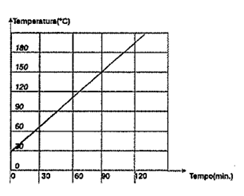
O gráfico mostra a variação da temperatura de um forno caseiro desde o instante em que é ligadoeo correspondente aumento linear nas horas seguintes. É correto afirmar que o tempo necessário para que o forno atinja 190° C é:
O gráfico mostra a variação da temperatura de um forno caseiro desde o instante em que é ligadoeo correspondente aumento linear nas horas seguintes. É correto afirmar que o tempo necessário para que o forno atinja 190° C é:
Ano: 2025
Banca:
Marinha
Órgão:
COLÉGIO NAVAL
Prova:
Marinha - 2025 - COLÉGIO NAVAL - Aluno - 1° dia |
Q3832764
Física
Na simulação de um lançamento de um projétil, considera-se que o lançamento é feito a partir da origem do plano
cartesiano e que sua trajetória é modelada pela sentença 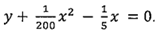 Se x e y são dados em metros, é correto afirmar que a menor distância entre o ponto de
partida e o ponto de chegada do projétil, tendo como
referência o eixo das abscissas é, de:
Se x e y são dados em metros, é correto afirmar que a menor distância entre o ponto de
partida e o ponto de chegada do projétil, tendo como
referência o eixo das abscissas é, de: 
 Conheça nossos planos