Foram encontradas 22.584 questões

Resolva questões gratuitamente!

Junte-se a mais de 4 milhões de concurseiros!

Q4158160 Eletricidade

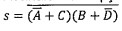
Em circuitos de corrente alternada (CA), especialmente com cargas indutivas ou capacitivas, a potência elétrica é dividida em componentes diferentes. Sobre potência real e potência aparente, assinale a opção correta. 
Alternativas
Q4158159 Eletrônica
Qual é a principal vantagem de utilizar a álgebra de Boole na análise de circuitos digitais?
Alternativas
Q4158158 Eletrônica
O que representa o dB (decibel) na instrumentação eletrônica? 
Alternativas
Q4158156 Eletroeletrônica
O flip-flop pode armazenar durante o período em que sua entrada clock for igual a 0, um bit apenas. Porém, se necessitamos guardar uma informação de mais de um bit, o flip-flop irá tornar-se insuficiente. Para isso utilizam-se sistemas denominados:
Alternativas
Q4158155 Eletroeletrônica
Considere um sistema trifásico balanceado que fornece energia a uma carga trifásica também balanceada, conectada em estrela. Cada fase da carga possui impedância de 10 puramente resistiva. A tensão de linha fornecida pela fonte é de 380 V (rms) e a frequência do sistema é de 60 Hz. Assinale a opção que apresenta 0 valor aproximado da potência ativa total consumida pela carga.
Alternativas
Q4158153 Raciocínio Lógico
Assinale a opção que corresponda à expressão Captura_de tela 2026-07-08 094620.jpg (122×31) simplificada.
Alternativas
Q4158151 Engenharia Elétrica
Considere dois fios metálicos idênticos, um de cobre e outro de alumínio, com mesmo comprimento e área da seção transversal. Ambos são ligados a uma fonte de tensão continua de mesmo valor. Sabendo que a resistividade do alumínio é maior que a do cobre, assinale a opção correta.
Alternativas
Q4158150 Eletrônica
Um Controlador Lógico Programável (CLP) é composto por diversos blocos funcionais que garantem sua operação em ambientes industriais. Dentre os principais componentes da arquitetura de um CLP, é correto afirmar que:
Alternativas
Q4157868 Nutrição
Segundo o Caderno de Atenção Básica, nº23, Saúde da Criança: nutrição infantil: aleitamento materno e alimentação complementar, do Ministério da Saúde (2015), assinale a opção que constitui como sinal de técnica correta durante a amamentação.
Alternativas
Q4157865 Medicina
A Síndrome nefrótica é um distúrbio clínico caracterizado por:
Alternativas
Q4157857 Odontologia
Segundo o Caderno de Atenção Básica, nº23, Saúde da Criança: nutrição infantil: aleitamento materno alimentação complementar, do Ministério da Saúde (2015), a higiene bucal (dentes e dorso da língua) com uma escova dental de cabeça pequena, cabo longo cerdas macias é indicada a partir do nascimento do: 
Alternativas
Q4157849 Medicina
Assinale a opção que não corresponde às causas clínicas da desidratação.
Alternativas
Q4157839 Medicina
Lentidão do movimento, cabeça inclinada para frente, modificações na deambulação, tremores na cabeça e nas mãos, face inexpressiva, rigidez muscular são características clínicas da:
Alternativas
Q3832797 Inglês
Read text VII to answer question.


TEXT VII


"Divergent" is a dark and thrilling series of young adult science fiction books by American novelist Veronica Roth. The trilogy consists of "Divergent" (2011), "Insurgent" (2012), and "Allegiant" (2013), which were later adapted into 3 films.

It is set in a post-apocalyptic dystopian Chicago that has separated its population into five Factions, each defined by certain values. The Factions are Dauntless (the brave), Amity (the kind), Erudite (the intelligent), Abnegation (the selfless), and Candor (the honest). Each year, teenagers of a certain age take a placement test and then choose the Faction to which they will devote the rest of their lives. In Chapter 1, we are introduced to Beatrice Prior, who later changes her name to Tris, the protagonist and narrator of the story. As she sits in front of a mirror while her mother cuts her hair, she reflects on the life challenges she will have to face soon.


Chapter 1

THERE IS ONE mirror in my house. It is behind a sliding panel in the hallway upstairs. Our faction allows us to stand in front of it on the second day of every third month, the day my mother cuts my hair.

I sit on the stool and my mother stands behind me with the scissors, trimming. The strands fall on the floor in a dull, blond ring.

When she finishes, she pulls my hair away from my face and twists it into a knot. I note how calm she looks and how focused she is. She is well-practiced in the art of losing herself. I can't say the same of myself.

I sneak a look at my reflection when she isn't paying attention-not for the sake of vanity, but out of curiosity. A lot can happen to a person's appearance in three months.

In my reflection, I see a narrow face, wide, round eyes, and a long, thin nose -I still look like a little girl, though sometime in the last few months I turned sixteen. The other factions celebrate birthdays, but we don't. It would be self-indulgent.

(...) "So today is the day," she says.

"Yes," I reply.

"Are you nervous?"

I stare into my own eyes for a moment. Today is the day of the Aptitude test that will show me which of the five factions I belong in. And tomorrow, at the Choosing Ceremony, I will decide on a faction; I will decide the rest of my life; I will decide to stay with my family or abandon them.

"No," I say. "The tests don't have to change our choices."

"Right." She smiles. "Let's go eat breakfast."

"Thank you. For cutting my hair."

She kisses my cheek and slides the panel over the mirror. I think my mother could be beautiful, in a different world. Her body is thin beneath the gray robe. She has high cheekbones and long eyelashes, and when she lets her hair down at night, it hangs in waves over her shoulders. But she must hide that beauty in Abnegation.

We walk together to the kitchen. On these mornings when my brother makes breakfast, and my father's hand skims my hair as he reads the newspaper, and my mother hums as she clears the table - it is on these mornings that I feel guiltiest for wanting to leave them.


Adapted from https://genius.com/Veronica-roth-divergent-chapter- 1-annotated
It is correct to state that Tris:
Alternativas
Q3832796 Inglês
Read text VII to answer question.


TEXT VII


"Divergent" is a dark and thrilling series of young adult science fiction books by American novelist Veronica Roth. The trilogy consists of "Divergent" (2011), "Insurgent" (2012), and "Allegiant" (2013), which were later adapted into 3 films.

It is set in a post-apocalyptic dystopian Chicago that has separated its population into five Factions, each defined by certain values. The Factions are Dauntless (the brave), Amity (the kind), Erudite (the intelligent), Abnegation (the selfless), and Candor (the honest). Each year, teenagers of a certain age take a placement test and then choose the Faction to which they will devote the rest of their lives. In Chapter 1, we are introduced to Beatrice Prior, who later changes her name to Tris, the protagonist and narrator of the story. As she sits in front of a mirror while her mother cuts her hair, she reflects on the life challenges she will have to face soon.


Chapter 1

THERE IS ONE mirror in my house. It is behind a sliding panel in the hallway upstairs. Our faction allows us to stand in front of it on the second day of every third month, the day my mother cuts my hair.

I sit on the stool and my mother stands behind me with the scissors, trimming. The strands fall on the floor in a dull, blond ring.

When she finishes, she pulls my hair away from my face and twists it into a knot. I note how calm she looks and how focused she is. She is well-practiced in the art of losing herself. I can't say the same of myself.

I sneak a look at my reflection when she isn't paying attention-not for the sake of vanity, but out of curiosity. A lot can happen to a person's appearance in three months.

In my reflection, I see a narrow face, wide, round eyes, and a long, thin nose -I still look like a little girl, though sometime in the last few months I turned sixteen. The other factions celebrate birthdays, but we don't. It would be self-indulgent.

(...) "So today is the day," she says.

"Yes," I reply.

"Are you nervous?"

I stare into my own eyes for a moment. Today is the day of the Aptitude test that will show me which of the five factions I belong in. And tomorrow, at the Choosing Ceremony, I will decide on a faction; I will decide the rest of my life; I will decide to stay with my family or abandon them.

"No," I say. "The tests don't have to change our choices."

"Right." She smiles. "Let's go eat breakfast."

"Thank you. For cutting my hair."

She kisses my cheek and slides the panel over the mirror. I think my mother could be beautiful, in a different world. Her body is thin beneath the gray robe. She has high cheekbones and long eyelashes, and when she lets her hair down at night, it hangs in waves over her shoulders. But she must hide that beauty in Abnegation.

We walk together to the kitchen. On these mornings when my brother makes breakfast, and my father's hand skims my hair as he reads the newspaper, and my mother hums as she clears the table - it is on these mornings that I feel guiltiest for wanting to leave them.


Adapted from https://genius.com/Veronica-roth-divergent-chapter- 1-annotated
In the sentence, "The tests don't have to change our choices" (Chapter 1, line 29), "don't have to" implies "no obligation". Which modal verb expresses the opposite ideа of "don't have to"?
Alternativas
Q3832795 Inglês
Read text VII to answer question.


TEXT VII


"Divergent" is a dark and thrilling series of young adult science fiction books by American novelist Veronica Roth. The trilogy consists of "Divergent" (2011), "Insurgent" (2012), and "Allegiant" (2013), which were later adapted into 3 films.

It is set in a post-apocalyptic dystopian Chicago that has separated its population into five Factions, each defined by certain values. The Factions are Dauntless (the brave), Amity (the kind), Erudite (the intelligent), Abnegation (the selfless), and Candor (the honest). Each year, teenagers of a certain age take a placement test and then choose the Faction to which they will devote the rest of their lives. In Chapter 1, we are introduced to Beatrice Prior, who later changes her name to Tris, the protagonist and narrator of the story. As she sits in front of a mirror while her mother cuts her hair, she reflects on the life challenges she will have to face soon.


Chapter 1

THERE IS ONE mirror in my house. It is behind a sliding panel in the hallway upstairs. Our faction allows us to stand in front of it on the second day of every third month, the day my mother cuts my hair.

I sit on the stool and my mother stands behind me with the scissors, trimming. The strands fall on the floor in a dull, blond ring.

When she finishes, she pulls my hair away from my face and twists it into a knot. I note how calm she looks and how focused she is. She is well-practiced in the art of losing herself. I can't say the same of myself.

I sneak a look at my reflection when she isn't paying attention-not for the sake of vanity, but out of curiosity. A lot can happen to a person's appearance in three months.

In my reflection, I see a narrow face, wide, round eyes, and a long, thin nose -I still look like a little girl, though sometime in the last few months I turned sixteen. The other factions celebrate birthdays, but we don't. It would be self-indulgent.

(...) "So today is the day," she says.

"Yes," I reply.

"Are you nervous?"

I stare into my own eyes for a moment. Today is the day of the Aptitude test that will show me which of the five factions I belong in. And tomorrow, at the Choosing Ceremony, I will decide on a faction; I will decide the rest of my life; I will decide to stay with my family or abandon them.

"No," I say. "The tests don't have to change our choices."

"Right." She smiles. "Let's go eat breakfast."

"Thank you. For cutting my hair."

She kisses my cheek and slides the panel over the mirror. I think my mother could be beautiful, in a different world. Her body is thin beneath the gray robe. She has high cheekbones and long eyelashes, and when she lets her hair down at night, it hangs in waves over her shoulders. But she must hide that beauty in Abnegation.

We walk together to the kitchen. On these mornings when my brother makes breakfast, and my father's hand skims my hair as he reads the newspaper, and my mother hums as she clears the table - it is on these mornings that I feel guiltiest for wanting to leave them.


Adapted from https://genius.com/Veronica-roth-divergent-chapter- 1-annotated
It is correct to infer that people from Abnegation:
Alternativas
Q3832794 Inglês
Read text VII to answer question.


TEXT VII


"Divergent" is a dark and thrilling series of young adult science fiction books by American novelist Veronica Roth. The trilogy consists of "Divergent" (2011), "Insurgent" (2012), and "Allegiant" (2013), which were later adapted into 3 films.

It is set in a post-apocalyptic dystopian Chicago that has separated its population into five Factions, each defined by certain values. The Factions are Dauntless (the brave), Amity (the kind), Erudite (the intelligent), Abnegation (the selfless), and Candor (the honest). Each year, teenagers of a certain age take a placement test and then choose the Faction to which they will devote the rest of their lives. In Chapter 1, we are introduced to Beatrice Prior, who later changes her name to Tris, the protagonist and narrator of the story. As she sits in front of a mirror while her mother cuts her hair, she reflects on the life challenges she will have to face soon.


Chapter 1

THERE IS ONE mirror in my house. It is behind a sliding panel in the hallway upstairs. Our faction allows us to stand in front of it on the second day of every third month, the day my mother cuts my hair.

I sit on the stool and my mother stands behind me with the scissors, trimming. The strands fall on the floor in a dull, blond ring.

When she finishes, she pulls my hair away from my face and twists it into a knot. I note how calm she looks and how focused she is. She is well-practiced in the art of losing herself. I can't say the same of myself.

I sneak a look at my reflection when she isn't paying attention-not for the sake of vanity, but out of curiosity. A lot can happen to a person's appearance in three months.

In my reflection, I see a narrow face, wide, round eyes, and a long, thin nose -I still look like a little girl, though sometime in the last few months I turned sixteen. The other factions celebrate birthdays, but we don't. It would be self-indulgent.

(...) "So today is the day," she says.

"Yes," I reply.

"Are you nervous?"

I stare into my own eyes for a moment. Today is the day of the Aptitude test that will show me which of the five factions I belong in. And tomorrow, at the Choosing Ceremony, I will decide on a faction; I will decide the rest of my life; I will decide to stay with my family or abandon them.

"No," I say. "The tests don't have to change our choices."

"Right." She smiles. "Let's go eat breakfast."

"Thank you. For cutting my hair."

She kisses my cheek and slides the panel over the mirror. I think my mother could be beautiful, in a different world. Her body is thin beneath the gray robe. She has high cheekbones and long eyelashes, and when she lets her hair down at night, it hangs in waves over her shoulders. But she must hide that beauty in Abnegation.

We walk together to the kitchen. On these mornings when my brother makes breakfast, and my father's hand skims my hair as he reads the newspaper, and my mother hums as she clears the table - it is on these mornings that I feel guiltiest for wanting to leave them.


Adapted from https://genius.com/Veronica-roth-divergent-chapter- 1-annotated
All the statements below are correct about "Divergent" EXCEPT for:
Alternativas
Q3832792 Inglês

Read text V to answer question.


TEXT V


US considers 'sun blocking' to cool the Earth


It sounds like something out of a sci-fi novel, but some researchers want to cool the earth by reflecting sunlight back into space. Sun blocking' technologies - also known as solar radiation modification (SRM) - could theoretically cool down the earth by reflecting sunlight back into space. One idea involves pumping sun-blocking particles into the upper atmosphere. This process of 'stratospheric aerosol injection' would involve planes spraying an aerosol like sulfur dioxide into the stratosphere. This mist of particles would reflect the sun back upwards, shading the earth. The method has already worked - although accidentally. When Mount Pinatubo in the Philippines erupted in 1991, it released thousands of tons of sulfur dioxide. The global temperature temporarily dropped by 0.5°C. In September 2022, researchers at Yale University argued that the injection method could hypothetically refreeze the poles.


A White House report published last Friday confirms that the US is open to researching SRM. "A programme of research into the scientific and societal implications of solar radiation modification (SRM) would enable better-informed decisions about the potential risks and benefits of SRM as a component. of climate policy, alongside the foundational elements of greenhouse gas emissions mitigation and adaptation it says. However, the report also clarifies that no decision has been made to "establish a comprehensive research programme focused on solar radiation modification."


In February, several news outlets reported that the UN wanted to 'explore' this technique. This could give the impression that the organisation had approved sun blocking as a viablé tool to fight climate change. Unfortunately for tech enthusiasts, this is not the case. The UN Environmental Program's recent report into SRM concludes that it is not currently a realistic or wise plan. "UNEP concurs with the panel that, at present, large-scale, or operational deployment of SRM technologies is not necessary, viable, prudent or sufficiently safe, given the limited scientific understanding and uncertainty about the potential impacts and unintended consequences," says UNEP's Chief Scientist Andrea Hinwood. "The review concludes that SRM cannot replace reducing greenhouse gas emissions." Nonetheless, the body doesn't rule out the method altogether, with the report concluding that their assessment of the technique "may change should climate actions remain insufficient".


Adapted from https://www.euronews.com/green/2023/07/05/sunblockers-us-scientists-aim-to-cool-the-earth-by-reflecting-sunlightinto-space



What type of text is it?
Alternativas
Q3832791 Inglês

Read text V to answer question.


TEXT V


US considers 'sun blocking' to cool the Earth


It sounds like something out of a sci-fi novel, but some researchers want to cool the earth by reflecting sunlight back into space. Sun blocking' technologies - also known as solar radiation modification (SRM) - could theoretically cool down the earth by reflecting sunlight back into space. One idea involves pumping sun-blocking particles into the upper atmosphere. This process of 'stratospheric aerosol injection' would involve planes spraying an aerosol like sulfur dioxide into the stratosphere. This mist of particles would reflect the sun back upwards, shading the earth. The method has already worked - although accidentally. When Mount Pinatubo in the Philippines erupted in 1991, it released thousands of tons of sulfur dioxide. The global temperature temporarily dropped by 0.5°C. In September 2022, researchers at Yale University argued that the injection method could hypothetically refreeze the poles.


A White House report published last Friday confirms that the US is open to researching SRM. "A programme of research into the scientific and societal implications of solar radiation modification (SRM) would enable better-informed decisions about the potential risks and benefits of SRM as a component. of climate policy, alongside the foundational elements of greenhouse gas emissions mitigation and adaptation it says. However, the report also clarifies that no decision has been made to "establish a comprehensive research programme focused on solar radiation modification."


In February, several news outlets reported that the UN wanted to 'explore' this technique. This could give the impression that the organisation had approved sun blocking as a viablé tool to fight climate change. Unfortunately for tech enthusiasts, this is not the case. The UN Environmental Program's recent report into SRM concludes that it is not currently a realistic or wise plan. "UNEP concurs with the panel that, at present, large-scale, or operational deployment of SRM technologies is not necessary, viable, prudent or sufficiently safe, given the limited scientific understanding and uncertainty about the potential impacts and unintended consequences," says UNEP's Chief Scientist Andrea Hinwood. "The review concludes that SRM cannot replace reducing greenhouse gas emissions." Nonetheless, the body doesn't rule out the method altogether, with the report concluding that their assessment of the technique "may change should climate actions remain insufficient".


Adapted from https://www.euronews.com/green/2023/07/05/sunblockers-us-scientists-aim-to-cool-the-earth-by-reflecting-sunlightinto-space


It may be inferred from the text that solar radiation modification:
Alternativas
Q3832788 Inglês
Read Text III to answer questions.


TEXT III


Czech star gymnast dies after falling over 200 feet from mountain while attempting to take selfie


By Scott Thompson - Fox News
Updated August 26, 2024


The Daily Mail reports that 23-year-old Natalie Stichova was declared dead six days after falling 262 feet down Tegelberg Mountain in Bavaria, Germany, on Aug. 15.

A friend of the gymnast told Czech media that Stichova was trying to take a selfie when she fell. The person, who wanted to remain anonymous, said Stichova was close to the edge of the mountain when her foot appeared to slip while setting up for a photo in front of the castle.

"We will never find out whether she slipped or whether a piece of the rock edge broke off," the friend said, per the Daily Mail.

Stichova was reportedly with her boyfriend, David, and two friends ________ the time of the incident. Police said it was a challenging climb to reach the gymnast after her fall. Although Stichova was alive when first responders arrived, she was suffering from severe injuries.

The Daily Mail reports Stichova's family took her off life support due to irreversible brain damage ________ Aug. 21. She died ________ 5:30 a.m. that day.

"With deep sorrow, we announce that our wonderful friend, gymnast, rëpresentative, and coach, Natalie Stichova, has left us forever due to a tragic accident," Stichova's club, Sokol Pribram Sports Gymnastics, said in an official statement, per the Daily Mail. "We are extending our heartfelt condolences to her family and close friends, sending them strength and support."


Adapted from: <https://www.foxnews.com/sports/czech-stargymnast-dies-after-falling-over-200-feet-from-mountain-whileattempting-take-selfie-report>
In the extract "Although Stichova was alive when first responders arrived, she was suffering from severe injuries" (4th paragraph), "although" is used to express:
Alternativas
Respostas
621: D
622: E
623: E
624: A
625: E
626: A
627: C
628: C
629: A
630: B
631: B
632: C
633: E
634: D
635: B
636: D
637: C
638: A
639: D
640: E