Questões Militares
Comentadas para idecan
Foram encontradas 2.092 questões
Resolva questões gratuitamente!
Junte-se a mais de 4 milhões de concurseiros!


Fire in South Korea
Four people died after a fire broke out in a shopping centre in South Korea. The fire broke out in a children´s play area inside the centre. There were no children inside at the time.
The centre is next to some flats. More than a hundred people from the flats immediately evacuated.
(Available: https://www.newsinlevels.com/products/fire-in-south-korea.)
“Broke out” (1 st par) means. Read the text and choose the correct option
Eating well may count more than exercise for weight loss: study
(By Lizette Borreli on 2/12/17 AT 9:10 AM.)
We’ve all heard that to lose weight we need to do two things: eat less, exercise more. This makes sense: Burning more calories than we consume will lead to weight loss. But this exercise-based approach provides only short-term results. Now, researchers at Loyola University of Chicago confirm that a healthy diet, not exercise, is the key to losing weight – and keeping it off.
“Our study results indicate that physical activity may not protect you from gaining weight,” said Lara Dugas, lead author of the study and an assistant professor in the Department of Public Health Sciences of Loyola University Chicago Stritch School of Medicine, in a statement.
Previous research has found exercise does help people lose weight by burning fat. A 10-month study split 141 obese or overweight people into three groups to see how cardio affected them – group 1 had to burn 400 calories doing cardio, 5 days a week; group 2 had to burn 600 calories doing cardio, 5 days a week; and group 3 did no exercise. Most participants lost 4.3 percent of their body weight in group 1; group 2 lost a little more at 5.7 percent; and the control group actually gained 0.5 percent.
The benefits of exercise on weight are notable, but most studies don't take into account its behavioral effects. For example, working out makes people hungrier, which means they are more likely to consume more calories. This suggests how much and what we eat has a bigger impact on our weight than exercise.
In the new study, published in Peer J, Dugas and her colleagues examined about 2,000 adults from the U.S. and four other countries: Ghana, South Africa, Jamaica and Seychelles, to measure their physical activity levels and weight change throughout the course of three years. Participants wore tracking devices – accelerometers – on their waists for a week, to track their energy expenditure and step count. Weight, height and body fat were also measured at baseline, one year and two years after.
In the beginning, Ghana participants had the lowest average weights (139 pounds for both men and women), and Americans the highest weights (202 pounds for women, 206 pounds for men). Ghanaians were more fit han Americans; 76 Ghanaian men and 44 percent Ghanaian women met the U.S. Surgeon General physical activity guidelines, while only 44 percent of American men and 20 percent of American women met the guidelines. Adults need 2 hours and 30 minutes of moderate-intensity aerobic activity, like brisk walking, each week, according to the Centers for Disease Control and Prevention.
Surprisingly, participants with higher rates of physical activity actually gained more weight than those with lower rates. American men who met the guidelines gained a half pound per year, while American men who did not meet the guidelines lost 0.6 pounds. This shows there's no significant relationship between sedentary time at baseline, and subsequent weight gain or weight loss. The only factors that were significantly linked to weight at baseline were age and gender.
“From our study it is not evident that higher volumes of PA [physical activity] alone are protective against future weight gain, and by deduction our data suggest that other environmental factors such as the food environment may have a more critical role”, concluded the researchers.
Exercise-focused weight loss regimens yield low success rates because we tend to poorly estimate calories we consume and calories we burn. For example, a 2010 study found when participants were asked to consume the amount of food they believed they burned in calories, they ended up eating two to three times the amount of calories they burned. This suggests calorie expenditure doesn’t really count for much.
Diet is a major factor in weight control; portion sizes and what we're eating is crucial to maintaining a healthy body weight. To lose weight and improve health, we need to both eat well and find the time to exercise.
(Available: http://www.newsweek.com/eating-well-count-more-exercise-weight-loss-554821.)
Observe o circuito a seguir.
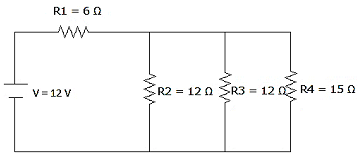
A corrente do circuito é
Observe os produtos que são liberados a partir de uma reação de combustão completa do etanol.
I. Gás carbônico.
II. Gás oxigênio.
III. Água.
IV. Carbono.
Estão corretas apenas as alternativas
CrCl3 + NaOH + H2O2 → Na2CrO4 + NaCl + H2O
Analise os compostos a seguir de acordo com suas propriedades de ligação entre moléculas.
I. Metano.
II. Monóxido de carbono.
III. Ácido clorídrico.
IV. Gás cloro.
As alternativas que contêm somente moléculas apolares são:
Sobre as propriedades consideradas organolépticas, analise:
I. Cor.
II. Ponto de fusão.
III. Maleabilidade.
IV. Odor.
V. Textura.
Estão corretas apenas as alternativas
“A meia-vida de um elemento radioativo é o intervalo de tempo em que uma amostra deste elemento se reduz à metade. Este intervalo de tempo também é chamado de período de semidesintegração. À medida que os elementos radioativos vão se desintegrando, no decorrer do tempo, a sua quantidade e atividade vão reduzindo e, por consequência, a quantidade de energia emitida por ele, em razão da radioatividade, também é reduzida.”
(ALMEIDA, Frederico Borges de. “Meia-Vida”; Brasil Escola. Disponível em http://brasilescola.uol.com.br/fisica/meiavida.htm. Acesso em: 24 de fevereiro de 2017.)
Assinale a alternativa que corresponde à massa residual de um material radioativo, que continha 10 g iniciais, após ter sua terceira meia-vida.
O altruísmo ainda tem lugar no mundo contemporâneo?
O altruísmo tem por base a preocupação de um ser humano para com outro ser humano. Este sentimento está cada vez mais raro e menos valorizado no mundo atual. Vivemos em uma sociedade onde ações, gestos e preocupações de um indivíduo para com seu semelhante estão se tornando exceções, quando na verdade deveriam ser a regra. Hoje percebemos um grande egoísmo do homem em tudo o que faz, e em todas as coisas e objetivos que quer atingir. Em nosso dia a dia valorizamos muito pouco os pequenos gestos de ajuda e colaboração.
Vejam os casos relatados diariamente nos jornais e nas TVs, o ser humano não pensa a longo prazo, pois o que hoje acontece com o outro um dia poderá acontecer com você. O curioso é que as manifestações de altruísmo surgem quando nos deparamos com grandes tragédias. Nesses casos, como nos terremotos do Haiti e do Japão ou das enchentes no Rio de Janeiro, existe uma grande comoção, todos procuram notícias, tentam ajudar e são solidários com as pessoas afetadas.
Esses casos nos levam às seguintes questões: Será que ainda podemos acreditar que é possível melhorar a sociedade em que vivemos? Será que ainda há esperança de um dia vermos os seres humanos preocupados com outros seres humanos? Por que o sentimento de solidariedade se manifesta, com grande ênfase, nos casos de tragédias de grande repercussão e muito pouco nos pequenos acontecimentos de nosso cotidiano?
Infelizmente ser altruísta está fora de moda, ter preocupação com seu semelhante parece que não acompanhou a velocidade das mudanças da sociedade contemporânea, a internet e as redes sociais substituíram o contato pessoal e aquele bom papo onde duas ou mais pessoas se conheciam, ficavam amigas, contavam seus problemas e se ajudavam mutuamente.
A banalização dos crimes e do “vou conquistar o que quero a qualquer preço”, mesmo que tenha que passar por cima de alguém, está deteriorando valores que faziam a vida ser mais justa, mais fraterna e mais humana. Ser solidário, companheiro, amigo e altruísta, entre tantos outros bons sentimentos, precisam ser resgatados para que se possa pensar, em longo prazo, numa sociedade onde sejamos menos desiguais e mais fraternos.
(Disponível em: http://tribunadoreconcavo.com/o-altruismo-ainda-tem-lugar-no-mundo-contemporaneo/. Editado por Tribuna do Recôncavo| Blog do Rossano.)

 Conheça nossos planos