Questões Militares
Sobre interpretação de texto | reading comprehension em inglês
Foram encontradas 2.315 questões
Observe the fragment taken from the blues Blow Wind Blow (Muddy Waters, Paul Butterfield)
When the sun rose this morning,
I didn't have my baby by my side.
When the sun rose this morning,
I didn't have my baby by my side.
I don't know where she was,
I know she's out with some another guy.
How to Become a Stunt Double
A stunt double stands in for the actor when the action or fight scene gets dangerous or goes beyond the capabilities of the actor. To become a stunt double, you must be in excellent physical condition and have special skills.

1. Exercise regularly if you want to become a stunt double. Eat nutritiously for optimal health and strength.
2. Take lots of lessons because the more skills you have, the better. Gymnastics is extremely important in becoming a stunt double. Get good at trampoline, skateboarding, swimming and high board diving. Take scuba diving lessons. Practice rock climbing and horseback riding. Learn to water ski and snow ski.
3. Enroll in martial arts classes, especially judo. Judo is excellent for learning how to break falls.
4. Get training in CPR(1) and First Aid. This training looks good on a résumé, especially for stunt double careers. Injuries happen.
5. Have valid driver's licenses for both car and motorcycle. Take advanced driving classes so you'll be qualified for difficult driving scenes.
6. Move to Hollywood and plan to work your way up from the bottom. You must get into the Screen Actors Guild(2) and have a union card(3) .
Taken from Google
(1) Cardiopulmonary resuscitation.
(2) Annual prize promoted by the American Syndicate of Actors.
(3) A card certifying membership in an organization.
How to Become a Stunt Double
A stunt double stands in for the actor when the action or fight scene gets dangerous or goes beyond the capabilities of the actor. To become a stunt double, you must be in excellent physical condition and have special skills.

1. Exercise regularly if you want to become a stunt double. Eat nutritiously for optimal health and strength.
2. Take lots of lessons because the more skills you have, the better. Gymnastics is extremely important in becoming a stunt double. Get good at trampoline, skateboarding, swimming and high board diving. Take scuba diving lessons. Practice rock climbing and horseback riding. Learn to water ski and snow ski.
3. Enroll in martial arts classes, especially judo. Judo is excellent for learning how to break falls.
4. Get training in CPR(1) and First Aid. This training looks good on a résumé, especially for stunt double careers. Injuries happen.
5. Have valid driver's licenses for both car and motorcycle. Take advanced driving classes so you'll be qualified for difficult driving scenes.
6. Move to Hollywood and plan to work your way up from the bottom. You must get into the Screen Actors Guild(2) and have a union card(3) .
Taken from Google
(1) Cardiopulmonary resuscitation.
(2) Annual prize promoted by the American Syndicate of Actors.
(3) A card certifying membership in an organization.
One of the instructions below IS NOT stated in the text. Choose it.
In order to become a stunt double you
How to Become a Stunt Double
A stunt double stands in for the actor when the action or fight scene gets dangerous or goes beyond the capabilities of the actor. To become a stunt double, you must be in excellent physical condition and have special skills.

1. Exercise regularly if you want to become a stunt double. Eat nutritiously for optimal health and strength.
2. Take lots of lessons because the more skills you have, the better. Gymnastics is extremely important in becoming a stunt double. Get good at trampoline, skateboarding, swimming and high board diving. Take scuba diving lessons. Practice rock climbing and horseback riding. Learn to water ski and snow ski.
3. Enroll in martial arts classes, especially judo. Judo is excellent for learning how to break falls.
4. Get training in CPR(1) and First Aid. This training looks good on a résumé, especially for stunt double careers. Injuries happen.
5. Have valid driver's licenses for both car and motorcycle. Take advanced driving classes so you'll be qualified for difficult driving scenes.
6. Move to Hollywood and plan to work your way up from the bottom. You must get into the Screen Actors Guild(2) and have a union card(3) .
Taken from Google
(1) Cardiopulmonary resuscitation.
(2) Annual prize promoted by the American Syndicate of Actors.
(3) A card certifying membership in an organization.
Observe the cartoon and answer the question about it.
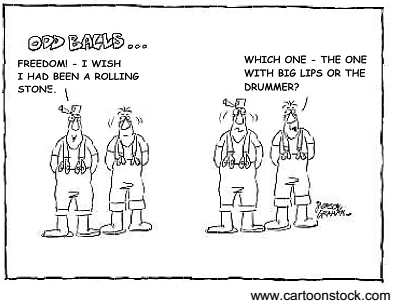
The first boy
Titanic – The Movie
Storyline
In this fiction movie, 84 years later, a 100-year-old woman named Rose DeWitt Bukater tells the story to her granddaughter Lizzy Calvert and others about her life set on April 10th 1912, on a ship called Titanic when young Rose boards the departing ship with the upper-class passengers, her mother Ruth DeWitt Bukater, and her fiancé. Meanwhile, a drifter and artist named Jack Dawson and his best friend Fabrizio De Rossi win third-class tickets to the ship in a game. She explains the whole story from departure until the death of Titanic on its first and last voyage April 15th, 1912 at 2:20 in the morning.
Adapted from http://www.imdb.com/title/tt0120338/
"My Heart Will Go On" is the love theme of the 1997 blockbuster film Titanic. It was recorded by Celine Dion. Originally released in 1997, it went to number 1 all over the world. It became Dion's biggest hit, and one of the best selling of all time, and was the world's best-selling single of 1998.
Adapted from Wikipedia
My Heart Will Go On (Celine Dion)
Soundtrack of Titanic
Every night in my dreams
I see you, I feel you,
That is how I know you go on
Far across the distance
And spaces between us
You have come to show you go on
Near, far, wherever you are
I believe that the heart does go on
Once more you open the door
And you're here in my heart
And my heart will go on and on
[...]
http://www.stlyrics.com/lyrics/titanic/myheartwillgoon

Titanic – The Movie
Storyline
In this fiction movie, 84 years later, a 100-year-old woman named Rose DeWitt Bukater tells the story to her granddaughter Lizzy Calvert and others about her life set on April 10th 1912, on a ship called Titanic when young Rose boards the departing ship with the upper-class passengers, her mother Ruth DeWitt Bukater, and her fiancé. Meanwhile, a drifter and artist named Jack Dawson and his best friend Fabrizio De Rossi win third-class tickets to the ship in a game. She explains the whole story from departure until the death of Titanic on its first and last voyage April 15th, 1912 at 2:20 in the morning.
Adapted from http://www.imdb.com/title/tt0120338/
"My Heart Will Go On" is the love theme of the 1997 blockbuster film Titanic. It was recorded by Celine Dion. Originally released in 1997, it went to number 1 all over the world. It became Dion's biggest hit, and one of the best selling of all time, and was the world's best-selling single of 1998.
Adapted from Wikipedia
My Heart Will Go On (Celine Dion)
Soundtrack of Titanic
Every night in my dreams
I see you, I feel you,
That is how I know you go on
Far across the distance
And spaces between us
You have come to show you go on
Near, far, wherever you are
I believe that the heart does go on
Once more you open the door
And you're here in my heart
And my heart will go on and on
[...]
http://www.stlyrics.com/lyrics/titanic/myheartwillgoon
Titanic – The Movie
Storyline
In this fiction movie, 84 years later, a 100-year-old woman named Rose DeWitt Bukater tells the story to her granddaughter Lizzy Calvert and others about her life set on April 10th 1912, on a ship called Titanic when young Rose boards the departing ship with the upper-class passengers, her mother Ruth DeWitt Bukater, and her fiancé. Meanwhile, a drifter and artist named Jack Dawson and his best friend Fabrizio De Rossi win third-class tickets to the ship in a game. She explains the whole story from departure until the death of Titanic on its first and last voyage April 15th, 1912 at 2:20 in the morning.
Adapted from http://www.imdb.com/title/tt0120338/
"My Heart Will Go On" is the love theme of the 1997 blockbuster film Titanic. It was recorded by Celine Dion. Originally released in 1997, it went to number 1 all over the world. It became Dion's biggest hit, and one of the best selling of all time, and was the world's best-selling single of 1998.
Adapted from Wikipedia
My Heart Will Go On (Celine Dion)
Soundtrack of Titanic
Every night in my dreams
I see you, I feel you,
That is how I know you go on
Far across the distance
And spaces between us
You have come to show you go on
Near, far, wherever you are
I believe that the heart does go on
Once more you open the door
And you're here in my heart
And my heart will go on and on
[...]
http://www.stlyrics.com/lyrics/titanic/myheartwillgoon
Twilight
Twilight is a 2008 American romantic vampire film based ___ Stephenie Meyer’s popular novel of the same name. It is the first film in The Twilight Saga film series. This film focuses on the development of the relationship between Bella Swan and Edward Cullen (a vampire), and the subsequent efforts of Cullen and his family to keep Swan safe ___ a coven of evil vampires.
The project was in development for approximately 3 years ___ Paramount Pictures, during which time a screen adaptation that differed significantly from the novel was written. Principal photography took 44 days and the film was primarily shot in Oregon.
Twilight was theatrically released ___ November 21 2010, grossing over US$392 million worldwide and became the most purchased DVD of the year. The soundtrack was released in the same year. Following the success of the film, New Moon and Eclipse, the next two novels in the series, were produced as films the following year.
Adapted from Wikipedia
The Mona Lisa
Leonardo Da Vinci’s Mona Lisa is widely recognized as the most famous painting of all time. She has aroused admiration, curiosity and suspicion for over 500 years. She can provoke a reaction known as the Mona Lisa Syndrome: the viewer is enchanted by her legendary smile, which becomes increasingly enigmatic the more you look at it.
As it will never be sold, the Mona Lisa is priceless, although for insurance reasons it is believed to be valued at anything up to $ 1 billion.
( Adapted from Move – Intermediate)
GLOSSARY
to arouse – despertar
to enchant – encantar
legendary – fabuloso, lendário
insurance – apólice de seguro
According to the text, the Mona Lisa
Service Animals
A Therapy Dog is a kind of service animal – an animal that helps people. The most common service animal is a seeing eye dog. A seeing eye dog helps blind people. However, dogs help people in many other ways. Hearing ear dogs help people with hearing problems. These dogs listen for specific noises, such as a fire alarm. When the dog hears the sound, the dog touches the owner. However, if it’s an emergency, the dog may pull the owner out of danger. Usually small dogs are hearing ear dogs because they are easy to care for. Wheelchair assistance dogs are much larger because the dog’s main job is pulling the wheelchair. These dogs also open doors and get items for their owners, such as magazines.
(Adapted from Access Reading – Thompson)
EXTRACT 1
Japan’s shipyards remain intact after quake
Japan’s major shipyards escaped the full impact of the March 11 earthquake and tsunami that struck the northeastern coast of the country with full force. An official at the Japan Ship Exporters’ Association said the devastating natural disaster “will have no impact on future export ship orders at all”. Although several small shipyards in the quake-hit areas were affected, major Japanese shipyards that build large vessels for exports are concentrated in western Japan and remain intact, the official said. Mitsui Engineering & Shipbuilding sustained “slight material damages” in the company’s Kasai Center and Chiba Works but did not consider such slight damages would cause serious impact on operations. “The rotational schedule of interruption of power supply due to the earthquake may affect our operation at our works and subsidiaries. However, the degree of the impact is not known now,” the company said in a statement. Japanese export ship orders rose for the 15th consecutive month in February o a year-on-year basis. Japanese shipbuilders received orders for 277 export vessels – 259 bulk carriers, 10 oil tankers and eight general cargo vessels – in the April-February period.
(Adapted from: www.australianmerchantnavy.com, March 2011)
EXTRACT 2
Tsnunami Debris Expected on U.S. Shores in 3 Years
The powerful tsunami triggered by the 9.0 Japanese earthquake destroyed coastal towns near Sendai, washing such things as houses and cars into the ocean. Projections of where this debris might head have been made at the international Pacific Research Center, university of Hawaii at Manoa. What their model predicts about the tsunami debris is that they first spread out eastward from the Japan Coast in the North Pacific Subtropical Gyre. In a year, the Papahanaumokuakea Marine National Monument will see pieces washing up on its shores; in two years, the remaining Hawaiian islands will see some effects; in three years, the plume will reach the US West Coast, dumping debris on Californian beaches and the beaches of British Columbia, Alaska, and Baja California. The debris will then drift into the famous floating junk yard, the North Pacific Garbage Patch, where it will wander around and break into smaller and smaller pieces. In five years, Hawaii shores can expect to see another barrage of debris that is stronger and longer-lasting than the first one. Much of the debris leaving the North Pacific Garbage Patch ends up on Hawaii’s reefs and beaches. These model projections will help to guide clean-up and tracking operations.
(Adapted from: www.geog.ucsb.edu, April 2011)
EXTRACT 1
Japan’s shipyards remain intact after quake
Japan’s major shipyards escaped the full impact of the March 11 earthquake and tsunami that struck the northeastern coast of the country with full force. An official at the Japan Ship Exporters’ Association said the devastating natural disaster “will have no impact on future export ship orders at all”. Although several small shipyards in the quake-hit areas were affected, major Japanese shipyards that build large vessels for exports are concentrated in western Japan and remain intact, the official said. Mitsui Engineering & Shipbuilding sustained “slight material damages” in the company’s Kasai Center and Chiba Works but did not consider such slight damages would cause serious impact on operations. “The rotational schedule of interruption of power supply due to the earthquake may affect our operation at our works and subsidiaries. However, the degree of the impact is not known now,” the company said in a statement. Japanese export ship orders rose for the 15th consecutive month in February o a year-on-year basis. Japanese shipbuilders received orders for 277 export vessels – 259 bulk carriers, 10 oil tankers and eight general cargo vessels – in the April-February period.
(Adapted from: www.australianmerchantnavy.com, March 2011)
EXTRACT 2
Tsnunami Debris Expected on U.S. Shores in 3 Years
The powerful tsunami triggered by the 9.0 Japanese earthquake destroyed coastal towns near Sendai, washing such things as houses and cars into the ocean. Projections of where this debris might head have been made at the international Pacific Research Center, university of Hawaii at Manoa. What their model predicts about the tsunami debris is that they first spread out eastward from the Japan Coast in the North Pacific Subtropical Gyre. In a year, the Papahanaumokuakea Marine National Monument will see pieces washing up on its shores; in two years, the remaining Hawaiian islands will see some effects; in three years, the plume will reach the US West Coast, dumping debris on Californian beaches and the beaches of British Columbia, Alaska, and Baja California. The debris will then drift into the famous floating junk yard, the North Pacific Garbage Patch, where it will wander around and break into smaller and smaller pieces. In five years, Hawaii shores can expect to see another barrage of debris that is stronger and longer-lasting than the first one. Much of the debris leaving the North Pacific Garbage Patch ends up on Hawaii’s reefs and beaches. These model projections will help to guide clean-up and tracking operations.
(Adapted from: www.geog.ucsb.edu, April 2011)
EXTRACT 1
Japan’s shipyards remain intact after quake
Japan’s major shipyards escaped the full impact of the March 11 earthquake and tsunami that struck the northeastern coast of the country with full force. An official at the Japan Ship Exporters’ Association said the devastating natural disaster “will have no impact on future export ship orders at all”. Although several small shipyards in the quake-hit areas were affected, major Japanese shipyards that build large vessels for exports are concentrated in western Japan and remain intact, the official said. Mitsui Engineering & Shipbuilding sustained “slight material damages” in the company’s Kasai Center and Chiba Works but did not consider such slight damages would cause serious impact on operations. “The rotational schedule of interruption of power supply due to the earthquake may affect our operation at our works and subsidiaries. However, the degree of the impact is not known now,” the company said in a statement. Japanese export ship orders rose for the 15th consecutive month in February o a year-on-year basis. Japanese shipbuilders received orders for 277 export vessels – 259 bulk carriers, 10 oil tankers and eight general cargo vessels – in the April-February period.
(Adapted from: www.australianmerchantnavy.com, March 2011)
EXTRACT 2
Tsnunami Debris Expected on U.S. Shores in 3 Years
The powerful tsunami triggered by the 9.0 Japanese earthquake destroyed coastal towns near Sendai, washing such things as houses and cars into the ocean. Projections of where this debris might head have been made at the international Pacific Research Center, university of Hawaii at Manoa. What their model predicts about the tsunami debris is that they first spread out eastward from the Japan Coast in the North Pacific Subtropical Gyre. In a year, the Papahanaumokuakea Marine National Monument will see pieces washing up on its shores; in two years, the remaining Hawaiian islands will see some effects; in three years, the plume will reach the US West Coast, dumping debris on Californian beaches and the beaches of British Columbia, Alaska, and Baja California. The debris will then drift into the famous floating junk yard, the North Pacific Garbage Patch, where it will wander around and break into smaller and smaller pieces. In five years, Hawaii shores can expect to see another barrage of debris that is stronger and longer-lasting than the first one. Much of the debris leaving the North Pacific Garbage Patch ends up on Hawaii’s reefs and beaches. These model projections will help to guide clean-up and tracking operations.
(Adapted from: www.geog.ucsb.edu, April 2011)


