Questões Militares
Sobre interpretação de texto | reading comprehension em inglês
Foram encontradas 2.325 questões


Match the questions to the answers.
(1) Are you on vacation?
(2) Where's she from?
(3) Are you and Ana married?
(4) Is Julie Italian?
( ) Yes, we are.
( ) She’s from Italy.
( ) No, she isn’t.
( ) No, I'm not.
Choose the option with the correct order.
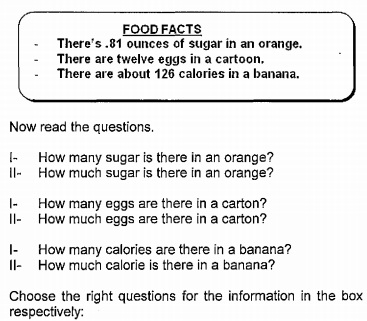
Read the Information in the box below.
The Vikings
Raiders, travelers or brave explorers?
The Vikings sailed the seas, attacked towns, and stole treasures all over Europe between 800 and 1100. They started from Scandinavia and attacked many countries in Europe. They settled in Britain, Ireland and France. They also crossed the Atlantic Ocean and arrived in Iceland and Greenland. They discovered North America but they also traveled east to Russia and south to Arabia.
They were good farmers and excelient shipbuilders. They used their ships for war. They also used them to carry people and goods to new lands. In winter, when there was not much farm work to do, they stayed home and did other interesting jobs. Men made swords to use them in battle. The Vikings liked swords so much they often decorated them with gold and gave them names. Women cooked and made clothes, shoes, and jewelry for themselves,______ children and husbands.
In 866 the Vikings captured an Anglo-Saxon town. They called it Jorvik and it was the capital of the Viking kingdom for 200 years. They made Jorvik rich and one of the most famous cities in Britain. Some years ago, archeologists discovered part of that Viking town in York, the modern city of Jorvik. They found many things such as jewelry, coins and clothes. If you ever go to York and you want to traveli back in time and see how the Vikings lived, visit the Jorvik Centre!
Adapted from Wilson, D. M. (1987) The Vikings, Activity Book, British Museum Press http://www.pi-schools.gr/books/gymnasio/aggl_a_prox/ergas/043-060.pdf
The Vikings used their ships to
The Vikings
Raiders, travelers or brave explorers?
The Vikings sailed the seas, attacked towns, and stole treasures all over Europe between 800 and 1100. They started from Scandinavia and attacked many countries in Europe. They settled in Britain, Ireland and France. They also crossed the Atlantic Ocean and arrived in Iceland and Greenland. They discovered North America but they also traveled east to Russia and south to Arabia.
They were good farmers and excelient shipbuilders. They used their ships for war. They also used them to carry people and goods to new lands. In winter, when there was not much farm work to do, they stayed home and did other interesting jobs. Men made swords to use them in battle. The Vikings liked swords so much they often decorated them with gold and gave them names. Women cooked and made clothes, shoes, and jewelry for themselves,______ children and husbands.
In 866 the Vikings captured an Anglo-Saxon town. They called it Jorvik and it was the capital of the Viking kingdom for 200 years. They made Jorvik rich and one of the most famous cities in Britain. Some years ago, archeologists discovered part of that Viking town in York, the modern city of Jorvik. They found many things such as jewelry, coins and clothes. If you ever go to York and you want to traveli back in time and see how the Vikings lived, visit the Jorvik Centre!
Adapted from Wilson, D. M. (1987) The Vikings, Activity Book, British Museum Press http://www.pi-schools.gr/books/gymnasio/aggl_a_prox/ergas/043-060.pdf
All the statements below are correct about the Vikings,
EXCEPT that they
Read the text II in orderto answer item.
My name is Patrick. I ___________ on vacation to Brazii last Summer, and I ___________ in a five-star hotel in front of the beach in Rio de Janeiro.
I went to Rio by plane and I___________ a month there, I ___________ a lot of people and we____________a great time! I want to go back to Brazii as soon as possible.
According to text II, it's correct to say that the statements
are true, EXCEPT:
Helpinq at a hospital
Every year many young peopie finish school and then take a year off before they start work or go to college. Some of them go to other countries and work as volunteers. Volunteers give their time to help people. For example, they work in schools or hospitais, orthey help with conservation.
Mike Coleman is 19 and______________in Omaha, Nebraska, in the United States. He wants to become a teacher but now he ______________ in Namibia. He's working in a hospital near Katima Mulilo. He says, " I'm working with the doctors and nurses here to help sick peopie. I'm not a doctor but I can do a lot of things to help. For example, I help carry peopie who can't walk. Sometimes I go to villages in the mobile hospital, too. There aren't many doctors here so they need help from peopie like me. I don't get any money, but that's OK, l'm not here for the money.”
"I'm staying here for two months, and I'm living in a small house with five other volunteers. The work is hard and the days are long, but I'm enjoying my life here. I'm learning a lot about life in Southern África and about myself! When I finish the two months' work, I want to travel in and around Namibia for three weeks. For example, I want to see the animais in the Okavango Delta in Botswana."
http://vyre-legacy-access.cambridge.org
Mark the right option to fill in the following sentence.Why is Mike Coleman in Namíbia, South África? Because_________________________ .
Helpinq at a hospital
Every year many young peopie finish school and then take a year off before they start work or go to college. Some of them go to other countries and work as volunteers. Volunteers give their time to help people. For example, they work in schools or hospitais, orthey help with conservation.
Mike Coleman is 19 and______________in Omaha, Nebraska, in the United States. He wants to become a teacher but now he ______________ in Namibia. He's working in a hospital near Katima Mulilo. He says, " I'm working with the doctors and nurses here to help sick peopie. I'm not a doctor but I can do a lot of things to help. For example, I help carry peopie who can't walk. Sometimes I go to villages in the mobile hospital, too. There aren't many doctors here so they need help from peopie like me. I don't get any money, but that's OK, l'm not here for the money.”
"I'm staying here for two months, and I'm living in a small house with five other volunteers. The work is hard and the days are long, but I'm enjoying my life here. I'm learning a lot about life in Southern África and about myself! When I finish the two months' work, I want to travel in and around Namibia for three weeks. For example, I want to see the animais in the Okavango Delta in Botswana."
http://vyre-legacy-access.cambridge.org
Read the statements below to check if they are true (T) or false (F), and choose the option that respectively represents the statements.
( ) Some volunteers work with preservation.
( ) Mike Coleman often works in a hospital.
( ) Mike is happy because the work is hard.
( ) lt's a personal experience, in Mike's opinion.
Helping at a hospital
Every year many young people finish school and then take a year off before they start work or go to college. Some of them go to other countries and work as volunteers. Volunteers give their time to help people. For example, they work in schools or hospitais, orthey help with conservation.
Mike Coleman is 19 and______________in Omaha, Nebraska, in the United States. He wants to become a teacher but now he ______________ in Namibia. He's working in a hospital near Katima Mulilo. He says, " I'm working with the doctors and nurses here to help sick people. I'm not a doctor but I can do a lot of things to help. For example, I help carry people who can't walk. Sometimes I go to villages in the mobile hospital, too. There aren't many doctors here so they need help from people like me. I don't get any money, but that's OK, l'm not here for the money.”
"I'm staying here for two months, and I'm living in a small house with five other volunteers. The work is hard and the days are long, but I'm enjoying my life here. I'm learning a lot about life in Southern África and about myself! When I finish the two months' work, I want to travel in and around Namibia for three weeks. For example, I want to see the animais in the Okavango Delta in Botswana."
http://vyre-legacy-access.cambridge.org
Read the fragment from the text.
“Some of them go to other countries and work as volunteers.” (lines 2 and 3)
What does the object pronoun them refer to?
Read the text and answer the question.
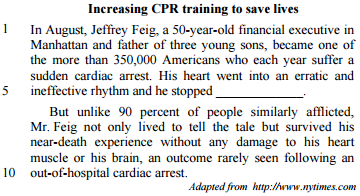
Read the text and answer the question.

 Conheça nossos planos