Questões de Vestibular UNESP 2022 para Vestibular
Foram encontradas 90 questões


Q4204748
Inglês
Texto associado
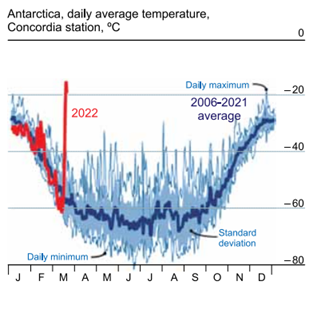
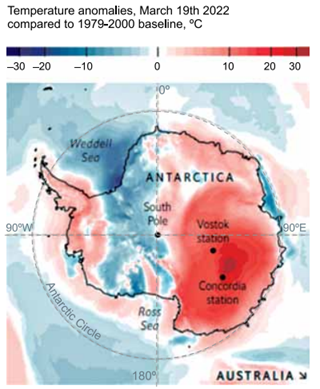
Examine o gráfico e o mapa e leia o texto para responder à questão.
In March 2022, parts of Antarctica have been 40 ºC
warmer than their March average
The Concordia research station is one of the most
inhospitable places on Earth. At 3,000m above sea level on
the Antarctic Plateau, the temperature rarely rises above
-25 ºC even in the summer. In midwinter it can fall to around
-80 ºC. The air is painfully dry, and fingers, toes and noses
can freeze in minutes. The dozen or so crew, mainly French
and Italian, who live and work in the station would normally
venture out only for essential work. But Concordia has recently
experienced a heatwave. On March 18th the temperature
reached a high of -11.8 ºC — more than 40 ºC warmer than
the average for this time of year.
Similarly freakish weather was recorded across eastern
Antarctica. Temperatures at the Russian-run Vostok
research station rose to -17.7 ºC, more than 15 ºC above the
previous record for March, set in 1967. Across the continent
temperatures were 4.5 ºC higher than usual (though in recent
days they have returned to a normal range).
Meteorologists have attributed the latest heatwave to
an atmospheric “river” of warm, damp air blowing towards
Antarctica from the Southern Ocean near Australia. It is
difficult to know whether climate change is to blame for
one-off weather events. But over the past 65 years or
so there has been an increase in the number of “high
temperature” days at Antarctic stations.
Most regions of Antarctica have been spared global
warming. In the late 20th century, a large hole opened
up in the ozone layer above the South Pole. This has a
regional cooling effect, which has offset much of the heating
caused by rising concentrations of greenhouse gases in the
atmosphere. Temperatures on the continent rarely climb
above freezing, which preserves its vast ice sheets (although
rising sea temperatures do threaten some areas). Even in
the recent surge, temperatures stayed well below zero.
(www.economist.com, 24.03.2022. Adaptado.)
The information presented by the graph, the map and the text
show that in March 2022
Q4204749
Inglês
Texto associado
Examine o gráfico e o mapa e leia o texto para responder à questão.
In March 2022, parts of Antarctica have been 40 ºC
warmer than their March average
The Concordia research station is one of the most
inhospitable places on Earth. At 3,000m above sea level on
the Antarctic Plateau, the temperature rarely rises above
-25 ºC even in the summer. In midwinter it can fall to around
-80 ºC. The air is painfully dry, and fingers, toes and noses
can freeze in minutes. The dozen or so crew, mainly French
and Italian, who live and work in the station would normally
venture out only for essential work. But Concordia has recently
experienced a heatwave. On March 18th the temperature
reached a high of -11.8 ºC — more than 40 ºC warmer than
the average for this time of year.
Similarly freakish weather was recorded across eastern
Antarctica. Temperatures at the Russian-run Vostok
research station rose to -17.7 ºC, more than 15 ºC above the
previous record for March, set in 1967. Across the continent
temperatures were 4.5 ºC higher than usual (though in recent
days they have returned to a normal range).
Meteorologists have attributed the latest heatwave to
an atmospheric “river” of warm, damp air blowing towards
Antarctica from the Southern Ocean near Australia. It is
difficult to know whether climate change is to blame for
one-off weather events. But over the past 65 years or
so there has been an increase in the number of “high
temperature” days at Antarctic stations.
Most regions of Antarctica have been spared global
warming. In the late 20th century, a large hole opened
up in the ozone layer above the South Pole. This has a
regional cooling effect, which has offset much of the heating
caused by rising concentrations of greenhouse gases in the
atmosphere. Temperatures on the continent rarely climb
above freezing, which preserves its vast ice sheets (although
rising sea temperatures do threaten some areas). Even in
the recent surge, temperatures stayed well below zero.
(www.economist.com, 24.03.2022. Adaptado.)
As informações apresentadas pelo gráfico também podem
ser encontradas
Q4204750
Geografia
Texto associado
Examine o gráfico e o mapa e leia o texto para responder à questão.
In March 2022, parts of Antarctica have been 40 ºC
warmer than their March average
The Concordia research station is one of the most
inhospitable places on Earth. At 3,000m above sea level on
the Antarctic Plateau, the temperature rarely rises above
-25 ºC even in the summer. In midwinter it can fall to around
-80 ºC. The air is painfully dry, and fingers, toes and noses
can freeze in minutes. The dozen or so crew, mainly French
and Italian, who live and work in the station would normally
venture out only for essential work. But Concordia has recently
experienced a heatwave. On March 18th the temperature
reached a high of -11.8 ºC — more than 40 ºC warmer than
the average for this time of year.
Similarly freakish weather was recorded across eastern
Antarctica. Temperatures at the Russian-run Vostok
research station rose to -17.7 ºC, more than 15 ºC above the
previous record for March, set in 1967. Across the continent
temperatures were 4.5 ºC higher than usual (though in recent
days they have returned to a normal range).
Meteorologists have attributed the latest heatwave to
an atmospheric “river” of warm, damp air blowing towards
Antarctica from the Southern Ocean near Australia. It is
difficult to know whether climate change is to blame for
one-off weather events. But over the past 65 years or
so there has been an increase in the number of “high
temperature” days at Antarctic stations.
Most regions of Antarctica have been spared global
warming. In the late 20th century, a large hole opened
up in the ozone layer above the South Pole. This has a
regional cooling effect, which has offset much of the heating
caused by rising concentrations of greenhouse gases in the
atmosphere. Temperatures on the continent rarely climb
above freezing, which preserves its vast ice sheets (although
rising sea temperatures do threaten some areas). Even in
the recent surge, temperatures stayed well below zero.
(www.economist.com, 24.03.2022. Adaptado.)
Based on your knowledge of geography, as well as on the
information provided by the text, map and graph, Antarctica
Q4204751
Inglês
Texto associado
Examine o gráfico e o mapa e leia o texto para responder à questão.
In March 2022, parts of Antarctica have been 40 ºC
warmer than their March average
The Concordia research station is one of the most
inhospitable places on Earth. At 3,000m above sea level on
the Antarctic Plateau, the temperature rarely rises above
-25 ºC even in the summer. In midwinter it can fall to around
-80 ºC. The air is painfully dry, and fingers, toes and noses
can freeze in minutes. The dozen or so crew, mainly French
and Italian, who live and work in the station would normally
venture out only for essential work. But Concordia has recently
experienced a heatwave. On March 18th the temperature
reached a high of -11.8 ºC — more than 40 ºC warmer than
the average for this time of year.
Similarly freakish weather was recorded across eastern
Antarctica. Temperatures at the Russian-run Vostok
research station rose to -17.7 ºC, more than 15 ºC above the
previous record for March, set in 1967. Across the continent
temperatures were 4.5 ºC higher than usual (though in recent
days they have returned to a normal range).
Meteorologists have attributed the latest heatwave to
an atmospheric “river” of warm, damp air blowing towards
Antarctica from the Southern Ocean near Australia. It is
difficult to know whether climate change is to blame for
one-off weather events. But over the past 65 years or
so there has been an increase in the number of “high
temperature” days at Antarctic stations.
Most regions of Antarctica have been spared global
warming. In the late 20th century, a large hole opened
up in the ozone layer above the South Pole. This has a
regional cooling effect, which has offset much of the heating
caused by rising concentrations of greenhouse gases in the
atmosphere. Temperatures on the continent rarely climb
above freezing, which preserves its vast ice sheets (although
rising sea temperatures do threaten some areas). Even in
the recent surge, temperatures stayed well below zero.
(www.economist.com, 24.03.2022. Adaptado.)
No contexto apresentado pelo segundo parágrafo, o trecho
“(though in recent days they have returned to a normal range)”
indica que as temperaturas
Q4204752
Inglês
Texto associado
Examine o gráfico e o mapa e leia o texto para responder à questão.
In March 2022, parts of Antarctica have been 40 ºC
warmer than their March average
The Concordia research station is one of the most
inhospitable places on Earth. At 3,000m above sea level on
the Antarctic Plateau, the temperature rarely rises above
-25 ºC even in the summer. In midwinter it can fall to around
-80 ºC. The air is painfully dry, and fingers, toes and noses
can freeze in minutes. The dozen or so crew, mainly French
and Italian, who live and work in the station would normally
venture out only for essential work. But Concordia has recently
experienced a heatwave. On March 18th the temperature
reached a high of -11.8 ºC — more than 40 ºC warmer than
the average for this time of year.
Similarly freakish weather was recorded across eastern
Antarctica. Temperatures at the Russian-run Vostok
research station rose to -17.7 ºC, more than 15 ºC above the
previous record for March, set in 1967. Across the continent
temperatures were 4.5 ºC higher than usual (though in recent
days they have returned to a normal range).
Meteorologists have attributed the latest heatwave to
an atmospheric “river” of warm, damp air blowing towards
Antarctica from the Southern Ocean near Australia. It is
difficult to know whether climate change is to blame for
one-off weather events. But over the past 65 years or
so there has been an increase in the number of “high
temperature” days at Antarctic stations.
Most regions of Antarctica have been spared global
warming. In the late 20th century, a large hole opened
up in the ozone layer above the South Pole. This has a
regional cooling effect, which has offset much of the heating
caused by rising concentrations of greenhouse gases in the
atmosphere. Temperatures on the continent rarely climb
above freezing, which preserves its vast ice sheets (although
rising sea temperatures do threaten some areas). Even in
the recent surge, temperatures stayed well below zero.
(www.economist.com, 24.03.2022. Adaptado.)
According to the third paragraph, meteorologists associate
the high temperature wave in Antarctica with
Q4204753
Geografia
Texto associado
Examine o gráfico e o mapa e leia o texto para responder à questão.
In March 2022, parts of Antarctica have been 40 ºC
warmer than their March average
The Concordia research station is one of the most
inhospitable places on Earth. At 3,000m above sea level on
the Antarctic Plateau, the temperature rarely rises above
-25 ºC even in the summer. In midwinter it can fall to around
-80 ºC. The air is painfully dry, and fingers, toes and noses
can freeze in minutes. The dozen or so crew, mainly French
and Italian, who live and work in the station would normally
venture out only for essential work. But Concordia has recently
experienced a heatwave. On March 18th the temperature
reached a high of -11.8 ºC — more than 40 ºC warmer than
the average for this time of year.
Similarly freakish weather was recorded across eastern
Antarctica. Temperatures at the Russian-run Vostok
research station rose to -17.7 ºC, more than 15 ºC above the
previous record for March, set in 1967. Across the continent
temperatures were 4.5 ºC higher than usual (though in recent
days they have returned to a normal range).
Meteorologists have attributed the latest heatwave to
an atmospheric “river” of warm, damp air blowing towards
Antarctica from the Southern Ocean near Australia. It is
difficult to know whether climate change is to blame for
one-off weather events. But over the past 65 years or
so there has been an increase in the number of “high
temperature” days at Antarctic stations.
Most regions of Antarctica have been spared global
warming. In the late 20th century, a large hole opened
up in the ozone layer above the South Pole. This has a
regional cooling effect, which has offset much of the heating
caused by rising concentrations of greenhouse gases in the
atmosphere. Temperatures on the continent rarely climb
above freezing, which preserves its vast ice sheets (although
rising sea temperatures do threaten some areas). Even in
the recent surge, temperatures stayed well below zero.
(www.economist.com, 24.03.2022. Adaptado.)
No quarto parágrafo, afirma-se que um grande buraco se
abriu na camada de ozônio acima do Polo Sul no final do
século XX. Medidas para controlar esse fenômeno foram
acordadas
Q4204754
Inglês
Texto associado
Leia o texto para responder à questão.
World’s happiest ranking goes to
Finland for fifth year in a row
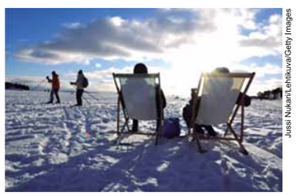
People enjoy sunny weather on the waterfront in Helsinki.
Finland was crowned the happiest country in the world for
the fifth consecutive year, with a score significantly ahead of its
peers in the World Happiness Report 2022 ranking, published
by a body linked to the United Nations. However, the authors
detected, on average, a long-term moderate upward trend in
stress, worry, and sadness in most countries, as well as “a
slight long-term decline in the enjoyment of life,” they wrote.
The report uses global survey data to report on how
people evaluate their own lives in more than 150 countries
around the world, with the ranking based on a three-year
average. Key variables that contribute to explaining people’s
life evaluations include healthy life expectancy, generosity,
social support, freedom to make life choices, perceptions of
corruption, and the gross domestic product per capita (an
indicator that measures a country’s economic output per
person, that is calculated by dividing the total gross domestic
product of a country by its population).
“World leaders should take heed,” Jeffrey Sachs, director
of the Center for Sustainable Development at Columbia
University, said. “Politics should be directed as the great
sages long ago insisted: to the well-being of the people, not
the power of the rulers.”
(Kati Pohjanpalo. www.bloomberg.com, 18.03.2022. Adaptado.)
According to the text, the World Happiness Report 2022
Q4204755
Inglês
Texto associado
Leia o texto para responder à questão.
World’s happiest ranking goes to
Finland for fifth year in a row
People enjoy sunny weather on the waterfront in Helsinki.
Finland was crowned the happiest country in the world for
the fifth consecutive year, with a score significantly ahead of its
peers in the World Happiness Report 2022 ranking, published
by a body linked to the United Nations. However, the authors
detected, on average, a long-term moderate upward trend in
stress, worry, and sadness in most countries, as well as “a
slight long-term decline in the enjoyment of life,” they wrote.
The report uses global survey data to report on how
people evaluate their own lives in more than 150 countries
around the world, with the ranking based on a three-year
average. Key variables that contribute to explaining people’s
life evaluations include healthy life expectancy, generosity,
social support, freedom to make life choices, perceptions of
corruption, and the gross domestic product per capita (an
indicator that measures a country’s economic output per
person, that is calculated by dividing the total gross domestic
product of a country by its population).
“World leaders should take heed,” Jeffrey Sachs, director
of the Center for Sustainable Development at Columbia
University, said. “Politics should be directed as the great
sages long ago insisted: to the well-being of the people, not
the power of the rulers.”
(Kati Pohjanpalo. www.bloomberg.com, 18.03.2022. Adaptado.)
De acordo com o texto, uma das variáveis que ajuda a interpretar as avaliações das pessoas sobre a sua própria vida é o
Q4204756
Inglês
Texto associado
Leia o texto para responder à questão.
World’s happiest ranking goes to
Finland for fifth year in a row
People enjoy sunny weather on the waterfront in Helsinki.
Finland was crowned the happiest country in the world for
the fifth consecutive year, with a score significantly ahead of its
peers in the World Happiness Report 2022 ranking, published
by a body linked to the United Nations. However, the authors
detected, on average, a long-term moderate upward trend in
stress, worry, and sadness in most countries, as well as “a
slight long-term decline in the enjoyment of life,” they wrote.
The report uses global survey data to report on how
people evaluate their own lives in more than 150 countries
around the world, with the ranking based on a three-year
average. Key variables that contribute to explaining people’s
life evaluations include healthy life expectancy, generosity,
social support, freedom to make life choices, perceptions of
corruption, and the gross domestic product per capita (an
indicator that measures a country’s economic output per
person, that is calculated by dividing the total gross domestic
product of a country by its population).
“World leaders should take heed,” Jeffrey Sachs, director
of the Center for Sustainable Development at Columbia
University, said. “Politics should be directed as the great
sages long ago insisted: to the well-being of the people, not
the power of the rulers.”
(Kati Pohjanpalo. www.bloomberg.com, 18.03.2022. Adaptado.)
No trecho do terceiro parágrafo ‘“World leaders should take
heed”’, a expressão sublinhada pode ser substituída, sem
alteração de sentido, por
Q4204757
Inglês

(https://boredpanda.com)
From the comic strip, one can say that happiness
Q4204758
Filosofia
No pensamento grego, tudo o que é “musical” se relaciona intimamente com o ritual, sobretudo com as festas, nas
quais, evidentemente, o ritual possui sua função específica.
Talvez não haja uma descrição mais lúcida das relações entre o ritual, a dança, a música e o jogo do que a das Leis
de Platão. Os deuses, diz ele, cheios de piedade pela raça
humana, condenada ao sofrimento, ordenaram que se realizassem as festas de ação de graças como descanso para
suas preocupações, e deram-lhes Apolo, as Musas e Dionísio
como companheiros dessas festas, a fim de que essa divina
comunidade festiva restabelecesse a ordem das coisas entre
os homens.
(Johan Huizinga. Homo ludens, 2007.)
O excerto, que aborda história e pensamento na Grécia Antiga, caracteriza
(Johan Huizinga. Homo ludens, 2007.)
O excerto, que aborda história e pensamento na Grécia Antiga, caracteriza
Q4204759
História
Durante a Idade Média na Europa Ocidental, as realizações
artísticas eram
Q4204760
História
O diabo parece ter sido estranho tanto para os tupis
do Brasil quanto aos nauas, maias, incas e demais povos
americanos. O cosmos maia era neutro, as forças e os seres sagrados “não eram nem bons, nem ruins, mas apenas
caprichosos”. [...] A cosmologia das populações andinas não
contava com a noção de mal personificada num ser satânico
[...].
(Laura de Mello e Souza. Inferno atlântico. Demonologia e colonização: Séculos XVI-XVIII, 1993.)
O excerto permite afirmar que
(Laura de Mello e Souza. Inferno atlântico. Demonologia e colonização: Séculos XVI-XVIII, 1993.)
O excerto permite afirmar que
Q4204761
História
Observe a imagem de Nossa Senhora do Rosário, produzida
na região das Minas Gerais no século XVIII.

(In: Lilia M. Schwarcz e Heloisa M. Starling. Brasil: uma biografia, 2018.)
Essa imagem revela uma prática que ocorria na região das Minas durante a exploração de minérios:
(In: Lilia M. Schwarcz e Heloisa M. Starling. Brasil: uma biografia, 2018.)
Essa imagem revela uma prática que ocorria na região das Minas durante a exploração de minérios:
Q4204762
História
Como jurisconsulto, não pretendo tratar da natureza da
servidão, nem da qualidade do domínio que o homem adquire sobre seu semelhante. Pretendo defender os nossos colonos da reprovação, que muitas pessoas, mais piedosas que
sábias, lhes fazem, afirmando que eles tratam cristãos como
escravos, comprando-os, vendendo-os e deles dispondo em
territórios regidos pelas leis da França, um país que abomina
a servidão acima de todas as nações do mundo. Todos os
escravos que desembarcam na França recuperam felizmente
a liberdade perdida.
(Jean-Baptiste Du Tertre. Apud: Rafael de Bivar Marquese. Feitores do corpo, missionários da mente: Senhores, letrados e o controle dos escravos nas Américas, 1660-1860, 2004. Adaptado.)
O excerto, publicado na década de 1660 por um padre dominicano após ter vivido quase duas décadas em colônias francesas na América,
(Jean-Baptiste Du Tertre. Apud: Rafael de Bivar Marquese. Feitores do corpo, missionários da mente: Senhores, letrados e o controle dos escravos nas Américas, 1660-1860, 2004. Adaptado.)
O excerto, publicado na década de 1660 por um padre dominicano após ter vivido quase duas décadas em colônias francesas na América,
Q4204763
História
[...] Foi sem dúvida entre os meses de janeiro e outubro
de 1822 que o Brasil, finalmente, se fez independente: isto
é, separou-se de Portugal. Nada garantia que essa independência seria duradoura, é verdade, mas foi entre esses meses que ela se concretizou, exigindo esforços posteriores de
consolidação; mas seriam antes esforços de reforço de algo
que já existia do que de criação abrupta de algo novo.
E o que, afinal, ocorreu no dia 7 de setembro de 1822? Um pequeno acontecimento que não foi imediatamente valorizado justamente por não ser de grande importância em comparação com os demais que tinham ocorrido e ainda ocorreriam naquele ano; mas que posteriormente se tornaria o principal marco da memória da Independência. Um marco da memória, e não da história.
(João Paulo Pimenta. Independência do Brasil, 2022.)
Ao tratar da Independência do Brasil em relação a Portugal, o excerto enfatiza
E o que, afinal, ocorreu no dia 7 de setembro de 1822? Um pequeno acontecimento que não foi imediatamente valorizado justamente por não ser de grande importância em comparação com os demais que tinham ocorrido e ainda ocorreriam naquele ano; mas que posteriormente se tornaria o principal marco da memória da Independência. Um marco da memória, e não da história.
(João Paulo Pimenta. Independência do Brasil, 2022.)
Ao tratar da Independência do Brasil em relação a Portugal, o excerto enfatiza
Q4204764
História
Muitos escravos e libertos recorriam aos orixás para
resolver diferentes tipos de problema. Aos poucos, a crença nos orixás foi se desenvolvendo e, no século XIX, deu
origem ao Candomblé. Essa religião era formada por “irmãos de fé”, pessoas que acreditavam nos orixás e que se
reuniam em torno de uma mesma casa ou terreiro. Nesse
espaço, que era comandado por uma mãe de santo ou um
pai de santo, além de realizar suas cerimônias religiosas,
entrar em contato com seus deuses e buscar respostas
por meio de jogos de adivinhação (como o jogo de búzios),
muitos escravos e libertos conseguiram formar outra família, família essa que muito se assemelhava com as grandes
linhagens existentes em diversas localidades africanas.
(Ynaê Lopes dos Santos. História da África e do Brasil afrodescendente, 2017.)
O texto caracteriza o Candomblé como
(Ynaê Lopes dos Santos. História da África e do Brasil afrodescendente, 2017.)
O texto caracteriza o Candomblé como
Q4204765
História
Observe o anúncio do sabonete Pears, difundido em 1887.

(In: Eric J. Hobsbawm. A era dos impérios: 1875-1914, 2008. Adaptado.)
O anúncio revela
(In: Eric J. Hobsbawm. A era dos impérios: 1875-1914, 2008. Adaptado.)
O anúncio revela
Q4204766
História
A Revolução Mexicana só pode ser entendida considerando-se as particularidades da sociedade mexicana dentro
de um processo global existente num determinado estágio do
desenvolvimento do capitalismo em nível mundial.
(Anna Maria Martinez Corrêa. A Revolução mexicana: 1910-1917, 1983.)
A afirmação do excerto justifica-se, pois a Revolução Mexicana de 1910 envolveu
(Anna Maria Martinez Corrêa. A Revolução mexicana: 1910-1917, 1983.)
A afirmação do excerto justifica-se, pois a Revolução Mexicana de 1910 envolveu
Q4204767
História
O final da Segunda Guerra Mundial em 1945 teve impacto
na política brasileira do período, porque expôs a contradição
entre

 Conheça nossos planos