Questões de Vestibular FCM/SANTA CASA 2022 para Vestibular
Foram encontradas 60 questões


Q4149979
Português
Examine a tirinha de Dik Browne, publicada na conta do
Instagram “Hagar, o Horrível”, em 22.06.2022.

Depreende-se da tirinha que
Depreende-se da tirinha que
Q4149980
Português
Texto associado
Leia a fábula “O cão convidado para jantar”, de Esopo, para
responder à questão.
Um homem preparava um jantar para receber à mesa um
amigo íntimo. E o cão dele chamou outro cão, dizendo: “Amigo, vem jantar aqui comigo.” Ele foi e, enquanto contemplava
feliz o grande jantar, exclamava intimamente: “Uau!, que alegria inesperada me apareceu bem agora! Vou me banquetear
à farta e comer tanto que amanhã não terei fome nenhuma!”
O cão dizia isso para si e, ao mesmo tempo, abanava o rabo,
confiante no amigo. Mas o cozinheiro, quando viu aquele
rabo se movimentando para lá e para cá, agarrou o cão pelas patas e, num átimo, o arremessou para fora, pela janela.
Após o baque, ele foi embora, ganindo muito. Então um dos
cães que toparam com ele no caminho perguntou: “Como foi
o jantar, amigo?” Ele respondeu: “Exagerei na bebida e fiquei
tão bêbado que nem mesmo sei por onde foi que eu saí.”
(Fábulas completas, 2013.)
Depreende-se da leitura da fábula a seguinte moral:
Q4149981
Português
Texto associado
Leia a fábula “O cão convidado para jantar”, de Esopo, para
responder à questão.
Um homem preparava um jantar para receber à mesa um
amigo íntimo. E o cão dele chamou outro cão, dizendo: “Amigo, vem jantar aqui comigo.” Ele foi e, enquanto contemplava
feliz o grande jantar, exclamava intimamente: “Uau!, que alegria inesperada me apareceu bem agora! Vou me banquetear
à farta e comer tanto que amanhã não terei fome nenhuma!”
O cão dizia isso para si e, ao mesmo tempo, abanava o rabo,
confiante no amigo. Mas o cozinheiro, quando viu aquele
rabo se movimentando para lá e para cá, agarrou o cão pelas patas e, num átimo, o arremessou para fora, pela janela.
Após o baque, ele foi embora, ganindo muito. Então um dos
cães que toparam com ele no caminho perguntou: “Como foi
o jantar, amigo?” Ele respondeu: “Exagerei na bebida e fiquei
tão bêbado que nem mesmo sei por onde foi que eu saí.”
(Fábulas completas, 2013.)
A resposta do cão acerca do jantar permite caracterizá-lo
como
Q4149982
Português
Texto associado
Leia a fábula “O cão convidado para jantar”, de Esopo, para
responder à questão.
Um homem preparava um jantar para receber à mesa um
amigo íntimo. E o cão dele chamou outro cão, dizendo: “Amigo, vem jantar aqui comigo.” Ele foi e, enquanto contemplava
feliz o grande jantar, exclamava intimamente: “Uau!, que alegria inesperada me apareceu bem agora! Vou me banquetear
à farta e comer tanto que amanhã não terei fome nenhuma!”
O cão dizia isso para si e, ao mesmo tempo, abanava o rabo,
confiante no amigo. Mas o cozinheiro, quando viu aquele
rabo se movimentando para lá e para cá, agarrou o cão pelas patas e, num átimo, o arremessou para fora, pela janela.
Após o baque, ele foi embora, ganindo muito. Então um dos
cães que toparam com ele no caminho perguntou: “Como foi
o jantar, amigo?” Ele respondeu: “Exagerei na bebida e fiquei
tão bêbado que nem mesmo sei por onde foi que eu saí.”
(Fábulas completas, 2013.)
Em “Ele foi e, enquanto contemplava feliz o grande jantar,
exclamava intimamente”, o termo sublinhado pode ser substituído, sem prejuízo para o sentido do texto, por:
Q4149983
Português
Texto associado
Leia a fábula “O cão convidado para jantar”, de Esopo, para
responder à questão.
Um homem preparava um jantar para receber à mesa um
amigo íntimo. E o cão dele chamou outro cão, dizendo: “Amigo, vem jantar aqui comigo.” Ele foi e, enquanto contemplava
feliz o grande jantar, exclamava intimamente: “Uau!, que alegria inesperada me apareceu bem agora! Vou me banquetear
à farta e comer tanto que amanhã não terei fome nenhuma!”
O cão dizia isso para si e, ao mesmo tempo, abanava o rabo,
confiante no amigo. Mas o cozinheiro, quando viu aquele
rabo se movimentando para lá e para cá, agarrou o cão pelas patas e, num átimo, o arremessou para fora, pela janela.
Após o baque, ele foi embora, ganindo muito. Então um dos
cães que toparam com ele no caminho perguntou: “Como foi
o jantar, amigo?” Ele respondeu: “Exagerei na bebida e fiquei
tão bêbado que nem mesmo sei por onde foi que eu saí.”
(Fábulas completas, 2013.)
Verifica-se o emprego de vírgula para separar um vocativo no
seguinte trecho:
Q4149984
Português
Texto associado
O silêncio e o ruído se opõem de maneira nítida e exclusiva. O ruído pode ser definido como uma série caótica de
sons, de choques. É nesse quadro que se opõe, por exemplo,
a suavidade dos campos silenciosos à dureza das cidades
ruidosas. O ruído é desagradável, violento. O silêncio, então,
marca uma ruptura: ele é ausência de ruídos. Opõe a um
caos sonoro uma superfície isolante branca que serve de anteparo. É a negação do ruído.
Evidentemente a relação que a música mantém com o
silêncio não é a mesma. O silêncio que precede a música
constitui sua preparação inicial, seu ponto de emergência,
talvez mesmo sua possibilidade pura. O silêncio que encerra
a música, o que vem imediatamente após a última nota, reúne nele a totalidade da melodia. Não é a negação da música,
mas sim uma vibração ideal em que deveria ressoar a totalidade acabada e reunida da melodia.
(Adauto Novaes (org.). Mutações: o silêncio
e a prosa do mundo, 2014. Adaptado.)
De acordo com o autor,
Q4149985
Português
Texto associado
O silêncio e o ruído se opõem de maneira nítida e exclusiva. O ruído pode ser definido como uma série caótica de
sons, de choques. É nesse quadro que se opõe, por exemplo,
a suavidade dos campos silenciosos à dureza das cidades
ruidosas. O ruído é desagradável, violento. O silêncio, então,
marca uma ruptura: ele é ausência de ruídos. Opõe a um
caos sonoro uma superfície isolante branca que serve de anteparo. É a negação do ruído.
Evidentemente a relação que a música mantém com o
silêncio não é a mesma. O silêncio que precede a música
constitui sua preparação inicial, seu ponto de emergência,
talvez mesmo sua possibilidade pura. O silêncio que encerra
a música, o que vem imediatamente após a última nota, reúne nele a totalidade da melodia. Não é a negação da música,
mas sim uma vibração ideal em que deveria ressoar a totalidade acabada e reunida da melodia.
(Adauto Novaes (org.). Mutações: o silêncio
e a prosa do mundo, 2014. Adaptado.)
O termo que qualifica o substantivo na expressão “última
nota” (2º parágrafo) tem sentido oposto ao termo que qualifica o substantivo em
Q4149986
Português
Texto associado
O silêncio e o ruído se opõem de maneira nítida e exclusiva. O ruído pode ser definido como uma série caótica de
sons, de choques. É nesse quadro que se opõe, por exemplo,
a suavidade dos campos silenciosos à dureza das cidades
ruidosas. O ruído é desagradável, violento. O silêncio, então,
marca uma ruptura: ele é ausência de ruídos. Opõe a um
caos sonoro uma superfície isolante branca que serve de anteparo. É a negação do ruído.
Evidentemente a relação que a música mantém com o
silêncio não é a mesma. O silêncio que precede a música
constitui sua preparação inicial, seu ponto de emergência,
talvez mesmo sua possibilidade pura. O silêncio que encerra
a música, o que vem imediatamente após a última nota, reúne nele a totalidade da melodia. Não é a negação da música,
mas sim uma vibração ideal em que deveria ressoar a totalidade acabada e reunida da melodia.
(Adauto Novaes (org.). Mutações: o silêncio
e a prosa do mundo, 2014. Adaptado.)
Em “Não é a negação da música, mas sim uma vibração ideal
em que deveria ressoar a totalidade acabada e reunida da
melodia.” (2º parágrafo), o pronome sublinhado refere-se a
Q4149987
Português
Texto associado
O silêncio e o ruído se opõem de maneira nítida e exclusiva. O ruído pode ser definido como uma série caótica de
sons, de choques. É nesse quadro que se opõe, por exemplo,
a suavidade dos campos silenciosos à dureza das cidades
ruidosas. O ruído é desagradável, violento. O silêncio, então,
marca uma ruptura: ele é ausência de ruídos. Opõe a um
caos sonoro uma superfície isolante branca que serve de anteparo. É a negação do ruído.
Evidentemente a relação que a música mantém com o
silêncio não é a mesma. O silêncio que precede a música
constitui sua preparação inicial, seu ponto de emergência,
talvez mesmo sua possibilidade pura. O silêncio que encerra
a música, o que vem imediatamente após a última nota, reúne nele a totalidade da melodia. Não é a negação da música,
mas sim uma vibração ideal em que deveria ressoar a totalidade acabada e reunida da melodia.
(Adauto Novaes (org.). Mutações: o silêncio
e a prosa do mundo, 2014. Adaptado.)
Pertence ao grupo das classes de palavras invariáveis o termo sublinhado em:
Q4149988
Literatura
Tal escritor acreditava no conhecimento puramente intuitivo e subjetivo da realidade. Procurava a expressão direta e
espontânea dos sentimentos. Sua imaginação criadora era
capaz de construir mundos ideais, maravilhosos ou fantásticos. Não havia limites para a sua sensibilidade e imaginação.
(Benjamin Abdala Junior e Samira Youssef Campedelli. Tempos da literatura brasileira, 1997. Adaptado.)
O texto refere-se ao escritor
(Benjamin Abdala Junior e Samira Youssef Campedelli. Tempos da literatura brasileira, 1997. Adaptado.)
O texto refere-se ao escritor
Q4149989
Inglês
Texto associado
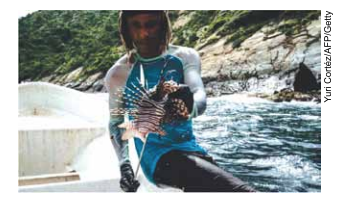
Aarav Chavda has been diving off the coast of Florida
for years. Each time he became increasingly depressed by
the ever-growing empty spaces, as colourful species of fish
and coral reefs continued to disappear. A significant reason
for that disappearance is the lionfish, an invasive species that
has boomed in Atlantic waters from Florida to the Caribbean
in recent decades, and in numerous other places from Brazil
and Mexico to the Mediterranean.
Lionfish have no natural predators outside their native
range — in the Indian and Pacific Oceans and the Red Sea —
and are all-consuming, devouring an estimated 79% of young
marine life within five weeks of entering a coral reef system.
“You can see the impacts on the reefs when you dive now
— it’s less vibrant, it’s less noisy,” Chavda said. “We know
there are solutions for some of the problems — such as coral-
-friendly sunscreens to help protect the reefs — but nobody’s
been able to do anything about the lionfish.”
So Chavda and a team of ecologically aware fellow
scuba enthusiasts decided to act by establishing a company
called Inversa, which turns lionfish into a new product: fish
leather. Chavda, 27, and his childhood friend from Texas,
Roland Salatino, set up the Florida-based company to make
the leather. They process the fish hides1
by tanning them
with drying agents and dye them before selling the leather to
partner companies to fashion into high-end products including
wallets, belts and handbags. Fish skin is thin but, because
the fibre structure runs crossways, it is stronger than many
other types of leather. Each hide, Chavda says, can save up
to 70,000 native reef fish.
The hides are also more sustainable than traditional
animal leathers, which generally require grazing on huge
amounts of pasture — degrading soils and producing high
carbon emissions. Inversa does not hunt the lionfish itself.
Instead, it relies on educating and encouraging largely poor
fishermen and women in often remote places to catch them.
“We’re really sort of empowering the consumer and fashion
by doing something for the planet — then we empower dive
communities in fishing cooperatives to do something for
themselves,” Chavda said.
(Richard Luscombe. www.theguardian.com, 12.06.2022. Adaptado.)
1
hide: an animal’s skin used to make leather
The text is mainly about
Q4149990
Inglês
Texto associado
Aarav Chavda has been diving off the coast of Florida
for years. Each time he became increasingly depressed by
the ever-growing empty spaces, as colourful species of fish
and coral reefs continued to disappear. A significant reason
for that disappearance is the lionfish, an invasive species that
has boomed in Atlantic waters from Florida to the Caribbean
in recent decades, and in numerous other places from Brazil
and Mexico to the Mediterranean.
Lionfish have no natural predators outside their native
range — in the Indian and Pacific Oceans and the Red Sea —
and are all-consuming, devouring an estimated 79% of young
marine life within five weeks of entering a coral reef system.
“You can see the impacts on the reefs when you dive now
— it’s less vibrant, it’s less noisy,” Chavda said. “We know
there are solutions for some of the problems — such as coral-
-friendly sunscreens to help protect the reefs — but nobody’s
been able to do anything about the lionfish.”
So Chavda and a team of ecologically aware fellow
scuba enthusiasts decided to act by establishing a company
called Inversa, which turns lionfish into a new product: fish
leather. Chavda, 27, and his childhood friend from Texas,
Roland Salatino, set up the Florida-based company to make
the leather. They process the fish hides1
by tanning them
with drying agents and dye them before selling the leather to
partner companies to fashion into high-end products including
wallets, belts and handbags. Fish skin is thin but, because
the fibre structure runs crossways, it is stronger than many
other types of leather. Each hide, Chavda says, can save up
to 70,000 native reef fish.
The hides are also more sustainable than traditional
animal leathers, which generally require grazing on huge
amounts of pasture — degrading soils and producing high
carbon emissions. Inversa does not hunt the lionfish itself.
Instead, it relies on educating and encouraging largely poor
fishermen and women in often remote places to catch them.
“We’re really sort of empowering the consumer and fashion
by doing something for the planet — then we empower dive
communities in fishing cooperatives to do something for
themselves,” Chavda said.
(Richard Luscombe. www.theguardian.com, 12.06.2022. Adaptado.)
1
hide: an animal’s skin used to make leather
A expressão “such as”, no trecho do segundo parágrafo “such
as coral-friendly sunscreens”, foi utilizada para introduzir
Q4149991
Inglês
Texto associado
Aarav Chavda has been diving off the coast of Florida
for years. Each time he became increasingly depressed by
the ever-growing empty spaces, as colourful species of fish
and coral reefs continued to disappear. A significant reason
for that disappearance is the lionfish, an invasive species that
has boomed in Atlantic waters from Florida to the Caribbean
in recent decades, and in numerous other places from Brazil
and Mexico to the Mediterranean.
Lionfish have no natural predators outside their native
range — in the Indian and Pacific Oceans and the Red Sea —
and are all-consuming, devouring an estimated 79% of young
marine life within five weeks of entering a coral reef system.
“You can see the impacts on the reefs when you dive now
— it’s less vibrant, it’s less noisy,” Chavda said. “We know
there are solutions for some of the problems — such as coral-
-friendly sunscreens to help protect the reefs — but nobody’s
been able to do anything about the lionfish.”
So Chavda and a team of ecologically aware fellow
scuba enthusiasts decided to act by establishing a company
called Inversa, which turns lionfish into a new product: fish
leather. Chavda, 27, and his childhood friend from Texas,
Roland Salatino, set up the Florida-based company to make
the leather. They process the fish hides1
by tanning them
with drying agents and dye them before selling the leather to
partner companies to fashion into high-end products including
wallets, belts and handbags. Fish skin is thin but, because
the fibre structure runs crossways, it is stronger than many
other types of leather. Each hide, Chavda says, can save up
to 70,000 native reef fish.
The hides are also more sustainable than traditional
animal leathers, which generally require grazing on huge
amounts of pasture — degrading soils and producing high
carbon emissions. Inversa does not hunt the lionfish itself.
Instead, it relies on educating and encouraging largely poor
fishermen and women in often remote places to catch them.
“We’re really sort of empowering the consumer and fashion
by doing something for the planet — then we empower dive
communities in fishing cooperatives to do something for
themselves,” Chavda said.
(Richard Luscombe. www.theguardian.com, 12.06.2022. Adaptado.)
1
hide: an animal’s skin used to make leather
De acordo com o texto,
Q4149992
Inglês
Texto associado
Aarav Chavda has been diving off the coast of Florida
for years. Each time he became increasingly depressed by
the ever-growing empty spaces, as colourful species of fish
and coral reefs continued to disappear. A significant reason
for that disappearance is the lionfish, an invasive species that
has boomed in Atlantic waters from Florida to the Caribbean
in recent decades, and in numerous other places from Brazil
and Mexico to the Mediterranean.
Lionfish have no natural predators outside their native
range — in the Indian and Pacific Oceans and the Red Sea —
and are all-consuming, devouring an estimated 79% of young
marine life within five weeks of entering a coral reef system.
“You can see the impacts on the reefs when you dive now
— it’s less vibrant, it’s less noisy,” Chavda said. “We know
there are solutions for some of the problems — such as coral-
-friendly sunscreens to help protect the reefs — but nobody’s
been able to do anything about the lionfish.”
So Chavda and a team of ecologically aware fellow
scuba enthusiasts decided to act by establishing a company
called Inversa, which turns lionfish into a new product: fish
leather. Chavda, 27, and his childhood friend from Texas,
Roland Salatino, set up the Florida-based company to make
the leather. They process the fish hides1
by tanning them
with drying agents and dye them before selling the leather to
partner companies to fashion into high-end products including
wallets, belts and handbags. Fish skin is thin but, because
the fibre structure runs crossways, it is stronger than many
other types of leather. Each hide, Chavda says, can save up
to 70,000 native reef fish.
The hides are also more sustainable than traditional
animal leathers, which generally require grazing on huge
amounts of pasture — degrading soils and producing high
carbon emissions. Inversa does not hunt the lionfish itself.
Instead, it relies on educating and encouraging largely poor
fishermen and women in often remote places to catch them.
“We’re really sort of empowering the consumer and fashion
by doing something for the planet — then we empower dive
communities in fishing cooperatives to do something for
themselves,” Chavda said.
(Richard Luscombe. www.theguardian.com, 12.06.2022. Adaptado.)
1
hide: an animal’s skin used to make leather
No trecho do terceiro parágrafo “and dye them before selling the
leather to partner companies”, o termo sublinhado refere-se a
Q4149993
Inglês
Texto associado
Aarav Chavda has been diving off the coast of Florida
for years. Each time he became increasingly depressed by
the ever-growing empty spaces, as colourful species of fish
and coral reefs continued to disappear. A significant reason
for that disappearance is the lionfish, an invasive species that
has boomed in Atlantic waters from Florida to the Caribbean
in recent decades, and in numerous other places from Brazil
and Mexico to the Mediterranean.
Lionfish have no natural predators outside their native
range — in the Indian and Pacific Oceans and the Red Sea —
and are all-consuming, devouring an estimated 79% of young
marine life within five weeks of entering a coral reef system.
“You can see the impacts on the reefs when you dive now
— it’s less vibrant, it’s less noisy,” Chavda said. “We know
there are solutions for some of the problems — such as coral-
-friendly sunscreens to help protect the reefs — but nobody’s
been able to do anything about the lionfish.”
So Chavda and a team of ecologically aware fellow
scuba enthusiasts decided to act by establishing a company
called Inversa, which turns lionfish into a new product: fish
leather. Chavda, 27, and his childhood friend from Texas,
Roland Salatino, set up the Florida-based company to make
the leather. They process the fish hides1
by tanning them
with drying agents and dye them before selling the leather to
partner companies to fashion into high-end products including
wallets, belts and handbags. Fish skin is thin but, because
the fibre structure runs crossways, it is stronger than many
other types of leather. Each hide, Chavda says, can save up
to 70,000 native reef fish.
The hides are also more sustainable than traditional
animal leathers, which generally require grazing on huge
amounts of pasture — degrading soils and producing high
carbon emissions. Inversa does not hunt the lionfish itself.
Instead, it relies on educating and encouraging largely poor
fishermen and women in often remote places to catch them.
“We’re really sort of empowering the consumer and fashion
by doing something for the planet — then we empower dive
communities in fishing cooperatives to do something for
themselves,” Chavda said.
(Richard Luscombe. www.theguardian.com, 12.06.2022. Adaptado.)
1
hide: an animal’s skin used to make leather
No trecho do quarto parágrafo “Instead, it relies on educating
and encouraging largely poor fishermen and women”, o termo
“instead” equivale, em português, a
Q4149994
Inglês
Texto associado
Aarav Chavda has been diving off the coast of Florida
for years. Each time he became increasingly depressed by
the ever-growing empty spaces, as colourful species of fish
and coral reefs continued to disappear. A significant reason
for that disappearance is the lionfish, an invasive species that
has boomed in Atlantic waters from Florida to the Caribbean
in recent decades, and in numerous other places from Brazil
and Mexico to the Mediterranean.
Lionfish have no natural predators outside their native
range — in the Indian and Pacific Oceans and the Red Sea —
and are all-consuming, devouring an estimated 79% of young
marine life within five weeks of entering a coral reef system.
“You can see the impacts on the reefs when you dive now
— it’s less vibrant, it’s less noisy,” Chavda said. “We know
there are solutions for some of the problems — such as coral-
-friendly sunscreens to help protect the reefs — but nobody’s
been able to do anything about the lionfish.”
So Chavda and a team of ecologically aware fellow
scuba enthusiasts decided to act by establishing a company
called Inversa, which turns lionfish into a new product: fish
leather. Chavda, 27, and his childhood friend from Texas,
Roland Salatino, set up the Florida-based company to make
the leather. They process the fish hides1
by tanning them
with drying agents and dye them before selling the leather to
partner companies to fashion into high-end products including
wallets, belts and handbags. Fish skin is thin but, because
the fibre structure runs crossways, it is stronger than many
other types of leather. Each hide, Chavda says, can save up
to 70,000 native reef fish.
The hides are also more sustainable than traditional
animal leathers, which generally require grazing on huge
amounts of pasture — degrading soils and producing high
carbon emissions. Inversa does not hunt the lionfish itself.
Instead, it relies on educating and encouraging largely poor
fishermen and women in often remote places to catch them.
“We’re really sort of empowering the consumer and fashion
by doing something for the planet — then we empower dive
communities in fishing cooperatives to do something for
themselves,” Chavda said.
(Richard Luscombe. www.theguardian.com, 12.06.2022. Adaptado.)
1
hide: an animal’s skin used to make leather
No trecho do quarto parágrafo “‘We’re really sort of
empowering the consumer and fashion’”, a expressão
sublinhada significa, no contexto em questão,
Q4149995
História
É bárbaro, segundo a etimologia da palavra (com a repetição da sequência barbar, de forma onomatopaica), quem
tem dificuldades de elocução, de pronunciação, quem gagueja, quem tem uma fala entrecortada.
(François Hartog. Memórias de Ulisses: narrativas sobre a fronteira na Grécia antiga, 2004.)
Essa definição era utilizada com a finalidade de
(François Hartog. Memórias de Ulisses: narrativas sobre a fronteira na Grécia antiga, 2004.)
Essa definição era utilizada com a finalidade de
Q4149996
História
Texto associado
O “Império Português”, no século XVIII, compreende os
territórios metropolitanos e os domínios ultramarinos, uma
“área semiperiférica” que constitui um dos vários “subsistemas” do “Sistema Mundial Moderno”, capitalista e europeu.
No interior desse subsistema destaca-se o espaço luso-atlântico, por sua riqueza e dinamismo econômicos, envolvendo
as relações de Portugal com a América portuguesa e as feitorias situadas no litoral africano. As articulações das diversas
áreas desse espaço constituem o essencial da estrutura e
dinâmica do “Antigo Sistema Colonial”.
(Francisco Calazans Falcon. “Pombal e o Brasil”.
In: José Mattoso, José Tengarrinha (orgs.). História de Portugal, 2001.)
No século XVIII, o sistema capitalista moderno europeu iniciava uma fase de grande dinamismo socioeconômico. Tal
fato deveu-se
Q4149997
História
Texto associado
O “Império Português”, no século XVIII, compreende os
territórios metropolitanos e os domínios ultramarinos, uma
“área semiperiférica” que constitui um dos vários “subsistemas” do “Sistema Mundial Moderno”, capitalista e europeu.
No interior desse subsistema destaca-se o espaço luso-atlântico, por sua riqueza e dinamismo econômicos, envolvendo
as relações de Portugal com a América portuguesa e as feitorias situadas no litoral africano. As articulações das diversas
áreas desse espaço constituem o essencial da estrutura e
dinâmica do “Antigo Sistema Colonial”.
(Francisco Calazans Falcon. “Pombal e o Brasil”.
In: José Mattoso, José Tengarrinha (orgs.). História de Portugal, 2001.)
O excerto refere-se às relações luso-atlânticas do Império
português, que envolviam
Q4149998
História
Observe a caricatura publicada na imprensa do Rio de Janeiro em 1904.
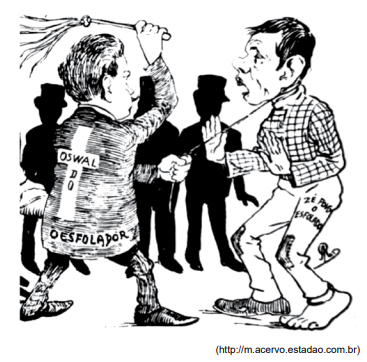
A caricatura representa a aplicação de medidas de combate às doenças na cidade do Rio de Janeiro como

 Conheça nossos planos