Questões de Vestibular FAME 2025 para Vestibular - Segundo Semestre - Medicina
Foram encontradas 45 questões


INSTRUÇÃO: Leia o texto a seguir para responder à questão.
Mudança climática e a necessidade de diálogo intergeracional
Estamos planejando o futuro olhando para o retrovisor. A crise climática gerou uma nova situação para toda a humanidade que não poderá ser resolvida com soluções antigas. Mesmo após diversas conferências sobre o clima, desde a Eco 92 até a COP30, […] os países tendem a concordar que são necessárias ações urgentes para combater a mudança climática e definem metas de redução da emissão de gases de efeito estufa, mas, na prática, o problema apenas se agrava. Por que isso ocorre?
A incoerência entre o discurso de transição energética e a efetiva ação repousa no modelo tradicional baseado em crescimento econômico. Apesar de os países concordarem que reduzir, reutilizar e reciclar são aspectos fundamentais, na prática tal atitude desacelera a economia. Logo, não é colocada em prática de forma efetiva.
O paradigma dos governantes mundiais, tanto os atuais quanto os das últimas décadas, visa estimular o consumo como forma de gerar mais empregos, o que é um raciocínio válido. Porém, não leva em consideração o impacto ao meio ambiente. Você é estimulado a consumir, descartar e, então, consumir novamente.
As novas gerações, entretanto, têm uma consciência ambiental muito mais aflorada. Eles cresceram ouvindo falar das mudanças climáticas, estudaram na escola formas de economizar energia e, agora, estão sentindo na pele os efeitos das ondas de calor que assolam o país. A moderação ganha muito mais valor para essas pessoas do que o estímulo ao consumismo desenfreado. O lema “lucro acima de tudo” não tem eco entre elas.
Para vencer essas dicotomias, a economia, como a conhecemos, precisa se reinventar. Na verdade, precisa circular. Um exemplo bem próximo dos consumidores é a importância da reciclagem, que gera um promissor mercado com receita e novos empregos, além de reduzir o lixo produzido pelas cidades. A coleta seletiva e os processos de triagem do lixo devem ser estimulados e aprimorados. Produtos reciclados devem ganhar mais espaço na economia do que produtos que utilizam matéria‑prima nova em sua fabricação.
SHAYANI, Rafael Amaral. Mudança climática e a necessidade de diálogo intergeracional. Correio Braziliense. Disponível em: https://www.correiobraziliense.com.br/opiniao/2025/02/7067391mudanca-climatica-e-a-necessidade-de-dialogo-intergeracional. html. Acesso em: 28 fev. 2025. [Fragmento]
INSTRUÇÃO: Leia o texto a seguir para responder à questão.
Mudança climática e a necessidade de diálogo intergeracional
Estamos planejando o futuro olhando para o retrovisor. A crise climática gerou uma nova situação para toda a humanidade que não poderá ser resolvida com soluções antigas. Mesmo após diversas conferências sobre o clima, desde a Eco 92 até a COP30, […] os países tendem a concordar que são necessárias ações urgentes para combater a mudança climática e definem metas de redução da emissão de gases de efeito estufa, mas, na prática, o problema apenas se agrava. Por que isso ocorre?
A incoerência entre o discurso de transição energética e a efetiva ação repousa no modelo tradicional baseado em crescimento econômico. Apesar de os países concordarem que reduzir, reutilizar e reciclar são aspectos fundamentais, na prática tal atitude desacelera a economia. Logo, não é colocada em prática de forma efetiva.
O paradigma dos governantes mundiais, tanto os atuais quanto os das últimas décadas, visa estimular o consumo como forma de gerar mais empregos, o que é um raciocínio válido. Porém, não leva em consideração o impacto ao meio ambiente. Você é estimulado a consumir, descartar e, então, consumir novamente.
As novas gerações, entretanto, têm uma consciência ambiental muito mais aflorada. Eles cresceram ouvindo falar das mudanças climáticas, estudaram na escola formas de economizar energia e, agora, estão sentindo na pele os efeitos das ondas de calor que assolam o país. A moderação ganha muito mais valor para essas pessoas do que o estímulo ao consumismo desenfreado. O lema “lucro acima de tudo” não tem eco entre elas.
Para vencer essas dicotomias, a economia, como a conhecemos, precisa se reinventar. Na verdade, precisa circular. Um exemplo bem próximo dos consumidores é a importância da reciclagem, que gera um promissor mercado com receita e novos empregos, além de reduzir o lixo produzido pelas cidades. A coleta seletiva e os processos de triagem do lixo devem ser estimulados e aprimorados. Produtos reciclados devem ganhar mais espaço na economia do que produtos que utilizam matéria‑prima nova em sua fabricação.
SHAYANI, Rafael Amaral. Mudança climática e a necessidade de diálogo intergeracional. Correio Braziliense. Disponível em: https://www.correiobraziliense.com.br/opiniao/2025/02/7067391mudanca-climatica-e-a-necessidade-de-dialogo-intergeracional. html. Acesso em: 28 fev. 2025. [Fragmento]

Disponível em: https://mucuri.ba.gov.br/acontece-neste-sabado-20-o-dia-d-da-campanha-nacionalde-vacinacao-contra-a-poliomielite-e-multivacinacao/. Acesso em: 25 fev. 2025.
A partir da escolha vocabular do cartaz, infere‑se que essa campanha busca
INSTRUÇÃO: Leia o texto a seguir para responder à questão.
‘A Geração Ansiosa’ e a nova caverna de Platão
Vício da geração Z, internet e as redes sociais são catalisadores para uma infância cada vez mais ansiosa, solitária e fragilizada
Onde brincam as crianças? [“Where do the children play?”] perguntava‑se Cat Stevens, no rescaldo da contracultura, numa canção belíssima de crítica ao desenvolvimento técnico e ao crescimento econômico desenfreado. Entre muitas outras coisas, os versos de Stevens aludiam ao fuzuê urbano e à falta de espaço nas cidades. O tempo respondeu à pergunta de Stevens de maneira inusitada: elas brincam em seus celulares.
[...]
LEITE, J. G. P. ‘A Geração Ansiosa’ e a nova caverna de Platão. Carta Capital. Disponível em: https://www.cartacapital. com.br/opiniao/a-geracao-ansiosa-e-a-nova-caverna-de-platao/. Acesso em: 20 fev. 2025. [Fragmento]
INSTRUÇÃO: Leia o texto a seguir para responder à questão.
‘A Geração Ansiosa’ e a nova caverna de Platão
Vício da geração Z, internet e as redes sociais são catalisadores para uma infância cada vez mais ansiosa, solitária e fragilizada
Onde brincam as crianças? [“Where do the children play?”] perguntava‑se Cat Stevens, no rescaldo da contracultura, numa canção belíssima de crítica ao desenvolvimento técnico e ao crescimento econômico desenfreado. Entre muitas outras coisas, os versos de Stevens aludiam ao fuzuê urbano e à falta de espaço nas cidades. O tempo respondeu à pergunta de Stevens de maneira inusitada: elas brincam em seus celulares.
[...]
LEITE, J. G. P. ‘A Geração Ansiosa’ e a nova caverna de Platão. Carta Capital. Disponível em: https://www.cartacapital. com.br/opiniao/a-geracao-ansiosa-e-a-nova-caverna-de-platao/. Acesso em: 20 fev. 2025. [Fragmento]
INSTRUÇÃO: Leia o texto a seguir para responder à questão.

BECK, Alexandre. Armandinho. Disponível em: https://tirasarmandinho.tumblr.com/post/163405308014/tirinha-original. Acesso em: 25 fev. 2025.
Releia o trecho a seguir:
“A gente procura por boas notícias...”
Assinale a alternativa em que a palavra em destaque tem, no contexto apresentado, a mesma classificação morfológica daquela em destaque no trecho acima.
INSTRUÇÃO: Leia o texto a seguir para responder à questão.
BECK, Alexandre. Armandinho. Disponível em: https://tirasarmandinho.tumblr.com/post/163405308014/tirinha-original. Acesso em: 25 fev. 2025.

Disponível em: https://blogdoaftm.com.br/chargemudancas-climaticas-6/. Acesso em: 25 fev. 2025.
Na fala do personagem, a segunda oração é classificada como coordenada
INSTRUÇÃO: Leia o texto a seguir para responder à questão.
Poética
Estou farto do lirismo comedido
Do lirismo bem comportado
Do lirismo funcionário público com livro de ponto expediente protocolo e manifestações de apreço ao Sr. Diretor.
Estou farto do lirismo que para e vai averiguar no dicionário o cunho vernáculo de um vocábulo.
Abaixo os puristas
[…]
Quero antes o lirismo dos loucos
O lirismo dos bêbados
O lirismo difícil e pungente dos bêbedos
O lirismo dos clowns de Shakespeare
– Não quero mais saber do lirismo que não é libertação.
BANDEIRA, Manuel. Poética. Disponível em: https://www. ufrgs.br/enunciarcotidianos/2017/04/11/poetica-manuelbandeira/. Acesso em: 25 fev. 2025. [Fragmento]
Nessa construção poética de Manuel Bandeira, o recurso metalinguístico revela‑se na
INSTRUÇÃO: Leia o texto a seguir para responder à questão.
Poética
Estou farto do lirismo comedido
Do lirismo bem comportado
Do lirismo funcionário público com livro de ponto expediente protocolo e manifestações de apreço ao Sr. Diretor.
Estou farto do lirismo que para e vai averiguar no dicionário o cunho vernáculo de um vocábulo.
Abaixo os puristas
[…]
Quero antes o lirismo dos loucos
O lirismo dos bêbados
O lirismo difícil e pungente dos bêbedos
O lirismo dos clowns de Shakespeare
– Não quero mais saber do lirismo que não é libertação.
BANDEIRA, Manuel. Poética. Disponível em: https://www. ufrgs.br/enunciarcotidianos/2017/04/11/poetica-manuelbandeira/. Acesso em: 25 fev. 2025. [Fragmento]
Abstract
Learning and memory happen because of a special brain process called Hebbian plasticity. This process makes the connections between brain cells, called neurons, stronger when the neurons work together. These stronger connections help us think, learn new skills, and remember things. Scientists are studying how Hebbian plasticity works and using tools like transcranial magnetic stimulation (TMS) to change these brain cell connections without the need for surgery. By understanding Hebbian plasticity, researchers hope to find better ways to help people learn, improve memory, and even treat brain‑related problems like depression or memory loss.
Available at: https://kids.frontiersin.org/articles/10.3389/ frym.2025.1425512. Accessed on: March 1st, 2025.
A potential application of understanding Hebbian plasticity, described in the abstract, is
INSTRUCTION: Read the following text to answer the question.
Neuroplasticity: How the brain changes with learning
You cannot learn something without storing it in some form of memory for future use. From neuroscience, we know that memories are encoded by physical changes in the brain. In other words, your brain changes physically whenever you learn anything, and your brain continues to be moulded by experience and learning throughout your life.
Executive summary
• Your brain is never fixed but continues to change with learning and experience throughout your life.
• Most learning in the brain involves rewiring or making and strengthening connections between neurons, the cells of your brain most crucial for learning.
• In most regions of the brain, the only neurons you will have throughout all of your life are already present at birth. Your brain does continue to grow new neurons in at least one very small but potentially important area for learning, but this is very new research and the role of these new neurons for learning is not yet known.
• Neuroplasticity is important for all learning – much of the neuroscience research on neuroplasticity is related to how the brain recovers from injury or damage – but some of the same principles apply to how the brain changes with learning throughout all of life.
Learning and memory and changes in the brain
Let us start with a simple logical argument, to dispel myths and show that logically, of course, your brain is changing with learning:
Learning and memory are necessarily closely linked. You cannot learn something without storing it in some form of memory for use in the future, either for recall as new knowledge or improvement in skills. From neuroscience, we know that memories are encoded by physical changes in the brain (although we still debate exactly what it is that changes and how). Your brain therefore changes physically whenever anything is learnt, and so your experiences and learning throughout all of life change and mould your brain.
There is a common brain myth or popular perception that the brain becomes fully developed sometime in early childhood, implying that nothing further changes, and that further changes in the brain with development in childhood and adolescence are somehow biologically determined, leading to a fully developed state at adulthood.
In reality, the way your brain develops is determined both by your genetics and by your learning and experiences. Biological does not mean predetermined. Your brain is shaped by your experiences and is never fixed but continues to change along with learning across the lifespan.
Available at: https://solportal.ibe-unesco.org/articles/neuroplasticityhow-the-brain-changes-with-learning/. Accessed on: March 1st, 2025.
INSTRUCTION: Read the following text to answer the question.
Neuroplasticity: How the brain changes with learning
You cannot learn something without storing it in some form of memory for future use. From neuroscience, we know that memories are encoded by physical changes in the brain. In other words, your brain changes physically whenever you learn anything, and your brain continues to be moulded by experience and learning throughout your life.
Executive summary
• Your brain is never fixed but continues to change with learning and experience throughout your life.
• Most learning in the brain involves rewiring or making and strengthening connections between neurons, the cells of your brain most crucial for learning.
• In most regions of the brain, the only neurons you will have throughout all of your life are already present at birth. Your brain does continue to grow new neurons in at least one very small but potentially important area for learning, but this is very new research and the role of these new neurons for learning is not yet known.
• Neuroplasticity is important for all learning – much of the neuroscience research on neuroplasticity is related to how the brain recovers from injury or damage – but some of the same principles apply to how the brain changes with learning throughout all of life.
Learning and memory and changes in the brain
Let us start with a simple logical argument, to dispel myths and show that logically, of course, your brain is changing with learning:
Learning and memory are necessarily closely linked. You cannot learn something without storing it in some form of memory for use in the future, either for recall as new knowledge or improvement in skills. From neuroscience, we know that memories are encoded by physical changes in the brain (although we still debate exactly what it is that changes and how). Your brain therefore changes physically whenever anything is learnt, and so your experiences and learning throughout all of life change and mould your brain.
There is a common brain myth or popular perception that the brain becomes fully developed sometime in early childhood, implying that nothing further changes, and that further changes in the brain with development in childhood and adolescence are somehow biologically determined, leading to a fully developed state at adulthood.
In reality, the way your brain develops is determined both by your genetics and by your learning and experiences. Biological does not mean predetermined. Your brain is shaped by your experiences and is never fixed but continues to change along with learning across the lifespan.
Available at: https://solportal.ibe-unesco.org/articles/neuroplasticityhow-the-brain-changes-with-learning/. Accessed on: March 1st, 2025.
INSTRUCTION: Read the following text to answer the question.
Neuroplasticity: How the brain changes with learning
You cannot learn something without storing it in some form of memory for future use. From neuroscience, we know that memories are encoded by physical changes in the brain. In other words, your brain changes physically whenever you learn anything, and your brain continues to be moulded by experience and learning throughout your life.
Executive summary
• Your brain is never fixed but continues to change with learning and experience throughout your life.
• Most learning in the brain involves rewiring or making and strengthening connections between neurons, the cells of your brain most crucial for learning.
• In most regions of the brain, the only neurons you will have throughout all of your life are already present at birth. Your brain does continue to grow new neurons in at least one very small but potentially important area for learning, but this is very new research and the role of these new neurons for learning is not yet known.
• Neuroplasticity is important for all learning – much of the neuroscience research on neuroplasticity is related to how the brain recovers from injury or damage – but some of the same principles apply to how the brain changes with learning throughout all of life.
Learning and memory and changes in the brain
Let us start with a simple logical argument, to dispel myths and show that logically, of course, your brain is changing with learning:
Learning and memory are necessarily closely linked. You cannot learn something without storing it in some form of memory for use in the future, either for recall as new knowledge or improvement in skills. From neuroscience, we know that memories are encoded by physical changes in the brain (although we still debate exactly what it is that changes and how). Your brain therefore changes physically whenever anything is learnt, and so your experiences and learning throughout all of life change and mould your brain.
There is a common brain myth or popular perception that the brain becomes fully developed sometime in early childhood, implying that nothing further changes, and that further changes in the brain with development in childhood and adolescence are somehow biologically determined, leading to a fully developed state at adulthood.
In reality, the way your brain develops is determined both by your genetics and by your learning and experiences. Biological does not mean predetermined. Your brain is shaped by your experiences and is never fixed but continues to change along with learning across the lifespan.
Available at: https://solportal.ibe-unesco.org/articles/neuroplasticityhow-the-brain-changes-with-learning/. Accessed on: March 1st, 2025.
Hebbian Plasticity and Mental Health
Hebbian plasticity is not just about learning new skills like riding a bike — it also helps your brain stay healthy. In some conditions, such as depression or post‑traumatic stress disorder (PTSD), the problematic symptoms can be caused by the poor function of certain brain connections. Imagine if the pathways between important parts of your brain were weak or broken. When brain pathways are weak, it can be harder to think clearly, concentrate, or feel happy. When a person experiences stress or trauma, Hebbian plasticity can also accidentally strengthen harmful connections. This happens because the brain is trying to protect itself, but sometimes it ends up strengthening neural pathways that make a person more vulnerable to negative emotions or stress responses. Fortunately, learning how to strengthen “positive” neural pathways, such as those involved in healthy coping strategies, physical activity, or resilience, can help restore balance, improving people’s moods and overall mental wellbeing.
Available at: https://kids.frontiersin.org/articles/10.3389/ frym.2025.1425512. Accessed on: March 1st, 2025.
The adjective coping in the sentence “Fortunately, learning how to strengthen ‘positive’ neural pathways, such as those involved in healthy coping strategies, physical activity, or resilience [...].” is closest in meaning to
Qual foi a economia desse comprador, em relação ao valor original total que pagaria antes da promoção?
Para que Paulo tenha alguma chance de ser aprovado ao fim da quinta avaliação, a quantidade de pontos que ele deverá atingir na quarta avaliação deve ser, no mínimo,
O dia do nascimento de Cauã foi no mesmo dia em que Adriano completava quantos anos?

Disponível em: https://www.em.com.br/app/noticia/internacional/2023/02/06/interna_internacional,1453875/ por-que-terremotos-na-turquia-sao-tao-devastadores.shtml. Acesso em: 25 fev. 2025.
A imagem representa um violento sismo ocorrido em fevereiro de 2023, na região situada na fronteira entre a Turquia e a Síria, que deixou um rastro de destruição. Esse evento resulta do fato de essa área estar situada em uma zona geologicamente instável.
Considerando os processos geológicos envolvidos, pode‑se afirmar que o sismo está associado ao(à)
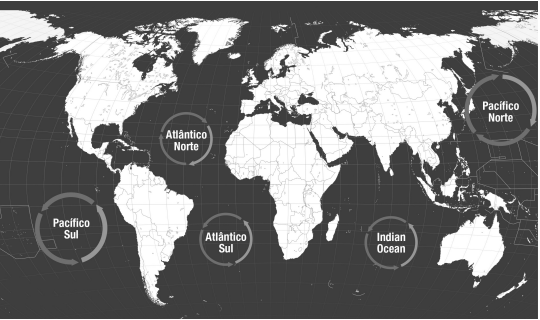
Disponível em: https://www.iberdrola.com/documents/20125/40897/Infografico_cinco_ilhas_plastico.pdf/ fcbcfcb4-bf97-b753-10bb-0350b79b49a3?t=1627897486211. Acesso em: 12 mar. 2025.
O mapa apresenta as cinco grandes ilhas de lixo plástico dispersas pelos oceanos do planeta, responsáveis por graves danos ao meio ambiente e à economia, sobretudo das pequenas comunidades que dependem da pesca para sobreviver.
Sobre a formação das ilhas de plástico, pode-se afirmar que

 Conheça nossos planos