Questões de Vestibular FEMPAR 2026 para Vestibular - Medicina
Foram encontradas 10 questões


Q4437167
Inglês
Texto associado
READ TEXT I AND ANSWER QUESTION.
TEXT I
Medicine and literature through time
Modern medical education increasingly recognizes the value of
humanities studies. Literature, philosophy, and social sciences
enable students to understand the human dimension of
medicine, develop empathy, and address complex ethical issues.
Many medical schools now incorporate humanities courses into
their curricula, providing students with opportunities for
reflection, creativity, and emotional growth. Humanities courses
do not replace basic medical education but complement it,
enhancing professional integration and the ability to provide
humanistic care.
The history of the relationship between medicine and literature
demonstrates that many doctors have used writing as a means of
understanding and communicating their experience. Anton
Chekhov, for example, through his short stories presented the
daily lives of patients and the moral pressure experienced by the
doctor. Richard Selzer, with his works, highlighted the human side
of medical practice, writing poems, essays and stories that
express the sensitivity and reflection of a health professional.
Michael Crichton, who began his career as a physician, admitted
that writing fiction was a way of processing the intense
experiences he faced in his daily practice. These experiences,
such as managing patients who refused treatment, significantly
influenced his professional career and led him to reflect on the
ethical dimension of medicine.
[…]
Literature also provides doctors with an opportunity to reflect on
their own professional experiences. Through writing, they can
express the emotions evoked by the difficulties of daily practice,
such as managing illness and pain, ethical challenges, and facing
death. This process enhances emotional resilience, selfawareness, and professional maturity. Language, whether
through poetry or narrative, makes the doctor more sensitive to
the needs of patients, helping him or her to recognize their
values, priorities, and concerns. The human dimension of
medicine is not only about compassion; it also includes
understanding the personal and social dimensions of illness and
treatment.
Empathy and humanity are fundamental values for modern
medical practice. Through literature, students and healthcare
professionals can experience emotions and situations that would
otherwise remain abstract. Reading patient or physician stories
helps develop the ability to understand the emotions and
perceptions of others, which is essential for effective and ethical
clinical practice.
Adapted from: Magna Scientia Advanced Research and Reviews, 2025, 15(01),
138-144 Accessed:
https://msarr.magnascientiapub.com/sites/default/files/fulltext_pdf/MSARR2025-0
Based on Text I, mark the statements below as true (T) or false
(F).
( ) Literature allows medical students to explore human experiences beyond clinical learning.
( ) Writing fiction is a practice that should be avoided among physicians.
( ) It would be better if physicians opted to write poetry instead of narratives.
The statements are, respectively,
Q4437168
Inglês
Texto associado
READ TEXT I AND ANSWER QUESTION.
TEXT I
Medicine and literature through time
Modern medical education increasingly recognizes the value of
humanities studies. Literature, philosophy, and social sciences
enable students to understand the human dimension of
medicine, develop empathy, and address complex ethical issues.
Many medical schools now incorporate humanities courses into
their curricula, providing students with opportunities for
reflection, creativity, and emotional growth. Humanities courses
do not replace basic medical education but complement it,
enhancing professional integration and the ability to provide
humanistic care.
The history of the relationship between medicine and literature
demonstrates that many doctors have used writing as a means of
understanding and communicating their experience. Anton
Chekhov, for example, through his short stories presented the
daily lives of patients and the moral pressure experienced by the
doctor. Richard Selzer, with his works, highlighted the human side
of medical practice, writing poems, essays and stories that
express the sensitivity and reflection of a health professional.
Michael Crichton, who began his career as a physician, admitted
that writing fiction was a way of processing the intense
experiences he faced in his daily practice. These experiences,
such as managing patients who refused treatment, significantly
influenced his professional career and led him to reflect on the
ethical dimension of medicine.
[…]
Literature also provides doctors with an opportunity to reflect on
their own professional experiences. Through writing, they can
express the emotions evoked by the difficulties of daily practice,
such as managing illness and pain, ethical challenges, and facing
death. This process enhances emotional resilience, selfawareness, and professional maturity. Language, whether
through poetry or narrative, makes the doctor more sensitive to
the needs of patients, helping him or her to recognize their
values, priorities, and concerns. The human dimension of
medicine is not only about compassion; it also includes
understanding the personal and social dimensions of illness and
treatment.
Empathy and humanity are fundamental values for modern
medical practice. Through literature, students and healthcare
professionals can experience emotions and situations that would
otherwise remain abstract. Reading patient or physician stories
helps develop the ability to understand the emotions and
perceptions of others, which is essential for effective and ethical
clinical practice.
Adapted from: Magna Scientia Advanced Research and Reviews, 2025, 15(01),
138-144 Accessed:
https://msarr.magnascientiapub.com/sites/default/files/fulltext_pdf/MSARR2025-0
The word “address” in “address complex ethical issues” (1st
paragraph) is a
Q4437169
Inglês
Texto associado
READ TEXT I AND ANSWER QUESTION.
TEXT I
Medicine and literature through time
Modern medical education increasingly recognizes the value of
humanities studies. Literature, philosophy, and social sciences
enable students to understand the human dimension of
medicine, develop empathy, and address complex ethical issues.
Many medical schools now incorporate humanities courses into
their curricula, providing students with opportunities for
reflection, creativity, and emotional growth. Humanities courses
do not replace basic medical education but complement it,
enhancing professional integration and the ability to provide
humanistic care.
The history of the relationship between medicine and literature
demonstrates that many doctors have used writing as a means of
understanding and communicating their experience. Anton
Chekhov, for example, through his short stories presented the
daily lives of patients and the moral pressure experienced by the
doctor. Richard Selzer, with his works, highlighted the human side
of medical practice, writing poems, essays and stories that
express the sensitivity and reflection of a health professional.
Michael Crichton, who began his career as a physician, admitted
that writing fiction was a way of processing the intense
experiences he faced in his daily practice. These experiences,
such as managing patients who refused treatment, significantly
influenced his professional career and led him to reflect on the
ethical dimension of medicine.
[…]
Literature also provides doctors with an opportunity to reflect on
their own professional experiences. Through writing, they can
express the emotions evoked by the difficulties of daily practice,
such as managing illness and pain, ethical challenges, and facing
death. This process enhances emotional resilience, selfawareness, and professional maturity. Language, whether
through poetry or narrative, makes the doctor more sensitive to
the needs of patients, helping him or her to recognize their
values, priorities, and concerns. The human dimension of
medicine is not only about compassion; it also includes
understanding the personal and social dimensions of illness and
treatment.
Empathy and humanity are fundamental values for modern
medical practice. Through literature, students and healthcare
professionals can experience emotions and situations that would
otherwise remain abstract. Reading patient or physician stories
helps develop the ability to understand the emotions and
perceptions of others, which is essential for effective and ethical
clinical practice.
Adapted from: Magna Scientia Advanced Research and Reviews, 2025, 15(01),
138-144 Accessed:
https://msarr.magnascientiapub.com/sites/default/files/fulltext_pdf/MSARR2025-0
In “Many medical schools now incorporate” (2nd paragraph)
“now” is similar in meaning to
Q4437170
Inglês
Texto associado
READ TEXT I AND ANSWER QUESTION.
TEXT I
Medicine and literature through time
Modern medical education increasingly recognizes the value of
humanities studies. Literature, philosophy, and social sciences
enable students to understand the human dimension of
medicine, develop empathy, and address complex ethical issues.
Many medical schools now incorporate humanities courses into
their curricula, providing students with opportunities for
reflection, creativity, and emotional growth. Humanities courses
do not replace basic medical education but complement it,
enhancing professional integration and the ability to provide
humanistic care.
The history of the relationship between medicine and literature
demonstrates that many doctors have used writing as a means of
understanding and communicating their experience. Anton
Chekhov, for example, through his short stories presented the
daily lives of patients and the moral pressure experienced by the
doctor. Richard Selzer, with his works, highlighted the human side
of medical practice, writing poems, essays and stories that
express the sensitivity and reflection of a health professional.
Michael Crichton, who began his career as a physician, admitted
that writing fiction was a way of processing the intense
experiences he faced in his daily practice. These experiences,
such as managing patients who refused treatment, significantly
influenced his professional career and led him to reflect on the
ethical dimension of medicine.
[…]
Literature also provides doctors with an opportunity to reflect on
their own professional experiences. Through writing, they can
express the emotions evoked by the difficulties of daily practice,
such as managing illness and pain, ethical challenges, and facing
death. This process enhances emotional resilience, selfawareness, and professional maturity. Language, whether
through poetry or narrative, makes the doctor more sensitive to
the needs of patients, helping him or her to recognize their
values, priorities, and concerns. The human dimension of
medicine is not only about compassion; it also includes
understanding the personal and social dimensions of illness and
treatment.
Empathy and humanity are fundamental values for modern
medical practice. Through literature, students and healthcare
professionals can experience emotions and situations that would
otherwise remain abstract. Reading patient or physician stories
helps develop the ability to understand the emotions and
perceptions of others, which is essential for effective and ethical
clinical practice.
Adapted from: Magna Scientia Advanced Research and Reviews, 2025, 15(01),
138-144 Accessed:
https://msarr.magnascientiapub.com/sites/default/files/fulltext_pdf/MSARR2025-0
The word “curricula” in “Many medical schools now incorporate
humanities courses into their curricula“(2nd paragraph) is in the
plural.
The word that is also in the plural is
Q4437171
Inglês
Texto associado
READ TEXT I AND ANSWER QUESTION.
TEXT I
Medicine and literature through time
Modern medical education increasingly recognizes the value of
humanities studies. Literature, philosophy, and social sciences
enable students to understand the human dimension of
medicine, develop empathy, and address complex ethical issues.
Many medical schools now incorporate humanities courses into
their curricula, providing students with opportunities for
reflection, creativity, and emotional growth. Humanities courses
do not replace basic medical education but complement it,
enhancing professional integration and the ability to provide
humanistic care.
The history of the relationship between medicine and literature
demonstrates that many doctors have used writing as a means of
understanding and communicating their experience. Anton
Chekhov, for example, through his short stories presented the
daily lives of patients and the moral pressure experienced by the
doctor. Richard Selzer, with his works, highlighted the human side
of medical practice, writing poems, essays and stories that
express the sensitivity and reflection of a health professional.
Michael Crichton, who began his career as a physician, admitted
that writing fiction was a way of processing the intense
experiences he faced in his daily practice. These experiences,
such as managing patients who refused treatment, significantly
influenced his professional career and led him to reflect on the
ethical dimension of medicine.
[…]
Literature also provides doctors with an opportunity to reflect on
their own professional experiences. Through writing, they can
express the emotions evoked by the difficulties of daily practice,
such as managing illness and pain, ethical challenges, and facing
death. This process enhances emotional resilience, selfawareness, and professional maturity. Language, whether
through poetry or narrative, makes the doctor more sensitive to
the needs of patients, helping him or her to recognize their
values, priorities, and concerns. The human dimension of
medicine is not only about compassion; it also includes
understanding the personal and social dimensions of illness and
treatment.
Empathy and humanity are fundamental values for modern
medical practice. Through literature, students and healthcare
professionals can experience emotions and situations that would
otherwise remain abstract. Reading patient or physician stories
helps develop the ability to understand the emotions and
perceptions of others, which is essential for effective and ethical
clinical practice.
Adapted from: Magna Scientia Advanced Research and Reviews, 2025, 15(01),
138-144 Accessed:
https://msarr.magnascientiapub.com/sites/default/files/fulltext_pdf/MSARR2025-0
The subject of the sentence “This process enhances emotional
resilience” (5th paragraph) refers to
Q4437172
Inglês
Texto associado
READ TEXT II AND ANSWER QUESTION.
TEXT II
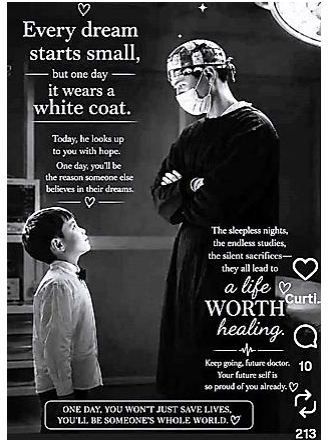
Adapted from @ medico_life_new. Accessed July 2026
The expression “a life worth healing” implies that the efforts the
future doctor will possibly have to make are
Q4437173
Inglês
Texto associado
READ TEXT II AND ANSWER QUESTION.
TEXT II
Adapted from @ medico_life_new. Accessed July 2026
To “look up to” someone in this poster means to
Q4437174
Inglês
Texto associado
READ TEXT III AND ANSWER QUESTION.
TEXT III

Analyse the assertions below based on Text III.
I. The job is financially rewarding.
II. The vacancy is for doctors to work at a hospital.
III. The foundation tends to those in difficult circumstance.
Choose the correct answer.
Q4437175
Inglês
Texto associado
READ TEXT III AND ANSWER QUESTION.
TEXT III
“Timely”, in “timely medical care”, qualifies medical care as
Q4437176
Inglês
Texto associado
READ TEXT III AND ANSWER QUESTION.
TEXT III
The adjective in “lasting impact” can be replaced without
significant change in meaning by

 Conheça nossos planos