Questões de Vestibular Sobre inglês

Questões Discursivas

Foram encontradas 6.472 questões

Q1399747 Inglês
Uncontacted Amazon tribe has been threatened by illegal
loggers

      Remarkable close-up footage that appears to show an uncontacted tribesman in the Amazon rainforest has been released by an indigenous media group that wants to raise awareness of the threat posed by illegal loggers, miners and drug traffickers.
     (...) The Awá have been described as the world’s most threatened tribe by the NGO Survival International, which has tracked killings by loggers, who surround and frequently encroach upon the group’s territory.
     Many of the community have been forced to abandon the forest, but some remain in self-imposed isolation. Their existence has been called into question by commercial interests that want to move into the land, but the new footage has been cited as proof that they remain in the territory.   
      It was recorded by a member of a neighbouring tribe, the Guajajara, which is trying to defend one of the last pockets of intact forest in Maranhão, a massively deforested state in the north-east of Brazil. ―We hope this film produces something positive.
       We hope it makes an impact around the world to help protect our people and our forest,‖ said Flay Guajajara, who shot the image while out hunting and released it through the Mídia Índia platform.
       (...) Olimpio Guajajara, coordinator of the Guardians of the Amazon, said three of the group’s members have been murdered in this activity, which highlighted the need for more long-term support. He said: ―We Guardians are defending our people’s rights, defending the uncontacted Indians, and defending nature for all of us. We need the land to be protected for good."
     Indigenous groups say successive governments have failed to adequately recognise their territorial rights and their role in protecting forests that are globally essential for carbon sequestration and natural habitats.
      According to Survival International, loggers have been emboldened by the government and their camps can now be seen on the edge of Awá land.
     Director Stephen Corry said: ―This video is further proof that the uncontacted Awá people really exist. And a glance at a satellite photo shows just how much danger they’re in. Loggers have already killed many of their relatives and forced others out of the forest".

Available at: https://www.theguardian.com/environment/2019/jul/22/uncontactedtribe-video-amazon-rainforest-awa-people.
In agreement with the text, it is CORRECT to affirm:
Alternativas
Q1399746 Inglês

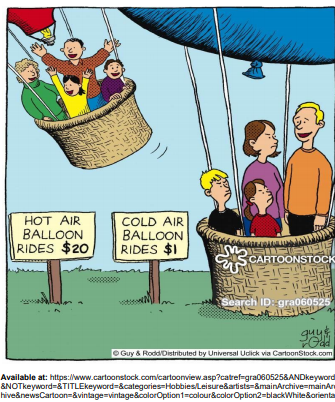
Read the following cartoon:

Imagem associada para resolução da questão


The cartoon infers the idea:

Alternativas
Q1399745 Inglês
Missing Dentures Found Stuck in Man's Throat 8 Days
After Surgery

       Here’s why it’s best to remove false teeth before surgery: You just might swallow them.
    A medical journal is reporting the case of a 72- year-old British man whose partial dentures apparently got stuck in his throat during surgery and weren’t discovered for eight days.
    The man went to the emergency room because he was having a hard time swallowing and was coughing up blood. Doctors ordered a chest X-ray, diagnosed him with what they wrongly thought was pneumonia and sent him home with antibiotics and steroids. It took another hospital visit before another X-ray revealed the problem: His dentures — a metal roof plate and three false teeth — lodged at the top of his throat.
    The man thought his dentures were lost while he was in the hospital for minor surgery. How it happened isn’t exactly clear, but a halfdozen previous cases have been documented of dentures going astray as surgical patients were put to sleep.
     Placing a tube in a patient’s airway can push things where they don’t belong, said Dr. Mary Dale Peterson, an anesthesiologist at Driscoll Children’s Hospital in Corpus Christi, Texas.
     Besides dentures, retainers, loose teeth and tongue piercings can cause problems, said Peterson, who is president-elect of the American Society of Anesthesiologists. Before a child’s surgery, she’ll pull a very loose tooth and tell the patient to expect a visit from the tooth fairy. "We can make a nice game of it."
     In the British case, after the dentures were removed, the man had several bouts of bleeding that required more surgery before he recovered. The journal article didn’t identify the man or the hospital involved. […]

Available at: https://www.nbcnews.com/health/health-news/man-s-missingdentures-were-found-stuck-his-throat-8-n1041641 (edited).
In accordance with the text, all the following alternatives are correct, EXCEPT:
Alternativas
Q1399744 Inglês
Missing Dentures Found Stuck in Man's Throat 8 Days
After Surgery

       Here’s why it’s best to remove false teeth before surgery: You just might swallow them.
    A medical journal is reporting the case of a 72- year-old British man whose partial dentures apparently got stuck in his throat during surgery and weren’t discovered for eight days.
    The man went to the emergency room because he was having a hard time swallowing and was coughing up blood. Doctors ordered a chest X-ray, diagnosed him with what they wrongly thought was pneumonia and sent him home with antibiotics and steroids. It took another hospital visit before another X-ray revealed the problem: His dentures — a metal roof plate and three false teeth — lodged at the top of his throat.
    The man thought his dentures were lost while he was in the hospital for minor surgery. How it happened isn’t exactly clear, but a halfdozen previous cases have been documented of dentures going astray as surgical patients were put to sleep.
     Placing a tube in a patient’s airway can push things where they don’t belong, said Dr. Mary Dale Peterson, an anesthesiologist at Driscoll Children’s Hospital in Corpus Christi, Texas.
     Besides dentures, retainers, loose teeth and tongue piercings can cause problems, said Peterson, who is president-elect of the American Society of Anesthesiologists. Before a child’s surgery, she’ll pull a very loose tooth and tell the patient to expect a visit from the tooth fairy. "We can make a nice game of it."
     In the British case, after the dentures were removed, the man had several bouts of bleeding that required more surgery before he recovered. The journal article didn’t identify the man or the hospital involved. […]

Available at: https://www.nbcnews.com/health/health-news/man-s-missingdentures-were-found-stuck-his-throat-8-n1041641 (edited).

In reference with the text, it is INCORRECT to affirm that by the time the man went to the emergency room:

Alternativas
Q1399743 Inglês
Missing Dentures Found Stuck in Man's Throat 8 Days
After Surgery

       Here’s why it’s best to remove false teeth before surgery: You just might swallow them.
    A medical journal is reporting the case of a 72- year-old British man whose partial dentures apparently got stuck in his throat during surgery and weren’t discovered for eight days.
    The man went to the emergency room because he was having a hard time swallowing and was coughing up blood. Doctors ordered a chest X-ray, diagnosed him with what they wrongly thought was pneumonia and sent him home with antibiotics and steroids. It took another hospital visit before another X-ray revealed the problem: His dentures — a metal roof plate and three false teeth — lodged at the top of his throat.
    The man thought his dentures were lost while he was in the hospital for minor surgery. How it happened isn’t exactly clear, but a halfdozen previous cases have been documented of dentures going astray as surgical patients were put to sleep.
     Placing a tube in a patient’s airway can push things where they don’t belong, said Dr. Mary Dale Peterson, an anesthesiologist at Driscoll Children’s Hospital in Corpus Christi, Texas.
     Besides dentures, retainers, loose teeth and tongue piercings can cause problems, said Peterson, who is president-elect of the American Society of Anesthesiologists. Before a child’s surgery, she’ll pull a very loose tooth and tell the patient to expect a visit from the tooth fairy. "We can make a nice game of it."
     In the British case, after the dentures were removed, the man had several bouts of bleeding that required more surgery before he recovered. The journal article didn’t identify the man or the hospital involved. […]

Available at: https://www.nbcnews.com/health/health-news/man-s-missingdentures-were-found-stuck-his-throat-8-n1041641 (edited).
According to the text, it is CORRECT to affirm:
Alternativas
Ano: 2019 Banca: VUNESP Órgão: UNIFESP Prova: VUNESP - 2019 - UNIFESP - Vestibular |
Q1399578 Inglês

Leia o texto para responder à questão.


America’s social-media addiction is getting worse


(Sources: Pew Research Centre; e Marketer)


   A survey in January and February 2019 from the Pew Research Centre, a think tank, found that 69% of American adults use Facebook; of these users, more than half visit the site “several times a day”. YouTube is even more popular, with 73% of adults saying they watch videos on the platform. For those aged 18 to 24, the figure is 90%. Instagram, a photo-sharing app, is used by 37% of adults. When Pew first conducted the survey in 2012, only a slim majority of Americans used Facebook. Fewer than one in ten had an Instagram account.

    Americans are also spending more time than ever on social-media sites like Facebook. There is evidence that limiting such services might yield health benefits. A paper published last year by Melissa Hunt, Rachel Marx, Courtney Lipson and Jordyn Young, all of the University of Pennsylvania, found that limiting social-media usage to 10 minutes a day led to reductions in loneliness, depression, anxiety and fear. Another paper from 2014 identified a link between heavy social-media usage and depression, largely due to a “social comparison” phenomenon, whereby users compare themselves to others and come away with lower evaluations of themselves. 

(www.economist.com, 08.08.2019. Adaptado.)

No trecho do segundo parágrafo “a ‘social comparison’ phenomenon, whereby users compare themselves to others and come away with lower evaluations of themselves”, a parte sublinhada tem função, no texto, de
Alternativas
Ano: 2019 Banca: VUNESP Órgão: UNIFESP Prova: VUNESP - 2019 - UNIFESP - Vestibular |
Q1399577 Inglês

Leia o texto para responder à questão.


America’s social-media addiction is getting worse


(Sources: Pew Research Centre; e Marketer)


   A survey in January and February 2019 from the Pew Research Centre, a think tank, found that 69% of American adults use Facebook; of these users, more than half visit the site “several times a day”. YouTube is even more popular, with 73% of adults saying they watch videos on the platform. For those aged 18 to 24, the figure is 90%. Instagram, a photo-sharing app, is used by 37% of adults. When Pew first conducted the survey in 2012, only a slim majority of Americans used Facebook. Fewer than one in ten had an Instagram account.

    Americans are also spending more time than ever on social-media sites like Facebook. There is evidence that limiting such services might yield health benefits. A paper published last year by Melissa Hunt, Rachel Marx, Courtney Lipson and Jordyn Young, all of the University of Pennsylvania, found that limiting social-media usage to 10 minutes a day led to reductions in loneliness, depression, anxiety and fear. Another paper from 2014 identified a link between heavy social-media usage and depression, largely due to a “social comparison” phenomenon, whereby users compare themselves to others and come away with lower evaluations of themselves. 

(www.economist.com, 08.08.2019. Adaptado.)

No trecho do segundo parágrafo “largely due to a ‘social comparison’ phenomenon”, a expressão sublinhada pode ser substituída, sem alteração de sentido, por
Alternativas
Ano: 2019 Banca: VUNESP Órgão: UNIFESP Prova: VUNESP - 2019 - UNIFESP - Vestibular |
Q1399576 Inglês

Leia o texto para responder à questão.


America’s social-media addiction is getting worse


(Sources: Pew Research Centre; e Marketer)


   A survey in January and February 2019 from the Pew Research Centre, a think tank, found that 69% of American adults use Facebook; of these users, more than half visit the site “several times a day”. YouTube is even more popular, with 73% of adults saying they watch videos on the platform. For those aged 18 to 24, the figure is 90%. Instagram, a photo-sharing app, is used by 37% of adults. When Pew first conducted the survey in 2012, only a slim majority of Americans used Facebook. Fewer than one in ten had an Instagram account.

    Americans are also spending more time than ever on social-media sites like Facebook. There is evidence that limiting such services might yield health benefits. A paper published last year by Melissa Hunt, Rachel Marx, Courtney Lipson and Jordyn Young, all of the University of Pennsylvania, found that limiting social-media usage to 10 minutes a day led to reductions in loneliness, depression, anxiety and fear. Another paper from 2014 identified a link between heavy social-media usage and depression, largely due to a “social comparison” phenomenon, whereby users compare themselves to others and come away with lower evaluations of themselves. 

(www.economist.com, 08.08.2019. Adaptado.)

In the excerpt from the second paragraph “limiting such services might yield health benefits”, the underlined expression may be replaced, without meaning change, by
Alternativas
Ano: 2019 Banca: VUNESP Órgão: UNIFESP Prova: VUNESP - 2019 - UNIFESP - Vestibular |
Q1399575 Inglês

Leia o texto para responder à questão.


America’s social-media addiction is getting worse


(Sources: Pew Research Centre; e Marketer)


   A survey in January and February 2019 from the Pew Research Centre, a think tank, found that 69% of American adults use Facebook; of these users, more than half visit the site “several times a day”. YouTube is even more popular, with 73% of adults saying they watch videos on the platform. For those aged 18 to 24, the figure is 90%. Instagram, a photo-sharing app, is used by 37% of adults. When Pew first conducted the survey in 2012, only a slim majority of Americans used Facebook. Fewer than one in ten had an Instagram account.

    Americans are also spending more time than ever on social-media sites like Facebook. There is evidence that limiting such services might yield health benefits. A paper published last year by Melissa Hunt, Rachel Marx, Courtney Lipson and Jordyn Young, all of the University of Pennsylvania, found that limiting social-media usage to 10 minutes a day led to reductions in loneliness, depression, anxiety and fear. Another paper from 2014 identified a link between heavy social-media usage and depression, largely due to a “social comparison” phenomenon, whereby users compare themselves to others and come away with lower evaluations of themselves. 

(www.economist.com, 08.08.2019. Adaptado.)

According to the second paragraph, the paper published by researchers of the University of Pennsylvania showed that
Alternativas
Ano: 2019 Banca: VUNESP Órgão: UNIFESP Prova: VUNESP - 2019 - UNIFESP - Vestibular |
Q1399574 Inglês

Leia o texto para responder à questão.


America’s social-media addiction is getting worse


(Sources: Pew Research Centre; e Marketer)


   A survey in January and February 2019 from the Pew Research Centre, a think tank, found that 69% of American adults use Facebook; of these users, more than half visit the site “several times a day”. YouTube is even more popular, with 73% of adults saying they watch videos on the platform. For those aged 18 to 24, the figure is 90%. Instagram, a photo-sharing app, is used by 37% of adults. When Pew first conducted the survey in 2012, only a slim majority of Americans used Facebook. Fewer than one in ten had an Instagram account.

    Americans are also spending more time than ever on social-media sites like Facebook. There is evidence that limiting such services might yield health benefits. A paper published last year by Melissa Hunt, Rachel Marx, Courtney Lipson and Jordyn Young, all of the University of Pennsylvania, found that limiting social-media usage to 10 minutes a day led to reductions in loneliness, depression, anxiety and fear. Another paper from 2014 identified a link between heavy social-media usage and depression, largely due to a “social comparison” phenomenon, whereby users compare themselves to others and come away with lower evaluations of themselves. 

(www.economist.com, 08.08.2019. Adaptado.)

According to the second paragraph, the excessive use of social-media raises questions about
Alternativas
Ano: 2019 Banca: VUNESP Órgão: UNIFESP Prova: VUNESP - 2019 - UNIFESP - Vestibular |
Q1399573 Inglês

Leia o texto para responder à questão.


America’s social-media addiction is getting worse


(Sources: Pew Research Centre; e Marketer)


   A survey in January and February 2019 from the Pew Research Centre, a think tank, found that 69% of American adults use Facebook; of these users, more than half visit the site “several times a day”. YouTube is even more popular, with 73% of adults saying they watch videos on the platform. For those aged 18 to 24, the figure is 90%. Instagram, a photo-sharing app, is used by 37% of adults. When Pew first conducted the survey in 2012, only a slim majority of Americans used Facebook. Fewer than one in ten had an Instagram account.

    Americans are also spending more time than ever on social-media sites like Facebook. There is evidence that limiting such services might yield health benefits. A paper published last year by Melissa Hunt, Rachel Marx, Courtney Lipson and Jordyn Young, all of the University of Pennsylvania, found that limiting social-media usage to 10 minutes a day led to reductions in loneliness, depression, anxiety and fear. Another paper from 2014 identified a link between heavy social-media usage and depression, largely due to a “social comparison” phenomenon, whereby users compare themselves to others and come away with lower evaluations of themselves. 

(www.economist.com, 08.08.2019. Adaptado.)

O trecho do primeiro parágrafo “Fewer than one in ten had an Instagram account” está ilustrado pela curva correspondente ao Instagram
Alternativas
Ano: 2019 Banca: VUNESP Órgão: UNIFESP Prova: VUNESP - 2019 - UNIFESP - Vestibular |
Q1399572 Inglês

Leia o texto para responder à questão.


America’s social-media addiction is getting worse


(Sources: Pew Research Centre; e Marketer)


   A survey in January and February 2019 from the Pew Research Centre, a think tank, found that 69% of American adults use Facebook; of these users, more than half visit the site “several times a day”. YouTube is even more popular, with 73% of adults saying they watch videos on the platform. For those aged 18 to 24, the figure is 90%. Instagram, a photo-sharing app, is used by 37% of adults. When Pew first conducted the survey in 2012, only a slim majority of Americans used Facebook. Fewer than one in ten had an Instagram account.

    Americans are also spending more time than ever on social-media sites like Facebook. There is evidence that limiting such services might yield health benefits. A paper published last year by Melissa Hunt, Rachel Marx, Courtney Lipson and Jordyn Young, all of the University of Pennsylvania, found that limiting social-media usage to 10 minutes a day led to reductions in loneliness, depression, anxiety and fear. Another paper from 2014 identified a link between heavy social-media usage and depression, largely due to a “social comparison” phenomenon, whereby users compare themselves to others and come away with lower evaluations of themselves. 

(www.economist.com, 08.08.2019. Adaptado.)

No trecho do primeiro parágrafo “of these users, more than half”, a expressão sublinhada refere-se
Alternativas
Ano: 2019 Banca: VUNESP Órgão: UNIFESP Prova: VUNESP - 2019 - UNIFESP - Vestibular |
Q1399571 Inglês

Leia o texto para responder à questão.


America’s social-media addiction is getting worse


(Sources: Pew Research Centre; e Marketer)


   A survey in January and February 2019 from the Pew Research Centre, a think tank, found that 69% of American adults use Facebook; of these users, more than half visit the site “several times a day”. YouTube is even more popular, with 73% of adults saying they watch videos on the platform. For those aged 18 to 24, the figure is 90%. Instagram, a photo-sharing app, is used by 37% of adults. When Pew first conducted the survey in 2012, only a slim majority of Americans used Facebook. Fewer than one in ten had an Instagram account.

    Americans are also spending more time than ever on social-media sites like Facebook. There is evidence that limiting such services might yield health benefits. A paper published last year by Melissa Hunt, Rachel Marx, Courtney Lipson and Jordyn Young, all of the University of Pennsylvania, found that limiting social-media usage to 10 minutes a day led to reductions in loneliness, depression, anxiety and fear. Another paper from 2014 identified a link between heavy social-media usage and depression, largely due to a “social comparison” phenomenon, whereby users compare themselves to others and come away with lower evaluations of themselves. 

(www.economist.com, 08.08.2019. Adaptado.)

According to the first paragraph and the graphic images, nowadays the most popular social-media platform among American adults is
Alternativas
Ano: 2019 Banca: VUNESP Órgão: UNIFESP Prova: VUNESP - 2019 - UNIFESP - Vestibular |
Q1399570 Inglês

Examine o quadrinho de Peter Steiner para responder à questão.


(https://condenaststore.com)

It can be inferred from the phrase “On the Internet, nobody knows you’re a dog” that the dark dog is
Alternativas
Ano: 2019 Banca: VUNESP Órgão: UNIFESP Prova: VUNESP - 2019 - UNIFESP - Vestibular |
Q1399569 Inglês

Examine o quadrinho de Peter Steiner para responder à questão.


(https://condenaststore.com)

The cartoon means that
Alternativas
Ano: 2019 Banca: VUNESP Órgão: UNIFESP Prova: VUNESP - 2019 - UNIFESP - Vestibular |
Q1399554 Inglês

Examine o cartum de Liana Finck, publicado em sua conta no Instagram em 13.08.2019.


Imagem associada para resolução da questão


No cartum, a casa pode ser vista como uma metáfora da

Alternativas
Q1399545 Inglês

Read the following advertisement in order to answer QUESTION.


Imagem associada para resolução da questão


The 1961 Kenwood Chef advertisement suggests:

Alternativas
Q1399544 Inglês
High-risk areas downhill from mining dams in Brazil
     More than 100,000 Brazilians live downhill from mining dams built like the one in Brumadinho that collapsed last month, our estimates found.
   Brazil counts 87 mining dams built using the same method, known as upstream tailings construction, as the one that collapsed. That design is risky if not monitored carefully, and experts have warned that a collapse could happen again in a country where neither the mining industry nor regulators have the situation under control.
     We looked at each of the 87 upstream dams to estimate if it could threaten populated areas, using geospatial analysis to estimate where the mud could flow if each of the dams failed. For at least 27 of those dams, more than 1,000 people live in high-risk areas. That means they are downhill from the dam and within eight kilometers — the distance the mud flowed after the Brumadinho collapse.
     All of those dams were rated by the government at the same risk level, or worse, as the dam that failed in Brumadinho.
     “I wouldn’t buy a home downstream of a tailings dam built in an upstream fashion,” said William F. Marcuson III, a former president of the American Society of Civil Engineers. “And I wouldn’t allow my mother to rent or live in a home downstream of a tailings dam built in an upstream fashion.”               
      Minas Gerais, a state whose name means “general mines”, has been the hub of Brazil’s mining industry for centuries. Today, it still produces 53 percent of the country’s mining output.

Available at: https://www.nytimes.com/interactive/2019/02/14/world/americas/brumadinho-brazildam-collapse.html?smid=pl-share
In agreement with the text, the word output in the sentence: “Today, it still produces 53 percent of the country’s mining output”, last paragraph, infers the idea of:
Alternativas
Q1399543 Inglês
High-risk areas downhill from mining dams in Brazil
     More than 100,000 Brazilians live downhill from mining dams built like the one in Brumadinho that collapsed last month, our estimates found.
   Brazil counts 87 mining dams built using the same method, known as upstream tailings construction, as the one that collapsed. That design is risky if not monitored carefully, and experts have warned that a collapse could happen again in a country where neither the mining industry nor regulators have the situation under control.
     We looked at each of the 87 upstream dams to estimate if it could threaten populated areas, using geospatial analysis to estimate where the mud could flow if each of the dams failed. For at least 27 of those dams, more than 1,000 people live in high-risk areas. That means they are downhill from the dam and within eight kilometers — the distance the mud flowed after the Brumadinho collapse.
     All of those dams were rated by the government at the same risk level, or worse, as the dam that failed in Brumadinho.
     “I wouldn’t buy a home downstream of a tailings dam built in an upstream fashion,” said William F. Marcuson III, a former president of the American Society of Civil Engineers. “And I wouldn’t allow my mother to rent or live in a home downstream of a tailings dam built in an upstream fashion.”               
      Minas Gerais, a state whose name means “general mines”, has been the hub of Brazil’s mining industry for centuries. Today, it still produces 53 percent of the country’s mining output.

Available at: https://www.nytimes.com/interactive/2019/02/14/world/americas/brumadinho-brazildam-collapse.html?smid=pl-share
All alternatives are in accordance with the text, EXCEPT:
Alternativas
Q1399542 Inglês
High-risk areas downhill from mining dams in Brazil
     More than 100,000 Brazilians live downhill from mining dams built like the one in Brumadinho that collapsed last month, our estimates found.
   Brazil counts 87 mining dams built using the same method, known as upstream tailings construction, as the one that collapsed. That design is risky if not monitored carefully, and experts have warned that a collapse could happen again in a country where neither the mining industry nor regulators have the situation under control.
     We looked at each of the 87 upstream dams to estimate if it could threaten populated areas, using geospatial analysis to estimate where the mud could flow if each of the dams failed. For at least 27 of those dams, more than 1,000 people live in high-risk areas. That means they are downhill from the dam and within eight kilometers — the distance the mud flowed after the Brumadinho collapse.
     All of those dams were rated by the government at the same risk level, or worse, as the dam that failed in Brumadinho.
     “I wouldn’t buy a home downstream of a tailings dam built in an upstream fashion,” said William F. Marcuson III, a former president of the American Society of Civil Engineers. “And I wouldn’t allow my mother to rent or live in a home downstream of a tailings dam built in an upstream fashion.”               
      Minas Gerais, a state whose name means “general mines”, has been the hub of Brazil’s mining industry for centuries. Today, it still produces 53 percent of the country’s mining output.

Available at: https://www.nytimes.com/interactive/2019/02/14/world/americas/brumadinho-brazildam-collapse.html?smid=pl-share
According to the text, it is CORRECT to affirm:
Alternativas
Respostas
1121: B
1122: C
1123: C
1124: B
1125: D
1126: A
1127: B
1128: D
1129: C
1130: E
1131: B
1132: A
1133: D
1134: D
1135: B
1136: D
1137: A
1138: B
1139: D
1140: C