Questões de Vestibular Sobre interpretação de texto | reading comprehension em inglês

Foram encontradas 5.299 questões

Ano: 2019 Banca: Inatel Órgão: Inatel Prova: Inatel - 2019 - Inatel - Vestibular - Julho |
Q1386889 Inglês
“We showed for the first time that it’s possible to do all this computation and sensing using insects in lieu of drones.” (Context Word Meaning)
Alternativas
Ano: 2019 Banca: Inatel Órgão: Inatel Prova: Inatel - 2019 - Inatel - Vestibular - Julho |
Q1386887 Inglês
Researchers create first sensor package that can ride aboard bees.


Researchers at the University of Washington have created a sensor package that is small enough to ride aboard a bumblebee.

Farmers can already use drones to soar over huge fields and monitor temperature, humidity or crop health. But these machines need so much power to fly that they can’t get very far without needing a charge.

Now, engineers at the University of Washington have created a sensing system that is small enough to ride aboard a bumblebee. Because insects can fly on their own, the package requires only a tiny rechargeable battery that could last for seven hours of flight and then charge while the bees are in their hive at night.

“Drones can fly for maybe 10 or 20 minutes before they need to charge again, whereas our bees can collect data for hours,” said senior author Shyam Gollakota, an associate professor in the UW’s Paul G. Allen School of Computer Science & Engineering. “We showed for the first time that it’s possible to actually do all this computation and sensing using insects in lieu of drones.”

Source: www.washington-edu/news/2018/12/11/sensor-bees/
The advantages of using a sensing system are… (Except - Text Comprehension)
Alternativas
Ano: 2019 Banca: Inatel Órgão: Inatel Prova: Inatel - 2019 - Inatel - Vestibular - Julho |
Q1386886 Inglês
Should we relax about screen time?

The UK government's plans for regulation of the internet and social media contained a long list of online harms. Among them was excessive screen use by teenagers.


On the Tech Tent podcast this week, we ask whether there is convincing evidence that spending hours staring at smartphones and other screens is damaging the mental health of young people.

f you read news headlines - or indeed the government's Online Harms White Paper - you might think that the case against screen time was a no-brainer. But this week, a study by the Oxford Internet Institute suggested that it had little obvious effect on the mental wellbeing of teenagers, even if they were spending hours staring at screens at bedtime.

"We look at general wellbeing," one of the researchers, Amy Orben, tells us. "We do not find a relationship between digital screen use 30 minutes, one hour and two hours before bed and a decrease in wellbeing."

The research examined data from more than 17,000 teenagers in the UK, Ireland and the United States

Source: www.bbc.com/news/technology-47910524
If you read news headlines or indeed the government’s Online Harms White Paper […] (Discourse Marker)
Alternativas
Ano: 2019 Banca: Inatel Órgão: Inatel Prova: Inatel - 2019 - Inatel - Vestibular - Julho |
Q1386885 Inglês
Should we relax about screen time?

The UK government's plans for regulation of the internet and social media contained a long list of online harms. Among them was excessive screen use by teenagers.


On the Tech Tent podcast this week, we ask whether there is convincing evidence that spending hours staring at smartphones and other screens is damaging the mental health of young people.

f you read news headlines - or indeed the government's Online Harms White Paper - you might think that the case against screen time was a no-brainer. But this week, a study by the Oxford Internet Institute suggested that it had little obvious effect on the mental wellbeing of teenagers, even if they were spending hours staring at screens at bedtime.

"We look at general wellbeing," one of the researchers, Amy Orben, tells us. "We do not find a relationship between digital screen use 30 minutes, one hour and two hours before bed and a decrease in wellbeing."

The research examined data from more than 17,000 teenagers in the UK, Ireland and the United States

Source: www.bbc.com/news/technology-47910524
Concerning to the text above “online harms” are… (Except) (Text Comprehension)
Alternativas
Ano: 2019 Banca: Inatel Órgão: Inatel Prova: Inatel - 2019 - Inatel - Vestibular - Julho |
Q1386883 Inglês
A fire gutted parts of Notre Dame Cathedral and altered the Paris skyline


Paris (CNN) A catastrophic fire engulfed Notre Dame Cathedral in Paris on Monday, altering the city's skyline and threatening a potent symbol of Catholicism at the start of Holy Week.

The fire burned for several hours, destroying the 850-year-old cathedral's iconic spire and roof before firefighters contained the blaze early Tuesday morning.

A pair of bell towers immortalized in Victor Hugo's tale "The Hunchback of Notre Dame" survived, along with the cathedral's elaborate stonework facade. Officials said invaluable artifacts were saved, including the Crown of Thorns, believed to be a relic of the passion of Christ.

President Emmanuel Macron lamented the destruction of an awe-inspiring building that embodied the heart of Paris for more than 800 years. But he pledged to rebuild, starting with the launch of an international fundraising campaign.

"Notre Dame is our history, it's our literature, it's our imagery. It's the place where we live our greatest moments, from wars to pandemics to liberations," he said.

"This history is ours. And it burns. It burns and I know the sadness so many of our fellow French feel."
The Paris prosecutor opened an investigation into the fire, the cause of which is still unknown.


Hundreds of firefighters were deployed to the scene, snarled by rush hour traffic.

For much of the afternoon, flames and plumes of smoke billowed from the cathedral as firefighters in cranes sprayed water onto the structure. 

The cathedral was undergoing renovation work, the fire service said.

'Madness'
The fire, just days before Easter, was met with horror by Parisians and tourists.

As firefighters battled the blaze, Parisians gathered outside the church Monday night, raising their voices in prayer.

"It's awful to see such a symbol disappearing in front of you. It's been there for so many years and in a few minutes half of it disappeared ... crazy.

"Paris without Notre Dame, madness."

Source: www.cnn.com/2019/04/15/world/note-dame-cathedral-fire/index.html 

Among invaluable artifacts that were saved, which one is considerable as a relic? (Text Comprehension)
Alternativas
Ano: 2019 Banca: CÁSPER LÍBERO Órgão: CÁSPER LÍBERO Prova: CÁSPER LÍBERO - 2019 - CÁSPER LÍBERO - Vestibular |
Q1380988 Inglês
Quais expressões a seguir não configuram um oximoro?
Alternativas
Ano: 2019 Banca: CÁSPER LÍBERO Órgão: CÁSPER LÍBERO Prova: CÁSPER LÍBERO - 2019 - CÁSPER LÍBERO - Vestibular |
Q1380986 Inglês

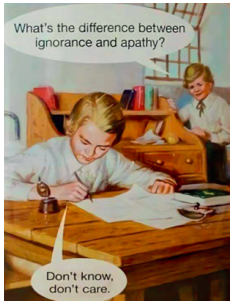
Imagem associada para resolução da questão

Fonte: https://steemit.com/meme/@ epicdave/whats-the-difference-between-ignorance-and-apathy


A resposta dada pela garota neste meme significa:

Alternativas
Ano: 2019 Banca: CÁSPER LÍBERO Órgão: CÁSPER LÍBERO Prova: CÁSPER LÍBERO - 2019 - CÁSPER LÍBERO - Vestibular |
Q1380985 Inglês
Leia o texto a seguir para responder à questão.


    McDonald’s new paper straws – described as “eco-friendly” by the US fast food giant – cannot be recycled. Last year, it axed plastic straws, even though they were recyclable, in all its UK branches as part of a green drive. But the US fast food giant says the new paper straws are not yet easy to recycle and should be put into general waste. McDonald’s says the materials are recyclable, but their thickness makes it difficult for them to be processed.
    The firm switched from plastic straws to paper ones in its restaurants in the UK and Republic of Ireland last autumn. The straws are manufactured by Transcend Packaging, based in Ebbw Vale, South Wales.
    But some customers were unhappy with the new straws, saying they dissolved before a drink could be finished, with milkshakes particularly hard to drink.
    “As a result of customer feedback, we have strengthened our paper straws, so while the materials are recyclable, their current thickness makes it difficult for them to be processed by our waste solution providers, who also help us recycle our paper cups,” a McDonald’s spokesman said.
    The firm said it was working to find a solution, and that current advice, as first reported by The Sun, to put paper straws in general waste was therefore temporary.
    “This waste from our restaurants does not go to landfill, but is used to generate energy,” the company added.
    A petition by irate McDonald’s customers to bring back plastic straws has so far been signed by 51,000 people. The restaurant chain uses 1.8 million straws a day in the UK, so the move to paper was a significant step in helping to reduce single-use plastic. Some single-use plastic products can take hundreds of years to decompose if not recycled.
Extracted from BBC News, 5th of August, 2019 (https://www.bbc.com/news/business-49234054) 
Qual das afi rmações a seguir, relacionadas ao texto, está incorreta?
Alternativas
Ano: 2019 Banca: CÁSPER LÍBERO Órgão: CÁSPER LÍBERO Prova: CÁSPER LÍBERO - 2019 - CÁSPER LÍBERO - Vestibular |
Q1380984 Inglês
Leia o texto a seguir para responder à questão.


    McDonald’s new paper straws – described as “eco-friendly” by the US fast food giant – cannot be recycled. Last year, it axed plastic straws, even though they were recyclable, in all its UK branches as part of a green drive. But the US fast food giant says the new paper straws are not yet easy to recycle and should be put into general waste. McDonald’s says the materials are recyclable, but their thickness makes it difficult for them to be processed.
    The firm switched from plastic straws to paper ones in its restaurants in the UK and Republic of Ireland last autumn. The straws are manufactured by Transcend Packaging, based in Ebbw Vale, South Wales.
    But some customers were unhappy with the new straws, saying they dissolved before a drink could be finished, with milkshakes particularly hard to drink.
    “As a result of customer feedback, we have strengthened our paper straws, so while the materials are recyclable, their current thickness makes it difficult for them to be processed by our waste solution providers, who also help us recycle our paper cups,” a McDonald’s spokesman said.
    The firm said it was working to find a solution, and that current advice, as first reported by The Sun, to put paper straws in general waste was therefore temporary.
    “This waste from our restaurants does not go to landfill, but is used to generate energy,” the company added.
    A petition by irate McDonald’s customers to bring back plastic straws has so far been signed by 51,000 people. The restaurant chain uses 1.8 million straws a day in the UK, so the move to paper was a significant step in helping to reduce single-use plastic. Some single-use plastic products can take hundreds of years to decompose if not recycled.
Extracted from BBC News, 5th of August, 2019 (https://www.bbc.com/news/business-49234054) 
Considere as seguintes afirmações relativas ao texto anterior:

1. Os canudos de plástico usados por todas as lojas do McDonald’s no Reino Unido até o outono passado já eram recicláveis. Mesmo assim, foram substituídos por canudos de papel para evitar plásticos de uso único.
2. A direção do McDonald’s do Reino Unido e da Irlanda pede que os consumidores descartem os canudos de papel no lixo comum porque descobriram que, na verdade, eles não são totalmente recicláveis.
3. Inicialmente, foram utilizados canudos de papel reciclável que se desmanchavam com facilidade, gerando reclamações de consumidores. Por isso a troca para o papel mais grosso, o que torna impossível sua reciclagem.
4. O problema com os novos canudos de papel vem da incapacidade apenas momentânea das empresas recicladoras de processar esse tipo de papel – mas elas garantem que os canudos não vão para aterros sanitários.
5. Um grupo de consumidores ambientalistas do McDonald’s criou um abaixo-assinado com mais de 51.000 adesões, pedindo a volta dos canudos de plástico, para os quais já há tecnologia de reciclagem existente.

Indique qual das opções abaixo classifica corretamente as cinco afirmações acima como Verdadeiras (V) ou Falsas (F).
Alternativas
Ano: 2019 Banca: INEP Órgão: UFPEL Prova: INEP - 2019 - UFPEL - Vestibular - Terceira Etapa |
Q1379208 Inglês
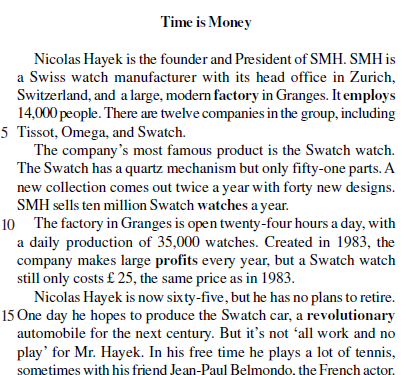
Leia o texto abaixo e responda à questão.

Disponível em: https://www.bbc.com/news/newsbeat-48277942
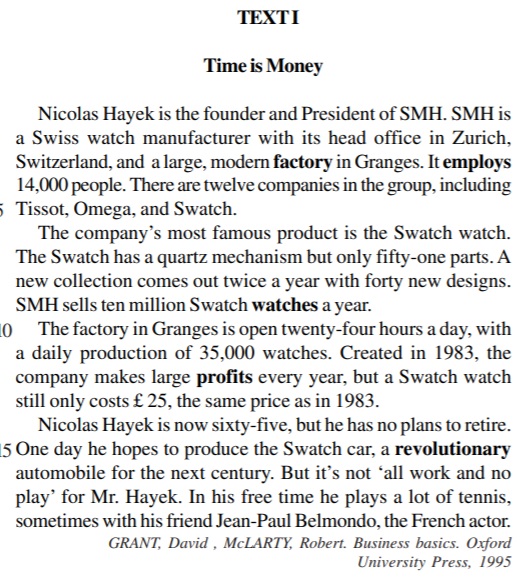
Qual das expressões abaixo pode substituir a conjunção ALTHOUGH (linha 17), sem prejuízo para o significado da frase?
Alternativas
Ano: 2019 Banca: INEP Órgão: UFPEL Prova: INEP - 2019 - UFPEL - Vestibular - Terceira Etapa |
Q1379207 Inglês
Leia o texto abaixo e responda à questão.

Disponível em: https://www.bbc.com/news/newsbeat-48277942
Por que Maisie Williams alega ter crescido sob os olhos do público?
Alternativas
Ano: 2019 Banca: INEP Órgão: IFAL Prova: INEP - 2019 - IFAL - Vestibular - Segundo Semestre |
Q1378769 Inglês

Big education publisher to end printed textbooks  


The world's largest education publisher, Pearson, has said it will gradually phase out printed textbooks. It has taken a decision to make all of its learning resources "digital first". Pearson said the future of the industry is in e-books and digital services. Pearson CEO John Fallon explained more about the company's future direction. He told the BBC: "We are now over the digital tipping point. Over half our annual revenues come from digital sales, so we've decided, a little bit like in other industries like newspapers or music or in broadcast, that it is time to flick the switch in how we primarily make and create our products." He added: "I am increasingly confident and excited about this." Pearson said a huge advantage of digital books is that they can be continually updated, _________3 means teachers will always have access to the latest versions of textbooks. Mr. Fallon said Pearson would stop its current business model of revising printed course books every three years. He said this model has dominated the industry for over four decades and is now past its use-by date. Fallon said: "We learn by engaging and sharing with others, and a digital environment enables you to do that in a much more effective way." He added the digital books will appeal to the "Netflix and Spotify generation". Textbook writers are worried they will earn less from their books as digital products are sold on a subscription basis.


Source: https://breakingnewsenglish.com/1907/190718- textbooks.html Captured on: 26/07/19

According to the text, it is wrong to affirm that:
Alternativas
Ano: 2019 Banca: INEP Órgão: IFAL Prova: INEP - 2019 - IFAL - Vestibular - Segundo Semestre |
Q1378768 Inglês

Big education publisher to end printed textbooks  


The world's largest education publisher, Pearson, has said it will gradually phase out printed textbooks. It has taken a decision to make all of its learning resources "digital first". Pearson said the future of the industry is in e-books and digital services. Pearson CEO John Fallon explained more about the company's future direction. He told the BBC: "We are now over the digital tipping point. Over half our annual revenues come from digital sales, so we've decided, a little bit like in other industries like newspapers or music or in broadcast, that it is time to flick the switch in how we primarily make and create our products." He added: "I am increasingly confident and excited about this." Pearson said a huge advantage of digital books is that they can be continually updated, _________3 means teachers will always have access to the latest versions of textbooks. Mr. Fallon said Pearson would stop its current business model of revising printed course books every three years. He said this model has dominated the industry for over four decades and is now past its use-by date. Fallon said: "We learn by engaging and sharing with others, and a digital environment enables you to do that in a much more effective way." He added the digital books will appeal to the "Netflix and Spotify generation". Textbook writers are worried they will earn less from their books as digital products are sold on a subscription basis.


Source: https://breakingnewsenglish.com/1907/190718- textbooks.html Captured on: 26/07/19

Read the statements below:


I. Pearson has stopped printing textbooks.
II. The publisher has profits of over 50% from digital sales.
III. Printed course books are revised by Pearson every three years.


According to the text, choose the only correct alternative:

Alternativas
Ano: 2019 Banca: FAG Órgão: FAG Prova: FAG - 2019 - FAG - Vestibular - Segundo Semestre |
Q1370257 Inglês
Why a global Language?


    ‘English is the global language.’ – A headline of this kind must have appeared in a thousand newspapers and magazines in recent years. ‘English Rules’ is an actual example, presenting to the world an uncomplicated scenario suggesting the universality of the language’s spread and the likelihood of its continuation. (…)
    These are the kinds of statement which seem so obvious that most people would give them hardly a second thought. Of course English is a global language, they would say. You hear it on television spoken by politicians from all over the world. Wherever you travel, you see English signs and advertisements. Whenever you enter a hotel or restaurant in a foreign city, they will understand English, and there will be an English menu. (…)
    But English is news. The language continues to make news daily in many countries. And the headline isn’t stating the obvious. For what does it mean, exactly? Is it saying that everyone in the world speaks English? This is certainly not true, as we shall see. Is it saying, then, that every country in the world recognizes English as an offcial language? This is not true either. So what does it mean to say that a language is a global language? Why is English the language which is usually cited in this connection? How did the situation arise? And could it change? Or is it the case that, once a language becomes a global language, it is there forever?
    These are fascinating questions to explore, whether your frst language is English or not. If English is your mother tongue, you may have mixed feelings about the way English is spreading around the world. You may feel pride, that your language is the one which has been so successful; but your pride may be tinged with concern, when you realize that people in other countries may not want to use the language in the same way that you do, and are changing it to suit themselves. We are all sensitive to the way other people use (it is often said, abuse) ‘our’ language. Deeply held feelings of ownership begin to be questioned. Indeed, if there is one predictable consequence of a language becoming a global language, it is that nobody owns it any more. Or rather, everyone who has learned it now owns it – ‘has a share in it’ might be more accurate – and has the right to use it in the way they want. This fact alone makes many people feel uncomfortable, even vaguely resentful. ‘Look what the Americans have done to English’ is a not uncommon comment found in the letter-columns of the British press.
    But similar comments can be heard in the USA when people encounter the sometimes striking variations in English which are emerging all over the world. And if English is not your mother tongue, you may still have mixed feelings about it. You may be strongly motivated to learn it, because you know it will put you in touch with more people than any other language; but at the same time you know it will take a great deal of effort to master it, and you may begrudge that effort. Having made progress, you will feel pride in your achievement, and savour the communicative power you have at your disposal, but may none the less feel that mother-tongue speakers of English have an unfair advantage over you. (…)
    These feelings are natural, and would arise whichever language emerged as a global language. They are feelings which give rise to fears, whether real or imaginary, and fears lead to conflict. Language is always in the news, and the nearer a language moves to becoming a global language, the more newsworthy it is. So how does a language come to achieve global status?
(Source: CRYSTAL, David. English as a global language. 2 ed. United Kingdom: Cambridge University Press, 2003.
According to the text, what is the one predictable consequence of a language becoming a global language?
Alternativas
Ano: 2019 Banca: FAG Órgão: FAG Prova: FAG - 2019 - FAG - Vestibular - Segundo Semestre |
Q1370256 Inglês
Why a global Language?


    ‘English is the global language.’ – A headline of this kind must have appeared in a thousand newspapers and magazines in recent years. ‘English Rules’ is an actual example, presenting to the world an uncomplicated scenario suggesting the universality of the language’s spread and the likelihood of its continuation. (…)
    These are the kinds of statement which seem so obvious that most people would give them hardly a second thought. Of course English is a global language, they would say. You hear it on television spoken by politicians from all over the world. Wherever you travel, you see English signs and advertisements. Whenever you enter a hotel or restaurant in a foreign city, they will understand English, and there will be an English menu. (…)
    But English is news. The language continues to make news daily in many countries. And the headline isn’t stating the obvious. For what does it mean, exactly? Is it saying that everyone in the world speaks English? This is certainly not true, as we shall see. Is it saying, then, that every country in the world recognizes English as an offcial language? This is not true either. So what does it mean to say that a language is a global language? Why is English the language which is usually cited in this connection? How did the situation arise? And could it change? Or is it the case that, once a language becomes a global language, it is there forever?
    These are fascinating questions to explore, whether your frst language is English or not. If English is your mother tongue, you may have mixed feelings about the way English is spreading around the world. You may feel pride, that your language is the one which has been so successful; but your pride may be tinged with concern, when you realize that people in other countries may not want to use the language in the same way that you do, and are changing it to suit themselves. We are all sensitive to the way other people use (it is often said, abuse) ‘our’ language. Deeply held feelings of ownership begin to be questioned. Indeed, if there is one predictable consequence of a language becoming a global language, it is that nobody owns it any more. Or rather, everyone who has learned it now owns it – ‘has a share in it’ might be more accurate – and has the right to use it in the way they want. This fact alone makes many people feel uncomfortable, even vaguely resentful. ‘Look what the Americans have done to English’ is a not uncommon comment found in the letter-columns of the British press.
    But similar comments can be heard in the USA when people encounter the sometimes striking variations in English which are emerging all over the world. And if English is not your mother tongue, you may still have mixed feelings about it. You may be strongly motivated to learn it, because you know it will put you in touch with more people than any other language; but at the same time you know it will take a great deal of effort to master it, and you may begrudge that effort. Having made progress, you will feel pride in your achievement, and savour the communicative power you have at your disposal, but may none the less feel that mother-tongue speakers of English have an unfair advantage over you. (…)
    These feelings are natural, and would arise whichever language emerged as a global language. They are feelings which give rise to fears, whether real or imaginary, and fears lead to conflict. Language is always in the news, and the nearer a language moves to becoming a global language, the more newsworthy it is. So how does a language come to achieve global status?
(Source: CRYSTAL, David. English as a global language. 2 ed. United Kingdom: Cambridge University Press, 2003.
The text above states that
Alternativas
Ano: 2019 Banca: FAG Órgão: FAG Prova: FAG - 2019 - FAG - Vestibular - Segundo Semestre |
Q1370255 Inglês
Why a global Language?


    ‘English is the global language.’ – A headline of this kind must have appeared in a thousand newspapers and magazines in recent years. ‘English Rules’ is an actual example, presenting to the world an uncomplicated scenario suggesting the universality of the language’s spread and the likelihood of its continuation. (…)
    These are the kinds of statement which seem so obvious that most people would give them hardly a second thought. Of course English is a global language, they would say. You hear it on television spoken by politicians from all over the world. Wherever you travel, you see English signs and advertisements. Whenever you enter a hotel or restaurant in a foreign city, they will understand English, and there will be an English menu. (…)
    But English is news. The language continues to make news daily in many countries. And the headline isn’t stating the obvious. For what does it mean, exactly? Is it saying that everyone in the world speaks English? This is certainly not true, as we shall see. Is it saying, then, that every country in the world recognizes English as an offcial language? This is not true either. So what does it mean to say that a language is a global language? Why is English the language which is usually cited in this connection? How did the situation arise? And could it change? Or is it the case that, once a language becomes a global language, it is there forever?
    These are fascinating questions to explore, whether your frst language is English or not. If English is your mother tongue, you may have mixed feelings about the way English is spreading around the world. You may feel pride, that your language is the one which has been so successful; but your pride may be tinged with concern, when you realize that people in other countries may not want to use the language in the same way that you do, and are changing it to suit themselves. We are all sensitive to the way other people use (it is often said, abuse) ‘our’ language. Deeply held feelings of ownership begin to be questioned. Indeed, if there is one predictable consequence of a language becoming a global language, it is that nobody owns it any more. Or rather, everyone who has learned it now owns it – ‘has a share in it’ might be more accurate – and has the right to use it in the way they want. This fact alone makes many people feel uncomfortable, even vaguely resentful. ‘Look what the Americans have done to English’ is a not uncommon comment found in the letter-columns of the British press.
    But similar comments can be heard in the USA when people encounter the sometimes striking variations in English which are emerging all over the world. And if English is not your mother tongue, you may still have mixed feelings about it. You may be strongly motivated to learn it, because you know it will put you in touch with more people than any other language; but at the same time you know it will take a great deal of effort to master it, and you may begrudge that effort. Having made progress, you will feel pride in your achievement, and savour the communicative power you have at your disposal, but may none the less feel that mother-tongue speakers of English have an unfair advantage over you. (…)
    These feelings are natural, and would arise whichever language emerged as a global language. They are feelings which give rise to fears, whether real or imaginary, and fears lead to conflict. Language is always in the news, and the nearer a language moves to becoming a global language, the more newsworthy it is. So how does a language come to achieve global status?
(Source: CRYSTAL, David. English as a global language. 2 ed. United Kingdom: Cambridge University Press, 2003.
Taking into account the textual genre approach, we can say the text “Why a global language”? is
Alternativas
Ano: 2019 Banca: UNIMONTES Órgão: Unimontes - MG Prova: UNIMONTES - 2019 - Unimontes - MG - Vestibular - PAES - Primeira Etapa |
Q1370064 Inglês

THE STORY OF ELLIS ISLAND

Mass migrations have marked the history of the human race ever since people began to dream of a better life 

Disponível em: <https://linguapress.com/advanced/ellis-island.htm>. Acesso em: 7 out. 2019. Adaptado.

O pronome “them” (Linha 7), refere-se a(à):
Alternativas
Ano: 2019 Banca: UNIMONTES Órgão: Unimontes - MG Prova: UNIMONTES - 2019 - Unimontes - MG - Vestibular - PAES - Primeira Etapa |
Q1370063 Inglês

THE STORY OF ELLIS ISLAND

Mass migrations have marked the history of the human race ever since people began to dream of a better life 

Disponível em: <https://linguapress.com/advanced/ellis-island.htm>. Acesso em: 7 out. 2019. Adaptado.

De acordo com o texto, é CORRETO afirmar:
Alternativas
Ano: 2019 Banca: FAG Órgão: FAG Prova: FAG - 2019 - FAG - Vestibular - Segundo Semestre - Medicina |
Q1369796 Inglês
Text 2


Text 2a. Second Language Learning


    One of the principles of all learning is that we make sense of new information and ideas by relating them to our previous knowledge. There are two main kinds of previous language knowledge which second language learners can use in order to make sense of the new language they encounter: the first is their knowledge of their mother tongue and the second is the knowledge they already possess about the second language itself.
LITTLEWOOD, W. Second Language Learning. In DAVIES, A. e ELDER, C. The Handbook of Applied Linguistics, pp.504/5, Blackwell Publishing, 2010.

Text 2b. National Curriculum Parameters


    Every text is organized within a specific genre according to its communicative purposes, as part of the conditions of discourse production, which generate social uses that determine any and every text. Genres are, therefore, historically determined, and constitute relatively stable forms of utterances available in a culture. (National Curriculum Parameters, Brasil, 1988, p.21) (adaptado) Answer the two questions below considering also texts "Second Language Learning" and "National Curriculum Parameters", above.
When approaching foreign language texts 2a and 2b, the learner will most frequently use his/her previous knowledge of the mother tongue to account for any difficulties, which may include dealing with genres. About the use of previous knowledge and the study of genres in foreign language education, it is correct to say that:
Alternativas
Ano: 2019 Banca: FAG Órgão: FAG Prova: FAG - 2019 - FAG - Vestibular - Segundo Semestre - Medicina |
Q1369795 Inglês
Text 2


Text 2a. Second Language Learning


    One of the principles of all learning is that we make sense of new information and ideas by relating them to our previous knowledge. There are two main kinds of previous language knowledge which second language learners can use in order to make sense of the new language they encounter: the first is their knowledge of their mother tongue and the second is the knowledge they already possess about the second language itself.
LITTLEWOOD, W. Second Language Learning. In DAVIES, A. e ELDER, C. The Handbook of Applied Linguistics, pp.504/5, Blackwell Publishing, 2010.

Text 2b. National Curriculum Parameters


    Every text is organized within a specific genre according to its communicative purposes, as part of the conditions of discourse production, which generate social uses that determine any and every text. Genres are, therefore, historically determined, and constitute relatively stable forms of utterances available in a culture. (National Curriculum Parameters, Brasil, 1988, p.21) (adaptado) Answer the two questions below considering also texts "Second Language Learning" and "National Curriculum Parameters", above.
Choose the correct option about some features of the texts 2a and 2b above:
Alternativas
Respostas
981: A
982: B
983: E
984: B
985: D
986: C
987: A
988: D
989: E
990: A
991: B
992: B
993: E
994: B
995: A
996: C
997: A
998: C
999: B
1000: E