Questões de Vestibular
Sobre interpretação de texto | reading comprehension em inglês
Foram encontradas 5.175 questões


(nytimes.com)
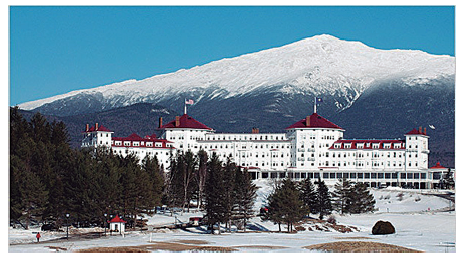
Shimmering white and gracefully statuesque, the Mount Washington Hotel is a granite fortress, a manmade anomaly among the raw wilderness of the surrounding White Mountains in remote northern New Hampshire, U.S. Even to this day, the hotel is geographically secured by 800,000 acres of the White Mountain National Forest around it. This was the main reason why the Hotel was chosen for a World War Two meeting – a meeting that shaped present-day global economic policies.
(Linda Laban. www.bbc.com, 26.08.2020. Adapted.)
The term “this”, which introduces the last sentence in the text, refers to the fact that the Mount Washington Hotel
(www.economist.com, 13.08.2020. Adapted.)
The descriptions in the paragraph
Bypassed by the rescue
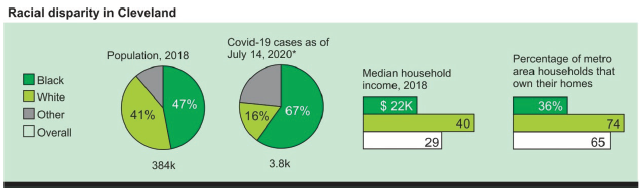
In a pandemic that’s wreaked widespread economic havoc, Cleveland has been among the hardesthit cities in the U.S. And at a time when the U.S. is engaged in another conversation about its foundational racial inequalities, not much of Washington’ $2 trillion has reached Cleveland’s predominantly Black neighborhoods.
(Bloomberg Businessweek, 20.07.2020. Adapted.)
By comparing the text and the graphs it is possible to state that

What about the artists?
The Guardian - Wed 14 Oct 2020
The government is deaf to the plight of freelance musicians and othercreatives
On Monday, a number of British arts organisations finally heard whether they had received grants from the £1.57bn bailout fund announced in July by the chancellor, Rishi Sunak. Not a moment too soon, institutions such as Wigmore Hall in London, Bristol Old Vic and the City of Birmingham Symphony Orchestra have been given a cash bufferthatshould keep them alive until March.
The welcome announcement has been marred, though, by the failure of the government to address the question of freelancers and self-employed people in the arts. In an interview with ITV last week, Mr. Sunak was asked what he thought professional musicians ought to do, given that they can’t earn enough to live. He answered that up to 3 million people in the country qualified for help under the self-employed support scheme. Pressed on whether musicians oughttofind differentwork, he mentioned retraining schemes that are "providing new and fresh opportunity”. People must adapt, he said. He added that it was untrue that there was no work for musicians. Music lessons, in his own household at least, were still going on.
Source: The Guardian, available at https://www.theguardian. com/commentisfree/2020/oct/14/the-guardian-view-on-saving-thearts-what-about-the-artists, accessed on October21st, 2020.
What about the artists?
The Guardian - Wed 14 Oct 2020
The government is deaf to the plight of freelance musicians and othercreatives
On Monday, a number of British arts organisations finally heard whether they had received grants from the £1.57bn bailout fund announced in July by the chancellor, Rishi Sunak. Not a moment too soon, institutions such as Wigmore Hall in London, Bristol Old Vic and the City of Birmingham Symphony Orchestra have been given a cash bufferthatshould keep them alive until March.
The welcome announcement has been marred, though, by the failure of the government to address the question of freelancers and self-employed people in the arts. In an interview with ITV last week, Mr. Sunak was asked what he thought professional musicians ought to do, given that they can’t earn enough to live. He answered that up to 3 million people in the country qualified for help under the self-employed support scheme. Pressed on whether musicians oughttofind differentwork, he mentioned retraining schemes that are "providing new and fresh opportunity”. People must adapt, he said. He added that it was untrue that there was no work for musicians. Music lessons, in his own household at least, were still going on.
Source: The Guardian, available at https://www.theguardian. com/commentisfree/2020/oct/14/the-guardian-view-on-saving-thearts-what-about-the-artists, accessed on October21st, 2020.
What about the artists?
The Guardian - Wed 14 Oct 2020
The government is deaf to the plight of freelance musicians and othercreatives
On Monday, a number of British arts organisations finally heard whether they had received grants from the £1.57bn bailout fund announced in July by the chancellor, Rishi Sunak. Not a moment too soon, institutions such as Wigmore Hall in London, Bristol Old Vic and the City of Birmingham Symphony Orchestra have been given a cash bufferthatshould keep them alive until March.
The welcome announcement has been marred, though, by the failure of the government to address the question of freelancers and self-employed people in the arts. In an interview with ITV last week, Mr. Sunak was asked what he thought professional musicians ought to do, given that they can’t earn enough to live. He answered that up to 3 million people in the country qualified for help under the self-employed support scheme. Pressed on whether musicians oughttofind differentwork, he mentioned retraining schemes that are "providing new and fresh opportunity”. People must adapt, he said. He added that it was untrue that there was no work for musicians. Music lessons, in his own household at least, were still going on.
Source: The Guardian, available at https://www.theguardian. com/commentisfree/2020/oct/14/the-guardian-view-on-saving-thearts-what-about-the-artists, accessed on October21st, 2020.

 Conheça nossos planos