Questões de Vestibular Sobre interpretação de texto | reading comprehension em inglês

Foram encontradas 5.299 questões

Q1672499 Inglês

When will the Amazon hit a tipping point?


    Scientists say climate change, deforestation and fires could cause the world’s largest rainforest to dry out. The big question is how soon that might happen. Seen from a monitoring tower above the treetops near Manaus, in the Brazilian Amazon, the rainforest canopy stretches to the horizon as an endless sea of green. It looks like a rich and healthy ecosystem, but appearances are deceiving. This rainforest — which holds 16,000 separate tree species — is slowly drying out.

    Over the past century, the average temperature in the forest has risen by 1-1.5 ºC. In some parts, the dry season has expanded during the past 50 years, from four months to almost five. Severe droughts have hit three times since 2005. That’s all driving a shift in vegetation. In 2018, a study reported that trees that do best in moist conditions, such as tropical legumes from the genus Inga, are dying. Those adapted to drier climes, such as the Brazil nut tree (Bertholletia excelsa), are thriving.

    At the same time, large parts of the Amazon, the world’s largest rainforest, are being cut down and burnt. Tree clearing has already shrunk the forest by around 15% from its 1970s extent of more than 6 million square kilometres; in Brazil, which contains more than half the forest, more than 19% has disappeared. Last year, deforestation in Brazil spiked by around 30% to almost 10,000 km2 , the largest loss in a decade. And in August 2019, videos of wildfires in the Amazon made international headlines. The number of fires that month was the highest for any August since an extreme drought in 2010.

(www.nature.com, 25.02.2020. Adaptado.)
De acordo com o terceiro parágrafo, a floresta amazônica
Alternativas
Q1672498 Inglês

When will the Amazon hit a tipping point?


    Scientists say climate change, deforestation and fires could cause the world’s largest rainforest to dry out. The big question is how soon that might happen. Seen from a monitoring tower above the treetops near Manaus, in the Brazilian Amazon, the rainforest canopy stretches to the horizon as an endless sea of green. It looks like a rich and healthy ecosystem, but appearances are deceiving. This rainforest — which holds 16,000 separate tree species — is slowly drying out.

    Over the past century, the average temperature in the forest has risen by 1-1.5 ºC. In some parts, the dry season has expanded during the past 50 years, from four months to almost five. Severe droughts have hit three times since 2005. That’s all driving a shift in vegetation. In 2018, a study reported that trees that do best in moist conditions, such as tropical legumes from the genus Inga, are dying. Those adapted to drier climes, such as the Brazil nut tree (Bertholletia excelsa), are thriving.

    At the same time, large parts of the Amazon, the world’s largest rainforest, are being cut down and burnt. Tree clearing has already shrunk the forest by around 15% from its 1970s extent of more than 6 million square kilometres; in Brazil, which contains more than half the forest, more than 19% has disappeared. Last year, deforestation in Brazil spiked by around 30% to almost 10,000 km2 , the largest loss in a decade. And in August 2019, videos of wildfires in the Amazon made international headlines. The number of fires that month was the highest for any August since an extreme drought in 2010.

(www.nature.com, 25.02.2020. Adaptado.)

According to the second paragraph, a change in vegetation can be noticed by
Alternativas
Q1672497 Inglês

When will the Amazon hit a tipping point?


    Scientists say climate change, deforestation and fires could cause the world’s largest rainforest to dry out. The big question is how soon that might happen. Seen from a monitoring tower above the treetops near Manaus, in the Brazilian Amazon, the rainforest canopy stretches to the horizon as an endless sea of green. It looks like a rich and healthy ecosystem, but appearances are deceiving. This rainforest — which holds 16,000 separate tree species — is slowly drying out.

    Over the past century, the average temperature in the forest has risen by 1-1.5 ºC. In some parts, the dry season has expanded during the past 50 years, from four months to almost five. Severe droughts have hit three times since 2005. That’s all driving a shift in vegetation. In 2018, a study reported that trees that do best in moist conditions, such as tropical legumes from the genus Inga, are dying. Those adapted to drier climes, such as the Brazil nut tree (Bertholletia excelsa), are thriving.

    At the same time, large parts of the Amazon, the world’s largest rainforest, are being cut down and burnt. Tree clearing has already shrunk the forest by around 15% from its 1970s extent of more than 6 million square kilometres; in Brazil, which contains more than half the forest, more than 19% has disappeared. Last year, deforestation in Brazil spiked by around 30% to almost 10,000 km2 , the largest loss in a decade. And in August 2019, videos of wildfires in the Amazon made international headlines. The number of fires that month was the highest for any August since an extreme drought in 2010.

(www.nature.com, 25.02.2020. Adaptado.)

According to the first paragraph, the Amazon rainforest
Alternativas
Q1672487 Inglês

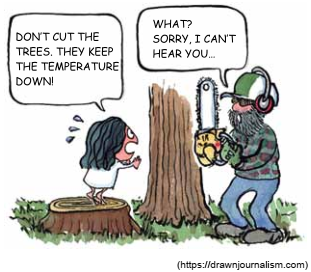
Examine o cartum de Sofia Warren, publicado em sua conta no Instagram em 09.03.2020.


Imagem associada para resolução da questão


Contribuem para o efeito de humor do cartum os seguintes recursos expressivos:

Alternativas
Q1672482 Inglês

Examine a anedota publicada pela comunidade “The Language Nerds” em sua conta no Facebook em 22.01.2020.
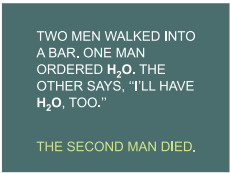

Imagem associada para resolução da questão


A anedota sugere que

Alternativas
Q1672477 Inglês

Examine a tira de Alex Culang e Raynato Castro.


Imagem associada para resolução da questão


Para que a história tivesse um desfecho favorável à garota, seria necessário

Alternativas
Q2030422 Inglês
Americans May Add Five Times More Plastic to the Oceans Than Thought

The United States is using more
plastic than ever, and waste exported for
recycling is often mishandled, according
to a new study.
The United States contribution
to coastal plastic pollution worldwide is
significantly larger than previously
thought, possibly by as much as five
times, according to a study published
Friday. The research, published in Science
Advances, is the sequel to a 2015 paper
by the same authors. Two factors
contributed to the sharp increase:
Americans are using more plastic than
ever and the current study included
pollution generated by United States
exports of plastic waste, while the earlier
one did not.
The United States, which does
not have sufficient infrastructure to
handle its recycling demands at home,
exports about half of its recyclable waste.
Of the total exported, about 88 percent
ends up in countries considered to have
inadequate waste management.
“When you consider how much
of our plastic waste isn’t actually
recyclable because it is low-value,
contaminated or difficult to process, it’s
not surprising that a lot of it ends up
polluting the environment,” said the
study’s lead author, Kara Lavender Law,
research professor of oceanography at
Sea Education Association, in a
statement.
The study estimates that in
2016, the United States contributed
between 1.1 and 2.2 million metric tons of
plastic waste to the oceans through a
combination of littering, dumping and 
mismanaged exports. At a minimum,
that’s almost double the total estimated
waste in the team’s previous study. At the
high end, it would be a fivefold increase
over the earlier estimate.
Nicholas Mallos, a senior
director at the Ocean Conservancy and an
author of the study, said the upper
estimate would be equal to a pile of
plastic covering the area of the White
House Lawn and reaching as high as the
Empire State Building.
The ranges are wide partly
because “there’s no real standard for
being able to provide good quality data on
collection and disposal of waste in
general,” said Ted Siegler, a resource
economist at DSM Environmental
Solutions, a consulting firm, and an
author of the study. Mr. Siegler said the
researchers had evaluated waste-disposal
practices in countries around the world
and used their “best professional
judgment” to determine the lowest and
highest amounts of plastic waste likely to
escape into the environment. They settled
on a range of 25 percent to 75 percent.
Tony Walker, an associate
professor at the Dalhousie University
School for Resource and Environmental
Studies in Halifax, Nova Scotia, said that
analyzing waste data can amount to a
“data minefield” because there are no
data standards across municipalities.
Moreover, once plastic waste is shipped
overseas, he said, data is often not
recorded at all.
Nonetheless, Dr. Walker, who
was not involved in the study, said it
could offer a more accurate accounting of
plastic pollution than the previous study,
which likely underestimated the United
States’ contribution. “They’ve put their
best estimate, as accurate as they can be
with this data,” he said, and used ranges,
which underscores that the figures are
estimates.
Of the plastics that go into the
United States recycling system, about 9
percent of the country’s total plastic
waste, there is no guarantee that they’ll
be remade into new consumer goods. New
plastic is so inexpensive to manufacture
that only certain expensive, high-grade
plastics are profitable to recycle within the
United States, which is why roughly half
of the country’s plastic waste was shipped
abroad in 2016, the most recent year for
which data is available.
Since 2016, however, the
recycling landscape has changed. China
and many countries in Southeast Asia
have stopped accepting plastic waste
imports. And lower oil prices have further
reduced the market for recycled plastic.
“What the new study really underscores is
we have to get a handle on source
reduction at home,” Mr. Mallos said. “That
starts with eliminating unnecessary and
problematic single-use plastics.”

From: https://www.nytimes.com/2020/10/30/
The phrase “The research, published in Science Advances…” (lines 10-11) can be correctly rewritten as
Alternativas
Q2030421 Inglês
Americans May Add Five Times More Plastic to the Oceans Than Thought

The United States is using more
plastic than ever, and waste exported for
recycling is often mishandled, according
to a new study.
The United States contribution
to coastal plastic pollution worldwide is
significantly larger than previously
thought, possibly by as much as five
times, according to a study published
Friday. The research, published in Science
Advances, is the sequel to a 2015 paper
by the same authors. Two factors
contributed to the sharp increase:
Americans are using more plastic than
ever and the current study included
pollution generated by United States
exports of plastic waste, while the earlier
one did not.
The United States, which does
not have sufficient infrastructure to
handle its recycling demands at home,
exports about half of its recyclable waste.
Of the total exported, about 88 percent
ends up in countries considered to have
inadequate waste management.
“When you consider how much
of our plastic waste isn’t actually
recyclable because it is low-value,
contaminated or difficult to process, it’s
not surprising that a lot of it ends up
polluting the environment,” said the
study’s lead author, Kara Lavender Law,
research professor of oceanography at
Sea Education Association, in a
statement.
The study estimates that in
2016, the United States contributed
between 1.1 and 2.2 million metric tons of
plastic waste to the oceans through a
combination of littering, dumping and 
mismanaged exports. At a minimum,
that’s almost double the total estimated
waste in the team’s previous study. At the
high end, it would be a fivefold increase
over the earlier estimate.
Nicholas Mallos, a senior
director at the Ocean Conservancy and an
author of the study, said the upper
estimate would be equal to a pile of
plastic covering the area of the White
House Lawn and reaching as high as the
Empire State Building.
The ranges are wide partly
because “there’s no real standard for
being able to provide good quality data on
collection and disposal of waste in
general,” said Ted Siegler, a resource
economist at DSM Environmental
Solutions, a consulting firm, and an
author of the study. Mr. Siegler said the
researchers had evaluated waste-disposal
practices in countries around the world
and used their “best professional
judgment” to determine the lowest and
highest amounts of plastic waste likely to
escape into the environment. They settled
on a range of 25 percent to 75 percent.
Tony Walker, an associate
professor at the Dalhousie University
School for Resource and Environmental
Studies in Halifax, Nova Scotia, said that
analyzing waste data can amount to a
“data minefield” because there are no
data standards across municipalities.
Moreover, once plastic waste is shipped
overseas, he said, data is often not
recorded at all.
Nonetheless, Dr. Walker, who
was not involved in the study, said it
could offer a more accurate accounting of
plastic pollution than the previous study,
which likely underestimated the United
States’ contribution. “They’ve put their
best estimate, as accurate as they can be
with this data,” he said, and used ranges,
which underscores that the figures are
estimates.
Of the plastics that go into the
United States recycling system, about 9
percent of the country’s total plastic
waste, there is no guarantee that they’ll
be remade into new consumer goods. New
plastic is so inexpensive to manufacture
that only certain expensive, high-grade
plastics are profitable to recycle within the
United States, which is why roughly half
of the country’s plastic waste was shipped
abroad in 2016, the most recent year for
which data is available.
Since 2016, however, the
recycling landscape has changed. China
and many countries in Southeast Asia
have stopped accepting plastic waste
imports. And lower oil prices have further
reduced the market for recycled plastic.
“What the new study really underscores is
we have to get a handle on source
reduction at home,” Mr. Mallos said. “That
starts with eliminating unnecessary and
problematic single-use plastics.”

From: https://www.nytimes.com/2020/10/30/
“There are no data standards” (lines 73-74) can be correctly rewritten as
Alternativas
Q2030409 Inglês
Americans May Add Five Times More Plastic to the Oceans Than Thought

The United States is using more
plastic than ever, and waste exported for
recycling is often mishandled, according
to a new study.
The United States contribution
to coastal plastic pollution worldwide is
significantly larger than previously
thought, possibly by as much as five
times, according to a study published
Friday. The research, published in Science
Advances, is the sequel to a 2015 paper
by the same authors. Two factors
contributed to the sharp increase:
Americans are using more plastic than
ever and the current study included
pollution generated by United States
exports of plastic waste, while the earlier
one did not.
The United States, which does
not have sufficient infrastructure to
handle its recycling demands at home,
exports about half of its recyclable waste.
Of the total exported, about 88 percent
ends up in countries considered to have
inadequate waste management.
“When you consider how much
of our plastic waste isn’t actually
recyclable because it is low-value,
contaminated or difficult to process, it’s
not surprising that a lot of it ends up
polluting the environment,” said the
study’s lead author, Kara Lavender Law,
research professor of oceanography at
Sea Education Association, in a
statement.
The study estimates that in
2016, the United States contributed
between 1.1 and 2.2 million metric tons of
plastic waste to the oceans through a
combination of littering, dumping and 
mismanaged exports. At a minimum,
that’s almost double the total estimated
waste in the team’s previous study. At the
high end, it would be a fivefold increase
over the earlier estimate.
Nicholas Mallos, a senior
director at the Ocean Conservancy and an
author of the study, said the upper
estimate would be equal to a pile of
plastic covering the area of the White
House Lawn and reaching as high as the
Empire State Building.
The ranges are wide partly
because “there’s no real standard for
being able to provide good quality data on
collection and disposal of waste in
general,” said Ted Siegler, a resource
economist at DSM Environmental
Solutions, a consulting firm, and an
author of the study. Mr. Siegler said the
researchers had evaluated waste-disposal
practices in countries around the world
and used their “best professional
judgment” to determine the lowest and
highest amounts of plastic waste likely to
escape into the environment. They settled
on a range of 25 percent to 75 percent.
Tony Walker, an associate
professor at the Dalhousie University
School for Resource and Environmental
Studies in Halifax, Nova Scotia, said that
analyzing waste data can amount to a
“data minefield” because there are no
data standards across municipalities.
Moreover, once plastic waste is shipped
overseas, he said, data is often not
recorded at all.
Nonetheless, Dr. Walker, who
was not involved in the study, said it
could offer a more accurate accounting of
plastic pollution than the previous study,
which likely underestimated the United
States’ contribution. “They’ve put their
best estimate, as accurate as they can be
with this data,” he said, and used ranges,
which underscores that the figures are
estimates.
Of the plastics that go into the
United States recycling system, about 9
percent of the country’s total plastic
waste, there is no guarantee that they’ll
be remade into new consumer goods. New
plastic is so inexpensive to manufacture
that only certain expensive, high-grade
plastics are profitable to recycle within the
United States, which is why roughly half
of the country’s plastic waste was shipped
abroad in 2016, the most recent year for
which data is available.
Since 2016, however, the
recycling landscape has changed. China
and many countries in Southeast Asia
have stopped accepting plastic waste
imports. And lower oil prices have further
reduced the market for recycled plastic.
“What the new study really underscores is
we have to get a handle on source
reduction at home,” Mr. Mallos said. “That
starts with eliminating unnecessary and
problematic single-use plastics.”

From: https://www.nytimes.com/2020/10/30/
Considering the information provided in the text, it is clear that of the total plastic waste in the United States
Alternativas
Q2030408 Inglês
Americans May Add Five Times More Plastic to the Oceans Than Thought

The United States is using more
plastic than ever, and waste exported for
recycling is often mishandled, according
to a new study.
The United States contribution
to coastal plastic pollution worldwide is
significantly larger than previously
thought, possibly by as much as five
times, according to a study published
Friday. The research, published in Science
Advances, is the sequel to a 2015 paper
by the same authors. Two factors
contributed to the sharp increase:
Americans are using more plastic than
ever and the current study included
pollution generated by United States
exports of plastic waste, while the earlier
one did not.
The United States, which does
not have sufficient infrastructure to
handle its recycling demands at home,
exports about half of its recyclable waste.
Of the total exported, about 88 percent
ends up in countries considered to have
inadequate waste management.
“When you consider how much
of our plastic waste isn’t actually
recyclable because it is low-value,
contaminated or difficult to process, it’s
not surprising that a lot of it ends up
polluting the environment,” said the
study’s lead author, Kara Lavender Law,
research professor of oceanography at
Sea Education Association, in a
statement.
The study estimates that in
2016, the United States contributed
between 1.1 and 2.2 million metric tons of
plastic waste to the oceans through a
combination of littering, dumping and 
mismanaged exports. At a minimum,
that’s almost double the total estimated
waste in the team’s previous study. At the
high end, it would be a fivefold increase
over the earlier estimate.
Nicholas Mallos, a senior
director at the Ocean Conservancy and an
author of the study, said the upper
estimate would be equal to a pile of
plastic covering the area of the White
House Lawn and reaching as high as the
Empire State Building.
The ranges are wide partly
because “there’s no real standard for
being able to provide good quality data on
collection and disposal of waste in
general,” said Ted Siegler, a resource
economist at DSM Environmental
Solutions, a consulting firm, and an
author of the study. Mr. Siegler said the
researchers had evaluated waste-disposal
practices in countries around the world
and used their “best professional
judgment” to determine the lowest and
highest amounts of plastic waste likely to
escape into the environment. They settled
on a range of 25 percent to 75 percent.
Tony Walker, an associate
professor at the Dalhousie University
School for Resource and Environmental
Studies in Halifax, Nova Scotia, said that
analyzing waste data can amount to a
“data minefield” because there are no
data standards across municipalities.
Moreover, once plastic waste is shipped
overseas, he said, data is often not
recorded at all.
Nonetheless, Dr. Walker, who
was not involved in the study, said it
could offer a more accurate accounting of
plastic pollution than the previous study,
which likely underestimated the United
States’ contribution. “They’ve put their
best estimate, as accurate as they can be
with this data,” he said, and used ranges,
which underscores that the figures are
estimates.
Of the plastics that go into the
United States recycling system, about 9
percent of the country’s total plastic
waste, there is no guarantee that they’ll
be remade into new consumer goods. New
plastic is so inexpensive to manufacture
that only certain expensive, high-grade
plastics are profitable to recycle within the
United States, which is why roughly half
of the country’s plastic waste was shipped
abroad in 2016, the most recent year for
which data is available.
Since 2016, however, the
recycling landscape has changed. China
and many countries in Southeast Asia
have stopped accepting plastic waste
imports. And lower oil prices have further
reduced the market for recycled plastic.
“What the new study really underscores is
we have to get a handle on source
reduction at home,” Mr. Mallos said. “That
starts with eliminating unnecessary and
problematic single-use plastics.”

From: https://www.nytimes.com/2020/10/30/
A high percentage of the USA's exported recyclable waste goes to countries that
Alternativas
Q2030407 Inglês
Americans May Add Five Times More Plastic to the Oceans Than Thought

The United States is using more
plastic than ever, and waste exported for
recycling is often mishandled, according
to a new study.
The United States contribution
to coastal plastic pollution worldwide is
significantly larger than previously
thought, possibly by as much as five
times, according to a study published
Friday. The research, published in Science
Advances, is the sequel to a 2015 paper
by the same authors. Two factors
contributed to the sharp increase:
Americans are using more plastic than
ever and the current study included
pollution generated by United States
exports of plastic waste, while the earlier
one did not.
The United States, which does
not have sufficient infrastructure to
handle its recycling demands at home,
exports about half of its recyclable waste.
Of the total exported, about 88 percent
ends up in countries considered to have
inadequate waste management.
“When you consider how much
of our plastic waste isn’t actually
recyclable because it is low-value,
contaminated or difficult to process, it’s
not surprising that a lot of it ends up
polluting the environment,” said the
study’s lead author, Kara Lavender Law,
research professor of oceanography at
Sea Education Association, in a
statement.
The study estimates that in
2016, the United States contributed
between 1.1 and 2.2 million metric tons of
plastic waste to the oceans through a
combination of littering, dumping and 
mismanaged exports. At a minimum,
that’s almost double the total estimated
waste in the team’s previous study. At the
high end, it would be a fivefold increase
over the earlier estimate.
Nicholas Mallos, a senior
director at the Ocean Conservancy and an
author of the study, said the upper
estimate would be equal to a pile of
plastic covering the area of the White
House Lawn and reaching as high as the
Empire State Building.
The ranges are wide partly
because “there’s no real standard for
being able to provide good quality data on
collection and disposal of waste in
general,” said Ted Siegler, a resource
economist at DSM Environmental
Solutions, a consulting firm, and an
author of the study. Mr. Siegler said the
researchers had evaluated waste-disposal
practices in countries around the world
and used their “best professional
judgment” to determine the lowest and
highest amounts of plastic waste likely to
escape into the environment. They settled
on a range of 25 percent to 75 percent.
Tony Walker, an associate
professor at the Dalhousie University
School for Resource and Environmental
Studies in Halifax, Nova Scotia, said that
analyzing waste data can amount to a
“data minefield” because there are no
data standards across municipalities.
Moreover, once plastic waste is shipped
overseas, he said, data is often not
recorded at all.
Nonetheless, Dr. Walker, who
was not involved in the study, said it
could offer a more accurate accounting of
plastic pollution than the previous study,
which likely underestimated the United
States’ contribution. “They’ve put their
best estimate, as accurate as they can be
with this data,” he said, and used ranges,
which underscores that the figures are
estimates.
Of the plastics that go into the
United States recycling system, about 9
percent of the country’s total plastic
waste, there is no guarantee that they’ll
be remade into new consumer goods. New
plastic is so inexpensive to manufacture
that only certain expensive, high-grade
plastics are profitable to recycle within the
United States, which is why roughly half
of the country’s plastic waste was shipped
abroad in 2016, the most recent year for
which data is available.
Since 2016, however, the
recycling landscape has changed. China
and many countries in Southeast Asia
have stopped accepting plastic waste
imports. And lower oil prices have further
reduced the market for recycled plastic.
“What the new study really underscores is
we have to get a handle on source
reduction at home,” Mr. Mallos said. “That
starts with eliminating unnecessary and
problematic single-use plastics.”

From: https://www.nytimes.com/2020/10/30/
The article mentions that half of the American recyclable waste is
Alternativas
Q2030406 Inglês
Americans May Add Five Times More Plastic to the Oceans Than Thought

The United States is using more
plastic than ever, and waste exported for
recycling is often mishandled, according
to a new study.
The United States contribution
to coastal plastic pollution worldwide is
significantly larger than previously
thought, possibly by as much as five
times, according to a study published
Friday. The research, published in Science
Advances, is the sequel to a 2015 paper
by the same authors. Two factors
contributed to the sharp increase:
Americans are using more plastic than
ever and the current study included
pollution generated by United States
exports of plastic waste, while the earlier
one did not.
The United States, which does
not have sufficient infrastructure to
handle its recycling demands at home,
exports about half of its recyclable waste.
Of the total exported, about 88 percent
ends up in countries considered to have
inadequate waste management.
“When you consider how much
of our plastic waste isn’t actually
recyclable because it is low-value,
contaminated or difficult to process, it’s
not surprising that a lot of it ends up
polluting the environment,” said the
study’s lead author, Kara Lavender Law,
research professor of oceanography at
Sea Education Association, in a
statement.
The study estimates that in
2016, the United States contributed
between 1.1 and 2.2 million metric tons of
plastic waste to the oceans through a
combination of littering, dumping and 
mismanaged exports. At a minimum,
that’s almost double the total estimated
waste in the team’s previous study. At the
high end, it would be a fivefold increase
over the earlier estimate.
Nicholas Mallos, a senior
director at the Ocean Conservancy and an
author of the study, said the upper
estimate would be equal to a pile of
plastic covering the area of the White
House Lawn and reaching as high as the
Empire State Building.
The ranges are wide partly
because “there’s no real standard for
being able to provide good quality data on
collection and disposal of waste in
general,” said Ted Siegler, a resource
economist at DSM Environmental
Solutions, a consulting firm, and an
author of the study. Mr. Siegler said the
researchers had evaluated waste-disposal
practices in countries around the world
and used their “best professional
judgment” to determine the lowest and
highest amounts of plastic waste likely to
escape into the environment. They settled
on a range of 25 percent to 75 percent.
Tony Walker, an associate
professor at the Dalhousie University
School for Resource and Environmental
Studies in Halifax, Nova Scotia, said that
analyzing waste data can amount to a
“data minefield” because there are no
data standards across municipalities.
Moreover, once plastic waste is shipped
overseas, he said, data is often not
recorded at all.
Nonetheless, Dr. Walker, who
was not involved in the study, said it
could offer a more accurate accounting of
plastic pollution than the previous study,
which likely underestimated the United
States’ contribution. “They’ve put their
best estimate, as accurate as they can be
with this data,” he said, and used ranges,
which underscores that the figures are
estimates.
Of the plastics that go into the
United States recycling system, about 9
percent of the country’s total plastic
waste, there is no guarantee that they’ll
be remade into new consumer goods. New
plastic is so inexpensive to manufacture
that only certain expensive, high-grade
plastics are profitable to recycle within the
United States, which is why roughly half
of the country’s plastic waste was shipped
abroad in 2016, the most recent year for
which data is available.
Since 2016, however, the
recycling landscape has changed. China
and many countries in Southeast Asia
have stopped accepting plastic waste
imports. And lower oil prices have further
reduced the market for recycled plastic.
“What the new study really underscores is
we have to get a handle on source
reduction at home,” Mr. Mallos said. “That
starts with eliminating unnecessary and
problematic single-use plastics.”

From: https://www.nytimes.com/2020/10/30/
One of the factors that contributes to the huge amount of plastic waste is the fact that
Alternativas
Q2030405 Inglês
Americans May Add Five Times More Plastic to the Oceans Than Thought

The United States is using more
plastic than ever, and waste exported for
recycling is often mishandled, according
to a new study.
The United States contribution
to coastal plastic pollution worldwide is
significantly larger than previously
thought, possibly by as much as five
times, according to a study published
Friday. The research, published in Science
Advances, is the sequel to a 2015 paper
by the same authors. Two factors
contributed to the sharp increase:
Americans are using more plastic than
ever and the current study included
pollution generated by United States
exports of plastic waste, while the earlier
one did not.
The United States, which does
not have sufficient infrastructure to
handle its recycling demands at home,
exports about half of its recyclable waste.
Of the total exported, about 88 percent
ends up in countries considered to have
inadequate waste management.
“When you consider how much
of our plastic waste isn’t actually
recyclable because it is low-value,
contaminated or difficult to process, it’s
not surprising that a lot of it ends up
polluting the environment,” said the
study’s lead author, Kara Lavender Law,
research professor of oceanography at
Sea Education Association, in a
statement.
The study estimates that in
2016, the United States contributed
between 1.1 and 2.2 million metric tons of
plastic waste to the oceans through a
combination of littering, dumping and 
mismanaged exports. At a minimum,
that’s almost double the total estimated
waste in the team’s previous study. At the
high end, it would be a fivefold increase
over the earlier estimate.
Nicholas Mallos, a senior
director at the Ocean Conservancy and an
author of the study, said the upper
estimate would be equal to a pile of
plastic covering the area of the White
House Lawn and reaching as high as the
Empire State Building.
The ranges are wide partly
because “there’s no real standard for
being able to provide good quality data on
collection and disposal of waste in
general,” said Ted Siegler, a resource
economist at DSM Environmental
Solutions, a consulting firm, and an
author of the study. Mr. Siegler said the
researchers had evaluated waste-disposal
practices in countries around the world
and used their “best professional
judgment” to determine the lowest and
highest amounts of plastic waste likely to
escape into the environment. They settled
on a range of 25 percent to 75 percent.
Tony Walker, an associate
professor at the Dalhousie University
School for Resource and Environmental
Studies in Halifax, Nova Scotia, said that
analyzing waste data can amount to a
“data minefield” because there are no
data standards across municipalities.
Moreover, once plastic waste is shipped
overseas, he said, data is often not
recorded at all.
Nonetheless, Dr. Walker, who
was not involved in the study, said it
could offer a more accurate accounting of
plastic pollution than the previous study,
which likely underestimated the United
States’ contribution. “They’ve put their
best estimate, as accurate as they can be
with this data,” he said, and used ranges,
which underscores that the figures are
estimates.
Of the plastics that go into the
United States recycling system, about 9
percent of the country’s total plastic
waste, there is no guarantee that they’ll
be remade into new consumer goods. New
plastic is so inexpensive to manufacture
that only certain expensive, high-grade
plastics are profitable to recycle within the
United States, which is why roughly half
of the country’s plastic waste was shipped
abroad in 2016, the most recent year for
which data is available.
Since 2016, however, the
recycling landscape has changed. China
and many countries in Southeast Asia
have stopped accepting plastic waste
imports. And lower oil prices have further
reduced the market for recycled plastic.
“What the new study really underscores is
we have to get a handle on source
reduction at home,” Mr. Mallos said. “That
starts with eliminating unnecessary and
problematic single-use plastics.”

From: https://www.nytimes.com/2020/10/30/
According to the text, the United States
Alternativas
Q2030404 Inglês
Americans May Add Five Times More Plastic to the Oceans Than Thought

The United States is using more
plastic than ever, and waste exported for
recycling is often mishandled, according
to a new study.
The United States contribution
to coastal plastic pollution worldwide is
significantly larger than previously
thought, possibly by as much as five
times, according to a study published
Friday. The research, published in Science
Advances, is the sequel to a 2015 paper
by the same authors. Two factors
contributed to the sharp increase:
Americans are using more plastic than
ever and the current study included
pollution generated by United States
exports of plastic waste, while the earlier
one did not.
The United States, which does
not have sufficient infrastructure to
handle its recycling demands at home,
exports about half of its recyclable waste.
Of the total exported, about 88 percent
ends up in countries considered to have
inadequate waste management.
“When you consider how much
of our plastic waste isn’t actually
recyclable because it is low-value,
contaminated or difficult to process, it’s
not surprising that a lot of it ends up
polluting the environment,” said the
study’s lead author, Kara Lavender Law,
research professor of oceanography at
Sea Education Association, in a
statement.
The study estimates that in
2016, the United States contributed
between 1.1 and 2.2 million metric tons of
plastic waste to the oceans through a
combination of littering, dumping and 
mismanaged exports. At a minimum,
that’s almost double the total estimated
waste in the team’s previous study. At the
high end, it would be a fivefold increase
over the earlier estimate.
Nicholas Mallos, a senior
director at the Ocean Conservancy and an
author of the study, said the upper
estimate would be equal to a pile of
plastic covering the area of the White
House Lawn and reaching as high as the
Empire State Building.
The ranges are wide partly
because “there’s no real standard for
being able to provide good quality data on
collection and disposal of waste in
general,” said Ted Siegler, a resource
economist at DSM Environmental
Solutions, a consulting firm, and an
author of the study. Mr. Siegler said the
researchers had evaluated waste-disposal
practices in countries around the world
and used their “best professional
judgment” to determine the lowest and
highest amounts of plastic waste likely to
escape into the environment. They settled
on a range of 25 percent to 75 percent.
Tony Walker, an associate
professor at the Dalhousie University
School for Resource and Environmental
Studies in Halifax, Nova Scotia, said that
analyzing waste data can amount to a
“data minefield” because there are no
data standards across municipalities.
Moreover, once plastic waste is shipped
overseas, he said, data is often not
recorded at all.
Nonetheless, Dr. Walker, who
was not involved in the study, said it
could offer a more accurate accounting of
plastic pollution than the previous study,
which likely underestimated the United
States’ contribution. “They’ve put their
best estimate, as accurate as they can be
with this data,” he said, and used ranges,
which underscores that the figures are
estimates.
Of the plastics that go into the
United States recycling system, about 9
percent of the country’s total plastic
waste, there is no guarantee that they’ll
be remade into new consumer goods. New
plastic is so inexpensive to manufacture
that only certain expensive, high-grade
plastics are profitable to recycle within the
United States, which is why roughly half
of the country’s plastic waste was shipped
abroad in 2016, the most recent year for
which data is available.
Since 2016, however, the
recycling landscape has changed. China
and many countries in Southeast Asia
have stopped accepting plastic waste
imports. And lower oil prices have further
reduced the market for recycled plastic.
“What the new study really underscores is
we have to get a handle on source
reduction at home,” Mr. Mallos said. “That
starts with eliminating unnecessary and
problematic single-use plastics.”

From: https://www.nytimes.com/2020/10/30/
As to the use of plastic by Americans, the text mentions that it
Alternativas
Q1796833 Inglês
Read the text to answer question.

     The formula for calculating people’s environmental footprint is simple, but widely misunderstood: Impact = Population x Affluence x Technology (I = PAT). The global rate of consumption growth, before the pandemic, was 3% a year. Population growth is 1%. Some people assume this means that the rise in population bears one-third of the responsibility for increased consumption. But population growth is overwhelmingly concentrated among the world’s poorest people, who have scarcely any A or T to multiply their P.
     Yet it is widely used as a blanket explanation of environment breakdown. Panic about population growth enables the people most responsible for the impacts of rising consumption (the affluent) to blame those who are least responsible.

(George Monbiot. www.theguardian.com, 26.08.2020. Adapted.)
The formula for calculating people’s environmental footprint
Alternativas
Q1796832 Inglês
Read the text to answer question.

     The formula for calculating people’s environmental footprint is simple, but widely misunderstood: Impact = Population x Affluence x Technology (I = PAT). The global rate of consumption growth, before the pandemic, was 3% a year. Population growth is 1%. Some people assume this means that the rise in population bears one-third of the responsibility for increased consumption. But population growth is overwhelmingly concentrated among the world’s poorest people, who have scarcely any A or T to multiply their P.
     Yet it is widely used as a blanket explanation of environment breakdown. Panic about population growth enables the people most responsible for the impacts of rising consumption (the affluent) to blame those who are least responsible.

(George Monbiot. www.theguardian.com, 26.08.2020. Adapted.)
The text states that
Alternativas
Q1796831 Inglês
Imagem associada para resolução da questão
(nytimes.com)
Shimmering white and gracefully statuesque, the Mount Washington Hotel is a granite fortress, a manmade anomaly among the raw wilderness of the surrounding White Mountains in remote northern New Hampshire, U.S. Even to this day, the hotel is geographically secured by 800,000 acres of the White Mountain National Forest around it. This was the main reason why the Hotel was chosen for a World War Two meeting – a meeting that shaped present-day global economic policies.
(Linda Laban. www.bbc.com, 26.08.2020. Adapted.)
The term “this”, which introduces the last sentence in the text, refers to the fact that the Mount Washington Hotel
Alternativas
Q1796830 Inglês
The American embassy escaped the blast in Beirut’s port unscathed. Many Western countries either have missions in the city centre or diplomats who live in the area. The wife of the Dutch ambassador was killed, as was a German diplomat. But America’s embassy sits in the mountain village of Awkar, five miles from the port. Security measures are onerous, a hangover from the bombing of the American embassy in Beirut in 1983, which killed 63 people. It took a week before the ambassador, Dorothy Shea, a career diplomat, toured the port. Even on social media it has been far quieter than other foreign powers.
(www.economist.com, 13.08.2020. Adapted.)
The descriptions in the paragraph
Alternativas
Q1796829 Inglês
Read the text and the graphs.
Bypassed by the rescue
In a pandemic that’s wreaked widespread economic havoc, Cleveland has been among the hardesthit cities in the U.S. And at a time when the U.S. is engaged in another conversation about its foundational racial inequalities, not much of Washington’ $2 trillion has reached Cleveland’s predominantly Black neighborhoods.

Imagem associada para resolução da questão
(Bloomberg Businessweek, 20.07.2020. Adapted.)
By comparing the text and the graphs it is possible to state that
Alternativas
Q1796827 Inglês
Read the text to answer question.


     We are at the beginning of a long road to rethinking and rebuilding supply chain models to encompass not just financial priorities but also business operations continuity in the most trying of circumstances. Executives from France and Italy, for example, are discussing ways to remake their businesses in the wake of the Covid-19 pandemic. Their specialty is supply chains. They are smart people at the core of the world’s most sophisticated and valuable systems of manufacture, shipment, and inventory, and yet many of their supply systems staggered in the past few months – the byproduct of reliance on old business models.
(Antonio Gulli. www.forbes.com, 28.07.2020. Adapted.)
One problem concerning supply chains after the outbreak of Covid-19 relates to
Alternativas
Respostas
741: C
742: A
743: A
744: B
745: E
746: B
747: C
748: D
749: B
750: B
751: A
752: D
753: C
754: B
755: E
756: C
757: D
758: E
759: B
760: D