Questões de Vestibular
Sobre aspectos linguísticos | linguistic aspects em inglês
Foram encontradas 169 questões


https://www.theguardian.com/environment/
2021/sep/27/
Examine a tira de Alex Culang e Raynato Castro.
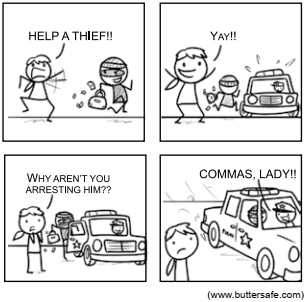
Para que a história tivesse um desfecho favorável à garota,
seria necessário

Assinale a opção que contém a sequência de palavras que preenche corretamente as lacunas das três frases 1, 2 e 3, nessa ordem.
( )I. Ann was sat in an armchair watching television. ( )II. The police stops me on my way last night. ( )III. I’m hungry. I’m wanting something to eat. ( )IV. You’re always watched TV. You should do something more active. ( )V. Rice don’t grow in cold climates.
Assinale a alternativa correta:
A: Leah has been overly amiable to me these days. B: I know ____________________________, the school finals are just around the corner and she needs help.
Choose the option to complete the dialogue.


I. A lacuna da linha 27 deveria ser preenchida por On the other hand.
PORQUE
II. Introduz o segundo de dois pontos de vista que se contrastam.
When the OECD launched the Programme for International Student Assessment — PISA — the idea was to enable countries to make cross-national comparisons of student achievement using a common/standard metric to increase human capital. In other words, higher academic achievement should corelate with earnings in the future and a country’s standard of living. As PISA states, it publishes the results of the test a year after the students are tested to help governments shape their education policies.
As PISA has developed, through seven global testing rounds every three years, with the first in 2000 and the most recent in 2018, for some it has gained a reputation as the “Olympics of education” given the widespread attention that country rankings receive following the release of results.
Now, partly in the face of criticisms, PISA is looking at expanding how and what it tests. As this process unfolds, policy-makers must remember that the social consequences of a test are just as important as the test’s content. Putting a new face on PISA will undoubtedly present various opportunities and challenges.
To date, PISA has been restricted to what is generally called the “cognitive” side of learning, focusing on reading, mathematics and scientific literacy. In addition to test questions, students and school principals fill out questionnaires to provide contextual information on student and school environment characteristics that can be associated with more or less favourable performance.
Countries that excel in PISA tests, such as Finland, a country with less than six million people, have become regarded by policy-makers as a “global reference society” — an ideal to aspire to — due to their high performance in PISA rankings.
Asian countries or jurisdictions like Singapore, Hong Kong (China) and Japan tend to consistently achieve exceptional PISA performances and hence get a lot of attention from other countries wishing to emulate their success via borrowing policy. For example, England flew teachers out to China to study mathematics teaching.
In the next administration in 2021, PISA will tackle creative thinking, trying to find ways to assess, and have students assess, flexibility in thinking and habits of creativity such as being inquisitive and persistent. The PISA team is also developing a way of testing students’ digital learning, which should be ready in time for the 2024 assessment.
However, it should be remembered that education policies from high achieving nations don’t migrate across international boundaries without consideration given to national and cultural contexts. Rather, innovations and changes in education require teachers to have the time and opportunity to re-educate themselves in relation to more recent insights in what it means to get the best out of children.
Leia o texto a seguir para responder à questão.
Forest fires: the good and the bad
Every year it seems like there’s another disastrous wildfire in the American West. In 2018, nearly 9 million acres were burned in the US alone. Uncontrolled fires often started accidentally by people, rampage and decimate forests. F
or most people, a forest fire is synonymous with disaster. But there are some kinds of forest fires that actually benefit the environment.
A controlled burn is a wildfire that people set intentionally for a specific purpose. Well-thought-out and wellmanaged controlled burns can be incredibly beneficial for forest management—in part because they can help stop an out-of-control wildfire. The technique is called backburning, and it involves setting a controlled fire in the path of the approaching wildfire. All the flammable material is burnt up and extinguished. When the wildfire approaches, there’s no more fuel left for it to keep going, and it dies out.
Controlled burns are also used to prevent forest fires. Even before human involvement, natural, low-intensity wildfires occurred every few years to burn up fuel, plant debris, and dead trees, making way for young, healthy trees and vegetation to thrive. That new growth in turn supports forest wildlife. Forest managers are now replicating this natural strategy when appropriate, starting manageable, slow-burning fires to make room for new life that will help keep the forest healthy in the long term.
The same method is one of WWF’s strategies for maintaining grassland habitats in the Northern Great Plains. Working with partners such as the U.S. Fish and Wildlife Service, WWF has intentionally burned hundreds of acres of prairie land to revitalize these key habitats. The fire burns off tall, aggressive vegetation that isn’t as hospitable to wildlife, and makes room for new growth that attracts bison, birds, and prairie dogs.
This doesn’t mean all intentional wildfires are good – far from it. Many of the fires intentionally set for agriculture and land clearing are at best ill-advised, and at worst devastating. Slash and burn fires are set every day to destroy large sections of forests. Of course, these forests don’t just remove trees; they kill and displace wildlife, alter water cycles and soil fertility, and endanger the lives and livelihoods of local communities. They also can rage out of control. In 1997, fires set intentionally to clear forests in Indonesia escalated into one of the largest wildfires in recorded history. Hundreds of people died; millions of acres burned; already at-risk species like orangutans perished by the hundreds; and a smoke and ash haze hung over southeast Asia for months, reducing visibility and causing acute health conditions.
That’s exactly why WWF helps governments around the world crack down on slash and burn deforestation. WWF also works with farmers and companies to stop unnecessary agricultural burns. And when our scientists think fire could be the best solution for revitalizing wild areas, we bring the right experts to the table to study the situation and come up with a plan.
All fire is risky. To minimize that risk as much as possible, controlled burns must be well-considered, wellplanned, and ignited and maintained by trained professionals. The bottom line? Fire can be a tool for conservation, but only when used the right way.
Disponível em: https://www.worldwildlife.org/stories/forest-fires-the-good-and-the-bad. Acesso em: 08 out. 2019

Consider the following sentence.
It is only when some irrelevant memory makes us prejudiced that we should search our mind for the reason for the aversion.
Select the alternative with the proposition that best rephrases it.

“If you listen to them all day long, you will prevent them”(l. 18-19)
Without changing the meaning, the words in bold may be substituted by
INSTRUÇÃO: Responder à questão com base no texto.


Adapted from: https://www.newyorker.com/science/maria-konnikova/being-a-better-online-reader
Consider the meaning of “as” in “As the letters continued to pour in, Wolf experienced a growing realization: reading had changed profoundly.” (lines 19 and 20) and in the segments below:
I. “we don’t read the same way online as we do on paper” (lines 28 and 29)
II. “when we scroll, we tend to read faster but less deeply, as a way of coping with an overload of information” (lines 38-40)
III. “As children move more toward an immersion in digital media, we have to figure out ways to read deeply in this new environment.” (lines 49-51)
The segment(s) in which the meaning of “as” is closest to the one in lines 19 and 20 is/are only
INSTRUÇÃO: Para responder às questão, considere o texto abaixo.
Am I too old to learn a new language?

Adapted from:<https://www.theguardian.com/education/2014/sep/13/am-i-too-old-to-learn-a-language>
Considere o emprego do ´s nas seguintes afirmações.
I - “The brain's neuroplasticity” (l. 02) é a contração de “has”.
II - “It´s often said” (l. 04) é a contração de “is”.
III - “one's brain” (l. 28) é a contração do “genitive case”.
Quais estão corretas?
Leia o texto a seguir para responder à questão.
Digitizing Healthcare: How Technology Is Improving Medical Care
by Tricia Hussung
A wide variety of digital innovations are revolutionizing healthcare — and technology in medicine is here to stay. How are these changes impacting the delivery of care, and what skills are needed to succeed in this bold new world? It’s no secret that, as a society, technology has become a part of our everyday lives. In fact, almost 60 percent of American adults own a smartphone, and 42 percent of that same population (American adults) owns a tablet computer. Though technology has been permeating almost every aspect of our lives, until recent years the medical field has been largely unaffected by the rapid pace of technological innovation that is characteristic of the Digital Age. However, this is changing.
This ubiquity of technology is beginning to extend into the medical field. Advances in medical technology are changing medicine by giving physicians more information — as well as better, more specific data.
New Medical Technology: Innovations
So just what are these new advances in technology? The following are just a few of the many innovations that have occurred in medical technology over the past year alone. Some of these leading technologies are still being developed, while others are slowly being introduced into mainstream medical practice.
- The modern hospital experience: Several medical technology companies are looking to update hospital stays to keep pace with the needs of modern patients. To more easily integrate changing technology, these new rooms would feature interchangeable parts that are easily adapted to the specific situation of a patient. The seamless design would have a minimal impact on facility operations while increasing patient comfort and connectivity.
- Surgery simulation: The Roswell Park Cancer Institute has partnered with the University of Buffalo’s School of Engineering and Applied Sciences to create the Robotic Surgery Simulator (RoSS). This innovation allows real-world views of surgeries while eliminating the need for a live environment to train aspiring surgeons. It gives these medical professionals the space to experiment in a simulated environment, rather than risking making mistakes on real patients.
- Cloud-based data and software: Applications like referralMD help healthcare providers create referrals digitally and reach millions of patients and providers who are in search of treatment options. The current, paper method of referrals causes almost 50 percent of patient referrals to never actually result in doctor’s visits. This present gap in care “causes patients to lose treatment (and) the healthcare facility to lose money.” Software innovations like these are part of the relatively new field of health informatics, which aims to collect, store, analyze and present health data in a digital format.
With widespread innovations like these affecting patient care practices, it is not surprising that the way medical
records and information are stored and shared is changing as well. These technological advancements are costeffective and improve the ability of medical professionals to diagnose and treat health issues of all kinds. Two of
the main changes that are revolutionizing the future of healthcare are electronic medical records and health
information exchange. Future won´t be the same for medical field. Are you ready for what is coming?
Disponível em:<https://online.king.edu/news/digitizing-healthcare-how-technology-is-improving-medical-care/>
Leia o texto a seguir para responder à questão.
Predictions for the future of 'smart' education
Posted by Charley Rogers - January 22, 2018
A wave of new technology has been introduced into schools up and down the country changing the way
teachers deliver lessons and how students learn.
A research by Randstad Education found schools and colleges have adopted the latest tech to improve teaching and make lessons more interactive and engaging. Some of the innovations already in use include ‘gamifying’ lessons by incorporating game-like rules and tasks to increase motivation. For example, Shireland Academy in the West Midlands included Minecraft on its curriculum.
Education, the research found, will become more project-based and include more interactive content to keep up with students’ changing attitudes towards traditional media. Classrooms, it is predicted, will join the Internet of Things – a network of devices like smartwatches that connect and share data with other items and systems – and create ‘smart schools’ where the teachers, students and devices become more connected.
Pressure on teachers – 75% find their workload unmanageable – as well as rising student numbers means technology will play a larger role performing tasks to save time. Teachers are also reaping the rewards as lessons and assessments move out of the classroom and onto platforms that make it easier for them to chart progress and achieve a better work-life balance. Education experts have highlighted the importance of new techniques that help teachers do their jobs.
However, while tech will become more commonplace in the classroom, it is expected to compliment teachers and not replace them. It´s important to understand that teaching tools have come a long way since the days when teachers used to write on chalkboards and present using an overhead projector.
The research says that students today benefit from some of the most exciting technology available to schools, but it’s not just the pupils who benefit from these innovations through invigorating lessons and virtual learning. Teachers are also reaping the rewards as lessons and assessments move out of the classroom and onto platforms that make it easier for them to chart progress and achieve a better work-life balance.
Technology has arrived and the teachers and classrooms of tomorrow are here today.
Disponível em: <https://edtechnology.co.uk/Article/predictions-for-the-future-of-education>. Acesso em: 19 set. 2018. (Adaptado).
When California police officers approached a Tesla stopped in the centre of a five-lane highway outside San Francisco last week, they found a man asleep at the wheel. The driver, who was arrested on suspicion of drunk driving, told them his car was in “autopilot”, Tesla’s semi-autonomous driver assist system.
In a separate incident, firefighters in Culver City reported that a Tesla vehicle parked at the rear of their fire truck as it attended an accident on the freeway. Again, the driver said the vehicle was in autopilot.

 Conheça nossos planos