Selecionar segmento
Estude com questões de diferentes segmentos
Atenção: Isso limpará todos os campos já preenchidos no filtro!
Foram encontradas 2.711 questões
Resolva questões gratuitamente!
Junte-se a mais de 4 milhões de concurseiros!


Ano: 2024
Banca:
IF-SP
Órgão:
IF-SP
Prova:
IF-SP - 2024 - IF-SP - Professor EBTT - Letras: Português/Libras |
Q3047681
Português
Texto associado
Leia os documentos a seguir:
Documento 1
ATENÇÃO MELHOR PERDER UM CELULAR DO QUE A SUA LIBERDADE. O aplicativo que o Governo Federal, mais precisamente o Ministério da Justiça, lançou no dia de ontem é, na verdade, uma armadilha para todos nós brasileiros de bem. O aplicativo passa a controlar todo o seu celular, inclusive todas as mensagens trocadas em redes sociais que você utiliza. Ele abre uma porta, inclusive, para que o governo sequestre suas redes sociais, sua lista de contatos e tudo mais que você faz, de maneira privada, no seu celular. O aplicativo fica com acesso ao seu microfone, sua câmera e seu número na operadora. Uma vez instalado, você passa totalmente para as mãos do Ministério da Justiça e fica totalmente exposto para qualquer ação que possa ser direcionada para você. Essa foi a maneira CRIMINOSA que eles encontraram, no apagar das luzes de 2023 com a saída do Dino, para controlar as redes sociais, como o próprio havia prometido. As redes sociais não iriam colaborar da forma que eles queriam para expor a privacidade dos seus usuários. NÃO INSTALE O APLICATIVO NO SEU CELULAR. MELHOR PERDER O CELULAR DO QUE A SUA LIBERDADE.
Encaminhe essa mensagem para seus familiares e amigos e compartilhe com outros grupos
Fonte: https://www.aosfatos.org/noticias/falso-app-celular-
seguro-permite-governo-acessar-conteudo/.
Acesso em: 18 ago. 2024. Transcrição.
Documento 2
É falso que app Celular Seguro permite ao governo acessar conteúdo de aparelho
Por Gisele Lobato
Não é verdade que o aplicativo Celular Seguro, que facilita o bloqueio do aparelho em caso de furto ou roubo, vai permitir ao Governo Federal acessar câmera, microfone, lista de contatos ou as redes sociais de quem aderir ao programa, como alega corrente que circula no WhatsApp e vídeos nas redes. Além de não exigir nenhuma permissão de acesso a esses recursos para funcionar, o programa é regido pela LGPD (Lei Geral de Proteção de Dados), cuja fiscalização é feita por um órgão que possui autonomia em relação ao governo.
Vídeos com a informação falsa acumulam pelo menos 3,9 mil compartilhamentos no Facebook, centenas de curtidas no Instagram e 11,5 mil visualizações no TikTok. A publicação também circula no WhatsApp, plataforma na qual não é possível estimar o alcance dos conteúdos. [...]
LOBATO, Gisele. É falso que app Celular Seguro permite
ao governo acessar conteúdo de aparelho. Aos fatos.
26.12.2023. Disponível em: https://www.aosfatos.org/
noticias/falso-app-celular-seguro-permite-governo-acessar-
conteudo/. Acesso em: 18 ago. 2024. Fragmento.
O documento 1, que teve ampla circulação nas redes sociais, foi refutado pelo documento 2. Entretanto, não se pode ignorar o impacto do alcance da (des)informação que pode ser gerada pelas tecnologias digitais de comunicação, uma vez que, segundo o documento 2, “vídeos com a informação falsa acumulam pelo menos 3,9 mil compartilhamentos no Facebook, centenas de curtidas no Instagram e 11,5 mil visualizações no TikTok”. Como estratégias de construção textual, os estudos de Vanoye (2003) apontam que há mensagens em que o destinador manifesta claramente as suas opiniões ou reações relativamente ao conteúdo de que trata, acrescentando às informações brutas uma carga suplementar constituída de seus sentimentos, seus juízos, sua maneira de ver e de descrever o acontecimento; há mensagens em que a expressão pessoal intervém de maneira dissimulada; e ainda há aquelas em que não se percebe a presença do destinador, ainda que, de fato, tenham sido produzidas por um indivíduo ou uma instituição, porque são produtos de um projeto cujo processo de construção busca a neutralização intencional do “eu”.
Isso considerado, pode-se afirmar que os mecanismos empregados no documento 1, no que diz respeito à construção discursiva do destinador da mensagem, são:
Isso considerado, pode-se afirmar que os mecanismos empregados no documento 1, no que diz respeito à construção discursiva do destinador da mensagem, são:
Ano: 2024
Banca:
IF-SP
Órgão:
IF-SP
Prova:
IF-SP - 2024 - IF-SP - Professor EBTT - Letras: Português/Libras |
Q3047679
Português
Leia o excerto adaptado de Marcuschi (2000)
a seguir:
Considerada a ideia de que a língua é muito mais um conjunto de práticas discursivas do que apenas uma série de regras ou um sistema de formas simbólicas, podemos pensá-la como prática social, que se manifesta e funciona em dois modos fundamentais: como atividade oral e como atividade escrita. Com a expressão “fala”, designamos as formas orais do ponto de vista do material linguístico e de sua realização textual-discursiva. O mesmo acontece com a expressão “escrita”, usada para designar o material linguístico da escrita, ou seja, as formas de textualização na escrita. Em última instância, são dois modos de representação da mesma língua, embora cada um dos dois modos tenha uma história própria.
Analisando o excerto acima e sua formação no curso de licenciatura, em disciplinas da área de língua e de linguística, é correto afirmar, na relação entre variedades, usos, língua oral e língua escrita, que:
Considerada a ideia de que a língua é muito mais um conjunto de práticas discursivas do que apenas uma série de regras ou um sistema de formas simbólicas, podemos pensá-la como prática social, que se manifesta e funciona em dois modos fundamentais: como atividade oral e como atividade escrita. Com a expressão “fala”, designamos as formas orais do ponto de vista do material linguístico e de sua realização textual-discursiva. O mesmo acontece com a expressão “escrita”, usada para designar o material linguístico da escrita, ou seja, as formas de textualização na escrita. Em última instância, são dois modos de representação da mesma língua, embora cada um dos dois modos tenha uma história própria.
Analisando o excerto acima e sua formação no curso de licenciatura, em disciplinas da área de língua e de linguística, é correto afirmar, na relação entre variedades, usos, língua oral e língua escrita, que:
Ano: 2024
Banca:
IF-SP
Órgão:
IF-SP
Prova:
IF-SP - 2024 - IF-SP - Professor EBTT - Letras: Português/Libras |
Q3047678
Português
Said Ali (2001), ao estudar aspectos da sintaxe
da Língua Portuguesa, examina, entre outras diversas categorias do verbo, as funções que os tempos –
presente, passado e futuro – assumem na construção
dos sentidos dos enunciados, o que intervém diretamente nos processos de compreensão e de produção
dos textos. Ao tratar do presente, no indicativo, o autor observa que o seu uso remete a uma ação que
se passa durante o tempo – breve ou longo – em que
se discorre sobre um assunto, mas não limitado ao
instante fugaz da realização do enunciado. Noutros
termos: “não haveria enunciado sem a cognição e
portanto sem a preexistência do fato; e, por outra
parte, terminado o enunciado verbal, para o qual
bastou um só segundo, o fato nem por isso deixará
de perdurar ainda algum tempo” (SAID ALI, 2001,
p. 310). Diante dessa observação, o linguista examina os complexos fatos da língua portuguesa, procurando descrever as muitas expressões verbais que se
servem desse tempo e, então, classificá-las segundo
o sentido que estabelecem.
Quanto às propostas de Said Ali, relativas às funções do uso do tempo presente no modo indicativo, que opção expõe, corretamente, em conjunto (descrição, classificação e exemplificação), as ideias do autor?
Quanto às propostas de Said Ali, relativas às funções do uso do tempo presente no modo indicativo, que opção expõe, corretamente, em conjunto (descrição, classificação e exemplificação), as ideias do autor?
Ano: 2024
Banca:
IF-SP
Órgão:
IF-SP
Prova:
IF-SP - 2024 - IF-SP - Professor EBTT - Letras: Português/Libras |
Q3047677
Português
Leia o excerto adaptado de Preti (1994): As
variedades diastráticas ocorrem em um plano vertical, isto é, dentro da linguagem de uma comunidade específica, seja urbana, seja rural.
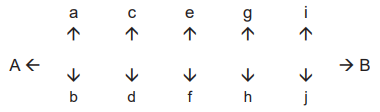
AB – eixo horizontal das variantes geográficas. ab, cd, ef, gh, ij – eixos verticais das variantes socioculturais.
Nesse cenário, as variações socioculturais podem ser influenciadas por fatores ligados diretamente ao falante (ou ao grupo a que pertence) ou à situação ou a ambos simultaneamente.
Após a leitura do excerto, marque a resposta que associa corretamente o conceito e sua indicação com exemplo dado:
AB – eixo horizontal das variantes geográficas. ab, cd, ef, gh, ij – eixos verticais das variantes socioculturais.
Nesse cenário, as variações socioculturais podem ser influenciadas por fatores ligados diretamente ao falante (ou ao grupo a que pertence) ou à situação ou a ambos simultaneamente.
Após a leitura do excerto, marque a resposta que associa corretamente o conceito e sua indicação com exemplo dado:
Ano: 2024
Banca:
IF-SP
Órgão:
IF-SP
Prova:
IF-SP - 2024 - IF-SP - Professor EBTT - Letras: Português/Inglês |
Q3047651
Inglês
Read the following text to answer the
question bellow:
The role of technology in language and literacy education
As Dourish and Bell (2011) have pointed out, “The technologically mediated world does not stand apart from the physical one within which it is embedded; rather, it provides a new set of ways for that physical world to be understood and appropriated” (p. 132). But those new ways of understanding and appropriating are not likely to be developed automatically. A favorable disposition of mind is a prerequisite. And that disposition is probably best fostered in educational settings. Young people today learn digitally mediated modes of expression largely outside of school, and those out of school uses of digital technologies are often more varied and more sophisticated than those they encounter at school (Jenkins, Purushotma, Weigel, Clinton, & Robison, 2009; Lundby, 2008). This raises the question of what the function of schools should be with respect to digital technologies and literacy. If literacy is the know-how needed to deal with the technology of writing in a given culture, and if globalization and its attendant social and technological changes have simultaneously increased individuals’ control of and control by technologies of communication, then I would suggest that the answer to the question above is that schools need to foster literacy that includes a dimension of critical semiotic awareness.
KERN, Richard. Language, literacy, and technology. Cambridge University Press, 2019.
According to the text, the technologically mediated world influences the understanding and appropriation of the physical world, therefore what role should educational settings play in this context to improve students’ awareness?
The role of technology in language and literacy education
As Dourish and Bell (2011) have pointed out, “The technologically mediated world does not stand apart from the physical one within which it is embedded; rather, it provides a new set of ways for that physical world to be understood and appropriated” (p. 132). But those new ways of understanding and appropriating are not likely to be developed automatically. A favorable disposition of mind is a prerequisite. And that disposition is probably best fostered in educational settings. Young people today learn digitally mediated modes of expression largely outside of school, and those out of school uses of digital technologies are often more varied and more sophisticated than those they encounter at school (Jenkins, Purushotma, Weigel, Clinton, & Robison, 2009; Lundby, 2008). This raises the question of what the function of schools should be with respect to digital technologies and literacy. If literacy is the know-how needed to deal with the technology of writing in a given culture, and if globalization and its attendant social and technological changes have simultaneously increased individuals’ control of and control by technologies of communication, then I would suggest that the answer to the question above is that schools need to foster literacy that includes a dimension of critical semiotic awareness.
KERN, Richard. Language, literacy, and technology. Cambridge University Press, 2019.
According to the text, the technologically mediated world influences the understanding and appropriation of the physical world, therefore what role should educational settings play in this context to improve students’ awareness?
Ano: 2024
Banca:
IF-SP
Órgão:
IF-SP
Prova:
IF-SP - 2024 - IF-SP - Professor EBTT - Letras: Português/Inglês |
Q3047650
Inglês
Scholars from various theoretical
backgrounds have continuously defined and
redefined genre from different perspectives.
Chouliaraki and Fairclough (1999, p. 21, apud
Meuer, 2013, p. 151) investigate the concept of
language use within society, emphasizing that the
relationship between language and society is not
unilateral but dialectical. From this perspective, the
analysis of social practices offers the advantage of
providing a nexus between abstract structures and
their operative mechanisms, thus reconciling the
divide between “society” and the lived experiences
of individuals.
Genres, according to what is being appointed above, are defined according to their
Genres, according to what is being appointed above, are defined according to their
Ano: 2024
Banca:
IF-SP
Órgão:
IF-SP
Prova:
IF-SP - 2024 - IF-SP - Professor EBTT - Letras: Português/Inglês |
Q3047649
Inglês
“The main difference between classroom
assessment and large-scale educational assessment
is the context of the classroom. The learners
are there as learners, and the teacher is there to
engage with the learners in the learning process.
This is true irrespective of whether the teacher is
viewed as a facilitator, an imparter of knowledge, an expert interlocutor, or whatever other model
one may choose to use.” (Fulcher; Davidson,
2007, p. 24).
In Language Testing and Assessment: An advanced resource book, Fulcher and Davidson (2007) state that there are important differences between largescale testing and classroom assessment, although the latter usually benefits from concepts presented in studies related to the former. Based on such divergence, it is correct to say that:
In Language Testing and Assessment: An advanced resource book, Fulcher and Davidson (2007) state that there are important differences between largescale testing and classroom assessment, although the latter usually benefits from concepts presented in studies related to the former. Based on such divergence, it is correct to say that:
Ano: 2024
Banca:
IF-SP
Órgão:
IF-SP
Prova:
IF-SP - 2024 - IF-SP - Professor EBTT - Letras: Português/Inglês |
Q3047648
Inglês
There are two statements below an assertion
(A) and a reason (R) about English for Specific
Purposes. Mark the correct answer about them.
Assertion (A)
When designing an English for Specific Purposes (ESP) course, the first stage is to carry out a rigorous needs analysis of the target situation and only after that the organizational patterns in specific texts should be identified to specify the linguistics means by which they are signaled. After adding such patterns to specific register and lexical components, the course design is ready. Thus, there are just these three stages in ESP for Hutchinson and Waters (1987).
Reason (R)
Using the analogy of a tree, Hutchinson and Waters (1987) defined ESP as a language product whose root is English Language Teaching (ELT) and branches are English for Academic Purposes (EAP) and English for Occupational Purposes (EOP). Thus, the main point of ESP is to teach specialized vocabulary.
Assertion (A)
When designing an English for Specific Purposes (ESP) course, the first stage is to carry out a rigorous needs analysis of the target situation and only after that the organizational patterns in specific texts should be identified to specify the linguistics means by which they are signaled. After adding such patterns to specific register and lexical components, the course design is ready. Thus, there are just these three stages in ESP for Hutchinson and Waters (1987).
Reason (R)
Using the analogy of a tree, Hutchinson and Waters (1987) defined ESP as a language product whose root is English Language Teaching (ELT) and branches are English for Academic Purposes (EAP) and English for Occupational Purposes (EOP). Thus, the main point of ESP is to teach specialized vocabulary.
Ano: 2024
Banca:
IF-SP
Órgão:
IF-SP
Prova:
IF-SP - 2024 - IF-SP - Professor EBTT - Letras: Português/Inglês |
Q3047647
Inglês
In The Postmethod Condition: (E)merging
Strategies for Second/Foreign Language Teaching,
Kumaravadivelu (1994) states that a widespread
dissatisfaction with the conventional concept of
method has produced what the author calls the
“postmethod condition”, a reformulation that can
potentially reshape the character and content of
L2 (second language) teaching, teacher education,
and classroom research. In this context, fostering
language awareness consists in one out of ten macro
strategies proposed by the author in a strategic
framework for L2 teaching in the postmethod era.
Regarding the concept of language awareness
proposed by the author, it is correct to say that:
Ano: 2024
Banca:
IF-SP
Órgão:
IF-SP
Prova:
IF-SP - 2024 - IF-SP - Professor EBTT - Letras: Português/Inglês |
Q3047646
Inglês
Brazilian learners often base their
pronunciation on spelling. This tendency
is understandable, given that Portuguese
pronunciation closely aligns with its orthography,
making it easier to transfer these habits to the
acquisition of a second language. Nonetheless,
it is crucial to recognize pronunciation as a vital
component of effective communication, demanding
clarity and comprehensibility. In order to foment
that habit, educators may use the International
Phonetic Alphabet (IPA), which provides symbols
that accurately represent the standard sounds
produced during speech. Integrating the IPA to
various pedagogical approaches can significantly
enhance students’ pronunciation skills. According
to IPA transcriptions quoted by Swan (2005,
p.xxx), the words house, occasion, cheap, with,
think are pronounced as follows:
Ano: 2024
Banca:
IF-SP
Órgão:
IF-SP
Prova:
IF-SP - 2024 - IF-SP - Professor EBTT - Letras: Português/Inglês |
Q3047645
Inglês
Language teaching has been characterized
by several methods and approaches which were
popular at some point and declined over the years.
There are many elements when it comes to teaching
a foreign language from theory of language to roles
of materials. Which of the following describes
a language teaching based mainly on grammar
teaching and courses segmented into separate
language skills with preoccupation with rules as
described in Brown (2007)?
Ano: 2024
Banca:
IF-SP
Órgão:
IF-SP
Prova:
IF-SP - 2024 - IF-SP - Professor EBTT - Letras: Português/Inglês |
Q3047644
Inglês
Read the following text to answer the
question bellow:
Literacy involves having the wherewithal to base one’s interpretive and creative decisions on one’s personal purposes, one’s understanding of the medium one is working with, and the conditions of possibility of reception, acceptance, or rejection by others. The importance of the medium translates into a number of pedagogical goals for language and literacy education:
• To develop learners’ ability to reflect on relationships between language forms and their material contexts.
• To make learners aware of how those relationships change over time and through different mediums and different cultures of reading (i.e., to make learners aware of the historical precedents that have helped shape the communication technologies they use).
• To develop learners’ ability to analyze mediums to identify their ideological (or commercial) underpinnings, and to be aware of how mediums can be used to manipulate consumers and citizens, and to resist such manipulation. To accomplish these goals, teachers should engage learners with questions about how the new media born of the digital age relate to ‘old’ media, and perhaps even ancient media, to allow them to discover what aspects of literacy have remained relatively constant, which have changed, and what the significance of those changes might be.
KERN, Richard. Language, literacy, and technology. Cambridge University Press, 2019.
Based on the text, which of the following best describes the pedagogical goals for language and literacy education in the context of media?
Literacy involves having the wherewithal to base one’s interpretive and creative decisions on one’s personal purposes, one’s understanding of the medium one is working with, and the conditions of possibility of reception, acceptance, or rejection by others. The importance of the medium translates into a number of pedagogical goals for language and literacy education:
• To develop learners’ ability to reflect on relationships between language forms and their material contexts.
• To make learners aware of how those relationships change over time and through different mediums and different cultures of reading (i.e., to make learners aware of the historical precedents that have helped shape the communication technologies they use).
• To develop learners’ ability to analyze mediums to identify their ideological (or commercial) underpinnings, and to be aware of how mediums can be used to manipulate consumers and citizens, and to resist such manipulation. To accomplish these goals, teachers should engage learners with questions about how the new media born of the digital age relate to ‘old’ media, and perhaps even ancient media, to allow them to discover what aspects of literacy have remained relatively constant, which have changed, and what the significance of those changes might be.
KERN, Richard. Language, literacy, and technology. Cambridge University Press, 2019.
Based on the text, which of the following best describes the pedagogical goals for language and literacy education in the context of media?
Ano: 2024
Banca:
IF-SP
Órgão:
IF-SP
Prova:
IF-SP - 2024 - IF-SP - Professor EBTT - Letras: Português/Inglês |
Q3047643
Inglês
KUMARAVADIVELU, B. (1994, p.28-29)
points out three important categories of language
teaching method: language-centered, learnercentered and learning-centered. Although, from the
practitioner’s point of view, none of these methods can
be realized in their purest form in the actual classroom,
the sample below can be classified as follow:
Introductory classroom Young EFL learners in an English language school. Teacher starts the class asking a strong learner, ‘Enzo, how are you?’ The learner responds, ‘Fine, how are you?’. The teacher continues, asking different learners, who respond in turn: Teacher: Sophia, how are you? Student: Fine, how are you? Teacher: Francisco, how are you? Student: Fine, how are you? Teacher: Valentina, how are you? Student: Fine, how are you? If a learner struggles to produce the response, the teacher demonstrates the correct utterance by first mouthing the syllables and then saying them aloud if necessary. The teacher corrects pronunciation, particularly emphasizing the /h/ sound in ‘how’ by breathing on her/his hand as if using a mirror, and drills the prompts with the students. The activity continues until every learner has been asked and has provided the correct response.
Introductory classroom Young EFL learners in an English language school. Teacher starts the class asking a strong learner, ‘Enzo, how are you?’ The learner responds, ‘Fine, how are you?’. The teacher continues, asking different learners, who respond in turn: Teacher: Sophia, how are you? Student: Fine, how are you? Teacher: Francisco, how are you? Student: Fine, how are you? Teacher: Valentina, how are you? Student: Fine, how are you? If a learner struggles to produce the response, the teacher demonstrates the correct utterance by first mouthing the syllables and then saying them aloud if necessary. The teacher corrects pronunciation, particularly emphasizing the /h/ sound in ‘how’ by breathing on her/his hand as if using a mirror, and drills the prompts with the students. The activity continues until every learner has been asked and has provided the correct response.
Ano: 2024
Banca:
IF-SP
Órgão:
IF-SP
Prova:
IF-SP - 2024 - IF-SP - Professor EBTT - Letras: Português/Inglês |
Q3047642
Inglês
“Em termos práticos, a acepção convencional de conhecimento e sujeito, fundamentada na
lógica da concentração, do individualismo e da
normatização, remonta ao modelo liberal-positivista de educação que “transmite” uma verdade
universal e acabada a um sujeito que a recebe de
maneira diretiva e que a devolve a contento de
modelos previamente determinados pela instituição escolar. Ao passo que a acepção pós-moderna
de conhecimento e de sujeito tenta romper com
a ideia de transmissão ao compreender o conhecimento como construção sociocultural. Nessa
perspectiva, a produção de sentidos passa a ser
compreendida sob o viés da colaboração, cujas
significações devem ser mediadas pela escola.”
(Duboc, 2015, p. 668)
In Avaliação da aprendizagem de línguas e os multiletramentos, Duboc (2015) states that the emergence of new literacies in the post-typographical society is closely related to a new understanding of subject, language and meaning making processes. Regarding knowledge construction in both moments discussed by the author, it is correct to say that:
In Avaliação da aprendizagem de línguas e os multiletramentos, Duboc (2015) states that the emergence of new literacies in the post-typographical society is closely related to a new understanding of subject, language and meaning making processes. Regarding knowledge construction in both moments discussed by the author, it is correct to say that:
Ano: 2024
Banca:
IF-SP
Órgão:
IF-SP
Prova:
IF-SP - 2024 - IF-SP - Professor EBTT - Letras: Português/Inglês |
Q3047641
Inglês

Fonte: Disponível em: https://phdcomics.com/comics.php?f=1374.Acesso em: 30 ago. 2024.

Fonte: Disponível em: https://worldofmirth.com/products/ ugh-as-if-clueless-vinyl-sticker. Acesso em: 30 ago. 2024.
How does the semantic use of ‘as if’ in the final panel of the comic strip in Text 1 contrast with its application in Text 2?
Ano: 2024
Banca:
IF-SP
Órgão:
IF-SP
Prova:
IF-SP - 2024 - IF-SP - Professor EBTT - Letras: Português/Inglês |
Q3047640
Inglês
Fonte: Disponível em: https://www.cartoonstock.com/ cartoon?searchID=CS249584. Acesso em: 2 ago. 2024.
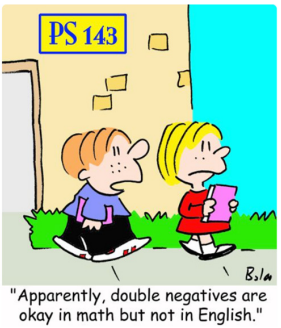
The comic cartoons, frequently, highlight an interesting linguistic construction often censured by grammarians: the use of double negatives to articulate a single negation. The critique of double negatives is based on the notion that negation is an absolute concept; something is either present or absent, and adding a second negative into a sentence does not make it more negative than it was before. However, Swan (2005, p. 364) reminds us that “multiple negatives are sometimes used instead of simple positive structures for special stylistic effects. This is rather literary; in spoken English, it can seem unnatural or old-fashioned”. In which of the alternatives bellow there is a purposeful use of a double negative structure for stylistic gains?
Ano: 2024
Banca:
IF-SP
Órgão:
IF-SP
Prova:
IF-SP - 2024 - IF-SP - Professor EBTT - Letras: Português/Inglês |
Q3047639
Inglês
Read the following text to answer the
question bellow:
The use of the word ‘America’ in the singular and without an adjective may shock the reader. In the expressions ‘God bless America’ or ‘Make America great again’, the part is taken for the whole. In Latin America, people speak more accurately of the Americas - Las Americas. ‘America’ was the baptismal name given in I507 by the German cartographer Martin Waldseemüller in Saint-Diédes-Vosges, based on the voyage of the Italian Amerigo Vespucci to only the southern half of the Western hemisphere. The symbolic cornering of its two continents by English-speaking and Protestant America, ignoring the Romance languages and Catholic traditions in the rest of the New World, has since expressed the relationship of forces between them. In what follows, the word designates less a state and a territory than a certain form of civilization.
DEBRAY, Regis. Civilization. How we all became American. Verso: London, 2019.
According to the text, what does the use of the term ‘America’ without an adjective signify in the context of English-speaking and Protestant America?
The use of the word ‘America’ in the singular and without an adjective may shock the reader. In the expressions ‘God bless America’ or ‘Make America great again’, the part is taken for the whole. In Latin America, people speak more accurately of the Americas - Las Americas. ‘America’ was the baptismal name given in I507 by the German cartographer Martin Waldseemüller in Saint-Diédes-Vosges, based on the voyage of the Italian Amerigo Vespucci to only the southern half of the Western hemisphere. The symbolic cornering of its two continents by English-speaking and Protestant America, ignoring the Romance languages and Catholic traditions in the rest of the New World, has since expressed the relationship of forces between them. In what follows, the word designates less a state and a territory than a certain form of civilization.
DEBRAY, Regis. Civilization. How we all became American. Verso: London, 2019.
According to the text, what does the use of the term ‘America’ without an adjective signify in the context of English-speaking and Protestant America?
Ano: 2024
Banca:
IF-SP
Órgão:
IF-SP
Prova:
IF-SP - 2024 - IF-SP - Professor EBTT - Letras: Português/Inglês |
Q3047638
Inglês
Read the following text to answer the
question bellow:
According to Dudley-Evans and St John (1998, 10-11), there are several widely-believed essential advantages of ESP courses: they are more motivating than EGP courses as they focus on the learner’s needs, more cost-effective, and the aims are widely accepted by learners. However, the level of motivation depends on the individual learner especially in ESP as learners seek variety from the commonly addressed topics. The problem here is that it is, naturally, easier to do specific work with highly motivated students whereas with less motivated students teachers tend to stick with more general work and topics. In ESP, it is crucial to present any teaching activity in a context regardless of the aim. Dudley-Evans and St John distinguish in this respect “carrier content” and “real content” (1998, 11): carrier content describes an authentic topic to teach the real content which is the language of process.
KOPPITSCH, Gerlinde. Teaching English for Specific Purposes. An action research project. Master Thesis. Alpen-Adria-Universität Klagenfurt, Klagenfurt, 2019.
According to the text, what is a crucial aspect of teaching English for Specific Purposes (ESP) courses?
According to Dudley-Evans and St John (1998, 10-11), there are several widely-believed essential advantages of ESP courses: they are more motivating than EGP courses as they focus on the learner’s needs, more cost-effective, and the aims are widely accepted by learners. However, the level of motivation depends on the individual learner especially in ESP as learners seek variety from the commonly addressed topics. The problem here is that it is, naturally, easier to do specific work with highly motivated students whereas with less motivated students teachers tend to stick with more general work and topics. In ESP, it is crucial to present any teaching activity in a context regardless of the aim. Dudley-Evans and St John distinguish in this respect “carrier content” and “real content” (1998, 11): carrier content describes an authentic topic to teach the real content which is the language of process.
KOPPITSCH, Gerlinde. Teaching English for Specific Purposes. An action research project. Master Thesis. Alpen-Adria-Universität Klagenfurt, Klagenfurt, 2019.
According to the text, what is a crucial aspect of teaching English for Specific Purposes (ESP) courses?
Ano: 2024
Banca:
IF-SP
Órgão:
IF-SP
Prova:
IF-SP - 2024 - IF-SP - Professor EBTT - Letras: Português/Inglês |
Q3047637
Inglês
It is believed students should develop their
communicative competence since the main aim of
learning a foreign language is to communicate in
an effective way. In order to do so, teachers play
a pivotal role when planning and delivering their
lessons which are expected to develop students’
competences in the language.
What are the four main elements of the communicative competence framework presented by Canale and Swain (1980) which is the foundation of many studies on English language teaching like Almeida Filho (2005)?
What are the four main elements of the communicative competence framework presented by Canale and Swain (1980) which is the foundation of many studies on English language teaching like Almeida Filho (2005)?
Ano: 2024
Banca:
IF-SP
Órgão:
IF-SP
Prova:
IF-SP - 2024 - IF-SP - Professor EBTT - Letras: Português/Inglês |
Q3047635
Português
De acordo com a teoria dos gêneros discursivos, apresentada por Bakhtin (1997), todo texto é
produzido em um contexto específico, o que implica a necessidade de considerar uma série de fatores para garantir a sua adequação e eficácia comunicativa. Esses fatores incluem o público-alvo, o
veículo de circulação, o contexto sócio-histórico,
as regularidades do gênero textual e a variedade
linguística adequada.
BAKHTIN, Mikhail. Os gêneros do discurso. In: Estética da criação verbal. 2ª ed. São Paulo: Martins Fontes, 1997.
Considerando essas premissas, imagine que você é responsável por escrever um artigo de opinião para um jornal de grande circulação. O tema é “O impacto das redes sociais na formação da identidade dos jovens”. O público-alvo são leitores de faixa etária variada, com diferentes níveis de escolaridade e acesso à informação.
Qual alternativa apresenta a melhor abordagem para garantir a adequação e eficácia do texto ao contexto de produção e ao público-alvo?
BAKHTIN, Mikhail. Os gêneros do discurso. In: Estética da criação verbal. 2ª ed. São Paulo: Martins Fontes, 1997.
Considerando essas premissas, imagine que você é responsável por escrever um artigo de opinião para um jornal de grande circulação. O tema é “O impacto das redes sociais na formação da identidade dos jovens”. O público-alvo são leitores de faixa etária variada, com diferentes níveis de escolaridade e acesso à informação.
Qual alternativa apresenta a melhor abordagem para garantir a adequação e eficácia do texto ao contexto de produção e ao público-alvo?

 Conheça nossos planos