Foram encontradas 2.711 questões
Resolva questões gratuitamente!
Junte-se a mais de 4 milhões de concurseiros!


Considere verdadeiras as seguintes premissas.
I - Bruno é mineiro ou Pedro é baiano.
II - Se Ana é atleta então Gisele não é professora.
III - Se Pedro é baiano então Gisele é professora.
Se Ana é atleta então, a partir dessas premissas, é correto concluir que
Analise os valores lógicos das proposições e informe se é verdadeiro (V) ou falso (F) o que se afirma.
( ) O número 8 é par e o Brasil é um país europeu.
( ) Se 3+5=9 então 7 > 9
( ) Virginópolis é uma cidade do estado de Minas Gerais ou Belo Horizonte é a capital do Brasil.
De acordo com os valores lógicos das proposições, a sequência correta é:
Considere a tirinha a seguir.
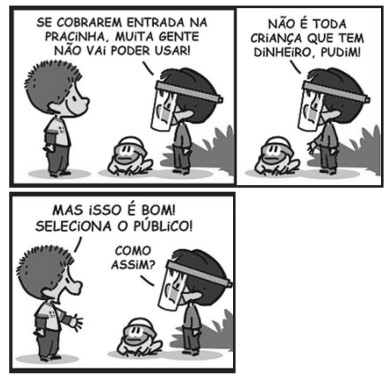
Disponível em https://goo.gl/ILAC6K Acesso em 20 abr. 2024
A implicação lógica apresentada no primeiro quadrinho possui uma equivalência na proposição:
A QUESTÃO SE REFERE À TIRINHA A SEGUIR.
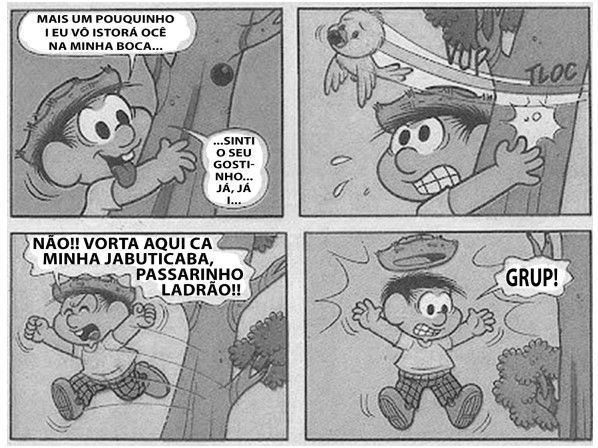
Disponível em: https://arquivosturmadamonica.blogspot.com/2023/02/chico-bento-hq-epoca-de-jaboticaba.html Acesso em: 26 fev. 2024. Adaptado.
Sobre os sinais de pontuação na tirinha, analise as asserções a seguir e a relação proposta entre elas.
I – A vírgula, no terceiro quadrinho, é obrigatória
PORQUE
II – foi empregada para isolar o aposto explicativo.
Sobre as asserções, é correto afirmar que
A QUESTÃO SE REFERE À TIRINHA A SEGUIR.
Disponível em: https://arquivosturmadamonica.blogspot.com/2023/02/chico-bento-hq-epoca-de-jaboticaba.html Acesso em: 26 fev. 2024. Adaptado.
As figuras de linguagem dão à linguagem maior expressividade e transmitem emoção, beleza, ironia, sonoridade etc.
No segundo quadrinho da tirinha, é correto afirmar que “vup” e “tloc” representam a figura
A QUESTÃO SE REFERE À TIRINHA A SEGUIR.
Disponível em: https://arquivosturmadamonica.blogspot.com/2023/02/chico-bento-hq-epoca-de-jaboticaba.html Acesso em: 26 fev. 2024. Adaptado.
Segundo Cereja e Cochar (2013, p.29), “nem todos falam como nós. Isso ocorre por diferentes razões: nascemos e crescemos em regiões e momentos diferentes; frequentamos a escola por menos ou mais tempo; convivemos em determinados grupos ou classes sociais. Essas diferenças no uso da língua constituem as variedades linguísticas.”
A esse respeito, é correto afirmar que a fala de Chico Bento, na tirinha, é exemplo de variação
TEXTO PARA A QUESTÃO.
O tempo e as jabuticabas
Rubens Alves*
Contei meus anos e descobri que tive menos tempo para viver daqui para frente do que já vivi até agora. Sinto-me como aquela menina que ganhou uma bacia de jabuticabas. As primeiras, ela chupou displicente, mas percebendo que faltam um pouco, rói o caroço.
Já não tenho tempo para lidar com mediocridades. Não quero estar em reuniões que desfilam egos inflados. Não tolero gabolices. Inquieto-me com invejosos tentando destruir quem eles admiram, cobiçando seus lugares, talentos e sorte. Já não tenho tempo para projetos megalomaníacos. Não participei de conferências que estabeleceram prazos fixos para reverter a miséria do mundo.
Já não tenho tempo para reuniões intermináveis para discutir estatutos, normas, procedimentos e regimentos internos. Já não tenho tempo para administrar melindres de pessoas que, apesar da idade cronológica, são imaturas. Lembrei-me agora de Mário de Andrade que afirmou: "as pessoas não debatem conteúdos, apenas os rótulos".
Meu tempo tornou-se escasso para debater rótulos, quero a essência, minha alma tem pressa... Sem muitas jabuticabas na bacia, quero viver ao lado da gente humana, muito humana; que sabe rir de seus tropeços, não se encanta com triunfos, não se considera eleito antes da hora, não foge de sua mortalidade, defende a dignidade dos marginalizados. Caminhar perto de coisas e pessoas de verdade, desfrutar desse amor absolutamente sem fraudes, nunca será perda de tempo. O essencial faz a vida valer a pena.
* Teólogo, educador, tradutor, psicanalista e escritor brasileiro.
Disponível em: https://www.gilbertogodoy.com.br/ler-post/o-tempo-e-asjabuticabas-%E2%80%93-rubem-alves Acesso em: 26 fev. 2024. Adaptado.
“Oração subordinada é a que depende de outra: serve-lhe de termo e completa-lhe ou amplia-lhe o sentido”. (Cegalla, 2010, p.379)
Considerando-se esse conceito, qual é a oração sublinhada que exerce o papel de adjetivo, ou seja, que é uma oração subordinada adjetiva?
TEXTO PARA A QUESTÃO.
O tempo e as jabuticabas
Rubens Alves*
Contei meus anos e descobri que tive menos tempo para viver daqui para frente do que já vivi até agora. Sinto-me como aquela menina que ganhou uma bacia de jabuticabas. As primeiras, ela chupou displicente, mas percebendo que faltam um pouco, rói o caroço.
Já não tenho tempo para lidar com mediocridades. Não quero estar em reuniões que desfilam egos inflados. Não tolero gabolices. Inquieto-me com invejosos tentando destruir quem eles admiram, cobiçando seus lugares, talentos e sorte. Já não tenho tempo para projetos megalomaníacos. Não participei de conferências que estabeleceram prazos fixos para reverter a miséria do mundo.
Já não tenho tempo para reuniões intermináveis para discutir estatutos, normas, procedimentos e regimentos internos. Já não tenho tempo para administrar melindres de pessoas que, apesar da idade cronológica, são imaturas. Lembrei-me agora de Mário de Andrade que afirmou: "as pessoas não debatem conteúdos, apenas os rótulos".
Meu tempo tornou-se escasso para debater rótulos, quero a essência, minha alma tem pressa... Sem muitas jabuticabas na bacia, quero viver ao lado da gente humana, muito humana; que sabe rir de seus tropeços, não se encanta com triunfos, não se considera eleito antes da hora, não foge de sua mortalidade, defende a dignidade dos marginalizados. Caminhar perto de coisas e pessoas de verdade, desfrutar desse amor absolutamente sem fraudes, nunca será perda de tempo. O essencial faz a vida valer a pena.
* Teólogo, educador, tradutor, psicanalista e escritor brasileiro.
Disponível em: https://www.gilbertogodoy.com.br/ler-post/o-tempo-e-asjabuticabas-%E2%80%93-rubem-alves Acesso em: 26 fev. 2024. Adaptado.
Crase é a contração de duas vogais iguais, sendo representada com acento grave.
Sobre o emprego da crase, analise as asserções a seguir e a relação proposta entre elas.
I – É facultativo o acento grave na expressão “valer a pena”
PORQUE
II – o verbo “valer”, neste caso, é também transitivo indireto.
Sobre as asserções, é correto afirmar que
TEXTO PARA A QUESTÃO.
O tempo e as jabuticabas
Rubens Alves*
Contei meus anos e descobri que tive menos tempo para viver daqui para frente do que já vivi até agora. Sinto-me como aquela menina que ganhou uma bacia de jabuticabas. As primeiras, ela chupou displicente, mas percebendo que faltam um pouco, rói o caroço.
Já não tenho tempo para lidar com mediocridades. Não quero estar em reuniões que desfilam egos inflados. Não tolero gabolices. Inquieto-me com invejosos tentando destruir quem eles admiram, cobiçando seus lugares, talentos e sorte. Já não tenho tempo para projetos megalomaníacos. Não participei de conferências que estabeleceram prazos fixos para reverter a miséria do mundo.
Já não tenho tempo para reuniões intermináveis para discutir estatutos, normas, procedimentos e regimentos internos. Já não tenho tempo para administrar melindres de pessoas que, apesar da idade cronológica, são imaturas. Lembrei-me agora de Mário de Andrade que afirmou: "as pessoas não debatem conteúdos, apenas os rótulos".
Meu tempo tornou-se escasso para debater rótulos, quero a essência, minha alma tem pressa... Sem muitas jabuticabas na bacia, quero viver ao lado da gente humana, muito humana; que sabe rir de seus tropeços, não se encanta com triunfos, não se considera eleito antes da hora, não foge de sua mortalidade, defende a dignidade dos marginalizados. Caminhar perto de coisas e pessoas de verdade, desfrutar desse amor absolutamente sem fraudes, nunca será perda de tempo. O essencial faz a vida valer a pena.
* Teólogo, educador, tradutor, psicanalista e escritor brasileiro.
Disponível em: https://www.gilbertogodoy.com.br/ler-post/o-tempo-e-asjabuticabas-%E2%80%93-rubem-alves Acesso em: 26 fev. 2024. Adaptado.
Sobre a classificação morfológica de vocábulos no texto, informe se é verdadeiro (V) ou falso (F) o que se afirma.
( ) “Perda” é o verbo principal da locução “será perda”. (§ 5)
( ) “Humana” é um adjetivo e qualifica o substantivo “gente”. (§ 5)
( ) “Tropeços” é um substantivo simples, que nomeia uma ação. (§ 5)
( ) “Intermináveis” é o tempo de duração das reuniões e, por isso, é um advérbio. (§ 4)
De acordo com as afirmações, a sequência correta é:
TEXTO PARA A QUESTÃO.
O tempo e as jabuticabas
Rubens Alves*
Contei meus anos e descobri que tive menos tempo para viver daqui para frente do que já vivi até agora. Sinto-me como aquela menina que ganhou uma bacia de jabuticabas. As primeiras, ela chupou displicente, mas percebendo que faltam um pouco, rói o caroço.
Já não tenho tempo para lidar com mediocridades. Não quero estar em reuniões que desfilam egos inflados. Não tolero gabolices. Inquieto-me com invejosos tentando destruir quem eles admiram, cobiçando seus lugares, talentos e sorte. Já não tenho tempo para projetos megalomaníacos. Não participei de conferências que estabeleceram prazos fixos para reverter a miséria do mundo.
Já não tenho tempo para reuniões intermináveis para discutir estatutos, normas, procedimentos e regimentos internos. Já não tenho tempo para administrar melindres de pessoas que, apesar da idade cronológica, são imaturas. Lembrei-me agora de Mário de Andrade que afirmou: "as pessoas não debatem conteúdos, apenas os rótulos".
Meu tempo tornou-se escasso para debater rótulos, quero a essência, minha alma tem pressa... Sem muitas jabuticabas na bacia, quero viver ao lado da gente humana, muito humana; que sabe rir de seus tropeços, não se encanta com triunfos, não se considera eleito antes da hora, não foge de sua mortalidade, defende a dignidade dos marginalizados. Caminhar perto de coisas e pessoas de verdade, desfrutar desse amor absolutamente sem fraudes, nunca será perda de tempo. O essencial faz a vida valer a pena.
* Teólogo, educador, tradutor, psicanalista e escritor brasileiro.
Disponível em: https://www.gilbertogodoy.com.br/ler-post/o-tempo-e-asjabuticabas-%E2%80%93-rubem-alves Acesso em: 26 fev. 2024. Adaptado.
TEXTO PARA A QUESTÃO.
O tempo e as jabuticabas
Rubens Alves*
Contei meus anos e descobri que tive menos tempo para viver daqui para frente do que já vivi até agora. Sinto-me como aquela menina que ganhou uma bacia de jabuticabas. As primeiras, ela chupou displicente, mas percebendo que faltam um pouco, rói o caroço.
Já não tenho tempo para lidar com mediocridades. Não quero estar em reuniões que desfilam egos inflados. Não tolero gabolices. Inquieto-me com invejosos tentando destruir quem eles admiram, cobiçando seus lugares, talentos e sorte. Já não tenho tempo para projetos megalomaníacos. Não participei de conferências que estabeleceram prazos fixos para reverter a miséria do mundo.
Já não tenho tempo para reuniões intermináveis para discutir estatutos, normas, procedimentos e regimentos internos. Já não tenho tempo para administrar melindres de pessoas que, apesar da idade cronológica, são imaturas. Lembrei-me agora de Mário de Andrade que afirmou: "as pessoas não debatem conteúdos, apenas os rótulos".
Meu tempo tornou-se escasso para debater rótulos, quero a essência, minha alma tem pressa... Sem muitas jabuticabas na bacia, quero viver ao lado da gente humana, muito humana; que sabe rir de seus tropeços, não se encanta com triunfos, não se considera eleito antes da hora, não foge de sua mortalidade, defende a dignidade dos marginalizados. Caminhar perto de coisas e pessoas de verdade, desfrutar desse amor absolutamente sem fraudes, nunca será perda de tempo. O essencial faz a vida valer a pena.
* Teólogo, educador, tradutor, psicanalista e escritor brasileiro.
Disponível em: https://www.gilbertogodoy.com.br/ler-post/o-tempo-e-asjabuticabas-%E2%80%93-rubem-alves Acesso em: 26 fev. 2024. Adaptado.
Shonto Begay, artista, poeta e diretor cinematográfico, nasceu na nação Navajo, Estados Unidos. “Grandmother”, apresentado para leitura e exame a seguir, exibe algumas de suas impressões acerca da cultura dos povos originários norte-americanos que estão especificamente conectadas às escolhas representadas em:
Grandmother
Grandmother was strong, like a distant mesa.
From her sprang many stories of days long ago.
From her gentle manners
Lessons were learned
Not easily forgotten.
She told us time and again
That the earth is our mother,
Our holy mother.
“Always greet the coming day
by greeting your grandparents,
Ya at eeh Shi cheii (Hello, My Grandfather)
To the young juniper tree.
Ya at eeh Shi masani (Hello, My Grandmother)
To the young pinon tree.”
The lines in her face were marks of honor,
Countless winters gazing into the blizzard,
Many summers in the hot cornfield.
Her strong brown hands, once smooth,
Carried many generations,
Gestured many stories,
Wiped away many tears.
The whiteness of her windblown hair,
A halo against the setting sun.
My grandmother was called Asdzan Alts iisi,
Small Woman. Wife of Little Hat,
Mother of generations of Bitter Water Clan,
She lived 113 years.
(Disponível em: https://cassandraljackson.tripod.com/cassandrasreadingcorner/id133.html. Acesso em: outubro de 2024.)
O emprego da forma verbal destacada na letra da canção “Somewhere only we know” da banda inglesa Keane, cantada nos shows pelo Brasil em 2024, justifica-se por:
I walked across an empty land
I knew the pathway like the back of my hand
I felt the earth beneath my feet
Sat by the river and it made me complete
Oh, simple thing, where have you gone?
I'm getting old, and I need something to rely on
So, tell me when you're gonna let me in
I'm getting tired, and I need somewhere to begin
I came across a fallen tree
I felt the branches of it looking at me
Is this the place we used to love?
Is this the place that I've been dreaming of?
Oh, simple thing, where have you gone?
I'm getting old, and I need something to rely on
So, tell me when you're gonna let me in
I'm getting tired, and I need somewhere to begin
And if you have a minute, why don't we go
Talk about it somewhere only we know?
This could be the end of everything
So, why don't we go somewhere only we know?
Somewhere only we know
Oh, simple thing, where have you gone?
I'm getting old, and I need something to rely on
So, tell me when you're gonna let me in
I'm getting tired, and I need somewhere to begin
And if you have a minute, why don't we go
Talk about it somewhere only we know?
This could be the end of everything
So, why don't we go?
So, why don't we go?
Ooh, oh-oh
Ah, oh
This could be the end of everything
So, why don't we go somewhere only we know?
Somewhere only we know
Somewhere only we know
(Disponível em: https://www.letras.mus.br/keane. Acesso em: outubro de 2024.)
Leia o texto a seguir e avalie as afirmativas apresentadas.
The conceptual and epistemological grounds of literacy are being stretched as the encoded worlds we navigate increasingly interpenetrate multicultural, multilingual, and multimodal contexts. The twenty-first century finds us at a critical juncture for reevaluating English language and literacy teaching agendas. The technological revolution has facilitated and augmented human communication such that everyday interactions now essentially include digital interfaces. Language, text, and discourse norms and practices are being rapidly expanded and reinvented in response to new media and global networks. The language driving the majority of intercultural web traffic is English, which reinforces its position as a global language and adds an insidious dimension of cybercolonialism. Teachers are in crisis: domains for English language socialization now extend from known geographical and social contexts to the global panorama of the virtual world in which we, too, are learners. Information and communication technologies (ICT) have created new literacies that are required by learners of all ages if they are to fairly contend for academic and economic success. Examining the evolution of literacy into multiliteracies and considering how this epistemological shift affects ELT turned out to be a necessity. Digitally responsive, pedagogically strategic, ecologically sensitive English language and literacy teaching and learning practices should, thus, be discussed.
(Available: https://www.researchgate.net/publication/226802846_From_Literacy_to_Multiliteracies_in_ELT. Adapted.)
I. As línguas são fenômenos (geo)político, histórico, social, variável, heterogêneo e sensível aos contextos de uso, sendo eles essenciais para o reconhecimento e a vivência da língua como forma de expressão identitária.
II. Ressalta-se a tendência hegemônica da língua inglesa em ambientes virtuais como aspecto estritamente benéfico.
III. O ensino de língua inglesa sofreu mudanças resultantes das novas concepções acerca de como os conhecimentos sobre a língua são adquiridos pelas pessoas a partir dos princípios da crença, verdade e justificativa.
Está correto o que se afirma apenas em
Leia o texto a seguir atentamente.
The proliferation of approaches and methods is a prominent characteristic of contemporary second and foreign language teaching. To some, this reflects the strength of the teaching profession. Invention of new classroom practices and approaches to designing language programs and materials reflects a commitment to finding more efficient and more effective ways of teaching languages. The classroom teacher and the program coordinator have a wider variety of methodological options to choose from than ever before. They can choose methods and materials according to the needs of learners, the preferences of teachers, and the constraints of the school or educational setting. To others, however, the wide variety of method options currently available confuses rather than comforts. Methods appear to be based on very different views of what language is and how a language is learned. Some methods recommend apparently strange and unfamiliar classroom techniques and practices; others are described in books that are hard to locate, obscurely written, and difficult to understand. Above all, the practitioner is often bewildered by the lack of any comprehensive theory of what an approach and method are.
Some of the responses to these issues may take the form of new approaches and methods as the teaching profession responds to the findings of new research and to the developments in educational theory and practice. The initiatives for changing programs and pedagogy may come from within the profession as well as from demands of a political, social, or even fiscal nature. Therefore, identifying some of the factors that have influenced language teaching trends’ shifts in the past, and that can be expected to continue to do so in the future, is relevant.
(Available: https://www.novaconcursos.com.br/blog/pdf/richards-jack-c.-&-rodgers.pdf. Adapted.)
Consideram-se exemplos dos fatores aos quais se refere o segundo parágrafo, EXCETO:
A fim de promover aprofundamento do conhecimento sistêmico que envolve os vários níveis da organização linguística, tais como os dos âmbitos léxico-semântico e morfológico, o professor selecionou um grupo de vocábulos extraídos de texto previamente estudado com o objetivo didático de guiar as observações e percepções dos estudantes:
fast-girl – love – they-that – some – more – and – cat – run – the – book – time – sad
Em relação aos vocábulos referidos, o critério que justifica as escolhas feitas pelo professor é:
O exame dos dados verbais e não verbais foi proposto aos estudantes de 7º ano tendo em vista a construção e a ampliação de repertório lexical por meio de textos produzidos e veiculados em ambiente virtual:

(Disponível em: https://imgflip.com/i/2xlf24. Acesso em: julho de 2024.)
Constitui-se informação consistente sobre o meme analisado:
A imagem abaixo foi apresentada pelo professor aos alunos do 9º ano como atividade prática de análise linguística para reflexão:
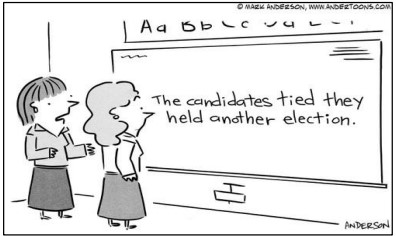
(Disponível em: https://andertoons.com. Acesso em: julho de 2024.)

 Conheça nossos planos