Questões de Concurso
Para professor - letras
Foram encontradas 2.711 questões
Resolva questões gratuitamente!
Junte-se a mais de 4 milhões de concurseiros!


Ano: 2026
Banca:
Instituto Legalle
Órgão:
Prefeitura de Campestre da Serra - RS
Provas:
Instituto Legalle - 2026 - Prefeitura de Campestre da Serra - RS - Professor de Letras - Inglês/Espanhol/Literatura
|
Instituto Legalle - 2026 - Prefeitura de Campestre da Serra - RS - Professor de Educação Física |
Instituto Legalle - 2026 - Prefeitura de Campestre da Serra - RS - Professor de Matemática |
Instituto Legalle - 2026 - Prefeitura de Campestre da Serra - RS - Professor de Pedagogia - Educação Infantil (44h) |
Instituto Legalle - 2026 - Prefeitura de Campestre da Serra - RS - Professor de Séries Iniciais |
Instituto Legalle - 2026 - Prefeitura de Campestre da Serra - RS - Psicopedagogo |
Q4219553
Estatuto da Pessoa Idosa - Lei nº 10.741 de 2003
O Município prestará assistência à criança, ao
adolescente, ao idoso e ao deficiente, estabelecendo
política e programas de proteção que lhes proporcione
segurança e condições de bem-estar social, preservando
sua dignidade e sobrevivência. Ainda, aos maiores de ____ anos e aos deficientes, é garantida a gratuidade dos
transportes coletivos urbanos.
Preenche, conforme a Lei Orgânica, CORRETAMENTE, а lacuna:
Preenche, conforme a Lei Orgânica, CORRETAMENTE, а lacuna:
Ano: 2026
Banca:
Instituto Legalle
Órgão:
Prefeitura de Campestre da Serra - RS
Provas:
Instituto Legalle - 2026 - Prefeitura de Campestre da Serra - RS - Professor de Letras - Inglês/Espanhol/Literatura
|
Instituto Legalle - 2026 - Prefeitura de Campestre da Serra - RS - Professor de Educação Física |
Instituto Legalle - 2026 - Prefeitura de Campestre da Serra - RS - Professor de Matemática |
Instituto Legalle - 2026 - Prefeitura de Campestre da Serra - RS - Professor de Pedagogia - Educação Infantil (44h) |
Instituto Legalle - 2026 - Prefeitura de Campestre da Serra - RS - Professor de Séries Iniciais |
Instituto Legalle - 2026 - Prefeitura de Campestre da Serra - RS - Psicopedagogo |
Q4219548
Português
Texto associado
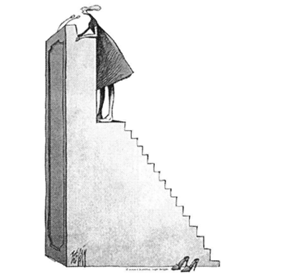
Para responder à questão, leia os textos abaixo,
TEXTO I
A proporção de mulheres e pessoas negras em cargos de alto escalão no serviço público brasileiro tem aumentado ao longo das últimas décadas, mas a diversidade nessa esfera ainda é pequena. No acumulado da série histórica, entre 1999 e 2025, os homens responderam por 75% dos cargos de direção, e as pessoas brancas por 78%. Ao observar a evolução no período, os dados indicam uma redução da predominância desses grupos. Em 2003, pessoas brancas ocupavam cerca de 80% dos cargos de alto escalão, percentual que cai para 71% em 2025. No caso dos homens, a participação recua de 80% para 63% no mesmo intervalo. O avanço da participação de mulheres e de pessoas negras se deu sobretudo a partir de 2022 e, nos dados mais recentes, a presença feminina já se aproxima de 40%. Mesmo assim, os índices ainda não refletem a pluralidade da sociedade brasileira.
As constatações fazem parte de uma série de estudos que apresentam análises sobre os perfis e as trajetórias de dirigentes no serviço público brasileiro, aliando características estritamente pessoais a aspectos relacionados à competência técnica e vínculos políticos. Dessa forma, jogam luz sobre a dinâmica de ocupação das posições de comando e como elas se estabilizam e se renovam, proporcionando maior transparência para a sociedade e para o próprio Estado brasileiro acerca dessa dinâmica. Em suma, os resultados dos estudos mostram avanços importantes, mas também evidenciam que a diversidade ainda não chegou ao alto escalão na proporção necessária. Para que o Estado responda melhor aos desafios do país, suas lideranças precisam refletir a pluralidade da sociedade brasileira. Ampliar a presença de mulheres e pessoas negras nesses espaços não é apenas uma agenda de justiça, mas também de qualidade da gestão pública.
Fonte: IPEA (2026).
TEXTO II
Fonte: https://www.revistaabogacia.com/las-mujeres en-el-campo-politico/
No Texto I, o vocábulo pequena ilustra uma
característica frequente na Língua Portuguesa: a assimetria
quantitativa entre o sistema gráfico e o sistema fônico.
Nesse caso, a ocorrência de um dígrafo consonantal (qu)
faz com que a palavra apresente 7 letras e 6 fonemas. Com
isso, assinale a alternativa cuja palavra apresenta exatamente a mesma quantidade de fonemas que a palavra pequena.
Ano: 2026
Banca:
Instituto Legalle
Órgão:
Prefeitura de Campestre da Serra - RS
Provas:
Instituto Legalle - 2026 - Prefeitura de Campestre da Serra - RS - Professor de Letras - Inglês/Espanhol/Literatura
|
Instituto Legalle - 2026 - Prefeitura de Campestre da Serra - RS - Professor de Educação Física |
Instituto Legalle - 2026 - Prefeitura de Campestre da Serra - RS - Professor de Matemática |
Instituto Legalle - 2026 - Prefeitura de Campestre da Serra - RS - Professor de Pedagogia - Educação Infantil (44h) |
Instituto Legalle - 2026 - Prefeitura de Campestre da Serra - RS - Professor de Séries Iniciais |
Instituto Legalle - 2026 - Prefeitura de Campestre da Serra - RS - Psicopedagogo |
Q4219546
Português
Texto associado
Para responder à questão, leia os textos abaixo,
TEXTO I
A proporção de mulheres e pessoas negras em cargos de alto escalão no serviço público brasileiro tem aumentado ao longo das últimas décadas, mas a diversidade nessa esfera ainda é pequena. No acumulado da série histórica, entre 1999 e 2025, os homens responderam por 75% dos cargos de direção, e as pessoas brancas por 78%. Ao observar a evolução no período, os dados indicam uma redução da predominância desses grupos. Em 2003, pessoas brancas ocupavam cerca de 80% dos cargos de alto escalão, percentual que cai para 71% em 2025. No caso dos homens, a participação recua de 80% para 63% no mesmo intervalo. O avanço da participação de mulheres e de pessoas negras se deu sobretudo a partir de 2022 e, nos dados mais recentes, a presença feminina já se aproxima de 40%. Mesmo assim, os índices ainda não refletem a pluralidade da sociedade brasileira.
As constatações fazem parte de uma série de estudos que apresentam análises sobre os perfis e as trajetórias de dirigentes no serviço público brasileiro, aliando características estritamente pessoais a aspectos relacionados à competência técnica e vínculos políticos. Dessa forma, jogam luz sobre a dinâmica de ocupação das posições de comando e como elas se estabilizam e se renovam, proporcionando maior transparência para a sociedade e para o próprio Estado brasileiro acerca dessa dinâmica. Em suma, os resultados dos estudos mostram avanços importantes, mas também evidenciam que a diversidade ainda não chegou ao alto escalão na proporção necessária. Para que o Estado responda melhor aos desafios do país, suas lideranças precisam refletir a pluralidade da sociedade brasileira. Ampliar a presença de mulheres e pessoas negras nesses espaços não é apenas uma agenda de justiça, mas também de qualidade da gestão pública.
Fonte: IPEA (2026).
TEXTO II
Fonte: https://www.revistaabogacia.com/las-mujeres en-el-campo-politico/
Considere o seguinte trecho extraído do
Texto I: Em 2003, pessoas brancas ocupavam cerca de
80% dos cargos de alto escalão... Com base na estrutura
sintática e nas regras da gramática normativa aplicadas ao
fragmento, analise as assertivas que seguem, julgando-as
V, se Verdadeiras, ou F, se Falsas:
( ) O sujeito classifica-se como composto, visto que seu núcleo (pessoas) encontra-se flexionado no plural.
( ) A expressão Em 2003 funciona sintaticamente como adjunto adverbial de tempo e localiza-se na oração de forma anteposta (deslocada).
( ) O termo brancas exerce a função sintática de adjunto adnominal, pois modifica o substantivo pessoas, atribuindo-lhe uma característica.
Qual alternativa preenche, CORRETAMENTE, de cima para baixo, os parênteses acima?
( ) O sujeito classifica-se como composto, visto que seu núcleo (pessoas) encontra-se flexionado no plural.
( ) A expressão Em 2003 funciona sintaticamente como adjunto adverbial de tempo e localiza-se na oração de forma anteposta (deslocada).
( ) O termo brancas exerce a função sintática de adjunto adnominal, pois modifica o substantivo pessoas, atribuindo-lhe uma característica.
Qual alternativa preenche, CORRETAMENTE, de cima para baixo, os parênteses acima?
Ano: 2026
Banca:
Instituto Legalle
Órgão:
Prefeitura de Campestre da Serra - RS
Provas:
Instituto Legalle - 2026 - Prefeitura de Campestre da Serra - RS - Professor de Letras - Inglês/Espanhol/Literatura
|
Instituto Legalle - 2026 - Prefeitura de Campestre da Serra - RS - Professor de Educação Física |
Instituto Legalle - 2026 - Prefeitura de Campestre da Serra - RS - Professor de Matemática |
Instituto Legalle - 2026 - Prefeitura de Campestre da Serra - RS - Professor de Pedagogia - Educação Infantil (44h) |
Instituto Legalle - 2026 - Prefeitura de Campestre da Serra - RS - Professor de Séries Iniciais |
Instituto Legalle - 2026 - Prefeitura de Campestre da Serra - RS - Psicopedagogo |
Q4219545
Português
Texto associado
Para responder à questão, leia os textos abaixo,
TEXTO I
A proporção de mulheres e pessoas negras em cargos de alto escalão no serviço público brasileiro tem aumentado ao longo das últimas décadas, mas a diversidade nessa esfera ainda é pequena. No acumulado da série histórica, entre 1999 e 2025, os homens responderam por 75% dos cargos de direção, e as pessoas brancas por 78%. Ao observar a evolução no período, os dados indicam uma redução da predominância desses grupos. Em 2003, pessoas brancas ocupavam cerca de 80% dos cargos de alto escalão, percentual que cai para 71% em 2025. No caso dos homens, a participação recua de 80% para 63% no mesmo intervalo. O avanço da participação de mulheres e de pessoas negras se deu sobretudo a partir de 2022 e, nos dados mais recentes, a presença feminina já se aproxima de 40%. Mesmo assim, os índices ainda não refletem a pluralidade da sociedade brasileira.
As constatações fazem parte de uma série de estudos que apresentam análises sobre os perfis e as trajetórias de dirigentes no serviço público brasileiro, aliando características estritamente pessoais a aspectos relacionados à competência técnica e vínculos políticos. Dessa forma, jogam luz sobre a dinâmica de ocupação das posições de comando e como elas se estabilizam e se renovam, proporcionando maior transparência para a sociedade e para o próprio Estado brasileiro acerca dessa dinâmica. Em suma, os resultados dos estudos mostram avanços importantes, mas também evidenciam que a diversidade ainda não chegou ao alto escalão na proporção necessária. Para que o Estado responda melhor aos desafios do país, suas lideranças precisam refletir a pluralidade da sociedade brasileira. Ampliar a presença de mulheres e pessoas negras nesses espaços não é apenas uma agenda de justiça, mas também de qualidade da gestão pública.
Fonte: IPEA (2026).
TEXTO II
Fonte: https://www.revistaabogacia.com/las-mujeres en-el-campo-politico/
Considere o seguinte fragmento extraído do
Texto I: No acumulado da série histórica, entre 1999 e
2025, os homens responderam por 75% dos cargos de
direção. No contexto da frase, o vocábulo sublinhado
estabelece uma relação de delimitação temporal,
demarcando o intervalo cronológico em que os dados
foram coletados. Sob o ponto de vista estritamente
morfossintático, a palavra entre classifica-se como um(a):
Ano: 2026
Banca:
ISET
Órgão:
Prefeitura de Sítio do Mato - BA
Prova:
ISET - 2026 - Prefeitura de Sítio do Mato - BA - Professor (Letras) |
Q4174371
Linguística
Leia as afirmações abaixo e depois responda ao que se
pede.
I. “________ é uma área híbrida, que mescla dois campos de conhecimento, buscando as relações entre a linguagem e o cérebro. Tem como objeto de estudo a estrutura cerebral e suas relações com a linguagem, principalmente com os distúrbios de linguagem.”
II. “________ trata a língua em suas variedades, descrevendo os fatos linguísticos sem uma avaliação do que é certo ou errado, já que, qualquer que seja a variedade linguística utilizada, ao servir para a comunicação entre as pessoas, é legítima.”
Pode-se dizer que os espaços acima em aberto podem ser corretamente preenchidos respectivamente pelas seguintes correntes dos estudos linguísticos:
I. “________ é uma área híbrida, que mescla dois campos de conhecimento, buscando as relações entre a linguagem e o cérebro. Tem como objeto de estudo a estrutura cerebral e suas relações com a linguagem, principalmente com os distúrbios de linguagem.”
II. “________ trata a língua em suas variedades, descrevendo os fatos linguísticos sem uma avaliação do que é certo ou errado, já que, qualquer que seja a variedade linguística utilizada, ao servir para a comunicação entre as pessoas, é legítima.”
Pode-se dizer que os espaços acima em aberto podem ser corretamente preenchidos respectivamente pelas seguintes correntes dos estudos linguísticos:
Ano: 2026
Banca:
ISET
Órgão:
Prefeitura de Sítio do Mato - BA
Prova:
ISET - 2026 - Prefeitura de Sítio do Mato - BA - Professor (Letras) |
Q4174370
Pedagogia
Relacione cada linha científica enumerada abaixo com
a postulação teórica condizente.
Coluna 01
(1) Sociointeracionismo
(2) Behaviorismo
(3) Cognitivismo construtivista
(4) Inatismo
Coluna 02
( ) “A aprendizagem da linguagem seria fator de exposição ao meio e decorrente de mecanismos comportamentais, como reforço, estímulo e resposta.”
( ) “Fala e pensamento prático devem ser estudados sob o mesmo prisma, e a atividade simbólica, viabilizada pela fala, tem uma função organizadora do pensamento: com a ajuda da fala, a criança começa a controlar o ambiente e o próprio comportamento.”
“A linguagem, específica da espécie, é adquirida como resultado do desencadeamento de um dispositivo inato, inscrito na mente do ser humano. É uma dotação genética, e não um conjunto de comportamentos verbais.”
( ) “No estágio de desenvolvimento cognitivo, dá-se o desenvolvimento da revolução simbólica, por meio da qual a experiência pode ser armazenada e recuperada.”
Pode-se dizer que a sequência correta do que fora proposto acima é a que se apresenta em:
Coluna 01
(1) Sociointeracionismo
(2) Behaviorismo
(3) Cognitivismo construtivista
(4) Inatismo
Coluna 02
( ) “A aprendizagem da linguagem seria fator de exposição ao meio e decorrente de mecanismos comportamentais, como reforço, estímulo e resposta.”
( ) “Fala e pensamento prático devem ser estudados sob o mesmo prisma, e a atividade simbólica, viabilizada pela fala, tem uma função organizadora do pensamento: com a ajuda da fala, a criança começa a controlar o ambiente e o próprio comportamento.”
“A linguagem, específica da espécie, é adquirida como resultado do desencadeamento de um dispositivo inato, inscrito na mente do ser humano. É uma dotação genética, e não um conjunto de comportamentos verbais.”
( ) “No estágio de desenvolvimento cognitivo, dá-se o desenvolvimento da revolução simbólica, por meio da qual a experiência pode ser armazenada e recuperada.”
Pode-se dizer que a sequência correta do que fora proposto acima é a que se apresenta em:
Ano: 2026
Banca:
ISET
Órgão:
Prefeitura de Sítio do Mato - BA
Prova:
ISET - 2026 - Prefeitura de Sítio do Mato - BA - Professor (Letras) |
Q4174369
Linguística
Leia:

Pode-se dizer que manifestações literárias como o Cordel auxiliam na diversidade linguística que deva existir no meio escolar. Quanto a isso, pode-se afirmar que sua expressividade linguística se manifesta como variedade:
Pode-se dizer que manifestações literárias como o Cordel auxiliam na diversidade linguística que deva existir no meio escolar. Quanto a isso, pode-se afirmar que sua expressividade linguística se manifesta como variedade:
Ano: 2026
Banca:
ISET
Órgão:
Prefeitura de Sítio do Mato - BA
Prova:
ISET - 2026 - Prefeitura de Sítio do Mato - BA - Professor (Letras) |
Q4174368
Pedagogia
É importante refletir sobre a escolha dos materiais
didático pedagógicos, ou seja, dos recursos utilizados no
processo de ensino-aprendizagem que favorecem a
mediação entre o conhecimento e o estudante. Quando os
materiais apresentam apenas uma realidade homogênea –
privilegiando, por exemplo, personagens brancos,
homens, urbanos, ricos –, reforçam estereótipos,
preconceitos e exclusões. Em busca da promoção da
diversidade étnico-racial no ambiente escolar, pode-se
afirmar que as ações propostas abaixo contemplam uma
prática inclusiva e democrática, EXCETO:
Ano: 2026
Banca:
ISET
Órgão:
Prefeitura de Sítio do Mato - BA
Prova:
ISET - 2026 - Prefeitura de Sítio do Mato - BA - Professor (Letras) |
Q4174367
Pedagogia
Sobre o princípio de Gestão democrática, pode-se
afirmar como incorreto o que se apresenta em:
Ano: 2026
Banca:
ISET
Órgão:
Prefeitura de Sítio do Mato - BA
Prova:
ISET - 2026 - Prefeitura de Sítio do Mato - BA - Professor (Letras) |
Q4174366
Pedagogia
Leia as afirmações abaixo antes de julgar o que se pede.
( ) Segundo o Artigo 205 da Constituição Federal, “A educação, direito de todos e dever do Estado e da família, será promovida e incentivada com a colaboração da sociedade, visando ao pleno desenvolvimento da pessoa, seu preparo para o exercício da cidadania e sua qualificação para o trabalho”.
( ) Segundo o Art. 3º da LDB, o ensino será ministrado com base nos seguintes princípios: “respeito à liberdade e apreço à tolerância” e “consideração com a diversidade étnico-racial”.
( ) Segundo o Art. 14 da LDB, a Lei dos respectivos Estados e Municípios e do Distrito Federal definirá as normas da gestão democrática do ensino público na educação básica.
( ) Segundo os princípios da LDB, é necessário que haja participação dos profissionais da educação na elaboração do projeto pedagógico da escola e também participação das comunidades escolar e local em Conselhos Escolares e em Fóruns dos Conselhos Escolares ou equivalentes.
Segundo os documentos oficiais que regem as ações da Educação Brasileira, ao se considerar V para as afirmativas verdadeiras e F para as falsas, pode-se dizer que a sequência correta, pela ordem é:
( ) Segundo o Artigo 205 da Constituição Federal, “A educação, direito de todos e dever do Estado e da família, será promovida e incentivada com a colaboração da sociedade, visando ao pleno desenvolvimento da pessoa, seu preparo para o exercício da cidadania e sua qualificação para o trabalho”.
( ) Segundo o Art. 3º da LDB, o ensino será ministrado com base nos seguintes princípios: “respeito à liberdade e apreço à tolerância” e “consideração com a diversidade étnico-racial”.
( ) Segundo o Art. 14 da LDB, a Lei dos respectivos Estados e Municípios e do Distrito Federal definirá as normas da gestão democrática do ensino público na educação básica.
( ) Segundo os princípios da LDB, é necessário que haja participação dos profissionais da educação na elaboração do projeto pedagógico da escola e também participação das comunidades escolar e local em Conselhos Escolares e em Fóruns dos Conselhos Escolares ou equivalentes.
Segundo os documentos oficiais que regem as ações da Educação Brasileira, ao se considerar V para as afirmativas verdadeiras e F para as falsas, pode-se dizer que a sequência correta, pela ordem é:
Ano: 2026
Banca:
ISET
Órgão:
Prefeitura de Sítio do Mato - BA
Prova:
ISET - 2026 - Prefeitura de Sítio do Mato - BA - Professor (Letras) |
Q4174365
Pedagogia
Sobre os objetivos gerais da Língua Portuguesa para o
Ensino Fundamental, os Parâmetros Curriculares
Nacionais (PCNs) orientam que o ensino da disciplina
deverá organizar-se de modo que os alunos sejam capazes
de:
I. “Compreender os textos orais e escritos com os quais se defrontam em diferentes situações de participação social, interpretando-os corretamente e inferindo as intenções de quem os produz”.
II. “Usar os conhecimentos adquiridos por meio da prática de reflexão sobre a língua para expandirem as possibilidades de uso da linguagem e a capacidade de análise crítica”.
III. “Valer-se do uso técnico da língua a fim de desenvolver sua autonomia crítica diante da sociedade e promover, por meio do mérito individual, os benefícios sociais consequentes das habilidades por ele adquiridas.”
IV. “Diferenciar, por meio da autonomia alcançada ao longo do processo educacional, níveis de linguagem apropriados a situações formais, em detrimento dos que se mostrarem inadequados para a plena organização social.
Pode-se dizer que está correto, segundo os PCNs, o que foi dito somente em:
I. “Compreender os textos orais e escritos com os quais se defrontam em diferentes situações de participação social, interpretando-os corretamente e inferindo as intenções de quem os produz”.
II. “Usar os conhecimentos adquiridos por meio da prática de reflexão sobre a língua para expandirem as possibilidades de uso da linguagem e a capacidade de análise crítica”.
III. “Valer-se do uso técnico da língua a fim de desenvolver sua autonomia crítica diante da sociedade e promover, por meio do mérito individual, os benefícios sociais consequentes das habilidades por ele adquiridas.”
IV. “Diferenciar, por meio da autonomia alcançada ao longo do processo educacional, níveis de linguagem apropriados a situações formais, em detrimento dos que se mostrarem inadequados para a plena organização social.
Pode-se dizer que está correto, segundo os PCNs, o que foi dito somente em:
Ano: 2026
Banca:
ISET
Órgão:
Prefeitura de Sítio do Mato - BA
Prova:
ISET - 2026 - Prefeitura de Sítio do Mato - BA - Professor (Letras) |
Q4174364
Português
Ao longo da história da investigação do
aperfeiçoamento das estratégias de produção de texto,
este passou a ser visto como uma unidade mais
abrangente que uma sequência de enunciados. Começouse assim a privilegiar os “aspectos pragmáticos” nele
existentes. De acordo com a vertente da pragmática, os
teóricos Robert-Alain Beaugrande e Wolfgang Dressler
postularam setes princípios da textualidade. Quanto a isso,
assinale a alternativa que apresente observação correta
sobre uma indicação apresentada.
Ano: 2026
Banca:
ISET
Órgão:
Prefeitura de Sítio do Mato - BA
Prova:
ISET - 2026 - Prefeitura de Sítio do Mato - BA - Professor (Letras) |
Q4174363
Pedagogia
Sobre os objetivos gerais de Língua Portuguesa para o
Ensino Fundamental, pode-se dizer que, no processo de
ensino-aprendizagem dos seus diferentes ciclos, espera-se
que o aluno amplie o domínio ativo do discurso nas
diversas situações comunicativas. Isso tem por objetivo
possibilitar a inserção efetiva deste no mundo da escrita,
ampliando suas possibilidades de participação social no
exercício da cidadania. Para isso, a escola deverá organizar
um conjunto de atividades que, progressivamente,
possibilite ao aluno o desenvolvimento de várias
competências e habilidades, EXCETO:
Ano: 2026
Banca:
ISET
Órgão:
Prefeitura de Sítio do Mato - BA
Prova:
ISET - 2026 - Prefeitura de Sítio do Mato - BA - Professor (Letras) |
Q4174362
Linguística
“A escola tem a obrigação, sim, de manter o cuidado com a
adequação social do produto linguístico de seus alunos, isto é,
tem de garantir que seus alunos entendam que têm de adequar
registros, e ela tem de garantir que eles tenham condições de
mover-se nos diferentes padrões de tensão e de frouxidão, em
conformidade com as situações de produção. Isso é obrigação
da escola, que a escola antiga valorizou tanto, a ponto de ser
estigmatizada por isso, e que, em nome da própria linguística,
a escola de hoje negligencia.” (Neves 2000, p. 52) A partir da
leitura do texto acima e da discussão do papel do professor
de Língua Portuguesa na escola, pode-se entender que o
novo conceito do estudo tem a finalidade de:
Ano: 2026
Banca:
ISET
Órgão:
Prefeitura de Sítio do Mato - BA
Prova:
ISET - 2026 - Prefeitura de Sítio do Mato - BA - Professor (Letras) |
Q4174361
Pedagogia
Leia a tirinha de Mafalda a seguir antes de responder ao
que se pede.
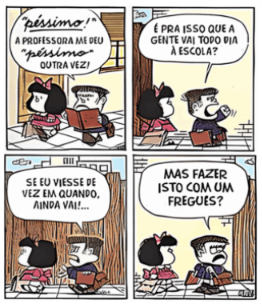
A partir da linha crítica presente no texto acima, é correto perceber sobre sua mensagem humorística que a tirinha:
A partir da linha crítica presente no texto acima, é correto perceber sobre sua mensagem humorística que a tirinha:
Ano: 2026
Banca:
ISET
Órgão:
Prefeitura de Sítio do Mato - BA
Prova:
ISET - 2026 - Prefeitura de Sítio do Mato - BA - Professor (Letras) |
Q4174360
Linguística
A variação linguística pode ocorrer em todos os níveis
da língua: lexical, fonético, morfológico, sintático e até
pragmático. Esses níveis podem estar vinculados a três
tipos de fatores, os quais são:
Ano: 2026
Banca:
ISET
Órgão:
Prefeitura de Sítio do Mato - BA
Prova:
ISET - 2026 - Prefeitura de Sítio do Mato - BA - Professor (Letras) |
Q4174359
Linguística
“A sociolinguística vem contribuir para a compreensão da
língua mediante a análise de sua relação com a sociedade, da
forma como a língua varia e muda, de acordo com os contextos
e os relacionamentos sociais.” Pode-se afirmar que os fatos
linguísticos seguintes demonstram a linha de análise
citada acima, EXCETO:
Ano: 2026
Banca:
ISET
Órgão:
Prefeitura de Sítio do Mato - BA
Prova:
ISET - 2026 - Prefeitura de Sítio do Mato - BA - Professor (Letras) |
Q4174358
Linguística
“______ é considerado o pai da linguística por ter
sistematizado os estudos linguísticos, principalmente por
intermédio da apresentação de uma terminologia que
conseguiu explicar os fatos linguísticos de forma precisa e
objetiva. Introduziu também os termos ______ e _______ para
diferenciar entre o estudo da língua em um determinado
momento e o estudo da evolução da língua ao longo do tempo.”
A partir dos estudos da Linguística moderna, pode-se afirmar que preenchem os espaços acima, pela ordem, as seguintes expressões:
A partir dos estudos da Linguística moderna, pode-se afirmar que preenchem os espaços acima, pela ordem, as seguintes expressões:
Ano: 2026
Banca:
ISET
Órgão:
Prefeitura de Sítio do Mato - BA
Prova:
ISET - 2026 - Prefeitura de Sítio do Mato - BA - Professor (Letras) |
Q4174357
Linguística
Analise as características abaixo antes de julgar o que
se pede:
I. “Não é possível a reação imediata. O escritor pode tentar antecipar as reações do leitor e incorporá-las ao texto.”
II. “O interlocutor é, geralmente, alguém específico.”
III. “Hesitações e pausas são comuns e, frequentemente, há redundâncias e repetições.”
IV. “É permanente. Pode ser relida quantas vezes forem necessárias e na velocidade de cada um.”
Considerando-se os estudos linguísticos atuais quanto à investigação do que seja pertencente à Fala ou à Escrita, pode-se afirmar que, pela ordem, a sequência correta do que se afirmou acima é:
I. “Não é possível a reação imediata. O escritor pode tentar antecipar as reações do leitor e incorporá-las ao texto.”
II. “O interlocutor é, geralmente, alguém específico.”
III. “Hesitações e pausas são comuns e, frequentemente, há redundâncias e repetições.”
IV. “É permanente. Pode ser relida quantas vezes forem necessárias e na velocidade de cada um.”
Considerando-se os estudos linguísticos atuais quanto à investigação do que seja pertencente à Fala ou à Escrita, pode-se afirmar que, pela ordem, a sequência correta do que se afirmou acima é:
Ano: 2026
Banca:
ISET
Órgão:
Prefeitura de Sítio do Mato - BA
Prova:
ISET - 2026 - Prefeitura de Sítio do Mato - BA - Professor (Letras) |
Q4174356
Pedagogia
Segundo Cagliari (2002, p. 28), “O objetivo mais geral do
ensino de português para todas as séries da escola é mostrar
como funciona a linguagem humana e, de modo particular, o
português; quais os usos que tem e como os alunos devem
fazer para estenderem ao máximo, ou abrangendo metas
específicas, esses usos nas modalidades escrita e oral, em
diferentes situações de vida.” A partir disso, é correto afirmar
que a postura pedagógica adequada do professor deve:

 Conheça nossos planos