Foram encontradas 31.379 questões
Resolva questões gratuitamente!
Junte-se a mais de 4 milhões de concurseiros!


TEXT II - Text for question.
The challenges of learning English skills and the integration of social media and video conferencing tools to help ESL learners coping with the challenges during COVID-19 pandemic: a literature review
Yong Hua Ying, Winson Eng Wei Siang, Maslawati Mohamad
Abstract
During the COVID-19 pandemic, the abrupt closures of all learning institutions have caused English as a Second Language (ESL) learners to have significant difficulties learning the English language especially for speaking skills. Speaking is one of the most important skills to learn because it is the primary mode of communication around the world. However, the majority of ESLlearners are still trying to improve their English speaking abilities. Since the implementation of the COVID-19 lockdowns, e-learning has been a well-known solution all over the world. Learners and educators need more time to adjust to online teaching and learning because most of them are exploring new technical innovations and strategies to be used in the classroom. As a result, this study includes a literature review on the challenges ESL learners encounter in learning speaking skills, as well as the use of social media and video conferencing tools to teach speaking skills. Lack of motivation and self-confidence, fear, hesitation, and limited vocabulary are some of the challenges faced by ESL learners. Hence, it is vital to determine the technology intervention used in teaching and developing speaking skills among these learners based on previous study. During the COVID-19 pandemic, some of the interventions in teaching speaking skills included utilizing social media and video conferencing applications like Facebook, WhatsApp, and others for online teaching and learning. Educators of ESLmight then pick the ones that would work best in their particular classroom.
Keywords: E-Learning, Learning of Language Skills, Social Media, Video Conferencing Tools, COVID-19 Pandemic Adapted from: https://www.scirp.org/journal/paperinformation.aspx?paperid=110450. Accessed on January 20 , 2022. th
Based on Text II, analyze the following sentences and check True (T) or False (F):
( ) ESLlearners' speaking skills were negatively affected in remote classes.
( ) Lack of motivation, fear, hesitation, limited vocabulary and lack of equipment for online classes are some of the challenges faced by ESLlearners.
( ) This research comprises a literature review on the challenges faced by ESLlearners and alternatives to teach speaking skills.
Choose the alternative with the CORRECT sequence:
TEXT II - Text for question.
The challenges of learning English skills and the integration of social media and video conferencing tools to help ESL learners coping with the challenges during COVID-19 pandemic: a literature review
Yong Hua Ying, Winson Eng Wei Siang, Maslawati Mohamad
Abstract
During the COVID-19 pandemic, the abrupt closures of all learning institutions have caused English as a Second Language (ESL) learners to have significant difficulties learning the English language especially for speaking skills. Speaking is one of the most important skills to learn because it is the primary mode of communication around the world. However, the majority of ESLlearners are still trying to improve their English speaking abilities. Since the implementation of the COVID-19 lockdowns, e-learning has been a well-known solution all over the world. Learners and educators need more time to adjust to online teaching and learning because most of them are exploring new technical innovations and strategies to be used in the classroom. As a result, this study includes a literature review on the challenges ESL learners encounter in learning speaking skills, as well as the use of social media and video conferencing tools to teach speaking skills. Lack of motivation and self-confidence, fear, hesitation, and limited vocabulary are some of the challenges faced by ESL learners. Hence, it is vital to determine the technology intervention used in teaching and developing speaking skills among these learners based on previous study. During the COVID-19 pandemic, some of the interventions in teaching speaking skills included utilizing social media and video conferencing applications like Facebook, WhatsApp, and others for online teaching and learning. Educators of ESLmight then pick the ones that would work best in their particular classroom.
Keywords: E-Learning, Learning of Language Skills, Social Media, Video Conferencing Tools, COVID-19 Pandemic Adapted from: https://www.scirp.org/journal/paperinformation.aspx?paperid=110450. Accessed on January 20 , 2022. th
In line with the abstract, we may infer that
TEXT I –
The crisis of the new coronavirus made access to education difficult for black and poor students. In English teaching, it is necessary to consider issues that have already distanced this group from learning the language, such as: difficulty in accessing technology, lack of monitoring by a family member, black girls and housework and representativeness in English teaching.
Newsroom11 / Nov. 2021
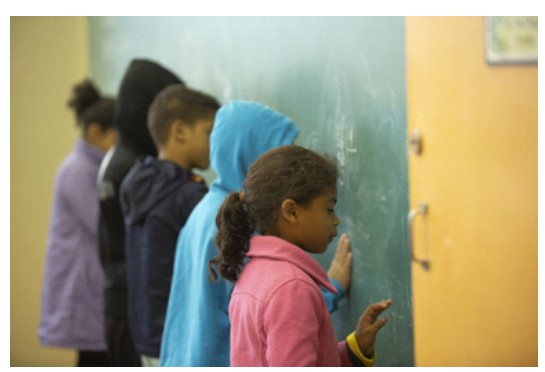
If inequality was already a reality in Brazilian education, in 2020, due to the Covid-19 pandemic — with closed schools and the adoption of remote education — the situation worsened even more. The report by the United Nations Children's Fund (UNICEF), “Scenarios of School Exclusion in Brazil”, points out that, at the end of 2020, more than 5 million Brazilian students aged 6 to 17 were without access to schools.
Of this total, more than 40% were represented by children aged 6 to 10 years, an age group in which education was almost universal in the country before the crisis of the new coronavirus. In this scenario, young people from poor, black, brown and indigenous families were the most affected.
Another data, presented by PNAD Covid, a survey by the Brazilian Institute of Geography and Statistics (IBGE), points out the supply of materials for attending classes from home: among white students in elementary school, 89% received school activities in the pandemic, among black and brown students this percentage drops to 77%.
It is a worrying context and, based on this information, we can make a cut about the exclusion of black children and teenagers and even girls in education, more specifically in English teaching. What factors further hindered these students' access to knowledge of the language? What were the problems already faced in language learning before the pandemic?
Adapted from: https://www.inglesnasescolas.org/en/headline/teaching-english-to-girls-and-black-students-problems-faced-even-before-the-pandemic/. Accessed on January 24th, 2022.
Answer question according to TEXT I.
In the sentence “What factors further hindered these students' access to knowledge of the language?” (in bold) the word “hindered” can be replaced by
TEXT I –
The crisis of the new coronavirus made access to education difficult for black and poor students. In English teaching, it is necessary to consider issues that have already distanced this group from learning the language, such as: difficulty in accessing technology, lack of monitoring by a family member, black girls and housework and representativeness in English teaching.
Newsroom11 / Nov. 2021
If inequality was already a reality in Brazilian education, in 2020, due to the Covid-19 pandemic — with closed schools and the adoption of remote education — the situation worsened even more. The report by the United Nations Children's Fund (UNICEF), “Scenarios of School Exclusion in Brazil”, points out that, at the end of 2020, more than 5 million Brazilian students aged 6 to 17 were without access to schools.
Of this total, more than 40% were represented by children aged 6 to 10 years, an age group in which education was almost universal in the country before the crisis of the new coronavirus. In this scenario, young people from poor, black, brown and indigenous families were the most affected.
Another data, presented by PNAD Covid, a survey by the Brazilian Institute of Geography and Statistics (IBGE), points out the supply of materials for attending classes from home: among white students in elementary school, 89% received school activities in the pandemic, among black and brown students this percentage drops to 77%.
It is a worrying context and, based on this information, we can make a cut about the exclusion of black children and teenagers and even girls in education, more specifically in English teaching. What factors further hindered these students' access to knowledge of the language? What were the problems already faced in language learning before the pandemic?
Adapted from: https://www.inglesnasescolas.org/en/headline/teaching-english-to-girls-and-black-students-problems-faced-even-before-the-pandemic/. Accessed on January 24th, 2022.
Answer question according to TEXT I.
The crisis of the new coronavirus and the adoption of remote education
TEXT I –
The crisis of the new coronavirus made access to education difficult for black and poor students. In English teaching, it is necessary to consider issues that have already distanced this group from learning the language, such as: difficulty in accessing technology, lack of monitoring by a family member, black girls and housework and representativeness in English teaching.
Newsroom11 / Nov. 2021
If inequality was already a reality in Brazilian education, in 2020, due to the Covid-19 pandemic — with closed schools and the adoption of remote education — the situation worsened even more. The report by the United Nations Children's Fund (UNICEF), “Scenarios of School Exclusion in Brazil”, points out that, at the end of 2020, more than 5 million Brazilian students aged 6 to 17 were without access to schools.
Of this total, more than 40% were represented by children aged 6 to 10 years, an age group in which education was almost universal in the country before the crisis of the new coronavirus. In this scenario, young people from poor, black, brown and indigenous families were the most affected.
Another data, presented by PNAD Covid, a survey by the Brazilian Institute of Geography and Statistics (IBGE), points out the supply of materials for attending classes from home: among white students in elementary school, 89% received school activities in the pandemic, among black and brown students this percentage drops to 77%.
It is a worrying context and, based on this information, we can make a cut about the exclusion of black children and teenagers and even girls in education, more specifically in English teaching. What factors further hindered these students' access to knowledge of the language? What were the problems already faced in language learning before the pandemic?
Adapted from: https://www.inglesnasescolas.org/en/headline/teaching-english-to-girls-and-black-students-problems-faced-even-before-the-pandemic/. Accessed on January 24th, 2022.
Answer question according to TEXT I.
According to the text, it is RIGHT to say that
I X for this opportunity ever since I Y for this position.
Complete according to the verb tenses and choose the alternative that correctly replaces X and Y respectively in the sentence above.
I.I will wave when I see you in the parade.
II.Will there be another wave of illness in the spring?
III.I dream of surfing the perfect wave.
Choose the option that contains the synonym:
Um(a) professor(a) de Língua Inglesa do Ensino Fundamental, ao fazer o seu Plano de Aula, escreve o seguinte: "Os estudantes deverão ler individualmente os textos indicados. Em seguida, deverão se reunir em grupo para discutir o assunto central dos textos." Considerando os elementos presentes em um Plano de Aula, o que foi escrito pelo(a) professor(a) corresponde ao item:
1.(__)A Língua Inglesa na África do Sul é reconhecida como um falar alóctone.
2.(__)A Língua Inglesa na Inglaterra é reconhecida como um falar autóctone.
3.(__)A Língua Inglesa no Canadá é reconhecida como um falar autóctone.
Após análise, assinale a alternativa que apresenta a sequência CORRETA dos itens acima, de cima para baixo:
I.The can came full of worms.
II.A drop of blood fell on the sheet.
Considering the context of each sentence, mark the alternative that presents the translation of the words in bold.
"She doesn't know whether X or not".
Complete according to the verb tense and choose the alternative that correctly replaces the X in the sentence above.
Marque a alternativa que substitui corretamente o X no texto acima.
I. My youngest daughter is one year old.
II. My team won its first major championship.
The words one and won are:
I.I think she´ll ______when she knows that.
II.He has______all the book.
Choose the correct alternative.
No primeiro dia do ano, um(a) professor(a) de Língua Inglesa do Ensino Fundamental inicia sua aula aplicando uma avaliação com o objetivo de compreender se a turma já conhece e domina alguns tempos verbais que foram abordados no ano anterior. Considerando o contexto apresentado, é possível afirmar que o(a) professor(a) aplicou uma:
I.Do ponto de vista metodológico, a apresentação de situações de leitura organizadas em pré-leitura, leitura e pós-leitura deve ser vista como potencializadora dessas aprendizagens de modo contextualizado e significativo para os estudantes, na perspectiva de um (re)dimensionamento das práticas e competências leitoras já existentes, especialmente em língua materna.
II.A vivência em leitura a partir de práticas situadas, envolvendo o contato com gêneros escritos e multimodais variados, de importância para a vida escolar, social e cultural dos estudantes, bem como as perspectivas de análise e problematização a partir dessas leituras, corroboram para o desenvolvimento da leitura crítica e para a construção de um percurso criativo e autônomo de aprendizagem da língua.
III.O trabalho com gêneros verbais e híbridos, potencializados principalmente pelos meios digitais, possibilita vivenciar, de maneira significativa e situada, diferentes modos de leitura (ler para ter uma ideia geral do texto, buscar informações específicas, compreender detalhes etc.), bem como diferentes objetivos de leitura (ler para pesquisar, para revisar a própria escrita, em voz alta para expor ideias e argumentos, para agir no mundo, posicionando-se de forma crítica, entre outras).
Está(ão) CORRETA(S) a(s) seguinte(s) proposição(ões).

 Conheça nossos planos