Questões de Concurso
Para prefeitura de passo fundo - rs
Foram encontradas 880 questões
Resolva questões gratuitamente!
Junte-se a mais de 4 milhões de concurseiros!


Ano: 2023
Banca:
OBJETIVA
Órgão:
Prefeitura de Passo Fundo - RS
Prova:
OBJETIVA - 2023 - Prefeitura de Passo Fundo - RS - Professor – Geografia |
Q2248556
Geografia
Os oceanos são importantes fontes de recursos naturais.
Sobre os recursos minerais marinhos, analisar os itens
abaixo:
I. A água dos oceanos é um bem mineral sustentável, sendo uma das principais fontes de sal para consumo humano.
II. Os recursos minerais marinhos são de natureza metálica e superficiais.
III. Os recursos minerais marinhos estão concentrados na linha de costa e nas planícies abissais.
Está(ão) CORRETO(S):
I. A água dos oceanos é um bem mineral sustentável, sendo uma das principais fontes de sal para consumo humano.
II. Os recursos minerais marinhos são de natureza metálica e superficiais.
III. Os recursos minerais marinhos estão concentrados na linha de costa e nas planícies abissais.
Está(ão) CORRETO(S):
Ano: 2023
Banca:
OBJETIVA
Órgão:
Prefeitura de Passo Fundo - RS
Prova:
OBJETIVA - 2023 - Prefeitura de Passo Fundo - RS - Professor – Geografia |
Q2248555
Geografia
Sobre os solos brasileiros, analisar os itens abaixo:
I. Os solos brasileiros são bem estudados, existindo um serviço cartográfico da Empresa Brasileira de Pesquisa Agropecuária (Embrapa) que vem realizando, desde a década de 1960, levantamentos cartográficos sistemáticos do território brasileiro.
II. No Brasil, os latossolos são, de longe, os solos mais importantes do ponto de vista da representação geográfica. Eles ocorrem em praticamente todas as regiões bioclimáticas do País, sobre diferentes tipos de rochas.
III. Um tipo de solo presente no território, classificado pela Embrapa como organossolo, é essencialmente orgânico.
Estão CORRETOS:
I. Os solos brasileiros são bem estudados, existindo um serviço cartográfico da Empresa Brasileira de Pesquisa Agropecuária (Embrapa) que vem realizando, desde a década de 1960, levantamentos cartográficos sistemáticos do território brasileiro.
II. No Brasil, os latossolos são, de longe, os solos mais importantes do ponto de vista da representação geográfica. Eles ocorrem em praticamente todas as regiões bioclimáticas do País, sobre diferentes tipos de rochas.
III. Um tipo de solo presente no território, classificado pela Embrapa como organossolo, é essencialmente orgânico.
Estão CORRETOS:
Ano: 2023
Banca:
OBJETIVA
Órgão:
Prefeitura de Passo Fundo - RS
Prova:
OBJETIVA - 2023 - Prefeitura de Passo Fundo - RS - Professor – Geografia |
Q2248554
Geografia
Considerando-se as correntes do pensamento
geográfico, numerar a 2ª coluna de acordo com a 1ª e, após,
assinalar a alternativa que apresenta a sequência CORRETA:
(1) Geografia Teorética. (2) Geografia Crítica. (3) Geografia Humanística.
(_) O espaço não é entendido como uma forma geométrica, sendo visto como o espaço vivido e experienciado. Os conceitos de paisagem e lugar ganham destaque. O conceito de lugar passa a ser visto como centro de significados, expressando não só a localização, mas o tipo de experiência com o mundo.
(_) O objeto da Geografia é a organização do espaço. Atentando-se para esse objeto, percebe-se que o interesse maior da Geografia é estudar o arranjo e a funcionalidade do espaço geográfico, a relação entre os objetos.
(_) O espaço é visto como a expressão visível da sociedade. O arranjo espacial indica o modo de socialização da natureza, ou seja, a transformação da primeira natureza em segunda natureza pelo trabalho humano.
(1) Geografia Teorética. (2) Geografia Crítica. (3) Geografia Humanística.
(_) O espaço não é entendido como uma forma geométrica, sendo visto como o espaço vivido e experienciado. Os conceitos de paisagem e lugar ganham destaque. O conceito de lugar passa a ser visto como centro de significados, expressando não só a localização, mas o tipo de experiência com o mundo.
(_) O objeto da Geografia é a organização do espaço. Atentando-se para esse objeto, percebe-se que o interesse maior da Geografia é estudar o arranjo e a funcionalidade do espaço geográfico, a relação entre os objetos.
(_) O espaço é visto como a expressão visível da sociedade. O arranjo espacial indica o modo de socialização da natureza, ou seja, a transformação da primeira natureza em segunda natureza pelo trabalho humano.
Ano: 2023
Banca:
OBJETIVA
Órgão:
Prefeitura de Passo Fundo - RS
Prova:
OBJETIVA - 2023 - Prefeitura de Passo Fundo - RS - Professor – Geografia |
Q2248553
Geografia
O Brasil é formado por diferentes biomas, sendo um
deles o Bioma Caatinga. Sobre esse bioma, analisar os itens
abaixo:
I. O Bioma Caatinga é caracterizado pelo clima muito quente e sazonalmente seco, o qual não traz reflexos para a hidrologia, para o mundo orgânico e para a socioeconomia sertaneja.
II. O Bioma Caatinga não se restringe apenas ao território brasileiro, transcendendo nossas fronteiras. Apresenta clima semiárido, com a maior biodiversidade do planeta.
III. O Bioma Caatinga é um dos biomas brasileiros mais alterados por ação antrópica, havendo inclusive a formação de grandes núcleos de desertificação em alguns pontos.
Está(ão) CORRETO(S):
I. O Bioma Caatinga é caracterizado pelo clima muito quente e sazonalmente seco, o qual não traz reflexos para a hidrologia, para o mundo orgânico e para a socioeconomia sertaneja.
II. O Bioma Caatinga não se restringe apenas ao território brasileiro, transcendendo nossas fronteiras. Apresenta clima semiárido, com a maior biodiversidade do planeta.
III. O Bioma Caatinga é um dos biomas brasileiros mais alterados por ação antrópica, havendo inclusive a formação de grandes núcleos de desertificação em alguns pontos.
Está(ão) CORRETO(S):
Ano: 2023
Banca:
OBJETIVA
Órgão:
Prefeitura de Passo Fundo - RS
Prova:
OBJETIVA - 2023 - Prefeitura de Passo Fundo - RS - Professor – Geografia |
Q2248552
Geografia
O avanço da tecnologia espacial e da ciência permitiu a
obtenção de imagens da superfície da Terra por meio da
utilização de sensores remotos instalados em satélites
artificiais. As imagens de satélites permitem o conhecimento
e o monitoramento da superfície terrestre, contribuindo em
diferentes áreas de conhecimento, entre elas o
monitoramento ambiental de florestas, processo relativo à
urbanização pelo mundo, por exemplo. Sobre o
sensoriamento remoto, assinalar a alternativa INCORRETA:
Ano: 2023
Banca:
OBJETIVA
Órgão:
Prefeitura de Passo Fundo - RS
Prova:
OBJETIVA - 2023 - Prefeitura de Passo Fundo - RS - Professor – Geografia |
Q2248551
Geografia
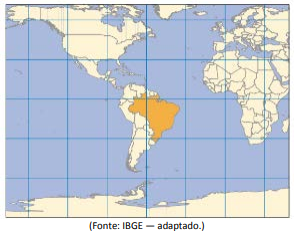
Em relação à projeção cartográfica na figura abaixo, assinalar a alternativa CORRETA:
Ano: 2023
Banca:
OBJETIVA
Órgão:
Prefeitura de Passo Fundo - RS
Prova:
OBJETIVA - 2023 - Prefeitura de Passo Fundo - RS - Professor – Geografia |
Q2248550
Pedagogia
O ensino de Geografia na atualidade se depara com os
avanços do meio técnico-científico-informacional, tornando
inevitável a utilização de novas linguagens na sala de aula
por parte do corpo docente. Sobre a introdução das
modernas tecnologias e o ensino de Geografia nas escolas,
assinalar a alternativa CORRETA:
Ano: 2023
Banca:
OBJETIVA
Órgão:
Prefeitura de Passo Fundo - RS
Prova:
OBJETIVA - 2023 - Prefeitura de Passo Fundo - RS - Professor – Geografia |
Q2248549
Pedagogia
Sobre as competências específicas de Geografia para o
Ensino Fundamental propostas na BNCC, analisar os itens
abaixo:
I. Utilizar os conhecimentos geográficos para entender a interação sociedade/natureza e exercitar o interesse e o espírito de investigação e de resolução de problemas.
II. Estabelecer conexões entre diferentes temas do conhecimento geográfico, reconhecendo a importância dos objetos técnicos para a compreensão das formas como os seres humanos fazem uso dos recursos da natureza ao longo da história.
III. Desenvolver autonomia e senso crítico para compreensão e aplicação do raciocínio geográfico na análise da ocupação humana e da produção do espaço, envolvendo os princípios de analogia, conexão, diferenciação, distribuição, extensão, localização e ordem.
Estão CORRETOS:
I. Utilizar os conhecimentos geográficos para entender a interação sociedade/natureza e exercitar o interesse e o espírito de investigação e de resolução de problemas.
II. Estabelecer conexões entre diferentes temas do conhecimento geográfico, reconhecendo a importância dos objetos técnicos para a compreensão das formas como os seres humanos fazem uso dos recursos da natureza ao longo da história.
III. Desenvolver autonomia e senso crítico para compreensão e aplicação do raciocínio geográfico na análise da ocupação humana e da produção do espaço, envolvendo os princípios de analogia, conexão, diferenciação, distribuição, extensão, localização e ordem.
Estão CORRETOS:
Ano: 2023
Banca:
OBJETIVA
Órgão:
Prefeitura de Passo Fundo - RS
Prova:
OBJETIVA - 2023 - Prefeitura de Passo Fundo - RS - Professor – Inglês |
Q2248478
Pedagogia
Texto associado
What life in medieval Europe was really like
A time of innovation, philosophy, and legendary
works of art: the realities of the medieval period (500 to
1500 C.E.) in Europe may surprise you. Many know the years
before the Renaissance and _________________ that
followed as Europe’s “Dark Ages,” a time of backward,
slovenly, and brutal people who were technologically
primitive and hopelessly superstitious.
Sure, it would take until the 19th century for the
germ theory of disease to overtake the concept of humors
and “miasmas” that could damage human health. But the
___________ image of medieval people as slovenly,
unwashed, and lacking hygiene is false. In fact, both indoor
and outdoor bathing were beloved in Europe. People not
only made and used soap at home, but they frequented
bathhouses—some public, some private, some merely fronts
for brothels.
A myth persists that during the Middle Ages, the
unenlightened believed Earth was flat and worried that ships
might even fall off the planet’s edge. That’s patently false:
People knew the planet was a sphere as far back as ancient
Greece (12th to 9th centuries B.C.), and had relatively
complex astronomical and planetary ______________ by the
time Christopher Columbus made his voyage to the
Americas in 1492.
The so-called “Dark Ages” is a myth historians have
spent years trying to disprove. The myth seems to stem from
some authors’ use of “dark” to refer to everything from a
14th-century poet’s complaints about the quality of local
literature to a 17th-century historian’s failed attempt to find
historical sources from centuries earlier.
(Fonte: National Geographic — adaptado.)
Sobre os eixos organizadores propostos para o
componente Língua Inglesa na Base Nacional Comum
Curricular, analisar os itens abaixo:
I. “Oralidade” envolve as práticas de linguagem em situações de uso oral da língua inglesa.
II. “Leitura” aborda práticas de linguagem decorrentes da interação do leitor com o texto escrito, somente sob o foco da construção de significados.
III. Dimensão intercultural nasce da compreensão de que as culturas, especialmente na sociedade contemporânea, estão em contínuo processo de interação e (re)construção.
Está(ão) CORRETO(S):
I. “Oralidade” envolve as práticas de linguagem em situações de uso oral da língua inglesa.
II. “Leitura” aborda práticas de linguagem decorrentes da interação do leitor com o texto escrito, somente sob o foco da construção de significados.
III. Dimensão intercultural nasce da compreensão de que as culturas, especialmente na sociedade contemporânea, estão em contínuo processo de interação e (re)construção.
Está(ão) CORRETO(S):
Ano: 2023
Banca:
OBJETIVA
Órgão:
Prefeitura de Passo Fundo - RS
Prova:
OBJETIVA - 2023 - Prefeitura de Passo Fundo - RS - Professor – Inglês |
Q2248477
Pedagogia
Texto associado
What life in medieval Europe was really like
A time of innovation, philosophy, and legendary
works of art: the realities of the medieval period (500 to
1500 C.E.) in Europe may surprise you. Many know the years
before the Renaissance and _________________ that
followed as Europe’s “Dark Ages,” a time of backward,
slovenly, and brutal people who were technologically
primitive and hopelessly superstitious.
Sure, it would take until the 19th century for the
germ theory of disease to overtake the concept of humors
and “miasmas” that could damage human health. But the
___________ image of medieval people as slovenly,
unwashed, and lacking hygiene is false. In fact, both indoor
and outdoor bathing were beloved in Europe. People not
only made and used soap at home, but they frequented
bathhouses—some public, some private, some merely fronts
for brothels.
A myth persists that during the Middle Ages, the
unenlightened believed Earth was flat and worried that ships
might even fall off the planet’s edge. That’s patently false:
People knew the planet was a sphere as far back as ancient
Greece (12th to 9th centuries B.C.), and had relatively
complex astronomical and planetary ______________ by the
time Christopher Columbus made his voyage to the
Americas in 1492.
The so-called “Dark Ages” is a myth historians have
spent years trying to disprove. The myth seems to stem from
some authors’ use of “dark” to refer to everything from a
14th-century poet’s complaints about the quality of local
literature to a 17th-century historian’s failed attempt to find
historical sources from centuries earlier.
(Fonte: National Geographic — adaptado.)
Em relação à Base Nacional Comum Curricular e seus
dispostos para o ensino de Língua Inglesa, assinalar a
alternativa que preenche a lacuna abaixo CORRETAMENTE:
Em que pese as diferenças entre uma terminologia e outra, suas ênfases, pontos de contato e eventuais sobreposições, o tratamento dado ao componente na BNCC prioriza o foco da função social e política do inglês e, nesse sentido, passa a tratá-la em seu status de __________________.
Em que pese as diferenças entre uma terminologia e outra, suas ênfases, pontos de contato e eventuais sobreposições, o tratamento dado ao componente na BNCC prioriza o foco da função social e política do inglês e, nesse sentido, passa a tratá-la em seu status de __________________.
Ano: 2023
Banca:
OBJETIVA
Órgão:
Prefeitura de Passo Fundo - RS
Prova:
OBJETIVA - 2023 - Prefeitura de Passo Fundo - RS - Professor – Inglês |
Q2248476
Inglês
Texto associado
What life in medieval Europe was really like
A time of innovation, philosophy, and legendary
works of art: the realities of the medieval period (500 to
1500 C.E.) in Europe may surprise you. Many know the years
before the Renaissance and _________________ that
followed as Europe’s “Dark Ages,” a time of backward,
slovenly, and brutal people who were technologically
primitive and hopelessly superstitious.
Sure, it would take until the 19th century for the
germ theory of disease to overtake the concept of humors
and “miasmas” that could damage human health. But the
___________ image of medieval people as slovenly,
unwashed, and lacking hygiene is false. In fact, both indoor
and outdoor bathing were beloved in Europe. People not
only made and used soap at home, but they frequented
bathhouses—some public, some private, some merely fronts
for brothels.
A myth persists that during the Middle Ages, the
unenlightened believed Earth was flat and worried that ships
might even fall off the planet’s edge. That’s patently false:
People knew the planet was a sphere as far back as ancient
Greece (12th to 9th centuries B.C.), and had relatively
complex astronomical and planetary ______________ by the
time Christopher Columbus made his voyage to the
Americas in 1492.
The so-called “Dark Ages” is a myth historians have
spent years trying to disprove. The myth seems to stem from
some authors’ use of “dark” to refer to everything from a
14th-century poet’s complaints about the quality of local
literature to a 17th-century historian’s failed attempt to find
historical sources from centuries earlier.
(Fonte: National Geographic — adaptado.)
Regarding countable and uncountable nouns, in relation
to the underlined words, number the 2nd column according
to the 1st column, then check the item that presents the
CORRECT sequence:
(1) Countable. (2) Uncountable.
( ) The children are playing at the park. ( ) Hot water is always good for sore muscles. ( ) Our research is going to be groundbreaking, I bet. ( ) My heart is set on this, I can’t change it.
(1) Countable. (2) Uncountable.
( ) The children are playing at the park. ( ) Hot water is always good for sore muscles. ( ) Our research is going to be groundbreaking, I bet. ( ) My heart is set on this, I can’t change it.
Ano: 2023
Banca:
OBJETIVA
Órgão:
Prefeitura de Passo Fundo - RS
Prova:
OBJETIVA - 2023 - Prefeitura de Passo Fundo - RS - Professor – Inglês |
Q2248475
Inglês
Texto associado
What life in medieval Europe was really like
A time of innovation, philosophy, and legendary
works of art: the realities of the medieval period (500 to
1500 C.E.) in Europe may surprise you. Many know the years
before the Renaissance and _________________ that
followed as Europe’s “Dark Ages,” a time of backward,
slovenly, and brutal people who were technologically
primitive and hopelessly superstitious.
Sure, it would take until the 19th century for the
germ theory of disease to overtake the concept of humors
and “miasmas” that could damage human health. But the
___________ image of medieval people as slovenly,
unwashed, and lacking hygiene is false. In fact, both indoor
and outdoor bathing were beloved in Europe. People not
only made and used soap at home, but they frequented
bathhouses—some public, some private, some merely fronts
for brothels.
A myth persists that during the Middle Ages, the
unenlightened believed Earth was flat and worried that ships
might even fall off the planet’s edge. That’s patently false:
People knew the planet was a sphere as far back as ancient
Greece (12th to 9th centuries B.C.), and had relatively
complex astronomical and planetary ______________ by the
time Christopher Columbus made his voyage to the
Americas in 1492.
The so-called “Dark Ages” is a myth historians have
spent years trying to disprove. The myth seems to stem from
some authors’ use of “dark” to refer to everything from a
14th-century poet’s complaints about the quality of local
literature to a 17th-century historian’s failed attempt to find
historical sources from centuries earlier.
(Fonte: National Geographic — adaptado.)
Concerning the parts of speech, the underlined word in
“I prefer to read in the bedroom.” is classified as a/an:
Ano: 2023
Banca:
OBJETIVA
Órgão:
Prefeitura de Passo Fundo - RS
Prova:
OBJETIVA - 2023 - Prefeitura de Passo Fundo - RS - Professor – Inglês |
Q2248474
Inglês
Texto associado
What life in medieval Europe was really like
A time of innovation, philosophy, and legendary
works of art: the realities of the medieval period (500 to
1500 C.E.) in Europe may surprise you. Many know the years
before the Renaissance and _________________ that
followed as Europe’s “Dark Ages,” a time of backward,
slovenly, and brutal people who were technologically
primitive and hopelessly superstitious.
Sure, it would take until the 19th century for the
germ theory of disease to overtake the concept of humors
and “miasmas” that could damage human health. But the
___________ image of medieval people as slovenly,
unwashed, and lacking hygiene is false. In fact, both indoor
and outdoor bathing were beloved in Europe. People not
only made and used soap at home, but they frequented
bathhouses—some public, some private, some merely fronts
for brothels.
A myth persists that during the Middle Ages, the
unenlightened believed Earth was flat and worried that ships
might even fall off the planet’s edge. That’s patently false:
People knew the planet was a sphere as far back as ancient
Greece (12th to 9th centuries B.C.), and had relatively
complex astronomical and planetary ______________ by the
time Christopher Columbus made his voyage to the
Americas in 1492.
The so-called “Dark Ages” is a myth historians have
spent years trying to disprove. The myth seems to stem from
some authors’ use of “dark” to refer to everything from a
14th-century poet’s complaints about the quality of local
literature to a 17th-century historian’s failed attempt to find
historical sources from centuries earlier.
(Fonte: National Geographic — adaptado.)
Considering the different uses for -ing forms, number
the 2nd column according to the 1st column, then check the
item that presents the CORRECT sequence:
(1) Noun. (2) Present participle. (3) Adjective.
(_) Playing piano is a great pleasure.
(_) That man is drinking.
(_) No parking.
( ) The rising prices are scary.
(1) Noun. (2) Present participle. (3) Adjective.
(_) Playing piano is a great pleasure.
(_) That man is drinking.
(_) No parking.
( ) The rising prices are scary.
Ano: 2023
Banca:
OBJETIVA
Órgão:
Prefeitura de Passo Fundo - RS
Prova:
OBJETIVA - 2023 - Prefeitura de Passo Fundo - RS - Professor – Inglês |
Q2248473
Inglês
Texto associado
What life in medieval Europe was really like
A time of innovation, philosophy, and legendary
works of art: the realities of the medieval period (500 to
1500 C.E.) in Europe may surprise you. Many know the years
before the Renaissance and _________________ that
followed as Europe’s “Dark Ages,” a time of backward,
slovenly, and brutal people who were technologically
primitive and hopelessly superstitious.
Sure, it would take until the 19th century for the
germ theory of disease to overtake the concept of humors
and “miasmas” that could damage human health. But the
___________ image of medieval people as slovenly,
unwashed, and lacking hygiene is false. In fact, both indoor
and outdoor bathing were beloved in Europe. People not
only made and used soap at home, but they frequented
bathhouses—some public, some private, some merely fronts
for brothels.
A myth persists that during the Middle Ages, the
unenlightened believed Earth was flat and worried that ships
might even fall off the planet’s edge. That’s patently false:
People knew the planet was a sphere as far back as ancient
Greece (12th to 9th centuries B.C.), and had relatively
complex astronomical and planetary ______________ by the
time Christopher Columbus made his voyage to the
Americas in 1492.
The so-called “Dark Ages” is a myth historians have
spent years trying to disprove. The myth seems to stem from
some authors’ use of “dark” to refer to everything from a
14th-century poet’s complaints about the quality of local
literature to a 17th-century historian’s failed attempt to find
historical sources from centuries earlier.
(Fonte: National Geographic — adaptado.)
The underlined word in "A fluffy cat curled up on the
cozy blanket.” can be substituted, without loss of meaning,
by:
Ano: 2023
Banca:
OBJETIVA
Órgão:
Prefeitura de Passo Fundo - RS
Prova:
OBJETIVA - 2023 - Prefeitura de Passo Fundo - RS - Professor – Inglês |
Q2248472
Inglês
Texto associado
What life in medieval Europe was really like
A time of innovation, philosophy, and legendary
works of art: the realities of the medieval period (500 to
1500 C.E.) in Europe may surprise you. Many know the years
before the Renaissance and _________________ that
followed as Europe’s “Dark Ages,” a time of backward,
slovenly, and brutal people who were technologically
primitive and hopelessly superstitious.
Sure, it would take until the 19th century for the
germ theory of disease to overtake the concept of humors
and “miasmas” that could damage human health. But the
___________ image of medieval people as slovenly,
unwashed, and lacking hygiene is false. In fact, both indoor
and outdoor bathing were beloved in Europe. People not
only made and used soap at home, but they frequented
bathhouses—some public, some private, some merely fronts
for brothels.
A myth persists that during the Middle Ages, the
unenlightened believed Earth was flat and worried that ships
might even fall off the planet’s edge. That’s patently false:
People knew the planet was a sphere as far back as ancient
Greece (12th to 9th centuries B.C.), and had relatively
complex astronomical and planetary ______________ by the
time Christopher Columbus made his voyage to the
Americas in 1492.
The so-called “Dark Ages” is a myth historians have
spent years trying to disprove. The myth seems to stem from
some authors’ use of “dark” to refer to everything from a
14th-century poet’s complaints about the quality of local
literature to a 17th-century historian’s failed attempt to find
historical sources from centuries earlier.
(Fonte: National Geographic — adaptado.)
Concerning the English language vocabulary, mark the
item that CORRECTLY fills in the following gaps:
To be, or not to be, that is the question: __________ 'tis nobler in the mind to suffer the slings and arrows of ____________ fortune, or to take arms against a sea of troubles and by ____________ end them. (William Shakespeare)
To be, or not to be, that is the question: __________ 'tis nobler in the mind to suffer the slings and arrows of ____________ fortune, or to take arms against a sea of troubles and by ____________ end them. (William Shakespeare)
Ano: 2023
Banca:
OBJETIVA
Órgão:
Prefeitura de Passo Fundo - RS
Prova:
OBJETIVA - 2023 - Prefeitura de Passo Fundo - RS - Professor – Inglês |
Q2248471
Inglês
Texto associado
What life in medieval Europe was really like
A time of innovation, philosophy, and legendary
works of art: the realities of the medieval period (500 to
1500 C.E.) in Europe may surprise you. Many know the years
before the Renaissance and _________________ that
followed as Europe’s “Dark Ages,” a time of backward,
slovenly, and brutal people who were technologically
primitive and hopelessly superstitious.
Sure, it would take until the 19th century for the
germ theory of disease to overtake the concept of humors
and “miasmas” that could damage human health. But the
___________ image of medieval people as slovenly,
unwashed, and lacking hygiene is false. In fact, both indoor
and outdoor bathing were beloved in Europe. People not
only made and used soap at home, but they frequented
bathhouses—some public, some private, some merely fronts
for brothels.
A myth persists that during the Middle Ages, the
unenlightened believed Earth was flat and worried that ships
might even fall off the planet’s edge. That’s patently false:
People knew the planet was a sphere as far back as ancient
Greece (12th to 9th centuries B.C.), and had relatively
complex astronomical and planetary ______________ by the
time Christopher Columbus made his voyage to the
Americas in 1492.
The so-called “Dark Ages” is a myth historians have
spent years trying to disprove. The myth seems to stem from
some authors’ use of “dark” to refer to everything from a
14th-century poet’s complaints about the quality of local
literature to a 17th-century historian’s failed attempt to find
historical sources from centuries earlier.
(Fonte: National Geographic — adaptado.)
Concerning the simple past, analyze the sentences below:
She walked along the beach and collected seashells (1st part), while he completed his assignment and submitted it before the deadline (2nd part).
The sentences are:
Ano: 2023
Banca:
OBJETIVA
Órgão:
Prefeitura de Passo Fundo - RS
Prova:
OBJETIVA - 2023 - Prefeitura de Passo Fundo - RS - Professor – Inglês |
Q2248470
Inglês
Texto associado
What life in medieval Europe was really like
A time of innovation, philosophy, and legendary
works of art: the realities of the medieval period (500 to
1500 C.E.) in Europe may surprise you. Many know the years
before the Renaissance and _________________ that
followed as Europe’s “Dark Ages,” a time of backward,
slovenly, and brutal people who were technologically
primitive and hopelessly superstitious.
Sure, it would take until the 19th century for the
germ theory of disease to overtake the concept of humors
and “miasmas” that could damage human health. But the
___________ image of medieval people as slovenly,
unwashed, and lacking hygiene is false. In fact, both indoor
and outdoor bathing were beloved in Europe. People not
only made and used soap at home, but they frequented
bathhouses—some public, some private, some merely fronts
for brothels.
A myth persists that during the Middle Ages, the
unenlightened believed Earth was flat and worried that ships
might even fall off the planet’s edge. That’s patently false:
People knew the planet was a sphere as far back as ancient
Greece (12th to 9th centuries B.C.), and had relatively
complex astronomical and planetary ______________ by the
time Christopher Columbus made his voyage to the
Americas in 1492.
The so-called “Dark Ages” is a myth historians have
spent years trying to disprove. The myth seems to stem from
some authors’ use of “dark” to refer to everything from a
14th-century poet’s complaints about the quality of local
literature to a 17th-century historian’s failed attempt to find
historical sources from centuries earlier.
(Fonte: National Geographic — adaptado.)
Check the item that CORRECTLY fills the gaps in the text:
Ano: 2023
Banca:
OBJETIVA
Órgão:
Prefeitura de Passo Fundo - RS
Prova:
OBJETIVA - 2023 - Prefeitura de Passo Fundo - RS - Professor – Inglês |
Q2248469
Inglês
Texto associado
What life in medieval Europe was really like
A time of innovation, philosophy, and legendary
works of art: the realities of the medieval period (500 to
1500 C.E.) in Europe may surprise you. Many know the years
before the Renaissance and _________________ that
followed as Europe’s “Dark Ages,” a time of backward,
slovenly, and brutal people who were technologically
primitive and hopelessly superstitious.
Sure, it would take until the 19th century for the
germ theory of disease to overtake the concept of humors
and “miasmas” that could damage human health. But the
___________ image of medieval people as slovenly,
unwashed, and lacking hygiene is false. In fact, both indoor
and outdoor bathing were beloved in Europe. People not
only made and used soap at home, but they frequented
bathhouses—some public, some private, some merely fronts
for brothels.
A myth persists that during the Middle Ages, the
unenlightened believed Earth was flat and worried that ships
might even fall off the planet’s edge. That’s patently false:
People knew the planet was a sphere as far back as ancient
Greece (12th to 9th centuries B.C.), and had relatively
complex astronomical and planetary ______________ by the
time Christopher Columbus made his voyage to the
Americas in 1492.
The so-called “Dark Ages” is a myth historians have
spent years trying to disprove. The myth seems to stem from
some authors’ use of “dark” to refer to everything from a
14th-century poet’s complaints about the quality of local
literature to a 17th-century historian’s failed attempt to find
historical sources from centuries earlier.
(Fonte: National Geographic — adaptado.)
According to the text, mark the CORRECT item:
Ano: 2023
Banca:
OBJETIVA
Órgão:
Prefeitura de Passo Fundo - RS
Provas:
OBJETIVA - 2023 - Prefeitura de Passo Fundo - RS - Professor – Inglês
|
OBJETIVA - 2023 - Prefeitura de Passo Fundo - RS - Professor – Geografia |
OBJETIVA - 2023 - Prefeitura de Passo Fundo - RS - Professor – Filosofia |
OBJETIVA - 2023 - Prefeitura de Passo Fundo - RS - Professor – Ensino Religioso |
OBJETIVA - 2023 - Prefeitura de Passo Fundo - RS - Professor – Artes |
Q2248468
Pedagogia
A Teoria Cognitiva da Aprendizagem trouxe várias
contribuições para as Ciências Humanas. Sobre essa teoria,
analisar os itens abaixo:
I. O Construtivismo sustenta a ideia de que o indivíduo, tanto nos aspectos cognitivos quanto nos aspectos sociais do comportamento, bem como nos afetivos, não é um mero produto do ambiente nem um simples resultado de suas disposições internas, mas sim uma construção própria que vai se produzindo, dia a dia, como resultado da interação entre esses dois fatores.
II. Segundo a Teoria Cognitiva da Aprendizagem, o comportamento dos seres humanos é instintivo e natural, sendo resultado de condicionamentos. Assim, os comportamentos têm íntima ligação com fatores genéticos, de modo que o meio em que se vive pouco interfere no comportamento individual.
III. A inteligência do indivíduo, como adaptação a situações novas, está relacionada com a complexidade dessa interação do indivíduo com o meio. Assim, quanto mais complexa for a interação, mais “inteligente” será o indivíduo.
Está(ão) CORRETO(S):
I. O Construtivismo sustenta a ideia de que o indivíduo, tanto nos aspectos cognitivos quanto nos aspectos sociais do comportamento, bem como nos afetivos, não é um mero produto do ambiente nem um simples resultado de suas disposições internas, mas sim uma construção própria que vai se produzindo, dia a dia, como resultado da interação entre esses dois fatores.
II. Segundo a Teoria Cognitiva da Aprendizagem, o comportamento dos seres humanos é instintivo e natural, sendo resultado de condicionamentos. Assim, os comportamentos têm íntima ligação com fatores genéticos, de modo que o meio em que se vive pouco interfere no comportamento individual.
III. A inteligência do indivíduo, como adaptação a situações novas, está relacionada com a complexidade dessa interação do indivíduo com o meio. Assim, quanto mais complexa for a interação, mais “inteligente” será o indivíduo.
Está(ão) CORRETO(S):
Ano: 2023
Banca:
OBJETIVA
Órgão:
Prefeitura de Passo Fundo - RS
Provas:
OBJETIVA - 2023 - Prefeitura de Passo Fundo - RS - Professor – Inglês
|
OBJETIVA - 2023 - Prefeitura de Passo Fundo - RS - Professor – Geografia |
OBJETIVA - 2023 - Prefeitura de Passo Fundo - RS - Professor – Filosofia |
OBJETIVA - 2023 - Prefeitura de Passo Fundo - RS - Professor – Ensino Religioso |
OBJETIVA - 2023 - Prefeitura de Passo Fundo - RS - Professor – Artes |
Q2248467
Pedagogia
Em relação ao conceito de competência, assinalar a alternativa que preenche a lacuna abaixo CORRETAMENTE:
A noção de competência no contexto educacional é muito fecunda e abrangente, mantendo com a ideia de disciplina importantes vínculos, como, por exemplo, o caráter de mediação. A ____________________ é, pois, a primeira característica absolutamente fundamental da ideia de competência.

 Conheça nossos planos