Selecionar segmento
Estude com questões de diferentes segmentos
Atenção: Isso limpará todos os campos já preenchidos no filtro!
Foram encontradas 1.290 questões
Resolva questões gratuitamente!
Junte-se a mais de 4 milhões de concurseiros!


Ano: 2024
Banca:
IVIN
Órgão:
Prefeitura de Santarém - PA
Prova:
IVIN - 2024 - Prefeitura de Santarém - PA - Professor de Inglês - Edital n° 1 |
Q3544729
Inglês
Texto associado
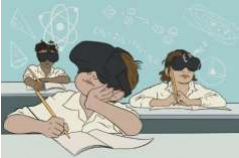
How technology is reinventing Education
Stanford Graduate School of Education Dean Dan Schwartz and other education scholars weigh in on what’s next
for some of the technology trends taking center stage in the classroom.
Image credit: Claire Scully
1. New advances in technology are upending education, from the recent debut of new artificial intelligence (AI)
chatbots like ChatGPT to the growing accessibility of virtual-reality tools that expand the boundaries of the
classroom. For educators, at the heart of it all is the hope that every learner gets an equal chance to develop
the skills they need to succeed. But that promise is not without its pitfalls.
2. “Technology is a game-changer for education – it offers the prospect of universal access to high-quality
learning experiences, and it creates fundamentally new ways of teaching,” said Dan Schwartz, dean of Stanford
Graduate School of Education (GSE), who is also a professor of educational technology at the GSE and faculty
director of the Stanford Accelerator for Learning. “But there are a lot of ways we teach that aren’t great, and a
big fear with AI in particular is that we just get more efficient at teaching badly. This is a moment to pay
attention, to do things differently.”
3. For K-12 schools, this year also marks the end of the Elementary and Secondary School Emergency Relief
(ESSER) funding program, which has provided pandemic recovery funds that many districts used to invest in
educational software and systems. With these funds running out in September 2024, schools are trying to
determine their best use of technology as they face the prospect of diminishing resources.
4. Here, Schwartz and other Stanford education scholars weigh in on some of the technology trends taking center
stage in the classroom this year.
SPECTOR, C. How technology is reinventing education | Stanford Report. Disponível em: <https://news.stanford.edu/stories/2024/02/technology-in-education>.
According to the text 1, about the technology’s impact on education, which of the following statements is not
true?
Ano: 2024
Banca:
IVIN
Órgão:
Prefeitura de Santarém - PA
Prova:
IVIN - 2024 - Prefeitura de Santarém - PA - Professor de Inglês - Edital n° 1 |
Q3544728
Inglês
Texto associado
How technology is reinventing Education
Stanford Graduate School of Education Dean Dan Schwartz and other education scholars weigh in on what’s next
for some of the technology trends taking center stage in the classroom.
Image credit: Claire Scully
1. New advances in technology are upending education, from the recent debut of new artificial intelligence (AI)
chatbots like ChatGPT to the growing accessibility of virtual-reality tools that expand the boundaries of the
classroom. For educators, at the heart of it all is the hope that every learner gets an equal chance to develop
the skills they need to succeed. But that promise is not without its pitfalls.
2. “Technology is a game-changer for education – it offers the prospect of universal access to high-quality
learning experiences, and it creates fundamentally new ways of teaching,” said Dan Schwartz, dean of Stanford
Graduate School of Education (GSE), who is also a professor of educational technology at the GSE and faculty
director of the Stanford Accelerator for Learning. “But there are a lot of ways we teach that aren’t great, and a
big fear with AI in particular is that we just get more efficient at teaching badly. This is a moment to pay
attention, to do things differently.”
3. For K-12 schools, this year also marks the end of the Elementary and Secondary School Emergency Relief
(ESSER) funding program, which has provided pandemic recovery funds that many districts used to invest in
educational software and systems. With these funds running out in September 2024, schools are trying to
determine their best use of technology as they face the prospect of diminishing resources.
4. Here, Schwartz and other Stanford education scholars weigh in on some of the technology trends taking center
stage in the classroom this year.
SPECTOR, C. How technology is reinventing education | Stanford Report. Disponível em: <https://news.stanford.edu/stories/2024/02/technology-in-education>.
Which sentence from the text 1 uses the simple past tense?
Ano: 2024
Banca:
IVIN
Órgão:
Prefeitura de Santarém - PA
Prova:
IVIN - 2024 - Prefeitura de Santarém - PA - Professor de Inglês - Edital n° 1 |
Q3544727
Inglês
Texto associado
How technology is reinventing Education
Stanford Graduate School of Education Dean Dan Schwartz and other education scholars weigh in on what’s next
for some of the technology trends taking center stage in the classroom.
Image credit: Claire Scully
1. New advances in technology are upending education, from the recent debut of new artificial intelligence (AI)
chatbots like ChatGPT to the growing accessibility of virtual-reality tools that expand the boundaries of the
classroom. For educators, at the heart of it all is the hope that every learner gets an equal chance to develop
the skills they need to succeed. But that promise is not without its pitfalls.
2. “Technology is a game-changer for education – it offers the prospect of universal access to high-quality
learning experiences, and it creates fundamentally new ways of teaching,” said Dan Schwartz, dean of Stanford
Graduate School of Education (GSE), who is also a professor of educational technology at the GSE and faculty
director of the Stanford Accelerator for Learning. “But there are a lot of ways we teach that aren’t great, and a
big fear with AI in particular is that we just get more efficient at teaching badly. This is a moment to pay
attention, to do things differently.”
3. For K-12 schools, this year also marks the end of the Elementary and Secondary School Emergency Relief
(ESSER) funding program, which has provided pandemic recovery funds that many districts used to invest in
educational software and systems. With these funds running out in September 2024, schools are trying to
determine their best use of technology as they face the prospect of diminishing resources.
4. Here, Schwartz and other Stanford education scholars weigh in on some of the technology trends taking center
stage in the classroom this year.
SPECTOR, C. How technology is reinventing education | Stanford Report. Disponível em: <https://news.stanford.edu/stories/2024/02/technology-in-education>.
According to the text 1, what is a major concern associated with the increased use of artificial intelligence (AI)
in education?
Ano: 2024
Banca:
IVIN
Órgão:
Prefeitura de Santarém - PA
Prova:
IVIN - 2024 - Prefeitura de Santarém - PA - Professor de História - Edital n° 1 |
Q3544586
Legislação dos Municípios do Estado do Pará
De acordo com as disposições do Anexo III da
Lei Municipal nº 14.899/94 do Município de
Santarém-PA, o cargo de Auxiliar Técnico em
Radiologia é classificado na Carreira de:
Ano: 2024
Banca:
IVIN
Órgão:
Prefeitura de Santarém - PA
Prova:
IVIN - 2024 - Prefeitura de Santarém - PA - Professor de História - Edital n° 1 |
Q3544585
Gestão de Pessoas
De acordo com as disposições da Lei Municipal
nº 14.899/94 do Município de Santarém-PA, assinale
a alternativa correta:
I. A promoção do desenvolvimento do servidor, através da oferta de programas de capacitação profissional e de um sistema de carreira que estimule o desenvolvimento técnico gerencial.
II. Institucionalizar o sistema de mérito, como critério de promoção e acesso.
III. Implementar uma política de treinamento e desenvolvimento de Recursos Humanos. São objetivos do Plano de Cargos, Carreiras e Vencimentos da Administração Pública Municipal de Santarém-PA, apenas:
I. A promoção do desenvolvimento do servidor, através da oferta de programas de capacitação profissional e de um sistema de carreira que estimule o desenvolvimento técnico gerencial.
II. Institucionalizar o sistema de mérito, como critério de promoção e acesso.
III. Implementar uma política de treinamento e desenvolvimento de Recursos Humanos. São objetivos do Plano de Cargos, Carreiras e Vencimentos da Administração Pública Municipal de Santarém-PA, apenas:
Ano: 2024
Banca:
IVIN
Órgão:
Prefeitura de Santarém - PA
Prova:
IVIN - 2024 - Prefeitura de Santarém - PA - Professor de História - Edital n° 1 |
Q3544580
Pedagogia
Considerando os princípios que servem de
fundamentos pedagógicos para a BNCC (Brasil,
2018), julgue os enunciados abaixo, assinalando-os
com C se estiverem corretos e com E se estiverem
errados:
( ) Foco no desenvolvimento de competências.
( ) Promoção da igualdade, diversidade e equidade.
( ) Compromisso com a educação integral.
( ) Ênfase em habilidades focais.
Está correta a sequência indicada em:
( ) Foco no desenvolvimento de competências.
( ) Promoção da igualdade, diversidade e equidade.
( ) Compromisso com a educação integral.
( ) Ênfase em habilidades focais.
Está correta a sequência indicada em:
Ano: 2024
Banca:
IVIN
Órgão:
Prefeitura de Santarém - PA
Prova:
IVIN - 2024 - Prefeitura de Santarém - PA - Professor de História - Edital n° 1 |
Q3544576
História
Após o golpe militar de 31 de março de 1964,
teve início um período ditatorial que duraria 21 anos
na história do Brasil (1964-1985). De caráter
autoritário e nacionalista, a Ditadura Militar
brasileira, estabeleceu a censura à imprensa,
restrição aos direitos políticos e perseguição policial
aos opositores do regime. Das alternativas abaixo,
assinale aquela que aponta corretamente, somente
acontecimentos desse regime autoritário:
Ano: 2024
Banca:
IVIN
Órgão:
Prefeitura de Santarém - PA
Prova:
IVIN - 2024 - Prefeitura de Santarém - PA - Professor de História - Edital n° 1 |
Q3544575
História
Juscelino Kubitschek, governou o Brasil durante
cinco anos (1956 a 1961), os quais ficaram
conhecidos popularmente como os “anos dourados".
Seu governo ficou conhecido como um período de
desenvolvimento econômico, cujo principal
instrumento foi o Plano ou Programa de Metas.
Sobre o Governo do presidente Juscelino Kubitschek,
assinale a alternativa incorreta:
Ano: 2024
Banca:
IVIN
Órgão:
Prefeitura de Santarém - PA
Prova:
IVIN - 2024 - Prefeitura de Santarém - PA - Professor de História - Edital n° 1 |
Q3544574
História
O chamado governo democrático de Getúlio
Vargas, iniciou-se em 1951, quando Vargas foi
empossado na presidência e ficou marcado pela
crise política que o levou ao suicídio em 1954. Entre
as alternativas abaixo, assinale aquela que não
corresponde aos acontecimentos desse governo:
Ano: 2024
Banca:
IVIN
Órgão:
Prefeitura de Santarém - PA
Prova:
IVIN - 2024 - Prefeitura de Santarém - PA - Professor de História - Edital n° 1 |
Q3544573
História
“Com as letras iniciais dos nomes desses
estudantes mortos, formou-se a sigla MMDC, que se
tornou o símbolo do movimento no estado. No dia 9
de julho de 1932, teve início a chamada Revolução
ou Revolta Constitucionalista, que mobilizou 30 mil
pessoas armadas em São Paulo para lutar contra o
governo federal.”
COTRIM. Gilberto. História global 3: Brasil e geral. 2ª edição. Ed. Saraiva, São Paulo. pg.121. 2013.
Sobre a Revolução Constitucionalista de 1932, assinale a alternativa correta:
COTRIM. Gilberto. História global 3: Brasil e geral. 2ª edição. Ed. Saraiva, São Paulo. pg.121. 2013.
Sobre a Revolução Constitucionalista de 1932, assinale a alternativa correta:
Ano: 2024
Banca:
IVIN
Órgão:
Prefeitura de Santarém - PA
Prova:
IVIN - 2024 - Prefeitura de Santarém - PA - Professor de História - Edital n° 1 |
Q3544572
História
Sobre o cenário sociopolítico da Primeira
República (1889-1930), assinale a alternativa
incorreta:
Ano: 2024
Banca:
IVIN
Órgão:
Prefeitura de Santarém - PA
Prova:
IVIN - 2024 - Prefeitura de Santarém - PA - Professor de História - Edital n° 1 |
Q3544571
História
A Guerra da Tríplice Aliança, também conhecida
como Guerra do Paraguai, 1864 a 1870, foi o maior e
mais sangrento conflito da América do Sul,
envolvendo Brasil, Argentina e Uruguai, contra o
Paraguai. Sobre esse conflito, assinale a alternativa
correta:
Ano: 2024
Banca:
IVIN
Órgão:
Prefeitura de Santarém - PA
Prova:
IVIN - 2024 - Prefeitura de Santarém - PA - Professor de História - Edital n° 1 |
Q3544570
História
O Período Regencial estendeu-se de 1831 a
1840, teve início com a abdicação do imperador D.
Pedro I, no ano de 1831, e foi encerrado em 1840 no
que ficou conhecido como Golpe da Maioridade.
Este período foi um dos mais conturbados da
história do Brasil, devido às revoltas que assolaram
diversas províncias. Assinale a alternativa que
contém somente revoltas do Período Regencial:
Ano: 2024
Banca:
IVIN
Órgão:
Prefeitura de Santarém - PA
Prova:
IVIN - 2024 - Prefeitura de Santarém - PA - Professor de História - Edital n° 1 |
Q3544569
História
Sobre o Primeiro Reinado do Brasil Império
(1822 a 1831), pode se afirmar que:
Ano: 2024
Banca:
IVIN
Órgão:
Prefeitura de Santarém - PA
Prova:
IVIN - 2024 - Prefeitura de Santarém - PA - Professor de História - Edital n° 1 |
Q3544568
História
“A Coroa portuguesa optou, então, em 1534,
por dividir a faixa portuguesa do território
americano demarcado pelo Tratado de Tordesilhas
em 15 lotes - capitanias hereditárias -, que foram
entregues a donatários escolhidos entre altos
funcionários e membros da pequena nobreza com
condição de bancarem eles mesmos a ocupação da
terra.“
MESGRAVIS. Laima. História do Brasil colônia, São Paulo. Ed. Contexto. Pg. 19-20. 2015.
Sobre a criação das capitanias hereditárias no Brasil durante o período colonial, assinale a alternativa incorreta:
MESGRAVIS. Laima. História do Brasil colônia, São Paulo. Ed. Contexto. Pg. 19-20. 2015.
Sobre a criação das capitanias hereditárias no Brasil durante o período colonial, assinale a alternativa incorreta:
Ano: 2024
Banca:
IVIN
Órgão:
Prefeitura de Santarém - PA
Prova:
IVIN - 2024 - Prefeitura de Santarém - PA - Professor de História - Edital n° 1 |
Q3544567
História
A Segunda Guerra Mundial (1939 a 1945) foi o
maior conflito armado já travado em toda a história
da humanidade. Algumas estimativas apontam em
até 60 milhões o número de mortos, outros
acontecimentos marcantes foram o Holocausto e os
bombardeios atômicos sobre Hiroshima e Nagasaki.
Sobre a Segunda Guerra Mundial, analise as
alternativas abaixo, e assinale aquela que apresenta
corretamente uma das principais causas do conflito:
Ano: 2024
Banca:
IVIN
Órgão:
Prefeitura de Santarém - PA
Prova:
IVIN - 2024 - Prefeitura de Santarém - PA - Professor de História - Edital n° 1 |
Q3544566
História
“A Conferência de Berlim consagrava essa
partilha pela efetiva ocupação territorial da África.
Realizada em 1885, reunira quatorze países e, ao
estipular princípios reguladores da partilha da África,
legitimava a ocupação de novos territórios pelas
nações imperialistas. Foi o instrumento legal através
do qual se justificaria a dominação das nações
pobres pelas potências industriais, ao mesmo tempo
em que acalmava as tensões criadas pela disputa de
mercados durante a agressiva expansão do
capitalismo.”
DE CARVALHO, Platão Eugênio. Neocolonialismo: A expansão imperialista do século XIX. coleção tudo é história. Ed. Brasiliense, São Paulo. pg. 13. 1995
Sobre a partilha da África ocorrida no século XIX, no movimento conhecido por Neocolonialismo, assinale a alternativa correta:
DE CARVALHO, Platão Eugênio. Neocolonialismo: A expansão imperialista do século XIX. coleção tudo é história. Ed. Brasiliense, São Paulo. pg. 13. 1995
Sobre a partilha da África ocorrida no século XIX, no movimento conhecido por Neocolonialismo, assinale a alternativa correta:
Ano: 2024
Banca:
IVIN
Órgão:
Prefeitura de Santarém - PA
Prova:
IVIN - 2024 - Prefeitura de Santarém - PA - Professor de História - Edital n° 1 |
Q3544565
História
Em 04 de julho de 1776, as treze colônias inglesas
da América do Norte se declararam independentes da
Inglaterra, tornaram-se o primeiro país independente
do continente americano e passaram a se chamar
pouco tempo depois de Estados Unidos da América.
Assinale a alternativa que cita corretamente alguns
dos motivos que levaram à independência das treze
colônias inglesas:
Ano: 2024
Banca:
IVIN
Órgão:
Prefeitura de Santarém - PA
Prova:
IVIN - 2024 - Prefeitura de Santarém - PA - Professor de História - Edital n° 1 |
Q3544564
História
“A vida dos primeiros trabalhadores das
indústrias era extremamente insalubre. Os operários
chegavam a trabalhar até 18 horas por dia em
ambientes abafados, mal iluminados e sujos.
Desempenhavam funções cansativas e monótonas, o
que os deixava vulneráveis a todo tipo de acidentes.
Os salários eram baixos e não havia direitos
trabalhistas, como férias, pagamentos de horas
extras e descanso semanal remunerado.”
BRAICK, Patrícia Ramos e MOTA, Myriam Becho. História 2: das cavernas ao terceiro milênio. 4ª edição. São Paulo: Ed. Moderna, pg. 102. 2016.
Sobre a vida dos trabalhadores no período da Revolução Industrial, assinale a alternativa correta:
BRAICK, Patrícia Ramos e MOTA, Myriam Becho. História 2: das cavernas ao terceiro milênio. 4ª edição. São Paulo: Ed. Moderna, pg. 102. 2016.
Sobre a vida dos trabalhadores no período da Revolução Industrial, assinale a alternativa correta:
Ano: 2024
Banca:
IVIN
Órgão:
Prefeitura de Santarém - PA
Prova:
IVIN - 2024 - Prefeitura de Santarém - PA - Professor de História - Edital n° 1 |
Q3544563
História
O Feudalismo foi um modo de organização
político, social, econômico e cultural baseado no
regime de servidão, que predominou na Europa
durante a Idade Média. Sobre as características do
Feudalismo, analise as alternativas abaixo e assinale
a incorreta:
 Conheça nossos planos