Foram encontradas 3.096 questões
Resolva questões gratuitamente!
Junte-se a mais de 4 milhões de concurseiros!


I. ÁREA DE ESPERA - área delimitada por 2 (duas) linhas de retenção, destinada exclusivamente à espera de motocicletas, motonetas e ciclomotores, junto à aproximação semafórica, imediatamente à frente da linha de retenção dos demais veículos;
II. CAMINHÃO-TRATOR - veículo automotor destinado a tracionar ou arrastar outro;
III. CAMIONETA - veículo misto destinado ao transporte de passageiros e carga no mesmo compartimento;
IV. CATADIÓPTRICO - dispositivo de reflexão e refração da luz utilizado na sinalização de vias e veículos (olho-de-gato);
V. ILHA - todo cruzamento em nível, entroncamento ou bifurcação, incluindo as áreas formadas por tais cruzamentos, entroncamentos ou bifurcações.
I. Tipificação da infração;
II. Local, data e hora do cometimento da infração;
III. Prontuário do condutor, sempre que possível;
IV. Identificação do órgão ou entidade e da autoridade ou agente autuador ou equipamento que comprovar a infração;
V. Caracteres da placa de identificação do veículo, sua marca e espécie, e outros elementos julgados necessários à sua identificação.
Assinale a opção CORRETA.
I. Ter idade superior a vinte e um anos;
II. Ser habilitado na categoria C;
III. Não ter cometido mais de uma infração gravíssima nos 06 (seis) últimos meses;
IV. Ser aprovado em curso especializado, nos termos da regulamentação do Contran.
As provas ou competições desportivas, inclusive seus ensaios, em via aberta à circulação, só poderão ser realizadas mediante prévia permissão da autoridade de trânsito com circunscrição sobre a via e dependerão de:
I. O ciclista desmontado empurrando a bicicleta equipara-se ao pedestre em direitos e deveres;
II. A circulação de pedestres na pista de rolamento, nas áreas urbanas, quando não houver passeios ou quando não for possível a utilização destes, será feita com prioridade sobre os veículos, pelos bordos da pista, em fila única, exceto em locais proibidos pela sinalização e nas situações em que a segurança ficar comprometida;
III. O órgão ou entidade com circunscrição sobre a via deverá assegurar a devida sinalização e proteção para circulação de pedestres onde houver obstrução da calçada ou da passagem para pedestres;
IV. O órgão ou entidade com circunscrição sobre a via manterá, obrigatoriamente, as faixas e passagens de pedestres em boas condições de visibilidade, higiene, segurança e sinalização.


I. No 'a' antes do vocábulo 'pessoas', o acento grave, indicador da crase, deve ser utilizado obrigatoriamente;
II. Na forma verbal 'têm', o acento se justifica porque tal forma verbal concorda com o vocábulo 'pessoas';
III. No que toca ao uso do 'que', pode-se trocá-lo por 'as quais' sem qualquer prejuízo sintático-semântico e coesivo.
Marque a opção CORRETA:
Read the following paragraph and choose the correct option for the question that follows:
I‘ve got a young friend, he‘s only 25, but he fits the bill perfectly. He‘s single and he‘s hungry. He‘s willing to start from scratch and, best of all, he isn‘t afraid of putting his nose to the grindstone for those 80-hour weeks. He decided to take the bull by the horns by going starting up his own business. He found a software developer who knew the internet inside out. This young man was also very ambitious. He left his safe job at the drop of a hat. They were both reaching for pie in the sky, and they were ready. They also were lucky. They founded a startup and got into the whole social networking business.
Adapted from: https://www.thoughtco.com/young-and-free-prerequisite-for-success-1210197 (Accessed on 01.21.2022)
The underlined idioms in the paragraph mean, respectively
I‘m sorry for ______ such a long time to write back. I‘ve been so busy at work lately. I‘ve also not been studying very hard and my French exam is next month! To ______ you the truth, I‘m getting a bit nervous and will have to ______ some revision! The good news is I‘m going on holiday with my parents before the exam, so if I get the chance I‘m going to try to ______ an effort and work on my French. Anyway, the reason I‘m writing is to ask you if you would like to come to the UK. I know you haven't been here before and we could ______ sightseeing. Let me know what you think.
Adapted from: https://www.flo-joe.co.uk/preliminaryenglish/vocabulary/pet-collocations.htm (Accessed on 01.21.2022)
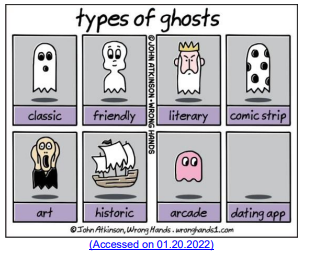
In the following picture, the punch line is related to
Read the text and choose the correct option for the question.
ENGLISH TEACHING AND LEARNING DURING THE COVID CRISIS: ONLINE CLASSES AND UPSKILLING TEACHERS
Since many countries have imposed a lockdown on movement, and many schools have subsequently closed their doors, vast numbers of previously tech-shy teachers are having to learn very quickly how to teach using online resources. This might be through delivering lessons using virtual classrooms or providing online self-study material for students, both of which may be new modes of lesson delivery for many.
Since the rise of the internet in the 1990s, English language (EL) teachers have had what might be described as a difficult relationship with technology. Initial teacher education has been slow to embrace digital ways of teaching and learning, meaning that many EL teachers feel that they have been poorly prepared to use technology in their teaching (Clark, 2018). Consequently, many EL teachers have been resistant to the digital wave which has revolutionised other areas of our lives. Understandably, there are a number of worries which teachers have regarding introducing technology into teaching. Three of the most common are:
• Technology is isolating – learner interaction is limited, and dissimilar to the kind of ways that they will be required to use language in the real world.
• Teachers are being deskilled, and the essence of teaching is being lost.
• The rise of technology, particularly Artificial Intelligence (AI), will soon mean that teachers are made redundant.
Is technology isolating for teachers?
In many situations, technology can actually facilitate interaction. We only need to think of how many of us now use our phones and social media such as WhatsApp or Facebook to communicate. This can be equally true of interaction in a virtual learning environment – if managed correctly, opportunities for language use can be optimised and students will have plenty of interaction with each other. And, whether we like it or not, these forms of interaction, mediated through digital channels, now account for a high percentage of interactions in the 'real world‘.
EL teaching has long since stopped being a static discipline, in which teachers are primarily conveyors of declarative knowledge, i.e. facts or information. Nowadays, English teachers are better conceptualised as facilitators of learning who provide learning opportunities for their students, and give feedback to support improvement. The essence of teaching is not therefore something fixed but rather dynamic, adapting to the context and situation in which each teacher finds themselves. The facilitation of learning through technology is a highly skilled endeavour, and in many contexts can offer a really useful support to the classroom, providing students with the chance to learn in new and interesting ways.
Artificial intelligence is a 21st century spectre which haunts many professions. However, a study into which jobs are likely to be replaced by AI in the future (Frey & Osborne, 2013) found that the chances of the profession of school teacher disappearing was around 0.007, i.e. very low indeed, especially when compared with jobs such as Library Assistants (0.95), Real Estate Brokers (0.97) and Telemarketers (0.99).
This is because teaching is a complex job, requiring a range of skills, such as subject knowledge, classroom management, motivational skills, delivering feedback, differentiating learning, problem solving, emotional intelligence, counselling, etc. – the list is almost endless.
This contrasts with the current state of AI, which can be described as 'domain specific‘, i.e. highly skilled but in one particular area, e.g. playing chess, driving a car, recognising human faces or speech. The 'domain general‘ skills which a teacher possesses, and the complex interaction between those, is not going to be matched by machines anytime soon.
Adapted from: https://www.cambridgeenglish.org/blog/english-teaching-and-learning-during-the-covid-crisis/ (Accessed on 01.23.2022)
Read the text and choose the correct option for the question.
ENGLISH TEACHING AND LEARNING DURING THE COVID CRISIS: ONLINE CLASSES AND UPSKILLING TEACHERS
Since many countries have imposed a lockdown on movement, and many schools have subsequently closed their doors, vast numbers of previously tech-shy teachers are having to learn very quickly how to teach using online resources. This might be through delivering lessons using virtual classrooms or providing online self-study material for students, both of which may be new modes of lesson delivery for many.
Since the rise of the internet in the 1990s, English language (EL) teachers have had what might be described as a difficult relationship with technology. Initial teacher education has been slow to embrace digital ways of teaching and learning, meaning that many EL teachers feel that they have been poorly prepared to use technology in their teaching (Clark, 2018). Consequently, many EL teachers have been resistant to the digital wave which has revolutionised other areas of our lives. Understandably, there are a number of worries which teachers have regarding introducing technology into teaching. Three of the most common are:
• Technology is isolating – learner interaction is limited, and dissimilar to the kind of ways that they will be required to use language in the real world.
• Teachers are being deskilled, and the essence of teaching is being lost.
• The rise of technology, particularly Artificial Intelligence (AI), will soon mean that teachers are made redundant.
Is technology isolating for teachers?
In many situations, technology can actually facilitate interaction. We only need to think of how many of us now use our phones and social media such as WhatsApp or Facebook to communicate. This can be equally true of interaction in a virtual learning environment – if managed correctly, opportunities for language use can be optimised and students will have plenty of interaction with each other. And, whether we like it or not, these forms of interaction, mediated through digital channels, now account for a high percentage of interactions in the 'real world‘.
EL teaching has long since stopped being a static discipline, in which teachers are primarily conveyors of declarative knowledge, i.e. facts or information. Nowadays, English teachers are better conceptualised as facilitators of learning who provide learning opportunities for their students, and give feedback to support improvement. The essence of teaching is not therefore something fixed but rather dynamic, adapting to the context and situation in which each teacher finds themselves. The facilitation of learning through technology is a highly skilled endeavour, and in many contexts can offer a really useful support to the classroom, providing students with the chance to learn in new and interesting ways.
Artificial intelligence is a 21st century spectre which haunts many professions. However, a study into which jobs are likely to be replaced by AI in the future (Frey & Osborne, 2013) found that the chances of the profession of school teacher disappearing was around 0.007, i.e. very low indeed, especially when compared with jobs such as Library Assistants (0.95), Real Estate Brokers (0.97) and Telemarketers (0.99).
This is because teaching is a complex job, requiring a range of skills, such as subject knowledge, classroom management, motivational skills, delivering feedback, differentiating learning, problem solving, emotional intelligence, counselling, etc. – the list is almost endless.
This contrasts with the current state of AI, which can be described as 'domain specific‘, i.e. highly skilled but in one particular area, e.g. playing chess, driving a car, recognising human faces or speech. The 'domain general‘ skills which a teacher possesses, and the complex interaction between those, is not going to be matched by machines anytime soon.
Adapted from: https://www.cambridgeenglish.org/blog/english-teaching-and-learning-during-the-covid-crisis/ (Accessed on 01.23.2022)

 Conheça nossos planos