Questões de Concurso Público CIJUN - SP 2023 para Analista de Dados Pleno (Estatística)
Foram encontradas 50 questões


Ano: 2023
Banca:
VUNESP
Órgão:
CIJUN - SP
Provas:
VUNESP - 2023 - CIJUN - SP - Analista de Dados Pleno (Estatística)
|
VUNESP - 2023 - CIJUN - SP - Analista de TI Pleno (ERP - Sistemas Internos) |
Q4196026
Inglês
Texto associado
Leia o texto para responder à questão.
Information Security (InfoSec) defined
Information security, often abbreviated InfoSec, is a set
of security procedures and tools that broadly protect sensitive
enterprise information from misuse, unauthorized access,
disruption, or destruction. InfoSec encompasses physical and
environmental security, access control, and cybersecurity. It
often includes technologies like cloud access security brokers
(CASB), deception tools, endpoint detection and response
(EDR), and security testing for DevOps (DevSecOps), among
others.
Key elements of information security
InfoSec comprises a range of security tools, solutions,
and processes that keep enterprise information secure across
devices and locations, helping to protect against cyberattacks
or other disruptive events.
• Application security - Policies, procedures, tools, and best
practices enacted to protect applications and their data.w
• Cloud security - Policies, procedures, tools, and best
practices enacted to protect all aspects of the cloud,
including systems, data, applications, and infrastructure.
• Cryptography - An algorithm-based method of securing
communication meant to ensure only intended recipients
of a specific message can view and decipher it.
• Disaster recovery - A method to reestablish functional
technological systems in the wake of an event like a
natural disaster, cyberattack, or another disruptive event.
• Incident response - An organization’s plan for responding
to, remediating, and managing the aftermath of a
cyberattack, data breach, or another disruptive event.
• Infrastructure security - Security that encompasses
an organization’s entire technological infrastructure,
including both hardware and software systems.
• Vulnerability management - The process an organization
takes to identify, assess, and remediate vulnerabilities in
its endpoints, software, and systems.
(www.microsoft.com/en-ww/security/business/security-101/
what-is-information-security-infosec#:~:text=Information%20security%2C%20often%20abbreviated%20(InfoSec,access%2C%20
disruption%2C%20or%20destruction. Adaptado.)
According to the definition of Information Security provided
in the first part of the text, the aim of InfoSec is to
Ano: 2023
Banca:
VUNESP
Órgão:
CIJUN - SP
Provas:
VUNESP - 2023 - CIJUN - SP - Analista de Dados Pleno (Estatística)
|
VUNESP - 2023 - CIJUN - SP - Analista de TI Pleno (ERP - Sistemas Internos) |
Q4196027
Inglês
Texto associado
Leia o texto para responder à questão.
Information Security (InfoSec) defined
Information security, often abbreviated InfoSec, is a set
of security procedures and tools that broadly protect sensitive
enterprise information from misuse, unauthorized access,
disruption, or destruction. InfoSec encompasses physical and
environmental security, access control, and cybersecurity. It
often includes technologies like cloud access security brokers
(CASB), deception tools, endpoint detection and response
(EDR), and security testing for DevOps (DevSecOps), among
others.
Key elements of information security
InfoSec comprises a range of security tools, solutions,
and processes that keep enterprise information secure across
devices and locations, helping to protect against cyberattacks
or other disruptive events.
• Application security - Policies, procedures, tools, and best
practices enacted to protect applications and their data.w
• Cloud security - Policies, procedures, tools, and best
practices enacted to protect all aspects of the cloud,
including systems, data, applications, and infrastructure.
• Cryptography - An algorithm-based method of securing
communication meant to ensure only intended recipients
of a specific message can view and decipher it.
• Disaster recovery - A method to reestablish functional
technological systems in the wake of an event like a
natural disaster, cyberattack, or another disruptive event.
• Incident response - An organization’s plan for responding
to, remediating, and managing the aftermath of a
cyberattack, data breach, or another disruptive event.
• Infrastructure security - Security that encompasses
an organization’s entire technological infrastructure,
including both hardware and software systems.
• Vulnerability management - The process an organization
takes to identify, assess, and remediate vulnerabilities in
its endpoints, software, and systems.
(www.microsoft.com/en-ww/security/business/security-101/
what-is-information-security-infosec#:~:text=Information%20security%2C%20often%20abbreviated%20(InfoSec,access%2C%20
disruption%2C%20or%20destruction. Adaptado.)
No trecho da primeira parte do texto “It often includes
technologies like cloud access security brokers (CASB),
deception tools, endpoint detection and response (EDR),
and security testing for DevOps (DevSecOps), among
others”, o termo destacado em negrito indica
Ano: 2023
Banca:
VUNESP
Órgão:
CIJUN - SP
Provas:
VUNESP - 2023 - CIJUN - SP - Analista de Dados Pleno (Estatística)
|
VUNESP - 2023 - CIJUN - SP - Analista de TI Pleno (ERP - Sistemas Internos) |
Q4196028
Inglês
Texto associado
Leia o texto para responder à questão.
Information Security (InfoSec) defined
Information security, often abbreviated InfoSec, is a set
of security procedures and tools that broadly protect sensitive
enterprise information from misuse, unauthorized access,
disruption, or destruction. InfoSec encompasses physical and
environmental security, access control, and cybersecurity. It
often includes technologies like cloud access security brokers
(CASB), deception tools, endpoint detection and response
(EDR), and security testing for DevOps (DevSecOps), among
others.
Key elements of information security
InfoSec comprises a range of security tools, solutions,
and processes that keep enterprise information secure across
devices and locations, helping to protect against cyberattacks
or other disruptive events.
• Application security - Policies, procedures, tools, and best
practices enacted to protect applications and their data.w
• Cloud security - Policies, procedures, tools, and best
practices enacted to protect all aspects of the cloud,
including systems, data, applications, and infrastructure.
• Cryptography - An algorithm-based method of securing
communication meant to ensure only intended recipients
of a specific message can view and decipher it.
• Disaster recovery - A method to reestablish functional
technological systems in the wake of an event like a
natural disaster, cyberattack, or another disruptive event.
• Incident response - An organization’s plan for responding
to, remediating, and managing the aftermath of a
cyberattack, data breach, or another disruptive event.
• Infrastructure security - Security that encompasses
an organization’s entire technological infrastructure,
including both hardware and software systems.
• Vulnerability management - The process an organization
takes to identify, assess, and remediate vulnerabilities in
its endpoints, software, and systems.
(www.microsoft.com/en-ww/security/business/security-101/
what-is-information-security-infosec#:~:text=Information%20security%2C%20often%20abbreviated%20(InfoSec,access%2C%20
disruption%2C%20or%20destruction. Adaptado.)
In the excerpt from the first part of the text “It often includes
technologies”, the word in bold refers to
Ano: 2023
Banca:
VUNESP
Órgão:
CIJUN - SP
Provas:
VUNESP - 2023 - CIJUN - SP - Analista de Dados Pleno (Estatística)
|
VUNESP - 2023 - CIJUN - SP - Analista de TI Pleno (ERP - Sistemas Internos) |
Q4196029
Inglês
Texto associado
Leia o texto para responder à questão.
Information Security (InfoSec) defined
Information security, often abbreviated InfoSec, is a set
of security procedures and tools that broadly protect sensitive
enterprise information from misuse, unauthorized access,
disruption, or destruction. InfoSec encompasses physical and
environmental security, access control, and cybersecurity. It
often includes technologies like cloud access security brokers
(CASB), deception tools, endpoint detection and response
(EDR), and security testing for DevOps (DevSecOps), among
others.
Key elements of information security
InfoSec comprises a range of security tools, solutions,
and processes that keep enterprise information secure across
devices and locations, helping to protect against cyberattacks
or other disruptive events.
• Application security - Policies, procedures, tools, and best
practices enacted to protect applications and their data.w
• Cloud security - Policies, procedures, tools, and best
practices enacted to protect all aspects of the cloud,
including systems, data, applications, and infrastructure.
• Cryptography - An algorithm-based method of securing
communication meant to ensure only intended recipients
of a specific message can view and decipher it.
• Disaster recovery - A method to reestablish functional
technological systems in the wake of an event like a
natural disaster, cyberattack, or another disruptive event.
• Incident response - An organization’s plan for responding
to, remediating, and managing the aftermath of a
cyberattack, data breach, or another disruptive event.
• Infrastructure security - Security that encompasses
an organization’s entire technological infrastructure,
including both hardware and software systems.
• Vulnerability management - The process an organization
takes to identify, assess, and remediate vulnerabilities in
its endpoints, software, and systems.
(www.microsoft.com/en-ww/security/business/security-101/
what-is-information-security-infosec#:~:text=Information%20security%2C%20often%20abbreviated%20(InfoSec,access%2C%20
disruption%2C%20or%20destruction. Adaptado.)
Leia a parte do texto Key elements of information security
para responder à questão.
No texto, os elementos chave de Segurança da Informação que mencionam explicitamente o uso de políticas são
No texto, os elementos chave de Segurança da Informação que mencionam explicitamente o uso de políticas são
Ano: 2023
Banca:
VUNESP
Órgão:
CIJUN - SP
Provas:
VUNESP - 2023 - CIJUN - SP - Analista de Dados Pleno (Estatística)
|
VUNESP - 2023 - CIJUN - SP - Analista de TI Pleno (ERP - Sistemas Internos) |
Q4196030
Inglês
Texto associado
Leia o texto para responder à questão.
Information Security (InfoSec) defined
Information security, often abbreviated InfoSec, is a set
of security procedures and tools that broadly protect sensitive
enterprise information from misuse, unauthorized access,
disruption, or destruction. InfoSec encompasses physical and
environmental security, access control, and cybersecurity. It
often includes technologies like cloud access security brokers
(CASB), deception tools, endpoint detection and response
(EDR), and security testing for DevOps (DevSecOps), among
others.
Key elements of information security
InfoSec comprises a range of security tools, solutions,
and processes that keep enterprise information secure across
devices and locations, helping to protect against cyberattacks
or other disruptive events.
• Application security - Policies, procedures, tools, and best
practices enacted to protect applications and their data.w
• Cloud security - Policies, procedures, tools, and best
practices enacted to protect all aspects of the cloud,
including systems, data, applications, and infrastructure.
• Cryptography - An algorithm-based method of securing
communication meant to ensure only intended recipients
of a specific message can view and decipher it.
• Disaster recovery - A method to reestablish functional
technological systems in the wake of an event like a
natural disaster, cyberattack, or another disruptive event.
• Incident response - An organization’s plan for responding
to, remediating, and managing the aftermath of a
cyberattack, data breach, or another disruptive event.
• Infrastructure security - Security that encompasses
an organization’s entire technological infrastructure,
including both hardware and software systems.
• Vulnerability management - The process an organization
takes to identify, assess, and remediate vulnerabilities in
its endpoints, software, and systems.
(www.microsoft.com/en-ww/security/business/security-101/
what-is-information-security-infosec#:~:text=Information%20security%2C%20often%20abbreviated%20(InfoSec,access%2C%20
disruption%2C%20or%20destruction. Adaptado.)
Leia a parte do texto Key elements of information security para responder à questão.
Os termos que evidenciam a diferença entre os objetivos de “Disaster recovery” e de “Incident response” são, respectivamente,
Os termos que evidenciam a diferença entre os objetivos de “Disaster recovery” e de “Incident response” são, respectivamente,
Ano: 2023
Banca:
VUNESP
Órgão:
CIJUN - SP
Prova:
VUNESP - 2023 - CIJUN - SP - Analista de Dados Pleno (Estatística) |
Q4196031
Noções de Informática
Um analista de dados com diversos programas abertos
em seu ambiente MS-Windows 10, em configuração padrão, está processando dados para um relatório e deseja
visualizar sua Área de Trabalho, para acessar um arquivo
específico.
O atalho por teclado que permite exibir a Área de Trabalho é
O atalho por teclado que permite exibir a Área de Trabalho é
Ano: 2023
Banca:
VUNESP
Órgão:
CIJUN - SP
Prova:
VUNESP - 2023 - CIJUN - SP - Analista de Dados Pleno (Estatística) |
Q4196032
Noções de Informática
Um usuário preparou um grande documento por meio do
MS-Word 2016, em sua configuração padrão, e para criar
um __________, acionou o ícone de mesmo nome exibido a seguir, dentro da guia __________.

Assinale a alternativa que preenche, correta e respectivamente, as lacunas do enunciado.
Assinale a alternativa que preenche, correta e respectivamente, as lacunas do enunciado.
Ano: 2023
Banca:
VUNESP
Órgão:
CIJUN - SP
Prova:
VUNESP - 2023 - CIJUN - SP - Analista de Dados Pleno (Estatística) |
Q4196033
Noções de Informática
Um analista de dados, por meio do MS-Excel 2016, em
sua configuração padrão, elaborou a planilha a seguir.
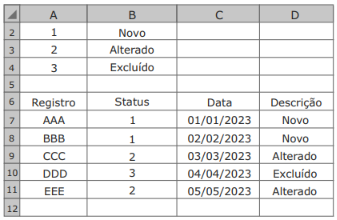
Nas linhas de 2 a 4, foi preparada uma legenda representando os códigos e suas respectivas descrições para indicar o status dos registros. Em seguida, nas colunas de A a C, a partir da linha 6, foram digitados dados de registros e seus respectivos código do status e data do registro. Então, na coluna D, o analista inseriu uma fórmula na célula D7, para preencher automaticamente com a descrição definida nas linhas de 2 a 4, de acordo com o código de status. Após preencher a fórmula em D7, arrastou a alça de preenchimento para preencher as células D8 até D11.
Assinale a alternativa que apresenta a fórmula adicionada em D7 que está de acordo com o enunciado e a imagem exibida.
Nas linhas de 2 a 4, foi preparada uma legenda representando os códigos e suas respectivas descrições para indicar o status dos registros. Em seguida, nas colunas de A a C, a partir da linha 6, foram digitados dados de registros e seus respectivos código do status e data do registro. Então, na coluna D, o analista inseriu uma fórmula na célula D7, para preencher automaticamente com a descrição definida nas linhas de 2 a 4, de acordo com o código de status. Após preencher a fórmula em D7, arrastou a alça de preenchimento para preencher as células D8 até D11.
Assinale a alternativa que apresenta a fórmula adicionada em D7 que está de acordo com o enunciado e a imagem exibida.
Ano: 2023
Banca:
VUNESP
Órgão:
CIJUN - SP
Prova:
VUNESP - 2023 - CIJUN - SP - Analista de Dados Pleno (Estatística) |
Q4196034
Noções de Informática
Um usuário preparou uma apresentação por meio do
MS-PowerPoint 2016, em sua configuração padrão,
contendo apenas 1 slide e 3 Formas. Definiu animações
de entrada sobre as Formas, cujo Painel de Animação
é visto a seguir.
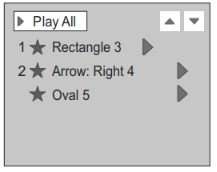
De acordo com a imagem, quantos cliques serão necessários para que todas as Formas apareçam durante o Modo de Apresentação?
De acordo com a imagem, quantos cliques serão necessários para que todas as Formas apareçam durante o Modo de Apresentação?
Ano: 2023
Banca:
VUNESP
Órgão:
CIJUN - SP
Prova:
VUNESP - 2023 - CIJUN - SP - Analista de Dados Pleno (Estatística) |
Q4196035
Redes de Computadores
Um recurso de internet bastante utilizado para quem
manipula grandes quantidades de dados é a transferência de arquivos pela internet.
Assinale a alternativa que apresenta uma URL que indica o uso de protocolo de transferência de arquivos.
Assinale a alternativa que apresenta uma URL que indica o uso de protocolo de transferência de arquivos.
Ano: 2023
Banca:
VUNESP
Órgão:
CIJUN - SP
Prova:
VUNESP - 2023 - CIJUN - SP - Analista de Dados Pleno (Estatística) |
Q4196036
Noções de Informática
A ferramenta Microsoft Excel é muito utilizada na coleta
e transformação de dados. Para facilitar a manipulação
dos dados, o Excel fornece a opção de formatação de
dados como tabelas ou criação de tabelas. Cada tabela
deve possuir um nome que segue determinados critérios
de validade.
Assinale a alternativa correta sobre nomes válidos para tabelas no Excel.
Assinale a alternativa correta sobre nomes válidos para tabelas no Excel.
Ano: 2023
Banca:
VUNESP
Órgão:
CIJUN - SP
Prova:
VUNESP - 2023 - CIJUN - SP - Analista de Dados Pleno (Estatística) |
Q4196037
Programação
Considere o trecho de código na linguagem R destacado.
df <–
data.frame(
natureza_despesa = c(
3.1.90.11.01 ,
3.1.90.11.01 ,
3.1.90.11.33 ,
3.1.90.11.33
),
valor_empenhado = c(45291.59, 134963.54,
4538.38,1200.64)
)
função_placeholder(df$valor_empenhado,
df$natureza_despesa, sum)
Um analista de dados da prefeitura deseja somar o valor total empenhado por natureza de despesa.
Qual função da família apply da linguagem R ele deve substituir no lugar de função_placeholder?
df <–
data.frame(
natureza_despesa = c(
3.1.90.11.01 ,
3.1.90.11.01 ,
3.1.90.11.33 ,
3.1.90.11.33
),
valor_empenhado = c(45291.59, 134963.54,
4538.38,1200.64)
)
função_placeholder(df$valor_empenhado,
df$natureza_despesa, sum)
Um analista de dados da prefeitura deseja somar o valor total empenhado por natureza de despesa.
Qual função da família apply da linguagem R ele deve substituir no lugar de função_placeholder?
Ano: 2023
Banca:
VUNESP
Órgão:
CIJUN - SP
Prova:
VUNESP - 2023 - CIJUN - SP - Analista de Dados Pleno (Estatística) |
Q4196038
Programação
A linguagem Python oferece diversos pacotes nativos
muito utilizados por cientistas de dados. Um dos mais utilizados é o pacote collections. Considere o código abaixo:
from collections import Counter
counter1 = Counter({'Constitucionais e Royalties': 1302.58 ,'Legais, Voluntárias e Específicas':12000})
counter2 = Counter({'Constitucionais e Royalties': 93939.08 ,'Legais, Voluntárias e Específicas':3893.57})
Counter_max = ___________
Para que os dois contadores sejam mesclados em um único que apresente somente os valores máximos para cada chave, qual código o analista de dados deve utilizar no lugar do sublinhado?
from collections import Counter
counter1 = Counter({'Constitucionais e Royalties': 1302.58 ,'Legais, Voluntárias e Específicas':12000})
counter2 = Counter({'Constitucionais e Royalties': 93939.08 ,'Legais, Voluntárias e Específicas':3893.57})
Counter_max = ___________
Para que os dois contadores sejam mesclados em um único que apresente somente os valores máximos para cada chave, qual código o analista de dados deve utilizar no lugar do sublinhado?
Ano: 2023
Banca:
VUNESP
Órgão:
CIJUN - SP
Prova:
VUNESP - 2023 - CIJUN - SP - Analista de Dados Pleno (Estatística) |
Q4196039
Banco de Dados
Muitos fatores são considerados por uma analista de dados
para selecionar a melhor configuração de suas ferramentas. Portanto, para obter um desempenho adequado em
seu relatório do Microsoft Power BI é necessário conhecer
os modos de armazenamento.
Sobre os modos de armazenamento no Power BI, assinale a alternativa correta.
Sobre os modos de armazenamento no Power BI, assinale a alternativa correta.
Ano: 2023
Banca:
VUNESP
Órgão:
CIJUN - SP
Prova:
VUNESP - 2023 - CIJUN - SP - Analista de Dados Pleno (Estatística) |
Q4196040
Banco de Dados
Acerca da ferramenta de Business Intelligence Tableau,
assinale a alternativa correta.
Ano: 2023
Banca:
VUNESP
Órgão:
CIJUN - SP
Prova:
VUNESP - 2023 - CIJUN - SP - Analista de Dados Pleno (Estatística) |
Q4196041
Programação
Um analista de dados da prefeitura recebeu a tarefa
de explorar os dados de remuneração dos servidores
da prefeitura utilizando a linguagem Java. Considere o
trecho de código incompleto gerado pelo analista abaixo:
1. import java.util.Arrays;
2. import java.util.List;
3. import java.util.DoubleSummaryStatistics;
4. public class Main {
5. public static void main(String[] args) {
6. List < Double > remuneracoes = Arrays.asList (4911.82, 2950.99, 19315.51, 3056.44);
7. DoubleSummaryStatistics ed = remuneracoes. stream()
8. .mapToDouble(remuneracao -> remuneracao)
9. ._____________();
10. System.out.println(ed); } }
O código deve utilizar a biblioteca correta do Java para gerar estatísticas descritivas dos dados da lista de remunerações.
Assinale a alternativa que indica corretamente o método que deve ser chamado na linha 9 e quais são as estatísticas descritivas retornadas por esse método.
1. import java.util.Arrays;
2. import java.util.List;
3. import java.util.DoubleSummaryStatistics;
4. public class Main {
5. public static void main(String[] args) {
6. List < Double > remuneracoes = Arrays.asList (4911.82, 2950.99, 19315.51, 3056.44);
7. DoubleSummaryStatistics ed = remuneracoes. stream()
8. .mapToDouble(remuneracao -> remuneracao)
9. ._____________();
10. System.out.println(ed); } }
O código deve utilizar a biblioteca correta do Java para gerar estatísticas descritivas dos dados da lista de remunerações.
Assinale a alternativa que indica corretamente o método que deve ser chamado na linha 9 e quais são as estatísticas descritivas retornadas por esse método.
Ano: 2023
Banca:
VUNESP
Órgão:
CIJUN - SP
Prova:
VUNESP - 2023 - CIJUN - SP - Analista de Dados Pleno (Estatística) |
Q4196042
Administração Geral
Os Indicadores-Chave de Desempenho, ou KPIs (Key
Performance Indicators), são ferramentas essenciais
para construção de bons painéis de dados para a gestão.
Sobre as características desses indicadores, assinale a
alternativa correta.
Ano: 2023
Banca:
VUNESP
Órgão:
CIJUN - SP
Prova:
VUNESP - 2023 - CIJUN - SP - Analista de Dados Pleno (Estatística) |
Q4196043
Modelagem de Processos de Negócio (BPM)
Para definir corretamente Indicadores-Chave de Desempenho é necessário que os Fatores Críticos de Sucesso
sejam bem delineados. Para essa etapa são utilizados
os critérios de qualidade de métricas S.M.A.R.T (Specific
- Específico, Measurable - Mensurável, Achievable - Atingível, Relevant – Relevante e Time Sensitive - Temporal).
Assinale a alternativa que apresenta o critério e sua definição correta associada.
Assinale a alternativa que apresenta o critério e sua definição correta associada.
Ano: 2023
Banca:
VUNESP
Órgão:
CIJUN - SP
Prova:
VUNESP - 2023 - CIJUN - SP - Analista de Dados Pleno (Estatística) |
Q4196044
Estatística
A análise exploratória de dados e a estatística descritiva
são muito utilizadas pelos analistas de dados governamentais na pesquisa de preços para licitações públicas.
Considere que após coletar preços para monitores de
computador o analista chegou a seguinte tabela de distribuição de frequência:
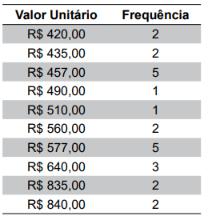
Para a tabela apresentada, os valores de média, de moda e da mediana são respectivamente:
Para a tabela apresentada, os valores de média, de moda e da mediana são respectivamente:
Ano: 2023
Banca:
VUNESP
Órgão:
CIJUN - SP
Prova:
VUNESP - 2023 - CIJUN - SP - Analista de Dados Pleno (Estatística) |
Q4196045
Estatística
O coeficiente de variação de Pearson (CV) é uma medida
de dispersão relativa que fornece a variação dos dados em
relação à média. Considere a distribuição de frequência de
valores de monitores em licitações públicas da tabela abaixo:
Considere que o desvio padrão dos dados apresentados é igual 137,9. Qual o valor do CV em termos percentuais (calcule somente até a segunda casa decimal sem arredondamentos)?
Considere que o desvio padrão dos dados apresentados é igual 137,9. Qual o valor do CV em termos percentuais (calcule somente até a segunda casa decimal sem arredondamentos)?

 Conheça nossos planos