Questões de Concurso Sobre inglês

Foram encontradas 25.607 questões

Q3102564 Inglês
A homophone is a word that has the same sound as another word but has a different meaning.
Choose the alternative that presents these kind of words. 
Alternativas
Q3102563 Inglês
Anglicismo é um tipo de estrangeirismo usado para definir as palavras que vêm do Inglês para o Português.
Assinale a alternativa que apresenta exemplos de palavras do inglês que se tornaram comuns na língua portuguesa. 
Alternativas
Q3102561 Inglês
Identifique abaixo as afirmativas verdadeiras ( V ) e as falsas ( F ) sobre o tema o uso de Inglês no Português do Brasil.

( ) Os estrangeirismos são privilégio da língua portuguesa.
( ) O estrangeirismo se refere ao uso de palavras ou expressões estrangeiras na comunicação quando não há uma palavra equivalente na língua do enunciador.
( ) Estrangeirismo é um fenômeno linguístico caraterizado pela apropriação de uma palavra ou expressão estrangeira.
( ) No português brasileiro, são bastante comuns os anglicismos, como e-mail, feedback, internet, por exemplo.

Assinale a alternativa que indica a sequência correta, de cima para baixo. 
Alternativas
Q3101569 Inglês

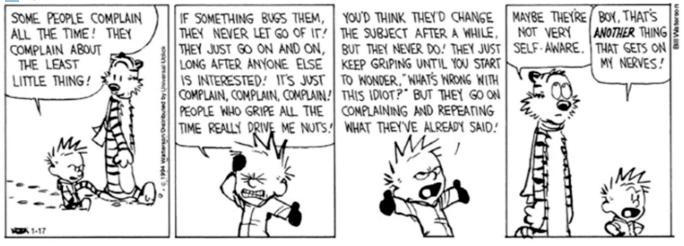
Read the comic strip below to answer question  


What is the best translation for the term “would like”?  

Alternativas
Q3101568 Inglês

Analyze strips I, II and II below:  


I.

Imagem associada para resolução da questão


II. 


Imagem associada para resolução da questão


III.


Imagem associada para resolução da questão


What verb tenses are in strips I, II and III, respectively?  

Alternativas
Q3101542 Inglês

Reading skill will help you to improve your understanding of the language and build your vocabulary.

Social Media Across Generations

Today’s grandparents are joining their grandchildren on social media, but the different generations’ online habits couldn’t be more different. In the UK the over-55s are joining Facebook in increasing numbers, meaning that they will soon be the site’s second biggest user group, with 3.5 million users aged 55-64 and 2.9 million over-65s.

Sheila, aged 59, says, I joined to see what my grandchildren are doing, as my daughter posts videos and photos of them. It’s a much better way to see what they’re doing than waiting for letters and photos in the post. That’s how we did it when I was a child, but I think I’m lucky I get to see so much more of their lives than my grandparents did.

Ironically, Sheila’s grandchildren are less likely to use Facebook themselves. Children under 17 in the UK are leaving the site – only 2.2 million users are under 17 – but they’re not going far from their smartphones. Chloe, aged 15, even sleeps with her phone. It’s my alarm clock so I have to she says. I look at it before I go to sleep and as soon as I wake up.

Unlike her grandmother’s generation, Chloe’s age group is spending so much time.......... their phones.......... home that they are missing out on spending time with their friends in real life. Sheila, on the other hand, has made contact with old friends from school she hasn’t heard...................40 years. We use Facebook to arrange to meet all over the country, she says. It’s changed my social life completely.

Teenagers might have their parents to thank for their smartphone and social media addiction as their parents were the early adopters of the smartphone. Peter, 38 and father of two teenagers, reports that he used to be on his phone or laptop constantly. I was always connected and I felt like I was always working, he says. How could I tell my kids to get off their phones if I was always in front of a screen myself? So, in the evenings and at weekends, he takes his SIM card out of his smartphone and puts it into an old-style mobile phone that can only make calls and send text messages. I’m not completely cut off from the world in case of emergencies, but the important thing is I’m setting a better example to my kids and spending more quality time with them.

Read the sentences below and determine whether they are true ( T ) or false ( F ), according to structure and grammar use.

( ) In the 5th paragraph of the text, the modal verb might can be replaced by may without changing its meaning.
( ) In the 2nd paragraph, the words what and when are being used as relative pronouns.
( ) The negative form of the sentence: That’s how we did it when I was a child, […] (from the 2nd paragraph of the text) is That’s how we didn’t do it when I wasn’t a child,[…]
( ) The word Unlike, in the 4th paragraph of the text, is an adjective that means different, not similar.
Select the option that presents the correct sequence from top to bottom.
Alternativas
Q3101541 Inglês
Analyze the sentences below about the correct use or not of articles (a, an, the or X (=no article)).

1. Kate has been talking to a customer who has just come into the shop.
2. She went to the zoo, but she didn’t see the monkeys there. She hates the monkeys.
3. People don’t write X letters nowadays. They write X emails. But I haven’t written an email for ages.
4. Jerry works in an university in the center of X London.

Select the option that presents the correct sentences. 
Alternativas
Q3101540 Inglês
Select the correct definition about the topic Social-Emotional Learning.
Alternativas
Q3101539 Inglês

Reading skill will help you to improve your understanding of the language and build your vocabulary.

Social Media Across Generations

Today’s grandparents are joining their grandchildren on social media, but the different generations’ online habits couldn’t be more different. In the UK the over-55s are joining Facebook in increasing numbers, meaning that they will soon be the site’s second biggest user group, with 3.5 million users aged 55-64 and 2.9 million over-65s.

Sheila, aged 59, says, I joined to see what my grandchildren are doing, as my daughter posts videos and photos of them. It’s a much better way to see what they’re doing than waiting for letters and photos in the post. That’s how we did it when I was a child, but I think I’m lucky I get to see so much more of their lives than my grandparents did.

Ironically, Sheila’s grandchildren are less likely to use Facebook themselves. Children under 17 in the UK are leaving the site – only 2.2 million users are under 17 – but they’re not going far from their smartphones. Chloe, aged 15, even sleeps with her phone. It’s my alarm clock so I have to she says. I look at it before I go to sleep and as soon as I wake up.

Unlike her grandmother’s generation, Chloe’s age group is spending so much time.......... their phones.......... home that they are missing out on spending time with their friends in real life. Sheila, on the other hand, has made contact with old friends from school she hasn’t heard...................40 years. We use Facebook to arrange to meet all over the country, she says. It’s changed my social life completely.

Teenagers might have their parents to thank for their smartphone and social media addiction as their parents were the early adopters of the smartphone. Peter, 38 and father of two teenagers, reports that he used to be on his phone or laptop constantly. I was always connected and I felt like I was always working, he says. How could I tell my kids to get off their phones if I was always in front of a screen myself? So, in the evenings and at weekends, he takes his SIM card out of his smartphone and puts it into an old-style mobile phone that can only make calls and send text messages. I’m not completely cut off from the world in case of emergencies, but the important thing is I’m setting a better example to my kids and spending more quality time with them.

The indirect speech of the sentence “It’s my alarm clock so I have to she says” (3rd paragraph from the text), can be found in which alternative?
Alternativas
Q3101538 Inglês

Reading skill will help you to improve your understanding of the language and build your vocabulary.

Social Media Across Generations

Today’s grandparents are joining their grandchildren on social media, but the different generations’ online habits couldn’t be more different. In the UK the over-55s are joining Facebook in increasing numbers, meaning that they will soon be the site’s second biggest user group, with 3.5 million users aged 55-64 and 2.9 million over-65s.

Sheila, aged 59, says, I joined to see what my grandchildren are doing, as my daughter posts videos and photos of them. It’s a much better way to see what they’re doing than waiting for letters and photos in the post. That’s how we did it when I was a child, but I think I’m lucky I get to see so much more of their lives than my grandparents did.

Ironically, Sheila’s grandchildren are less likely to use Facebook themselves. Children under 17 in the UK are leaving the site – only 2.2 million users are under 17 – but they’re not going far from their smartphones. Chloe, aged 15, even sleeps with her phone. It’s my alarm clock so I have to she says. I look at it before I go to sleep and as soon as I wake up.

Unlike her grandmother’s generation, Chloe’s age group is spending so much time.......... their phones.......... home that they are missing out on spending time with their friends in real life. Sheila, on the other hand, has made contact with old friends from school she hasn’t heard...................40 years. We use Facebook to arrange to meet all over the country, she says. It’s changed my social life completely.

Teenagers might have their parents to thank for their smartphone and social media addiction as their parents were the early adopters of the smartphone. Peter, 38 and father of two teenagers, reports that he used to be on his phone or laptop constantly. I was always connected and I felt like I was always working, he says. How could I tell my kids to get off their phones if I was always in front of a screen myself? So, in the evenings and at weekends, he takes his SIM card out of his smartphone and puts it into an old-style mobile phone that can only make calls and send text messages. I’m not completely cut off from the world in case of emergencies, but the important thing is I’m setting a better example to my kids and spending more quality time with them.

Read the text again and match the numbers in column 1 to what they refer to in column 2.

Column 1 Numbers from the text

1. 59
2. 15
3. 40
4. 3.5
5. 38

Column 2 Refer to

( ) Facebook’s users.
( ) Peter’s age.
( ) Chloe’s age.
( ) Grandmother’s age.
( ) the number of years Sheila hasn’t been in contact with her friends.

Select the option that presents the correct sequence from top to bottom. 
Alternativas
Q3101537 Inglês

Reading skill will help you to improve your understanding of the language and build your vocabulary.

Social Media Across Generations

Today’s grandparents are joining their grandchildren on social media, but the different generations’ online habits couldn’t be more different. In the UK the over-55s are joining Facebook in increasing numbers, meaning that they will soon be the site’s second biggest user group, with 3.5 million users aged 55-64 and 2.9 million over-65s.

Sheila, aged 59, says, I joined to see what my grandchildren are doing, as my daughter posts videos and photos of them. It’s a much better way to see what they’re doing than waiting for letters and photos in the post. That’s how we did it when I was a child, but I think I’m lucky I get to see so much more of their lives than my grandparents did.

Ironically, Sheila’s grandchildren are less likely to use Facebook themselves. Children under 17 in the UK are leaving the site – only 2.2 million users are under 17 – but they’re not going far from their smartphones. Chloe, aged 15, even sleeps with her phone. It’s my alarm clock so I have to she says. I look at it before I go to sleep and as soon as I wake up.

Unlike her grandmother’s generation, Chloe’s age group is spending so much time.......... their phones.......... home that they are missing out on spending time with their friends in real life. Sheila, on the other hand, has made contact with old friends from school she hasn’t heard...................40 years. We use Facebook to arrange to meet all over the country, she says. It’s changed my social life completely.

Teenagers might have their parents to thank for their smartphone and social media addiction as their parents were the early adopters of the smartphone. Peter, 38 and father of two teenagers, reports that he used to be on his phone or laptop constantly. I was always connected and I felt like I was always working, he says. How could I tell my kids to get off their phones if I was always in front of a screen myself? So, in the evenings and at weekends, he takes his SIM card out of his smartphone and puts it into an old-style mobile phone that can only make calls and send text messages. I’m not completely cut off from the world in case of emergencies, but the important thing is I’m setting a better example to my kids and spending more quality time with them.

Pronouns are words (or phrases) you substitute for nouns when your reader or listener already knows which noun you’re referring to.
In the sentence I joined to see what my grandchildren are doing, as my daughter posts videos and photos of them…, the word in bold refers to:
Alternativas
Q3101536 Inglês

Reading skill will help you to improve your understanding of the language and build your vocabulary.

Social Media Across Generations

Today’s grandparents are joining their grandchildren on social media, but the different generations’ online habits couldn’t be more different. In the UK the over-55s are joining Facebook in increasing numbers, meaning that they will soon be the site’s second biggest user group, with 3.5 million users aged 55-64 and 2.9 million over-65s.

Sheila, aged 59, says, I joined to see what my grandchildren are doing, as my daughter posts videos and photos of them. It’s a much better way to see what they’re doing than waiting for letters and photos in the post. That’s how we did it when I was a child, but I think I’m lucky I get to see so much more of their lives than my grandparents did.

Ironically, Sheila’s grandchildren are less likely to use Facebook themselves. Children under 17 in the UK are leaving the site – only 2.2 million users are under 17 – but they’re not going far from their smartphones. Chloe, aged 15, even sleeps with her phone. It’s my alarm clock so I have to she says. I look at it before I go to sleep and as soon as I wake up.

Unlike her grandmother’s generation, Chloe’s age group is spending so much time.......... their phones.......... home that they are missing out on spending time with their friends in real life. Sheila, on the other hand, has made contact with old friends from school she hasn’t heard...................40 years. We use Facebook to arrange to meet all over the country, she says. It’s changed my social life completely.

Teenagers might have their parents to thank for their smartphone and social media addiction as their parents were the early adopters of the smartphone. Peter, 38 and father of two teenagers, reports that he used to be on his phone or laptop constantly. I was always connected and I felt like I was always working, he says. How could I tell my kids to get off their phones if I was always in front of a screen myself? So, in the evenings and at weekends, he takes his SIM card out of his smartphone and puts it into an old-style mobile phone that can only make calls and send text messages. I’m not completely cut off from the world in case of emergencies, but the important thing is I’m setting a better example to my kids and spending more quality time with them.

Read the sentences below and determine whether they are true ( T ) or false ( F ), according to structure and grammar use.

( ) grandmother’s generation and Chloe’s age group (paragraph 4), the (‘s) are examples of the genitive case.
( ) The pronouns themselves, they and, their (in bold in the 3rd paragraph of the text) are respectively: reflexive pronoun, subject pronoun and possessive pronoun.
( ) The underlined words in the text biggest and better are adjectives in the superlative and comparative form, respectively.
( ) In It’s changed my social life completely, the (‘s) is the contracted form of has.
( ) The discourse marker on the other hand (in the 4th paragraph of the text), is being used to show a logical connection.

Select the option that presents the correct sequence from top to bottom.
Alternativas
Q3101535 Inglês

Reading skill will help you to improve your understanding of the language and build your vocabulary.

Social Media Across Generations

Today’s grandparents are joining their grandchildren on social media, but the different generations’ online habits couldn’t be more different. In the UK the over-55s are joining Facebook in increasing numbers, meaning that they will soon be the site’s second biggest user group, with 3.5 million users aged 55-64 and 2.9 million over-65s.

Sheila, aged 59, says, I joined to see what my grandchildren are doing, as my daughter posts videos and photos of them. It’s a much better way to see what they’re doing than waiting for letters and photos in the post. That’s how we did it when I was a child, but I think I’m lucky I get to see so much more of their lives than my grandparents did.

Ironically, Sheila’s grandchildren are less likely to use Facebook themselves. Children under 17 in the UK are leaving the site – only 2.2 million users are under 17 – but they’re not going far from their smartphones. Chloe, aged 15, even sleeps with her phone. It’s my alarm clock so I have to she says. I look at it before I go to sleep and as soon as I wake up.

Unlike her grandmother’s generation, Chloe’s age group is spending so much time.......... their phones.......... home that they are missing out on spending time with their friends in real life. Sheila, on the other hand, has made contact with old friends from school she hasn’t heard...................40 years. We use Facebook to arrange to meet all over the country, she says. It’s changed my social life completely.

Teenagers might have their parents to thank for their smartphone and social media addiction as their parents were the early adopters of the smartphone. Peter, 38 and father of two teenagers, reports that he used to be on his phone or laptop constantly. I was always connected and I felt like I was always working, he says. How could I tell my kids to get off their phones if I was always in front of a screen myself? So, in the evenings and at weekends, he takes his SIM card out of his smartphone and puts it into an old-style mobile phone that can only make calls and send text messages. I’m not completely cut off from the world in case of emergencies, but the important thing is I’m setting a better example to my kids and spending more quality time with them.

After reading the text carefully, some words related to family members are being used.
Study these sentences.

1. Parents are your relatives.
2. Grandparents are your parent’s parent.
3. Grandchildren are the children of your children.
4. Peter has two daughters.

Select the option that presents the correct sentences.
Alternativas
Q3101534 Inglês

Reading skill will help you to improve your understanding of the language and build your vocabulary.

Social Media Across Generations

Today’s grandparents are joining their grandchildren on social media, but the different generations’ online habits couldn’t be more different. In the UK the over-55s are joining Facebook in increasing numbers, meaning that they will soon be the site’s second biggest user group, with 3.5 million users aged 55-64 and 2.9 million over-65s.

Sheila, aged 59, says, I joined to see what my grandchildren are doing, as my daughter posts videos and photos of them. It’s a much better way to see what they’re doing than waiting for letters and photos in the post. That’s how we did it when I was a child, but I think I’m lucky I get to see so much more of their lives than my grandparents did.

Ironically, Sheila’s grandchildren are less likely to use Facebook themselves. Children under 17 in the UK are leaving the site – only 2.2 million users are under 17 – but they’re not going far from their smartphones. Chloe, aged 15, even sleeps with her phone. It’s my alarm clock so I have to she says. I look at it before I go to sleep and as soon as I wake up.

Unlike her grandmother’s generation, Chloe’s age group is spending so much time.......... their phones.......... home that they are missing out on spending time with their friends in real life. Sheila, on the other hand, has made contact with old friends from school she hasn’t heard...................40 years. We use Facebook to arrange to meet all over the country, she says. It’s changed my social life completely.

Teenagers might have their parents to thank for their smartphone and social media addiction as their parents were the early adopters of the smartphone. Peter, 38 and father of two teenagers, reports that he used to be on his phone or laptop constantly. I was always connected and I felt like I was always working, he says. How could I tell my kids to get off their phones if I was always in front of a screen myself? So, in the evenings and at weekends, he takes his SIM card out of his smartphone and puts it into an old-style mobile phone that can only make calls and send text messages. I’m not completely cut off from the world in case of emergencies, but the important thing is I’m setting a better example to my kids and spending more quality time with them.

Analyze the sentences below about the text.

1. Peter has changed how much he uses his phone during the working day.
2. Peter feels that the changes make him a better parent.
3. Grandparents like to keep their phones near them.
4. Parents were the first generation to get smartphones.

Select the option that presents the correct sentences.
Alternativas
Q3101533 Inglês

Reading skill will help you to improve your understanding of the language and build your vocabulary.

Social Media Across Generations

Today’s grandparents are joining their grandchildren on social media, but the different generations’ online habits couldn’t be more different. In the UK the over-55s are joining Facebook in increasing numbers, meaning that they will soon be the site’s second biggest user group, with 3.5 million users aged 55-64 and 2.9 million over-65s.

Sheila, aged 59, says, I joined to see what my grandchildren are doing, as my daughter posts videos and photos of them. It’s a much better way to see what they’re doing than waiting for letters and photos in the post. That’s how we did it when I was a child, but I think I’m lucky I get to see so much more of their lives than my grandparents did.

Ironically, Sheila’s grandchildren are less likely to use Facebook themselves. Children under 17 in the UK are leaving the site – only 2.2 million users are under 17 – but they’re not going far from their smartphones. Chloe, aged 15, even sleeps with her phone. It’s my alarm clock so I have to she says. I look at it before I go to sleep and as soon as I wake up.

Unlike her grandmother’s generation, Chloe’s age group is spending so much time.......... their phones.......... home that they are missing out on spending time with their friends in real life. Sheila, on the other hand, has made contact with old friends from school she hasn’t heard...................40 years. We use Facebook to arrange to meet all over the country, she says. It’s changed my social life completely.

Teenagers might have their parents to thank for their smartphone and social media addiction as their parents were the early adopters of the smartphone. Peter, 38 and father of two teenagers, reports that he used to be on his phone or laptop constantly. I was always connected and I felt like I was always working, he says. How could I tell my kids to get off their phones if I was always in front of a screen myself? So, in the evenings and at weekends, he takes his SIM card out of his smartphone and puts it into an old-style mobile phone that can only make calls and send text messages. I’m not completely cut off from the world in case of emergencies, but the important thing is I’m setting a better example to my kids and spending more quality time with them.

Read the sentences below and determine whether they are true ( T ) or false ( F ) based onto the text.

( ) More people aged 55 or more use Facebook than people aged 65 or more.
( ) Grandparents typically use Facebook less than their grandchildren.
( ) Sheila feels grateful to social media.
( ) Peter found his own smartphone use affected how he felt about how much his children used their phones.

Select the option that presents the correct sequence from top to bottom. 
Alternativas
Q3101532 Inglês

Reading skill will help you to improve your understanding of the language and build your vocabulary.

Social Media Across Generations

Today’s grandparents are joining their grandchildren on social media, but the different generations’ online habits couldn’t be more different. In the UK the over-55s are joining Facebook in increasing numbers, meaning that they will soon be the site’s second biggest user group, with 3.5 million users aged 55-64 and 2.9 million over-65s.

Sheila, aged 59, says, I joined to see what my grandchildren are doing, as my daughter posts videos and photos of them. It’s a much better way to see what they’re doing than waiting for letters and photos in the post. That’s how we did it when I was a child, but I think I’m lucky I get to see so much more of their lives than my grandparents did.

Ironically, Sheila’s grandchildren are less likely to use Facebook themselves. Children under 17 in the UK are leaving the site – only 2.2 million users are under 17 – but they’re not going far from their smartphones. Chloe, aged 15, even sleeps with her phone. It’s my alarm clock so I have to she says. I look at it before I go to sleep and as soon as I wake up.

Unlike her grandmother’s generation, Chloe’s age group is spending so much time.......... their phones.......... home that they are missing out on spending time with their friends in real life. Sheila, on the other hand, has made contact with old friends from school she hasn’t heard...................40 years. We use Facebook to arrange to meet all over the country, she says. It’s changed my social life completely.

Teenagers might have their parents to thank for their smartphone and social media addiction as their parents were the early adopters of the smartphone. Peter, 38 and father of two teenagers, reports that he used to be on his phone or laptop constantly. I was always connected and I felt like I was always working, he says. How could I tell my kids to get off their phones if I was always in front of a screen myself? So, in the evenings and at weekends, he takes his SIM card out of his smartphone and puts it into an old-style mobile phone that can only make calls and send text messages. I’m not completely cut off from the world in case of emergencies, but the important thing is I’m setting a better example to my kids and spending more quality time with them.

A preposition is a word that usually precedes a noun or expresses a relation to another word.
Choose the alternative which presents the correct prepositions that are missing from paragraph 4 of the text.
Alternativas
Q3101531 Inglês

Reading skill will help you to improve your understanding of the language and build your vocabulary.

Social Media Across Generations

Today’s grandparents are joining their grandchildren on social media, but the different generations’ online habits couldn’t be more different. In the UK the over-55s are joining Facebook in increasing numbers, meaning that they will soon be the site’s second biggest user group, with 3.5 million users aged 55-64 and 2.9 million over-65s.

Sheila, aged 59, says, I joined to see what my grandchildren are doing, as my daughter posts videos and photos of them. It’s a much better way to see what they’re doing than waiting for letters and photos in the post. That’s how we did it when I was a child, but I think I’m lucky I get to see so much more of their lives than my grandparents did.

Ironically, Sheila’s grandchildren are less likely to use Facebook themselves. Children under 17 in the UK are leaving the site – only 2.2 million users are under 17 – but they’re not going far from their smartphones. Chloe, aged 15, even sleeps with her phone. It’s my alarm clock so I have to she says. I look at it before I go to sleep and as soon as I wake up.

Unlike her grandmother’s generation, Chloe’s age group is spending so much time.......... their phones.......... home that they are missing out on spending time with their friends in real life. Sheila, on the other hand, has made contact with old friends from school she hasn’t heard...................40 years. We use Facebook to arrange to meet all over the country, she says. It’s changed my social life completely.

Teenagers might have their parents to thank for their smartphone and social media addiction as their parents were the early adopters of the smartphone. Peter, 38 and father of two teenagers, reports that he used to be on his phone or laptop constantly. I was always connected and I felt like I was always working, he says. How could I tell my kids to get off their phones if I was always in front of a screen myself? So, in the evenings and at weekends, he takes his SIM card out of his smartphone and puts it into an old-style mobile phone that can only make calls and send text messages. I’m not completely cut off from the world in case of emergencies, but the important thing is I’m setting a better example to my kids and spending more quality time with them.

Based on the text, which alternative contains the best definition of to miss out on (4th paragraph)? 
Alternativas
Q3101530 Inglês

Reading skill will help you to improve your understanding of the language and build your vocabulary.

Social Media Across Generations

Today’s grandparents are joining their grandchildren on social media, but the different generations’ online habits couldn’t be more different. In the UK the over-55s are joining Facebook in increasing numbers, meaning that they will soon be the site’s second biggest user group, with 3.5 million users aged 55-64 and 2.9 million over-65s.

Sheila, aged 59, says, I joined to see what my grandchildren are doing, as my daughter posts videos and photos of them. It’s a much better way to see what they’re doing than waiting for letters and photos in the post. That’s how we did it when I was a child, but I think I’m lucky I get to see so much more of their lives than my grandparents did.

Ironically, Sheila’s grandchildren are less likely to use Facebook themselves. Children under 17 in the UK are leaving the site – only 2.2 million users are under 17 – but they’re not going far from their smartphones. Chloe, aged 15, even sleeps with her phone. It’s my alarm clock so I have to she says. I look at it before I go to sleep and as soon as I wake up.

Unlike her grandmother’s generation, Chloe’s age group is spending so much time.......... their phones.......... home that they are missing out on spending time with their friends in real life. Sheila, on the other hand, has made contact with old friends from school she hasn’t heard...................40 years. We use Facebook to arrange to meet all over the country, she says. It’s changed my social life completely.

Teenagers might have their parents to thank for their smartphone and social media addiction as their parents were the early adopters of the smartphone. Peter, 38 and father of two teenagers, reports that he used to be on his phone or laptop constantly. I was always connected and I felt like I was always working, he says. How could I tell my kids to get off their phones if I was always in front of a screen myself? So, in the evenings and at weekends, he takes his SIM card out of his smartphone and puts it into an old-style mobile phone that can only make calls and send text messages. I’m not completely cut off from the world in case of emergencies, but the important thing is I’m setting a better example to my kids and spending more quality time with them.

Match the words (from the text) in column 1 with the correct definitions in column 2.

Column 1 Words

1. addiction
2. constantly
3. unlike
4. ironically
5. social media

Column 2 Definitions

( ) websites and apps like Facebook, Twitter.
( ) needing something too much or in an unhealthy way.
( ) in a funny or strange way because it’s unexpected.
( ) different form.
( ) time without a break.

Select the option that presents the correct sequence from top to bottom.
Alternativas
Q3101265 Inglês

Imagem associada para resolução da questão


What is the best translation for the term “would like”?

Alternativas
Q3101264 Inglês

Analyze strips I, II and II below:


Imagem associada para resolução da questão

Imagem associada para resolução da questão


What verb tenses are in strips I, II and III, respectively?

Alternativas
Respostas
7301: A
7302: E
7303: E
7304: E
7305: B
7306: D
7307: C
7308: A
7309: E
7310: D
7311: B
7312: C
7313: D
7314: D
7315: C
7316: B
7317: A
7318: E
7319: E
7320: B