Questões de Concurso Sobre inglês
Foram encontradas 26.001 questões


Ano: 2025
Banca:
VUNESP
Órgão:
SEDUC-SP
Prova:
VUNESP - 2025 - SEDUC-SP - Professor de Educação Básica II - Inglês - QM 2023 |
Q3529152
Inglês
Texto associado
Read the text to answer question:
Information and communication technology (ICT)
ICT uses language to develop and apply technical
computing skills. Learners practise how to find, develop,
analyse and present information, and they learn how to model
situations, solve problems and evaluate their solutions. There
are many opportunities for CLIL ICT teachers to support
their learners’ understanding of key ICT concepts and skills
through the use of physical objects, visuals, demonstrations
and hands-on practice. It is these visual elements of the
subject that makes ICT a good one for learners who are new
to CLIL. However, since ICT lessons may often concentrate
on technical skills or involve learners sitting silently behind
a computer, the challenge for ICT teachers is to create
opportunities for CLIL learners to think for themselves, to
speak and to practise communicating in writing. ICT is ideal
for cross-curricular work: learners can use the content of their subject lessons to carry out ICT tasks in another language. As
they develop ICT knowledge and skills, CLIL learners can be
taught how to think, talk and write like ICT specialists.
(DALE, Liz; TANNER, Rosie. CLIL activities: a resource for subjects and
language teachers. Cambridge: Cambridge University, 2012)
According to the extract, ICT is considered a good subject
for learners who are new to CLIL because
Ano: 2025
Banca:
VUNESP
Órgão:
SEDUC-SP
Prova:
VUNESP - 2025 - SEDUC-SP - Professor de Educação Básica II - Inglês - QM 2023 |
Q3529151
Inglês
Texto associado
Read the text to answer question:
CLIL is an approach or method which integrates the
teaching of content from the curriculum with the teaching
of a non-native language. It is increasingly important in our
global, technological society, where knowledge of another
language helps learners to develop skills in their first or home
language and also helps them develop skills to communicate
ideas about science, arts and technology to people around
the world. It gives learners a different learning experience
compared with most foreign language teaching because in
a CLIL classroom, the curricular subject and new language
are taught together. Thinking and learning skills are integrated
too. CLIL can involve many methodologies from both subject
and language teaching, so CLIL presents new challenges for
teachers and learners.
(BENTLEY, Kay. The TKT course CLIL module. Cambridge:
Cambridge University, 2010)
In the excerpt “CLIL can involve many methodologies
from both subject and language teaching”, the word
closest in meaning to the one in bold is
Ano: 2025
Banca:
VUNESP
Órgão:
SEDUC-SP
Prova:
VUNESP - 2025 - SEDUC-SP - Professor de Educação Básica II - Inglês - QM 2023 |
Q3529150
Inglês
Texto associado
Read the text to answer question:
CLIL is an approach or method which integrates the
teaching of content from the curriculum with the teaching
of a non-native language. It is increasingly important in our
global, technological society, where knowledge of another
language helps learners to develop skills in their first or home
language and also helps them develop skills to communicate
ideas about science, arts and technology to people around
the world. It gives learners a different learning experience
compared with most foreign language teaching because in
a CLIL classroom, the curricular subject and new language
are taught together. Thinking and learning skills are integrated
too. CLIL can involve many methodologies from both subject
and language teaching, so CLIL presents new challenges for
teachers and learners.
(BENTLEY, Kay. The TKT course CLIL module. Cambridge:
Cambridge University, 2010)
No trecho retirado do texto “It is increasingly important
in our global, technological society, where knowledge of
another language helps learners to develop skills in their
first or home language…”, a palavra, em negrito, pode ser
subtituída, sem alteração de significado ou estrutura, por
Ano: 2025
Banca:
VUNESP
Órgão:
SEDUC-SP
Prova:
VUNESP - 2025 - SEDUC-SP - Professor de Educação Básica II - Inglês - QM 2023 |
Q3529149
Inglês
Texto associado
Read the text to answer question:
CLIL is an approach or method which integrates the
teaching of content from the curriculum with the teaching
of a non-native language. It is increasingly important in our
global, technological society, where knowledge of another
language helps learners to develop skills in their first or home
language and also helps them develop skills to communicate
ideas about science, arts and technology to people around
the world. It gives learners a different learning experience
compared with most foreign language teaching because in
a CLIL classroom, the curricular subject and new language
are taught together. Thinking and learning skills are integrated
too. CLIL can involve many methodologies from both subject
and language teaching, so CLIL presents new challenges for
teachers and learners.
(BENTLEY, Kay. The TKT course CLIL module. Cambridge:
Cambridge University, 2010)
According to the text, what makes CLIL a unique and
valuable approach to language learning in today’s global
society is that it
Ano: 2025
Banca:
VUNESP
Órgão:
SEDUC-SP
Prova:
VUNESP - 2025 - SEDUC-SP - Professor de Educação Básica II - Inglês - QM 2020 |
Q3524727
Inglês
Leia a citação a seguir:
“Never make fun of someone who doesn’t speak English proper. They already be speaking another language.”
Anonymous
The teacher who praises this attempt at communication is one who follows the concepts of the
“Never make fun of someone who doesn’t speak English proper. They already be speaking another language.”
Anonymous
The teacher who praises this attempt at communication is one who follows the concepts of the
Ano: 2025
Banca:
VUNESP
Órgão:
SEDUC-SP
Prova:
VUNESP - 2025 - SEDUC-SP - Professor de Educação Básica II - Inglês - QM 2020 |
Q3524726
Inglês
This is the name of a site which discusses the post-method
era in language teaching and learning.
eNglIsh lANguAge TeAChINg IN The POsT-MeThOd erA
Its representation is consistent with the following comment:
eNglIsh lANguAge TeAChINg IN The POsT-MeThOd erA
Its representation is consistent with the following comment:
Ano: 2025
Banca:
VUNESP
Órgão:
SEDUC-SP
Prova:
VUNESP - 2025 - SEDUC-SP - Professor de Educação Básica II - Inglês - QM 2020 |
Q3524724
Inglês
Texto associado
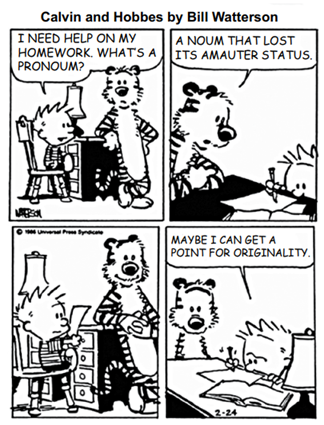
Read the comic strip about Calvin (the boy) and Hobbes (the
tiger), and answer question.
(https://www.gocomics.com/search/calvinandhobbes?utf8=%E2%9C%93&ter
ms=what+is+a+pronoun%3F)
The boy’s words and the face expressions allow us to
infer that
Ano: 2025
Banca:
VUNESP
Órgão:
SEDUC-SP
Prova:
VUNESP - 2025 - SEDUC-SP - Professor de Educação Básica II - Inglês - QM 2020 |
Q3524723
Inglês
Texto associado
Read the text to answer question.
Our world is changing rapidly and so are the needs and
wants of our learners. Mobile phones and social media have
become staples in students’ daily lives. Many work from home
and value flexibility in when and where they learn. English has
become an essential tool for international communication,
and so have many transferable skills that are crucial to our
learners’ employability in a landscape where new jobs and
tasks are constantly being created.
It can be tricky to define ‘innovation’ and often, when we
talk about innovations, it is easy to only focus on technological
innovations. However, innovations go beyond technological
advancements. In the world of English language teaching
(ELT), innovation introduces new and original elements in
methodology, design, content, and, of course, in technology.
However innovative, technology shouldn’t be used for the sake
of using the latest technology because innovation is about
addressing and solving current challenges and offering fresh
solutions. It is about adapting to changing needs and contexts
and enhancing learning outcomes. It is about reimagining old
ways of teaching and learning and attempting new pedagogies.
In other words, innovation is about moving forward with the
way we do things because it can make things more effective
and more efficient for the educator and the learner.
(https://www.britishcouncil.org/voices-magazine/2024)
No Currículo Paulista, lemos que, entre as competências
específicas de língua inglesa para o ensino fundamental,
é esperado:
“Utilizar novas tecnologias, com novas linguagens e modos de interação, para pesquisar, selecionar, compartilhar, posicionar-se e produzir sentidos em práticas de letramento na língua inglesa, de forma ética, crítica e responsável.”
O trecho do texto do British Council que vai ao encontro dessa proposta é
“Utilizar novas tecnologias, com novas linguagens e modos de interação, para pesquisar, selecionar, compartilhar, posicionar-se e produzir sentidos em práticas de letramento na língua inglesa, de forma ética, crítica e responsável.”
O trecho do texto do British Council que vai ao encontro dessa proposta é
Ano: 2025
Banca:
VUNESP
Órgão:
SEDUC-SP
Prova:
VUNESP - 2025 - SEDUC-SP - Professor de Educação Básica II - Inglês - QM 2020 |
Q3524722
Inglês
Texto associado
Read the text to answer question.
Our world is changing rapidly and so are the needs and
wants of our learners. Mobile phones and social media have
become staples in students’ daily lives. Many work from home
and value flexibility in when and where they learn. English has
become an essential tool for international communication,
and so have many transferable skills that are crucial to our
learners’ employability in a landscape where new jobs and
tasks are constantly being created.
It can be tricky to define ‘innovation’ and often, when we
talk about innovations, it is easy to only focus on technological
innovations. However, innovations go beyond technological
advancements. In the world of English language teaching
(ELT), innovation introduces new and original elements in
methodology, design, content, and, of course, in technology.
However innovative, technology shouldn’t be used for the sake
of using the latest technology because innovation is about
addressing and solving current challenges and offering fresh
solutions. It is about adapting to changing needs and contexts
and enhancing learning outcomes. It is about reimagining old
ways of teaching and learning and attempting new pedagogies.
In other words, innovation is about moving forward with the
way we do things because it can make things more effective
and more efficient for the educator and the learner.
(https://www.britishcouncil.org/voices-magazine/2024)
No trecho retirado do segundo parágrafo do texto
“innovation is about moving forward with the way we
do things because it can make things more effective”,
há exemplo de dois verbos – do e make – que causam
dificuldade para aprendizes de inglês falantes nativos de
português por conta de “collocations”, ou “groups of two
or more words that are frequently used together”.
Assinale a alternativa em que a expressão em negrito foi empregada corretamente.
Assinale a alternativa em que a expressão em negrito foi empregada corretamente.
Ano: 2025
Banca:
VUNESP
Órgão:
SEDUC-SP
Prova:
VUNESP - 2025 - SEDUC-SP - Professor de Educação Básica II - Inglês - QM 2020 |
Q3524721
Inglês
Texto associado
Read the text to answer question.
Our world is changing rapidly and so are the needs and
wants of our learners. Mobile phones and social media have
become staples in students’ daily lives. Many work from home
and value flexibility in when and where they learn. English has
become an essential tool for international communication,
and so have many transferable skills that are crucial to our
learners’ employability in a landscape where new jobs and
tasks are constantly being created.
It can be tricky to define ‘innovation’ and often, when we
talk about innovations, it is easy to only focus on technological
innovations. However, innovations go beyond technological
advancements. In the world of English language teaching
(ELT), innovation introduces new and original elements in
methodology, design, content, and, of course, in technology.
However innovative, technology shouldn’t be used for the sake
of using the latest technology because innovation is about
addressing and solving current challenges and offering fresh
solutions. It is about adapting to changing needs and contexts
and enhancing learning outcomes. It is about reimagining old
ways of teaching and learning and attempting new pedagogies.
In other words, innovation is about moving forward with the
way we do things because it can make things more effective
and more efficient for the educator and the learner.
(https://www.britishcouncil.org/voices-magazine/2024)
The excerpt from the text “It can be tricky to define
‘innovation’ and often, when we talk about innovations, it
is easy to only focus on technological innovations” shows
two instances of the use of an ambient “it” or empty “it”.
Unlike the common pronoun it, empty it does not refer
to anything; it simply serves a grammatical function. In
other words, empty it has a grammatical meaning, but no
lexical meaning.
Mark the alternative in which it has a lexical meaning.
Mark the alternative in which it has a lexical meaning.
Ano: 2025
Banca:
VUNESP
Órgão:
SEDUC-SP
Prova:
VUNESP - 2025 - SEDUC-SP - Professor de Educação Básica II - Inglês - QM 2020 |
Q3524720
Inglês
Texto associado
Read the text to answer question.
Our world is changing rapidly and so are the needs and
wants of our learners. Mobile phones and social media have
become staples in students’ daily lives. Many work from home
and value flexibility in when and where they learn. English has
become an essential tool for international communication,
and so have many transferable skills that are crucial to our
learners’ employability in a landscape where new jobs and
tasks are constantly being created.
It can be tricky to define ‘innovation’ and often, when we
talk about innovations, it is easy to only focus on technological
innovations. However, innovations go beyond technological
advancements. In the world of English language teaching
(ELT), innovation introduces new and original elements in
methodology, design, content, and, of course, in technology.
However innovative, technology shouldn’t be used for the sake
of using the latest technology because innovation is about
addressing and solving current challenges and offering fresh
solutions. It is about adapting to changing needs and contexts
and enhancing learning outcomes. It is about reimagining old
ways of teaching and learning and attempting new pedagogies.
In other words, innovation is about moving forward with the
way we do things because it can make things more effective
and more efficient for the educator and the learner.
(https://www.britishcouncil.org/voices-magazine/2024)
According to the authors, the reason for not using the
latest technology with the sole objective of using it is that
Ano: 2025
Banca:
VUNESP
Órgão:
SEDUC-SP
Prova:
VUNESP - 2025 - SEDUC-SP - Professor de Educação Básica II - Inglês - QM 2020 |
Q3524719
Inglês
Texto associado
Read the text to answer question.
Our world is changing rapidly and so are the needs and
wants of our learners. Mobile phones and social media have
become staples in students’ daily lives. Many work from home
and value flexibility in when and where they learn. English has
become an essential tool for international communication,
and so have many transferable skills that are crucial to our
learners’ employability in a landscape where new jobs and
tasks are constantly being created.
It can be tricky to define ‘innovation’ and often, when we
talk about innovations, it is easy to only focus on technological
innovations. However, innovations go beyond technological
advancements. In the world of English language teaching
(ELT), innovation introduces new and original elements in
methodology, design, content, and, of course, in technology.
However innovative, technology shouldn’t be used for the sake
of using the latest technology because innovation is about
addressing and solving current challenges and offering fresh
solutions. It is about adapting to changing needs and contexts
and enhancing learning outcomes. It is about reimagining old
ways of teaching and learning and attempting new pedagogies.
In other words, innovation is about moving forward with the
way we do things because it can make things more effective
and more efficient for the educator and the learner.
(https://www.britishcouncil.org/voices-magazine/2024)
The sentence “Mobile phones and social media have
become staples in students’ daily lives” means
Ano: 2025
Banca:
VUNESP
Órgão:
SEDUC-SP
Prova:
VUNESP - 2025 - SEDUC-SP - Professor de Educação Básica II - Inglês - QM 2020 |
Q3524718
Inglês
Texto associado
Read the text to answer question.
Our world is changing rapidly and so are the needs and
wants of our learners. Mobile phones and social media have
become staples in students’ daily lives. Many work from home
and value flexibility in when and where they learn. English has
become an essential tool for international communication,
and so have many transferable skills that are crucial to our
learners’ employability in a landscape where new jobs and
tasks are constantly being created.
It can be tricky to define ‘innovation’ and often, when we
talk about innovations, it is easy to only focus on technological
innovations. However, innovations go beyond technological
advancements. In the world of English language teaching
(ELT), innovation introduces new and original elements in
methodology, design, content, and, of course, in technology.
However innovative, technology shouldn’t be used for the sake
of using the latest technology because innovation is about
addressing and solving current challenges and offering fresh
solutions. It is about adapting to changing needs and contexts
and enhancing learning outcomes. It is about reimagining old
ways of teaching and learning and attempting new pedagogies.
In other words, innovation is about moving forward with the
way we do things because it can make things more effective
and more efficient for the educator and the learner.
(https://www.britishcouncil.org/voices-magazine/2024)
One of the main points raised by the authors is:
Ano: 2025
Banca:
VUNESP
Órgão:
SEDUC-SP
Prova:
VUNESP - 2025 - SEDUC-SP - Professor de Educação Básica II - Inglês - QM 2020 |
Q3524717
Inglês
Texto associado
Read the text and answer question.
As one of the oldest and most influential foreign language
pedagogical journals, The Modern Language Journal (MLJ)
offers valuable insights into how technological advances
have affected language teaching and learning at various
points in history. The present article will review the proposed
pedagogical use of technological resources by means of a
critical analysis of articles published in the MLJ since its first
edition in 1916. The assessment of how previous technical
capabilities have been implemented for pedagogical purposes
represents a necessary background for the assessment of
the pedagogical potential of present-day technologies. In this
article I argue that, whereas most “new technologies” (radio,
television, VCR, computers) may have been revolutionary in
the overall context of human interaction, it is not clear that
they have achieved equal degrees of pedagogical benefit in
the realm of second language teaching. I further claim that
the pedagogical effectiveness of different technologies is
related to four major questions: (a) Is increased technological
sophistication correlated to increased pedagogical
effectiveness? (b) Which technical attributes specific to new technologies can be profitably exploited for pedagogical
purposes? (c) How can new technologies be successfully
integrated into the curriculum? and (d) Do new technologies
provide for an efficient use of human and material resources?
(Salaberry, M. Researchgate.net. Adaptado)
Sometimes, when communicating, users of the language
may have to report what they have heard or read from
someone else. In the case of the question taken from
the text “Which technical attributes specific to new
technologies can be profitably exploited for pedagogical
purposes?”, the appropriate reported form beginning with
“The author asked” is:
Ano: 2025
Banca:
VUNESP
Órgão:
SEDUC-SP
Prova:
VUNESP - 2025 - SEDUC-SP - Professor de Educação Básica II - Inglês - QM 2020 |
Q3524716
Inglês
Texto associado
Read the text and answer question.
As one of the oldest and most influential foreign language
pedagogical journals, The Modern Language Journal (MLJ)
offers valuable insights into how technological advances
have affected language teaching and learning at various
points in history. The present article will review the proposed
pedagogical use of technological resources by means of a
critical analysis of articles published in the MLJ since its first
edition in 1916. The assessment of how previous technical
capabilities have been implemented for pedagogical purposes
represents a necessary background for the assessment of
the pedagogical potential of present-day technologies. In this
article I argue that, whereas most “new technologies” (radio,
television, VCR, computers) may have been revolutionary in
the overall context of human interaction, it is not clear that
they have achieved equal degrees of pedagogical benefit in
the realm of second language teaching. I further claim that
the pedagogical effectiveness of different technologies is
related to four major questions: (a) Is increased technological
sophistication correlated to increased pedagogical
effectiveness? (b) Which technical attributes specific to new technologies can be profitably exploited for pedagogical
purposes? (c) How can new technologies be successfully
integrated into the curriculum? and (d) Do new technologies
provide for an efficient use of human and material resources?
(Salaberry, M. Researchgate.net. Adaptado)
O autor do texto argumenta que
Ano: 2025
Banca:
VUNESP
Órgão:
SEDUC-SP
Prova:
VUNESP - 2025 - SEDUC-SP - Professor de Educação Básica II - Inglês - QM 2020 |
Q3524715
Inglês
Texto associado
Read the text and answer question.
As one of the oldest and most influential foreign language
pedagogical journals, The Modern Language Journal (MLJ)
offers valuable insights into how technological advances
have affected language teaching and learning at various
points in history. The present article will review the proposed
pedagogical use of technological resources by means of a
critical analysis of articles published in the MLJ since its first
edition in 1916. The assessment of how previous technical
capabilities have been implemented for pedagogical purposes
represents a necessary background for the assessment of
the pedagogical potential of present-day technologies. In this
article I argue that, whereas most “new technologies” (radio,
television, VCR, computers) may have been revolutionary in
the overall context of human interaction, it is not clear that
they have achieved equal degrees of pedagogical benefit in
the realm of second language teaching. I further claim that
the pedagogical effectiveness of different technologies is
related to four major questions: (a) Is increased technological
sophistication correlated to increased pedagogical
effectiveness? (b) Which technical attributes specific to new technologies can be profitably exploited for pedagogical
purposes? (c) How can new technologies be successfully
integrated into the curriculum? and (d) Do new technologies
provide for an efficient use of human and material resources?
(Salaberry, M. Researchgate.net. Adaptado)
Entre as pistas gráficas presentes no texto está o uso
de aspas na expressão “new technologies”. Esse uso
pretende
Ano: 2025
Banca:
VUNESP
Órgão:
SEDUC-SP
Prova:
VUNESP - 2025 - SEDUC-SP - Professor de Educação Básica II - Inglês - QM 2020 |
Q3524714
Inglês
Texto associado
Read the text and answer question.
As one of the oldest and most influential foreign language
pedagogical journals, The Modern Language Journal (MLJ)
offers valuable insights into how technological advances
have affected language teaching and learning at various
points in history. The present article will review the proposed
pedagogical use of technological resources by means of a
critical analysis of articles published in the MLJ since its first
edition in 1916. The assessment of how previous technical
capabilities have been implemented for pedagogical purposes
represents a necessary background for the assessment of
the pedagogical potential of present-day technologies. In this
article I argue that, whereas most “new technologies” (radio,
television, VCR, computers) may have been revolutionary in
the overall context of human interaction, it is not clear that
they have achieved equal degrees of pedagogical benefit in
the realm of second language teaching. I further claim that
the pedagogical effectiveness of different technologies is
related to four major questions: (a) Is increased technological
sophistication correlated to increased pedagogical
effectiveness? (b) Which technical attributes specific to new technologies can be profitably exploited for pedagogical
purposes? (c) How can new technologies be successfully
integrated into the curriculum? and (d) Do new technologies
provide for an efficient use of human and material resources?
(Salaberry, M. Researchgate.net. Adaptado)
Casos de cognatos e falsos cognatos são comumente
vistos entre português e inglês. Das palavras em negrito
a seguir, aponte aquela que representa um falso cognato
no contexto do texto.
Ano: 2025
Banca:
VUNESP
Órgão:
SEDUC-SP
Prova:
VUNESP - 2025 - SEDUC-SP - Professor de Educação Básica II - Inglês - QM 2020 |
Q3524713
Inglês
Texto associado
Read the text and answer question.
As one of the oldest and most influential foreign language
pedagogical journals, The Modern Language Journal (MLJ)
offers valuable insights into how technological advances
have affected language teaching and learning at various
points in history. The present article will review the proposed
pedagogical use of technological resources by means of a
critical analysis of articles published in the MLJ since its first
edition in 1916. The assessment of how previous technical
capabilities have been implemented for pedagogical purposes
represents a necessary background for the assessment of
the pedagogical potential of present-day technologies. In this
article I argue that, whereas most “new technologies” (radio,
television, VCR, computers) may have been revolutionary in
the overall context of human interaction, it is not clear that
they have achieved equal degrees of pedagogical benefit in
the realm of second language teaching. I further claim that
the pedagogical effectiveness of different technologies is
related to four major questions: (a) Is increased technological
sophistication correlated to increased pedagogical
effectiveness? (b) Which technical attributes specific to new technologies can be profitably exploited for pedagogical
purposes? (c) How can new technologies be successfully
integrated into the curriculum? and (d) Do new technologies
provide for an efficient use of human and material resources?
(Salaberry, M. Researchgate.net. Adaptado)
It is correct to state that the study of different genres
Ano: 2025
Banca:
VUNESP
Órgão:
SEDUC-SP
Prova:
VUNESP - 2025 - SEDUC-SP - Professor de Educação Básica II - Inglês - QM 2020 |
Q3524712
Inglês
Texto associado
Read the text and answer question.
As one of the oldest and most influential foreign language
pedagogical journals, The Modern Language Journal (MLJ)
offers valuable insights into how technological advances
have affected language teaching and learning at various
points in history. The present article will review the proposed
pedagogical use of technological resources by means of a
critical analysis of articles published in the MLJ since its first
edition in 1916. The assessment of how previous technical
capabilities have been implemented for pedagogical purposes
represents a necessary background for the assessment of
the pedagogical potential of present-day technologies. In this
article I argue that, whereas most “new technologies” (radio,
television, VCR, computers) may have been revolutionary in
the overall context of human interaction, it is not clear that
they have achieved equal degrees of pedagogical benefit in
the realm of second language teaching. I further claim that
the pedagogical effectiveness of different technologies is
related to four major questions: (a) Is increased technological
sophistication correlated to increased pedagogical
effectiveness? (b) Which technical attributes specific to new technologies can be profitably exploited for pedagogical
purposes? (c) How can new technologies be successfully
integrated into the curriculum? and (d) Do new technologies
provide for an efficient use of human and material resources?
(Salaberry, M. Researchgate.net. Adaptado)
Assuming the text was taken from an academic article, its
characteristics are consistent with the
Ano: 2025
Banca:
VUNESP
Órgão:
SEDUC-SP
Prova:
VUNESP - 2025 - SEDUC-SP - Professor de Educação Básica II - Inglês - QM 2020 |
Q3524711
Inglês
Texto associado
Read the text and answer question.
As one of the oldest and most influential foreign language
pedagogical journals, The Modern Language Journal (MLJ)
offers valuable insights into how technological advances
have affected language teaching and learning at various
points in history. The present article will review the proposed
pedagogical use of technological resources by means of a
critical analysis of articles published in the MLJ since its first
edition in 1916. The assessment of how previous technical
capabilities have been implemented for pedagogical purposes
represents a necessary background for the assessment of
the pedagogical potential of present-day technologies. In this
article I argue that, whereas most “new technologies” (radio,
television, VCR, computers) may have been revolutionary in
the overall context of human interaction, it is not clear that
they have achieved equal degrees of pedagogical benefit in
the realm of second language teaching. I further claim that
the pedagogical effectiveness of different technologies is
related to four major questions: (a) Is increased technological
sophistication correlated to increased pedagogical
effectiveness? (b) Which technical attributes specific to new technologies can be profitably exploited for pedagogical
purposes? (c) How can new technologies be successfully
integrated into the curriculum? and (d) Do new technologies
provide for an efficient use of human and material resources?
(Salaberry, M. Researchgate.net. Adaptado)
One of the main objectives of the author is to

 Conheça nossos planos