Questões de Concurso
Sobre presente simples | simple present em inglês
Foram encontradas 342 questões


Also called modal auxiliary verbs, modal verbs are used along with a main verb to express possibility, ability, permission, necessity, and others. Modal verbs, modal auxiliary verbs, modal auxiliaries or simply modals are only used in combination with “ordinary verbs”. They have no inflection at all as they are always followed by the infinitive form of a verb. After reading the statements below, check the correct alternative based on the correct use of the modal auxiliary verbs in English.
I. CAN as a modal auxiliary verb is used to express present ability, permission and polite request.
II. SHOULD as a modal auxiliary verb is used to express opinion, advice, necessity and recommendation.
III. MAY as a modal auxiliary verb is used to express obligation, firm necessity, logical conclusion and probability.
IV.OUGHT TO as a modal auxiliary verb is used to express intention, permission, supposition with doubt and past habits.
V. MUST as a modal auxiliary verb is used to express supposition, moral duty, strict recommendation, regret and insistent advice.
Based on the information gathered after reading the propositions provided, it is possible to say that is (that are) correct.
Many languages have grammatical means to indicate the time when an action or event occurs, or when a state or process holds. This phenomenon is called “tense”. Verb tenses indicate when an action took place, as well as how long it occurred. In English, the main verb tenses are past, present, and future. When it comes to verb aspect, it is worth mentioning that it deals with the internal constituency of actions, events, states, processes or situations. For instance, it may indicate that an action is completed or still ongoing. English has four aspects, which are: simple, progressive (continuous), perfect and perfect progressive. Having that said, check the alternative, whose information presented is the only one that can be posited as correct when it comes to English tenses and their adequate uses.
Which form of the verb 'to be' is used and why is it used in this context?
There are five occurrences of the verb to be in the text.
'I play soccer every Friday', 'She practices the piano after school', 'We go for a walk with the dog', 'He feeds his pet fish before dinner'.
I. “I will be there at nine o’clock” is in the immediate future.
II. “The Second War ended in 1945” is in the simple past.
III. “At this same time tomorrow, I’ll be travelling” is in future progressive.
IV. “How many symphonies did Mozart compose?” is in the simple present.
V. “She hasn’t seen that film yet” is in the present perfect progressive.
Which ones are correct?
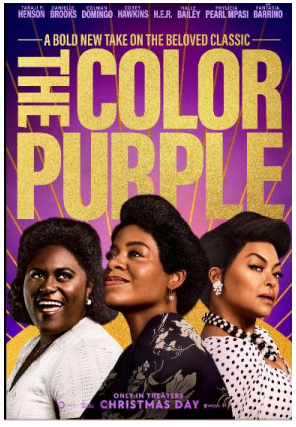
I. “Oprah has joined forces with Steven Spielberg, Quincy Jones, and Scott Sanders to bring The Color Purple musical”
II. "In 1985, Oprah made her acting debut as Sofia in Spielberg’s adaptation of Alice Walker’s novel—and earned an Academy Award nomination. "
III. “Celie, the protagonist of The Color Purple, endures the unimaginable while growing up in rural Georgia—and triumphs, thanks in part to the support of the book’s other women protagonists, Sofia and Shug Avery.”
I. “What will you have been doing?” is in the simple future and future perfect tense.
II. “I was studying English when you called yesteday” is in the past continuous.
III. “She wrote last night” is in simple past.
IV. “Have they ever been abroad?” is in the past perfect.
V. “What are you doing now?” is in the present continuous.
Which ones are correct?
• Get enough sleep. Good sleep improves your brain performance, mood and overall health. Consistently poor sleep is associated with anxiety, depression, and other mental health conditions.
I - “Mental illnesses are disorders, ranging from mild to severe, that affect a person’s thinking, mood, and/or behavior.”
II - "According to the National Institute of Mental Health, nearly one-in-five adults live with a mental illness."
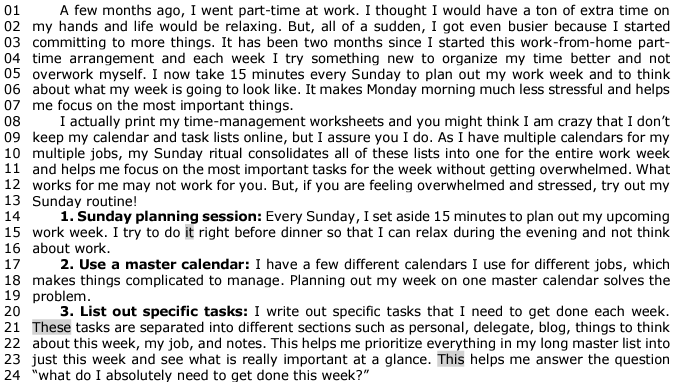

Complete the sentence below with the correct verb. Choose the CORRECT answer.
“A professional soccer player always _________ a lot during a match.”
Text II
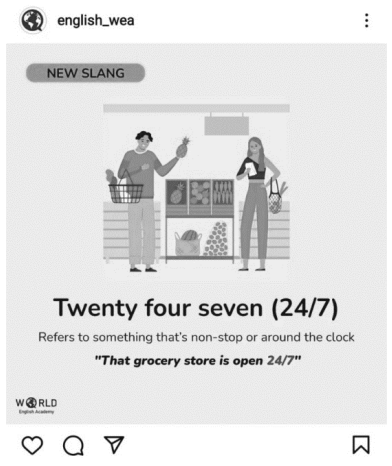
Analyze the sentences:
"They are studying for the test."
"Do you have a brother?"
Check the alternative that presents the tense of the sentence below:
“Pamela went to Paris last year.”
‘Talking to a coworker: “I don’t know if we are going to reach our goal this month.
Last month it was amazing as I ________ 10 cars in total.’’
I – Julia goes to the gym three times a week, but she hates it. II – The baby slept very well last night, after he was breastfed. III – I am going to move to another town after I retire. IV – I have already seen this movie. Let’s choose another one.
“By seven o’clock the orchestra _______________, no thin five-piece affair, but a whole pitful of oboes and trombones and saxophones and viols and cornets and piccolos, and low and high drums. The last swimmers ______________ in from the beach now and _______________ up-stairs; the cars from New York _______________ five deep in the drive […]” (FITZGERALD, 2011, p. 32-33).
Source: https://www.wsfcs.k12.nc.us/cms/lib/NC01001395/Centricity/Domain/7935/Gatsby_PDF_FullText.pdf Access on March, 20th 2023

 Conheça nossos planos