Questões de Concurso
Sobre presente simples | simple present em inglês
Foram encontradas 342 questões


Which verb tense the sentence below refer to?
"Has he been driving everyday?"
Instructions: answer the question based on the following text.

Source (adapted): https://www.bbc.com/news/worldafrica-50800864
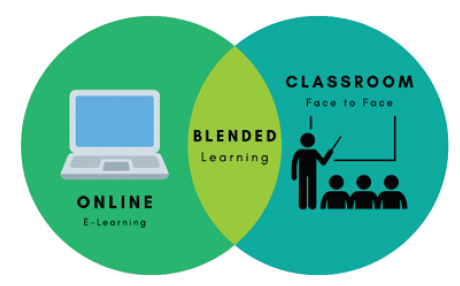
What is blended learning and how does it work?

I. “At the touch of love everyone ______ a poet.”
II. “Don’t let yesterday ______ up too much of today.”
III. “Blessed are the curious for they ______ have adventures.”
IV. “The journey, not the arrival _______.”
Analise as tabelas abaixo:
TABELA 1
I Water boils at 100°C.
II Mary heard the sound of a bell.
III I will drive the car tomorrow.
TABELA 2
A Passado
B Presente
C Futuro
Assinale a alternativa que relaciona a frase da “Tabela 1” ao tempo verbal correto da “Tabela 2”:
Read the text below to answer the question.
Parker Solar Probe: How Nasa is trying to 'touch' the Sun
Nasa is all set to launch one of the most ambitious missions in its history. It's sending a satellite called the Parker Solar Probe into the Sun's outer atmosphere, or corona. Scheduled for launch on Saturday, the spacecraft promises to crack some longstanding mysteries about our star's behaviour.
(Adapted from: https://www.bbc.com/news/av/science-environment-45113552).
Read the text below to answer the question.
How octopuses ‘taste’ things by touching
Octopus arms have minds of their own. Each of these eight supple yet powerful limbs can explore the seafloor in search of prey, snatching crabs from hiding spots without direction from the octopus’ brain. But how each arm can tell what it’s grasping has remained a mystery.
Now, researchers have identified specialized cells not seen in other animals that allow octopuses to “taste” with their arms. Embedded in the suckers, these cells enable the arms to do double duty of touch and taste by detecting chemicals produced by many aquatic creatures. This may help an arm quickly distinguish food from rocks or poisonous prey, Harvard University molecular biologist Nicholas Bellono and his colleagues report online October 29 in Cell.
The findings provide another clue about the unique evolutionary path octopuses have taken toward intelligence. Instead of being concentrated in the brain, two-thirds of the nerve cells in an octopus are distributed among the arms, allowing the flexible appendages to operate semiindependently.
(Adapted from: https://www.sciencenews.org/article/octopus-taste-touch-arm-suckers).
Dr. Dweck’s research into growth mindset
changed education forever
Over 30 years ago, Carol Dweck and her colleagues became interested in students' attitudes about failure. They noticed that some students rebounded while other students seemed devastated by even the smallest setbacks. After studying the behavior of thousands of children, Dr. Dweck coined the terms fixed mindset and growth mindset to describe the underlying beliefs people have about learning and intelligence. When students believe they can get smarter, they understand that effort makes them stronger. Therefore they put in extra time and effort, and that leads to higher achievement.
Recent advances in neuroscience have shown us
that the brain is far more malleable than we ever
knew. Research on brain plasticity has shown how
connectivity between neurons can change with
experience. With practice, neural networks grow
new connections, strengthen existing ones, and
build insulation that speeds transmission of
impulses. These neuroscientific discoveries have
shown us that we can increase our neural growth
by the actions we take, such as using good
strategies, asking questions, practicing, and
following good nutrition and sleep habits. […]
So the researchers asked, “Can we change
mindsets? And if so, how?” This began a series of
interventions and studies that prove we can indeed
change a person’s mindset from fixed to growth,
and when we do, it leads to increased motivation
and achievement. For example, 7th graders who
were taught that intelligence is malleable and
shown how the brain grows with effort showed a
clear increase in math grades.
In addition to teaching kids about malleable
intelligence, researchers started noticing that
teacher practice has a big impact on student
mindset, and the feedback that teachers give their
students can either encourage a child to choose a
challenge and increase achievement or look for an
easy way out. For example, studies on different
kinds of praise have shown that telling children
they are smart encourages a fixed mindset,
whereas praising hard work and effort cultivates a
growth mindset. When students have a growth
mindset, they take on challenges and learn from
them, therefore increasing their abilities and
achievement. […].
Source: https://www.mindsetworks.com/science/.Access:02/12/2019)
Observe the following sentences taken from the text:
I. Recent advances in neuroscience have shown us that the brain is far more malleable than we ever knew.
II. Research on brain plasticity has shown how connectivity between neurons can change with experience.
Mark what is CORRECT about verb tenses in the above sentences:

Australia fires: What's being done to fight the flames?
Large parts of Australia __________ (devastate) by the worst wildfires the country __________ (see) in decades, with huge blazes tearing through bush, woodland and national parks. Record-breaking temperatures and months of drought __________ (help) the fires burn an estimated 10 million hectares (100,000 sq km) of land since 1 July.
Bushfire conditions EASED over the weekend, giving fire crews a period of temporary respite. But authorities __________ (say) the huge fires will persist until there is substantial rainfall. More hot weather is __________ (expect) next week and the risk was far from over, they said. Thousands of firefighters are still battling blazes across large swathes of Australia - ranging in size from small fires to infernos burning across hectares of land. Entire towns have been engulfed and residents across several states have lost their homes. At least 28 people have died.
State and federal authorities have been working together to try to stem the spread. While they have managed to contain some within a matter of days, the biggest blazes have been burning for months.
At least 3,700 firefighters are on the ground at any one time across the country during the worst periods, according to the country's state fire services. Most are in the worst-hit states of New South Wales (NSW) and Victoria. When fires have been at their worst, about 2,700 firefighters have been battling the blazes at any one time in NSW alone. Ben Shepherd, of the NSW Rural Fire Service, said his colleagues had dealt with 4.2m hectares of burning land this season, compared with the typical 300,000 hectares. "It's been an incredibly long campaign," he said.
Fire crews across the country have been joined by 3,000 army, navy and air force reservists who are assisting with search and rescue and clean-up efforts. Further support coming from the US, Canada, and New Zealand, who have sent additional teams and equipment to help.
(https://www.bbc.com/news/world-australia-51008051 )
Consider the following sentences:
I- “The news ____ on Channel Five at nine o’clock”.
II- “These loaves _____ really fresh”.
II- “These loaves _____ really fresh”. III- “I think that maths _____ the most difficult subject”.
The alternative that best completes the sentences I – II – III, in that order, is:
Following the term for language skills and five possible descriptions of the term. Choose the correct option A, B C, D or E: Oral fluency is ______.
Select an alternative that fills a gap correctly:
_____________________ for their future plans for retirement will face serious financial and retiring difficulties.
Select an alternative that fills a gap correctly:
The results were ___________ this last 3 months.
Select an alternative that fills a gap correctly:
A sound that involves vibration of the glottis is a ________________ sound.

 Conheça nossos planos