Questões de Concurso
Sobre palavras conectivas | connective words em inglês
Foram encontradas 642 questões


A Free Press Needs You
By The Editorial Board
August 15, 2018
In 1787, the year the Constitution was adopted in the USA, Thomas Jefferson famously wrote to a friend, “Were it left to me to decide whether we should have a government without newspapers, or newspapers without a government, I should not hesitate a moment to prefer the latter.”
That's how he felt before he became president, anyway. Twenty years later, after enduring the oversight of the press from inside the White House, he was less sure of its value. “Nothing can now be believed which is seen in a newspaper,” he wrote. “Truth itself becomes suspicious by being put into that polluted vehicle.”
Jefferson's discomfort was, and remains, understandable. Reporting the news in an open society is an enterprise laced with conflict. His discomfort also illustrates the need for the right of free press he helped to preserve. As the founders believed from their own experience, a well-informed public is best equipped to root out corruption and, over the long haul, promotes liberty and justice. “Public discussion is a political duty,” the Supreme Court said in 1964. That discussion must be “uninhibited, robust, and wide-open” and “may well include vehement, caustic and sometimes unpleasantly sharp attacks on government and public officials.”
(www.nytimes.com/interactive/2018/08/15/opinion/editorials/free-press-local
-journalism-news-donald-trump.html?action=click&module=Trending&
pgtype=Article®ion=Footer&contentCollection=Trending. Adaptado.)

Based on the text, judge the item below.
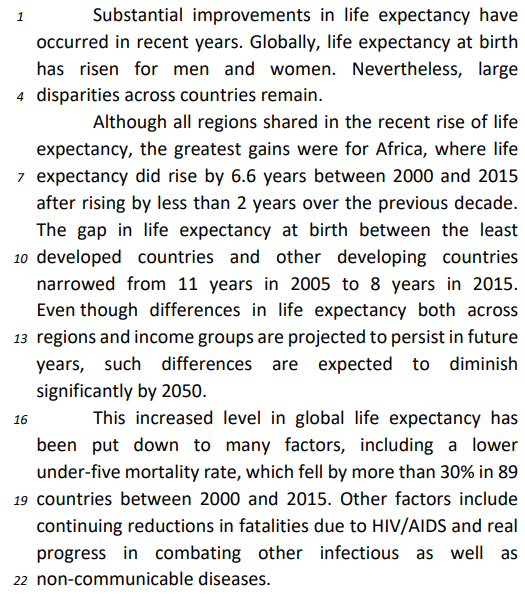
The word Nevertheless is a correct alternative for
“However” (line 10).
New Public Management Model
The new public management model, which emerged in the 1980s, represented an attempt to make the public sector more business-like as well as to improve the efficiency of the Government, borrowed ideas and management models from the private sector. It emphasized the centrality of citizens who were the recipient of the services or customers to the public sector.
New public management system also proposed a more decentralized control of resources. It explored other service delivery models so as to achieve better results, including a quasi-market structure where public and private service providers competed with each other in an attempt to provide better and faster services.
The Core Themes for the New Public Management were:
1. A strong focus on financial control, value for money and increasing public sector efficiency;
2. A command and control mode of functioning, identifying and setting targets and continuous monitoring of public sector performance;
3. Introducing audits and controls at professional level, using transparent means to review public worker performance, setting benchmarks, using protocols to ameliorate public sector worker professional behaviour;
4. Greater customer orientation and responsiveness and increasing the scope of roles played by non-public sector providers;
5. Deregulating the labor market, replacing collective agreements to individual rewards packages combined with short term contracts;
6. Introducing new forms of corporate governance, introducing a board model of functioning and concentrating the power to the strategic core of the organization.
(www.managementstudyguide.com/new-public-management.htm.
Adaptado.)
[…] If a teacher is normally noisy and energetic as a teacher, he or she should spend a class behaving more calmly. This is so because each time teachers break their own behavior patterns, they send a ripple through the class. That ripple is a mixture of surprise and curiosity and it is a perfect starting point for student involvement. The need for surprise and curiosity within a fifty-minute lesson is also overwhelming. This can be seen most clearly with children at primary and secondary levels, but even adults need a varied diet to keep them stimulated. However, variety is not the same as anarchy, since students need a certain amount of predictability for the sake of stability.
(Adapted from: HARMER, Jeremy. How to be
a good teacher. England: Longman, 1998, p. 5.)
Ainda no trecho acima o uso do conectivo since indica:
Read the following text and answer question.
Introduction to global food loss and food waste
Food losses and food waste are quickly becoming a top global issue, because while there are millions of families with children starving, others are living in abundance, with many others carelessly throwing food away. Many of us have wasted food in one way or the other, but the real food losses and waste matter is ______ than just consumer food waste.
From farming fields and storage places, through transportation, processing, market places, down to
consumption places such as homes, schools, restaurants and workplaces, more than half of all food
produced globally go to waste. This is a tragedy!
In developing countries, it takes a lot of man-power to produce food. In more advanced countries, machines and technology are used, but the drain on energy, destruction of vegetative lands, the use of chemicals and ______ impact on the environment are phenomenal. Putting all that together, it is clear that a major problem has emerged and we are all in a position to help in one way or the other.
(Adapted from: https://goo.gl/ySEn3F. Access: 01/23/2018)
The words such as in “ such as homes, schools, restaurants and workplaces…” indicates
QUESTION
Technological change – from consumers to producers
Chris Pim
Over the last 20 years, there has been a tremendous shift in the way that users integrate technology into their personal lives. These changes have taken time to filter down into the educational sector, but slowly teachers have realised the need to adapt their practice in order to reflect the changing nature of technological use in the wider world.
In the past, technology has predominately been used to source and consume information, whereas today‟s learners have become particularly adept at creating and collaboratively developing content for a wide variety of purposes, for example so-called Web 2.0 tools such as blogs, forums and wikis. Moreover, children and young people are now becoming increasingly interested in the concept of „content curation‟ –selecting, sifting, showcasing and sharing content with friends, family and peers.
The change from a „read Web‟ to a „read/write Web‟ has encouraged teachers to become increasingly inventive in their approach to engaging technologically savvy learners who want to publish their work within an ever expanding arena.
(…)
PIM, Chris. Emerging Technologies, emerging minds:
digital innovations within the primary sector. In
MOTTERAM, Gary (Ed.) Innovations in learning
technologies for English language teaching.
London: British Council, 2013.
“Perhaps they were detected as flaws in a product’s quality…”
Can be replaced by which word without changing its meaning?
A Brief and Simplified Description of Papermaking
The paper we use today is created from individual wood fibers that are first suspended in water and then pressed and dried into sheets. The process of converting the wood to a suspension of wood fibers in water is known as pulp making, while the manufacture of the dried and pressed sheets of paper is formally termed papermaking. The process of making paper has undergone a steady evolution, and larger and more sophisticated equipment and better technology continue to improve it.
The Wood yard and Wood rooms
The process at Androscogging began with receiving wood in the form of chips or of logs 4 or 8 feet in length. From 6 AM to 10 PM a steady stream of trucks and railroad cars were weighted and unloaded. About 40 percent were suplied by independents who were paid by weight their logs. The mill also received wood chips from lumber mills in the area. The chips and logs were stored in mammoth piles with separate piles for wood of different species (such as pine, spruce, hemlock).
When needed, logs were floated in flumes......(1).....the wood yard.....(2).....one of the mill’s three wood rooms. There, bark was rubbed......(3)........in long, ribbed debarking drums by tumbling the logs against one another. The logs then fell into a chipper;......(4)......seconds a large log was reduced to a pile of chips approximately 1 inch by 1 inch by 1/4 inch.
The chips were stored in silos. There were separate silos for softwoods (spruce, fir, hemlock, and pine) and hardwoods (maple, oak, beech, and birch). This separate and temporary storage of chips permitted the controlled mixing of chips into the precise recipe for the grade of paper being produced.
The wood chips were then sorted through large, flat vibrating screens. Oversized chips were rechipped, and ones that were too small were collected for burning in the power house. (The mill provided approximately 20 percent of all its own steam and electricity needs from burning waste. An additional 50 percent of total electricity needs was produced by harnessing the river for hydroelectric power.)
Once drawn from the silo into the digesters, there was no stopping the flow of chips into paper.
Pulpmaking
The pulp made at Androscoggin was of two types: Kraft pulp (produced chemically) and ground wood pulp (produced mechanically). Kraft pulp was far more important to the high quality white papers produced at Androscoggin, accounting for 80 percent of all the pulp used. Kraft pulp makes strong paper. (Kraft is German for strength. A German invented the Kraft pulp process in 1884.) A paper’s strength generally comes from the overlap and binding of long fibers of softwood; only chemically was it initially possible to separate long wood fibers for suspension in water. Hardwood fibers are generally smaller and thinner and help smooth the paper and make it less porous.
The ground wood pulping process was simpler and less expensive than the Kraft process. It took high quality spruce and fir logs and pressed them continuously against a revolving stone that broke apart the wood’s fibers. The fibers, however, were smaller than those produced by the Kraft process and, although used to make newsprint, were useful at Androscoggin in providing “fill” for the coated publication gloss papers of machines 2 and 3, as will be described later.
(A)The chemical Kraft process worked by dissolving the lignin that bonds wood fibers together. (B) It did this in a tall pressure cooker, called a digester, by “cooking” the chips in a solution of caustic soda (NaOH) and sodium sulfide (Na2S), which was termed the “white liquor.” (C)The two digesters at Androscoggin were continuous digesters; chips and liquor went into the top, were cooked together as they slowly settled down to the bottom, and were drawn off the bottom after about three hours. (D) By this time, the white liquor had changed chemically to “black liquor’’; the digested chips were then separated from this black liquor. (E)
In what was known as the “cold blow” process, the hot, pressurized chips were gradually cooled and depressurized. A “cold liquor’’ (170°F) was introduced to the bottom of the digester and served both to cool and to transport the digested chips to a diffusion washer that washed and depressurized the chips. Because so much of the lignin bonding the fibers together had been removed, the wood fiber in the chips literally fell apart at this stage.
The black liquor from the digester entered a separate four-step recovery process. Over 95 percent of the black liquor could be reconstituted as white liquor, thereby saving on chemical costs and significantly lowering pollution. The four-step process involved (1) washing the black liquor from the cooked fiber to produce weak black liquor, (2) evaporating the weak black liquor to a thicker consistency, (3) combustion of this heavy black liquor with sodium sulfate (Na2SO4 ), and redissolving the smelt, yielding a “green liquor” (sodium carbonate + sodium sulfide), and (4) adding lime, which reacted with the green liquor to produce white liquor. The last step was known as causticization.
Meanwhile, the wood-fiber pulp was purged of impurities like bark and dirt by mechanical screening and by spinning the mixture in centrifugal cleaners. The pulp was then concentrated by removing water from it so that it could be stored and bleached more economically.
By this time, depending on the type of pulp being made, it had been between 3 1/2 and 5 hours since the chips had entered the pulp mill.
All the Kraft pulp was then bleached. Bleaching took between 5 and 6 hours. It consisted of a three-step process in which (1) a mix of chlorine (Cl2 ) and chlorine dioxide (CIO2 ) was introduced to the pulp and the pulp was washed; (2) a patented mix of sodium hydroxide (NaOH), liquid oxygen, and hydrogen peroxide (H2 O2 ) was then added to the pulp and the pulp was again washed; and (3) chlorine dioxide (ClO2 ) was introduced and the pulp washed a final time. The result was like fluffy cream of wheat. By this time the pulp was nearly ready to be made into paper.
From the bleachery, the stock of pulp was held for a short time in storage (a maximum of 16 hours) and then proceeded through a series of blending operations that permitted a string of additives (for example, filler clay, resins, brighteners, alum, dyes) to be mixed into the pulp according to the recipe for the paper grade being produced. Here, too, “broke” (paper wastes from the mill itself) was recycled into the pulp. The pulp was then once again cleaned and blended into an even consistency before moving to the papermaking machine itself.
It made a difference whether the broke was of coated
or uncoated paper, and whether it was white or colored. White, uncoated paper could be recycled immediately. Colored, uncoated paper had to be rebleached.
Coated papers, because of the clays in them, could not
be reclaimed.
“The ground wood pulping process was simpler and less expensive than the Kraft process. It took high quality spruce and fir logs and pressed them continuously against a revolving stone that broke apart the wood’s fibers.”
1. the word ‘simpler’ is an adjective in the superlative form. 2. the word ‘them’ is an object pronoun. 3. the tense used in ’took’, is simple past of a regular verb. 4. the word ‘that’ can be replaced by ‘which’ without changing its meaning.
Choose the alternative which presents the correct ones:
John, ______________, became patron of our Children's Festival.
Identify the best option that completes the context above.
Mary Ellis, who died in July aged 101, was a member of the Air Transport Auxiliary (ATA) and delivered Spitfires and bombers to front line airfields. _______________, Mrs. Ellis had gone on to manage Sandown Airport, and her goddaughter Clare Mosdell told the service ______________ she had pioneered tourist flights to the island ____________ training other female aviators.
Complete the paragraph with the best connectives according to the context.
Read the sentence below.
Even though I'm not on the ballot, in a certain way I am on the ballot.
The purpose of the notebooks _____ to keep track of where I'm wanting the book to go, but also to always feel close to it.
Choose the best option that completes the context given.
Observe the fragment below.
[…] that towns are being liberated from MS-13, like they had been captured.
Choose the best connective that replaces the underlined item, without changing the meaning
Read the article below and choose the correct option to complete it:
New York needs
a new stadium
The Giants may move to New Jersey and take all 1. ____ money with 2. ____. This is not going to be good for 3. ____.
Nobody in New York likes the Giant stadium. “ 4. ____´s too hard to see the field.” Says Al Shapiro. The stadium could fall any minute!
From: www.tv411org/reading
Text for the item.
A long and healthy life?
Internet: <www.ngllife.com> (adapted).
Based on the text, judge the following item.
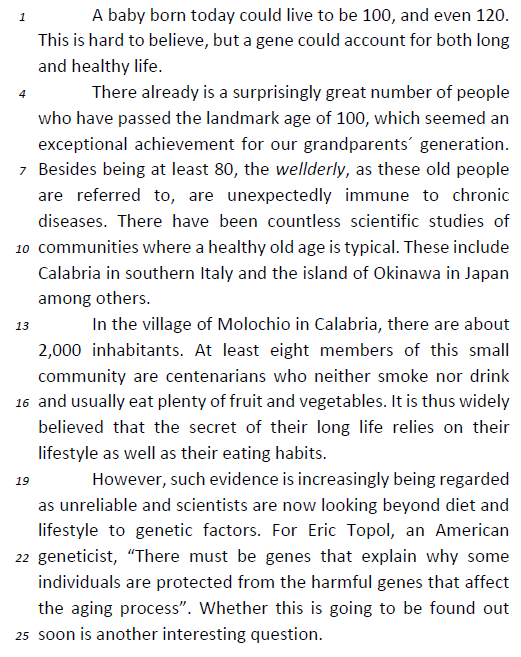
The use of Nevertheless instead of “However”, in “However, such evidence” (line 19), will alter the meaning of the sentence.
Text for the item.
A long and healthy life?
Internet: <www.ngllife.com> (adapted).
Based on the text, judge the following item.
A synonymous word for “thus”, in “It is thus widely
believed” (lines 16 and 17), is therefore.
Text for the question.
Higher life expectancy worldwide

 Conheça nossos planos