Questões de Concurso
Sobre palavras conectivas | connective words em inglês
Foram encontradas 665 questões


The team had very little time to prepare; however, they completed the project successfully.
Reading and examination of the sentences allows one to state that they all share:
1. Whether you earn an A or get a lower grade, do your best.
2. Both John and Bill are excellent tennis players.
3.Neither the professor nor the students understood the problem.
4. I not only lost the game but also hurt my ankle. 5. Professor Jenkins is not only patient, but also stimulating.
6.Hector did not lose money at the casino but he did not win any either.
7. Barbara is as tall as Mary.
TEXT III
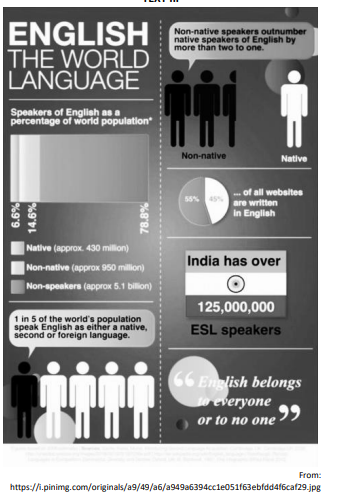
TEXT II
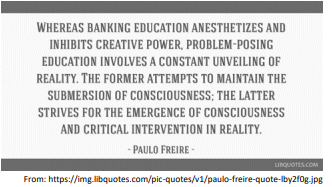
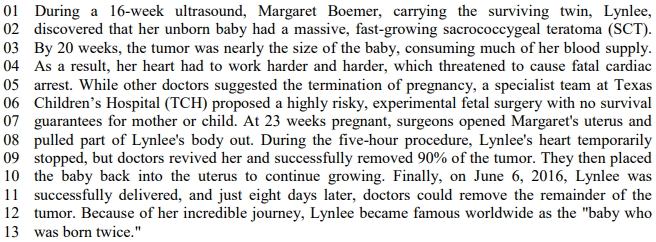
While some educators emphasize standardized assessment as a reliable way to measure academic achievement, others argue that learning should be evaluated through more holistic approaches.
(__)In Despite the fact that the evidence was incomplete, the committee proceeded, despite functions as a preposition whose complement is the noun phrase headed by fact , while the that-clause is embedded within that noun phrase.
(__)In Because the evidence was incomplete and because of the evidence was incomplete , because and because of are syntactically interchangeable causal connectors, since both can directly introduce finite clauses.
(__)In Whereas the first proposal emphasizes access, the second emphasizes efficiency, whereas functions as a preposition because it establishes a contrastive relation between two propositions.
(__)The expressions in case and in case of belong to the same syntactic category: both directly introduce finite subordinate clauses expressing precaution or contingency.
The correct sequence, from top to bottom, is:
Considering the connective structures used in the text, mark T, for true, and F, for false.
(__)In Before LIDAR technology was able to peek through the trees, before introduces a finite subordinate clause expressing temporal anteriority.
(__)In such as those bearing nuts or fruit, such as introduces examples of the tree species the researchers intend to investigate.
(__)In as well as to the locations of earthworks and ancient road networks, as well as contributes an additive relation to the description of variables whose relationships will be investigated.
(__)In than previously assumed, than introduces a causal subordinate clause explaining why researchers revised their interpretation of population density.
After analysis, select the alternative that presents the CORRECT sequence of the items above, from top to bottom.
"The number of new business applications filed by Gen Zers jumped 66% in June compared with a year ago. That far outpaced applications filed by other generations."
The demonstrative form "That" establishes a cohesive relationship with information presented immediately before it. What is its contextual referent?
Consider the sentence.
"Although such entrepreneurship is clearly unusual for young people, it is by no means unheard of these days."
The relation established by "although" is one of:

Answer question based on the paragraph bellow:
[The] centrality of emotion in identity may seem to clash with a compelling argument that identity is a consciousness of one’s memories – that is, one’s history – in some organized pattern, often a continuous narrative... At one level, it is indispu table that a sense of one’s own identity is constructed from narrative memory.... However, we believe that we are arguing about a motivational process that underlies the very construction of such memories and the motivation for their construc tion. If people organize their thoughts, memories, and future hopes around happy events, it would be circularly the case that they are most them selves when this organization functions well and should have a sense of not being them selves if it does not function. Moreover, happy people should use particular strategies for thought (including memory construction) that are somewhat different from those of people who feel most themselves when they are excited or exhilarated.
(Available at: Haviland-Jones JM, Kahlbaugh P (2004) Emotion and identity. In: Lewis M, Haviland-Jones JM (eds) Handbook of emotions, 3rd edn. The Guilford Press, New York, pp 293–305)
TEXTO PARA A QUESTÃO
Artificial Intelligence and the Future of Language Learning
Artificial Intelligence (AI) has become an increasingly influential tool in language education. Digital platforms powered by AI can instantly provide personalized feedback, adapt learning paths according to students' performance, and offer opportunities for authentic interaction through virtual assistants and conversational chatbots. Such innovations have expanded access to language learning beyond the classroom and have encouraged greater learner autonomy.
However, educational researchers emphasize that technological innovation alone does not guarantee meaningful learning. They argue that language acquisition remains fundamentally a social process, requiring interaction, negotiation of meaning, collaboration, and critical reflection. Therefore, AI should not replace teachers but rather complement pedagogical practices, allowing educators to dedicate more time to mediating learning, fostering intercultural awareness, and promoting communicative competence.
Furthermore, concerns have emerged regarding algorithmic bias, data privacy, and the reliability of automatically generated content. For this reason, schools are increasingly expected to develop students' digital literacy so that they can critically evaluate online information, recognize the limitations of artificial intelligence, and use technological resources ethically and responsibly.
In this context, effective language teaching involves balancing technological innovation with human interaction, ensuring that digital resources enhance—not replace—the educational relationship established between teachers and learners.
TEXTO PARA A QUESTÃO
Artificial Intelligence and the Future of Language Learning
Artificial Intelligence (AI) has become an increasingly influential tool in language education. Digital platforms powered by AI can instantly provide personalized feedback, adapt learning paths according to students' performance, and offer opportunities for authentic interaction through virtual assistants and conversational chatbots. Such innovations have expanded access to language learning beyond the classroom and have encouraged greater learner autonomy.
However, educational researchers emphasize that technological innovation alone does not guarantee meaningful learning. They argue that language acquisition remains fundamentally a social process, requiring interaction, negotiation of meaning, collaboration, and critical reflection. Therefore, AI should not replace teachers but rather complement pedagogical practices, allowing educators to dedicate more time to mediating learning, fostering intercultural awareness, and promoting communicative competence.
Furthermore, concerns have emerged regarding algorithmic bias, data privacy, and the reliability of automatically generated content. For this reason, schools are increasingly expected to develop students' digital literacy so that they can critically evaluate online information, recognize the limitations of artificial intelligence, and use technological resources ethically and responsibly.
In this context, effective language teaching involves balancing technological innovation with human interaction, ensuring that digital resources enhance—not replace—the educational relationship established between teachers and learners.
In the sentence:
"AI should not replace teachers but rather complement pedagogical practices..."
the expression rather establishes the semantic relationship of:

A name that will be familiar to any music fan, Rolling Stone has been going since 1967, and has strayed away from its rock roots, now reporting on all popular genres as well as TV, movies and culture.

Consequence of Sound is one of the best music blogs to hear about the latest music news and rumours for festivals worldwide. They also have reviews of music, film and TV.

All Music is not only a great place to get music information and recommendations, but their blog has interviews with some of the greatest musicians of all time.

The Playground is a UK-based music blog which covers most genres including indie, edm and house. The blog is also involved in some of the latest developments in the music industry as a whole.

Billboard needs no introduction, and this might be stretching the definition of blog for the purposes of this article. However, if you want to keep up with the latest news and gossip for the hottest artists and labels, this is the place to look.

This Song Is Sick has been sharing fresh new music since 2010. Here you’ll find a mix of genres, and new music from both established artists and up and coming acts. If you want to be featured on This Song Is Sick there is a submission process to send your song for consideration.

Dancing Astronaut is the place to go if you appreciate dance music. The blog reports on concerts and festivals and keeps you up to date with reviews of dance music.

Popjustice is a fun blog dedicated to all things pop. They feature news, interviews, new music, and most importantly a calendar that will tell you how long it’s been since Rihanna last released an album.
(https://audiohype.io/resources/best-music-blogs/)
"The local council approved the funding for the new library. ________, they slashed the budget for the municipal arts center; ________, the community's reaction was deeply divided." (Adaptado de notícias locais do portal BBC News).
Considerando as relações lógico-discursivas estabelecidas entre as orações, as lacunas devem ser preenchidas, respectivamente, por um conector de contraste e por um conector de consequência. Assinale a alternativa correta.
"Neuroscientists have demonstrated that bilingualism sharpens the brain's executive functions. This cognitive advantage, however, is not static; it requires continuous linguistic exercise, ensuring that the former remains active well into old age." (Adaptado de Scientific American.)
No excerto, os elementos coesivos destacados retomam, respectivamente:

 Conheça nossos planos