Questões de Concurso
Sobre interpretação de texto | reading comprehension em inglês
Foram encontradas 12.709 questões


Para responder à questão, leia o texto.
US TO BUILD $120M RARE EARTH RESEARCH INSTITUTE
Para responder à questão, leia o texto.
US TO BUILD $120M RARE EARTH RESEARCH INSTITUTE
Read the paragraph below.
“At the Whole Woman’s Health center here, a young woman predicted what others would do if the state’s stringent new abortion bill approved late Friday forces clinics like this one to close: cross the border to Mexico to seek an “abortion pill.”
A Pill Available in Mexico Is a Texas Option for Abortion. Available in: http://www.nytimes.com
It is correct to affirm that the underlined word refers to
Vigilance needed to ensure safe infant food
WHO and FAO alert countries to possible spread of
melamine-contaminated dairy products
WHO and the UN Food and Agriculture Organization (FAO) are urging affected countries to ensure safe feeding of millions of infants following the ongoing melamine-contaminated milk crisis in China. The two agencies also call on countries to be alert to the possible spread of melamine-contaminated dairy products.
“While breastfeeding is the ideal way of providing infants with the nutrients they need for healthy growth and development, it is also critical to ensure that there is an adequate supply of safe powdered infant formula to meet the needs of infants who are not breastfed”, said Dr Jorgen Schlundt, Director of the WHO Food Safety Department.
Replacing powdered infant formula with other products such as condensed milk, honey mixed with milk, or fresh milk is inappropriate as such products would put at risk the safety and nutritional status of this vulnerable population group, the two agencies advised.
“Restoring consumer confidence is critical. Melamine-contaminated products should be removed from the food chain in order to prevent further exposure. The safe supply of dairy products needs to be restored immediately,” said Dr Ezzeddine Boutrif, Director of the FAO Nutrition and Consumer Protection Division.
Safe feeding for infants
WHO recommends that all infants should be fed exclusively with breast milk for the first six months of life. No other liquid or food, not even water, is needed during this period. Thereafter, infants should receive adequate and safe complementary foods while breastfeeding continues up to two years of age and beyond.
Following reports of findings of imported melaminecontaminated products in several countries over the last two weeks, countries should closely monitor their markets. The two agencies highlighted that melamine-contaminated products could reach markets in other countries through both formal and informal trade. Getting information about the origin of the product, up-to-date recall information or in some cases testing for melamine contamination might be considered. If found contaminated, appropriate actions such as product recall and safe disposal should be taken, based on an assessment of the risk to human health.
Safe supply of food critical
Food safety is not the sole responsibility of public authorities. The food industry is also responsible for ensuring a safe supply of food to the consumer. “It is critical that the industry strongly invests in food safety and adopts a food safety culture covering the food chain from raw materials through to the final product,” said Dr Boutrif.
Incidents such as melamine contamination in China not only impact food safety and human health but also put the livelihoods of hundreds of millions of dairy farmers at risk. “There is a need for countries to do major investment in strengthening their food control and food-borne disease surveillance systems as it could minimize the potential occurrence of food safety incidents like this one”, said Dr Schlundt.
The melamine-contaminated dairy products event first came to the attention of the international organizations on 11th September. Both WHO and FAO have used the International Food Safety Authorities Network (INFOSAN) to inform and update national food safety authorities on this crisis, one of the largest in recent years.
Over 54,000 children have sought medical treatment in China after drinking melamine-contaminated infant formula. Almost 12,900 are currently hospitalized.
Melamine is commonly used in food contact materials (e.g. containers, labels, etc.) and can also be used in agriculture production such as fertilizer. Whether this has a potential for carry-over into food at low concentrations (usually in the range of microgram per kilogram) and further impact on human health may need further evaluation.
Melamine on its own is of low toxicity. But animal studies have suggested that kidney problems occur when melamine is present in combination with cyanuric acid, a potential impurity of melamine. The level of melamine found in the contaminated infant formula has been as high as 2,560 miligram per kilogram of food, while the level of cyanuric acid is unknown.
Available in: http://www.who.int
According to the text, analyze the assertions below, put T for True or F for False and choose the alternative that presents the correct sequence.
( ) After the diagnosis show that children were contaminated, studies had confirmed that cyanuric acid and melamine induce kidney problems.
( ) Public authorities and food industry are responsible for preventing melamine food contamination, exclusively.
( ) According to Dr. Jorgen Schlundt, breast milk is
compounded of indispensable nutrients children
need for the first year of their lives, and none of the
supplies are capable of providing them.
Anxiety Medication: Over Prescribed and
Causing Overdoses
According to a story on NBC New York, more and more patients are ending up in New York City hospitals having over dosed on Xanax. Xanax is in the benzodiaziepine family of drugs and it’s used to treat anxiety, nervousness, and panic attacks by decreasing brain activity.
Xanax Overdoses Way Up
NBC New York reports:
Between 2004 and 2009, New York City emergency room visits involving Xanax and other anti-anxiety prescription drugs known as benzodiazepines increased more than 50 percent. That’s up from 38 out of 100,000 New Yorkers in 2004 to 59 out of 100,000 New Yorkers.
It’s not the drug by itself that causes the overdoses, but used in combination with other drugs and alcohol, it creates a toxic cocktail which isn’t easily metabolized in the body.
The drug is habit forming and withdrawal symptoms can include sweating, shaking, difficulty falling asleep, difficulty concentrating, depression, and nervousness. Many fear that the drug is being over prescribed.
“I don’t believe they take the time with the patients to figure out what the problems are,” Cali Estes, a drug counselor said to NBC New York. “A doctor who is running short on time and nurses and probably isn’t paid as much as he or she used to be finds it easier to say, ‘OK, this person has a problem, here’s your script, have a nice day. Where’s my next patient?’”
Whitney Houston’s Death Tied to Xanax and Other Drugs
Whitney Houston’s recent death is raising questions as to this and other sedatives. Xanax is most often criticized by those in the psychiatric community because it only lasts 6 to 20 hours.
Forbes reports:
On the face of it, this seems like a great combination – you get a quick hit of anxiety relief and the drug leaves your system within a 24-hour period. But in practice what often happens is that because the drug acts so quickly and dissipates quickly, the patient begins taking more of it to maintain the effect. Two pills a day turns into four, which turns into six and so forth.
According to the CDC, prescription drug overdose is now the leading cause of accidental death in the U.S., topping automobile accidents for the first time in 30 years. Currently, Xanax is the 11th most widely prescribed drug in the nation.
Available in: http://blogs.discovery.com
Why and how do animals migrate?
From Kids Discover Magazine

Available at: <http://www.kidsdiscover.com/blog/spotlight/animalmigrations-for-kids/> Retrieved on: nov. 20, 2012. Adapted.
Why and how do animals migrate?
From Kids Discover Magazine
Available at: <http://www.kidsdiscover.com/blog/spotlight/animalmigrations-for-kids/> Retrieved on: nov. 20, 2012. Adapted.
Why and how do animals migrate?
From Kids Discover Magazine
Available at: <http://www.kidsdiscover.com/blog/spotlight/animalmigrations-for-kids/> Retrieved on: nov. 20, 2012. Adapted.
Why and how do animals migrate?
From Kids Discover Magazine
Available at: <http://www.kidsdiscover.com/blog/spotlight/animalmigrations-for-kids/> Retrieved on: nov. 20, 2012. Adapted.

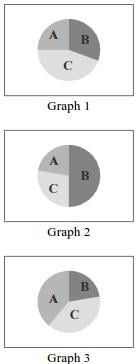
According to the data presented in lines 12 through 18 of the article, it is true that the secondary schools which have Wi-Fi in most or all classrooms are represented by
In light of increased public awareness, professional bodies such as the Information Systems Audit and Control Association (ISACA) have undertaken a number of steps to provide guidance in the implementation of effective IT governance. The approach taken by ISACA appears to be largely based upon two concepts. The first concept relates to increasing the awareness of issues and concepts relating to IT governance in the public domain. The second concept involves the provision of guidelines and the identification of best-practice IT governance mechanisms. Interestingly, the effectiveness of these best-practice mechanisms in improving IT governance is largely based upon conceptual arguments. As such, it becomes important to ascertain if these best-practice mechanisms do impact upon the level of IT governance.
As IT escalates in terms of importance and pervasiveness in the operations of firms, it is inexorably tied to specific mechanisms that are prescribed for good corporate governance, most notably, a sound system of internal controls. Accordingly, effective IT governance is a critical underpinning for a system of good corporate governance that minimizes agency losses for a firm.
Internet: < http://onlinelibrary.wiley.com > (adapted).
Based on the text above, judge the following item.
In light of increased public awareness, professional bodies such as the Information Systems Audit and Control Association (ISACA) have undertaken a number of steps to provide guidance in the implementation of effective IT governance. The approach taken by ISACA appears to be largely based upon two concepts. The first concept relates to increasing the awareness of issues and concepts relating to IT governance in the public domain. The second concept involves the provision of guidelines and the identification of best-practice IT governance mechanisms. Interestingly, the effectiveness of these best-practice mechanisms in improving IT governance is largely based upon conceptual arguments. As such, it becomes important to ascertain if these best-practice mechanisms do impact upon the level of IT governance.
As IT escalates in terms of importance and pervasiveness in the operations of firms, it is inexorably tied to specific mechanisms that are prescribed for good corporate governance, most notably, a sound system of internal controls. Accordingly, effective IT governance is a critical underpinning for a system of good corporate governance that minimizes agency losses for a firm.
Internet: < http://onlinelibrary.wiley.com > (adapted).
Based on the text above, judge the following item.
In light of increased public awareness, professional bodies such as the Information Systems Audit and Control Association (ISACA) have undertaken a number of steps to provide guidance in the implementation of effective IT governance. The approach taken by ISACA appears to be largely based upon two concepts. The first concept relates to increasing the awareness of issues and concepts relating to IT governance in the public domain. The second concept involves the provision of guidelines and the identification of best-practice IT governance mechanisms. Interestingly, the effectiveness of these best-practice mechanisms in improving IT governance is largely based upon conceptual arguments. As such, it becomes important to ascertain if these best-practice mechanisms do impact upon the level of IT governance.
As IT escalates in terms of importance and pervasiveness in the operations of firms, it is inexorably tied to specific mechanisms that are prescribed for good corporate governance, most notably, a sound system of internal controls. Accordingly, effective IT governance is a critical underpinning for a system of good corporate governance that minimizes agency losses for a firm.
Internet: < http://onlinelibrary.wiley.com > (adapted).
Based on the text above, judge the following item.
In light of increased public awareness, professional bodies such as the Information Systems Audit and Control Association (ISACA) have undertaken a number of steps to provide guidance in the implementation of effective IT governance. The approach taken by ISACA appears to be largely based upon two concepts. The first concept relates to increasing the awareness of issues and concepts relating to IT governance in the public domain. The second concept involves the provision of guidelines and the identification of best-practice IT governance mechanisms. Interestingly, the effectiveness of these best-practice mechanisms in improving IT governance is largely based upon conceptual arguments. As such, it becomes important to ascertain if these best-practice mechanisms do impact upon the level of IT governance.
As IT escalates in terms of importance and pervasiveness in the operations of firms, it is inexorably tied to specific mechanisms that are prescribed for good corporate governance, most notably, a sound system of internal controls. Accordingly, effective IT governance is a critical underpinning for a system of good corporate governance that minimizes agency losses for a firm.
Internet: < http://onlinelibrary.wiley.com > (adapted).
Based on the text above, judge the following item.


 Conheça nossos planos