Questões de Concurso Sobre interpretação de texto | reading comprehension em inglês

Foram encontradas 13.188 questões

Q3616888 Inglês
TEXT:


Reading and Vocabulary: A Recipe for Success
Dr Randi Reppen
March 13, 2025


It’s no surprise that research shows a very strong relationship between reading comprehension and vocabulary knowledge. After all, we need to be able to understand the words that we encounter when reading in order to understand what we’re reading. As Grabe and Stoller so succinctly stated back in 1997, “reading improves vocabulary knowledge and vocabulary knowledge supports reading development” (p.119). It’s a reciprocal relationship: the larger your vocabulary, the easier it is to read, and the more you read, the more your vocabulary increases.

So how do we get learners to increase their vocabulary to make reading easier (and more pleasurable!)? Research tells us that to read with adequate comprehension, 95 – 98% of the words in the text need to be known (Nation 2001: 147). But what does it mean to know a word when a single word can have many diff erent senses/meanings? Take a simple word like green. Now put yourself in your student’s shoes. Imagine fi rst encountering this word in a story about someone who lost their green jacket. Then in a diff erent context you read about someone who was green – instead of a color this could mean that the person was feeling sick, or envious, or a novice, or eco-conscious. Not so simple, is it?

We also know that reading texts on diff erent topics increases the chances that our students will encounter diff erent words and come across new meanings of known words. But how can we get them to do this consistently? One eff ective way is to combine “intensive” and “extensive” reading practice. This approach can both fi ne tune reading skills and increase vocabulary knowledge, all while making reading more pleasurable.

Intensive Reading

Intensive reading activities typically take place in class and involve diff erent ways of interacting with a text. Examples include timed readings, scanning for information, or skimming to get the gist of the text before diving in to read.

Newspaper articles off er great resources for scanning activities since they often include dates and names. If your school has a campus paper (print or online), use it as a resource for scanning activities. Rather than focusing on just one article, have your students scan the entire school paper for when or where certain events are taking place. This has the added benefi t of being directly relevant to their daily lives.

I’m also a fan of timed readings using short texts (200 – 400 words) that cover a wide range of topics. These increase the opportunity for students to encounter more diff erent words and to see words they already “know” in diff erent contexts and with diff erent meanings (as our example above of the word green).

Extensive Reading

Extensive reading usually happens outside the classroom, but there are benefi ts to including a dedicated time for this type of reading in class. When I teach reading, I always have 10 – 15 minutes of silent sustained reading as part of class. During that time everyone, including me, reads something of their choice. I set a timer so that we don’t lose track of time while reading.

With extensive reading, students choose texts of high interest to read every day for a predetermined amount of time. It’s important that students are reading for pleasure during this time and NOT reading textbooks. Graded readers or young adult literature are great resources for extensive reading.

You can help motivate your students by keeping track of their reading. Here are two suggestions:

1. Reading logs – Have your students keep reading logs of how much time they spend reading each day. They should also write a sentence or two about what they read.

2. Reading progress tracker – Have a place in your classroom to show their reading progress. For example, if students commit to reading 15 minutes a day, create a board showing student progress in 15-minute increments. As students accumulate reading time, you can have benchmarks (e.g., an hour, fi ve hours) for when students receive diff erent rewards, such as a certifi cate, time for an in-class game, or even a free book.

Combining intensive and extensive reading activities has long been a recipe for success in my classrooms. I have no doubt that it will help you help your students become more successful, and happier, readers, too.


Adapted from https://www.cambridge.org/elt/blog/2025/03/13/readingand-vocabulary-a-recipe-for-success/ Acesso em 23/07/2025
Ao relacionar a abordagem instrumental para o ensino de língua inglesa e o tema do texto, pode-se concluir que:
Alternativas
Q3616887 Inglês
TEXT:


Reading and Vocabulary: A Recipe for Success
Dr Randi Reppen
March 13, 2025


It’s no surprise that research shows a very strong relationship between reading comprehension and vocabulary knowledge. After all, we need to be able to understand the words that we encounter when reading in order to understand what we’re reading. As Grabe and Stoller so succinctly stated back in 1997, “reading improves vocabulary knowledge and vocabulary knowledge supports reading development” (p.119). It’s a reciprocal relationship: the larger your vocabulary, the easier it is to read, and the more you read, the more your vocabulary increases.

So how do we get learners to increase their vocabulary to make reading easier (and more pleasurable!)? Research tells us that to read with adequate comprehension, 95 – 98% of the words in the text need to be known (Nation 2001: 147). But what does it mean to know a word when a single word can have many diff erent senses/meanings? Take a simple word like green. Now put yourself in your student’s shoes. Imagine fi rst encountering this word in a story about someone who lost their green jacket. Then in a diff erent context you read about someone who was green – instead of a color this could mean that the person was feeling sick, or envious, or a novice, or eco-conscious. Not so simple, is it?

We also know that reading texts on diff erent topics increases the chances that our students will encounter diff erent words and come across new meanings of known words. But how can we get them to do this consistently? One eff ective way is to combine “intensive” and “extensive” reading practice. This approach can both fi ne tune reading skills and increase vocabulary knowledge, all while making reading more pleasurable.

Intensive Reading

Intensive reading activities typically take place in class and involve diff erent ways of interacting with a text. Examples include timed readings, scanning for information, or skimming to get the gist of the text before diving in to read.

Newspaper articles off er great resources for scanning activities since they often include dates and names. If your school has a campus paper (print or online), use it as a resource for scanning activities. Rather than focusing on just one article, have your students scan the entire school paper for when or where certain events are taking place. This has the added benefi t of being directly relevant to their daily lives.

I’m also a fan of timed readings using short texts (200 – 400 words) that cover a wide range of topics. These increase the opportunity for students to encounter more diff erent words and to see words they already “know” in diff erent contexts and with diff erent meanings (as our example above of the word green).

Extensive Reading

Extensive reading usually happens outside the classroom, but there are benefi ts to including a dedicated time for this type of reading in class. When I teach reading, I always have 10 – 15 minutes of silent sustained reading as part of class. During that time everyone, including me, reads something of their choice. I set a timer so that we don’t lose track of time while reading.

With extensive reading, students choose texts of high interest to read every day for a predetermined amount of time. It’s important that students are reading for pleasure during this time and NOT reading textbooks. Graded readers or young adult literature are great resources for extensive reading.

You can help motivate your students by keeping track of their reading. Here are two suggestions:

1. Reading logs – Have your students keep reading logs of how much time they spend reading each day. They should also write a sentence or two about what they read.

2. Reading progress tracker – Have a place in your classroom to show their reading progress. For example, if students commit to reading 15 minutes a day, create a board showing student progress in 15-minute increments. As students accumulate reading time, you can have benchmarks (e.g., an hour, fi ve hours) for when students receive diff erent rewards, such as a certifi cate, time for an in-class game, or even a free book.

Combining intensive and extensive reading activities has long been a recipe for success in my classrooms. I have no doubt that it will help you help your students become more successful, and happier, readers, too.


Adapted from https://www.cambridge.org/elt/blog/2025/03/13/readingand-vocabulary-a-recipe-for-success/ Acesso em 23/07/2025
De acordo com o texto, a relação que pode ser estabelecida entre leitura e vocabulário é uma relação de:
Alternativas
Q3613861 Inglês

Read the excerpt from the song “Matilda” by Harry Styles:


You can let it go

You can throw a party full of everyone you know

And not invite your family, 'cause they never showed you love

You don't have to be sorry for leaving and growing up.

(Available on: https://www.letras.mus.br/harry-styles/matilda/. Accessed in: July 2025.)


Based on the excerpt, the speaker expresses that:

Alternativas
Q3613860 Inglês

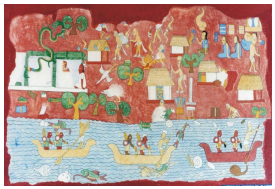
Read the email below:


Imagem associada para resolução da questão


(Available on: https://s3.eu-central-1.amazonaws.com/studysmarter-mediafiles/. Accessed in: July 2025.)


Considering the overall use of verb tenses in the email, it is correct to state that:
Alternativas
Q3613856 Inglês
   You are a second-grade teacher in your second year of teaching. Your school's technology coordinator recently retired and your principal has asked you to take on the assignment. With new technology standards just passed by the state, she tells you it's critical that the school train its teachers to teach with technology. Although your technology experience is limited to e-mail and spreadsheets, she insists that you are the most qualified teacher for the job. Reluctantly, you accept.

    Your first step is to solicit ideas to improve conditions for integrating technology into the curriculum. You send each teacher a survey and a copy of the state technology standards. The resulting list of obstacles to address includes a lack of access to computers, insufficient time to learn new software, little training or support, low levels of personal confidence, and a lack of awareness of available resources. Already, you feel daunted; in helping the school fulfill the new technology standards, you wonder where to begin. And this new task is in addition to your regular teaching duties. Are you tired yet?


(Available on: https://www.edutopia.org/casenet-online-cases-teachers. Accessed in: July 2025.)
The option that best aligns with an evaluation approach suitable for the use of technology in language learning is:
Alternativas
Q3613855 Inglês
   You are a second-grade teacher in your second year of teaching. Your school's technology coordinator recently retired and your principal has asked you to take on the assignment. With new technology standards just passed by the state, she tells you it's critical that the school train its teachers to teach with technology. Although your technology experience is limited to e-mail and spreadsheets, she insists that you are the most qualified teacher for the job. Reluctantly, you accept.

    Your first step is to solicit ideas to improve conditions for integrating technology into the curriculum. You send each teacher a survey and a copy of the state technology standards. The resulting list of obstacles to address includes a lack of access to computers, insufficient time to learn new software, little training or support, low levels of personal confidence, and a lack of awareness of available resources. Already, you feel daunted; in helping the school fulfill the new technology standards, you wonder where to begin. And this new task is in addition to your regular teaching duties. Are you tired yet?


(Available on: https://www.edutopia.org/casenet-online-cases-teachers. Accessed in: July 2025.)
The most appropriate initiative to support teachers in producing effective teaching materials using technology is: 
Alternativas
Q3613854 Inglês
   You are a second-grade teacher in your second year of teaching. Your school's technology coordinator recently retired and your principal has asked you to take on the assignment. With new technology standards just passed by the state, she tells you it's critical that the school train its teachers to teach with technology. Although your technology experience is limited to e-mail and spreadsheets, she insists that you are the most qualified teacher for the job. Reluctantly, you accept.

    Your first step is to solicit ideas to improve conditions for integrating technology into the curriculum. You send each teacher a survey and a copy of the state technology standards. The resulting list of obstacles to address includes a lack of access to computers, insufficient time to learn new software, little training or support, low levels of personal confidence, and a lack of awareness of available resources. Already, you feel daunted; in helping the school fulfill the new technology standards, you wonder where to begin. And this new task is in addition to your regular teaching duties. Are you tired yet?


(Available on: https://www.edutopia.org/casenet-online-cases-teachers. Accessed in: July 2025.)
The most appropriate first step to support the school in integrating technology into the curriculum is: 
Alternativas
Q3610243 Inglês
Postclassic Period


The end of the Terminal Classic Period has been viewed as the death knell for the Maya civilization, and the Postclassic Period has traditionally been described as a militaristic, decadent, and degenerate phase in Maya history. But more enlightened views would see that the militarism was part and parcel with other features that suggest a tendency towards secularism and the resultant downplaying of the ceremonial rituals that dominated the Classic Period. Moreover, much of our interpretations of the Postclassic were projected from ethnohistoric accounts of the Spanish intrusions in the region. Very little attention has been directed towards understanding the Postclassic through archaeology, although recent research on the period, particularly at Santa Rita in northern Belize, suggests continuity from the Classic Period.The focus of cultural developments moved from the Central Maya Lowlands north, to the Yucatan, where the Spanish first contacted the Maya culture.

Once the Spanish established their base in northern Yucatan by 1546, they began to impose their views and customs upon the Maya. This was a time of great disruption. The Maya people suffered from introduction of European diseases suppression of native traditions conscription of labor.

Tragically, the vast majority of Maya documents were destroyed by Spanish religious zealots. The Auto de Fe of Fray DeLanda is among the most famed. Credited with providing scraps of information on the Mayan language, in truth he is responsible for burning the majority of the known text at the time. The created a huge void of information about the language and practices of this advanced civilization. The Maya of the Yucatan struggled to maintain their life ways under Spanish rule. The Maya forest garden and milpa strategy, unfamiliar to and unappreciated by the Spanish, was not accepted.

After the conquest of the northern Yucatan, the southern Maya Itza kingdom still dominated the southern lowlands, where Tikal once ruled. Hostile to their neighbors and ensconced in the Maya forest, they were able to maintain their independence for nearly two centuries after the Spanish arrived.


Postclassic Mural

It was not until 1696 that the Spanish conquered the last of the independent Maya city-states, the Itza of Tayasal, the descendants of the ancient Maya realm. The Central Maya Lowlands, which today include most of Belize and the Peten of Guatemala, are still home to Maya who can trace their ancestry back into prehistory as attested by the patronyms of local villagers: Teck, Bacab, Mai, Cocom, and Panti to name a few.


https://www.marc.ucsb.edu/research/maya/ancient-maya-civilization/po stclassic-period
As used in the opening evaluation of the Terminal Classic, the phrase "the death knell for the Maya civilization" serves a rhetorical purpose; which interpretation best captures its figurative force in this context?
Alternativas
Q3610241 Inglês
Postclassic Period


The end of the Terminal Classic Period has been viewed as the death knell for the Maya civilization, and the Postclassic Period has traditionally been described as a militaristic, decadent, and degenerate phase in Maya history. But more enlightened views would see that the militarism was part and parcel with other features that suggest a tendency towards secularism and the resultant downplaying of the ceremonial rituals that dominated the Classic Period. Moreover, much of our interpretations of the Postclassic were projected from ethnohistoric accounts of the Spanish intrusions in the region. Very little attention has been directed towards understanding the Postclassic through archaeology, although recent research on the period, particularly at Santa Rita in northern Belize, suggests continuity from the Classic Period.The focus of cultural developments moved from the Central Maya Lowlands north, to the Yucatan, where the Spanish first contacted the Maya culture.

Once the Spanish established their base in northern Yucatan by 1546, they began to impose their views and customs upon the Maya. This was a time of great disruption. The Maya people suffered from introduction of European diseases suppression of native traditions conscription of labor.

Tragically, the vast majority of Maya documents were destroyed by Spanish religious zealots. The Auto de Fe of Fray DeLanda is among the most famed. Credited with providing scraps of information on the Mayan language, in truth he is responsible for burning the majority of the known text at the time. The created a huge void of information about the language and practices of this advanced civilization. The Maya of the Yucatan struggled to maintain their life ways under Spanish rule. The Maya forest garden and milpa strategy, unfamiliar to and unappreciated by the Spanish, was not accepted.

After the conquest of the northern Yucatan, the southern Maya Itza kingdom still dominated the southern lowlands, where Tikal once ruled. Hostile to their neighbors and ensconced in the Maya forest, they were able to maintain their independence for nearly two centuries after the Spanish arrived.


Postclassic Mural

It was not until 1696 that the Spanish conquered the last of the independent Maya city-states, the Itza of Tayasal, the descendants of the ancient Maya realm. The Central Maya Lowlands, which today include most of Belize and the Peten of Guatemala, are still home to Maya who can trace their ancestry back into prehistory as attested by the patronyms of local villagers: Teck, Bacab, Mai, Cocom, and Panti to name a few.


https://www.marc.ucsb.edu/research/maya/ancient-maya-civilization/po stclassic-period
Drawing on the passage's contrasting evaluations of the period, which pair of nouns taken (or inferable) from the text functions as antonyms in context?
Alternativas
Q3610237 Inglês
Postclassic Period


The end of the Terminal Classic Period has been viewed as the death knell for the Maya civilization, and the Postclassic Period has traditionally been described as a militaristic, decadent, and degenerate phase in Maya history. But more enlightened views would see that the militarism was part and parcel with other features that suggest a tendency towards secularism and the resultant downplaying of the ceremonial rituals that dominated the Classic Period. Moreover, much of our interpretations of the Postclassic were projected from ethnohistoric accounts of the Spanish intrusions in the region. Very little attention has been directed towards understanding the Postclassic through archaeology, although recent research on the period, particularly at Santa Rita in northern Belize, suggests continuity from the Classic Period.The focus of cultural developments moved from the Central Maya Lowlands north, to the Yucatan, where the Spanish first contacted the Maya culture.

Once the Spanish established their base in northern Yucatan by 1546, they began to impose their views and customs upon the Maya. This was a time of great disruption. The Maya people suffered from introduction of European diseases suppression of native traditions conscription of labor.

Tragically, the vast majority of Maya documents were destroyed by Spanish religious zealots. The Auto de Fe of Fray DeLanda is among the most famed. Credited with providing scraps of information on the Mayan language, in truth he is responsible for burning the majority of the known text at the time. The created a huge void of information about the language and practices of this advanced civilization. The Maya of the Yucatan struggled to maintain their life ways under Spanish rule. The Maya forest garden and milpa strategy, unfamiliar to and unappreciated by the Spanish, was not accepted.

After the conquest of the northern Yucatan, the southern Maya Itza kingdom still dominated the southern lowlands, where Tikal once ruled. Hostile to their neighbors and ensconced in the Maya forest, they were able to maintain their independence for nearly two centuries after the Spanish arrived.


Postclassic Mural

It was not until 1696 that the Spanish conquered the last of the independent Maya city-states, the Itza of Tayasal, the descendants of the ancient Maya realm. The Central Maya Lowlands, which today include most of Belize and the Peten of Guatemala, are still home to Maya who can trace their ancestry back into prehistory as attested by the patronyms of local villagers: Teck, Bacab, Mai, Cocom, and Panti to name a few.


https://www.marc.ucsb.edu/research/maya/ancient-maya-civilization/po stclassic-period
Considering the passage's account of cultural reorientation after the Classic decline, which geographic shift characterizes developments in the Postclassic as described by the author?
Alternativas
Q3610236 Inglês
Postclassic Period


The end of the Terminal Classic Period has been viewed as the death knell for the Maya civilization, and the Postclassic Period has traditionally been described as a militaristic, decadent, and degenerate phase in Maya history. But more enlightened views would see that the militarism was part and parcel with other features that suggest a tendency towards secularism and the resultant downplaying of the ceremonial rituals that dominated the Classic Period. Moreover, much of our interpretations of the Postclassic were projected from ethnohistoric accounts of the Spanish intrusions in the region. Very little attention has been directed towards understanding the Postclassic through archaeology, although recent research on the period, particularly at Santa Rita in northern Belize, suggests continuity from the Classic Period.The focus of cultural developments moved from the Central Maya Lowlands north, to the Yucatan, where the Spanish first contacted the Maya culture.

Once the Spanish established their base in northern Yucatan by 1546, they began to impose their views and customs upon the Maya. This was a time of great disruption. The Maya people suffered from introduction of European diseases suppression of native traditions conscription of labor.

Tragically, the vast majority of Maya documents were destroyed by Spanish religious zealots. The Auto de Fe of Fray DeLanda is among the most famed. Credited with providing scraps of information on the Mayan language, in truth he is responsible for burning the majority of the known text at the time. The created a huge void of information about the language and practices of this advanced civilization. The Maya of the Yucatan struggled to maintain their life ways under Spanish rule. The Maya forest garden and milpa strategy, unfamiliar to and unappreciated by the Spanish, was not accepted.

After the conquest of the northern Yucatan, the southern Maya Itza kingdom still dominated the southern lowlands, where Tikal once ruled. Hostile to their neighbors and ensconced in the Maya forest, they were able to maintain their independence for nearly two centuries after the Spanish arrived.


Postclassic Mural

It was not until 1696 that the Spanish conquered the last of the independent Maya city-states, the Itza of Tayasal, the descendants of the ancient Maya realm. The Central Maya Lowlands, which today include most of Belize and the Peten of Guatemala, are still home to Maya who can trace their ancestry back into prehistory as attested by the patronyms of local villagers: Teck, Bacab, Mai, Cocom, and Panti to name a few.


https://www.marc.ucsb.edu/research/maya/ancient-maya-civilization/po stclassic-period
Considering tone, organization, and intent, which label best classifies the overall text you read about the Postclassic and Spanish intrusion?
Alternativas
Q3610235 Inglês
Postclassic Period


The end of the Terminal Classic Period has been viewed as the death knell for the Maya civilization, and the Postclassic Period has traditionally been described as a militaristic, decadent, and degenerate phase in Maya history. But more enlightened views would see that the militarism was part and parcel with other features that suggest a tendency towards secularism and the resultant downplaying of the ceremonial rituals that dominated the Classic Period. Moreover, much of our interpretations of the Postclassic were projected from ethnohistoric accounts of the Spanish intrusions in the region. Very little attention has been directed towards understanding the Postclassic through archaeology, although recent research on the period, particularly at Santa Rita in northern Belize, suggests continuity from the Classic Period.The focus of cultural developments moved from the Central Maya Lowlands north, to the Yucatan, where the Spanish first contacted the Maya culture.

Once the Spanish established their base in northern Yucatan by 1546, they began to impose their views and customs upon the Maya. This was a time of great disruption. The Maya people suffered from introduction of European diseases suppression of native traditions conscription of labor.

Tragically, the vast majority of Maya documents were destroyed by Spanish religious zealots. The Auto de Fe of Fray DeLanda is among the most famed. Credited with providing scraps of information on the Mayan language, in truth he is responsible for burning the majority of the known text at the time. The created a huge void of information about the language and practices of this advanced civilization. The Maya of the Yucatan struggled to maintain their life ways under Spanish rule. The Maya forest garden and milpa strategy, unfamiliar to and unappreciated by the Spanish, was not accepted.

After the conquest of the northern Yucatan, the southern Maya Itza kingdom still dominated the southern lowlands, where Tikal once ruled. Hostile to their neighbors and ensconced in the Maya forest, they were able to maintain their independence for nearly two centuries after the Spanish arrived.


Postclassic Mural

It was not until 1696 that the Spanish conquered the last of the independent Maya city-states, the Itza of Tayasal, the descendants of the ancient Maya realm. The Central Maya Lowlands, which today include most of Belize and the Peten of Guatemala, are still home to Maya who can trace their ancestry back into prehistory as attested by the patronyms of local villagers: Teck, Bacab, Mai, Cocom, and Panti to name a few.


https://www.marc.ucsb.edu/research/maya/ancient-maya-civilization/po stclassic-period
Within the sentence explaining how independence was maintained in the southern lowlands, to whom does the pronoun "they" most plausibly refer, given the surrounding details? 
Alternativas
Q3598090 Inglês

A PERFECT FAMILY HOLIDAY


The pronoun “them” (line 1) refers to:
Alternativas
Q3591154 Inglês
O texto seguinte servirá de base para responder às questões de 1 a 5.


Population history of the Southern Caucasus

Max Planck Institute for Evolutionary Anthropology—An international team of researchers from Germany, Georgia, Armenia, and Norway has analyzed ancient DNA from 230 individuals across 50 archaeological sites from Georgia and Armenia. Within the framework of the Max Planck-Harvard Research Center for the Archaeoscience of the Ancient Mediterranean, co-directed by Johannes Krause, Director at the Max Planck Institute for Evolutionary Anthropology in Leipzig, and Philipp Stockhammer, Professor at Ludwig Maximilians University of Munich, this study reconstructs the genetic interactions of populations in the Southern Caucasus over time and down to the level of individual mobility.

Mostly constant ancestry with traces of Bronze Age migrations

Spanning from the Early Bronze Age (circa 3500 BCE) to after the Migration Period (circa 500 CE), the research shows that people in the Southern Caucasus retained a mostly constant ancestry profile. "The persistence of a deeply rooted local gene pool through several shifts in material culture is exceptional", says population geneticist Harald Ringbauer, whose research team at the Max Planck Institute for Evolutionary Anthropology led this study, "This stands out compared to other regions across Western Eurasia, where many changes were linked to substantial movement of people."

While there was overall genetic continuity, the research also found evidence of migration from neighboring regions. During the later phases of the Bronze Age, in particular, a portion of the area's genetic makeup traces back to people from Anatolia and the Eurasian steppe pastoralists—reflecting cultural exchange, technological innovation, burial practices, and the expansion of economic systems, such as mobile pastoralism. Following this period, the population size in the area increased, and genetic signatures of mixing were often more transient or confined to singular mobile individuals.

Cranial deformation: introduced by migration, then turned into a local tradition

One of the study's most striking findings concerns early Medieval individuals from the Iberian Kingdom, located in present-day eastern Georgia, who had intentionally deformed skulls. This cultural practice was long thought to be tied to Central Eurasian Steppe populations. "We identified numerous individuals with deformed skulls who were genetically Central Asian, and we even found direct genealogical links to the Avars and Huns " says lead author and geneticist Eirini Skourtanioti from the Max Planck Institute for Evolutionary Anthropology and Ludwig Maximilians University Munich. "However, our analyses revealed that most of these individuals were locals, not migrants. This is a compelling example of the cultural adoption of a practice that was likely disseminated in the area by nomadic groups."

Liana Bitadze, head of the Anthropological Research Laboratory at Tbilisi State University in Georgia and a co-author of the study, corroborates the significance of this finding: "Previously, we addressed this question through comparative morphometric analyses. Now, ancient DNA analysis has created a completely new line of evidence, helping us to reach more definitive answers."

A melting pot of diverse ancestries

The study also highlights how urban centers and early Christian sites in eastern Georgia became melting pots of people beginning in Late Antiquity. This further emphasizes the long-standing role of the Caucasus as a dynamic cultural and genetic frontier.

"Historical sources mention how the Caucasus Mountains served both as a barrier and a corridor for migration during Late Antiquity. Our study shows that increased individual mobility was a key feature of the emerging urban centers in the region", says Xiaowen Jia, co-lead author and PhD researcher at Ludwig Maximilians University Munich.

This research sets a new standard for understanding the population histories of regions that have long been overlooked by archaeogenetics.


https://popular-archaeology.com/article/population-history-of-the-southe rn-caucasus/
Consider the following statements about the text:

I. The study's findings challenge previous beliefs about cranial deformation, showing that it was adopted locally rather than exclusively brought by Central Eurasian migrants.
II. Evidence of migration from Anatolia and Eurasian steppe pastoralists during the Bronze Age is linked in the text to technological and cultural exchanges.
III. The Caucasus Mountains are described solely as a barrier to human movement throughout history.

Which are correct according to the text?
Alternativas
Q3591153 Inglês
O texto seguinte servirá de base para responder às questões de 1 a 5.


Population history of the Southern Caucasus

Max Planck Institute for Evolutionary Anthropology—An international team of researchers from Germany, Georgia, Armenia, and Norway has analyzed ancient DNA from 230 individuals across 50 archaeological sites from Georgia and Armenia. Within the framework of the Max Planck-Harvard Research Center for the Archaeoscience of the Ancient Mediterranean, co-directed by Johannes Krause, Director at the Max Planck Institute for Evolutionary Anthropology in Leipzig, and Philipp Stockhammer, Professor at Ludwig Maximilians University of Munich, this study reconstructs the genetic interactions of populations in the Southern Caucasus over time and down to the level of individual mobility.

Mostly constant ancestry with traces of Bronze Age migrations

Spanning from the Early Bronze Age (circa 3500 BCE) to after the Migration Period (circa 500 CE), the research shows that people in the Southern Caucasus retained a mostly constant ancestry profile. "The persistence of a deeply rooted local gene pool through several shifts in material culture is exceptional", says population geneticist Harald Ringbauer, whose research team at the Max Planck Institute for Evolutionary Anthropology led this study, "This stands out compared to other regions across Western Eurasia, where many changes were linked to substantial movement of people."

While there was overall genetic continuity, the research also found evidence of migration from neighboring regions. During the later phases of the Bronze Age, in particular, a portion of the area's genetic makeup traces back to people from Anatolia and the Eurasian steppe pastoralists—reflecting cultural exchange, technological innovation, burial practices, and the expansion of economic systems, such as mobile pastoralism. Following this period, the population size in the area increased, and genetic signatures of mixing were often more transient or confined to singular mobile individuals.

Cranial deformation: introduced by migration, then turned into a local tradition

One of the study's most striking findings concerns early Medieval individuals from the Iberian Kingdom, located in present-day eastern Georgia, who had intentionally deformed skulls. This cultural practice was long thought to be tied to Central Eurasian Steppe populations. "We identified numerous individuals with deformed skulls who were genetically Central Asian, and we even found direct genealogical links to the Avars and Huns " says lead author and geneticist Eirini Skourtanioti from the Max Planck Institute for Evolutionary Anthropology and Ludwig Maximilians University Munich. "However, our analyses revealed that most of these individuals were locals, not migrants. This is a compelling example of the cultural adoption of a practice that was likely disseminated in the area by nomadic groups."

Liana Bitadze, head of the Anthropological Research Laboratory at Tbilisi State University in Georgia and a co-author of the study, corroborates the significance of this finding: "Previously, we addressed this question through comparative morphometric analyses. Now, ancient DNA analysis has created a completely new line of evidence, helping us to reach more definitive answers."

A melting pot of diverse ancestries

The study also highlights how urban centers and early Christian sites in eastern Georgia became melting pots of people beginning in Late Antiquity. This further emphasizes the long-standing role of the Caucasus as a dynamic cultural and genetic frontier.

"Historical sources mention how the Caucasus Mountains served both as a barrier and a corridor for migration during Late Antiquity. Our study shows that increased individual mobility was a key feature of the emerging urban centers in the region", says Xiaowen Jia, co-lead author and PhD researcher at Ludwig Maximilians University Munich.

This research sets a new standard for understanding the population histories of regions that have long been overlooked by archaeogenetics.


https://popular-archaeology.com/article/population-history-of-the-southe rn-caucasus/
Based on the text, judge the following statements:

1.(__)The research covered a time span from circa 3500 BCE to circa 500 CE.
2.(__)The increase in population size during the later Bronze Age was entirely due to migration from Central Asia.
3.(__)Individual mobility in Late Antiquity contributed to the diversity found in emerging urban centers in eastern Georgia.

The correct sequence is:
Alternativas
Q3591152 Inglês
O texto seguinte servirá de base para responder às questões de 1 a 5.


Population history of the Southern Caucasus

Max Planck Institute for Evolutionary Anthropology—An international team of researchers from Germany, Georgia, Armenia, and Norway has analyzed ancient DNA from 230 individuals across 50 archaeological sites from Georgia and Armenia. Within the framework of the Max Planck-Harvard Research Center for the Archaeoscience of the Ancient Mediterranean, co-directed by Johannes Krause, Director at the Max Planck Institute for Evolutionary Anthropology in Leipzig, and Philipp Stockhammer, Professor at Ludwig Maximilians University of Munich, this study reconstructs the genetic interactions of populations in the Southern Caucasus over time and down to the level of individual mobility.

Mostly constant ancestry with traces of Bronze Age migrations

Spanning from the Early Bronze Age (circa 3500 BCE) to after the Migration Period (circa 500 CE), the research shows that people in the Southern Caucasus retained a mostly constant ancestry profile. "The persistence of a deeply rooted local gene pool through several shifts in material culture is exceptional", says population geneticist Harald Ringbauer, whose research team at the Max Planck Institute for Evolutionary Anthropology led this study, "This stands out compared to other regions across Western Eurasia, where many changes were linked to substantial movement of people."

While there was overall genetic continuity, the research also found evidence of migration from neighboring regions. During the later phases of the Bronze Age, in particular, a portion of the area's genetic makeup traces back to people from Anatolia and the Eurasian steppe pastoralists—reflecting cultural exchange, technological innovation, burial practices, and the expansion of economic systems, such as mobile pastoralism. Following this period, the population size in the area increased, and genetic signatures of mixing were often more transient or confined to singular mobile individuals.

Cranial deformation: introduced by migration, then turned into a local tradition

One of the study's most striking findings concerns early Medieval individuals from the Iberian Kingdom, located in present-day eastern Georgia, who had intentionally deformed skulls. This cultural practice was long thought to be tied to Central Eurasian Steppe populations. "We identified numerous individuals with deformed skulls who were genetically Central Asian, and we even found direct genealogical links to the Avars and Huns " says lead author and geneticist Eirini Skourtanioti from the Max Planck Institute for Evolutionary Anthropology and Ludwig Maximilians University Munich. "However, our analyses revealed that most of these individuals were locals, not migrants. This is a compelling example of the cultural adoption of a practice that was likely disseminated in the area by nomadic groups."

Liana Bitadze, head of the Anthropological Research Laboratory at Tbilisi State University in Georgia and a co-author of the study, corroborates the significance of this finding: "Previously, we addressed this question through comparative morphometric analyses. Now, ancient DNA analysis has created a completely new line of evidence, helping us to reach more definitive answers."

A melting pot of diverse ancestries

The study also highlights how urban centers and early Christian sites in eastern Georgia became melting pots of people beginning in Late Antiquity. This further emphasizes the long-standing role of the Caucasus as a dynamic cultural and genetic frontier.

"Historical sources mention how the Caucasus Mountains served both as a barrier and a corridor for migration during Late Antiquity. Our study shows that increased individual mobility was a key feature of the emerging urban centers in the region", says Xiaowen Jia, co-lead author and PhD researcher at Ludwig Maximilians University Munich.

This research sets a new standard for understanding the population histories of regions that have long been overlooked by archaeogenetics.


https://popular-archaeology.com/article/population-history-of-the-southe rn-caucasus/
Read the sentence: "Urban centers and early Christian sites in eastern Georgia became melting pots of people beginning in Late Antiquity." A Portuguese-speaking learner might wrongly assume that "melting pot" means "pote derretendo" (literal). Which interpretation reflects the correct figurative meaning in this context?
Alternativas
Q3587386 Inglês

Observe the humorous image below, which plays with the idea of the forms of modal verbs in English:


39.png (208×207)


(Available on: https://www.reddit.com/r/memes/. Accessed on: may 2025.)


The image presents “might” and “mould” as possible forms of “may”. Considering grammatical accuracy and the use of humor in language learning, the alternative that best explains the linguistic joke presented is:

Alternativas
Q3587385 Inglês

Look at the event poster below:


38.png (276×159)


(Available on: https://www.theo2.co.uk/events/. Accessed on: may 2025.)


The most appropriate reading strategy to locate specific information such as the event's date and venue is: 

Alternativas
Q3587384 Inglês
Read the excerpt from adapted LDB (Law nº 9.394/1996) below:
The teaching of a modern foreign language, preferably English, shall be offered from the sixth year of elementary school.
(Adapted from LDB, Art. 26, §5.)
According to the Brazilian Education Law, it is correct to state that:
Alternativas
Q3587383 Inglês

Look at the comic strip below:


36.png (205×142)


(Available on: https://blogger. Accessed on: may 2025.)


The image shows a person pulling hard on a door labeled “PUSH”, while others behind appear frustrated. Considering the meaning of the word on the sign and the person’s behavior, choose the best explanation for the situation.

Alternativas
Respostas
2021: A
2022: B
2023: D
2024: C
2025: D
2026: D
2027: D
2028: D
2029: D
2030: E
2031: E
2032: D
2033: C
2034: B
2035: B
2036: C
2037: C
2038: A
2039: D
2040: D