Questões de Concurso
Sobre infinitivo e gerúndio | infinitive and gerund em inglês
Foram encontradas 105 questões
Concerning the previous text, judge the following item.
In the last sentence of the first paragraph, the words “themselves at” could be removed from the fragment without altering its overall meaning or affecting its coherence: telecommunications companies are finding the center of this shift.
O texto seguinte servirá de base para responder à questão.
Texto 2
Driven by pre-salt, oil becomes Brazil's top export
Revenues
The discovery of the pre-salt was so significant for Brazil's oil production potential that it led the government to change the regime that authorized companies to explore the submerged resources.
As a result, the pre-salt areas are governed by the sharing regime. Under this model, surplus oil production—the balance after covering costs—is divided between the company and the Brazilian government. During the auction that authorizes exploration, the company offering the highest share of profits to the federal government is granted the right to explore.
This is distinct from the concession model, which applies to the post-salt period. In this system, the risk of investment and exploration lies with the concessionaire, who becomes the owner of all the oil and gas that may be discovered. In return, the company pays royalties and special participation fees, particularly for large production fields, in addition to a signature bonus upon winning the auction.
New frontiers

With the pre-salt expected to reach its peak in the 2030s, Brazil's oil industry, led by Petrobras, is shifting its focus to new oil frontiers that are believed to hold significant production potential.
One such frontier is the so-called equatorial margin, located off Brazil's northern coast, where exploration is pending a favorable decision from the Brazilian Institute for the Environment and Renewable Natural Resources (Ibama), an agency under the Ministry of the Environment and Climate Change.
Another promising region is the Pelotas Basin, located off Brazil's southern coast. The growing interest in this area is fueled by the discovery of oil wells in Uruguay and off the coasts of Namibia and South Africa. Experts suggest that the geological conditions in these regions are similar, as the continents were once joined tens of millions of years ago.
According to Petrobras, the company plans to invest $79 billion in exploring new oil and gas frontiers by 2029. Of this amount, 40 percent will be allocated to the South and Southeast regions, 38 percent to the equatorial margin, with the remainder directed towards other countries.
From MOURA, Bruno de Freitas. Driven by pre-salt, oil becomes Brazil's top export. Rio de Janeiro, Agência Brasil, Jan 18th,2025. Accessed on February 21st, 2025
Read the text below and answer the questions that follow.
Text
Should schools just say no to pupils using phones?
14th July 2024
Natalie Grice – BBC News
“I wouldn’t say it’s a good thing for a child never to have a smartphone. I think it’s part of a balanced life. You’ve got to live in your own time.”
These are not the words you might expect to hear from a teacher at a school that has never in its history allowed pupils under sixth form age to use a mobile phone on the premises.
But Sarah Owen, deputy head at Stanwell School in Penarth, Vale of Glamorgan, was simply expressing a personal opinion, rather than the school’s view about a young person’s wider life.
It is clear that she and the school have very firm opinions on what is best for children while they are on school grounds.
For Stanwell pupils in years 7 to 11, that has always meant no phones. Not in lessons, not in the corridor, not at breaktimes.
It is such a long-established rule that it presumably comes as no surprise to pupils and parents when they join the school, which is starting to seem as if it may have been ahead of a growing curve.
In the past few years, a number of schools across Wales and further afield have introduced total bans on mobiles. While Stanwell only asks pupils to keep phones switched off in their bags, others require the devices to be handed in at the start of the day.
Llanidloes High School in Powys is one which has implemented this policy in the past few years and Ysgol Penrhyn Dewi in St Davids, Pembrokeshire, followed suit at the start of this year.
Sarah Owen has been at Stanwell School since 2000 and says that there has always been a no phone policy in the school. For Sarah, it is a question not of trying to impinge on their students’ freedom, but of giving them vital time away from mobile life, for welfare as well as educational reasons.
“We genuinely believe this is in their best interests,” she said. “Phone addiction and screen addiction and scrolling, the loss of concentration, the loss of soft skills around listening and interacting with others, that’s something we need to be concerned about as a society generally.”
“We want children to be interacting with each other, having conversations, playing football, having those connections and interactions with other people.”
Sarah also believes it gives pupils relief from the possibility of being “photographed, filmed, mocked in some way – that’s not a nice way for children to live”. She said she wanted her pupils to have “some sanctuary from the anxiety of feeling so scrutinised and looked at”.
Adapted from: https://www.bbc.com/news/articles
Choose the option that completes the sentence below correctly:
The students at Stanwell are all looking forward ...
Choose the option that best completes the sentence below:
"She regretted not ______ the opportunity when it was offered to her."
(Available in: https://www.tandfonline.com, Adapted.)
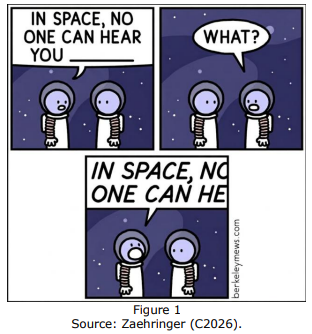
According to what is inferred from usage, the ING forms are:

Available at: https://www.gocomics.com/peanuts/1970/10/22. Accessed on: Sept 3rd, 2024.
Choose the appropriate alternative to complete her sentence with the correct grammar.
Read the following sentences about “Uso e formação de Wh-questions e outras estruturas interrogativas.”
1. Wh-questions begin with what, when, where, who, whom, which, whose, why and how.
2. We use the ‘wh-questions’ to ask for information. The answer can be yes or no. We expect an answer which gives information.
3. We usually form ‘wh-questions’ with wh- + an auxiliary verb (be, do or have) + subject + infinitive verb or with wh- + a modal verb + subject + main verb.
4. When what, who, which or whose is the subject or part of the subject, we do not use the auxiliary. We use the word order subject + verb.
Select the option that presents the correct sentences.
Text
Reading skill will help you to improve your understanding of the language and build your vocabulary.
Read the text below carefully.
Social media, magazines and shop windows bombard people daily with things to buy, and British consumers are buying more clothes and shoes than ever before. Online shopping means it is easy for customers to buy without thinking, while major brands offer such cheap clothes that they can be treated like disposable items – worn two or three times and then thrown away
In Britain, the average person spends more than £1,000 on new clothes a year, which is around four per cent of their income. That might not sound like much, but that figure hides two far more worrying trends for society and for the environment. First, a lot of that consumer spending is via credit cards. British people currently owe approximately £670 per adult to credit card companies. That’s 66 per cent of the average wardrobe budget. Also, not only are people spending money they don’t have, they’re using it to buy things they don’t need. Britain throws away 300,000 tons of clothing a year, most of which goes into landfill sites.
People might not realize they are part of the disposable clothing problem because they donate their unwanted clothes to charities. But charity shops can’t sell all those unwanted clothes. Fast fashion goes out of fashion as quickly as it came in and is often too poor quality to recycle; people don’t want to buy it second-hand. Huge quantities end up being thrown away, and a lot of clothes that charities can’t sell are sent abroad, causing even more economic and environmental problems.
However, a different trend is springing up in opposition to consumerism – the ‘buy nothing’ trend. The idea originated in Canada in the early 1990s and then moved to the US, where it became a rejection of the overspending and overconsumption of Black Friday and Cyber Monday during Thanksgiving weekend. On Buy Nothing Day people organize various types of protests and cut up their credit cards. Throughout the year, Buy Nothing groups organize the exchange and repair of items they already own.
The trend has now reached influencers on social media who usually share posts of clothing and make- -up that they recommend for people to buy. Some YouTube stars now encourage their viewers not to buy anything at all for periods as long as a year. Two friends in Canada spent a year working towards buying only food. For the first three months they learned how to live without buying electrical goods, clothes or things for the house. For the next stage, they gave up services, for example haircuts, eating out at restaurants or buying petrol for their cars. In one year, they’d saved $55,000.
The changes they made meant two fewer cars on the roads, a reduction in plastic and paper packaging and a positive impact on the environment from all the energy saved. If everyone followed a similar plan, the results would be impressive. But even if you can’t manage a full year without going shopping, you can participate in the anti-consumerist movement by refusing to buy things you don’t need. Buy Nothing groups send a clear message to companies that people are no longer willing to accept the environmental and human cost of overconsumption.
source: learnenglish.britishcouncil.org
Read the sentences below and determine whether they are true ( T ) or false ( F ), according to structure and grammar use.
( ) The verbs worn and thrown (1st paragraph of the text) has its infinitive form as wear and throw.
( ) The underlined words in the text: nothing, anything and, everyone are examples of relative pronouns.
( ) The singular form of the following words from the text clothes and goods are, respectively cloth and good.
( ) The following sentence from the text: “Fast fashion goes out of fashion as quickly as it came in …” (3rd paragraph of the text). The words in bold are being used to compare things that are equal in some way.
( ) The negative form of the sentence “In one year, they’d saved $55,000.” (5th paragraph of the text), is “In one year, they hadn’t saved $55,000.”
Select the option that presents the correct sequence from top to bottom.
A 9th grade group was given a handout containing a list of sentences to be observed and analysed as a pair work activity, having the lexicon found in the sentences been already studied, and, if necessary, dictionary checking on word meaning allowed. The teacher conducted class discussion based on the perceptions resulting from the list examination performed. Being the handout as follows, consistent data to ground conclusions is introduced in:
• Summer’s arriving will be happily celebrated in the touristic cities and towns this year.
• People are coming to attend the Rock in Rio shows on the multiple stages of Rock City.
• Beating among opponent sports fans has become an issue during championship playoffs.
• For his disregarding teacher’s instructions during tests, Carl got detention on several occasions.
• The candidates are campaigning all around the country for elections are just around the corner.
• Some boys are beating each other in the school yard and there’s not any adult out there.
• Tourists’ coming to spend summer vacations is surely bound to fill in all hotels and inns.
• Since our bus’s arriving, we should get our luggage together and be ready to get it.
• The candidate hasn`t stayed much with her family because campaigning takes her all over.
• The way that man drives tells us he’s totally disregarding both, human life and traffic laws.

(Available at: https://www.economist.com/business/2024/09/05/the-mystery-of-the-cover-letter – text specially adapted for this test).
1.a) The coming and going of people is easy in a humanized city. 1.b) People are coming and going to choose their Christmas gifts.
2.a) Mike’s arriving to class late became a bad habit. 2.b) Look, Mike’s arriving to class late once more!
3.a) Jordan gets detention for his disrespecting the teachers. 3.b) Jordan gets detention for he’s disrespecting the teachers.
4.a) The candidate’s winning the elections in several key areas. 4.b) Her winning the elections was happily celebrated.
5.a) We are buying the gear for the weekend camping trip. 5.b) For the weekend camping trip, our buying the gear was expensive.
Judge the next item, about the semantics and morphosyntax of the English language.
In the phrase "She enjoys playing the piano," the
gerund "playing" functions as a verbal noun, modifying
the verb "enjoys."