Questões de Concurso
Sobre formação de palavras (prefixos e sufixos) | word formation (prefix and suffix) em inglês
Foram encontradas 329 questões


Analyze the cartoon below:

Why is the hyphen used in “solar-powered”?
Phonetics and Phonology –the image below brings examples of:
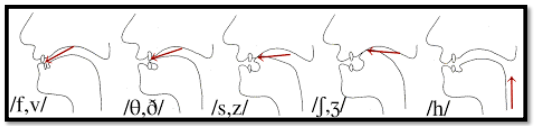
Source: <pt.quora.com>
Text 1
Youth and Adult Literacy in Brazil:
learning from practice
The Concept of functional ILLITERACY
[…] A person is considered functionally literate....................he or she is capable..........using reading and writing skills..........meet the demands of his or her social context, using them to continue learning and developing over their lifetimes. With the expansion of the access to schooling beyond literacy, the focus was shifted to the quality of the educational process offered to all. The issue here is not simply whether people know how to read or write, but what they are capable of doing with those skills. This means that, besides the issue of illiteracy, a social problem that still persists in Brazil, there is also the issue of functional illiteracy; in other words, the inability to effectively use reading and writing skills in the various areas of social life after a certain number of years of schooling. According to census criteria, individuals with less than 4 years of schooling are considered functionally illiterate. […]
Source: https://unesdoc.unesco.org
Prefixes are affixes added to the beginning of a base word to slightly change its meaning.
Study these examples in the following sentence from text 1 “…there is also the issue of functional illiteracy; in other words, the inability to effectively…”.
The underlined words indicate that they:
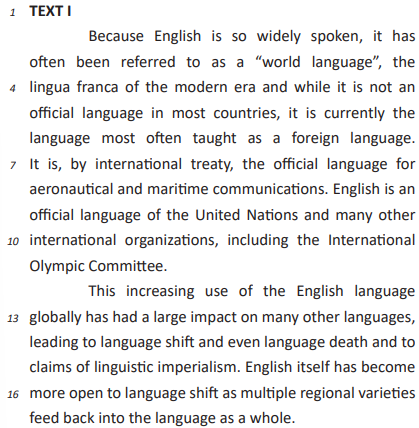
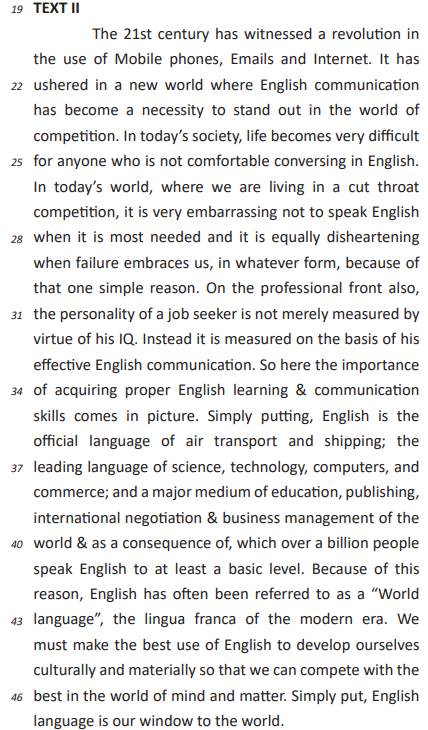
In text I, the suffix ‑ly was added to the adjectives wide, current and global so they could turn into adverbs of manner.
Read Text III and answer the three questions that follow it:
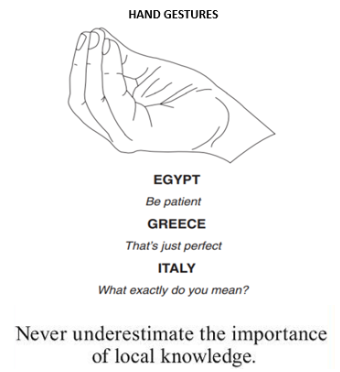
Adapted from: https://www.linkedin.com/pulse
/hand-gestures-%C5%BEeljko-kraljevi%C4%87/ and
https://i.pinimg.com/originals/ed/80/ae/ed80ae85f4ae55dd248a8b9eb18c73db.jpeg
The word “underestimate” is formed by
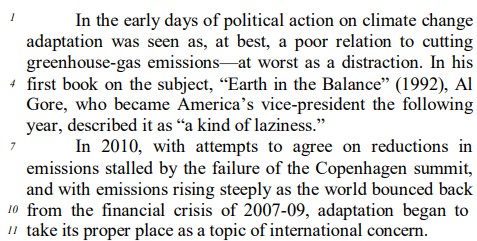
Climate adaptation policies are needed more than ever. The Economist. May 30th, 2020. https://www.economist.com/schoolsbrief/2020/05/30/climate-adaptation-policies-are-needed-more-than-ever.
Concerning syntactic and morphological aspects, judge the following item.
MONACO, Emily. Gladstone's: The UK's only residential library. BBC. 22nd October 2023. https://www.bbc.com/travel/article/20231022- gladstones-the-uks-only-residential-library. [adapted]
Based on the text, judge the following item.

BALDWIN,James. The Creative Process. In: The Price ofthe Ticket – Collected Nonfiction 1948–1985.New York: St. Martin's Press, 1985. [adapted]
Based on the text, judge the following item.
Leia o texto para responder à questão.
Canada: Educating in and for climate emergency
Climate change is the most urgent crisis facing our planet today. Youth have repeatedly called for action on tackling this crisis, including the implementation of climate change curricula in schools.
Canadian students are among those demanding improvement to the sparse and inconsistent delivery of climate change education. A study published in 2019 found that only about half of Canada’s ministries of education and about 60 per cent of school divisions in the country had sustainabilityspecific policy, with this understood to include governance, curriculum, facilities, research, and community outreach. When climate change topics are taught, key concepts are often missing such as the scientific consensus that humans are causing climate change, or a focus on impacts or solutions.
A recent countrywide survey of 4,035 respondents across the country highlighted the consequences of inadequate climate change education in schools. One-third of Canadians failed a 10-question knowledge quiz. Only around half knew greenhouse gases were the main cause of climate change. Few responded correctly that the average temperature has already increased by more than one degree Celsius. Despite their gaps in knowledge, the majority of survey respondents agreed that we are experiencing a climate emergency and that climate change education should be a high priority.
Ten percent of survey respondents were educators (406 people), and among this group, half said a lack of time is a barrier when attempting to include climate change education within the classroom. In fact, respected international organizations have noted that implementing climate change education in schools cannot continue to fall on the shoulders of overburdened teachers.
The traditional way of teaching doesn’t work for complex topics like climate change. Teachers need to shift towards student-directed inquiry and active, real-world learning. It’s not enough to simply quote scientific facts, as a focus on “doom and gloom” can intensify eco-anxiety. Best practices for climate change education include the opportunity to take personal and collective action.
(Karen S. Acton. http://theconversation.com, 07.03.2023. Adaptado)
TEXT:
What's the best way to learn receptive skills?
Miranda Hamilton
July 26, 2021
We often think of speaking and writing as the most challenging of the four language skills but what about the receptive skills? With reading, learners have time to think, but listening in another language presents a very different set of challenges for the learner. How often have we heard learners complain ‘it’s too fast, teacher!’? So how can you help?
Some guides are designed to help teachers understand the subskills of listening, with activities, tips and strategies to help you develop your learners’ listening skills as they prepare for their exams.
Here are just a few of the ideas from the guides for you to try with your learners. They will work at all levels.
How many words?
This micro listening is a great activity to try towards the end of your listening lesson, when learners have already heard the recording, so they know the speakers’ voices and the topic.
• Select a short phrase, of around 10 words, from the listening you have just completed. Set up the audio so you are ready to press ‘Play’.
• Tell the learners to listen and count the number of words they hear. You will need to play the audio several times. Pairs discuss. Take a range of answers from the class, but don’t tell them the answer just yet.
• Write the phrase on the board and count the number of words with the class. Who was the closest?
• Now ask them to listen and read the phrase at the same time. This time they have to decide which words they hear most clearly, in other words, you want them to notice the stressed words. Ask why they think they heard these words most clearly. Explain that stressed words carry the key information.
This micro listening activity helps raise learners’ awareness of sounds, helping them notice the stressed words and preparing them to listen for key information.
Support every learner
In mixed-ability classes, put a few simple strategies in place so the whole class can listen to the same recording, and take part in the same activity. This means that no learner feels lost or left behind.
• Make the gap-fill or sentence-completion task more achievable and supply the first letter of the missing word. Alternatively supply the first and the final letter and indicate how many letters the missing word has.
• Provide an additional layer of support for weaker learners by giving them the audio script. They can read the script as they listen and use it to help them find the correct answers.
Prepare to listen, prepare to understand
Don’t be in too much of a hurry to hand out the listening task and press ‘Play’. Time spent in class before listening means learners are better prepared to understand.
• Before you listen, have a class discussion around the topic of the listening. This gives learners the opportunity not only to practice their speaking, but also to practice listening to one another. A good discussion will make them think about the main ideas they might hear when they listen. • Useful vocabulary always comes out of a class discussion, creating a very natural way to pre-teach vocabulary before they listen. Useful language linked to a discussion is easier to learn because learners have a context, which makes it easier to remember than pre-teaching vocabulary from a wordlist.
• Take your time to discuss the task and check understanding. Encourage the class to reflect on their discussion and predict the answers. Remember to write their predictions on the board. Did they guess correctly? It doesn’t matter if they did or not, what matters is that they are prepared and ready to listen to see if they were right.
Feeling prepared to listen means learners feel confident and ready to understand, both in the classroom and in their exam.
Adapted from: https://www.cambridgeenglish.org/blog/whats-the-best-way-tolearn-receptive-skills
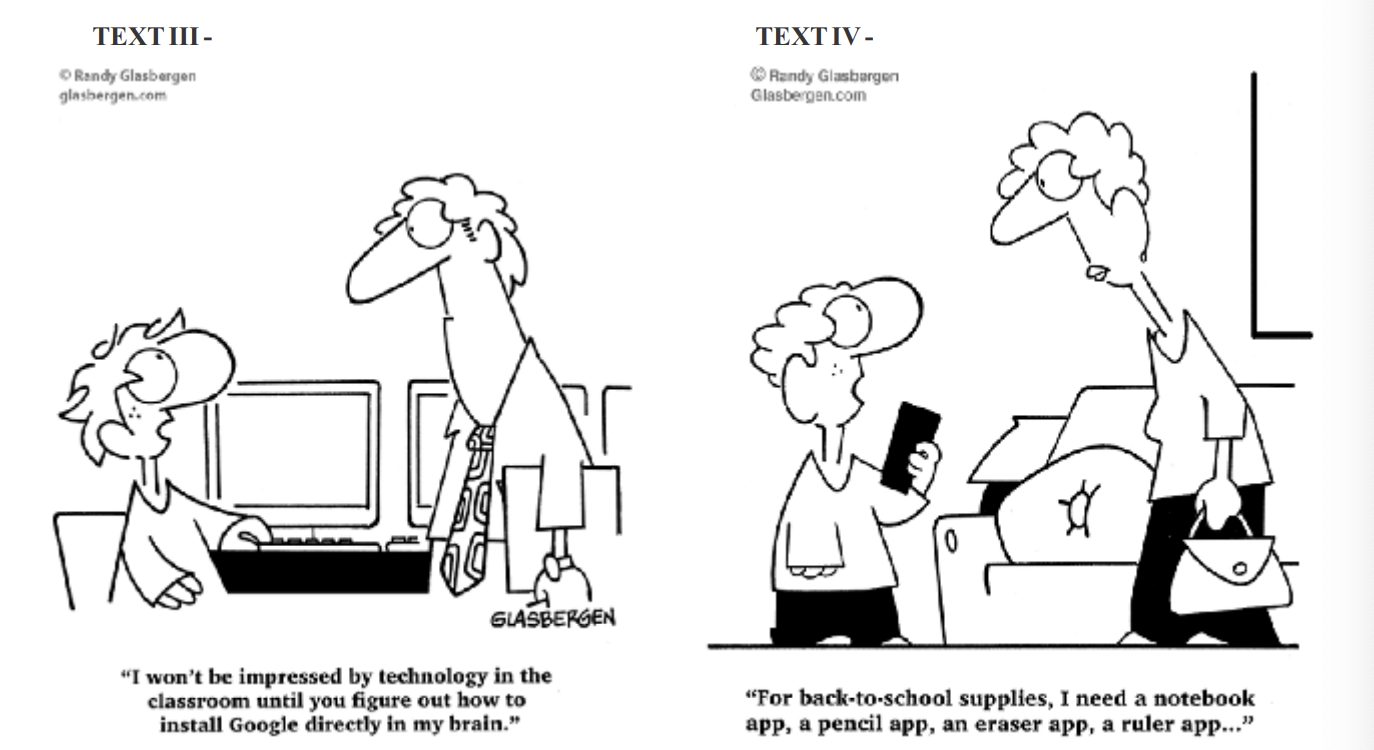
Available from: <https://www.glasbergen.com/education-cartoons/education-technology>/. Accessed on: Nov 8th , 2022
Answer questions according to TEXTS.

 Conheça nossos planos