Questões de Concurso
Sobre adjetivos | adjectives em inglês
Foram encontradas 776 questões


Q200120
Inglês


Based on the meanings in the text,
Ano: 2011
Banca:
CESGRANRIO
Órgão:
Petrobras
Provas:
CESGRANRIO - 2011 - Petrobras - Analista de Sistemas Júnior - Engenharia de Software
|
CESGRANRIO - 2011 - Petrobras - Assistente Social Júnior - 2011 |
CESGRANRIO - 2011 - Petrobrás - Contador Júnior - 2011 |
CESGRANRIO - 2011 - Petrobras - Advogado |
CESGRANRIO - 2011 - Petrobras - Analista de Sistemas Júnior - Processos de Negócios - 2011 |
CESGRANRIO - 2011 - Petrobras - Analista de Sistemas Júnior - Infra-Estrutura - 2011 |
CESGRANRIO - 2011 - Petrobras - Engenheiro de Equipamento Júnior - Elétrica 2011 |
CESGRANRIO - 2011 - Petrobras - Arquiteto |
CESGRANRIO - 2011 - Petrobras - Engenheiro de Equipamento Júnior - Eletrônica - 2011 |
CESGRANRIO - 2011 - Petrobras - Engenheiro de Produção Júnior - 2011 |
CESGRANRIO - 2011 - Petrobras - Geofísico Júnior - Geologia - 2011 |
CESGRANRIO - 2011 - Petrobras - Geólogo Júnior - 2011 |
Q199881
Inglês
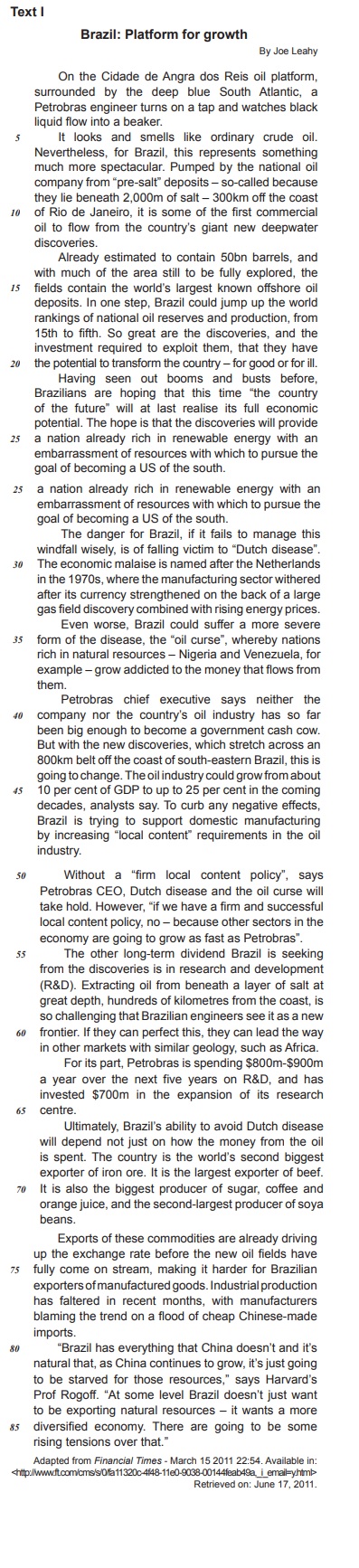
Based on the meanings in Text I, the two words are antonymous in
Ano: 2011
Banca:
CESGRANRIO
Órgão:
Transpetro
Provas:
CESGRANRIO - 2011 - Transpetro - Administrador Júnior
|
CESGRANRIO - 2011 - Transpetro - Analista de Sistemas Júnior |
CESGRANRIO - 2011 - Transpetro - Contador Júnior - Contábil |
CESGRANRIO - 2011 - Transpetro - Contador Júnior - Auditoria Interna |
CESGRANRIO - 2011 - Transpetro - Economista Júnior |
CESGRANRIO - 2011 - Transpetro - Engenheiro Júnior - Engenharia de Produção |
CESGRANRIO - 2011 - Transpetro - Médico do trabalho |
CESGRANRIO - 2011 - Transpetro - Engenheiro Júnior - Análise de Projetos de Inverstimentos |
CESGRANRIO - 2011 - Transpetro - Engenheiro Júnior - Geotécnica |
CESGRANRIO - 2011 - Transpetro - Engenheiro Júnior - Elétrica |
CESGRANRIO - 2011 - Transpetro - Engenheiro Júnior - Mecânica |
CESGRANRIO - 2011 - Transpetro - Profissional de Meio Ambiente Júnior |
CESGRANRIO - 2011 - Transpetro - Engenheiro Júnior - Processamento |
CESGRANRIO - 2011 - Transpetro - Engenheiro Júnior - Segurança |
CESGRANRIO - 2011 - Transpetro - Engenheiro Júnior - Naval |
CESGRANRIO - 2011 - Transpetro - Químico de Petróleo Júnior |
CESGRANRIO - 2011 - Transpetro - Engenheiro Júnior - Automação |
Q154634
Inglês
Texto associado
Model copes with chaos to deliver relief
Computer program helps responders transport
supplies in tough conditions
By Rachel Ehrenberg Science News, Web edition: Monday, February 21st, 2011
WASHINGTON — Getting blood or other perishable supplies to an area that’s been struck by an earthquake or hurricane isn’t as simple as asking what brown can do for you. But a new model quickly determines the best routes and means for delivering humanitarian aid, even in situations where bridges are out or airport tarmacs are clogged with planes.
The research, presented February 18 at the annual meeting of the American Association for the Advancement of Science, could help get supplies to areas which have experienced natural disasters or help prepare for efficient distribution of vaccines when the flu hits.
Efficient supply chains have long been a goal of manufacturers, but transport in fragile networks — where supply, demand and delivery routes may be in extremely rapid flux — requires a different approach, said Anna Nagurney of the University of Massachusetts Amherst, who presented the new work. Rather than considering the shortest path from one place to another to maximize profit, her system aims for the cleanest path at minimum cost, while capturing factors such as the perishability of the product and the uncertainty of supply routes. ‘You don’t know where demand is, so it’s tricky,’ said Nagurney. ‘It’s a multicriteria decision-making problem.’
By calculating the total cost associated with each link in a network, accounting for congestion and incorporating penalties for time and products that are lost, the computer model calculates the best supply chain in situations where standard routes may be disrupted.
‘Mathematical tools are essential to develop formal means to predict, and to respond to, such critical perturbations,’ said Iain Couzin of Princeton University, who uses similar computational tools to study collective animal behavior. ‘This is particularly important where response must be rapid and effective, such as during disaster scenarios … or during epidemics or breaches of national security.
’ The work can be applied to immediate, pressing situations, such as getting blood, food or medication to a disaster site, or to longer-term problems such as determining the best locations for manufacturing flu vaccines. . Retrieved April 7th, 2011.
Based on the meanings in the text, the two items are antonymous in
Ano: 2011
Banca:
CESGRANRIO
Órgão:
Transpetro
Provas:
CESGRANRIO - 2011 - Transpetro - Administrador Júnior
|
CESGRANRIO - 2011 - Transpetro - Analista de Sistemas Júnior |
CESGRANRIO - 2011 - Transpetro - Contador Júnior - Contábil |
CESGRANRIO - 2011 - Transpetro - Contador Júnior - Auditoria Interna |
CESGRANRIO - 2011 - Transpetro - Economista Júnior |
CESGRANRIO - 2011 - Transpetro - Engenheiro Júnior - Engenharia de Produção |
CESGRANRIO - 2011 - Transpetro - Médico do trabalho |
CESGRANRIO - 2011 - Transpetro - Engenheiro Júnior - Análise de Projetos de Inverstimentos |
CESGRANRIO - 2011 - Transpetro - Engenheiro Júnior - Geotécnica |
CESGRANRIO - 2011 - Transpetro - Engenheiro Júnior - Elétrica |
CESGRANRIO - 2011 - Transpetro - Engenheiro Júnior - Mecânica |
CESGRANRIO - 2011 - Transpetro - Profissional de Meio Ambiente Júnior |
CESGRANRIO - 2011 - Transpetro - Engenheiro Júnior - Processamento |
CESGRANRIO - 2011 - Transpetro - Engenheiro Júnior - Segurança |
CESGRANRIO - 2011 - Transpetro - Engenheiro Júnior - Naval |
CESGRANRIO - 2011 - Transpetro - Químico de Petróleo Júnior |
CESGRANRIO - 2011 - Transpetro - Engenheiro Júnior - Automação |
Q154628
Inglês
Texto associado
Model copes with chaos to deliver relief
Computer program helps responders transport
supplies in tough conditions
By Rachel Ehrenberg Science News, Web edition: Monday, February 21st, 2011
WASHINGTON — Getting blood or other perishable supplies to an area that’s been struck by an earthquake or hurricane isn’t as simple as asking what brown can do for you. But a new model quickly determines the best routes and means for delivering humanitarian aid, even in situations where bridges are out or airport tarmacs are clogged with planes.
The research, presented February 18 at the annual meeting of the American Association for the Advancement of Science, could help get supplies to areas which have experienced natural disasters or help prepare for efficient distribution of vaccines when the flu hits.
Efficient supply chains have long been a goal of manufacturers, but transport in fragile networks — where supply, demand and delivery routes may be in extremely rapid flux — requires a different approach, said Anna Nagurney of the University of Massachusetts Amherst, who presented the new work. Rather than considering the shortest path from one place to another to maximize profit, her system aims for the cleanest path at minimum cost, while capturing factors such as the perishability of the product and the uncertainty of supply routes. ‘You don’t know where demand is, so it’s tricky,’ said Nagurney. ‘It’s a multicriteria decision-making problem.’
By calculating the total cost associated with each link in a network, accounting for congestion and incorporating penalties for time and products that are lost, the computer model calculates the best supply chain in situations where standard routes may be disrupted.
‘Mathematical tools are essential to develop formal means to predict, and to respond to, such critical perturbations,’ said Iain Couzin of Princeton University, who uses similar computational tools to study collective animal behavior. ‘This is particularly important where response must be rapid and effective, such as during disaster scenarios … or during epidemics or breaches of national security.
’ The work can be applied to immediate, pressing situations, such as getting blood, food or medication to a disaster site, or to longer-term problems such as determining the best locations for manufacturing flu vaccines. . Retrieved April 7th, 2011.
By Rachel Ehrenberg Science News, Web edition: Monday, February 21st, 2011
WASHINGTON — Getting blood or other perishable supplies to an area that’s been struck by an earthquake or hurricane isn’t as simple as asking what brown can do for you. But a new model quickly determines the best routes and means for delivering humanitarian aid, even in situations where bridges are out or airport tarmacs are clogged with planes.
The research, presented February 18 at the annual meeting of the American Association for the Advancement of Science, could help get supplies to areas which have experienced natural disasters or help prepare for efficient distribution of vaccines when the flu hits.
Efficient supply chains have long been a goal of manufacturers, but transport in fragile networks — where supply, demand and delivery routes may be in extremely rapid flux — requires a different approach, said Anna Nagurney of the University of Massachusetts Amherst, who presented the new work. Rather than considering the shortest path from one place to another to maximize profit, her system aims for the cleanest path at minimum cost, while capturing factors such as the perishability of the product and the uncertainty of supply routes. ‘You don’t know where demand is, so it’s tricky,’ said Nagurney. ‘It’s a multicriteria decision-making problem.’
By calculating the total cost associated with each link in a network, accounting for congestion and incorporating penalties for time and products that are lost, the computer model calculates the best supply chain in situations where standard routes may be disrupted.
‘Mathematical tools are essential to develop formal means to predict, and to respond to, such critical perturbations,’ said Iain Couzin of Princeton University, who uses similar computational tools to study collective animal behavior. ‘This is particularly important where response must be rapid and effective, such as during disaster scenarios … or during epidemics or breaches of national security.
’ The work can be applied to immediate, pressing situations, such as getting blood, food or medication to a disaster site, or to longer-term problems such as determining the best locations for manufacturing flu vaccines. . Retrieved April 7th, 2011.
According to Anna Nagurney, in paragraph 3 (lines 14-26), an efficient logistics system must consider the
Ano: 2011
Banca:
FCC
Órgão:
TRE-RN
Prova:
FCC - 2011 - TRE-RN - Analista Judiciário - Análise de Sistemas |
Q105199
Inglês


A alternativa que preenche corretamente a lacuna  é
é
Ano: 2011
Banca:
CESGRANRIO
Órgão:
Petrobras
Provas:
CESGRANRIO - 2011 - Petrobras - Administrador Júnior
|
CESGRANRIO - 2011 - Petrobrás - Auditor Júnior |
CESGRANRIO - 2011 - Petrobrás - Contador Júnior |
CESGRANRIO - 2011 - Petrobrás - Químico de Petróleo Júnior |
CESGRANRIO - 2011 - Petrobrás - Engenheiro Civil Júnior |
CESGRANRIO - 2011 - Petrobrás - Enfermeiro do Trabalho Júnior |
CESGRANRIO - 2011 - Petrobras - Engenheiro de Equipamento Júnior - Mecânica |
CESGRANRIO - 2011 - Petrobras - Engenheiro de Equipamento Júnior - Inspeção |
CESGRANRIO - 2011 - Petrobras - Engenheiro de Equipamento Júnior - Elétrica |
CESGRANRIO - 2011 - Petrobras - Engenheiro de Equipamento Júnior - Terminais e Dutos |
CESGRANRIO - 2011 - Petrobras - Engenheiro de Equipamento Júnior - Eletrônica |
CESGRANRIO - 2011 - Petrobras - Engenheiro de Produção Júnior |
CESGRANRIO - 2011 - Petrobras - Engenheiro de Meio Ambiente Júnior |
CESGRANRIO - 2011 - Petrobras - Engenheiro de Telecomunicações Júnior |
CESGRANRIO - 2011 - Petrobrás - Engenheiro de Segurança do Trabalho |
CESGRANRIO - 2011 - Petrobras - Engenheiro Naval Júnior |
CESGRANRIO - 2011 - Petrobras - Engenheiro de Petróleo Júnior |
CESGRANRIO - 2011 - Petrobras - Geólogo Júnior |
CESGRANRIO - 2011 - Petrobras - Médico do trabalho |
CESGRANRIO - 2011 - Petrobras - Profissional de Comunicação Júnior - Publicidade e Propaganda |
CESGRANRIO - 2011 - Petrobrás - Profissional de Comunicação Júnior - Jornalismo |
CESGRANRIO - 2011 - Petrobras - Geofísico Júnior - Geologia |
CESGRANRIO - 2011 - Petrobrás - Engenheiro de Processamento Júnior |
CESGRANRIO - 2011 - Petrobrás - Geofísico Júnior - Física |
Q87925
Inglês
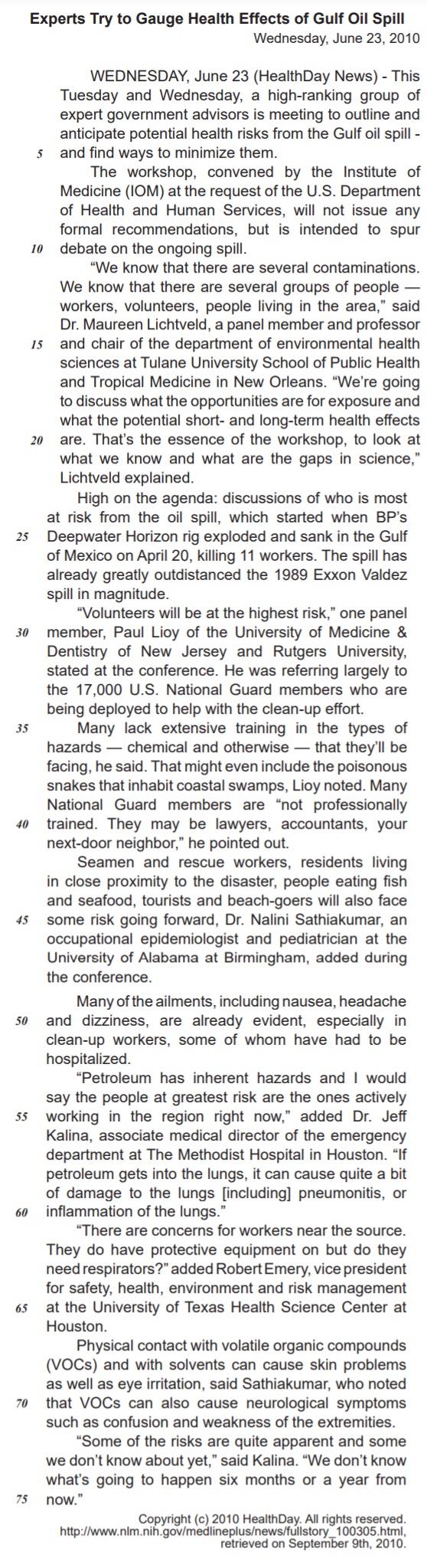
Based on the meanings in the text,
Ano: 2010
Banca:
CESPE / CEBRASPE
Órgão:
SEDU-ES
Prova:
CESPE - 2010 - SEDU-ES - Professor B — Ensino Fundamental e Médio — Inglês |
Q544907
Inglês
Texto associado

Internet: <www.scielo.br> (adapted).
Based on the text, judge the item below.
The adjective “compliant” ( L.15) can be replaced by submissive.
Ano: 2010
Banca:
CESPE / CEBRASPE
Órgão:
INMETRO
Prova:
CESPE - 2010 - INMETRO - Todos os Cargos - Conhecimentos Básicos |
Q487744
Inglês

The antonym of “misleading” (l.15) is
Ano: 2010
Banca:
CESGRANRIO
Órgão:
Prefeitura de Salvador - BA
Prova:
CESGRANRIO - 2010 - Prefeitura de Salvador - BA - Professor - Inglês |
Q186865
Inglês


In terms of meaning,
Ano: 2010
Banca:
CESGRANRIO
Órgão:
Petrobras
Prova:
CESGRANRIO - 2010 - BR Distribuidora - Profissional Júnior - Direito |
Q119698
Inglês


The pair of words that express opposing ideas is
Ano: 2010
Banca:
CESGRANRIO
Órgão:
Petrobras
Prova:
CESGRANRIO - 2010 - Petrobras - Todos os Cargos - Nível Superior - Conhecimentos Básicos |
Q81320
Inglês


Based on the meanings in Text II, the words reveal opposite ideas in
Ano: 2010
Banca:
CESGRANRIO
Órgão:
EPE
Provas:
CESGRANRIO - 2010 - EPE - Advogado
|
CESGRANRIO - 2010 - EPE - Analista de Gestão Corporativa - Administração Geral |
CESGRANRIO - 2010 - EPE - Analista de Gestão Corporativa - Contabilidade |
CESGRANRIO - 2010 - EPE - Analista de Gestão Corporativa - Recursos Humanos |
CESGRANRIO - 2010 - EPE - Analista de Gestão Corporativa - Tecnologia da Informação |
CESGRANRIO - 2010 - EPE - Analista de Pesquisa Energética - Economia de Energia |
CESGRANRIO - 2010 - EPE - Analista de Pesquisa Energética - Gás e Bioenergia |
CESGRANRIO - 2010 - EPE - Analista de Pesquisa Energética - Meio Ambiente - Análises Ambientais |
CESGRANRIO - 2010 - EPE - Analista de Pesquisa Energética - Meio Ambiente - Ecologia |
CESGRANRIO - 2010 - EPE - Analista de Pesquisa Energética - Meio Ambiente - Geoprocessamento |
CESGRANRIO - 2010 - EPE - Analista de Pesquisa Energética - Meio Ambiente - Recursos Hídricos |
CESGRANRIO - 2010 - EPE - Analista de Pesquisa Energética - Petróleo - Abastecimento |
CESGRANRIO - 2010 - EPE - Analista de Pesquisa Energética - Petróleo - Exploração |
CESGRANRIO - 2010 - EPE - Analista de Pesquisa Energética - Meio Ambiente - Socioeconomia |
CESGRANRIO - 2010 - EPE - Analista de Pesquisa Energética - Planejamento da Geração de Energia |
CESGRANRIO - 2010 - EPE - Analista de Pesquisa Energética - Transmissão de Energia |
CESGRANRIO - 2010 - EPE - Analista de Pesquisa Energética - Recursos Energéticos |
CESGRANRIO - 2010 - EPE - Analista de Pesquisa Energética - Projetos da Geração de Energia |
Q74952
Inglês

Based on the meanings of the words taken from Text 1, the relationship in each pair is defined as
Ano: 2010
Banca:
CESGRANRIO
Órgão:
BNDES
Provas:
CESGRANRIO - 2010 - BNDES - Analista de Sistemas - Suporte
|
CESGRANRIO - 2010 - BNDES - Arquiteto |
CESGRANRIO - 2010 - BNDES - Arquivista |
CESGRANRIO - 2010 - BNDES - Advogado |
Q71386
Inglês


The pair of expressions that express opposing ideas is
Ano: 2010
Banca:
CESGRANRIO
Órgão:
Petrobras
Provas:
CESGRANRIO - 2010 - Petrobras - Advogado - Júnior
|
CESGRANRIO - 2010 - Petrobras - Economista - Biocombustível |
CESGRANRIO - 2010 - Petrobras - Contador - Biocombustível |
CESGRANRIO - 2010 - Petrobras - Administrador - Biocombustível |
CESGRANRIO - 2010 - Petrobras - Assistente Social Júnior - Biocombustível |
CESGRANRIO - 2010 - Petrobras - Analista Ambiental - Biocombustível |
CESGRANRIO - 2010 - Petrobras - Enfermeiro do Trabalho Júnior - Biocombustível |
CESGRANRIO - 2010 - Petrobras - Analista de Comercialização e Logística Júnior - Biocombustível |
CESGRANRIO - 2010 - Petrobras - Engenheiro Agrônomo - Biocombustível |
CESGRANRIO - 2010 - Petrobras - Engenheiro Agrícola - Júnior - Biocombustível |
CESGRANRIO - 2010 - Petrobras - Engenheiro de Produção - Biocombustível |
CESGRANRIO - 2010 - Petrobras - Engenheiro de Segurança - Biocombustível |
CESGRANRIO - 2010 - Petrobras - Médico do Trabalho - Biocombustível |
CESGRANRIO - 2010 - Petrobras - Comunicação Social (Bacharelado) - Jornalismo |
CESGRANRIO - 2010 - Petrobras - Engenheiro de Equipamento Júnior - Mecânica - Biocombustível |
CESGRANRIO - 2010 - Petrobras - Engenheiro de Processamento Júnior - Biocombustível |
Q60948
Inglês

Based on the meanings of the words in the text, it can be said tha
Q55463
Inglês
Texto associado
Read the book review below and answer questions 7,
8, 9 and 10.
YOUTH PROLONGED: OLD AGE POSTPONED
by Robert Weale (King's College London, UK)
What exactly is human ageing? Can it be slowed down?
These questions have puzzled scientists and laymen alike
for generations, and continue to do so today. The author
addresses these thought-provoking issues by challenging
pre-conceived notions of age-perception, age-acceptance
and inter-age relations. Pertinent matters of age-related
communication are dealt with, and the reader is treated to
a grand tour of the latest theories of ageing, age-related
biological changes and age-related diseases, such as
Alzheimer's Disease. Here, the author's expertise in agerelated
eye diseases truly comes into its own.
Weale's unique work not only underlines important
genetic and avoidable risk factors but gives ample
consideration to possible consequences stemming from
different early lifestyles. Readers will re-consider their
ideas of what it means to age, and gain a better
understanding of what can and cannot slow down the
process of ageing.
Fonte: http://www.worldscibooks.com/ December, 2009.
In the book review there are many adjectives, some are single words, like old, others are compound words, like thought-provoking. Which of the alternatives below contain only adjectives from the text.
I. Pertinent, unique, ample.
II. Grand, important, early.
III. Biological, different, treated.
IV. Avoidable, ample, postponed.
I. Pertinent, unique, ample.
II. Grand, important, early.
III. Biological, different, treated.
IV. Avoidable, ample, postponed.
Q55460
Inglês
Choose the only correct alternative to fill in the blanks:
I. Brazil is ________ Argentina.
II. Japan is _________ Bolivia.
III. The Everest is _________mountain in the world.
IV. France is not __________ Canada.
I. Brazil is ________ Argentina.
II. Japan is _________ Bolivia.
III. The Everest is _________mountain in the world.
IV. France is not __________ Canada.
Ano: 2010
Banca:
CESGRANRIO
Órgão:
BACEN
Prova:
CESGRANRIO - 2010 - BACEN - Analista do Banco Central - Conhecimentos Gerais - Todos os Cargos |
Q25600
Inglês


. In terms of meaning, it is correct to affirm that
Ano: 2010
Banca:
CESGRANRIO
Órgão:
IBGE
Provas:
CESGRANRIO - 2010 - IBGE - Analista de Sistemas - Desenvolvimento de Aplicações
|
CESGRANRIO - 2010 - IBGE - Arquivologista |
CESGRANRIO - 2010 - IBGE - Analista de Sistemas - Suporte |
CESGRANRIO - 2010 - IBGE - Analista de Sistemas - Comunicação e Rede |
CESGRANRIO - 2010 - IBGE - Analista de Planejamento - Biblioteconomia |
CESGRANRIO - 2010 - IBGE - Analista de Planejamento - Arquivologia |
CESGRANRIO - 2010 - IBGE - Analista de Planejamento - Engenharia Civil |
CESGRANRIO - 2010 - IBGE - Analista de Sistemas - Suporte de Produção e Rede |
CESGRANRIO - 2010 - IBGE - Analista de Planejamento - Ciências Contábeis |
CESGRANRIO - 2010 - IBGE - Analista de Planejamento - Engenharia de Produção |
CESGRANRIO - 2010 - IBGE - Analista de Planejamento - Engenharia Elétrica |
CESGRANRIO - 2010 - IBGE - Analista de Planejamento - Gestão e Infraestrutura |
CESGRANRIO - 2010 - IBGE - Tecnologista em Informações Geográficas - Estatística |
CESGRANRIO - 2010 - IBGE - Analista de Planejamento - Assuntos Educacionais |
CESGRANRIO - 2010 - IBGE - Analista de Planejamento - Auditor |
CESGRANRIO - 2010 - IBGE - Analista de Planejamento - Geoprocessamento |
CESGRANRIO - 2010 - IBGE - Analista de Planejamento - Gestão em Pesquisa |
CESGRANRIO - 2010 - IBGE - Analista de Planejamento - Historia |
CESGRANRIO - 2010 - IBGE - Analista de Planejamento - Jornalismo |
CESGRANRIO - 2010 - IBGE - Tecnologista em Informações Geográficas - Análise Agrícola |
Q24001
Inglês
Texto associado
An 18-Minute Plan for Managing Your Day


Check the option that contains a correct correspondence of meaning.
Ano: 2009
Banca:
CESPE / CEBRASPE
Órgão:
FINEP
Prova:
CESPE / CEBRASPE - 2009 - FINEP - Todos os Cargos - Nível Superior |
Q130858
Inglês
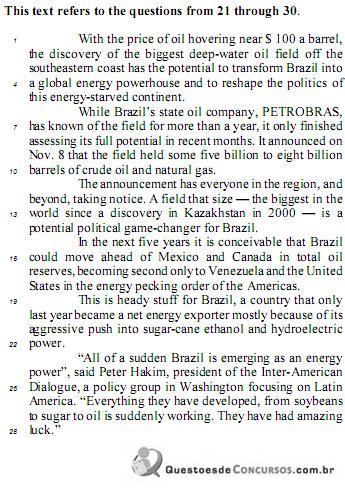
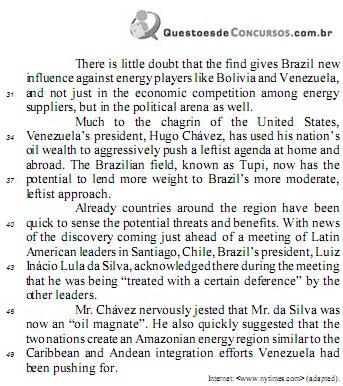
“the biggest” (L.12) is
Q77845
Inglês
Texto associado
Para responder às questões de números 26 a 31, considere o texto abaixo.

A palavra que preenche corretamente a lacuna A, no texto, é

 Conheça nossos planos