Foram encontradas 14.724 questões

Resolva questões gratuitamente!

Junte-se a mais de 4 milhões de concurseiros!

Q2197117 Português
Em: “... milhares de indivíduos voltam a ver o mundo graças às córneas doadas.”, que tipo de sujeito se manifesta?
Alternativas
Q2197116 Português
Pensar é transgredir - Lya Luft
Não lembro em que momento percebi que viver deveria ser uma permanente reinvenção de nós mesmos -:- para não morrermos soterrados na poeira da banalidade embora pareça que ainda estamos vivos.
Mas compreendi, num lampejo: então é isso, então é assim. Apesar dos medos, convém não ser demais fútil nem demais acomodada. Algumas vezes é preciso pegar o touro pelos chifres, mergulhar para depois ver o que acontece: porque a vida não tem de ser sorvida como uma taça que se esvazia, mas como o jarro que se renova a cada gole bebido.
Para reinventar-se é preciso pensar: isso aprendi muito cedo.
Apalpar, no nevoeiro de quem somos, algo que pareça uma essência: isso, mais ou menos, sou eu. Isso é o que eu queria ser, acredito ser, quero me tornar ou já fui. Muita inquietação por baixo das águas do cotidiano. Mais cômodo seria ficar com o travesseiro sobre a cabeça e adotar o lema reconfortante: "Parar pra pensar, nem pensar!".
O problema é que, quando menos se espera ele chega o sorrateiro pensamento que nos faz parar. Pode ser no meio do shopping, no trânsito, na frente da tevê ou do computâdor. Simplesmente escovando os dentes. Ou na hora da droga, do sexo sem afeto, do desafeto, do rancor, da lamúria, da hesitação e da resignação. Sem ter programado, a gente para pra pensar.
Pode ser um susto: como espiar de um berçário confortável para um corredor com mil possibilidades. Cada porta, uma escolha. Muitas vão se abrir para um nada ou para algum absurdo. Outras, para um jardim de promessas. Alguma, para a noite além da cerca. Hora de tirar os disfarces, aposentar as máscaras e reavaliar: reavaliar-se.
Pensar pede audácia, pois refletir é transgredir a ordem do superficial que nos pressiona tanto.
Somos demasiado frívolos: buscamos o atordoamento das mil distrações, corremos de um lado a outro achando que somos grandes cumpridores de tarefas. Quando o primeiro dever seria de vez em quando parar e analisar: quem a gente é, o que fazemos com a nossa vida, o tempo, os amores. E com as obrigações também, é claro,pois não temos sempre cinco anos de idade, quando a prioridade é dormir abraçado no urso de pelúcia e prosseguir, no sono, o sonho que afinal nessa idade ainda é avida.
Mas pensar não é apenas a ameaça de enfrentar a alma no espelho: é sair para as varandas de si mesmo e olhar em torno, e quem sabe finalmente respirar.
Compreender: somos inquilinos de algo bem maior do que o nosso pequeno segredo individual. É o poderoso ciclo da existência. Nele todos os desastres e toda a belezatêm significado como fases de um processo.
Se nos escondermos num canto escuro abafando nossos questionamentos, não escutaremos o rumor do vento nas árvores do mundo. Nem compreenderemos que o prato das inevitáveis perdas pode pesar menos do que o dos possíveis ganhos.
Os ganhos ou os danos dependem da perspectiva e possiblidades de quem vai tecendo a sua história. O mundo em si não tem sentido sem o nosso olhar que lhe atribui identidade, sem o nosso pensamento que lhe confere alguma ordem.
Viver, como talvez morrer, é recriar-se: a vida não está aí apenas para ser suportada nem vivida, mas elaborada.
(Texto adaptado. Disponível em https://pensador.uol.com.br/frase/MjgzMzA0Acesso em 23/02/2017
Em “Mas compreendi, num lampejo.” , a palavra em destaque tem o sentido de:
Alternativas
Q2197115 Português
Assinale a alternativa que contém um advérbio de tempo.
Alternativas
Q2197114 Português
O termo grifado tem valor de possessivo na alternativa:
Alternativas
Q2197113 Português
Em “Você que ama velocidade, agora pode chegar ao finalmente"., a palavra sublinhada foi formada por:
Alternativas
Q2197112 Português
Destaque a alternativa em que as regras de acentuação foram empregadas adequadamente. 
Alternativas
Q1786162 Português
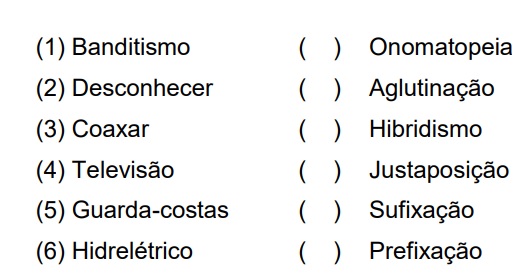
Faça a correspondência da primeira com a segunda coluna e identifique a sequência cujo processo de formação de palavras foi devidamente observado:

Imagem associada para resolução da questão
Alternativas
Q1623387 Inglês
Britain bans gasoline and diesel cars starting in 2040


      Britain will ban sales of new gasoline and diesel cars starting in 2040 as part of a bid to clean up the country’s air. The decision to phase out the internal combustion engine heralds a new era of low-emission technologies with major implications for the auto industry, society and the environment. “We can’t carry on with diesel and petrol cars”, U.K. environment secretary Michael Gove told the BBC on Wednesday. “There is no alternative to embracing new technology”. Almost 2.7 million new cars were registered in the U.K. in 2016, making it the second biggest market in Europe after Germany.
      Meeting the 2040 deadline will be a heavy lift. British demand for electric and fuel cell cars, as well as plug-in hybrids, grew 40% in 2015, but they only accounted for less than 3% of the market. Still, experts say sales of clean cars are likely to continue on their dramatic upward trajectory.
      The car industry says that demand for electric vehicles will only reach a tipping point once they're cheaper to own than conventional vehicles.
      The deadline was announced by the government on Wednesday as part of a plan to reduce air pollution. The blueprint highlighted roughly £1.4 billion in government investment designed to help ensure that every vehicle on the road in Britain produces zero emissions by 2050.
     Gove said action was needed because gasoline and diesel engines contribute to health problems, “accelerate climate change, do damage to the planet and the next generation”. Roughly 40,000 deaths in Britain each year are attributable to outdoor air pollution, according to a study published last year by the Royal College of Physicians. Dirty air has been linked to cancer, asthma, stroke and heart disease, among other health issues.
     The problem is especially pronounced in big cities. London surpassed the European Union’s annual limit for nitrogen dioxide exposure just five days into the new year, according to King’s College. The university estimates that air pollution is responsible for 9,400 premature deaths in the city every year.
     The timeline for ending sales of internal combustion engines mirrors one proposed in early July by France. President Emmanuel Macron has given the auto industry the same deadline to make the switch to cleaner tech.
     “We are quite rightly in a position of global leadership when it comes to shaping new technology”, Gove said. But the auto industry, which supports over 800,000 jobs in the U.K., is wary of hard deadlines.
     Other countries have been even more ambitious than the U.K. India is planning to stop selling gas-powered vehicles by 2030.
      The German car industry and government officials will meet in early August to discuss the future of diesel engine technology. Manufacturers are trying to avoid diesel cars being banned from German towns and cities. 
Consider the following excerpt taken from the text:

British demand for electric and fuel cell cars, as well as plug-in hybrids, grew 40% in 2015, but they only accounted for less than 3% of the market.

Choose the alternative that conveys the same meaning of the excerpt above.
Alternativas
Q1623386 Inglês
Britain bans gasoline and diesel cars starting in 2040


      Britain will ban sales of new gasoline and diesel cars starting in 2040 as part of a bid to clean up the country’s air. The decision to phase out the internal combustion engine heralds a new era of low-emission technologies with major implications for the auto industry, society and the environment. “We can’t carry on with diesel and petrol cars”, U.K. environment secretary Michael Gove told the BBC on Wednesday. “There is no alternative to embracing new technology”. Almost 2.7 million new cars were registered in the U.K. in 2016, making it the second biggest market in Europe after Germany.
      Meeting the 2040 deadline will be a heavy lift. British demand for electric and fuel cell cars, as well as plug-in hybrids, grew 40% in 2015, but they only accounted for less than 3% of the market. Still, experts say sales of clean cars are likely to continue on their dramatic upward trajectory.
      The car industry says that demand for electric vehicles will only reach a tipping point once they're cheaper to own than conventional vehicles.
      The deadline was announced by the government on Wednesday as part of a plan to reduce air pollution. The blueprint highlighted roughly £1.4 billion in government investment designed to help ensure that every vehicle on the road in Britain produces zero emissions by 2050.
     Gove said action was needed because gasoline and diesel engines contribute to health problems, “accelerate climate change, do damage to the planet and the next generation”. Roughly 40,000 deaths in Britain each year are attributable to outdoor air pollution, according to a study published last year by the Royal College of Physicians. Dirty air has been linked to cancer, asthma, stroke and heart disease, among other health issues.
     The problem is especially pronounced in big cities. London surpassed the European Union’s annual limit for nitrogen dioxide exposure just five days into the new year, according to King’s College. The university estimates that air pollution is responsible for 9,400 premature deaths in the city every year.
     The timeline for ending sales of internal combustion engines mirrors one proposed in early July by France. President Emmanuel Macron has given the auto industry the same deadline to make the switch to cleaner tech.
     “We are quite rightly in a position of global leadership when it comes to shaping new technology”, Gove said. But the auto industry, which supports over 800,000 jobs in the U.K., is wary of hard deadlines.
     Other countries have been even more ambitious than the U.K. India is planning to stop selling gas-powered vehicles by 2030.
      The German car industry and government officials will meet in early August to discuss the future of diesel engine technology. Manufacturers are trying to avoid diesel cars being banned from German towns and cities. 
Com base no texto, considere as seguintes afirmativas:

1. No primeiro parágrafo, a palavra em negrito e sublinhada (“it”) refere-se ao Reino Unido.
2. No segundo parágrafo, a palavra em negrito e sublinhada (“they”) refere-se a “electric, fuel cell and pug-in hybrid cars”.
3. No terceiro parágrafo, a palavra em negrito e sublinhada (“they”) refere-se a “conventional vehicles”.
4. No oitavo parágrafo, a palavra “we” em negrito e sublinhada refere-se ao governo da França.

Assinale a alternativa correta.
Alternativas
Q1623385 Inglês
Britain bans gasoline and diesel cars starting in 2040


      Britain will ban sales of new gasoline and diesel cars starting in 2040 as part of a bid to clean up the country’s air. The decision to phase out the internal combustion engine heralds a new era of low-emission technologies with major implications for the auto industry, society and the environment. “We can’t carry on with diesel and petrol cars”, U.K. environment secretary Michael Gove told the BBC on Wednesday. “There is no alternative to embracing new technology”. Almost 2.7 million new cars were registered in the U.K. in 2016, making it the second biggest market in Europe after Germany.
      Meeting the 2040 deadline will be a heavy lift. British demand for electric and fuel cell cars, as well as plug-in hybrids, grew 40% in 2015, but they only accounted for less than 3% of the market. Still, experts say sales of clean cars are likely to continue on their dramatic upward trajectory.
      The car industry says that demand for electric vehicles will only reach a tipping point once they're cheaper to own than conventional vehicles.
      The deadline was announced by the government on Wednesday as part of a plan to reduce air pollution. The blueprint highlighted roughly £1.4 billion in government investment designed to help ensure that every vehicle on the road in Britain produces zero emissions by 2050.
     Gove said action was needed because gasoline and diesel engines contribute to health problems, “accelerate climate change, do damage to the planet and the next generation”. Roughly 40,000 deaths in Britain each year are attributable to outdoor air pollution, according to a study published last year by the Royal College of Physicians. Dirty air has been linked to cancer, asthma, stroke and heart disease, among other health issues.
     The problem is especially pronounced in big cities. London surpassed the European Union’s annual limit for nitrogen dioxide exposure just five days into the new year, according to King’s College. The university estimates that air pollution is responsible for 9,400 premature deaths in the city every year.
     The timeline for ending sales of internal combustion engines mirrors one proposed in early July by France. President Emmanuel Macron has given the auto industry the same deadline to make the switch to cleaner tech.
     “We are quite rightly in a position of global leadership when it comes to shaping new technology”, Gove said. But the auto industry, which supports over 800,000 jobs in the U.K., is wary of hard deadlines.
     Other countries have been even more ambitious than the U.K. India is planning to stop selling gas-powered vehicles by 2030.
      The German car industry and government officials will meet in early August to discuss the future of diesel engine technology. Manufacturers are trying to avoid diesel cars being banned from German towns and cities. 
The main idea of the text is related to:
Alternativas
Q1623384 Inglês
Britain bans gasoline and diesel cars starting in 2040


      Britain will ban sales of new gasoline and diesel cars starting in 2040 as part of a bid to clean up the country’s air. The decision to phase out the internal combustion engine heralds a new era of low-emission technologies with major implications for the auto industry, society and the environment. “We can’t carry on with diesel and petrol cars”, U.K. environment secretary Michael Gove told the BBC on Wednesday. “There is no alternative to embracing new technology”. Almost 2.7 million new cars were registered in the U.K. in 2016, making it the second biggest market in Europe after Germany.
      Meeting the 2040 deadline will be a heavy lift. British demand for electric and fuel cell cars, as well as plug-in hybrids, grew 40% in 2015, but they only accounted for less than 3% of the market. Still, experts say sales of clean cars are likely to continue on their dramatic upward trajectory.
      The car industry says that demand for electric vehicles will only reach a tipping point once they're cheaper to own than conventional vehicles.
      The deadline was announced by the government on Wednesday as part of a plan to reduce air pollution. The blueprint highlighted roughly £1.4 billion in government investment designed to help ensure that every vehicle on the road in Britain produces zero emissions by 2050.
     Gove said action was needed because gasoline and diesel engines contribute to health problems, “accelerate climate change, do damage to the planet and the next generation”. Roughly 40,000 deaths in Britain each year are attributable to outdoor air pollution, according to a study published last year by the Royal College of Physicians. Dirty air has been linked to cancer, asthma, stroke and heart disease, among other health issues.
     The problem is especially pronounced in big cities. London surpassed the European Union’s annual limit for nitrogen dioxide exposure just five days into the new year, according to King’s College. The university estimates that air pollution is responsible for 9,400 premature deaths in the city every year.
     The timeline for ending sales of internal combustion engines mirrors one proposed in early July by France. President Emmanuel Macron has given the auto industry the same deadline to make the switch to cleaner tech.
     “We are quite rightly in a position of global leadership when it comes to shaping new technology”, Gove said. But the auto industry, which supports over 800,000 jobs in the U.K., is wary of hard deadlines.
     Other countries have been even more ambitious than the U.K. India is planning to stop selling gas-powered vehicles by 2030.
      The German car industry and government officials will meet in early August to discuss the future of diesel engine technology. Manufacturers are trying to avoid diesel cars being banned from German towns and cities. 
According to the text, choose the correct alternative.
Alternativas
Q1623383 Inglês
Britain bans gasoline and diesel cars starting in 2040


      Britain will ban sales of new gasoline and diesel cars starting in 2040 as part of a bid to clean up the country’s air. The decision to phase out the internal combustion engine heralds a new era of low-emission technologies with major implications for the auto industry, society and the environment. “We can’t carry on with diesel and petrol cars”, U.K. environment secretary Michael Gove told the BBC on Wednesday. “There is no alternative to embracing new technology”. Almost 2.7 million new cars were registered in the U.K. in 2016, making it the second biggest market in Europe after Germany.
      Meeting the 2040 deadline will be a heavy lift. British demand for electric and fuel cell cars, as well as plug-in hybrids, grew 40% in 2015, but they only accounted for less than 3% of the market. Still, experts say sales of clean cars are likely to continue on their dramatic upward trajectory.
      The car industry says that demand for electric vehicles will only reach a tipping point once they're cheaper to own than conventional vehicles.
      The deadline was announced by the government on Wednesday as part of a plan to reduce air pollution. The blueprint highlighted roughly £1.4 billion in government investment designed to help ensure that every vehicle on the road in Britain produces zero emissions by 2050.
     Gove said action was needed because gasoline and diesel engines contribute to health problems, “accelerate climate change, do damage to the planet and the next generation”. Roughly 40,000 deaths in Britain each year are attributable to outdoor air pollution, according to a study published last year by the Royal College of Physicians. Dirty air has been linked to cancer, asthma, stroke and heart disease, among other health issues.
     The problem is especially pronounced in big cities. London surpassed the European Union’s annual limit for nitrogen dioxide exposure just five days into the new year, according to King’s College. The university estimates that air pollution is responsible for 9,400 premature deaths in the city every year.
     The timeline for ending sales of internal combustion engines mirrors one proposed in early July by France. President Emmanuel Macron has given the auto industry the same deadline to make the switch to cleaner tech.
     “We are quite rightly in a position of global leadership when it comes to shaping new technology”, Gove said. But the auto industry, which supports over 800,000 jobs in the U.K., is wary of hard deadlines.
     Other countries have been even more ambitious than the U.K. India is planning to stop selling gas-powered vehicles by 2030.
      The German car industry and government officials will meet in early August to discuss the future of diesel engine technology. Manufacturers are trying to avoid diesel cars being banned from German towns and cities. 

Consider the following numbers:


1. 2.7 million new clean energy cars were registered in the U.K. in 2016.

2. 40,000 of British deaths yearly are said to be caused by pollution related diseases.

3. Car industry in Britain is cautious about having specific dates for banning internal combustion energy cars because it supports over 800.000 jobs in the UK.


Mark the correct alternative.

Alternativas
Q1623382 Inglês
Consider the following excerpt:

Difficulty interpreting what I have come to call ‘Ahorita Time’ is a reflection of different cultural understandings of time. Dr Company explained that if she is giving a talk in Mexico and goes over her allotted time, Mexicans “feel like I am giving them a gift”. In the UK or the US, however, “The audience starts to leave, feeling like I am wasting their time”.

Choose the alternative that conveys the same meaning of the excerpt above.
Alternativas
Q1623381 Inglês
The ways Mexicans tell time


Understanding this takes not a fluency in the language but rather a fluency in Mexican culture.

Mexicans are famous in the Spanish-speaking world for their extensive use of the diminutive. While in most Spanish-speaking countries the addition of the diminutive ‘ita’ to an adverb like ahora (meaning ‘now’) would strengthen it to indicate immediacy (i.e. ‘right now’), this is not the case in Mexico. Dr Company explained that Mexicans instead use the diminutive form to break down the space between the speaker and the listener and lessen formality. In this case of ‘ahorita’, the addition of the diminutive reduces urgency rather than increasing it – a difference that can be extremely confusing for foreigners. 


(Disponível: <http://www.bbc.com/travel/story/20170725-the-confusing-way-mexicans-tell-time>. Adaptado. Acesso: 26 de julho de 2017.)
The text illustrates:
Alternativas
Q1623380 Inglês
The ways Mexicans tell time


Understanding this takes not a fluency in the language but rather a fluency in Mexican culture.

Mexicans are famous in the Spanish-speaking world for their extensive use of the diminutive. While in most Spanish-speaking countries the addition of the diminutive ‘ita’ to an adverb like ahora (meaning ‘now’) would strengthen it to indicate immediacy (i.e. ‘right now’), this is not the case in Mexico. Dr Company explained that Mexicans instead use the diminutive form to break down the space between the speaker and the listener and lessen formality. In this case of ‘ahorita’, the addition of the diminutive reduces urgency rather than increasing it – a difference that can be extremely confusing for foreigners. 


(Disponível: <http://www.bbc.com/travel/story/20170725-the-confusing-way-mexicans-tell-time>. Adaptado. Acesso: 26 de julho de 2017.)
Consider the following affirmatives:

1. The use of the diminutive in Mexico does not follow the same rules for other Spanish speaking countries.
2. Dr Company says that Mexicans use ‘ahorita’ to indicate immediacy.
3. The use of the diminutive in Mexico indicates more proximity between speaker and listener.
4. The ‘ahorita’ example indicates the particular way Mexicans have adapted language to their cultural patterns.

Choose the correct alternative.
Alternativas
Q1623325 Literatura
Sobre o Sermão de Santo Antônio aos peixes (século XVII), do Padre Antônio Vieira, assinale a alternativa correta.
Alternativas
Q1623323 Português

“Canção para álbum de moça”:


Bom-dia: eu dizia à moça

que de longe me sorria.

Bom-dia: mas da distância

ela nem me respondia.

Em vão a fala dos olhos

e dos braços repetia

bom-dia à moça que estava

de noite como de dia

bem longe de meu poder

e de meu pobre bom-dia.

Bom-dia sempre: se acaso

a resposta vier fria

ou tarde vier, contudo

esperarei o bom-dia.

E sobre casas compactas


sobre o vale e a serrania

irei repetindo manso

a qualquer hora: bom-dia.

Nem a moça põe reparo

não sente, não desconfia

o que há de carinho preso

no cerne deste bom-dia.

Bom dia: repito à tarde

à meia-noite: bom dia.

E de madrugada vou

pintando a cor de meu dia

que a moça possa encontrá-lo

azul e rosa: bom-dia.

Bom-dia: apenas um eco

na mata (mas quem diria)


decifra minha mensagem,

deseja bom o meu dia.

A moça, sorrindo ao longe

não sente, nessa alegria,

o que há de rude também

no clarão deste bom-dia.

De triste, túrbido, inquieto,

noite que se denuncia

e vai errante, sem fogos,

na mais louca nostalgia.

Ah, se um dia respondesses

Ao meu bom-dia: bom-dia!

Como a noite se mudara

no mais cristalino dia!


Considerando o poema acima e o livro de que ele é parte integrante – Claro Enigma (1951), de Carlos Drummond de Andrade –, assinale a alternativa correta.
Alternativas
Q1623322 Literatura
Considere os versos da canção abaixo:

Nosso amor é mais gostoso Nossa saudade dura mais Nosso abraço mais apertado Nós não usa as “bleque tais”!

O samba “Nóis não usa as bleque tais”, composto por Adoniran Barbosa e Gianfrancesco Guarnieri, serviu de trilha sonora para a peça Eles não usam black-tie (1958). A respeito do assunto, assinale a alternativa correta.
Alternativas
Q1623321 Literatura
No romance Clara dos Anjos, de Lima Barreto, o narrador tece considerações generalizantes a respeito da sociedade de sua época, ao mesmo tempo em que narra a vida da protagonista, de sua família e a malandragem de Cassi Jones. A respeito de aspectos da construção de Clara ou de fatos de que ela participa, assinale a alternativa correta.
Alternativas
Q1623319 Português
TV a Serviço da Tecnologia e do Racismo


      Os meios de comunicação, todos eles, têm sido braço direito e esquerdo da propagação das tecnologias da estrutura racista. Isso é uma verdade que se pode confirmar com absoluta facilidade em todos os veículos de comunicação disponíveis, em especial a televisão.
   O poderoso e influente jornalista Assis Chateaubriand foi o responsável pela primeira transmissão televisiva no Brasil, em 18 de setembro de 1950, pela TV Tupi, em São Paulo. No ano seguinte, seria a vez de o Rio de Janeiro ser contemplado com essa novíssima ferramenta, viabilizada por recursos importados dos Estados Unidos. O Brasil, então, passou a ser o quarto país do mundo a operar esse tipo de veículo, ficando atrás apenas da Inglaterra, França e dos próprios Estados Unidos. O país seguia pouco mais de meio século de pós-abolição. Uma pós-abolição que ora tentava se livrar das sobras humanas, cuja exploração explícita já não era mais permitida pela lei, ora se valia da fragilidade dessas sobras vivas para prosseguir com os acúmulos de riqueza construída à custa da exploração histórica e não reparada. [...]


(Joice Beth, Le Monde Diplomatique Brasil, junho/2017, p. 38. Adaptado.)
O parágrafo a seguir dá continuidade ao texto de Joice Beth.

O mito da democracia racial foi amplamente propagado, __________ sempre, nas telenovelas, negros e brancos conviviam de forma pacífica, __________ alicerçou na mentalidade do sujeito negro uma aceitação inexistente da negritude, __________ essa convivência era claramente hierarquizada, estabelecendo sem nenhum constrangimento quem era “superior” – e mandava – e quem era “inferior” – e, __________, obedecia.

Assinale a alternativa que preenche adequadamente as lacunas, na ordem em que aparecem no texto.
Alternativas
Respostas
6601: A
6602: D
6603: B
6604: C
6605: B
6606: E
6607: B
6608: E
6609: A
6610: A
6611: C
6612: D
6613: C
6614: E
6615: E
6616: C
6617: A
6618: C
6619: E
6620: A