Selecionar segmento
Estude com questões de diferentes segmentos
Atenção: Isso limpará todos os campos já preenchidos no filtro!
Foram encontradas 22.584 questões
Resolva questões gratuitamente!
Junte-se a mais de 4 milhões de concurseiros!


Ano: 2025
Banca:
Marinha
Órgão:
COLÉGIO NAVAL
Prova:
Marinha - 2025 - COLÉGIO NAVAL - Aluno - 1° dia |
Q3832787
Inglês
Texto associado
Read Text III to answer questions.
TEXT III
Czech star gymnast dies after falling over 200 feet from
mountain while attempting to take selfie
By Scott Thompson - Fox News
Updated August 26, 2024
The Daily Mail reports that 23-year-old Natalie Stichova
was declared dead six days after falling 262 feet down
Tegelberg Mountain in Bavaria, Germany, on Aug. 15.
A friend of the gymnast told Czech media that Stichova
was trying to take a selfie when she fell. The person, who
wanted to remain anonymous, said Stichova was close to
the edge of the mountain when her foot appeared to slip
while setting up for a photo in front of the castle.
"We will never find out whether she slipped or whether a
piece of the rock edge broke off," the friend said, per the
Daily Mail.
Stichova was reportedly with her boyfriend, David, and two
friends ________ the time of the incident. Police said it was
a challenging climb to reach the gymnast after her fall.
Although Stichova was alive when first responders arrived,
she was suffering from severe injuries.
The Daily Mail reports Stichova's family took her off life
support due to irreversible brain damage ________ Aug. 21.
She died ________ 5:30 a.m. that day.
"With deep sorrow, we announce that our wonderful friend,
gymnast, rëpresentative, and coach, Natalie Stichova, has
left us forever due to a tragic accident," Stichova's club,
Sokol Pribram Sports Gymnastics, said in an official
statement, per the Daily Mail. "We are extending our
heartfelt condolences to her family and close friends,
sending them strength and support."
Adapted from: <https://www.foxnews.com/sports/czech-stargymnast-dies-after-falling-over-200-feet-from-mountain-whileattempting-take-selfie-report>
Which word ending in_ing, extracted from the text, is used
as an adjective?
Ano: 2025
Banca:
Marinha
Órgão:
COLÉGIO NAVAL
Prova:
Marinha - 2025 - COLÉGIO NAVAL - Aluno - 1° dia |
Q3832786
Inglês
Texto associado
Read Text III to answer questions.
TEXT III
Czech star gymnast dies after falling over 200 feet from
mountain while attempting to take selfie
By Scott Thompson - Fox News
Updated August 26, 2024
The Daily Mail reports that 23-year-old Natalie Stichova
was declared dead six days after falling 262 feet down
Tegelberg Mountain in Bavaria, Germany, on Aug. 15.
A friend of the gymnast told Czech media that Stichova
was trying to take a selfie when she fell. The person, who
wanted to remain anonymous, said Stichova was close to
the edge of the mountain when her foot appeared to slip
while setting up for a photo in front of the castle.
"We will never find out whether she slipped or whether a
piece of the rock edge broke off," the friend said, per the
Daily Mail.
Stichova was reportedly with her boyfriend, David, and two
friends ________ the time of the incident. Police said it was
a challenging climb to reach the gymnast after her fall.
Although Stichova was alive when first responders arrived,
she was suffering from severe injuries.
The Daily Mail reports Stichova's family took her off life
support due to irreversible brain damage ________ Aug. 21.
She died ________ 5:30 a.m. that day.
"With deep sorrow, we announce that our wonderful friend,
gymnast, rëpresentative, and coach, Natalie Stichova, has
left us forever due to a tragic accident," Stichova's club,
Sokol Pribram Sports Gymnastics, said in an official
statement, per the Daily Mail. "We are extending our
heartfelt condolences to her family and close friends,
sending them strength and support."
Adapted from: <https://www.foxnews.com/sports/czech-stargymnast-dies-after-falling-over-200-feet-from-mountain-whileattempting-take-selfie-report>
Complete the three gaps in the 4th and 5th paragraphs with
the missing prepositions. Then, mark the correct option,
respectively.
Ano: 2025
Banca:
Marinha
Órgão:
COLÉGIO NAVAL
Prova:
Marinha - 2025 - COLÉGIO NAVAL - Aluno - 1° dia |
Q3832785
Inglês
Texto associado
Read Text III to answer questions.
TEXT III
Czech star gymnast dies after falling over 200 feet from
mountain while attempting to take selfie
By Scott Thompson - Fox News
Updated August 26, 2024
The Daily Mail reports that 23-year-old Natalie Stichova
was declared dead six days after falling 262 feet down
Tegelberg Mountain in Bavaria, Germany, on Aug. 15.
A friend of the gymnast told Czech media that Stichova
was trying to take a selfie when she fell. The person, who
wanted to remain anonymous, said Stichova was close to
the edge of the mountain when her foot appeared to slip
while setting up for a photo in front of the castle.
"We will never find out whether she slipped or whether a
piece of the rock edge broke off," the friend said, per the
Daily Mail.
Stichova was reportedly with her boyfriend, David, and two
friends ________ the time of the incident. Police said it was
a challenging climb to reach the gymnast after her fall.
Although Stichova was alive when first responders arrived,
she was suffering from severe injuries.
The Daily Mail reports Stichova's family took her off life
support due to irreversible brain damage ________ Aug. 21.
She died ________ 5:30 a.m. that day.
"With deep sorrow, we announce that our wonderful friend,
gymnast, rëpresentative, and coach, Natalie Stichova, has
left us forever due to a tragic accident," Stichova's club,
Sokol Pribram Sports Gymnastics, said in an official
statement, per the Daily Mail. "We are extending our
heartfelt condolences to her family and close friends,
sending them strength and support."
Adapted from: <https://www.foxnews.com/sports/czech-stargymnast-dies-after-falling-over-200-feet-from-mountain-whileattempting-take-selfie-report>
Mark the option in which the statement, in parenthesis,
correctly explains the verb tense(s) used in the
corresponding extracts from the text.
Ano: 2025
Banca:
Marinha
Órgão:
COLÉGIO NAVAL
Prova:
Marinha - 2025 - COLÉGIO NAVAL - Aluno - 1° dia |
Q3832784
Inglês
Texto associado
Read Text II to answer question.
TEXT II
France to trial ban on mobile phones at school for children
under 15
Kim Willsher - Paris
Tue 27 Aug 2024
France is to trial a ban on mobile phones at school
pupils who are younger than 15, seeking to give children a
"digital pause" that, if judged successful, could be rolled
out nationwide from January.
Just under 200 secondary schools will take place in the
experiment that will require youngsters to hand over
phones on arrival at reception. It takes the prohibition on
the devices further than a 2018 law that banned pupils at
primary and secondary schools from using their phones on
the premises but allowed them to keep possession of
them.
Announcing the trial on Tuesday, the acting education
minister, Nicole Belloubet, said the aim was to give
youngsters a "digital pause". If the trial proves successful,
the ban would be introduced in all schools from January,
Belloubet said.
A commission set up by the president, Emmanuel Macron,
expressed concern that the overexposure of children to
screens was having a detrimental effect on their health and
development.
A 140-page report published in March concluded there was
"a very clear consensus on the direct and indirect negative
effects of digital devices on sleep, on being sedentary - a
lack of physical activity and the risk of being overweight
and even obese - as well as on sight". It said the "hyper"
use of phones and other digital technology was not only
bad for children but also for "society and civilisation".
The report recommended children's use of mobile phones
be controlled in stages: no mobile phones before the age
of at least 11, mobiles without internet access between 11
and 13, phones with internet but no access to social media
before 15.
It also suggested children under three years old should not
be exposed at all to digital devices, which it said were "not
necessary for the healthy development of the child".
"We must put the digital tool in its place. Up to at least six
years old a child has no need for a digital device to
develop," Servane Mouton, a neurologist and
neurophysiologist who was on the commission, said. "We
have to teach parents once again how to play with their
children."
Banning phones in schools has long been debated across
Europe. In countries where bans exist this is most often
confined to their use and do not require children to hand
them over.
In Germany there are no formal restrictions but most
schools have prohibited the use of mobile phones and
digital devices in classrooms except for education
purposes. A quasi ban has been in place in Dutch
secondary school classrooms since the beginning of this
year, but as a recommendation and not a legal obligation.
From this school year the directive will also apply to
primary schools.
Italy was early to phone bans, introducing one in 2007,
easing it in 2017 and reimposing it in 2022. It applies to all
age groups.
In February this year, the British government issued
guidance for schools "on prohibiting the use of mobile
phones throughout the school day" but said it was for
individual head teachers and leaders to decide on phone
use policy.
Portugal is experimenting with a compromise by
introducing a number of phone-free days at schools each
month, while in Spain schools in some autonomous
regions have imposed a ban but there is no nationwide
prohibition.
Adapted from: <https://www.thequardian.com/world/article/2024/aug/27/franceto-trial-ban-on-mobile-phones-at-school-for-children-under-15>
The main purpose of the experiment in France is to:
Ano: 2025
Banca:
Marinha
Órgão:
COLÉGIO NAVAL
Prova:
Marinha - 2025 - COLÉGIO NAVAL - Aluno - 1° dia |
Q3832783
Inglês
Texto associado
Read Text II to answer question.
TEXT II
France to trial ban on mobile phones at school for children
under 15
Kim Willsher - Paris
Tue 27 Aug 2024
France is to trial a ban on mobile phones at school
pupils who are younger than 15, seeking to give children a
"digital pause" that, if judged successful, could be rolled
out nationwide from January.
Just under 200 secondary schools will take place in the
experiment that will require youngsters to hand over
phones on arrival at reception. It takes the prohibition on
the devices further than a 2018 law that banned pupils at
primary and secondary schools from using their phones on
the premises but allowed them to keep possession of
them.
Announcing the trial on Tuesday, the acting education
minister, Nicole Belloubet, said the aim was to give
youngsters a "digital pause". If the trial proves successful,
the ban would be introduced in all schools from January,
Belloubet said.
A commission set up by the president, Emmanuel Macron,
expressed concern that the overexposure of children to
screens was having a detrimental effect on their health and
development.
A 140-page report published in March concluded there was
"a very clear consensus on the direct and indirect negative
effects of digital devices on sleep, on being sedentary - a
lack of physical activity and the risk of being overweight
and even obese - as well as on sight". It said the "hyper"
use of phones and other digital technology was not only
bad for children but also for "society and civilisation".
The report recommended children's use of mobile phones
be controlled in stages: no mobile phones before the age
of at least 11, mobiles without internet access between 11
and 13, phones with internet but no access to social media
before 15.
It also suggested children under three years old should not
be exposed at all to digital devices, which it said were "not
necessary for the healthy development of the child".
"We must put the digital tool in its place. Up to at least six
years old a child has no need for a digital device to
develop," Servane Mouton, a neurologist and
neurophysiologist who was on the commission, said. "We
have to teach parents once again how to play with their
children."
Banning phones in schools has long been debated across
Europe. In countries where bans exist this is most often
confined to their use and do not require children to hand
them over.
In Germany there are no formal restrictions but most
schools have prohibited the use of mobile phones and
digital devices in classrooms except for education
purposes. A quasi ban has been in place in Dutch
secondary school classrooms since the beginning of this
year, but as a recommendation and not a legal obligation.
From this school year the directive will also apply to
primary schools.
Italy was early to phone bans, introducing one in 2007,
easing it in 2017 and reimposing it in 2022. It applies to all
age groups.
In February this year, the British government issued
guidance for schools "on prohibiting the use of mobile
phones throughout the school day" but said it was for
individual head teachers and leaders to decide on phone
use policy.
Portugal is experimenting with a compromise by
introducing a number of phone-free days at schools each
month, while in Spain schools in some autonomous
regions have imposed a ban but there is no nationwide
prohibition.
Adapted from: <https://www.thequardian.com/world/article/2024/aug/27/franceto-trial-ban-on-mobile-phones-at-school-for-children-under-15>
According to the text:
Ano: 2025
Banca:
Marinha
Órgão:
COLÉGIO NAVAL
Prova:
Marinha - 2025 - COLÉGIO NAVAL - Aluno - 1° dia |
Q3832782
Inglês
Texto associado
Read Text II to answer question.
TEXT II
France to trial ban on mobile phones at school for children
under 15
Kim Willsher - Paris
Tue 27 Aug 2024
France is to trial a ban on mobile phones at school
pupils who are younger than 15, seeking to give children a
"digital pause" that, if judged successful, could be rolled
out nationwide from January.
Just under 200 secondary schools will take place in the
experiment that will require youngsters to hand over
phones on arrival at reception. It takes the prohibition on
the devices further than a 2018 law that banned pupils at
primary and secondary schools from using their phones on
the premises but allowed them to keep possession of
them.
Announcing the trial on Tuesday, the acting education
minister, Nicole Belloubet, said the aim was to give
youngsters a "digital pause". If the trial proves successful,
the ban would be introduced in all schools from January,
Belloubet said.
A commission set up by the president, Emmanuel Macron,
expressed concern that the overexposure of children to
screens was having a detrimental effect on their health and
development.
A 140-page report published in March concluded there was
"a very clear consensus on the direct and indirect negative
effects of digital devices on sleep, on being sedentary - a
lack of physical activity and the risk of being overweight
and even obese - as well as on sight". It said the "hyper"
use of phones and other digital technology was not only
bad for children but also for "society and civilisation".
The report recommended children's use of mobile phones
be controlled in stages: no mobile phones before the age
of at least 11, mobiles without internet access between 11
and 13, phones with internet but no access to social media
before 15.
It also suggested children under three years old should not
be exposed at all to digital devices, which it said were "not
necessary for the healthy development of the child".
"We must put the digital tool in its place. Up to at least six
years old a child has no need for a digital device to
develop," Servane Mouton, a neurologist and
neurophysiologist who was on the commission, said. "We
have to teach parents once again how to play with their
children."
Banning phones in schools has long been debated across
Europe. In countries where bans exist this is most often
confined to their use and do not require children to hand
them over.
In Germany there are no formal restrictions but most
schools have prohibited the use of mobile phones and
digital devices in classrooms except for education
purposes. A quasi ban has been in place in Dutch
secondary school classrooms since the beginning of this
year, but as a recommendation and not a legal obligation.
From this school year the directive will also apply to
primary schools.
Italy was early to phone bans, introducing one in 2007,
easing it in 2017 and reimposing it in 2022. It applies to all
age groups.
In February this year, the British government issued
guidance for schools "on prohibiting the use of mobile
phones throughout the school day" but said it was for
individual head teachers and leaders to decide on phone
use policy.
Portugal is experimenting with a compromise by
introducing a number of phone-free days at schools each
month, while in Spain schools in some autonomous
regions have imposed a ban but there is no nationwide
prohibition.
Adapted from: <https://www.thequardian.com/world/article/2024/aug/27/franceto-trial-ban-on-mobile-phones-at-school-for-children-under-15>
It is correct to infer that in France:
Ano: 2025
Banca:
Marinha
Órgão:
COLÉGIO NAVAL
Prova:
Marinha - 2025 - COLÉGIO NAVAL - Aluno - 1° dia |
Q3832781
Inglês
Texto associado
Read Text II to answer question.
TEXT II
France to trial ban on mobile phones at school for children
under 15
Kim Willsher - Paris
Tue 27 Aug 2024
France is to trial a ban on mobile phones at school
pupils who are younger than 15, seeking to give children a
"digital pause" that, if judged successful, could be rolled
out nationwide from January.
Just under 200 secondary schools will take place in the
experiment that will require youngsters to hand over
phones on arrival at reception. It takes the prohibition on
the devices further than a 2018 law that banned pupils at
primary and secondary schools from using their phones on
the premises but allowed them to keep possession of
them.
Announcing the trial on Tuesday, the acting education
minister, Nicole Belloubet, said the aim was to give
youngsters a "digital pause". If the trial proves successful,
the ban would be introduced in all schools from January,
Belloubet said.
A commission set up by the president, Emmanuel Macron,
expressed concern that the overexposure of children to
screens was having a detrimental effect on their health and
development.
A 140-page report published in March concluded there was
"a very clear consensus on the direct and indirect negative
effects of digital devices on sleep, on being sedentary - a
lack of physical activity and the risk of being overweight
and even obese - as well as on sight". It said the "hyper"
use of phones and other digital technology was not only
bad for children but also for "society and civilisation".
The report recommended children's use of mobile phones
be controlled in stages: no mobile phones before the age
of at least 11, mobiles without internet access between 11
and 13, phones with internet but no access to social media
before 15.
It also suggested children under three years old should not
be exposed at all to digital devices, which it said were "not
necessary for the healthy development of the child".
"We must put the digital tool in its place. Up to at least six
years old a child has no need for a digital device to
develop," Servane Mouton, a neurologist and
neurophysiologist who was on the commission, said. "We
have to teach parents once again how to play with their
children."
Banning phones in schools has long been debated across
Europe. In countries where bans exist this is most often
confined to their use and do not require children to hand
them over.
In Germany there are no formal restrictions but most
schools have prohibited the use of mobile phones and
digital devices in classrooms except for education
purposes. A quasi ban has been in place in Dutch
secondary school classrooms since the beginning of this
year, but as a recommendation and not a legal obligation.
From this school year the directive will also apply to
primary schools.
Italy was early to phone bans, introducing one in 2007,
easing it in 2017 and reimposing it in 2022. It applies to all
age groups.
In February this year, the British government issued
guidance for schools "on prohibiting the use of mobile
phones throughout the school day" but said it was for
individual head teachers and leaders to decide on phone
use policy.
Portugal is experimenting with a compromise by
introducing a number of phone-free days at schools each
month, while in Spain schools in some autonomous
regions have imposed a ban but there is no nationwide
prohibition.
Adapted from: <https://www.thequardian.com/world/article/2024/aug/27/franceto-trial-ban-on-mobile-phones-at-school-for-children-under-15>
The pronouns in the sentence "(...) but allowed them to
keep possession of them" (2nd paragraph) refer to,
respectively:
Ano: 2025
Banca:
Marinha
Órgão:
COLÉGIO NAVAL
Prova:
Marinha - 2025 - COLÉGIO NAVAL - Aluno - 1° dia |
Q3832780
Inglês
Texto associado
Read Text II to answer question.
TEXT II
France to trial ban on mobile phones at school for children
under 15
Kim Willsher - Paris
Tue 27 Aug 2024
France is to trial a ban on mobile phones at school
pupils who are younger than 15, seeking to give children a
"digital pause" that, if judged successful, could be rolled
out nationwide from January.
Just under 200 secondary schools will take place in the
experiment that will require youngsters to hand over
phones on arrival at reception. It takes the prohibition on
the devices further than a 2018 law that banned pupils at
primary and secondary schools from using their phones on
the premises but allowed them to keep possession of
them.
Announcing the trial on Tuesday, the acting education
minister, Nicole Belloubet, said the aim was to give
youngsters a "digital pause". If the trial proves successful,
the ban would be introduced in all schools from January,
Belloubet said.
A commission set up by the president, Emmanuel Macron,
expressed concern that the overexposure of children to
screens was having a detrimental effect on their health and
development.
A 140-page report published in March concluded there was
"a very clear consensus on the direct and indirect negative
effects of digital devices on sleep, on being sedentary - a
lack of physical activity and the risk of being overweight
and even obese - as well as on sight". It said the "hyper"
use of phones and other digital technology was not only
bad for children but also for "society and civilisation".
The report recommended children's use of mobile phones
be controlled in stages: no mobile phones before the age
of at least 11, mobiles without internet access between 11
and 13, phones with internet but no access to social media
before 15.
It also suggested children under three years old should not
be exposed at all to digital devices, which it said were "not
necessary for the healthy development of the child".
"We must put the digital tool in its place. Up to at least six
years old a child has no need for a digital device to
develop," Servane Mouton, a neurologist and
neurophysiologist who was on the commission, said. "We
have to teach parents once again how to play with their
children."
Banning phones in schools has long been debated across
Europe. In countries where bans exist this is most often
confined to their use and do not require children to hand
them over.
In Germany there are no formal restrictions but most
schools have prohibited the use of mobile phones and
digital devices in classrooms except for education
purposes. A quasi ban has been in place in Dutch
secondary school classrooms since the beginning of this
year, but as a recommendation and not a legal obligation.
From this school year the directive will also apply to
primary schools.
Italy was early to phone bans, introducing one in 2007,
easing it in 2017 and reimposing it in 2022. It applies to all
age groups.
In February this year, the British government issued
guidance for schools "on prohibiting the use of mobile
phones throughout the school day" but said it was for
individual head teachers and leaders to decide on phone
use policy.
Portugal is experimenting with a compromise by
introducing a number of phone-free days at schools each
month, while in Spain schools in some autonomous
regions have imposed a ban but there is no nationwide
prohibition.
Adapted from: <https://www.thequardian.com/world/article/2024/aug/27/franceto-trial-ban-on-mobile-phones-at-school-for-children-under-15>
Mark the option in which the extract from the text contains
an adverb in the comparative degree.
Ano: 2025
Banca:
Marinha
Órgão:
COLÉGIO NAVAL
Prova:
Marinha - 2025 - COLÉGIO NAVAL - Aluno - 1° dia |
Q3832776
Matemática
Observe o sistema abaixo.
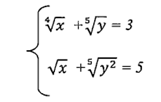
Existem dois pares ordenados A(X1,Y1) е В(Х2,Y2) que solucionam o sistema apresentado. Se representarmos os pontos A e B no sistema cartesiano é correto afirmar que a menor distância entre eles é igual a:
Existem dois pares ordenados A(X1,Y1) е В(Х2,Y2) que solucionam o sistema apresentado. Se representarmos os pontos A e B no sistema cartesiano é correto afirmar que a menor distância entre eles é igual a:
Ano: 2025
Banca:
Marinha
Órgão:
COLÉGIO NAVAL
Prova:
Marinha - 2025 - COLÉGIO NAVAL - Aluno - 1° dia |
Q3832775
Matemática
Analise a figura abaixo.
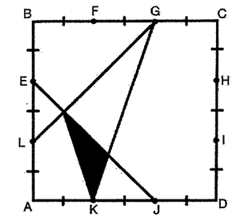
A figura acima apresenta um quadrado de lado igual a 6 unidades de comprimento. Considerando que o segmento com marcas iguais são congruentes, é correto afirmar que, em unidades de área, a área da região sombreada é igual a:
A figura acima apresenta um quadrado de lado igual a 6 unidades de comprimento. Considerando que o segmento com marcas iguais são congruentes, é correto afirmar que, em unidades de área, a área da região sombreada é igual a:
Ano: 2025
Banca:
Marinha
Órgão:
COLÉGIO NAVAL
Prova:
Marinha - 2025 - COLÉGIO NAVAL - Aluno - 1° dia |
Q3832772
Matemática
Considere a igualdade A³ - A²z- A²y + Ayz - A²x + Axz + Axy - 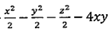 - 4yz - 4xz +xyz =0, e ainda que A³ = (x + y + z)3, B = xy + xz + yz e C = A2.
É correto afirmar que xyz é igual a:
- 4yz - 4xz +xyz =0, e ainda que A³ = (x + y + z)3, B = xy + xz + yz e C = A2. É correto afirmar que xyz é igual a:
Ano: 2025
Banca:
Marinha
Órgão:
COLÉGIO NAVAL
Prova:
Marinha - 2025 - COLÉGIO NAVAL - Aluno - 1° dia |
Q3832771
Matemática
Considere no campo dos números reais a equação
irracional a seguir:

É correto afirmar que o menor inteiro m, que faz parte de seu conjunto solução, é um número tal que m:
É correto afirmar que o menor inteiro m, que faz parte de seu conjunto solução, é um número tal que m:
Ano: 2025
Banca:
Marinha
Órgão:
COLÉGIO NAVAL
Prova:
Marinha - 2025 - COLÉGIO NAVAL - Aluno - 1° dia |
Q3832769
Matemática
O conjunto solução S da inequação 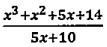 ≥ 1 é tal que S é dado pelo intervalo:
≥ 1 é tal que S é dado pelo intervalo:
Ano: 2025
Banca:
Marinha
Órgão:
COLÉGIO NAVAL
Prova:
Marinha - 2025 - COLÉGIO NAVAL - Aluno - 1° dia |
Q3832765
Matemática
Analise o gráfico abaixo.
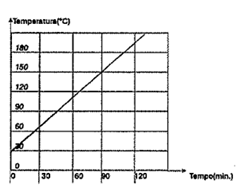
O gráfico mostra a variação da temperatura de um forno caseiro desde o instante em que é ligadoeo correspondente aumento linear nas horas seguintes. É correto afirmar que o tempo necessário para que o forno atinja 190° C é:
O gráfico mostra a variação da temperatura de um forno caseiro desde o instante em que é ligadoeo correspondente aumento linear nas horas seguintes. É correto afirmar que o tempo necessário para que o forno atinja 190° C é:
Ano: 2025
Banca:
Marinha
Órgão:
COLÉGIO NAVAL
Prova:
Marinha - 2025 - COLÉGIO NAVAL - Aluno - 2° dia |
Q3832607
Química
O hidróxido de lítio (LiOH) é amplamente utilizado como
um agente de captura de dióxido de carbono (CO₂) em
ambientes fechados, como submarinos e espaçonaves,
onde o controle da qualidade do ar é essencial para a
sobrevivência da tripulação. Esse composto reage com o
CO2,: formando carbonato de lítio (Li₂CO3) e água (H2O),
removendo assim o gás tóxico do ambiente. A reação é
representada pela seguinte equação química:
CO2(g) + 2 LiOH(s) → Li2CO3(s) + H2O(1)
Para remover o CO2 de um compartimento de um submarino, foram utilizados 400 mols de LiOH. Assim, qual é a massa de carbonato de lítio (Li2CO3) formada, em quilogramas (kg)?
CO2(g) + 2 LiOH(s) → Li2CO3(s) + H2O(1)
Para remover o CO2 de um compartimento de um submarino, foram utilizados 400 mols de LiOH. Assim, qual é a massa de carbonato de lítio (Li2CO3) formada, em quilogramas (kg)?
Ano: 2025
Banca:
Marinha
Órgão:
COLÉGIO NAVAL
Prova:
Marinha - 2025 - COLÉGIO NAVAL - Aluno - 2° dia |
Q3832602
Química
Considere a figura abaixo e as seguintes informações sobre os átomos hipotéticos A, В е C.
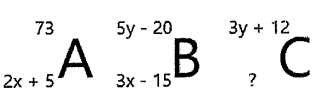
Em que:
• A e B são isótopos;
• A e C são isótonos;
• B e C são isóbaros;
• A tem número de massa 73 e número atômico 2x + 5;
• B tem número de massa 5y - 20 e número atômico 3x-15;
• C tem número de massa 3y + 12.
Com base nessas informações, qual é o número de prótons do átomo C?
Ano: 2025
Banca:
Marinha
Órgão:
COLÉGIO NAVAL
Prova:
Marinha - 2025 - COLÉGIO NAVAL - Aluno - 2° dia |
Q3832595
Biologia
O filo Platyhelminthes é composto por vermes de corpos
achatados que podem viver em ambientes terrestres ou
aquáticos. São de vida livre ou parasitas. Dentre os
parasitas, a Taenia solium e a Taenia saginata podem
infectar o ser humano levando a doenças como a teníase
e a cisticercose. Sobre essas doenças, assinale a
alternativa correta.
Ano: 2025
Banca:
Marinha
Órgão:
COLÉGIO NAVAL
Prova:
Marinha - 2025 - COLÉGIO NAVAL - Aluno - 2° dia |
Q3832594
Medicina
As escaladas de montanhas como o Monte Everest e K2
requerem muito preparo por parte dos montanhistas. Isso
porque tais montanhas passam dos 8.000 metros de
altitude. Uma das estratégias utilizadas pelos
montanhistas está na utilização de cilindros pressurizados
contendo gás oxigênio. Assinale a opção que explique
corretamente por que a captação de gás oxigênio (O₂)
atmosférico nesses locais é menos eficiente.
Ano: 2025
Banca:
Marinha
Órgão:
COLÉGIO NAVAL
Prova:
Marinha - 2025 - COLÉGIO NAVAL - Aluno - 2° dia |
Q3832593
Biologia
Ao compararmos células do fígado, pele, neurônios,
músculos e de outros tecidos de um mesmo animal,
percebe-se que elas são muito distintas, tanto nos
aspectos morfológicos quanto funcionais. Assinale a
alternativa que explique o motivo pelo qual as células de
um mesmo indivíduo sofrem diferenciação.
Ano: 2025
Banca:
Marinha
Órgão:
COLÉGIO NAVAL
Prova:
Marinha - 2025 - COLÉGIO NAVAL - Aluno - 2° dia |
Q3832592
Biologia
Na célula, as organelas responsáveis pela desintoxicação
de álcool e decomposição do peróxido de hidrogênio;
síntese de proteínas; empacotamento e armazenamento
de substâncias; fornecimento de energia; e formação das
fibras do fuso na divisão celular, são, respectivamente:

 Conheça nossos planos