Foram encontradas 22.390 questões
Resolva questões gratuitamente!
Junte-se a mais de 4 milhões de concurseiros!


EXTRACT 1
Japan’s shipyards remain intact after quake
Japan’s major shipyards escaped the full impact of the March 11 earthquake and tsunami that struck the northeastern coast of the country with full force. An official at the Japan Ship Exporters’ Association said the devastating natural disaster “will have no impact on future export ship orders at all”. Although several small shipyards in the quake-hit areas were affected, major Japanese shipyards that build large vessels for exports are concentrated in western Japan and remain intact, the official said. Mitsui Engineering & Shipbuilding sustained “slight material damages” in the company’s Kasai Center and Chiba Works but did not consider such slight damages would cause serious impact on operations. “The rotational schedule of interruption of power supply due to the earthquake may affect our operation at our works and subsidiaries. However, the degree of the impact is not known now,” the company said in a statement. Japanese export ship orders rose for the 15th consecutive month in February o a year-on-year basis. Japanese shipbuilders received orders for 277 export vessels – 259 bulk carriers, 10 oil tankers and eight general cargo vessels – in the April-February period.
(Adapted from: www.australianmerchantnavy.com, March 2011)
EXTRACT 2
Tsnunami Debris Expected on U.S. Shores in 3 Years
The powerful tsunami triggered by the 9.0 Japanese earthquake destroyed coastal towns near Sendai, washing such things as houses and cars into the ocean. Projections of where this debris might head have been made at the international Pacific Research Center, university of Hawaii at Manoa. What their model predicts about the tsunami debris is that they first spread out eastward from the Japan Coast in the North Pacific Subtropical Gyre. In a year, the Papahanaumokuakea Marine National Monument will see pieces washing up on its shores; in two years, the remaining Hawaiian islands will see some effects; in three years, the plume will reach the US West Coast, dumping debris on Californian beaches and the beaches of British Columbia, Alaska, and Baja California. The debris will then drift into the famous floating junk yard, the North Pacific Garbage Patch, where it will wander around and break into smaller and smaller pieces. In five years, Hawaii shores can expect to see another barrage of debris that is stronger and longer-lasting than the first one. Much of the debris leaving the North Pacific Garbage Patch ends up on Hawaii’s reefs and beaches. These model projections will help to guide clean-up and tracking operations.
(Adapted from: www.geog.ucsb.edu, April 2011)
Choose the option which completes the sentences below correctly:
It is ________ use trying to change her mind.
Slowly, ___________children began coming to school.
Unfortunately, he had __________ friends.
Could you possibly give me ___________ help?
EXTRACT 1
Japan’s shipyards remain intact after quake
Japan’s major shipyards escaped the full impact of the March 11 earthquake and tsunami that struck the northeastern coast of the country with full force. An official at the Japan Ship Exporters’ Association said the devastating natural disaster “will have no impact on future export ship orders at all”. Although several small shipyards in the quake-hit areas were affected, major Japanese shipyards that build large vessels for exports are concentrated in western Japan and remain intact, the official said. Mitsui Engineering & Shipbuilding sustained “slight material damages” in the company’s Kasai Center and Chiba Works but did not consider such slight damages would cause serious impact on operations. “The rotational schedule of interruption of power supply due to the earthquake may affect our operation at our works and subsidiaries. However, the degree of the impact is not known now,” the company said in a statement. Japanese export ship orders rose for the 15th consecutive month in February o a year-on-year basis. Japanese shipbuilders received orders for 277 export vessels – 259 bulk carriers, 10 oil tankers and eight general cargo vessels – in the April-February period.
(Adapted from: www.australianmerchantnavy.com, March 2011)
EXTRACT 2
Tsnunami Debris Expected on U.S. Shores in 3 Years
The powerful tsunami triggered by the 9.0 Japanese earthquake destroyed coastal towns near Sendai, washing such things as houses and cars into the ocean. Projections of where this debris might head have been made at the international Pacific Research Center, university of Hawaii at Manoa. What their model predicts about the tsunami debris is that they first spread out eastward from the Japan Coast in the North Pacific Subtropical Gyre. In a year, the Papahanaumokuakea Marine National Monument will see pieces washing up on its shores; in two years, the remaining Hawaiian islands will see some effects; in three years, the plume will reach the US West Coast, dumping debris on Californian beaches and the beaches of British Columbia, Alaska, and Baja California. The debris will then drift into the famous floating junk yard, the North Pacific Garbage Patch, where it will wander around and break into smaller and smaller pieces. In five years, Hawaii shores can expect to see another barrage of debris that is stronger and longer-lasting than the first one. Much of the debris leaving the North Pacific Garbage Patch ends up on Hawaii’s reefs and beaches. These model projections will help to guide clean-up and tracking operations.
(Adapted from: www.geog.ucsb.edu, April 2011)
Choose the word that completes the idea of the following statement correctly:
“Michael is a _______ smoker. He smokes three packs of cigarettes a day.”
EXTRACT 1
Japan’s shipyards remain intact after quake
Japan’s major shipyards escaped the full impact of the March 11 earthquake and tsunami that struck the northeastern coast of the country with full force. An official at the Japan Ship Exporters’ Association said the devastating natural disaster “will have no impact on future export ship orders at all”. Although several small shipyards in the quake-hit areas were affected, major Japanese shipyards that build large vessels for exports are concentrated in western Japan and remain intact, the official said. Mitsui Engineering & Shipbuilding sustained “slight material damages” in the company’s Kasai Center and Chiba Works but did not consider such slight damages would cause serious impact on operations. “The rotational schedule of interruption of power supply due to the earthquake may affect our operation at our works and subsidiaries. However, the degree of the impact is not known now,” the company said in a statement. Japanese export ship orders rose for the 15th consecutive month in February o a year-on-year basis. Japanese shipbuilders received orders for 277 export vessels – 259 bulk carriers, 10 oil tankers and eight general cargo vessels – in the April-February period.
(Adapted from: www.australianmerchantnavy.com, March 2011)
EXTRACT 2
Tsnunami Debris Expected on U.S. Shores in 3 Years
The powerful tsunami triggered by the 9.0 Japanese earthquake destroyed coastal towns near Sendai, washing such things as houses and cars into the ocean. Projections of where this debris might head have been made at the international Pacific Research Center, university of Hawaii at Manoa. What their model predicts about the tsunami debris is that they first spread out eastward from the Japan Coast in the North Pacific Subtropical Gyre. In a year, the Papahanaumokuakea Marine National Monument will see pieces washing up on its shores; in two years, the remaining Hawaiian islands will see some effects; in three years, the plume will reach the US West Coast, dumping debris on Californian beaches and the beaches of British Columbia, Alaska, and Baja California. The debris will then drift into the famous floating junk yard, the North Pacific Garbage Patch, where it will wander around and break into smaller and smaller pieces. In five years, Hawaii shores can expect to see another barrage of debris that is stronger and longer-lasting than the first one. Much of the debris leaving the North Pacific Garbage Patch ends up on Hawaii’s reefs and beaches. These model projections will help to guide clean-up and tracking operations.
(Adapted from: www.geog.ucsb.edu, April 2011)
Match the following sentences with the meaning expressed by the modal verb in each of them.
1. Rooms must be vacated by noon.
2. May I take a look at your newspaper?
3. John might have borrowed his partner’s computer.
4. If you are going to the forest, you ought to buy some mosquito repellent.
5. You must be joking!
EXTRACT 1
Japan’s shipyards remain intact after quake
Japan’s major shipyards escaped the full impact of the March 11 earthquake and tsunami that struck the northeastern coast of the country with full force. An official at the Japan Ship Exporters’ Association said the devastating natural disaster “will have no impact on future export ship orders at all”. Although several small shipyards in the quake-hit areas were affected, major Japanese shipyards that build large vessels for exports are concentrated in western Japan and remain intact, the official said. Mitsui Engineering & Shipbuilding sustained “slight material damages” in the company’s Kasai Center and Chiba Works but did not consider such slight damages would cause serious impact on operations. “The rotational schedule of interruption of power supply due to the earthquake may affect our operation at our works and subsidiaries. However, the degree of the impact is not known now,” the company said in a statement. Japanese export ship orders rose for the 15th consecutive month in February o a year-on-year basis. Japanese shipbuilders received orders for 277 export vessels – 259 bulk carriers, 10 oil tankers and eight general cargo vessels – in the April-February period.
(Adapted from: www.australianmerchantnavy.com, March 2011)
EXTRACT 2
Tsnunami Debris Expected on U.S. Shores in 3 Years
The powerful tsunami triggered by the 9.0 Japanese earthquake destroyed coastal towns near Sendai, washing such things as houses and cars into the ocean. Projections of where this debris might head have been made at the international Pacific Research Center, university of Hawaii at Manoa. What their model predicts about the tsunami debris is that they first spread out eastward from the Japan Coast in the North Pacific Subtropical Gyre. In a year, the Papahanaumokuakea Marine National Monument will see pieces washing up on its shores; in two years, the remaining Hawaiian islands will see some effects; in three years, the plume will reach the US West Coast, dumping debris on Californian beaches and the beaches of British Columbia, Alaska, and Baja California. The debris will then drift into the famous floating junk yard, the North Pacific Garbage Patch, where it will wander around and break into smaller and smaller pieces. In five years, Hawaii shores can expect to see another barrage of debris that is stronger and longer-lasting than the first one. Much of the debris leaving the North Pacific Garbage Patch ends up on Hawaii’s reefs and beaches. These model projections will help to guide clean-up and tracking operations.
(Adapted from: www.geog.ucsb.edu, April 2011)
EXTRACT 1
Japan’s shipyards remain intact after quake
Japan’s major shipyards escaped the full impact of the March 11 earthquake and tsunami that struck the northeastern coast of the country with full force. An official at the Japan Ship Exporters’ Association said the devastating natural disaster “will have no impact on future export ship orders at all”. Although several small shipyards in the quake-hit areas were affected, major Japanese shipyards that build large vessels for exports are concentrated in western Japan and remain intact, the official said. Mitsui Engineering & Shipbuilding sustained “slight material damages” in the company’s Kasai Center and Chiba Works but did not consider such slight damages would cause serious impact on operations. “The rotational schedule of interruption of power supply due to the earthquake may affect our operation at our works and subsidiaries. However, the degree of the impact is not known now,” the company said in a statement. Japanese export ship orders rose for the 15th consecutive month in February o a year-on-year basis. Japanese shipbuilders received orders for 277 export vessels – 259 bulk carriers, 10 oil tankers and eight general cargo vessels – in the April-February period.
(Adapted from: www.australianmerchantnavy.com, March 2011)
EXTRACT 2
Tsnunami Debris Expected on U.S. Shores in 3 Years
The powerful tsunami triggered by the 9.0 Japanese earthquake destroyed coastal towns near Sendai, washing such things as houses and cars into the ocean. Projections of where this debris might head have been made at the international Pacific Research Center, university of Hawaii at Manoa. What their model predicts about the tsunami debris is that they first spread out eastward from the Japan Coast in the North Pacific Subtropical Gyre. In a year, the Papahanaumokuakea Marine National Monument will see pieces washing up on its shores; in two years, the remaining Hawaiian islands will see some effects; in three years, the plume will reach the US West Coast, dumping debris on Californian beaches and the beaches of British Columbia, Alaska, and Baja California. The debris will then drift into the famous floating junk yard, the North Pacific Garbage Patch, where it will wander around and break into smaller and smaller pieces. In five years, Hawaii shores can expect to see another barrage of debris that is stronger and longer-lasting than the first one. Much of the debris leaving the North Pacific Garbage Patch ends up on Hawaii’s reefs and beaches. These model projections will help to guide clean-up and tracking operations.
(Adapted from: www.geog.ucsb.edu, April 2011)
EXTRACT 1
Japan’s shipyards remain intact after quake
Japan’s major shipyards escaped the full impact of the March 11 earthquake and tsunami that struck the northeastern coast of the country with full force. An official at the Japan Ship Exporters’ Association said the devastating natural disaster “will have no impact on future export ship orders at all”. Although several small shipyards in the quake-hit areas were affected, major Japanese shipyards that build large vessels for exports are concentrated in western Japan and remain intact, the official said. Mitsui Engineering & Shipbuilding sustained “slight material damages” in the company’s Kasai Center and Chiba Works but did not consider such slight damages would cause serious impact on operations. “The rotational schedule of interruption of power supply due to the earthquake may affect our operation at our works and subsidiaries. However, the degree of the impact is not known now,” the company said in a statement. Japanese export ship orders rose for the 15th consecutive month in February o a year-on-year basis. Japanese shipbuilders received orders for 277 export vessels – 259 bulk carriers, 10 oil tankers and eight general cargo vessels – in the April-February period.
(Adapted from: www.australianmerchantnavy.com, March 2011)
EXTRACT 2
Tsnunami Debris Expected on U.S. Shores in 3 Years
The powerful tsunami triggered by the 9.0 Japanese earthquake destroyed coastal towns near Sendai, washing such things as houses and cars into the ocean. Projections of where this debris might head have been made at the international Pacific Research Center, university of Hawaii at Manoa. What their model predicts about the tsunami debris is that they first spread out eastward from the Japan Coast in the North Pacific Subtropical Gyre. In a year, the Papahanaumokuakea Marine National Monument will see pieces washing up on its shores; in two years, the remaining Hawaiian islands will see some effects; in three years, the plume will reach the US West Coast, dumping debris on Californian beaches and the beaches of British Columbia, Alaska, and Baja California. The debris will then drift into the famous floating junk yard, the North Pacific Garbage Patch, where it will wander around and break into smaller and smaller pieces. In five years, Hawaii shores can expect to see another barrage of debris that is stronger and longer-lasting than the first one. Much of the debris leaving the North Pacific Garbage Patch ends up on Hawaii’s reefs and beaches. These model projections will help to guide clean-up and tracking operations.
(Adapted from: www.geog.ucsb.edu, April 2011)
Choose the option in which the prepositions complete the verb phrases, respectively:
1. The problem stems __________ the government’s lack of action.
2. When I asked Jean, she hinted ________ the chance of a promotion for me.
3. The salesman was responsible ________ the accident.
4. Please, refrain _________smoking in the lecture lounge.
5. I can’t stand the way she is always boasting _______ her wealthy
parents.
EXTRACT 1
Japan’s shipyards remain intact after quake
Japan’s major shipyards escaped the full impact of the March 11 earthquake and tsunami that struck the northeastern coast of the country with full force. An official at the Japan Ship Exporters’ Association said the devastating natural disaster “will have no impact on future export ship orders at all”. Although several small shipyards in the quake-hit areas were affected, major Japanese shipyards that build large vessels for exports are concentrated in western Japan and remain intact, the official said. Mitsui Engineering & Shipbuilding sustained “slight material damages” in the company’s Kasai Center and Chiba Works but did not consider such slight damages would cause serious impact on operations. “The rotational schedule of interruption of power supply due to the earthquake may affect our operation at our works and subsidiaries. However, the degree of the impact is not known now,” the company said in a statement. Japanese export ship orders rose for the 15th consecutive month in February o a year-on-year basis. Japanese shipbuilders received orders for 277 export vessels – 259 bulk carriers, 10 oil tankers and eight general cargo vessels – in the April-February period.
(Adapted from: www.australianmerchantnavy.com, March 2011)
EXTRACT 2
Tsnunami Debris Expected on U.S. Shores in 3 Years
The powerful tsunami triggered by the 9.0 Japanese earthquake destroyed coastal towns near Sendai, washing such things as houses and cars into the ocean. Projections of where this debris might head have been made at the international Pacific Research Center, university of Hawaii at Manoa. What their model predicts about the tsunami debris is that they first spread out eastward from the Japan Coast in the North Pacific Subtropical Gyre. In a year, the Papahanaumokuakea Marine National Monument will see pieces washing up on its shores; in two years, the remaining Hawaiian islands will see some effects; in three years, the plume will reach the US West Coast, dumping debris on Californian beaches and the beaches of British Columbia, Alaska, and Baja California. The debris will then drift into the famous floating junk yard, the North Pacific Garbage Patch, where it will wander around and break into smaller and smaller pieces. In five years, Hawaii shores can expect to see another barrage of debris that is stronger and longer-lasting than the first one. Much of the debris leaving the North Pacific Garbage Patch ends up on Hawaii’s reefs and beaches. These model projections will help to guide clean-up and tracking operations.
(Adapted from: www.geog.ucsb.edu, April 2011)
EXTRACT 1
Japan’s shipyards remain intact after quake
Japan’s major shipyards escaped the full impact of the March 11 earthquake and tsunami that struck the northeastern coast of the country with full force. An official at the Japan Ship Exporters’ Association said the devastating natural disaster “will have no impact on future export ship orders at all”. Although several small shipyards in the quake-hit areas were affected, major Japanese shipyards that build large vessels for exports are concentrated in western Japan and remain intact, the official said. Mitsui Engineering & Shipbuilding sustained “slight material damages” in the company’s Kasai Center and Chiba Works but did not consider such slight damages would cause serious impact on operations. “The rotational schedule of interruption of power supply due to the earthquake may affect our operation at our works and subsidiaries. However, the degree of the impact is not known now,” the company said in a statement. Japanese export ship orders rose for the 15th consecutive month in February o a year-on-year basis. Japanese shipbuilders received orders for 277 export vessels – 259 bulk carriers, 10 oil tankers and eight general cargo vessels – in the April-February period.
(Adapted from: www.australianmerchantnavy.com, March 2011)
EXTRACT 2
Tsnunami Debris Expected on U.S. Shores in 3 Years
The powerful tsunami triggered by the 9.0 Japanese earthquake destroyed coastal towns near Sendai, washing such things as houses and cars into the ocean. Projections of where this debris might head have been made at the international Pacific Research Center, university of Hawaii at Manoa. What their model predicts about the tsunami debris is that they first spread out eastward from the Japan Coast in the North Pacific Subtropical Gyre. In a year, the Papahanaumokuakea Marine National Monument will see pieces washing up on its shores; in two years, the remaining Hawaiian islands will see some effects; in three years, the plume will reach the US West Coast, dumping debris on Californian beaches and the beaches of British Columbia, Alaska, and Baja California. The debris will then drift into the famous floating junk yard, the North Pacific Garbage Patch, where it will wander around and break into smaller and smaller pieces. In five years, Hawaii shores can expect to see another barrage of debris that is stronger and longer-lasting than the first one. Much of the debris leaving the North Pacific Garbage Patch ends up on Hawaii’s reefs and beaches. These model projections will help to guide clean-up and tracking operations.
(Adapted from: www.geog.ucsb.edu, April 2011)
EXTRACT 1
Japan’s shipyards remain intact after quake
Japan’s major shipyards escaped the full impact of the March 11 earthquake and tsunami that struck the northeastern coast of the country with full force. An official at the Japan Ship Exporters’ Association said the devastating natural disaster “will have no impact on future export ship orders at all”. Although several small shipyards in the quake-hit areas were affected, major Japanese shipyards that build large vessels for exports are concentrated in western Japan and remain intact, the official said. Mitsui Engineering & Shipbuilding sustained “slight material damages” in the company’s Kasai Center and Chiba Works but did not consider such slight damages would cause serious impact on operations. “The rotational schedule of interruption of power supply due to the earthquake may affect our operation at our works and subsidiaries. However, the degree of the impact is not known now,” the company said in a statement. Japanese export ship orders rose for the 15th consecutive month in February o a year-on-year basis. Japanese shipbuilders received orders for 277 export vessels – 259 bulk carriers, 10 oil tankers and eight general cargo vessels – in the April-February period.
(Adapted from: www.australianmerchantnavy.com, March 2011)
EXTRACT 2
Tsnunami Debris Expected on U.S. Shores in 3 Years
The powerful tsunami triggered by the 9.0 Japanese earthquake destroyed coastal towns near Sendai, washing such things as houses and cars into the ocean. Projections of where this debris might head have been made at the international Pacific Research Center, university of Hawaii at Manoa. What their model predicts about the tsunami debris is that they first spread out eastward from the Japan Coast in the North Pacific Subtropical Gyre. In a year, the Papahanaumokuakea Marine National Monument will see pieces washing up on its shores; in two years, the remaining Hawaiian islands will see some effects; in three years, the plume will reach the US West Coast, dumping debris on Californian beaches and the beaches of British Columbia, Alaska, and Baja California. The debris will then drift into the famous floating junk yard, the North Pacific Garbage Patch, where it will wander around and break into smaller and smaller pieces. In five years, Hawaii shores can expect to see another barrage of debris that is stronger and longer-lasting than the first one. Much of the debris leaving the North Pacific Garbage Patch ends up on Hawaii’s reefs and beaches. These model projections will help to guide clean-up and tracking operations.
(Adapted from: www.geog.ucsb.edu, April 2011)
EXTRACT 1
Japan’s shipyards remain intact after quake
Japan’s major shipyards escaped the full impact of the March 11 earthquake and tsunami that struck the northeastern coast of the country with full force. An official at the Japan Ship Exporters’ Association said the devastating natural disaster “will have no impact on future export ship orders at all”. Although several small shipyards in the quake-hit areas were affected, major Japanese shipyards that build large vessels for exports are concentrated in western Japan and remain intact, the official said. Mitsui Engineering & Shipbuilding sustained “slight material damages” in the company’s Kasai Center and Chiba Works but did not consider such slight damages would cause serious impact on operations. “The rotational schedule of interruption of power supply due to the earthquake may affect our operation at our works and subsidiaries. However, the degree of the impact is not known now,” the company said in a statement. Japanese export ship orders rose for the 15th consecutive month in February o a year-on-year basis. Japanese shipbuilders received orders for 277 export vessels – 259 bulk carriers, 10 oil tankers and eight general cargo vessels – in the April-February period.
(Adapted from: www.australianmerchantnavy.com, March 2011)
EXTRACT 2
Tsnunami Debris Expected on U.S. Shores in 3 Years
The powerful tsunami triggered by the 9.0 Japanese earthquake destroyed coastal towns near Sendai, washing such things as houses and cars into the ocean. Projections of where this debris might head have been made at the international Pacific Research Center, university of Hawaii at Manoa. What their model predicts about the tsunami debris is that they first spread out eastward from the Japan Coast in the North Pacific Subtropical Gyre. In a year, the Papahanaumokuakea Marine National Monument will see pieces washing up on its shores; in two years, the remaining Hawaiian islands will see some effects; in three years, the plume will reach the US West Coast, dumping debris on Californian beaches and the beaches of British Columbia, Alaska, and Baja California. The debris will then drift into the famous floating junk yard, the North Pacific Garbage Patch, where it will wander around and break into smaller and smaller pieces. In five years, Hawaii shores can expect to see another barrage of debris that is stronger and longer-lasting than the first one. Much of the debris leaving the North Pacific Garbage Patch ends up on Hawaii’s reefs and beaches. These model projections will help to guide clean-up and tracking operations.
(Adapted from: www.geog.ucsb.edu, April 2011)
Choose the option with the correct tag questions for the sentences below.
1. You weren’t listening, ____________________?
2. She doesn’t’t know him, __________________?
3. I’m a bit overweight, _____________________?
4. Don’t open your eyes, ____________________?
EXTRACT 1
Japan’s shipyards remain intact after quake
Japan’s major shipyards escaped the full impact of the March 11 earthquake and tsunami that struck the northeastern coast of the country with full force. An official at the Japan Ship Exporters’ Association said the devastating natural disaster “will have no impact on future export ship orders at all”. Although several small shipyards in the quake-hit areas were affected, major Japanese shipyards that build large vessels for exports are concentrated in western Japan and remain intact, the official said. Mitsui Engineering & Shipbuilding sustained “slight material damages” in the company’s Kasai Center and Chiba Works but did not consider such slight damages would cause serious impact on operations. “The rotational schedule of interruption of power supply due to the earthquake may affect our operation at our works and subsidiaries. However, the degree of the impact is not known now,” the company said in a statement. Japanese export ship orders rose for the 15th consecutive month in February o a year-on-year basis. Japanese shipbuilders received orders for 277 export vessels – 259 bulk carriers, 10 oil tankers and eight general cargo vessels – in the April-February period.
(Adapted from: www.australianmerchantnavy.com, March 2011)
EXTRACT 2
Tsnunami Debris Expected on U.S. Shores in 3 Years
The powerful tsunami triggered by the 9.0 Japanese earthquake destroyed coastal towns near Sendai, washing such things as houses and cars into the ocean. Projections of where this debris might head have been made at the international Pacific Research Center, university of Hawaii at Manoa. What their model predicts about the tsunami debris is that they first spread out eastward from the Japan Coast in the North Pacific Subtropical Gyre. In a year, the Papahanaumokuakea Marine National Monument will see pieces washing up on its shores; in two years, the remaining Hawaiian islands will see some effects; in three years, the plume will reach the US West Coast, dumping debris on Californian beaches and the beaches of British Columbia, Alaska, and Baja California. The debris will then drift into the famous floating junk yard, the North Pacific Garbage Patch, where it will wander around and break into smaller and smaller pieces. In five years, Hawaii shores can expect to see another barrage of debris that is stronger and longer-lasting than the first one. Much of the debris leaving the North Pacific Garbage Patch ends up on Hawaii’s reefs and beaches. These model projections will help to guide clean-up and tracking operations.
(Adapted from: www.geog.ucsb.edu, April 2011)
EXTRACT 1
Japan’s shipyards remain intact after quake
Japan’s major shipyards escaped the full impact of the March 11 earthquake and tsunami that struck the northeastern coast of the country with full force. An official at the Japan Ship Exporters’ Association said the devastating natural disaster “will have no impact on future export ship orders at all”. Although several small shipyards in the quake-hit areas were affected, major Japanese shipyards that build large vessels for exports are concentrated in western Japan and remain intact, the official said. Mitsui Engineering & Shipbuilding sustained “slight material damages” in the company’s Kasai Center and Chiba Works but did not consider such slight damages would cause serious impact on operations. “The rotational schedule of interruption of power supply due to the earthquake may affect our operation at our works and subsidiaries. However, the degree of the impact is not known now,” the company said in a statement. Japanese export ship orders rose for the 15th consecutive month in February o a year-on-year basis. Japanese shipbuilders received orders for 277 export vessels – 259 bulk carriers, 10 oil tankers and eight general cargo vessels – in the April-February period.
(Adapted from: www.australianmerchantnavy.com, March 2011)
EXTRACT 2
Tsnunami Debris Expected on U.S. Shores in 3 Years
The powerful tsunami triggered by the 9.0 Japanese earthquake destroyed coastal towns near Sendai, washing such things as houses and cars into the ocean. Projections of where this debris might head have been made at the international Pacific Research Center, university of Hawaii at Manoa. What their model predicts about the tsunami debris is that they first spread out eastward from the Japan Coast in the North Pacific Subtropical Gyre. In a year, the Papahanaumokuakea Marine National Monument will see pieces washing up on its shores; in two years, the remaining Hawaiian islands will see some effects; in three years, the plume will reach the US West Coast, dumping debris on Californian beaches and the beaches of British Columbia, Alaska, and Baja California. The debris will then drift into the famous floating junk yard, the North Pacific Garbage Patch, where it will wander around and break into smaller and smaller pieces. In five years, Hawaii shores can expect to see another barrage of debris that is stronger and longer-lasting than the first one. Much of the debris leaving the North Pacific Garbage Patch ends up on Hawaii’s reefs and beaches. These model projections will help to guide clean-up and tracking operations.
(Adapted from: www.geog.ucsb.edu, April 2011)
EXTRACT 1
Japan’s shipyards remain intact after quake
Japan’s major shipyards escaped the full impact of the March 11 earthquake and tsunami that struck the northeastern coast of the country with full force. An official at the Japan Ship Exporters’ Association said the devastating natural disaster “will have no impact on future export ship orders at all”. Although several small shipyards in the quake-hit areas were affected, major Japanese shipyards that build large vessels for exports are concentrated in western Japan and remain intact, the official said. Mitsui Engineering & Shipbuilding sustained “slight material damages” in the company’s Kasai Center and Chiba Works but did not consider such slight damages would cause serious impact on operations. “The rotational schedule of interruption of power supply due to the earthquake may affect our operation at our works and subsidiaries. However, the degree of the impact is not known now,” the company said in a statement. Japanese export ship orders rose for the 15th consecutive month in February o a year-on-year basis. Japanese shipbuilders received orders for 277 export vessels – 259 bulk carriers, 10 oil tankers and eight general cargo vessels – in the April-February period.
(Adapted from: www.australianmerchantnavy.com, March 2011)
EXTRACT 2
Tsnunami Debris Expected on U.S. Shores in 3 Years
The powerful tsunami triggered by the 9.0 Japanese earthquake destroyed coastal towns near Sendai, washing such things as houses and cars into the ocean. Projections of where this debris might head have been made at the international Pacific Research Center, university of Hawaii at Manoa. What their model predicts about the tsunami debris is that they first spread out eastward from the Japan Coast in the North Pacific Subtropical Gyre. In a year, the Papahanaumokuakea Marine National Monument will see pieces washing up on its shores; in two years, the remaining Hawaiian islands will see some effects; in three years, the plume will reach the US West Coast, dumping debris on Californian beaches and the beaches of British Columbia, Alaska, and Baja California. The debris will then drift into the famous floating junk yard, the North Pacific Garbage Patch, where it will wander around and break into smaller and smaller pieces. In five years, Hawaii shores can expect to see another barrage of debris that is stronger and longer-lasting than the first one. Much of the debris leaving the North Pacific Garbage Patch ends up on Hawaii’s reefs and beaches. These model projections will help to guide clean-up and tracking operations.
(Adapted from: www.geog.ucsb.edu, April 2011)
EXTRACT 1
Japan’s shipyards remain intact after quake
Japan’s major shipyards escaped the full impact of the March 11 earthquake and tsunami that struck the northeastern coast of the country with full force. An official at the Japan Ship Exporters’ Association said the devastating natural disaster “will have no impact on future export ship orders at all”. Although several small shipyards in the quake-hit areas were affected, major Japanese shipyards that build large vessels for exports are concentrated in western Japan and remain intact, the official said. Mitsui Engineering & Shipbuilding sustained “slight material damages” in the company’s Kasai Center and Chiba Works but did not consider such slight damages would cause serious impact on operations. “The rotational schedule of interruption of power supply due to the earthquake may affect our operation at our works and subsidiaries. However, the degree of the impact is not known now,” the company said in a statement. Japanese export ship orders rose for the 15th consecutive month in February o a year-on-year basis. Japanese shipbuilders received orders for 277 export vessels – 259 bulk carriers, 10 oil tankers and eight general cargo vessels – in the April-February period.
(Adapted from: www.australianmerchantnavy.com, March 2011)
EXTRACT 2
Tsnunami Debris Expected on U.S. Shores in 3 Years
The powerful tsunami triggered by the 9.0 Japanese earthquake destroyed coastal towns near Sendai, washing such things as houses and cars into the ocean. Projections of where this debris might head have been made at the international Pacific Research Center, university of Hawaii at Manoa. What their model predicts about the tsunami debris is that they first spread out eastward from the Japan Coast in the North Pacific Subtropical Gyre. In a year, the Papahanaumokuakea Marine National Monument will see pieces washing up on its shores; in two years, the remaining Hawaiian islands will see some effects; in three years, the plume will reach the US West Coast, dumping debris on Californian beaches and the beaches of British Columbia, Alaska, and Baja California. The debris will then drift into the famous floating junk yard, the North Pacific Garbage Patch, where it will wander around and break into smaller and smaller pieces. In five years, Hawaii shores can expect to see another barrage of debris that is stronger and longer-lasting than the first one. Much of the debris leaving the North Pacific Garbage Patch ends up on Hawaii’s reefs and beaches. These model projections will help to guide clean-up and tracking operations.
(Adapted from: www.geog.ucsb.edu, April 2011)
EXTRACT 1
Japan’s shipyards remain intact after quake
Japan’s major shipyards escaped the full impact of the March 11 earthquake and tsunami that struck the northeastern coast of the country with full force. An official at the Japan Ship Exporters’ Association said the devastating natural disaster “will have no impact on future export ship orders at all”. Although several small shipyards in the quake-hit areas were affected, major Japanese shipyards that build large vessels for exports are concentrated in western Japan and remain intact, the official said. Mitsui Engineering & Shipbuilding sustained “slight material damages” in the company’s Kasai Center and Chiba Works but did not consider such slight damages would cause serious impact on operations. “The rotational schedule of interruption of power supply due to the earthquake may affect our operation at our works and subsidiaries. However, the degree of the impact is not known now,” the company said in a statement. Japanese export ship orders rose for the 15th consecutive month in February o a year-on-year basis. Japanese shipbuilders received orders for 277 export vessels – 259 bulk carriers, 10 oil tankers and eight general cargo vessels – in the April-February period.
(Adapted from: www.australianmerchantnavy.com, March 2011)
EXTRACT 2
Tsnunami Debris Expected on U.S. Shores in 3 Years
The powerful tsunami triggered by the 9.0 Japanese earthquake destroyed coastal towns near Sendai, washing such things as houses and cars into the ocean. Projections of where this debris might head have been made at the international Pacific Research Center, university of Hawaii at Manoa. What their model predicts about the tsunami debris is that they first spread out eastward from the Japan Coast in the North Pacific Subtropical Gyre. In a year, the Papahanaumokuakea Marine National Monument will see pieces washing up on its shores; in two years, the remaining Hawaiian islands will see some effects; in three years, the plume will reach the US West Coast, dumping debris on Californian beaches and the beaches of British Columbia, Alaska, and Baja California. The debris will then drift into the famous floating junk yard, the North Pacific Garbage Patch, where it will wander around and break into smaller and smaller pieces. In five years, Hawaii shores can expect to see another barrage of debris that is stronger and longer-lasting than the first one. Much of the debris leaving the North Pacific Garbage Patch ends up on Hawaii’s reefs and beaches. These model projections will help to guide clean-up and tracking operations.
(Adapted from: www.geog.ucsb.edu, April 2011)
EXTRACT 1
Japan’s shipyards remain intact after quake
Japan’s major shipyards escaped the full impact of the March 11 earthquake and tsunami that struck the northeastern coast of the country with full force. An official at the Japan Ship Exporters’ Association said the devastating natural disaster “will have no impact on future export ship orders at all”. Although several small shipyards in the quake-hit areas were affected, major Japanese shipyards that build large vessels for exports are concentrated in western Japan and remain intact, the official said. Mitsui Engineering & Shipbuilding sustained “slight material damages” in the company’s Kasai Center and Chiba Works but did not consider such slight damages would cause serious impact on operations. “The rotational schedule of interruption of power supply due to the earthquake may affect our operation at our works and subsidiaries. However, the degree of the impact is not known now,” the company said in a statement. Japanese export ship orders rose for the 15th consecutive month in February o a year-on-year basis. Japanese shipbuilders received orders for 277 export vessels – 259 bulk carriers, 10 oil tankers and eight general cargo vessels – in the April-February period.
(Adapted from: www.australianmerchantnavy.com, March 2011)
EXTRACT 2
Tsnunami Debris Expected on U.S. Shores in 3 Years
The powerful tsunami triggered by the 9.0 Japanese earthquake destroyed coastal towns near Sendai, washing such things as houses and cars into the ocean. Projections of where this debris might head have been made at the international Pacific Research Center, university of Hawaii at Manoa. What their model predicts about the tsunami debris is that they first spread out eastward from the Japan Coast in the North Pacific Subtropical Gyre. In a year, the Papahanaumokuakea Marine National Monument will see pieces washing up on its shores; in two years, the remaining Hawaiian islands will see some effects; in three years, the plume will reach the US West Coast, dumping debris on Californian beaches and the beaches of British Columbia, Alaska, and Baja California. The debris will then drift into the famous floating junk yard, the North Pacific Garbage Patch, where it will wander around and break into smaller and smaller pieces. In five years, Hawaii shores can expect to see another barrage of debris that is stronger and longer-lasting than the first one. Much of the debris leaving the North Pacific Garbage Patch ends up on Hawaii’s reefs and beaches. These model projections will help to guide clean-up and tracking operations.
(Adapted from: www.geog.ucsb.edu, April 2011)
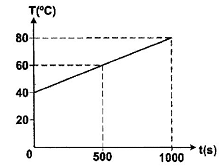
No interior de um calorímetro, totalmente preenchido por 0,40 kg de certa substância, há um termômetro e um resistor elétrico, todos inicialmente em equilíbrio térmico, na temperatura de 40°C. No instante t = 0, o resistor foi conectado a uma bateria, passando a dissipar 80 watts. A leitura do termômetro permitiu a construção do gráfico da temperatura T da substância em função do tempo t, mostrado na figura. Considerando que toda a energia dissipada pelo resistor é absorvida pela substância, o calor específico da substância, em J/g°C, é igual a
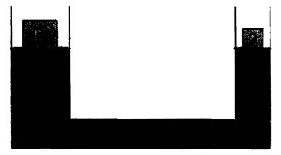
Na figura, temos a representação de uma prensa hidráulica em equilíbrio, com seus êmbolos nivelados. A carga P tem peso de módulo 220 newtons e está apoiada sobre um êmbolo de área igual a 100 cm2 . A carga Q esta apoiada no outro êmbolo cuja área é de 50,0 cm2 . Sendo g=10,0 m/s2 , a massa, em gramas, da carga Q, é:
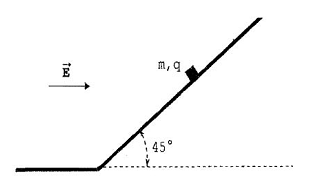
Um pequeno bloco de massa m = 40,0 g e carga elétrica positiva q = 2,00 µC é colocado sobre um plano inclinado de 45° em relação à horizontal, conforme a figura. Sabendo que o coeficiente de atrito estático é µe = 1 / 3, o módulo do campo elétrico horizontal mínino, em kN/C, atuando sobre o bloco, de modo a mantê-lo em equilíbrio estático é
I - O Presidente da República pode, ouvidos o Conselho da República e o Conselho de Defesa Nacional, solicitar ao Congresso Nacional autorização para decretar Estado de Defesa para preservar ou prontamente restabelecer a ordem pública ou a paz social.
II - O tempo de duração do estado de sítio é, no máximo, de 30 dias, podendo ser prorrogado por novos períodos de até 30 dias,quantas vezes se mostrar necessário.
III- No estado de defesa é possível a restrição temporária aos direitos de reunião, sigilo de correspondência e sigilo de comunicação telegráfica e telefônica.
IV - Na vigência do estado de sítio, não se admitem restrições à necessidade de ir e vir, nem à inviolabilidade de correspondência.
V - Cessado o estado de defesa ou o estado de sítio, cessarão também seus efeitos, sem prejuízo da responsabilidade pelos ilícitos cometidos por seus executores ou agentes.
Assinale a opção correta.
 Conheça nossos planos