Foram encontradas 18.734 questões
Resolva questões gratuitamente!
Junte-se a mais de 4 milhões de concurseiros!


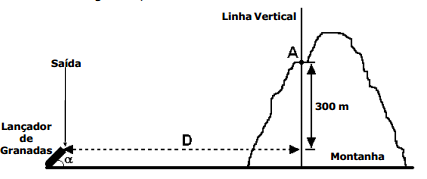
A velocidade da granada, ao sair do lançador, é de 100 m/s e forma um ângulo “α " com a horizontal; a aceleração da gravidade é igual a 10m/s2 e todos os atritos são desprezíveis. Para que a granada atinja o ponto A, somente após a sua passagem pelo ponto de maior altura possível de ser atingido por ela, a distância D deve ser de:
Dados: Cos α = 0,6
Sen α = 0,8
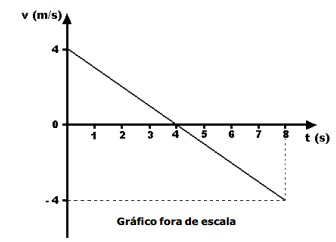
O gráfico abaixo representa a velocidade(v) de uma partícula que se desloca sobre uma reta em função do tempo(t). O deslocamento da partícula, no intervalo de 0 s a 8 s, foi de:
Um avião bombardeiro deve interceptar um comboio que transporta armamentos inimigos quando este atingir um ponto A, onde as trajetórias do avião e do comboio se cruzarão. O comboio partirá de um ponto B, às 8 h, com uma velocidade constante igual a 40 km/h, e percorrerá uma distância de 60 km para atingir o ponto A. O avião partirá de um ponto C, com velocidade constante igual a 400 km/h, e percorrerá uma distância de 300 km até atingir o ponto A. Consideramos o avião e o comboio como partículas descrevendo trajetórias retilíneas. Os pontos A, B e C estão representados no desenho abaixo.
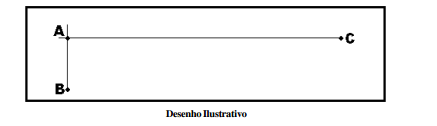
Para conseguir interceptar o comboio no ponto A, o avião deverá iniciar o seu voo a partir do ponto C às:
FOLHA DE DADOS
Massas Atômicas (u):
O = 16
C = 12
S = 32
H = 1
Na = 23
Ni = 59
Ag = 108
U = 238
Dados Termodinâmicos:
R = 0,082 atm.L.mol-1.K-1 = 8,314 J.mol-1K-1
FOLHA DE DADOS
Massas Atômicas (u):
O = 16
C = 12
S = 32
H = 1
Na = 23
Ni = 59
Ag = 108
U = 238
Dados Termodinâmicos:
R = 0,082 atm.L.mol-1.K-1 = 8,314 J.mol-1K-1
considere as espécies de (I) a (IV) e o arcabouço da Tabela Periódica representados a seguir. Assinale a alternativa correta.
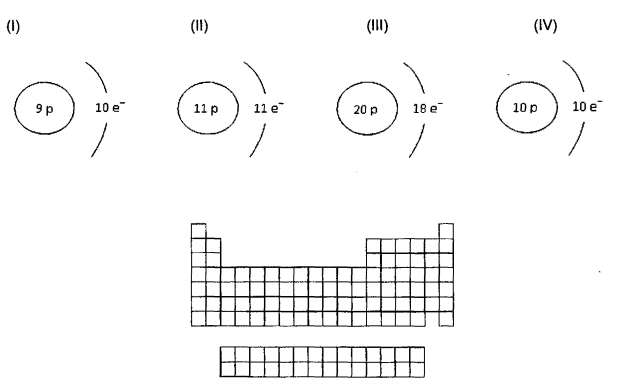
FOLHA DE DADOS
Massas Atômicas (u):
O = 16
C = 12
S = 32
H = 1
Na = 23
Ni = 59
Ag = 108
U = 238
Dados Termodinâmicos:
R = 0,082 atm.L.mol-1.K-1 = 8,314 J.mol-1K-1
Marque a resposta certa, corresponde aos números de oxidação dos elementos sublinhados em cada fórmula, na ordem em que estão apresentados.
AgO; NaO2; H2S2O8; Ni(CO)4; U3O8
FOLHA DE DADOS
Massas Atômicas (u):
O = 16
C = 12
S = 32
H = 1
Na = 23
Ni = 59
Ag = 108
U = 238
Dados Termodinâmicos:
R = 0,082 atm.L.mol-1.K-1 = 8,314 J.mol-1K-1
FOLHA DE DADOS
Massas Atômicas (u):
O = 16
C = 12
S = 32
H = 1
Na = 23
Ni = 59
Ag = 108
U = 238
Dados Termodinâmicos:
R = 0,082 atm.L.mol-1.K-1 = 8,314 J.mol-1K-1
The U.S. Department of Homeland Security (DHS), which operates airport security checkpoints in the United States, is spending upward of US$ 7 million a year trying to develop technology that can detect the evil intent of the terrorists among us. Yes, you read that correctly: They plan to find the bad guys by reading their minds.
Dozens of researchers across the country are in the middle of a five year program contracted primarily to the Charles Stark Draper Laboratory, in Cambridge, Mass. They’ve developed a psycho-physiological theory of ‘malintent’ – basically, a hodgepodge of behaviorism and biometrics according to which physiological chances can give away a terrorist’s intention to do immediate harm. So far, they’ve spent US$ 20 million on biometric research, sensors, and a series of tests and demonstrations. This technology is called the Future Attribute Screening Technology (FAST).
The underlying theory is that your body reacts, in measurable and largely involuntary ways, to reveal the nature of your intentions. So as you wait in line at the airport checkpoint, thermal and other types of cameras and laser- and radar-based sensors will try to get a fix on the baseline parameters of your autonomic nervous system – your body temperature, your heart rate and respiration, your skin’s moistness, and the very look in your eyes. Then, as a security officer asks you a few questions, the sensors will remeasure those parameters so that the FAST algorithms can figure out whether you’re naughty or nice, all on the spot, without knowing anything else about you.
The U.S. Department of Homeland Security (DHS), which operates airport security checkpoints in the United States, is spending upward of US$ 7 million a year trying to develop technology that can detect the evil intent of the terrorists among us. Yes, you read that correctly: They plan to find the bad guys by reading their minds.
Dozens of researchers across the country are in the middle of a five year program contracted primarily to the Charles Stark Draper Laboratory, in Cambridge, Mass. They’ve developed a psycho-physiological theory of ‘malintent’ – basically, a hodgepodge of behaviorism and biometrics according to which physiological chances can give away a terrorist’s intention to do immediate harm. So far, they’ve spent US$ 20 million on biometric research, sensors, and a series of tests and demonstrations. This technology is called the Future Attribute Screening Technology (FAST).
The underlying theory is that your body reacts, in measurable and largely involuntary ways, to reveal the nature of your intentions. So as you wait in line at the airport checkpoint, thermal and other types of cameras and laser- and radar-based sensors will try to get a fix on the baseline parameters of your autonomic nervous system – your body temperature, your heart rate and respiration, your skin’s moistness, and the very look in your eyes. Then, as a security officer asks you a few questions, the sensors will remeasure those parameters so that the FAST algorithms can figure out whether you’re naughty or nice, all on the spot, without knowing anything else about you.
The U.S. Department of Homeland Security (DHS), which operates airport security checkpoints in the United States, is spending upward of US$ 7 million a year trying to develop technology that can detect the evil intent of the terrorists among us. Yes, you read that correctly: They plan to find the bad guys by reading their minds.
Dozens of researchers across the country are in the middle of a five year program contracted primarily to the Charles Stark Draper Laboratory, in Cambridge, Mass. They’ve developed a psycho-physiological theory of ‘malintent’ – basically, a hodgepodge of behaviorism and biometrics according to which physiological chances can give away a terrorist’s intention to do immediate harm. So far, they’ve spent US$ 20 million on biometric research, sensors, and a series of tests and demonstrations. This technology is called the Future Attribute Screening Technology (FAST).
The underlying theory is that your body reacts, in measurable and largely involuntary ways, to reveal the nature of your intentions. So as you wait in line at the airport checkpoint, thermal and other types of cameras and laser- and radar-based sensors will try to get a fix on the baseline parameters of your autonomic nervous system – your body temperature, your heart rate and respiration, your skin’s moistness, and the very look in your eyes. Then, as a security officer asks you a few questions, the sensors will remeasure those parameters so that the FAST algorithms can figure out whether you’re naughty or nice, all on the spot, without knowing anything else about you.
The U.S. Department of Homeland Security (DHS), which operates airport security checkpoints in the United States, is spending upward of US$ 7 million a year trying to develop technology that can detect the evil intent of the terrorists among us. Yes, you read that correctly: They plan to find the bad guys by reading their minds.
Dozens of researchers across the country are in the middle of a five year program contracted primarily to the Charles Stark Draper Laboratory, in Cambridge, Mass. They’ve developed a psycho-physiological theory of ‘malintent’ – basically, a hodgepodge of behaviorism and biometrics according to which physiological chances can give away a terrorist’s intention to do immediate harm. So far, they’ve spent US$ 20 million on biometric research, sensors, and a series of tests and demonstrations. This technology is called the Future Attribute Screening Technology (FAST).
The underlying theory is that your body reacts, in measurable and largely involuntary ways, to reveal the nature of your intentions. So as you wait in line at the airport checkpoint, thermal and other types of cameras and laser- and radar-based sensors will try to get a fix on the baseline parameters of your autonomic nervous system – your body temperature, your heart rate and respiration, your skin’s moistness, and the very look in your eyes. Then, as a security officer asks you a few questions, the sensors will remeasure those parameters so that the FAST algorithms can figure out whether you’re naughty or nice, all on the spot, without knowing anything else about you.
As both an electrical engineer and a Jesuit priest, Lammert B. Otten can lead a spiritual retreat just as easily as a dam-building project in Zambia. “As an engineer,” he says, “you’re concreting with God to make life better for people.”
What task below could Lammert B. Otten be legally in charge of?
It’s a little surprising that the land of Sir Isaac Newton does not have its own space agency. An attempt to fill that void came with the announcement in June that the United Kingdom would create a ‘bureaucracy busting’ organization to oversee British civilian space and satellite activities.
What does the author of the passage refer to by the term “void”?
 Conheça nossos planos