Questões de Concurso Militar ESCOLA NAVAL 2026 para Aspirante - 1º Dia

Foram encontradas 40 questões

Q4277326 Não definido

Seja f a função real definida por f(x) = cos(2 arc cos(x)), em que -1 ≤ x ≤ 1. Sendo assim, qual dos gráficos abaixo melhor representa g (x) = 1 / f (x) ?

Alternativas
Q4277327 Não definido

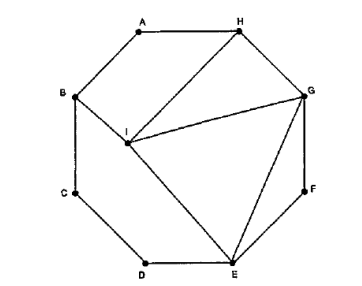
Considere a figura abaiхo. 


Imagem associada para resolução da questão


Sabendo que o octógono é regular de lado 8, tal que a reta que contém o segmento IH intersecta o ponto C, calcule a razão entre a área do triângulo IEG e a área do octógono regular ABCDEFGH e assinale a opção correta. 

Alternativas
Q4277328 Não definido
To Type or to Write, That Is the Question
At the highest level of learning, should you type or
write by hand?


[1] Research by Mueller and Oppenheimer (2014) compared students who typed lecture notes on laptops with those who wrote them by hand during the same time.

[2] In terms of immediate results, laptop users typed and recorded more words during the lectures, and their notes were aimost word-for-word transcripts of the lectures. The initial assumption was that this would ultimately be beneficial for these students compared with those who were handwriting their notes.

[3] After the lectures, the two groups of students in this study were tested on the information presented. The results showed that students who wrote by hand during lectures scored significantly higher on the tests than those who typed.

[4] The immediate question was: "Why was this the case?" Muelier and Oppenheimer (2014) found that students who handwrote their notes were consistently engaged in higherlevel thinking. This meant that throughout their lectures, these students were actively listening and intellectually analyzing what to record. This led to higher knowledge-based outcomes.

[5] Luo et al. (2018) found that handwritten notes contained more meaningful content (such as deeper thought and greater intellectual structure), resulting in higher scores on knowledge-based tests.

[6] Morehead et al. (2019) confirmed that the benefits of handwriting are most evident when students are assessed on higher-order conceptual understanding rather than on memorizing facts.

[7] These studies confirm that handwriting is an essential cognitive process and a highly beneficial intellectual activity that enhances learning at advanced levels of education and that begins from the first day of school and continues thereafter.


Handwriting Helps to Advance Knowledge and Enhance Ideas


[8] This evidence from university classrooms illustrates a broader principle: handwriting for note-taking is a deeper thinking skill. When students write by hand, they actively select and synthesize information.

[9] This process requires them to decide what is essential, how ideas connect, and how best to represent them in their own words. The research indicates that this type of engagement develops, advances, and enhances critical thinking (defined as the ability to analyze, evaluate, and make reasoned, detailed judgments), because handwriting forces students to process information conceptually rather than transcribe it verbatim.

[10] The research also indicates that this process helps to develop higher-order thinking, which involves analyzing, applying, synthesizing, and evaluating information. This then develops a deeper knowledge potential. Additionally, as confirmed by classroom studies and evidence from neuroscience, handwriting activates broader brain networks than typing.

[11] Building on this, some studies explain that the ongoing substitution of handwriting by typewriting in almost every educational setting may seem somewhat misguided, as it could negatively affect the learning process.

[12] However, Van der Weel and Van der Meer (2024) emphasise the importance of staying current in this everchanging digital world. With this in mind, they state that children must, first and foremost, learn handwriting. Only after they are absoiutely proficient, especially at complex narrative handwriting, should typing be considered.


(Adapted from: https://www.psychologytoday.com)
After tests were applied to students, the results demonstrated that students who wrote by hand during the lectures: 
Alternativas
Q4277329 Não definido
To Type or to Write, That Is the Question
At the highest level of learning, should you type or
write by hand?


[1] Research by Mueller and Oppenheimer (2014) compared students who typed lecture notes on laptops with those who wrote them by hand during the same time.

[2] In terms of immediate results, laptop users typed and recorded more words during the lectures, and their notes were aimost word-for-word transcripts of the lectures. The initial assumption was that this would ultimately be beneficial for these students compared with those who were handwriting their notes.

[3] After the lectures, the two groups of students in this study were tested on the information presented. The results showed that students who wrote by hand during lectures scored significantly higher on the tests than those who typed.

[4] The immediate question was: "Why was this the case?" Muelier and Oppenheimer (2014) found that students who handwrote their notes were consistently engaged in higherlevel thinking. This meant that throughout their lectures, these students were actively listening and intellectually analyzing what to record. This led to higher knowledge-based outcomes.

[5] Luo et al. (2018) found that handwritten notes contained more meaningful content (such as deeper thought and greater intellectual structure), resulting in higher scores on knowledge-based tests.

[6] Morehead et al. (2019) confirmed that the benefits of handwriting are most evident when students are assessed on higher-order conceptual understanding rather than on memorizing facts.

[7] These studies confirm that handwriting is an essential cognitive process and a highly beneficial intellectual activity that enhances learning at advanced levels of education and that begins from the first day of school and continues thereafter.


Handwriting Helps to Advance Knowledge and Enhance Ideas


[8] This evidence from university classrooms illustrates a broader principle: handwriting for note-taking is a deeper thinking skill. When students write by hand, they actively select and synthesize information.

[9] This process requires them to decide what is essential, how ideas connect, and how best to represent them in their own words. The research indicates that this type of engagement develops, advances, and enhances critical thinking (defined as the ability to analyze, evaluate, and make reasoned, detailed judgments), because handwriting forces students to process information conceptually rather than transcribe it verbatim.

[10] The research also indicates that this process helps to develop higher-order thinking, which involves analyzing, applying, synthesizing, and evaluating information. This then develops a deeper knowledge potential. Additionally, as confirmed by classroom studies and evidence from neuroscience, handwriting activates broader brain networks than typing.

[11] Building on this, some studies explain that the ongoing substitution of handwriting by typewriting in almost every educational setting may seem somewhat misguided, as it could negatively affect the learning process.

[12] However, Van der Weel and Van der Meer (2024) emphasise the importance of staying current in this everchanging digital world. With this in mind, they state that children must, first and foremost, learn handwriting. Only after they are absoiutely proficient, especially at complex narrative handwriting, should typing be considered.


(Adapted from: https://www.psychologytoday.com)
In the extract "the ongoing substitution of handwriting by typewriting in almost every educational setting may seem somewhat misquided" (paragraph 11), the word "misquided" means: 
Alternativas
Q4277330 Não definido
To Type or to Write, That Is the Question
At the highest level of learning, should you type or
write by hand?


[1] Research by Mueller and Oppenheimer (2014) compared students who typed lecture notes on laptops with those who wrote them by hand during the same time.

[2] In terms of immediate results, laptop users typed and recorded more words during the lectures, and their notes were aimost word-for-word transcripts of the lectures. The initial assumption was that this would ultimately be beneficial for these students compared with those who were handwriting their notes.

[3] After the lectures, the two groups of students in this study were tested on the information presented. The results showed that students who wrote by hand during lectures scored significantly higher on the tests than those who typed.

[4] The immediate question was: "Why was this the case?" Muelier and Oppenheimer (2014) found that students who handwrote their notes were consistently engaged in higherlevel thinking. This meant that throughout their lectures, these students were actively listening and intellectually analyzing what to record. This led to higher knowledge-based outcomes.

[5] Luo et al. (2018) found that handwritten notes contained more meaningful content (such as deeper thought and greater intellectual structure), resulting in higher scores on knowledge-based tests.

[6] Morehead et al. (2019) confirmed that the benefits of handwriting are most evident when students are assessed on higher-order conceptual understanding rather than on memorizing facts.

[7] These studies confirm that handwriting is an essential cognitive process and a highly beneficial intellectual activity that enhances learning at advanced levels of education and that begins from the first day of school and continues thereafter.


Handwriting Helps to Advance Knowledge and Enhance Ideas


[8] This evidence from university classrooms illustrates a broader principle: handwriting for note-taking is a deeper thinking skill. When students write by hand, they actively select and synthesize information.

[9] This process requires them to decide what is essential, how ideas connect, and how best to represent them in their own words. The research indicates that this type of engagement develops, advances, and enhances critical thinking (defined as the ability to analyze, evaluate, and make reasoned, detailed judgments), because handwriting forces students to process information conceptually rather than transcribe it verbatim.

[10] The research also indicates that this process helps to develop higher-order thinking, which involves analyzing, applying, synthesizing, and evaluating information. This then develops a deeper knowledge potential. Additionally, as confirmed by classroom studies and evidence from neuroscience, handwriting activates broader brain networks than typing.

[11] Building on this, some studies explain that the ongoing substitution of handwriting by typewriting in almost every educational setting may seem somewhat misguided, as it could negatively affect the learning process.

[12] However, Van der Weel and Van der Meer (2024) emphasise the importance of staying current in this everchanging digital world. With this in mind, they state that children must, first and foremost, learn handwriting. Only after they are absoiutely proficient, especially at complex narrative handwriting, should typing be considered.


(Adapted from: https://www.psychologytoday.com)
According to the text, Mueller and Oppenheimer discovered that:
Alternativas
Q4277331 Não definido
The underlined words "them" and "their" in the extract "(...) what is essential, how ideas connect, and how best to represent them in their own words." (paragraph 9) refer to, respectively:
Alternativas
Q4277332 Não definido

What Scott's Antarctic expedition reveals about our seas today


[1] Sea urchins preserved in glass jars in Dr Hugh Carter's desk in the Natural History Museum were coilected from the depths of the Southern Ocean by polar teams led by Sir Ernest Shackleton, Capt Robert Falcon Scott and the Norwegian Carsten Borchgrevink in the 19th and 20th centuries. They tell a tale of heroic exploration and scientific endeavour.

[

2] Now, more than a century later, a new project led by Carter has gathered samples that could be compared with those found on the expeditions that took place more than a century ago. Carter, the Natural History Museum's (NHM) curator of marine invertebrates, hopes the preserved Antarctic urchins, 50 in all, will help tell a different, increasingly urgent story of modern times: how changes in the world's southernmost waters may be affecting marine life.


[3] In January, the biologist undertook a six-week long research trip to visit the exact sites sampled by Borchgrevink's Southern Cross, Shackleton's Discovery and Scott's ill-fated Terra Nova expedition between 1898 and 1913.


[4] In the Antarctic, which is warming at twice the global average, a lack of baseline scientific data makes it difficult to assess the physical and biological changes that have occurred over time.


[5] Carter's theory is that comparing the "tests" or shell of the urchins (a type of invertebrate known as echinoderms, which include starfish and sea cucumbers) in the NHM's collection with modern samples will help reveal more about the impact of ocean acidification, often called the "evil twin" of the climate crisis.


[6] Acidification is caused when carbon díoxide is rapidly absorbed into the ocean, where it then reacts with water molecules leading to a fall in the pH of the seawater.


[7] Preliminary findings on Carter's ship, the deep water research vessel the RV Tangaroa, appeared to confirm his worst fears.


[8] "We know that the ocean has been getting more acidic but in most cases we don't know what the impacts are," he says. "We had a suspicion that [due to ocean acidification] you would get less calcium carbonate in the water. This would make it harder to build a body if that body is made from calcium carbonate."


[9] Corals, sea snails, oysters and small single-celled organisms called foraminifera, a component of plankton, all rely on calcium carbonate to build shells. Calcium carbonate dissolves in acid very easily, so the more acid, the harder it is for animals such as these to survive.


[10] While the tests of the historical urchins on Carter's desk were "robust and healthy", those brought to the surface in January were thinner and more fragile in comparison, so much so that they were crushed by the force of the hose used to clean them.


[11] "All the ones we collected were fragile and some of them collapsed," says Carter. "From initial appearances, the modern specimens we collected have weaker tests than the historical ones, but we need to do more work to establish to what degree and exactly what is causing this.


[12] The biological implications of an acidifying ocean could be enormous, adds Carter. "It could make the seas unliveable for things with a calcium skeleton."


[13] During the expedition, the impact of the climate crisis was tangible; some of the study sites were only accessible because of melting ice. And it coincided with stark findings that the level of global sea ice fell to its lowest recorded level, a symptom of our warming planet.


[14] But there were positive findings on the expedition, too. Carter saw as many as 150 whales on his trip, as well as what he described as "crazy levels" of wildlife on the western edge of Coulman island, which had 17 species of starfish in just 100 metres, the same number found in all of the UK's shallow waters.


[15] "It is a thrill to know that the environment is not as bad in some parts of the world as it could be," he says. "It's the only bit of the world you don't see any plastic or human impacts from fishing."


[16] Prof Craig Stevens, an oceanographer who co-led the Tangaroa expedition, described their work as "sweet and sour".


[17] "This lack of ice is having knock-on effects for not only the regional ocean but the whole planet. This work is very sweet and sour. It is amazing to get the opportunity to advance the science, but at the same time, we are catching glimpses of a future for the planet that we really want to avoid. It brings home in a very tangible way the need to limit emissions of climate-affecting gases."


(Adapted from: www.theguardian.com)

Professor Craig Stevens described their work as "sweet and sour" (paragraphs 16 and 17) because its components include both: 
Alternativas
Q4277333 Não definido

What Scott's Antarctic expedition reveals about our seas today


[1] Sea urchins preserved in glass jars in Dr Hugh Carter's desk in the Natural History Museum were coilected from the depths of the Southern Ocean by polar teams led by Sir Ernest Shackleton, Capt Robert Falcon Scott and the Norwegian Carsten Borchgrevink in the 19th and 20th centuries. They tell a tale of heroic exploration and scientific endeavour.

[

2] Now, more than a century later, a new project led by Carter has gathered samples that could be compared with those found on the expeditions that took place more than a century ago. Carter, the Natural History Museum's (NHM) curator of marine invertebrates, hopes the preserved Antarctic urchins, 50 in all, will help tell a different, increasingly urgent story of modern times: how changes in the world's southernmost waters may be affecting marine life.


[3] In January, the biologist undertook a six-week long research trip to visit the exact sites sampled by Borchgrevink's Southern Cross, Shackleton's Discovery and Scott's ill-fated Terra Nova expedition between 1898 and 1913.


[4] In the Antarctic, which is warming at twice the global average, a lack of baseline scientific data makes it difficult to assess the physical and biological changes that have occurred over time.


[5] Carter's theory is that comparing the "tests" or shell of the urchins (a type of invertebrate known as echinoderms, which include starfish and sea cucumbers) in the NHM's collection with modern samples will help reveal more about the impact of ocean acidification, often called the "evil twin" of the climate crisis.


[6] Acidification is caused when carbon díoxide is rapidly absorbed into the ocean, where it then reacts with water molecules leading to a fall in the pH of the seawater.


[7] Preliminary findings on Carter's ship, the deep water research vessel the RV Tangaroa, appeared to confirm his worst fears.


[8] "We know that the ocean has been getting more acidic but in most cases we don't know what the impacts are," he says. "We had a suspicion that [due to ocean acidification] you would get less calcium carbonate in the water. This would make it harder to build a body if that body is made from calcium carbonate."


[9] Corals, sea snails, oysters and small single-celled organisms called foraminifera, a component of plankton, all rely on calcium carbonate to build shells. Calcium carbonate dissolves in acid very easily, so the more acid, the harder it is for animals such as these to survive.


[10] While the tests of the historical urchins on Carter's desk were "robust and healthy", those brought to the surface in January were thinner and more fragile in comparison, so much so that they were crushed by the force of the hose used to clean them.


[11] "All the ones we collected were fragile and some of them collapsed," says Carter. "From initial appearances, the modern specimens we collected have weaker tests than the historical ones, but we need to do more work to establish to what degree and exactly what is causing this.


[12] The biological implications of an acidifying ocean could be enormous, adds Carter. "It could make the seas unliveable for things with a calcium skeleton."


[13] During the expedition, the impact of the climate crisis was tangible; some of the study sites were only accessible because of melting ice. And it coincided with stark findings that the level of global sea ice fell to its lowest recorded level, a symptom of our warming planet.


[14] But there were positive findings on the expedition, too. Carter saw as many as 150 whales on his trip, as well as what he described as "crazy levels" of wildlife on the western edge of Coulman island, which had 17 species of starfish in just 100 metres, the same number found in all of the UK's shallow waters.


[15] "It is a thrill to know that the environment is not as bad in some parts of the world as it could be," he says. "It's the only bit of the world you don't see any plastic or human impacts from fishing."


[16] Prof Craig Stevens, an oceanographer who co-led the Tangaroa expedition, described their work as "sweet and sour".


[17] "This lack of ice is having knock-on effects for not only the regional ocean but the whole planet. This work is very sweet and sour. It is amazing to get the opportunity to advance the science, but at the same time, we are catching glimpses of a future for the planet that we really want to avoid. It brings home in a very tangible way the need to limit emissions of climate-affecting gases."


(Adapted from: www.theguardian.com)

Mark the correct option according to text II.
Alternativas
Q4277334 Não definido
Which option is grammatically correct? 
Alternativas
Q4277335 Não definido
Which option completes the sentence below correctly?
The young midshipman ______ once a month.
Alternativas
Q4277336 Não definido
Which option completes the paragraph below correctly?

       The U.S. Army Corps of Engineers and the City of Nome ______ to expand the Port of Nome into the first deep-draft port in the U.S. Arctic. As Arctic cruise tourism and commercial shipping  ______, the need for robust search and rescue (SAR) capabilities, especially for mass rescue operations, ______ an increasingly urgent matter. In 2023 and 2024, Nome ______ a rise in cruise ship visits with each of these averaging nearly 500 passengers and crew, and some vessels carrying more than 1,700 people. This trend  ______expected to accelerate after the port expansion, heightening the risk of large-scale SAR events in a region currently with limited response capacity.
(Adapted from Proceedings, Fall 2025, p.9-10)
Alternativas
Q4277337 Não definido
Read the sentence below.
They continue to establish new partnerships with other agencies to improve effectiveness. coordination and mission effectiveness.

Mark the option that replaces the underlined verb correctly, without changing the meaning of the sentence. 
Alternativas
Q4277338 Não definido
Which option completes the sentence correctly?

If I ______a millionaire, I_______ travel around the world.
Alternativas
Q4277339 Não definido
Read the paragraph below. Complete the sentences with a, an, the or - (no article).

During ____ training exercise,  ____ cadets had to do  ____unusual task that required them to work in teams under pressure.  ____objective of ____ activity was to develop leadership and ____ decision-making skills. in  ____end,  ____ experience proved to be both challenging and rewarding.

Which option completes the paragraph correctly?
Alternativas
Q4277340 Não definido
Mark the option that completes the text below correctly.
Why do people exercise regularly?

People exercise regularly because it improves their physical and mental health. Regular activity helps control weight, reduces the risk of diseases, and increases energy levels ____, exercise can reduce stress and improve mood.
Alternativas
Q4277341 Não definido

Mark the option that completes the dialogue below correctly.


John: I'm sure we should not go there.

Peter: _____. 

Alternativas
Q4277342 Não definido
Read the sentence below.
Hackers stole billions of dollars in 2025.
Which option presents the correct passive voice form of the sentence?

Alternativas
Q4277343 Não definido
Which option is grammatically INCORRECT? 
Alternativas
Q4277344 Não definido
Mark the option that is grammatically correct.
Alternativas
Q4277345 Não definido
Mark the option in which the underlined words are correctly used.
Alternativas
Respostas
21: E
22: D
23: B
24: C
25: E
26: D
27: E
28: A
29: A
30: A
31: C
32: B
33: D
34: E
35: D
36: D
37: C
38: B
39: D
40: E