Questões de Concurso Militar CBM-MA 2026 para Praça Especialista Músico Bombeiro Militar - Cargos 2 a 12
Foram encontradas 100 questões


Ano: 2026
Banca:
CESPE / CEBRASPE
Órgão:
CBM-MA
Provas:
CESPE / CEBRASPE - 2026 - CBM-MA - Praça Combatente Bombeiro Militar (QPBM-0)
|
CESPE / CEBRASPE - 2026 - CBM-MA - Praça Especialista Músico Bombeiro Militar - Cargos 2 a 12 |
Q4404304
Geografia
A respeito da agricultura maranhense, assinale a opção correta.
Ano: 2026
Banca:
CESPE / CEBRASPE
Órgão:
CBM-MA
Provas:
CESPE / CEBRASPE - 2026 - CBM-MA - Praça Combatente Bombeiro Militar (QPBM-0)
|
CESPE / CEBRASPE - 2026 - CBM-MA - Praça Especialista Músico Bombeiro Militar - Cargos 2 a 12 |
Q4404305
Geografia
Em relação ao Complexo Portuário de São Luís, localizado na
capital do estado do Maranhão, assinale a opção correta.
Ano: 2026
Banca:
CESPE / CEBRASPE
Órgão:
CBM-MA
Provas:
CESPE / CEBRASPE - 2026 - CBM-MA - Praça Combatente Bombeiro Militar (QPBM-0)
|
CESPE / CEBRASPE - 2026 - CBM-MA - Praça Especialista Músico Bombeiro Militar - Cargos 2 a 12 |
Q4404306
Inglês
Texto associado
Text CG1A4
When wildfire evacuation orders are lifted, returning
residents often mistake “cleared to return” for “safe.” However,
recovering from a wildfire requires careful navigation of hidden
post-fire hazards. As seen following destructive blazes like the
August 2026 fires in Spokane, Washington, three main areas
require cautious attention before reoccupying or rebuilding.
First, surviving buildings may hold toxins. Homes spared
by flames can still harbor severe indoor contamination. Smoke,
ash, and toxic chemicals enter through vents, windows, and
HVAC systems, settling into carpets, walls, and ductwork. These
contaminants can include dangerous heavy metals like lead and
arsenic, asbestos, and volatile organic compounds (VOCs).
Because these hazards cannot be identified by sight or smell,
property owners should hire qualified professionals to inspect
and test air and surfaces. If contamination is found, professional
remediation and independent confirmation testing are essential
before moving back in.
Furthermore, drinking water may be chemically
contaminated. A functioning tap offers a false sense of security.
Fire-induced pressure drops can draw smoke and toxic debris into
water networks, while extreme heat can melt plastic plumbing,
leaching cancer-causing chemicals like benzene into the supply.
Boiling water will not remove these chemicals and can actually
increase exposure by releasing toxic vapors into indoor air. While
utilities handle public infrastructure, property owners are
responsible for testing their own plumbing, irrigation systems,
and private wells. Stagnant water samples (typically resting in
pipes for 72 hours) should be tested for VOCs, metals, and
bacteria. Until safety is verified, residents should rely on bottled
water for drinking, cooking, and bathing.
Also, debris removal is only the first step. Clearing ash,
damaged vehicles, and surface soil does not mean a property is
automatically ready for rebuilding. Past wildfire studies show
that up to 34% of cleared properties still contained dangerous soil
contamination, such as heavy metals. Soil testing should be
conducted by independent, board-licensed engineers or geologists
before construction begins, and local environmental or health
agencies should review the findings.
Ultimately, safety cannot be judged by appearance or odor
alone. Engaging licensed professionals to evaluate air, water, and
soil is the safest path to a full recovery.
Internet: <https://theconversation.com> (adapted).
According to the first paragraph of text CG1A4, the expression
‘cleared to return’ indicates that
Ano: 2026
Banca:
CESPE / CEBRASPE
Órgão:
CBM-MA
Provas:
CESPE / CEBRASPE - 2026 - CBM-MA - Praça Combatente Bombeiro Militar (QPBM-0)
|
CESPE / CEBRASPE - 2026 - CBM-MA - Praça Especialista Músico Bombeiro Militar - Cargos 2 a 12 |
Q4404307
Inglês
Texto associado
Text CG1A4
When wildfire evacuation orders are lifted, returning
residents often mistake “cleared to return” for “safe.” However,
recovering from a wildfire requires careful navigation of hidden
post-fire hazards. As seen following destructive blazes like the
August 2026 fires in Spokane, Washington, three main areas
require cautious attention before reoccupying or rebuilding.
First, surviving buildings may hold toxins. Homes spared
by flames can still harbor severe indoor contamination. Smoke,
ash, and toxic chemicals enter through vents, windows, and
HVAC systems, settling into carpets, walls, and ductwork. These
contaminants can include dangerous heavy metals like lead and
arsenic, asbestos, and volatile organic compounds (VOCs).
Because these hazards cannot be identified by sight or smell,
property owners should hire qualified professionals to inspect
and test air and surfaces. If contamination is found, professional
remediation and independent confirmation testing are essential
before moving back in.
Furthermore, drinking water may be chemically
contaminated. A functioning tap offers a false sense of security.
Fire-induced pressure drops can draw smoke and toxic debris into
water networks, while extreme heat can melt plastic plumbing,
leaching cancer-causing chemicals like benzene into the supply.
Boiling water will not remove these chemicals and can actually
increase exposure by releasing toxic vapors into indoor air. While
utilities handle public infrastructure, property owners are
responsible for testing their own plumbing, irrigation systems,
and private wells. Stagnant water samples (typically resting in
pipes for 72 hours) should be tested for VOCs, metals, and
bacteria. Until safety is verified, residents should rely on bottled
water for drinking, cooking, and bathing.
Also, debris removal is only the first step. Clearing ash,
damaged vehicles, and surface soil does not mean a property is
automatically ready for rebuilding. Past wildfire studies show
that up to 34% of cleared properties still contained dangerous soil
contamination, such as heavy metals. Soil testing should be
conducted by independent, board-licensed engineers or geologists
before construction begins, and local environmental or health
agencies should review the findings.
Ultimately, safety cannot be judged by appearance or odor
alone. Engaging licensed professionals to evaluate air, water, and
soil is the safest path to a full recovery.
Internet: <https://theconversation.com> (adapted).
According to the information presented in the third paragraph of
text CG1A4, a functioning water tap
Ano: 2026
Banca:
CESPE / CEBRASPE
Órgão:
CBM-MA
Provas:
CESPE / CEBRASPE - 2026 - CBM-MA - Praça Combatente Bombeiro Militar (QPBM-0)
|
CESPE / CEBRASPE - 2026 - CBM-MA - Praça Especialista Músico Bombeiro Militar - Cargos 2 a 12 |
Q4404308
Inglês
Texto associado
Text CG1A4
When wildfire evacuation orders are lifted, returning
residents often mistake “cleared to return” for “safe.” However,
recovering from a wildfire requires careful navigation of hidden
post-fire hazards. As seen following destructive blazes like the
August 2026 fires in Spokane, Washington, three main areas
require cautious attention before reoccupying or rebuilding.
First, surviving buildings may hold toxins. Homes spared
by flames can still harbor severe indoor contamination. Smoke,
ash, and toxic chemicals enter through vents, windows, and
HVAC systems, settling into carpets, walls, and ductwork. These
contaminants can include dangerous heavy metals like lead and
arsenic, asbestos, and volatile organic compounds (VOCs).
Because these hazards cannot be identified by sight or smell,
property owners should hire qualified professionals to inspect
and test air and surfaces. If contamination is found, professional
remediation and independent confirmation testing are essential
before moving back in.
Furthermore, drinking water may be chemically
contaminated. A functioning tap offers a false sense of security.
Fire-induced pressure drops can draw smoke and toxic debris into
water networks, while extreme heat can melt plastic plumbing,
leaching cancer-causing chemicals like benzene into the supply.
Boiling water will not remove these chemicals and can actually
increase exposure by releasing toxic vapors into indoor air. While
utilities handle public infrastructure, property owners are
responsible for testing their own plumbing, irrigation systems,
and private wells. Stagnant water samples (typically resting in
pipes for 72 hours) should be tested for VOCs, metals, and
bacteria. Until safety is verified, residents should rely on bottled
water for drinking, cooking, and bathing.
Also, debris removal is only the first step. Clearing ash,
damaged vehicles, and surface soil does not mean a property is
automatically ready for rebuilding. Past wildfire studies show
that up to 34% of cleared properties still contained dangerous soil
contamination, such as heavy metals. Soil testing should be
conducted by independent, board-licensed engineers or geologists
before construction begins, and local environmental or health
agencies should review the findings.
Ultimately, safety cannot be judged by appearance or odor
alone. Engaging licensed professionals to evaluate air, water, and
soil is the safest path to a full recovery.
Internet: <https://theconversation.com> (adapted).
It can be concluded from the fourth and fifth paragraphs of text
CG1A4 that post-wildfire recovery
Ano: 2026
Banca:
CESPE / CEBRASPE
Órgão:
CBM-MA
Provas:
CESPE / CEBRASPE - 2026 - CBM-MA - Praça Combatente Bombeiro Militar (QPBM-0)
|
CESPE / CEBRASPE - 2026 - CBM-MA - Praça Especialista Músico Bombeiro Militar - Cargos 2 a 12 |
Q4404309
Inglês
Texto associado
Text CG1A4
When wildfire evacuation orders are lifted, returning
residents often mistake “cleared to return” for “safe.” However,
recovering from a wildfire requires careful navigation of hidden
post-fire hazards. As seen following destructive blazes like the
August 2026 fires in Spokane, Washington, three main areas
require cautious attention before reoccupying or rebuilding.
First, surviving buildings may hold toxins. Homes spared
by flames can still harbor severe indoor contamination. Smoke,
ash, and toxic chemicals enter through vents, windows, and
HVAC systems, settling into carpets, walls, and ductwork. These
contaminants can include dangerous heavy metals like lead and
arsenic, asbestos, and volatile organic compounds (VOCs).
Because these hazards cannot be identified by sight or smell,
property owners should hire qualified professionals to inspect
and test air and surfaces. If contamination is found, professional
remediation and independent confirmation testing are essential
before moving back in.
Furthermore, drinking water may be chemically
contaminated. A functioning tap offers a false sense of security.
Fire-induced pressure drops can draw smoke and toxic debris into
water networks, while extreme heat can melt plastic plumbing,
leaching cancer-causing chemicals like benzene into the supply.
Boiling water will not remove these chemicals and can actually
increase exposure by releasing toxic vapors into indoor air. While
utilities handle public infrastructure, property owners are
responsible for testing their own plumbing, irrigation systems,
and private wells. Stagnant water samples (typically resting in
pipes for 72 hours) should be tested for VOCs, metals, and
bacteria. Until safety is verified, residents should rely on bottled
water for drinking, cooking, and bathing.
Also, debris removal is only the first step. Clearing ash,
damaged vehicles, and surface soil does not mean a property is
automatically ready for rebuilding. Past wildfire studies show
that up to 34% of cleared properties still contained dangerous soil
contamination, such as heavy metals. Soil testing should be
conducted by independent, board-licensed engineers or geologists
before construction begins, and local environmental or health
agencies should review the findings.
Ultimately, safety cannot be judged by appearance or odor
alone. Engaging licensed professionals to evaluate air, water, and
soil is the safest path to a full recovery.
Internet: <https://theconversation.com> (adapted).
Based on the third paragraph of text CG1A4, it is correct to
affirm that the melting of plastic plumbing
Ano: 2026
Banca:
CESPE / CEBRASPE
Órgão:
CBM-MA
Provas:
CESPE / CEBRASPE - 2026 - CBM-MA - Praça Combatente Bombeiro Militar (QPBM-0)
|
CESPE / CEBRASPE - 2026 - CBM-MA - Praça Especialista Músico Bombeiro Militar - Cargos 2 a 12 |
Q4404310
Raciocínio Lógico
Com base na lógica de argumentação, assinale a opção correta a
respeito do seguinte argumento: “Os bombeiros militares do
Maranhão são especialistas nas tradições culinárias dos países
banhados pelo mar Mediterrâneo, visto que todos os bombeiros
militares são experientes pilotos de helicóptero, todos os
experientes pilotos de helicópteros são escritores de romances de
época, todos os escritores de romance de época são estudiosos da
história das Américas do século XVIII, e todos os estudiosos da
história das Américas do século XVIII são especialistas nas
tradições culinárias dos países banhados pelo mar
Mediterrâneo.”.
Ano: 2026
Banca:
CESPE / CEBRASPE
Órgão:
CBM-MA
Provas:
CESPE / CEBRASPE - 2026 - CBM-MA - Praça Combatente Bombeiro Militar (QPBM-0)
|
CESPE / CEBRASPE - 2026 - CBM-MA - Praça Especialista Músico Bombeiro Militar - Cargos 2 a 12 |
Q4404311
Raciocínio Lógico
Considerando os símbolos lógicos usuais e o pressuposto de que,
em lógica sentencial, as letras maiúsculas representam
proposições lógicas, assinale a opção em que a proposição lógica
apresentada expressa corretamente a seguinte sentença:
“O bombeiro militar promete regular sua conduta pelos preceitos
da moral, e ele também promete dedicar-se inteiramente à
segurança da comunidade, mesmo arriscando a própria vida.”.
Ano: 2026
Banca:
CESPE / CEBRASPE
Órgão:
CBM-MA
Provas:
CESPE / CEBRASPE - 2026 - CBM-MA - Praça Combatente Bombeiro Militar (QPBM-0)
|
CESPE / CEBRASPE - 2026 - CBM-MA - Praça Especialista Músico Bombeiro Militar - Cargos 2 a 12 |
Q4404312
Raciocínio Lógico
Carlos, Victor e Alex encontraram-se na praia de São
Marcos, em São Luís do Maranhão. Um deles é policial militar,
outro é bombeiro militar, e o outro, policial civil. Eles nasceram
em cidades maranhenses diferentes — quais sejam, Caxias,
Imperatriz e São Luís. Carlos não é policial civil e nasceu em São
Luís; o bombeiro militar nasceu em Imperatriz; e o policial civil
não é Victor.
A partir da situação hipotética descrita, assinale a opção correta.
A partir da situação hipotética descrita, assinale a opção correta.
Ano: 2026
Banca:
CESPE / CEBRASPE
Órgão:
CBM-MA
Provas:
CESPE / CEBRASPE - 2026 - CBM-MA - Praça Combatente Bombeiro Militar (QPBM-0)
|
CESPE / CEBRASPE - 2026 - CBM-MA - Praça Especialista Músico Bombeiro Militar - Cargos 2 a 12 |
Q4404313
Raciocínio Lógico
A seguir, são apresentadas as primeiras três colunas de uma
tabela-verdade, sendo P, Q e R proposições lógicas.
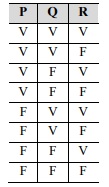
Considerando que a última coluna dessa tabela-verdade seja referente à expressão P → (Q ˄ R), assinale a opção que corresponde à sequência dos valores V ou F dessa última coluna, tomados de cima para baixo.
Considerando que a última coluna dessa tabela-verdade seja referente à expressão P → (Q ˄ R), assinale a opção que corresponde à sequência dos valores V ou F dessa última coluna, tomados de cima para baixo.
Ano: 2026
Banca:
CESPE / CEBRASPE
Órgão:
CBM-MA
Prova:
CESPE / CEBRASPE - 2026 - CBM-MA - Praça Especialista Músico Bombeiro Militar - Cargos 2 a 12 |
Q4409682
Música
No que se refere à pauta musical e às notas, assinale a opção
correta.
Ano: 2026
Banca:
CESPE / CEBRASPE
Órgão:
CBM-MA
Prova:
CESPE / CEBRASPE - 2026 - CBM-MA - Praça Especialista Músico Bombeiro Militar - Cargos 2 a 12 |
Q4409683
Música
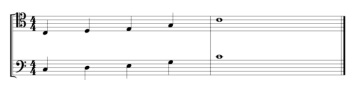
Em relação ao trecho musical apresentado, assinale a opção correta à luz da teoria relativa às claves e aos intervalos simples.
Ano: 2026
Banca:
CESPE / CEBRASPE
Órgão:
CBM-MA
Prova:
CESPE / CEBRASPE - 2026 - CBM-MA - Praça Especialista Músico Bombeiro Militar - Cargos 2 a 12 |
Q4409684
Música
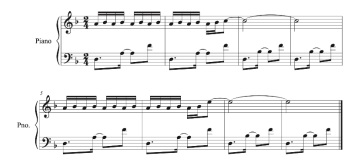
Tendo como referência esse trecho da composição Bebê, de Hermeto Pascoal, julgue os itens a seguir.
I No primeiro compasso, o contorno melódico formado pelas três notas escritas na clave de fá mostra uma 5.ª justa entre D e A e uma 6.ª menor entre A e F.
II No quinto compasso, as notas escritas na clave de sol mostram uma sucessão de quatro segundas maiores.
III No oitavo compasso da clave de fá, a nota mais grave e a nota mais aguda formam um intervalo de 10.ª maior.
IV No terceiro compasso, as duas primeiras notas escritas na clave de fá formam um intervalo de 6.ª menor.
Estão certos apenas os itens
Ano: 2026
Banca:
CESPE / CEBRASPE
Órgão:
CBM-MA
Prova:
CESPE / CEBRASPE - 2026 - CBM-MA - Praça Especialista Músico Bombeiro Militar - Cargos 2 a 12 |
Q4409685
Música
De acordo com a teoria sobre tom, semitom e alterações, assinale
a opção correta.
Ano: 2026
Banca:
CESPE / CEBRASPE
Órgão:
CBM-MA
Prova:
CESPE / CEBRASPE - 2026 - CBM-MA - Praça Especialista Músico Bombeiro Militar - Cargos 2 a 12 |
Q4409686
Música
Considerando o conceito de enarmonia, julgue os seguintes itens.
I A substituição de uma nota por outra de mesmo som, mas de nome diferente, assim como a substituição de um intervalo de notas por outro de nome diferente, mas com o mesmo som, caracteriza o conceito de enarmonia.
II Nos instrumentos de afinação natural, duas notas enarmônicas têm rigorosamente a mesma altura.
III Os intervalos 3.ª M e 4.ª D são enarmônicos.
IV No piano, as notas enarmônicas são tocadas em teclas diferentes.
Assinale a opção correta.
Ano: 2026
Banca:
CESPE / CEBRASPE
Órgão:
CBM-MA
Prova:
CESPE / CEBRASPE - 2026 - CBM-MA - Praça Especialista Músico Bombeiro Militar - Cargos 2 a 12 |
Q4409687
Música

Com base no trecho musical apresentado, correspondente aos dois primeiros compassos da melodia do Hino Nacional Brasileiro, bem como nas regras de classificação de intervalos e nos conceitos de tom e semitom, assinale a opção correta.
Ano: 2026
Banca:
CESPE / CEBRASPE
Órgão:
CBM-MA
Prova:
CESPE / CEBRASPE - 2026 - CBM-MA - Praça Especialista Músico Bombeiro Militar - Cargos 2 a 12 |
Q4409688
Música
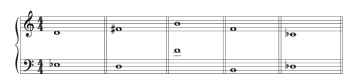
De acordo com a teoria de intervalos simples e compostos, assinale a opção correta em relação ao trecho musical apresentado.
Ano: 2026
Banca:
CESPE / CEBRASPE
Órgão:
CBM-MA
Prova:
CESPE / CEBRASPE - 2026 - CBM-MA - Praça Especialista Músico Bombeiro Militar - Cargos 2 a 12 |
Q4409689
Música
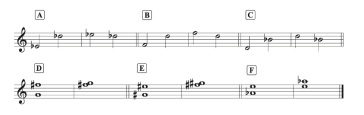
A partir da figura apresentada, assinale a opção correta de acordo com a teoria sobre classificação e inversão de intervalos.
Ano: 2026
Banca:
CESPE / CEBRASPE
Órgão:
CBM-MA
Prova:
CESPE / CEBRASPE - 2026 - CBM-MA - Praça Especialista Músico Bombeiro Militar - Cargos 2 a 12 |
Q4409690
Música
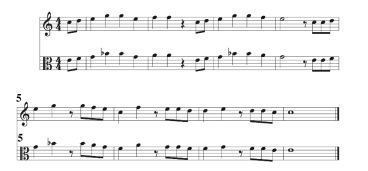
Considerando a figura apresentada, assinale a opção correta.
Ano: 2026
Banca:
CESPE / CEBRASPE
Órgão:
CBM-MA
Prova:
CESPE / CEBRASPE - 2026 - CBM-MA - Praça Especialista Músico Bombeiro Militar - Cargos 2 a 12 |
Q4409691
Música
Com base na teoria sobre intervalos compostos, assinale a opção
correta.

 Conheça nossos planos