Questões Militares Sobre vocabulário | vocabulary em inglês

Foram encontradas 642 questões

Ano: 2026 Banca: IDECAN Órgão: CBM-MG Prova: IDECAN - 2026 - CBM-MG - Cadete BM |
Q4349453 Inglês

Read the text to answer the question.


To begin the dialogue on cultural identity, it is essential to establish a baseline understanding the concept. Culture can be defined by the “totality of that group’s [a community or population] thought, experiences, and patterns of behavior and its concepts, values, and assumptions about life that guide behavior and how those evolve with contact with other cultures.” Cultural identity refers to people who identify themselves with a specific cultural group that has a shared system of symbols and norms for conduct. Recognition of this identity facilitates others’ understanding of the opportunities and challenges faced by individuals within a cultural group. To assist in understanding the basics of cultural identity, symbols and narratives as elements of culture will be examined in this section.

As many of our judgments are based on external observations, it should not be surprising that identities are shaped through use of symbols. According to sociologist Erik Cohen, the use of symbols in defining identity is a universal human trait. Symbols are employed in value systems such as religion, nationalism, social ideologies, and ethnicity. There are times when symbols become so significant to an existing cultural group’s identity that they stand out amongst all other symbols, dominating the narrative of cultural identity of that group. Dominant symbol systems provide “a set of stories, images, landscapes, scenarios, historical events, national symbols, and rituals which represent the shared experiences, sorrows, and triumphs and disasters which give meaning to the nation.” Therefore, understanding how complex symbol systems function and transmit meaning can help with assessing the motivations that underlie a cultural group’s actions. This is key to developing appropriate engagement strategies with cultural groups in urban environments.

Cultural groups use narrativesas a conduit for conveying messages. Narratives can be used as an analytical framework for understanding a wide spectrum of human activities. The stories conveyed through narrative can be viewed as building-blocks of identity in that they enable cultural groups to understand who they are and what they are in relation to others external to their group. In the search to understand cultural identities, knowledge of a cultural group’s narrative is “instructive for understanding how decisions might have come about, the motivations for actions, the causal assumptions drawn, and the arguments put forward, as well as a variety of other actions or variables. ”Therefore, it can be deduced that the future urban environment an Army may find itself operating within will witness a multitude of competing narratives, which may be further exacerbated by competition over limited resources and power.

Source: https://www.armyupress.army.mil/Journals/Military-Review/Online-Exclusive/2015-Online-Exclusive-Articles/Cultural-Identity/ Acess: 03/19/2026.

In the sentence “it is essential to establish a baseline understanding of the concept”, the word “baseline”, as used in context, most nearly means:
Alternativas
Q4306019 Inglês

Leia a tirinha do cartunista Daniel Shelton para responder à questão.



(Daniel Shelton. Ben on the Run, 2018.)

No contexto da tirinha, a expressão do quarto quadrinho “Nothing but hair” pode ser substituída, sem alteração de sentido, por:
Alternativas
Q4306018 Inglês

Leia a tirinha do cartunista Daniel Shelton para responder à questão.


(Daniel Shelton. Ben on the Run, 2018.)

In the context of the comic strip, the expression “No wonder”, in the fourth panel, means:

Alternativas
Q4306016 Inglês

Leia o texto para responder à questão.
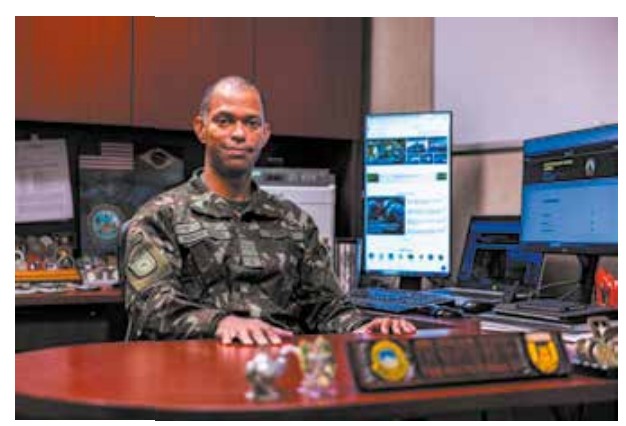


1     Brazilian Army Colonel Sergio Reis Matos serves as one of four United States Army South’s (USARSOUTH) partner nation liaison officers, or PNLO. Since July 2023, Matos has worked to strengthen the historic partnership between Brazil and the United States (US), focusing on enhancing military collaboration and interoperability.

    Matos’ journey into the military began with two key influences: his father, a decorated non-commissioned officer in the Brazilian Navy, and his own early experience at a military middle school. “My father earned the rank of sergeant major and was able to travel the world to 23 countries,” said Matos. “He was a brilliant example of the opportunities to be had by serving my homeland.”

    In 1987, Matos was accepted into a military middle school which was overseen by the Brazilian Army, which Matos said is very similar to the junior reserve officers’ training corps. His experience there laid the foundation for values and discipline needed for a career in the army.

    Matos began his military career in 1993 at the Brazilian Army Cadets’ Preparatory School in São Paulo. Over nearly 32 years, he has held several distinguished roles, including commanding a border detachment in the Amazon, securing military venues during the 2016 Olympic Games in Brazil and leading an infantry battalion steeped in historical ties to the US Fifth Army. “The most memorable period of my career was when I commanded the 11th Mountain Infantry Battalion,” he reflected. “It was one of the units that integrated with US forces during World War II.”

5     His assignment as the Brazilian PNLO at USARSOUTH is not his first encounter with the US Army. In 2007, he attended the Captain’s Career Course at Fort Moore (US) where he earned the Distinguished International Honor Graduate award for excellence in academics and the Order of Saint Maurice Medallion in the rank of Peregrinus, for his notable contributions to the US infantry.

    During his tenure at USARSOUTH, he facilitated military coordination between the Brazilian and US armies, focusing on combined operations, joint exercises and strategic engagements. His efforts as the Brazilian PNLO have been central to enhancing interoperability and fostering deeper collaboration.


(Joshua Taeckens. www.army.mil, 11.01.2025. Adaptado.)

No trecho do quinto parágrafo “His assignment as the Brazilian PNLO at USARSOUTH is not his first encounter with the US Army”, o termo sublinhado, nesse contexto, é empregado para indicar
Alternativas
Q4306013 Inglês

Leia o texto para responder à questão.


1     Brazilian Army Colonel Sergio Reis Matos serves as one of four United States Army South’s (USARSOUTH) partner nation liaison officers, or PNLO. Since July 2023, Matos has worked to strengthen the historic partnership between Brazil and the United States (US), focusing on enhancing military collaboration and interoperability.

    Matos’ journey into the military began with two key influences: his father, a decorated non-commissioned officer in the Brazilian Navy, and his own early experience at a military middle school. “My father earned the rank of sergeant major and was able to travel the world to 23 countries,” said Matos. “He was a brilliant example of the opportunities to be had by serving my homeland.”

    In 1987, Matos was accepted into a military middle school which was overseen by the Brazilian Army, which Matos said is very similar to the junior reserve officers’ training corps. His experience there laid the foundation for values and discipline needed for a career in the army.

    Matos began his military career in 1993 at the Brazilian Army Cadets’ Preparatory School in São Paulo. Over nearly 32 years, he has held several distinguished roles, including commanding a border detachment in the Amazon, securing military venues during the 2016 Olympic Games in Brazil and leading an infantry battalion steeped in historical ties to the US Fifth Army. “The most memorable period of my career was when I commanded the 11th Mountain Infantry Battalion,” he reflected. “It was one of the units that integrated with US forces during World War II.”

5     His assignment as the Brazilian PNLO at USARSOUTH is not his first encounter with the US Army. In 2007, he attended the Captain’s Career Course at Fort Moore (US) where he earned the Distinguished International Honor Graduate award for excellence in academics and the Order of Saint Maurice Medallion in the rank of Peregrinus, for his notable contributions to the US infantry.

    During his tenure at USARSOUTH, he facilitated military coordination between the Brazilian and US armies, focusing on combined operations, joint exercises and strategic engagements. His efforts as the Brazilian PNLO have been central to enhancing interoperability and fostering deeper collaboration.


(Joshua Taeckens. www.army.mil, 11.01.2025. Adaptado.)

No trecho do segundo parágrafo “‘My father earned the rank of sergeant major and was able to travel the world to 23 countries’”, o termo sublinhado pode ser substituído, sem alteração de sentido, por
Alternativas
Q4306009 Inglês

Read the poster for a campaign launched by an organization in the United Kingdom to answer question from.



(https://actiononsugar.org, 2025. Adaptado.)


1  sweet talk: persuasive language.

The phrase from the poster “Needlessly high in protein” indicates that protein
Alternativas
Q4306008 Inglês

Read the poster for a campaign launched by an organization in the United Kingdom to answer question from.


(https://actiononsugar.org, 2025. Adaptado.)


1  sweet talk: persuasive language.

The campaign poster primarily encourages consumers to 
Alternativas
Q4277337 Inglês
Read the sentence below.
They continue to establish new partnerships with other agencies to improve effectiveness. coordination and mission effectiveness.

Mark the option that replaces the underlined verb correctly, without changing the meaning of the sentence. 
Alternativas
Q4277329 Inglês
To Type or to Write, That Is the Question
At the highest level of learning, should you type or
write by hand?


[1] Research by Mueller and Oppenheimer (2014) compared students who typed lecture notes on laptops with those who wrote them by hand during the same time.

[2] In terms of immediate results, laptop users typed and recorded more words during the lectures, and their notes were aimost word-for-word transcripts of the lectures. The initial assumption was that this would ultimately be beneficial for these students compared with those who were handwriting their notes.

[3] After the lectures, the two groups of students in this study were tested on the information presented. The results showed that students who wrote by hand during lectures scored significantly higher on the tests than those who typed.

[4] The immediate question was: "Why was this the case?" Muelier and Oppenheimer (2014) found that students who handwrote their notes were consistently engaged in higherlevel thinking. This meant that throughout their lectures, these students were actively listening and intellectually analyzing what to record. This led to higher knowledge-based outcomes.

[5] Luo et al. (2018) found that handwritten notes contained more meaningful content (such as deeper thought and greater intellectual structure), resulting in higher scores on knowledge-based tests.

[6] Morehead et al. (2019) confirmed that the benefits of handwriting are most evident when students are assessed on higher-order conceptual understanding rather than on memorizing facts.

[7] These studies confirm that handwriting is an essential cognitive process and a highly beneficial intellectual activity that enhances learning at advanced levels of education and that begins from the first day of school and continues thereafter.


Handwriting Helps to Advance Knowledge and Enhance Ideas


[8] This evidence from university classrooms illustrates a broader principle: handwriting for note-taking is a deeper thinking skill. When students write by hand, they actively select and synthesize information.

[9] This process requires them to decide what is essential, how ideas connect, and how best to represent them in their own words. The research indicates that this type of engagement develops, advances, and enhances critical thinking (defined as the ability to analyze, evaluate, and make reasoned, detailed judgments), because handwriting forces students to process information conceptually rather than transcribe it verbatim.

[10] The research also indicates that this process helps to develop higher-order thinking, which involves analyzing, applying, synthesizing, and evaluating information. This then develops a deeper knowledge potential. Additionally, as confirmed by classroom studies and evidence from neuroscience, handwriting activates broader brain networks than typing.

[11] Building on this, some studies explain that the ongoing substitution of handwriting by typewriting in almost every educational setting may seem somewhat misguided, as it could negatively affect the learning process.

[12] However, Van der Weel and Van der Meer (2024) emphasise the importance of staying current in this everchanging digital world. With this in mind, they state that children must, first and foremost, learn handwriting. Only after they are absoiutely proficient, especially at complex narrative handwriting, should typing be considered.


(Adapted from: https://www.psychologytoday.com)
In the extract "the ongoing substitution of handwriting by typewriting in almost every educational setting may seem somewhat misquided" (paragraph 11), the word "misquided" means: 
Alternativas
Q4275857 Inglês
Choose the correct option to complete the sentence. 

Unfortunately, the city council had to stop the construction of the community centre as their resources _________ .
Alternativas
Q4275854 Inglês
New Al System could prevent vessel collisions by reducing dependence on ship Captain


Researchers at Texas A&M University have created an intelligent Al system that can help prevent accidents and collisions at sea. Named 'Ship Collision Avoidance of Machine Learning and Radar Technology for Stationary Entities and Avoidance', or SMART-SEA, the platform works to decrease the dependence on ship captains.


The project team was led by Dr Mirjan Fürth, an assistant professor of ocean engineering, who was awarded a contract by the US Department of the Interior (DOI) and the US Department of Energy (DOE) through the Ocean Energy Safety Institute (OESI). It is not completely an autonomous system, rather it provides 'a human-in-theloop', who gives real-time instructions based on maritime traffic,weather and other factors.


This makes navigation safer and easier for the crew, transiting crucial or dangerous waterways by providing additional information and instructions. Collisions between vessels and accidents like ships hitting stationary structures like rigs or lighthouses are becoming common, and most are caused by human error. This Al system will help eliminate that, stated the project team.


Massive vessels have a lot of forward momentum that their shipping distances are measured in miles rather than metres. They also turn very slowly, meaning that any collision has to factor in this slow movement while also adjusting for sensor time lags, ocean current impacts and several other factors.


The Al system has been developed keeping all the above-mentioned factors in mind and is extremely accurate. The research team also said that the system combines raw radar imaging data with machine learning, enabling it to identify moving objects even in bad weather with limited visibility.


The machine learning algorithm detects stationary objects as well from a large distance. The system uses computational fluid dynamics models and machine learning, which have been previously trained on vessel motions, the team added. The system does all of this while complying with International Regulations for Preventing Collisions at Sea (COLREGS).


(From: <https://www.marineinsight.com/.../new-ai-systemcould.../>)
Mark the correct option to fill in the blank.

The analysts didn't know which platform to choose from. Both platforms seemed to have a _____ integration with the other tools.
Alternativas
Q4275851 Inglês
Read the text and answer the question that follow it.


Balancing Al and Critical Thinking for the Military Leaders of Tomorrow


Al is becoming increasingly embedded in daily life, transforming the way we work, communicate, and make decisions. From virtual assistants and personalized recommendations to smart home devices and automated customer service, Al streamlines everyday tasks and enhances convenience. As Al continues to evolve, its role in our livelihoods will only expand, making it an essential tool for productivity and innovation. Rather than resisting this technology, we should embrace it. Al has the potential to enhance and expand our knowledge, enabling more informed decision-making.

For future military leaders, it is critical that education and training prioritize independent thinking and decisive action rather than an overreliance on Al-driven systems. Leaders must develop the confidence to question Al outputs, evaluate their accuracy, and consider multiple perspectives before making informed decisions, rather than blindly accepting computer-generated recommendations. Al struggles in unpredictable, high-stakes environments where training data is insufficient to cover every potential contingency. Future conflicts will demand leaders who can adapt in real time, assess emerging threats, and execute decisions based on experience, judgment, and battlefield awareness - not just what a computer system suggests. To maintain a strategic edge and operational superiority, military leaders must cultivate a disciplined decision-making process that integrates Al as a tool while ensuring that human intuition, adaptability, and ethical reasoning remain at the forefront of command decisions. Though the possibilities of Al are vast and impressive, it is crucial to remember that its role should not be replace, but to complement human intelligence.

The rapid evolution of Al presents both a strategic advantage and a formidable challenge in shaping the next generation of military leaders. Al can enhance decisionmaking, optimize operations, and expand battlefield awareness, yet it must remain a force multiplier - not a replacement for human intellect. The true test of future leadership lies in striking the right balance: leveraging Al's capabilities while preserving the independent thought, adaptability, and critical reasoning essential for command in today's volatile geopolitical environment. In an era where peer adversaries are racing to develop their own Aldriven strategies, our leaders must be prepared to out-think, not just out-tech, the competition. Al should sharpen human cognition, not dull it - because the future of warfare will be won by those who can command both machine intelligence and the power of the human mind.


(Abridged from <https://mwi.westpoint.edu/warfare-at-thespeed-of-thought-balancing-ai-and-critical-thinking-for-themilitary-leaders-of-tomorrow/>)
Concerning the vocabulary underlined in the text and their meaning in context, we can only affirm that: 
Alternativas
Ano: 2026 Banca: VUNESP Órgão: PM-SP Prova: VUNESP - 2026 - PM-SP - Cadete PM |
Q4246614 Inglês
Leia o texto para responder à questão.


FIFA’s exorbitant World Cup tickets could backfire

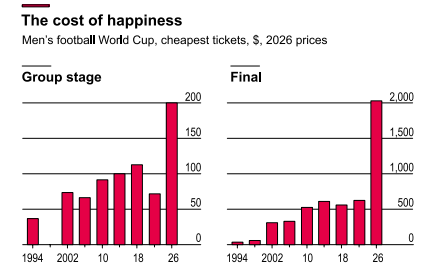
    Gianni Infantino, the boss of the Fédération Internationale de Football Association (FIFA), calls football’s governing body the world’s provider of happiness. At the 2026 World Cup in North America, that happiness comes at a price. The cheapest tickets for group-stage games1 averaged $200; those for the final went for higher than $2,000. The data presented in the chart suggest this year’s World Cup is the most expensive cultural event ever.


Captura_de tela 2026-08-21 092706.png (430×275)


   World Cup tickets are usually priced well below what the market might accept. Throughout the tournament’s history demand has tended to surpass supply. Rather than charge more, FIFA has kept prices at levels ordinary fans could afford and distributed seats through lotteries. Broadcasting and sponsorship rights mattered far more to the organisation’s finances than matchday receipts.
    In 2026 it is different. For the first time FIFA has taken direct control of ticketing, rather than outsourcing to local organisers. It has embraced dynamic pricing, whereby prices rise in line with demand, and opened an official resale marketplace, from which it takes a 15% share from both the buyer and the seller. Even after adjusting for inflation, World Cup tickets across the United States, Canada and Mexico cost more than twice as much as they did in Qatar in 2022.
    Even if higher prices compensate for weaker sales, FIFA risks damaging the product itself — which could, in turn, hurt its more lucrative revenue streams2. Full stadiums create the noise and tension that make matches irresistible on TV and other screens. FIFA faced embarrassment last year during the Club World Cup, when spectators were reportedly moved towards television cameras at sparsely attended matches. Studies have shown that wealthier fans are quieter and less overtly passionate about their teams.


(www.economist.com, 18.05.2026. Adaptado.)


1 group-stage games: jogos da fase de grupos. Rodada inicial da Copa do Mundo na qual as nações participantes são divididas em grupos menores para disputar o torneio.

2  revenue streams: fontes de receita.
No trecho do segundo parágrafo “Rather than charge more, FIFA has kept prices at levels ordinary fans could afford”, a frase sublinhada pode ser substituída, sem alteração de sentido, por:
Alternativas
Ano: 2026 Banca: VUNESP Órgão: PM-SP Prova: VUNESP - 2026 - PM-SP - Cadete PM |
Q4246612 Inglês
Leia o texto para responder à questão.


FIFA’s exorbitant World Cup tickets could backfire

    Gianni Infantino, the boss of the Fédération Internationale de Football Association (FIFA), calls football’s governing body the world’s provider of happiness. At the 2026 World Cup in North America, that happiness comes at a price. The cheapest tickets for group-stage games1 averaged $200; those for the final went for higher than $2,000. The data presented in the chart suggest this year’s World Cup is the most expensive cultural event ever.


Captura_de tela 2026-08-21 092706.png (430×275)


   World Cup tickets are usually priced well below what the market might accept. Throughout the tournament’s history demand has tended to surpass supply. Rather than charge more, FIFA has kept prices at levels ordinary fans could afford and distributed seats through lotteries. Broadcasting and sponsorship rights mattered far more to the organisation’s finances than matchday receipts.
    In 2026 it is different. For the first time FIFA has taken direct control of ticketing, rather than outsourcing to local organisers. It has embraced dynamic pricing, whereby prices rise in line with demand, and opened an official resale marketplace, from which it takes a 15% share from both the buyer and the seller. Even after adjusting for inflation, World Cup tickets across the United States, Canada and Mexico cost more than twice as much as they did in Qatar in 2022.
    Even if higher prices compensate for weaker sales, FIFA risks damaging the product itself — which could, in turn, hurt its more lucrative revenue streams2. Full stadiums create the noise and tension that make matches irresistible on TV and other screens. FIFA faced embarrassment last year during the Club World Cup, when spectators were reportedly moved towards television cameras at sparsely attended matches. Studies have shown that wealthier fans are quieter and less overtly passionate about their teams.


(www.economist.com, 18.05.2026. Adaptado.)


1 group-stage games: jogos da fase de grupos. Rodada inicial da Copa do Mundo na qual as nações participantes são divididas em grupos menores para disputar o torneio.

2  revenue streams: fontes de receita.
In the excerpt from the first paragraph “At the 2026 World Cup in North America, that happiness comes at a price”, the underlined expression is equivalent, in Portuguese, to the idiom:
Alternativas
Q4231865 Inglês

Read text VI to answer question.


The internet went into overdrive when the song "Heart on My Sleeve" first dropped in 2023. Fans were on cloud nine, fully convinced that Drake and The Weeknd had just casually dropped a surprise collaboration. Social media lit up with excitement as listeners praised the track, thinking it was another hit from two of music's biggest creators - and could a whole album be on the way?


But as the song racked up millions of streams on TikTok, the truth surfaced this wasn't a new Drake and The Weeknd collab. In fact, it wasn't them at all. The track was created by a TikTok user, Ghostwriter977, using artificial intelligence to perfectly mimic the two artists' voices. The revelation sent shockwaves across the industry, raising eyebrows and questions about the role of AI in music.


AI-generated music is a polarizing topic; depending on who you ask, it's either the next big innovation or a cultural catastrophe waiting to happen. There's no doubt that artificial intelligence is changing the music industry, but the question remains: is it a tool to unlock new creative frontiers, or is it a threat to the authenticity and soul of music as we know it?


These technologically capable algorithms compose everything from background music to full-fledged songs. Some argue it's an incredible tool for musicians and producers, offering new ways to experiment with sound, composition, and genre - even overcoming writer's block. AI can generate infinite variations of a melody, compose background scores for films, or even write lyrics based on given parameters. AI is more than just a tool for those pushing boundaries - it's a creative partner. It allows artists to break away from traditional musical structures and unlocks a world of possibilities.


But here's the flip side: AI doesn't understand human emotion. It doesn't have the lived experiences that often give music its soul. While an AI can generate a technically proficient melody, can it truly capture the emotional depth of a musician pouring their heart into a track? Critics argue that AI-generated music can feel hollow, lacking the emotion and intention that comes from a human touch. Sure, AI can replicate patterns, styles, and formulas, but does it truly understand why certain notes make us feel a certain way? Many fear that relying too heavily on AI will lead to a flood of cookie-cutter music devoid of real emotion or authenticity.


Looking out for tomorrow, what does AI mean for the future of creativity? Are we moving toward a world where algorithms outpace human artists, churning out music by the minute? This raises concerns for musicians, producers, and even DJs, who worry about their roles being replaced by technology, much like other industries where automation has taken over.


As AI continues to evolve, artists and creators will have to find ways to use AI as a tool while ensuring that the heart of music its ability to move, inspire, and connect remains in human hands. Ultimately, AI-generated music can be a powerful partner, but without careful consideration, it may turn the art of music into just another algorithmic output.


Adapted from https://council.rollingstone.com/blog/

The sentence "Fans were on cloud nine", in the 1st paragraph, means that fans were:
Alternativas
Q4189448 Inglês
Leia o texto a seguir de Dias e Turbi sobre the two multis e responda à questão:


      English school textbooks have a long tradition in the Brazilian public sector of education. Most often they are the only pedagogical resources in an English classroom. English public school textbooks are submitted to a National Program for evaluation and this educational policy has had positive impacts on these materials. This article analyzes one of the units of a textbook series for teens that was approved in 2020. Our analysis focuses on the two “multis”, the multiliteracies pedagogy and the combined effects of the use of different media (multimodality), which aims to encourage the active role today’s learners play in learning. We also highlight some alternatives for improvements and give some suggestions for English teachers. The documentary research method within the qualitative paradigm supports our analysis. Our results show that the unit follows the principles of the two “multis” and the cycle of knowledge processes, although its pedagogical design can be improved. Our analysis also reveals that much has yet to be done if we consider the responsibility students must assume when learning.


(Dias, R., Turbi, A.E.F., The two “multis” and the multiliteracies pedagogy: “shaking hands” in the Brazilian English public education for teens, 2021. Adaptado)
In the text, the authors refer to the analysis of textbooks for public schools by the National Program as 
Alternativas
Q4189443 Inglês
Leia os textos a seguir para responder à questão:


     Do certain people actually have a “knack” for learning foreign languages? Anecdotal evidence would suggest that some people are indeed able to learn languages faster and more efficiently than others. One way of looking at such aptitude is the identification of characteristics of successful language learners. Risk-taking behavior, memory efficiency, intelligent guessing, willingness to communicate, low anxiety, and ambiguity tolerance are but a few of the many variables that have been cited

(Brown, H.D., Principles of Language Learning and Teaching, 2014. Adaptado)

    Historically, research on language aptitude has been a roller-coaster ride. John Carroll’s (Carroll & Sapon, 1959) pioneering work on aptitude, embodied in the Modern Language Aptitude Test (MLAT), began the quest. The MLAT asserted the predictability of number learning, sound discrimination, pattern discernment, and memorization for future success in a foreign language. This test, and some others, were used for some time in such contexts as Peace Corps volunteer training programs and military communications courses to help predict successful language learners.

(Brown, H.D., Principles of Language Learning and Teaching, 2014. Adaptado)
The word “knack”, used within inverted commas in the question that opens the first paragraph, means 
Alternativas
Q4161472 Inglês
Na rotina de passadiço e manobra de uma embarcação, os comandos e ordens de leme em inglês devem ser seguidos de forma precisa. Se o oficial de quarto desejar que o timoneiro reduza a guinada do navio o mais rápido possível, a ordem padrão dada é: 
Alternativas
Q4157289 Inglês
A palavra que é repetida três vezes seguida do nome da embarcação, posição e ocorrência e é usada em casos de emergência, como por exemplo, um perigo de naufrágio é: 
Alternativas
Q4157246 Inglês
Durante o fundeio em área próxima ao canal de acesso, a embarcação começa a perder posição porque o ferro não está sustentando adequadamente. Ao mesmo tempo, a estação de tráfego informa que a embarcação passou a interferir na passagem de outras embarcações e determina que o ferro seja suspenso. Considerando o vocabulário técnico marítimo em inglês, qual sequência de frases representa melhor essa situação operacional? 
Alternativas
Respostas
1: A
2: D
3: E
4: A
5: B
6: A
7: C
8: B
9: C
10: D
11: B
12: C
13: A
14: E
15: A
16: C
17: C
18: E
19: A
20: E
