Questões Militares Sobre inglês
Foram encontradas 4.500 questões


From Nail bars to car washes: how big
is the UK’s slavery problem?
by Annie Kelly
Does slavery exist in the UK?
More than 250 years since the end of the
transatlantic slave trade, there are close to 41
million people still trapped in some form of slavery
across the world today. Yet nobody really knows
the scale and how many victims or perpetrators of
this crime there are in Britain.
The data that has been released is inconsistent. The government believes there are about 13,000 victims of slavery in the UK, while earlier this year the Global Slavery Index released a much higher estimate of 136,000.
Statistics on slavery from the National Crime Agency note the number of people passed on to the government’s national referral mechanism (NRM), the process by which victims of slavery are identified and granted statutory support. While this data gives a good snapshot of what kinds of slavery are most prevalent and who is falling victim to exploiters, it doesn’t paint the whole picture. For every victim identified by the police, there will be many others who are not found and remain under the control of traffickers, pimps and gangmasters.
There are also many potential victims who don’t agree to go through the mechanism because they don’t trust the authorities, or are too scared to report their traffickers. Between 1 November 2015 and 30 June 2018, the government received notifications of 3,306 potential victims of modern slavery in England and Wales who were not referred to the NRM.
[…]
The police recorded 3,773 modern slavery offences between June 2017 and June 2018.
[…]
(Source: https://www.theguardian.com/global-development/2018/ oct/18/nail-bars-car-washes-uk-slavery-problem-anti-slavery-day. Access: 20/10/2018)

America’s deadliest building fire for more than a decade struck Oakland, California, on December 2nd 2016, killing 36 people attending a dance party in a warehouse that had become a cluttered artist collective. The disaster highlights an open secret: many cities lack resources to inspect for fire risk all the structures that they should. Even though the Oakland building had no fire sprinklers and at least ten people lived there illegally, no inspector had visited in about 30 years. How might cities make better use of the inspectors they do have?
A handful of American cities have begun to seek help from a new type of analytics software. By crunching diverse data collected by government bodies and utilities, the software works out which buildings are most likely to catch fire and should therefore be inspected first. Plenty of factors play a role. Older, wooden buildings, unsurprisingly, pose more risk, as do those close to past fires and leaks of gas or oil. Poverty also pushes up fire risk, especially if lots of children, who may be attracted to mischief, live nearby. More telling are unpaid taxes, foreclosure proceedings and recorded complaints of mould, rats, crumbling plaster, accumulating rubbish, and domestic fights, all of which hint at property neglect. A building’s fire risk also increases the further it is from its owner’s residence.
Predictive software designed at Harvard that Portland, Oregon, will soon begin using will do that. Perhaps more importantly, the city’s fire chief noticed that buildings marked as being the biggest risks are clustered in areas lacking good schools, public transport, health care and food options. Healthier, happier people start fewer fires, he concluded. He now lobbies officials to reduce Portland’s pockets of deteriorated areas.
(The Economist. www.economist.com/the-economist-explains
/2018/08/29/how-cities-can-better-prevent-fires. Adaptado)
America’s deadliest building fire for more than a decade struck Oakland, California, on December 2nd 2016, killing 36 people attending a dance party in a warehouse that had become a cluttered artist collective. The disaster highlights an open secret: many cities lack resources to inspect for fire risk all the structures that they should. Even though the Oakland building had no fire sprinklers and at least ten people lived there illegally, no inspector had visited in about 30 years. How might cities make better use of the inspectors they do have?
A handful of American cities have begun to seek help from a new type of analytics software. By crunching diverse data collected by government bodies and utilities, the software works out which buildings are most likely to catch fire and should therefore be inspected first. Plenty of factors play a role. Older, wooden buildings, unsurprisingly, pose more risk, as do those close to past fires and leaks of gas or oil. Poverty also pushes up fire risk, especially if lots of children, who may be attracted to mischief, live nearby. More telling are unpaid taxes, foreclosure proceedings and recorded complaints of mould, rats, crumbling plaster, accumulating rubbish, and domestic fights, all of which hint at property neglect. A building’s fire risk also increases the further it is from its owner’s residence.
Predictive software designed at Harvard that Portland, Oregon, will soon begin using will do that. Perhaps more importantly, the city’s fire chief noticed that buildings marked as being the biggest risks are clustered in areas lacking good schools, public transport, health care and food options. Healthier, happier people start fewer fires, he concluded. He now lobbies officials to reduce Portland’s pockets of deteriorated areas.
(The Economist. www.economist.com/the-economist-explains
/2018/08/29/how-cities-can-better-prevent-fires. Adaptado)
America’s deadliest building fire for more than a decade struck Oakland, California, on December 2nd 2016, killing 36 people attending a dance party in a warehouse that had become a cluttered artist collective. The disaster highlights an open secret: many cities lack resources to inspect for fire risk all the structures that they should. Even though the Oakland building had no fire sprinklers and at least ten people lived there illegally, no inspector had visited in about 30 years. How might cities make better use of the inspectors they do have?
A handful of American cities have begun to seek help from a new type of analytics software. By crunching diverse data collected by government bodies and utilities, the software works out which buildings are most likely to catch fire and should therefore be inspected first. Plenty of factors play a role. Older, wooden buildings, unsurprisingly, pose more risk, as do those close to past fires and leaks of gas or oil. Poverty also pushes up fire risk, especially if lots of children, who may be attracted to mischief, live nearby. More telling are unpaid taxes, foreclosure proceedings and recorded complaints of mould, rats, crumbling plaster, accumulating rubbish, and domestic fights, all of which hint at property neglect. A building’s fire risk also increases the further it is from its owner’s residence.
Predictive software designed at Harvard that Portland, Oregon, will soon begin using will do that. Perhaps more importantly, the city’s fire chief noticed that buildings marked as being the biggest risks are clustered in areas lacking good schools, public transport, health care and food options. Healthier, happier people start fewer fires, he concluded. He now lobbies officials to reduce Portland’s pockets of deteriorated areas.
(The Economist. www.economist.com/the-economist-explains
/2018/08/29/how-cities-can-better-prevent-fires. Adaptado)
America’s deadliest building fire for more than a decade struck Oakland, California, on December 2nd 2016, killing 36 people attending a dance party in a warehouse that had become a cluttered artist collective. The disaster highlights an open secret: many cities lack resources to inspect for fire risk all the structures that they should. Even though the Oakland building had no fire sprinklers and at least ten people lived there illegally, no inspector had visited in about 30 years. How might cities make better use of the inspectors they do have?
A handful of American cities have begun to seek help from a new type of analytics software. By crunching diverse data collected by government bodies and utilities, the software works out which buildings are most likely to catch fire and should therefore be inspected first. Plenty of factors play a role. Older, wooden buildings, unsurprisingly, pose more risk, as do those close to past fires and leaks of gas or oil. Poverty also pushes up fire risk, especially if lots of children, who may be attracted to mischief, live nearby. More telling are unpaid taxes, foreclosure proceedings and recorded complaints of mould, rats, crumbling plaster, accumulating rubbish, and domestic fights, all of which hint at property neglect. A building’s fire risk also increases the further it is from its owner’s residence.
Predictive software designed at Harvard that Portland, Oregon, will soon begin using will do that. Perhaps more importantly, the city’s fire chief noticed that buildings marked as being the biggest risks are clustered in areas lacking good schools, public transport, health care and food options. Healthier, happier people start fewer fires, he concluded. He now lobbies officials to reduce Portland’s pockets of deteriorated areas.
(The Economist. www.economist.com/the-economist-explains
/2018/08/29/how-cities-can-better-prevent-fires. Adaptado)
America’s deadliest building fire for more than a decade struck Oakland, California, on December 2nd 2016, killing 36 people attending a dance party in a warehouse that had become a cluttered artist collective. The disaster highlights an open secret: many cities lack resources to inspect for fire risk all the structures that they should. Even though the Oakland building had no fire sprinklers and at least ten people lived there illegally, no inspector had visited in about 30 years. How might cities make better use of the inspectors they do have?
A handful of American cities have begun to seek help from a new type of analytics software. By crunching diverse data collected by government bodies and utilities, the software works out which buildings are most likely to catch fire and should therefore be inspected first. Plenty of factors play a role. Older, wooden buildings, unsurprisingly, pose more risk, as do those close to past fires and leaks of gas or oil. Poverty also pushes up fire risk, especially if lots of children, who may be attracted to mischief, live nearby. More telling are unpaid taxes, foreclosure proceedings and recorded complaints of mould, rats, crumbling plaster, accumulating rubbish, and domestic fights, all of which hint at property neglect. A building’s fire risk also increases the further it is from its owner’s residence.
Predictive software designed at Harvard that Portland, Oregon, will soon begin using will do that. Perhaps more importantly, the city’s fire chief noticed that buildings marked as being the biggest risks are clustered in areas lacking good schools, public transport, health care and food options. Healthier, happier people start fewer fires, he concluded. He now lobbies officials to reduce Portland’s pockets of deteriorated areas.
(The Economist. www.economist.com/the-economist-explains
/2018/08/29/how-cities-can-better-prevent-fires. Adaptado)
America’s deadliest building fire for more than a decade struck Oakland, California, on December 2nd 2016, killing 36 people attending a dance party in a warehouse that had become a cluttered artist collective. The disaster highlights an open secret: many cities lack resources to inspect for fire risk all the structures that they should. Even though the Oakland building had no fire sprinklers and at least ten people lived there illegally, no inspector had visited in about 30 years. How might cities make better use of the inspectors they do have?
A handful of American cities have begun to seek help from a new type of analytics software. By crunching diverse data collected by government bodies and utilities, the software works out which buildings are most likely to catch fire and should therefore be inspected first. Plenty of factors play a role. Older, wooden buildings, unsurprisingly, pose more risk, as do those close to past fires and leaks of gas or oil. Poverty also pushes up fire risk, especially if lots of children, who may be attracted to mischief, live nearby. More telling are unpaid taxes, foreclosure proceedings and recorded complaints of mould, rats, crumbling plaster, accumulating rubbish, and domestic fights, all of which hint at property neglect. A building’s fire risk also increases the further it is from its owner’s residence.
Predictive software designed at Harvard that Portland, Oregon, will soon begin using will do that. Perhaps more importantly, the city’s fire chief noticed that buildings marked as being the biggest risks are clustered in areas lacking good schools, public transport, health care and food options. Healthier, happier people start fewer fires, he concluded. He now lobbies officials to reduce Portland’s pockets of deteriorated areas.
(The Economist. www.economist.com/the-economist-explains
/2018/08/29/how-cities-can-better-prevent-fires. Adaptado)

Read the text and answer questions
Ursula! I whispered
Yes, my darling, she said, without __________ her eyes.
What have you got in your basket? I asked. She opened her eyes, startled, and looked at me.
What do you mean? she said defensively.
There is something moving in your basket, I said.
Oh, it’s nothing. It’s just a present for somebody. She said.
Adapted from, FERGUSON, Kenneth. Read for Meaning,
Comprehension tests for First Certificate. Ed. Evans Brothers, first
Published 1975.
Read the text and choose the best response.
The verbs “whispered” and “said” underlined in the text refer to
Read the text and answer questions
Ursula! I whispered
Yes, my darling, she said, without __________ her eyes.
What have you got in your basket? I asked. She opened her eyes, startled, and looked at me.
What do you mean? she said defensively.
There is something moving in your basket, I said.
Oh, it’s nothing. It’s just a present for somebody. She said.
Adapted from, FERGUSON, Kenneth. Read for Meaning,
Comprehension tests for First Certificate. Ed. Evans Brothers, first
Published 1975.
Read the text and answer questions
Ursula! I whispered
Yes, my darling, she said, without __________ her eyes.
What have you got in your basket? I asked. She opened her eyes, startled, and looked at me.
What do you mean? she said defensively.
There is something moving in your basket, I said.
Oh, it’s nothing. It’s just a present for somebody. She said.
Adapted from, FERGUSON, Kenneth. Read for Meaning,
Comprehension tests for First Certificate. Ed. Evans Brothers, first
Published 1975.
Read the text and answer questions
Ursula! I whispered
Yes, my darling, she said, without __________ her eyes.
What have you got in your basket? I asked. She opened her eyes, startled, and looked at me.
What do you mean? she said defensively.
There is something moving in your basket, I said.
Oh, it’s nothing. It’s just a present for somebody. She said.
Adapted from, FERGUSON, Kenneth. Read for Meaning,
Comprehension tests for First Certificate. Ed. Evans Brothers, first
Published 1975.
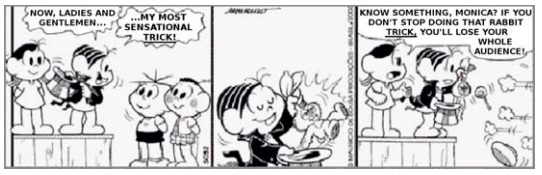
Read the extract and choose the best alternative to complete the blank.
Dan and Jenny are married. They got married exactly 20 years ago, so today is their 20th wedding anniversary. They ___________ together for 20 years.


 Conheça nossos planos