Questões Militares Comentadas sobre inglês
Foram encontradas 3.295 questões


Ano: 2014
Banca:
CONSULTEC
Órgão:
PM-BA
Prova:
CONSULTEC - 2014 - PM-BA - Aspirante da Polícia Militar |
Q571105
Inglês

Fill in the blanks with interrogative words (WH-questions)
A. ____ was Voyager 1 sent into space? Thirty-six years ago.
B. ____ was Voyager 1 sent into space? To study other planets.
C. ____ is it from Earth now? Twelve billion miles.
D. ____ is it expected to last? Ten years at the most.
According to the text, the correct sequence, from top to bottom, is
A. ____ was Voyager 1 sent into space? Thirty-six years ago.
B. ____ was Voyager 1 sent into space? To study other planets.
C. ____ is it from Earth now? Twelve billion miles.
D. ____ is it expected to last? Ten years at the most.
According to the text, the correct sequence, from top to bottom, is
Ano: 2014
Banca:
CONSULTEC
Órgão:
PM-BA
Prova:
CONSULTEC - 2014 - PM-BA - Aspirante da Polícia Militar |
Q571104
Inglês
Fill in the parentheses with T (True) or F (False).
About the Voyager 1 spacecraft, it's correct to say:
( ) It has managed to get out of our solar system.
( ) It went past all the planets in our solar system.
( ) It avoided getting near the region known as heliopause.
( ) It's unable to send photos of the interstellar space back to Earth.
According to the text, the correct sequence, from top to bottom, is
About the Voyager 1 spacecraft, it's correct to say:
( ) It has managed to get out of our solar system.
( ) It went past all the planets in our solar system.
( ) It avoided getting near the region known as heliopause.
( ) It's unable to send photos of the interstellar space back to Earth.
According to the text, the correct sequence, from top to bottom, is
Ano: 2014
Banca:
CONSULTEC
Órgão:
PM-BA
Prova:
CONSULTEC - 2014 - PM-BA - Aspirante da Polícia Militar |
Q571103
Inglês
Texto associado

DAVIS, Jim. Garfield. Disponível em: <http://www.google.com.br/url?>. Acesso em: 2 fev. 2014.
DAVIS, Jim. Garfield. Disponível em: <http://www.google.com.br/url?>. Acesso em: 2 fev. 2014.
When the small cat in picture 5 says “So what should we
play", it
Ano: 2014
Banca:
CONSULTEC
Órgão:
PM-BA
Prova:
CONSULTEC - 2014 - PM-BA - Aspirante da Polícia Militar |
Q571102
Inglês
Texto associado
DAVIS, Jim. Garfield. Disponível em: <http://www.google.com.br/url?>. Acesso em: 2 fev. 2014.
DAVIS, Jim. Garfield. Disponível em: <http://www.google.com.br/url?>. Acesso em: 2 fev. 2014.
The best adjective to describe the cat Garfield is that he's
Ano: 2014
Banca:
CONSULTEC
Órgão:
PM-BA
Prova:
CONSULTEC - 2014 - PM-BA - Aspirante da Polícia Militar |
Q571101
Inglês

The adjective “best" (l. 20) is the superlative degree of
Ano: 2014
Banca:
CONSULTEC
Órgão:
PM-BA
Prova:
CONSULTEC - 2014 - PM-BA - Aspirante da Polícia Militar |
Q571100
Inglês
“we not only lose most of the pleasure […] but also damage our health." (l. 5-7)
In this sentence, the words in bold, not only…but also, express
In this sentence, the words in bold, not only…but also, express
Ano: 2014
Banca:
CONSULTEC
Órgão:
PM-BA
Prova:
CONSULTEC - 2014 - PM-BA - Aspirante da Polícia Militar |
Q571099
Inglês
Fill in the parentheses with T (True) or F (False).
In his book, The Slow Down Diet, Marc David encourages us to
( ) avoid eating junk food.
( ) really enjoy every meal.
( ) skip meals so as to lose weight.
( ) take our time while we're having a meal.
According to the text, the correct sequence, from top to bottom, is
In his book, The Slow Down Diet, Marc David encourages us to
( ) avoid eating junk food.
( ) really enjoy every meal.
( ) skip meals so as to lose weight.
( ) take our time while we're having a meal.
According to the text, the correct sequence, from top to bottom, is
Ano: 2014
Banca:
CONSULTEC
Órgão:
PM-BA
Prova:
CONSULTEC - 2014 - PM-BA - Aspirante da Polícia Militar |
Q571098
Inglês
According to the text, it's difficult for most people nowadays to
have a healthy lifestyle because they
Ano: 2014
Banca:
CONSULTEC
Órgão:
PM-BA
Prova:
CONSULTEC - 2014 - PM-BA - Aspirante da Polícia Militar |
Q571097
Inglês

As far as the future success of the OPHONE is concerned,
professor David Edwards feels
Ano: 2014
Banca:
CONSULTEC
Órgão:
PM-BA
Prova:
CONSULTEC - 2014 - PM-BA - Aspirante da Polícia Militar |
Q571096
Inglês
The text says that
Ano: 2014
Banca:
CONSULTEC
Órgão:
PM-BA
Prova:
CONSULTEC - 2014 - PM-BA - Aspirante da Polícia Militar |
Q571095
Inglês
Fill in the parentheses with T (True) or F (False).
About the OPHONE, it's correct to say:
( ) It's already on the market in all of Europe.
( ) It's a special application that will make it possible to communicate smells through smartphones.
( ) It will be able to transmit all kind of scents only to short distances.
( ) It's supposed to work the same way that sounds and images are transmitted.
According to the text, the correct sequence, from top to bottom, is
About the OPHONE, it's correct to say:
( ) It's already on the market in all of Europe.
( ) It's a special application that will make it possible to communicate smells through smartphones.
( ) It will be able to transmit all kind of scents only to short distances.
( ) It's supposed to work the same way that sounds and images are transmitted.
According to the text, the correct sequence, from top to bottom, is
Ano: 2014
Banca:
Exército
Órgão:
EsFCEx
Provas:
Exército - 2014 - EsFCEx - Oficial - Informática
|
Exército - 2014 - EsFCEx - Oficial - Administração |
Exército - 2014 - EsFCEx - Oficial - Biblioteconomia |
Exército - 2014 - EsFCEx - Oficial - Comunicação Social |
Exército - 2014 - EsFCEx - Oficial - Magistério em Espanhol |
Exército - 2014 - EsFCEx - Oficial - Magistério Geografia |
Exército - 2014 - EsFCEx - Oficial - Direito |
Exército - 2014 - EsFCEx - Oficial - Magistério Matemática |
Exército - 2014 - EsFCEx - Oficial - v |
Exército - 2014 - EsFCEx - Oficial - Magistério Química |
Exército - 2014 - EsFCEx - Oficial - Psicologia |
Exército - 2014 - EsFCEx - Oficial - Veterinária |
Exército - 2014 - EsFCEx - Oficial - Ciências Contábeis |
Exército - 2014 - EsFCEx - Oficial - Enfermagem |
Q520311
Inglês
Choose the alternative that correctly completes the sentences below:
I left Rio ___ 2013 and went ____ Salvador and I will get married ______ July. The wedding is ______ August 25th.
Ano: 2014
Banca:
Exército
Órgão:
EsFCEx
Provas:
Exército - 2014 - EsFCEx - Oficial - Informática
|
Exército - 2014 - EsFCEx - Oficial - Administração |
Exército - 2014 - EsFCEx - Oficial - Biblioteconomia |
Exército - 2014 - EsFCEx - Oficial - Comunicação Social |
Exército - 2014 - EsFCEx - Oficial - Magistério em Espanhol |
Exército - 2014 - EsFCEx - Oficial - Magistério Geografia |
Exército - 2014 - EsFCEx - Oficial - Direito |
Exército - 2014 - EsFCEx - Oficial - Magistério Matemática |
Exército - 2014 - EsFCEx - Oficial - v |
Exército - 2014 - EsFCEx - Oficial - Magistério Química |
Exército - 2014 - EsFCEx - Oficial - Psicologia |
Exército - 2014 - EsFCEx - Oficial - Veterinária |
Exército - 2014 - EsFCEx - Oficial - Ciências Contábeis |
Exército - 2014 - EsFCEx - Oficial - Enfermagem |
Q520310
Inglês
Identify the correct (C) questions and the incorrect ones (I). Then choose the best alternative.
( ) How old Ana is?
( ) Where are going these kids?
( ) Are you waiting for us?
( ) How old Ana is?
( ) Where are going these kids?
( ) Are you waiting for us?
Ano: 2014
Banca:
Exército
Órgão:
EsFCEx
Provas:
Exército - 2014 - EsFCEx - Oficial - Informática
|
Exército - 2014 - EsFCEx - Oficial - Administração |
Exército - 2014 - EsFCEx - Oficial - Biblioteconomia |
Exército - 2014 - EsFCEx - Oficial - Comunicação Social |
Exército - 2014 - EsFCEx - Oficial - Magistério em Espanhol |
Exército - 2014 - EsFCEx - Oficial - Magistério Geografia |
Exército - 2014 - EsFCEx - Oficial - Direito |
Exército - 2014 - EsFCEx - Oficial - Magistério Matemática |
Exército - 2014 - EsFCEx - Oficial - v |
Exército - 2014 - EsFCEx - Oficial - Magistério Química |
Exército - 2014 - EsFCEx - Oficial - Psicologia |
Exército - 2014 - EsFCEx - Oficial - Veterinária |
Exército - 2014 - EsFCEx - Oficial - Ciências Contábeis |
Exército - 2014 - EsFCEx - Oficial - Enfermagem |
Q520309
Inglês
Choose the alternative that correctly completes the sentences below:
My car wasn‟t big enough, so, I needed a ________ one. My new car is______ and __________ than the one I had. It is _________ car in the world.
My car wasn‟t big enough, so, I needed a ________ one. My new car is______ and __________ than the one I had. It is _________ car in the world.
Ano: 2014
Banca:
Exército
Órgão:
EsFCEx
Provas:
Exército - 2014 - EsFCEx - Oficial - Informática
|
Exército - 2014 - EsFCEx - Oficial - Administração |
Exército - 2014 - EsFCEx - Oficial - Biblioteconomia |
Exército - 2014 - EsFCEx - Oficial - Comunicação Social |
Exército - 2014 - EsFCEx - Oficial - Magistério em Espanhol |
Exército - 2014 - EsFCEx - Oficial - Magistério Geografia |
Exército - 2014 - EsFCEx - Oficial - Direito |
Exército - 2014 - EsFCEx - Oficial - Magistério Matemática |
Exército - 2014 - EsFCEx - Oficial - v |
Exército - 2014 - EsFCEx - Oficial - Magistério Química |
Exército - 2014 - EsFCEx - Oficial - Psicologia |
Exército - 2014 - EsFCEx - Oficial - Veterinária |
Exército - 2014 - EsFCEx - Oficial - Ciências Contábeis |
Exército - 2014 - EsFCEx - Oficial - Enfermagem |
Q520308
Inglês
Choose the correct alternative according to the use of modals:
Ano: 2014
Banca:
Exército
Órgão:
EsFCEx
Provas:
Exército - 2014 - EsFCEx - Oficial - Informática
|
Exército - 2014 - EsFCEx - Oficial - Administração |
Exército - 2014 - EsFCEx - Oficial - Biblioteconomia |
Exército - 2014 - EsFCEx - Oficial - Comunicação Social |
Exército - 2014 - EsFCEx - Oficial - Magistério em Espanhol |
Exército - 2014 - EsFCEx - Oficial - Magistério Geografia |
Exército - 2014 - EsFCEx - Oficial - Direito |
Exército - 2014 - EsFCEx - Oficial - Magistério Matemática |
Exército - 2014 - EsFCEx - Oficial - v |
Exército - 2014 - EsFCEx - Oficial - Magistério Química |
Exército - 2014 - EsFCEx - Oficial - Psicologia |
Exército - 2014 - EsFCEx - Oficial - Veterinária |
Exército - 2014 - EsFCEx - Oficial - Ciências Contábeis |
Exército - 2014 - EsFCEx - Oficial - Enfermagem |
Q520307
Inglês
Which alternative best completes the following sentence?
My sister spent most of her life __________ a small town _________ the south _________Bahia.
My sister spent most of her life __________ a small town _________ the south _________Bahia.
Ano: 2014
Banca:
Exército
Órgão:
EsFCEx
Provas:
Exército - 2014 - EsFCEx - Oficial - Informática
|
Exército - 2014 - EsFCEx - Oficial - Administração |
Exército - 2014 - EsFCEx - Oficial - Biblioteconomia |
Exército - 2014 - EsFCEx - Oficial - Comunicação Social |
Exército - 2014 - EsFCEx - Oficial - Magistério em Espanhol |
Exército - 2014 - EsFCEx - Oficial - Magistério Geografia |
Exército - 2014 - EsFCEx - Oficial - Direito |
Exército - 2014 - EsFCEx - Oficial - Magistério Matemática |
Exército - 2014 - EsFCEx - Oficial - v |
Exército - 2014 - EsFCEx - Oficial - Magistério Química |
Exército - 2014 - EsFCEx - Oficial - Psicologia |
Exército - 2014 - EsFCEx - Oficial - Veterinária |
Exército - 2014 - EsFCEx - Oficial - Ciências Contábeis |
Exército - 2014 - EsFCEx - Oficial - Enfermagem |
Q520306
Inglês
Choose the alternative that best completes the sentence below.
Lucy rented _______ yellow car about ________ hour ago and lent it to_________ students.
Lucy rented _______ yellow car about ________ hour ago and lent it to_________ students.
Ano: 2014
Banca:
Exército
Órgão:
EsFCEx
Provas:
Exército - 2014 - EsFCEx - Oficial - Informática
|
Exército - 2014 - EsFCEx - Oficial - Administração |
Exército - 2014 - EsFCEx - Oficial - Biblioteconomia |
Exército - 2014 - EsFCEx - Oficial - Comunicação Social |
Exército - 2014 - EsFCEx - Oficial - Magistério em Espanhol |
Exército - 2014 - EsFCEx - Oficial - Magistério Geografia |
Exército - 2014 - EsFCEx - Oficial - Direito |
Exército - 2014 - EsFCEx - Oficial - Magistério Matemática |
Exército - 2014 - EsFCEx - Oficial - v |
Exército - 2014 - EsFCEx - Oficial - Magistério Química |
Exército - 2014 - EsFCEx - Oficial - Psicologia |
Exército - 2014 - EsFCEx - Oficial - Veterinária |
Exército - 2014 - EsFCEx - Oficial - Ciências Contábeis |
Exército - 2014 - EsFCEx - Oficial - Enfermagem |
Q520305
Inglês
Complete the passage below with the correct form of the verb in parentheses.Then choose the correct alternative.
Name a celebrity and Naomi Stein _______ probably ______________(1) them. She _______________(2) famous for her photos of John Lennon and The Rolling Stones. Her new book, The Female Gaze ___________________(3) a hundred intimate portraits of different types of women. Last night Dave Weich _____________(4) Naomi in New York, where she _______________(5) to him four of her favorite photographs.
Name a celebrity and Naomi Stein _______ probably ______________(1) them. She _______________(2) famous for her photos of John Lennon and The Rolling Stones. Her new book, The Female Gaze ___________________(3) a hundred intimate portraits of different types of women. Last night Dave Weich _____________(4) Naomi in New York, where she _______________(5) to him four of her favorite photographs.
Q512582
Inglês
Texto associado
INSTRUCTIONS – Read the following text carefully and then choose the correct alternatives that answer the question.
SOUTHERN HUMPBACK WHALE
INTRODUCTION
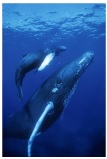
During the Australian winter, these ocean leviathans journey 3,100 miles north from their Antarctic feeding grounds to the warm tropical waters near Australia´s Whitsunday Islands. At the southern edge of the Great Barrier Reef, the 40-ton female humpbacks give birth to calves measuring 14 feet long and weighing over one ton. The Whitsundays´ sheltered bays keep the calves warm and safe from predators. During the next few months, the whales rest, sing, play and mate. The calves nurse, but the one thing the adult whales don´t do while in the tropical seas is eat. By winter´s end, adults are famished, and they head south. This life cycle is repeated throughout the Southern Hemisphere: one group migrates along the western coast of Australia, others to southern Africa and South America.
SIGHT UNSEEN
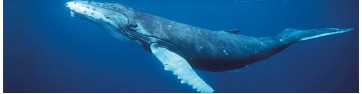
Underneath the blue Australian ocean, film crews captured the elegant rituals of southern humpbacks as they swim, sing, nurse, and play. A mother humpback whale supported her young calf from underneath, so it could breathe easier near the surface. Calves drink 130 gallons of milk a day! While baby grows fat, the mother starves for five months, her blubber stores depleting daily. Unlike the cold Antarctic waters, the seas here don´t grow rich with krill that humpbacks filer through their baleen plates. But she provides her calf with rich milk that contains some of the highest fat content of any mammal´s milk – 45 percent.
UNIQUE BEHAVIOR
Humpback males sing a unique melody, full of high-pitched chirps and whistles interspersed with deeper gurgles and moans. Each male repeats his song for hours, which likely plays a role in courtship. The song may change over time, with males singing a modified melody in consecutive years.
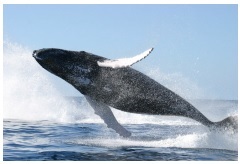
Whale-watching tours take advantage of the humpback´s playful and curious nature. They often approach boats and put on quite a show. As whales journey south along the eastern coast of Australia, many stop in sheltered Platypus Bay around Fraser Island – a World Heritage Site – where they display the charismatic behaviors loved by whale-watchers. The crystal blue waters give a perfect window to watch the whales twist, roll and swim upside down, emerging to breathe, slap their tails or pectoral fins on the water´s surface. Breaching whales jump nearly all the way out of the water. “Spyhopping" means their head emerges, and they peer at the surroundings with their large eyes.
STATUS/CONSERVATION
Commercial hunting in the 19th and 20th centuries decimated most whale species. Because they migrate close to shore and swim slowly, humpbacks became a popular whalers´ target, and were hunted down to a few hundred animals in the Southern Hemisphere. The International Whaling Commission (IWC) implemented a moratorium on harvesting all species starting in 1986, and in 1994, declared Antarctica´s Southern Ocean a whale sanctuary. Now numbering over 10,000 in the Southern Hemisphere, humpbacks have shown incredible resilience, but their numbers still remain a fraction of their historic abundance. Recovery of regional populations varies, and the World Conservation Union (IUCN) lists the humpback as vulnerable.
Humpbacks also have two Northern Hemisphere populations that number around 11,500 in the North Atlantic and 6,000 in the North Pacific. Northern humpbacks are genetically differentiated from the Southern Hemisphere population, and have dark bellies, while the southern humpbacks have all-white bellies. They don´t interbreed, because while the southern populations are mating and calving in the warm tropical seas, northern populations are near the polar Arctic.
OUTLOOK
The International Whaling Commission (IWC) allows hunting by indigenous cultures but bans hunting of humpback whales. Japan has long engaged in IWC-sanctioned “scientific whaling" of minke and other whales, and plans to start hunting humpbacks in 2007. “We are all concerned about Japan´s plans to add this species to the scientific whaling quota", says Dr. Scott Baker, a renowned cetacean conservation biologist. Iceland also just started commercial whaling in 2006.
Some Asian countries allow the sale of whale meat from incidental bycatch, and a whale´s value of $100,000 provides incentive for illegal harvest. Baker and colleagues used DNA to show that the whale meat being sold in South Korean shops did not match that reported to the IWC. Illegal harvest and sale of whale meat is occurring.
Australia and New Zealand have petitioned the IWC to create a South Pacific Sanctuary adjoining the Southern Ocean Sanctuary where whaling would be illegal. Thus far, it has not been approved by IWC.
http://dsc.discovery.com/convergence/planet-earth/...
INSTRUCTIONS – Read the following text carefully and then choose the correct alternatives that answer the question.
SOUTHERN HUMPBACK WHALE
INTRODUCTION
During the Australian winter, these ocean leviathans journey 3,100 miles north from their Antarctic feeding grounds to the warm tropical waters near Australia´s Whitsunday Islands. At the southern edge of the Great Barrier Reef, the 40-ton female humpbacks give birth to calves measuring 14 feet long and weighing over one ton. The Whitsundays´ sheltered bays keep the calves warm and safe from predators. During the next few months, the whales rest, sing, play and mate. The calves nurse, but the one thing the adult whales don´t do while in the tropical seas is eat. By winter´s end, adults are famished, and they head south. This life cycle is repeated throughout the Southern Hemisphere: one group migrates along the western coast of Australia, others to southern Africa and South America.
SIGHT UNSEEN
Underneath the blue Australian ocean, film crews captured the elegant rituals of southern humpbacks as they swim, sing, nurse, and play. A mother humpback whale supported her young calf from underneath, so it could breathe easier near the surface. Calves drink 130 gallons of milk a day! While baby grows fat, the mother starves for five months, her blubber stores depleting daily. Unlike the cold Antarctic waters, the seas here don´t grow rich with krill that humpbacks filer through their baleen plates. But she provides her calf with rich milk that contains some of the highest fat content of any mammal´s milk – 45 percent.
UNIQUE BEHAVIOR
Humpback males sing a unique melody, full of high-pitched chirps and whistles interspersed with deeper gurgles and moans. Each male repeats his song for hours, which likely plays a role in courtship. The song may change over time, with males singing a modified melody in consecutive years.
Whale-watching tours take advantage of the humpback´s playful and curious nature. They often approach boats and put on quite a show. As whales journey south along the eastern coast of Australia, many stop in sheltered Platypus Bay around Fraser Island – a World Heritage Site – where they display the charismatic behaviors loved by whale-watchers. The crystal blue waters give a perfect window to watch the whales twist, roll and swim upside down, emerging to breathe, slap their tails or pectoral fins on the water´s surface. Breaching whales jump nearly all the way out of the water. “Spyhopping" means their head emerges, and they peer at the surroundings with their large eyes.
STATUS/CONSERVATION
Commercial hunting in the 19th and 20th centuries decimated most whale species. Because they migrate close to shore and swim slowly, humpbacks became a popular whalers´ target, and were hunted down to a few hundred animals in the Southern Hemisphere. The International Whaling Commission (IWC) implemented a moratorium on harvesting all species starting in 1986, and in 1994, declared Antarctica´s Southern Ocean a whale sanctuary. Now numbering over 10,000 in the Southern Hemisphere, humpbacks have shown incredible resilience, but their numbers still remain a fraction of their historic abundance. Recovery of regional populations varies, and the World Conservation Union (IUCN) lists the humpback as vulnerable.
Humpbacks also have two Northern Hemisphere populations that number around 11,500 in the North Atlantic and 6,000 in the North Pacific. Northern humpbacks are genetically differentiated from the Southern Hemisphere population, and have dark bellies, while the southern humpbacks have all-white bellies. They don´t interbreed, because while the southern populations are mating and calving in the warm tropical seas, northern populations are near the polar Arctic.
OUTLOOK
The International Whaling Commission (IWC) allows hunting by indigenous cultures but bans hunting of humpback whales. Japan has long engaged in IWC-sanctioned “scientific whaling" of minke and other whales, and plans to start hunting humpbacks in 2007. “We are all concerned about Japan´s plans to add this species to the scientific whaling quota", says Dr. Scott Baker, a renowned cetacean conservation biologist. Iceland also just started commercial whaling in 2006.
Some Asian countries allow the sale of whale meat from incidental bycatch, and a whale´s value of $100,000 provides incentive for illegal harvest. Baker and colleagues used DNA to show that the whale meat being sold in South Korean shops did not match that reported to the IWC. Illegal harvest and sale of whale meat is occurring.
Australia and New Zealand have petitioned the IWC to create a South Pacific Sanctuary adjoining the Southern Ocean Sanctuary where whaling would be illegal. Thus far, it has not been approved by IWC.
http://dsc.discovery.com/convergence/planet-earth/...
The sentence “incidental bycatch” means that this kind of catch WASN`T:
Q512581
Inglês
Texto associado
INSTRUCTIONS – Read the following text carefully and then choose the correct alternatives that answer the question.
SOUTHERN HUMPBACK WHALE
INTRODUCTION
During the Australian winter, these ocean leviathans journey 3,100 miles north from their Antarctic feeding grounds to the warm tropical waters near Australia´s Whitsunday Islands. At the southern edge of the Great Barrier Reef, the 40-ton female humpbacks give birth to calves measuring 14 feet long and weighing over one ton. The Whitsundays´ sheltered bays keep the calves warm and safe from predators. During the next few months, the whales rest, sing, play and mate. The calves nurse, but the one thing the adult whales don´t do while in the tropical seas is eat. By winter´s end, adults are famished, and they head south. This life cycle is repeated throughout the Southern Hemisphere: one group migrates along the western coast of Australia, others to southern Africa and South America.
SIGHT UNSEEN
Underneath the blue Australian ocean, film crews captured the elegant rituals of southern humpbacks as they swim, sing, nurse, and play. A mother humpback whale supported her young calf from underneath, so it could breathe easier near the surface. Calves drink 130 gallons of milk a day! While baby grows fat, the mother starves for five months, her blubber stores depleting daily. Unlike the cold Antarctic waters, the seas here don´t grow rich with krill that humpbacks filer through their baleen plates. But she provides her calf with rich milk that contains some of the highest fat content of any mammal´s milk – 45 percent.
UNIQUE BEHAVIOR
Humpback males sing a unique melody, full of high-pitched chirps and whistles interspersed with deeper gurgles and moans. Each male repeats his song for hours, which likely plays a role in courtship. The song may change over time, with males singing a modified melody in consecutive years.
Whale-watching tours take advantage of the humpback´s playful and curious nature. They often approach boats and put on quite a show. As whales journey south along the eastern coast of Australia, many stop in sheltered Platypus Bay around Fraser Island – a World Heritage Site – where they display the charismatic behaviors loved by whale-watchers. The crystal blue waters give a perfect window to watch the whales twist, roll and swim upside down, emerging to breathe, slap their tails or pectoral fins on the water´s surface. Breaching whales jump nearly all the way out of the water. “Spyhopping" means their head emerges, and they peer at the surroundings with their large eyes.
STATUS/CONSERVATION
Commercial hunting in the 19th and 20th centuries decimated most whale species. Because they migrate close to shore and swim slowly, humpbacks became a popular whalers´ target, and were hunted down to a few hundred animals in the Southern Hemisphere. The International Whaling Commission (IWC) implemented a moratorium on harvesting all species starting in 1986, and in 1994, declared Antarctica´s Southern Ocean a whale sanctuary. Now numbering over 10,000 in the Southern Hemisphere, humpbacks have shown incredible resilience, but their numbers still remain a fraction of their historic abundance. Recovery of regional populations varies, and the World Conservation Union (IUCN) lists the humpback as vulnerable.
Humpbacks also have two Northern Hemisphere populations that number around 11,500 in the North Atlantic and 6,000 in the North Pacific. Northern humpbacks are genetically differentiated from the Southern Hemisphere population, and have dark bellies, while the southern humpbacks have all-white bellies. They don´t interbreed, because while the southern populations are mating and calving in the warm tropical seas, northern populations are near the polar Arctic.
OUTLOOK
The International Whaling Commission (IWC) allows hunting by indigenous cultures but bans hunting of humpback whales. Japan has long engaged in IWC-sanctioned “scientific whaling" of minke and other whales, and plans to start hunting humpbacks in 2007. “We are all concerned about Japan´s plans to add this species to the scientific whaling quota", says Dr. Scott Baker, a renowned cetacean conservation biologist. Iceland also just started commercial whaling in 2006.
Some Asian countries allow the sale of whale meat from incidental bycatch, and a whale´s value of $100,000 provides incentive for illegal harvest. Baker and colleagues used DNA to show that the whale meat being sold in South Korean shops did not match that reported to the IWC. Illegal harvest and sale of whale meat is occurring.
Australia and New Zealand have petitioned the IWC to create a South Pacific Sanctuary adjoining the Southern Ocean Sanctuary where whaling would be illegal. Thus far, it has not been approved by IWC.
http://dsc.discovery.com/convergence/planet-earth/...
INSTRUCTIONS – Read the following text carefully and then choose the correct alternatives that answer the question.
SOUTHERN HUMPBACK WHALE
INTRODUCTION
During the Australian winter, these ocean leviathans journey 3,100 miles north from their Antarctic feeding grounds to the warm tropical waters near Australia´s Whitsunday Islands. At the southern edge of the Great Barrier Reef, the 40-ton female humpbacks give birth to calves measuring 14 feet long and weighing over one ton. The Whitsundays´ sheltered bays keep the calves warm and safe from predators. During the next few months, the whales rest, sing, play and mate. The calves nurse, but the one thing the adult whales don´t do while in the tropical seas is eat. By winter´s end, adults are famished, and they head south. This life cycle is repeated throughout the Southern Hemisphere: one group migrates along the western coast of Australia, others to southern Africa and South America.
SIGHT UNSEEN
Underneath the blue Australian ocean, film crews captured the elegant rituals of southern humpbacks as they swim, sing, nurse, and play. A mother humpback whale supported her young calf from underneath, so it could breathe easier near the surface. Calves drink 130 gallons of milk a day! While baby grows fat, the mother starves for five months, her blubber stores depleting daily. Unlike the cold Antarctic waters, the seas here don´t grow rich with krill that humpbacks filer through their baleen plates. But she provides her calf with rich milk that contains some of the highest fat content of any mammal´s milk – 45 percent.
UNIQUE BEHAVIOR
Humpback males sing a unique melody, full of high-pitched chirps and whistles interspersed with deeper gurgles and moans. Each male repeats his song for hours, which likely plays a role in courtship. The song may change over time, with males singing a modified melody in consecutive years.
Whale-watching tours take advantage of the humpback´s playful and curious nature. They often approach boats and put on quite a show. As whales journey south along the eastern coast of Australia, many stop in sheltered Platypus Bay around Fraser Island – a World Heritage Site – where they display the charismatic behaviors loved by whale-watchers. The crystal blue waters give a perfect window to watch the whales twist, roll and swim upside down, emerging to breathe, slap their tails or pectoral fins on the water´s surface. Breaching whales jump nearly all the way out of the water. “Spyhopping" means their head emerges, and they peer at the surroundings with their large eyes.
STATUS/CONSERVATION
Commercial hunting in the 19th and 20th centuries decimated most whale species. Because they migrate close to shore and swim slowly, humpbacks became a popular whalers´ target, and were hunted down to a few hundred animals in the Southern Hemisphere. The International Whaling Commission (IWC) implemented a moratorium on harvesting all species starting in 1986, and in 1994, declared Antarctica´s Southern Ocean a whale sanctuary. Now numbering over 10,000 in the Southern Hemisphere, humpbacks have shown incredible resilience, but their numbers still remain a fraction of their historic abundance. Recovery of regional populations varies, and the World Conservation Union (IUCN) lists the humpback as vulnerable.
Humpbacks also have two Northern Hemisphere populations that number around 11,500 in the North Atlantic and 6,000 in the North Pacific. Northern humpbacks are genetically differentiated from the Southern Hemisphere population, and have dark bellies, while the southern humpbacks have all-white bellies. They don´t interbreed, because while the southern populations are mating and calving in the warm tropical seas, northern populations are near the polar Arctic.
OUTLOOK
The International Whaling Commission (IWC) allows hunting by indigenous cultures but bans hunting of humpback whales. Japan has long engaged in IWC-sanctioned “scientific whaling" of minke and other whales, and plans to start hunting humpbacks in 2007. “We are all concerned about Japan´s plans to add this species to the scientific whaling quota", says Dr. Scott Baker, a renowned cetacean conservation biologist. Iceland also just started commercial whaling in 2006.
Some Asian countries allow the sale of whale meat from incidental bycatch, and a whale´s value of $100,000 provides incentive for illegal harvest. Baker and colleagues used DNA to show that the whale meat being sold in South Korean shops did not match that reported to the IWC. Illegal harvest and sale of whale meat is occurring.
Australia and New Zealand have petitioned the IWC to create a South Pacific Sanctuary adjoining the Southern Ocean Sanctuary where whaling would be illegal. Thus far, it has not been approved by IWC.
http://dsc.discovery.com/convergence/planet-earth/...
Dr. Scott Baker is concerned that:

 Conheça nossos planos