Questões Militares
Sobre interpretação de texto | reading comprehension em inglês
Foram encontradas 2.315 questões
Religious Intolerance in India
By THE EDITORIAL BOARDDEC. 25, 2014
Hope is in danger of crumbling that Prime Minister Narendra Modi would rein in the divisive agenda of his militant Hindunationalist supporters and allow India to concentrate on the important work of economic reform, and the blame lies squarely with Mr. Modi.
During the last days of its winter session ending on Tuesday, Parliament was unable to deal with important legislative business because of repeated adjournments and uproar over attempts by Hindu groups to convert Christians and Muslims. The issue has come to a head following a “homecoming” campaign by the Rashtriya Swayamsevak Sangh and the Vishwa Hindu Parishad — groups dedicated to transforming India’s secular democracy into a Hindu state — to “reconvert” Christians and Muslims to Hinduism.
In recent weeks, Hindu militants have engineered conversions of Muslims and Christians in Agra and in the states of Gujarat and Kerala. Police are investigating accusations that people have been induced to participate in mass conversion meetings by a combination of intimidation and bribery, including the promise of food ration cards. Attacks on Christians and their places of worship have intensified in recent weeks. One of New Delhi’s biggest churches burned down on Dec. 1 — arson is being blamed — and Christmas carolers were attacked on their way home in the city of Hyderabad on Dec. 12.
More than 80 percent of Indians are Hindus, but Muslims, Christians and Sikhs form important religious minorities with centuries of history in India. Religious pluralism and freedom are protected by India’s Constitution. The issue of religious conversion is contentious in India. Many Dalits, known formerly as untouchables, and other low-caste Hindus and Tribals admit they convert to Islam or Christianity primarily to escape crushing caste prejudice and oppression. The main architect of the Constitution, Dr. Bhimrao Ramji Ambedkar, born a Dalit, famously converted to Buddhism to escape caste-oppression under Hinduism.
A version of this editorial appears in print on December 26, 2014, in The International New York Times.
Religious Intolerance in India
By THE EDITORIAL BOARDDEC. 25, 2014
Hope is in danger of crumbling that Prime Minister Narendra Modi would rein in the divisive agenda of his militant Hindunationalist supporters and allow India to concentrate on the important work of economic reform, and the blame lies squarely with Mr. Modi.
During the last days of its winter session ending on Tuesday, Parliament was unable to deal with important legislative business because of repeated adjournments and uproar over attempts by Hindu groups to convert Christians and Muslims. The issue has come to a head following a “homecoming” campaign by the Rashtriya Swayamsevak Sangh and the Vishwa Hindu Parishad — groups dedicated to transforming India’s secular democracy into a Hindu state — to “reconvert” Christians and Muslims to Hinduism.
In recent weeks, Hindu militants have engineered conversions of Muslims and Christians in Agra and in the states of Gujarat and Kerala. Police are investigating accusations that people have been induced to participate in mass conversion meetings by a combination of intimidation and bribery, including the promise of food ration cards. Attacks on Christians and their places of worship have intensified in recent weeks. One of New Delhi’s biggest churches burned down on Dec. 1 — arson is being blamed — and Christmas carolers were attacked on their way home in the city of Hyderabad on Dec. 12.
More than 80 percent of Indians are Hindus, but Muslims, Christians and Sikhs form important religious minorities with centuries of history in India. Religious pluralism and freedom are protected by India’s Constitution. The issue of religious conversion is contentious in India. Many Dalits, known formerly as untouchables, and other low-caste Hindus and Tribals admit they convert to Islam or Christianity primarily to escape crushing caste prejudice and oppression. The main architect of the Constitution, Dr. Bhimrao Ramji Ambedkar, born a Dalit, famously converted to Buddhism to escape caste-oppression under Hinduism.
A version of this editorial appears in print on December 26, 2014, in The International New York Times.

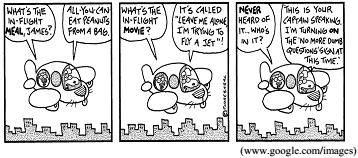
According to the cartoon, Leo is having an uncomfortable
flight
According to the text, studying abroad
Write (T) for the true statements or (F) for the false statements.
( ) Antarctica must be preserved for research purposes.
( ) Tourists don’t need the scientists to visit Antarctica.
( ) Simple mistakes can be damaged by opening the wrong door.
( ) Tourists can make simple mistakes and damage some of the researchers’ projects.
Choose the correct alternative.
"If we lived on a planet where nothing ever changed, there would be little to do. There would be nothing to figure out. There would be no impetus for science. And if we lived in an unpredictable world, where things changed in random or very complex ways, we would not be able to figure things out. ___________________________. If I throw a stick up in the air, it always falls down. If the sun sets in the west, it always rises again the next morning in the east. And so it becomes possible to figure things out. We can do science, and with it we can improve our lives."
Carl Sagan, http://todayinsci.com/S/Sagan_Carl/SaganCarl-Quotations.htm Acessado em 14 de Abril de 2015.
Text 2
MATERIALS OF IMPORTANCE
Carbonated Beverages Containers
One common item that presents some interesting material property requirements is the container for carbonated beverages. The material used for this application must satisfy the following constraints: provide a barrier to the passage of carbon dioxide, which is under pressure in the container; be nontoxic, unreactive with the beverage, and, preferably be recyclable; be relatively strong, and capable of surviving a drop from a height of several feet when containing the beverage; be inexpensive and the cost to fabricate the final shape should be relatively low; if optically transparent, retain its optical clarity; and capable of being produced having different colors and/or able to be adorned with decorative labels. All three of the basic material types—metal (aluminum), ceramic (glass), and polymer (polyester plastic)—are used for carbonated beverage containers.
All of these materials are nontoxic and unreactive with beverages. In addition, each material has its pros and cons. For example, the aluminum alloy is relatively strong (but easily dented), is a very good barrier to the diffusion of carbon dioxide, is easily recycled, beverages are cooled rapidly, and labels may be painted onto its surface. On the other hand, the cans are optically opaque, and relatively expensive to produce. Glass is impervious to the passage of carbon dioxide, is a relatively inexpensive material, may be recycled, but it cracks and fractures easily, and glass bottles are relatively heavy. Whereas the plastic is relatively strong, may be made optically transparent, is inexpensive and lightweight, and is recyclable, it is not as impervious to the passage of carbon dioxide as the aluminum and glass. For example, you may have noticed that beverages in aluminum and glass containers retain their carbonization (i.e., “fizz”) for several years, whereas those in two-liter plastic bottles “go flat” within a few months.
Disponível em
https://onedrive.live.com/view.aspx?resid=FA116F188700E8B6!608&ithint=file%2cpdf&app=WordPdf&authkey=!AcrrQAFlJ83JGjU Acesso em 15 Abr 2015.
Water: Unclogging the finance
How to improve water systems is one challenge; financing them is another. Public authorities in most countries play the main role in implementing and funding water infrastructure, but it is a model that is under increasing pressure, with government budgets and banks still prudent about issuing credit.
There is no generic funding model that can be applied to every need; the sheer diversity of water infrastructures and sources of financing to be identified, scanned and tapped in line with particular investment types and needs.
There may be small-scale projects initiated by local entrepreneurs, or large infrastructures that serve multiple , such as energy and heavy manufacturing. Some investments may involve green ecosystems to supply, store or filter water.
Not only will these infrastructures have different financing needs, but will access funds in different ways, for instance through capital markets, loans, funds, public expenditures, etc.
Take large dams and large reservoirs. These are costly, long-term affairs. The Three Gorges Dam project in China, for instance, could cost over US$22 billion, according to government ________, including construction, relocation of residents and financing costs.
Moreover, cost recovery is not expected to occur for 10 years after full operation starts. Such major projects tend to be financed major development banks such as the Asian Development Bank and World Bank, and institutional investors such as pension funds. The sources for long-term financing are expanding, with the emergence of sovereign funds and philanthropists, of new groups like the Chinese-led Asian Infrastructure Investment Bank, opened in March 2015.
But before leaping into major such as dams, policymakers must answer several questions. Will the construction lock them in and still be valuable in 25, 50 or 100 years’ time? After all, there are several cases of investments that have fallen into disuse or underuse, such as a desalination in Sydney that was built during a severe but temporary drought, and dams in France’s Loire Valley that are now being decommissioned at some cost. Had a more forwardprobing “value options” approach been used in planning them, they in the first place. ( . . . )
Disponível em http://www.oecdobserver.org/news/fullstory.php/aid/4825/ Water:_Unclogging_the_finance.html#sthash.kRhyDJ1.dpuf Acesso em 16 Abr 2015.
PARA A QUESTÃO, ESCOLHA A ALTERNATIVA QUE COMPLETA O TEXTO 1 CORRETAMENTE.
"If we lived on a planet where nothing ever changed, there would be little to do. There would be nothing to figure out. There would be no impetus for science. And if we lived in an unpredictable world, where things changed in random or very complex ways, we would not be able to figure things out. ___________________________. If I throw a stick up in the air, it always falls down. If the sun sets in the west, it always rises again the next morning in the east. And so it becomes possible to figure things out. We can do science, and with it we can improve our lives."
Carl Sagan, http://todayinsci.com/S/Sagan_Carl/SaganCarl-Quotations.htm Acessado em 14 de Abril de 2015.
Text 4
Case Study 1: Damage Assessment in the Philippines after Typhoon Haiyan
In November 2013, Super Typhoon Haiyan devastated the city of Tacloban in the Philippines. Soon after, a case the size of a backpack arrived, accompanied by a small team of experts. This pilot project to bring in a UAV, with a range of up to five kilometers and a high-resolution video camera, to assist humanitarian responders was the work of a partnership between several private sector firms and NetHope, a consortium of NGOs.
The Philippines lacked the necessary regulations, so the use of the UAV was cleared by a special agreement with the Mayor of Tacloban. The UAV was covered with insurance that covered damage or injury due to malfunction.
The UAV was used first to identify where to set up a base of operations, and then to check if roads were passable, a task that could take days when done on foot or by helicopter. The UAV was also flown up the coast to evaluate damage from storm surge and flooding and to see which villages had been affected. The aerial assessments “really helped to speed up …efforts, cut down on wasted time and work, and make them more accurate in their targeting of assistance.” It was also suggested that the UAV might have located survivors in the rubble using infrared cameras if it had arrived within 72 hours.
Interest is building in developing local capacity for using UAVs in disaster response. SkyEye Inc., a local start-up, is working with the Ateneo de Manila University to train five teams across the Philippines to locally deploy UAVs in preparation for next typhoon season.
UAV= unmanned aerial vehicle
NGOs= Non-Governmental Organizations
Disponível em http://www.unocha.org/about-us/publications/flagship-publications/*/72 Acesso em 15 Abr 2015.
Text 4
Case Study 1: Damage Assessment in the Philippines after Typhoon Haiyan
In November 2013, Super Typhoon Haiyan devastated the city of Tacloban in the Philippines. Soon after, a case the size of a backpack arrived, accompanied by a small team of experts. This pilot project to bring in a UAV, with a range of up to five kilometers and a high-resolution video camera, to assist humanitarian responders was the work of a partnership between several private sector firms and NetHope, a consortium of NGOs.
The Philippines lacked the necessary regulations, so the use of the UAV was cleared by a special agreement with the Mayor of Tacloban. The UAV was covered with insurance that covered damage or injury due to malfunction.
The UAV was used first to identify where to set up a base of operations, and then to check if roads were passable, a task that could take days when done on foot or by helicopter. The UAV was also flown up the coast to evaluate damage from storm surge and flooding and to see which villages had been affected. The aerial assessments “really helped to speed up …efforts, cut down on wasted time and work, and make them more accurate in their targeting of assistance.” It was also suggested that the UAV might have located survivors in the rubble using infrared cameras if it had arrived within 72 hours.
Interest is building in developing local capacity for using UAVs in disaster response. SkyEye Inc., a local start-up, is working with the Ateneo de Manila University to train five teams across the Philippines to locally deploy UAVs in preparation for next typhoon season.
UAV= unmanned aerial vehicle
NGOs= Non-Governmental Organizations
Disponível em http://www.unocha.org/about-us/publications/flagship-publications/*/72 Acesso em 15 Abr 2015.
Text 4
Case Study 1: Damage Assessment in the Philippines after Typhoon Haiyan
In November 2013, Super Typhoon Haiyan devastated the city of Tacloban in the Philippines. Soon after, a case the size of a backpack arrived, accompanied by a small team of experts. This pilot project to bring in a UAV, with a range of up to five kilometers and a high-resolution video camera, to assist humanitarian responders was the work of a partnership between several private sector firms and NetHope, a consortium of NGOs.
The Philippines lacked the necessary regulations, so the use of the UAV was cleared by a special agreement with the Mayor of Tacloban. The UAV was covered with insurance that covered damage or injury due to malfunction.
The UAV was used first to identify where to set up a base of operations, and then to check if roads were passable, a task that could take days when done on foot or by helicopter. The UAV was also flown up the coast to evaluate damage from storm surge and flooding and to see which villages had been affected. The aerial assessments “really helped to speed up …efforts, cut down on wasted time and work, and make them more accurate in their targeting of assistance.” It was also suggested that the UAV might have located survivors in the rubble using infrared cameras if it had arrived within 72 hours.
Interest is building in developing local capacity for using UAVs in disaster response. SkyEye Inc., a local start-up, is working with the Ateneo de Manila University to train five teams across the Philippines to locally deploy UAVs in preparation for next typhoon season.
UAV= unmanned aerial vehicle
NGOs= Non-Governmental Organizations
Disponível em http://www.unocha.org/about-us/publications/flagship-publications/*/72 Acesso em 15 Abr 2015.