Questões Militares
Sobre interpretação de texto | reading comprehension em inglês
Foram encontradas 2.325 questões


Choose the best alternative, according to the cartoon.

According to what the boy says, he _____________.

According to the text, the purpose of the new machine is to
__________________.

Read the words by songwriter Jimi Hendrix and answer
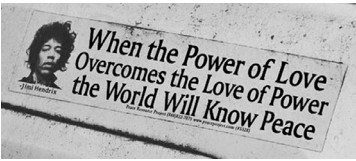
Choose the alternative that best explains the words in the
picture.

The word “bored”, used twice in the cartoon, is NOT
closest in meaning to __________.

Choose the best alternative according to the text.
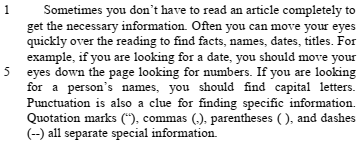

Fill in the blank with the option that best completes the text.
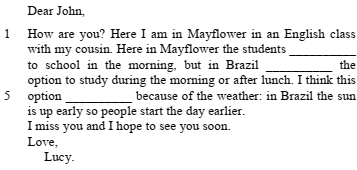
Read the text and complete the blanks with the appropriate verbs.
Utilize o texto abaixo para responder a questão:
Argentina Raises Key Rate to 40%, Bringing Economic Uncertainty
His approach — emphasizing lower tariffs, accurate economic data, trade pacts and the freer flow of capital — was largely aimed at coaxing foreign investment back to Argentina and ending the economic exile that followed the country’s default in 2001.
But over the last week, Argentina has been reminded that when capital is free to flow in, it can also flow out, creating profound economic implications.
With foreign investors pulling their money en masse, Argentina’s central bank was forced to take drastic action to stabilize the country’s currency. On Friday, policymakers lifted the benchmark interest rate to 40 percent after days of intervening heavily in financial markets.
While it helped settle the markets, the move will weigh on the prospects for the president’s ambitious economic overhaul. It also has the potential to crimp growth, adding to political discontent.
The rate increase, a day after the Argentine peso fell 8.5 percent against the dollar, was the third in a week. The central bank said it would use “all the tools at its disposal” to slow inflation, which in March was up 25 percent from a year earlier, to 15 percent this year, a goal most analysts now see as unrealistic.
In parallel, officials announced that they would cut government spending, and reduce the primary budget deficit to 2.7 percent, from the earlier goal of 3.2 percent. Their decision was seen as a response to criticism from investors that Mr. Macri’s government had not been cutting spending quickly enough.
Mr. Macri was sworn into office in December 2015. Argentina had been closed to international markets for more than a decade amid a long-running legal fight with bondholders that followed a default on its debt.
Early on, Mr. Macri’s policies were greeted with widespread optimism by financial markets, which gobbled up the country’s newly issued bonds.
POLITI, D. MATT, P Argentina Raises Key Rate to 40%, Bringing Economic Uncertainty. The New York Times, 2018. Disponível em: <https:// www.nytimes.com/2018/05/04/business/economy/argentina-economyinterest-rates.html?rref=collection%2Fsectioncollection%2Famericas&actio n=click&contentCollection=americas®ion=stream&module=stream_unit &version=latest&contentPlacement=8&pgtype=sectionfront>
According to the fragment text above, which other containment action was taken by officials?
Utilize o texto abaixo para responder a questão.
Climate change solutions
According to climate experts, one big problem we have right now is too much CO2 in the air. If we can out CO2 into the air, can we take it back out? At the moment, trees do this job - just not fast enough. So could we make treelike machines to do the job? Scientist Klaus Lackner of Columbia University in New York says yes and several companies are already developing the idea.
Smarter power for vehicles
• Electric car are more and more common all over the world, and the technology is getting better. And if you recharge the batteries with electricity which comes from solar and wind power, they are very clean technology.
• By law, the petrol sold in Brazil is 25% ethanol - a fuel made from sugar. It pollutes less than ordinary petrol. However, growing the sugar uses a lot of energy, and some people say the fuel can damage car engines.
• Hydrogen - a natural part of water - is used in some vehicles, including buses in cities around the world. It’s a great fuel, because the only waste it produces is water. The big problem is that making hydrogen fuel creates a lot of pollution.
Smoke to make shade?
Smoke from volcanoes and forest fires is known to block the sun and cool the Earth. Scientists at the University of Bristol in the UK have done experiments to test the idea of creating smoke to cool the world. The idea is disliked by most experts as a possibly very dangerous way to fight climate change. Dr Hugh Hunt, director of the research projects, said that the technology won’t be developed in the near future.
A vegetarian diet?
According to a report by the United Nations, producing meat creates more greenhouse gas emissions than transport - 18% of the world’s total. Eating less meat would help to reduce emissions and possibly fight global warming. Cities in Belgium, Brazil, Germany and South Africa - among many others - have “no-meat” days to bring the issue to people’s attention, and try to fight climate change close to home.
These are big ideas, but the solution in the end may be a big sum of small actions.
LANSFORD, L. Keynote Intermediate Workbook: 1. ed. National
Geographic Learning, a part of Cengage Learning, 2016
Utilize o texto abaixo para responder a questão.
Climate change solutions
According to climate experts, one big problem we have right now is too much CO2 in the air. If we can out CO2 into the air, can we take it back out? At the moment, trees do this job - just not fast enough. So could we make treelike machines to do the job? Scientist Klaus Lackner of Columbia University in New York says yes and several companies are already developing the idea.
Smarter power for vehicles
• Electric car are more and more common all over the world, and the technology is getting better. And if you recharge the batteries with electricity which comes from solar and wind power, they are very clean technology.
• By law, the petrol sold in Brazil is 25% ethanol - a fuel made from sugar. It pollutes less than ordinary petrol. However, growing the sugar uses a lot of energy, and some people say the fuel can damage car engines.
• Hydrogen - a natural part of water - is used in some vehicles, including buses in cities around the world. It’s a great fuel, because the only waste it produces is water. The big problem is that making hydrogen fuel creates a lot of pollution.
Smoke to make shade?
Smoke from volcanoes and forest fires is known to block the sun and cool the Earth. Scientists at the University of Bristol in the UK have done experiments to test the idea of creating smoke to cool the world. The idea is disliked by most experts as a possibly very dangerous way to fight climate change. Dr Hugh Hunt, director of the research projects, said that the technology won’t be developed in the near future.
A vegetarian diet?
According to a report by the United Nations, producing meat creates more greenhouse gas emissions than transport - 18% of the world’s total. Eating less meat would help to reduce emissions and possibly fight global warming. Cities in Belgium, Brazil, Germany and South Africa - among many others - have “no-meat” days to bring the issue to people’s attention, and try to fight climate change close to home.
These are big ideas, but the solution in the end may be a big sum of small actions.
LANSFORD, L. Keynote Intermediate Workbook: 1. ed. National
Geographic Learning, a part of Cengage Learning, 2016
Utilize o texto abaixo para responder a questão.
Climate change solutions
According to climate experts, one big problem we have right now is too much CO2 in the air. If we can out CO2 into the air, can we take it back out? At the moment, trees do this job - just not fast enough. So could we make treelike machines to do the job? Scientist Klaus Lackner of Columbia University in New York says yes and several companies are already developing the idea.
Smarter power for vehicles
• Electric car are more and more common all over the world, and the technology is getting better. And if you recharge the batteries with electricity which comes from solar and wind power, they are very clean technology.
• By law, the petrol sold in Brazil is 25% ethanol - a fuel made from sugar. It pollutes less than ordinary petrol. However, growing the sugar uses a lot of energy, and some people say the fuel can damage car engines.
• Hydrogen - a natural part of water - is used in some vehicles, including buses in cities around the world. It’s a great fuel, because the only waste it produces is water. The big problem is that making hydrogen fuel creates a lot of pollution.
Smoke to make shade?
Smoke from volcanoes and forest fires is known to block the sun and cool the Earth. Scientists at the University of Bristol in the UK have done experiments to test the idea of creating smoke to cool the world. The idea is disliked by most experts as a possibly very dangerous way to fight climate change. Dr Hugh Hunt, director of the research projects, said that the technology won’t be developed in the near future.
A vegetarian diet?
According to a report by the United Nations, producing meat creates more greenhouse gas emissions than transport - 18% of the world’s total. Eating less meat would help to reduce emissions and possibly fight global warming. Cities in Belgium, Brazil, Germany and South Africa - among many others - have “no-meat” days to bring the issue to people’s attention, and try to fight climate change close to home.
These are big ideas, but the solution in the end may be a big sum of small actions.
LANSFORD, L. Keynote Intermediate Workbook: 1. ed. National
Geographic Learning, a part of Cengage Learning, 2016
International Civil Defence Organisation
1. Introduction
Fires are the accidents which occur most frequently, whose causes are the most diverse and which require intervention methods and techniques adapted to the conditions and needs of each incident. Depending on the type of fire (nature of the material ablaze), meteorological conditions (wind) and the effectiveness of the intervention, material damage can be limited (a single car, building or production or storage warehouse installation), or affect wide areas (forest or agricultural fires, hydrocarbons, gas or other highly flammable products, storage or piping installations, harbour installations and rail or marine transport equipment). […]
2. Preventive and protective measures
Fires can spread more or less rapidly depending on their causes, the nature of the material and goods alight, the fire prevention installations (automatic sprinklers), meteorological conditions, the ways the population is informed and the initiative it shows, as well as the speed and efficiency of the intervening services and of their fire-fighting equipment. In the light of experience, prevention is seen to be most important and consists of two distinct components. On the one hand, the primary responsibility falling upon the political authorities empowered to implement the legal prescriptions concerning fire protection, to forecast accidents and to inform the population, as well as to set up measures and means for fighting fires and explosions. On the other hand, the responsible behaviour of each individual based upon an education geared towards caution and the respect of instructions in case of fire. Defining, and controlling the implementation of, the particular rules of protection against fires, specific to each enterprise presenting a potential danger, including the training of security personnel, is also relevant in this context. The many types of fire and the preventive and protective measures which relate to them, make it advisable to limit the present study to the specific measures falling to the political authorities in one area only, namely that of “forest fires”. This type of fire is of particular interest to developing countries and the preventive measures to be applied have a general representative value, that is:
– organising an observation service, prevention and alarm (security) service at local and regional levels;
– implementing legislation regulating the use of fire by all the population present in or at the edge of forests, and more particularly by owners and individuals exercising a professional activity in sensitive areas;
– planning and concrete preparation (periodic maintenance) for fire-fighting through adequate landscaping of the territory and appropriate forest cultivation limiting fire propagation (alternating vegetation, clearance, trimming), creating and maintaining access paths (extinction) and fire-break areas as well as fire-fighting equipment such as water supplies (conduits, cisterns), watch towers and meteorological posts, and the construction of helicopter landing pads;
– surveillance and detection of fires as soon as the danger of fires is forecast by the ad hoc meteorological service (which comprises automatic or mobile statistics posts observing the winds and the vegetation: dryness, force, direction, evolution);
– as soon as the danger of fire increases, activating an alarm plan (basic intervention plan) requiring the engagement of preventive intervention squads (firemen), and their wide positioning as near as possible to the threatened zones, and making available water bombers and specialised aerial machines ready for action;
– preparation and concretisation (organisation) of an intervention mechanism: this requires the setting up of specialised management programmes ensuring the coordination of powerful and efficient equipment and means for fighting forest fires (instruction);
– preparedness management and the coordination of the use of the means of intervention of the authorities and the information and alarm services for the population require a secure transmission network (radio network);
– planning the evacuation of the population possibly under threat in the various sensitive areas, particularly if there are risks of explosion (reservoirs and gas conduits explosives or ammunition dumps, hydrocarbon production, handling or transport installations, other dangerous material, etc.).
[...]
Available at: <http://www.icdo.org/en/disasters/man-made-disasters/industrial-accidents/fire>
International Civil Defence Organisation
1. Introduction
Fires are the accidents which occur most frequently, whose causes are the most diverse and which require intervention methods and techniques adapted to the conditions and needs of each incident. Depending on the type of fire (nature of the material ablaze), meteorological conditions (wind) and the effectiveness of the intervention, material damage can be limited (a single car, building or production or storage warehouse installation), or affect wide areas (forest or agricultural fires, hydrocarbons, gas or other highly flammable products, storage or piping installations, harbour installations and rail or marine transport equipment). […]
2. Preventive and protective measures
Fires can spread more or less rapidly depending on their causes, the nature of the material and goods alight, the fire prevention installations (automatic sprinklers), meteorological conditions, the ways the population is informed and the initiative it shows, as well as the speed and efficiency of the intervening services and of their fire-fighting equipment. In the light of experience, prevention is seen to be most important and consists of two distinct components. On the one hand, the primary responsibility falling upon the political authorities empowered to implement the legal prescriptions concerning fire protection, to forecast accidents and to inform the population, as well as to set up measures and means for fighting fires and explosions. On the other hand, the responsible behaviour of each individual based upon an education geared towards caution and the respect of instructions in case of fire. Defining, and controlling the implementation of, the particular rules of protection against fires, specific to each enterprise presenting a potential danger, including the training of security personnel, is also relevant in this context. The many types of fire and the preventive and protective measures which relate to them, make it advisable to limit the present study to the specific measures falling to the political authorities in one area only, namely that of “forest fires”. This type of fire is of particular interest to developing countries and the preventive measures to be applied have a general representative value, that is:
– organising an observation service, prevention and alarm (security) service at local and regional levels;
– implementing legislation regulating the use of fire by all the population present in or at the edge of forests, and more particularly by owners and individuals exercising a professional activity in sensitive areas;
– planning and concrete preparation (periodic maintenance) for fire-fighting through adequate landscaping of the territory and appropriate forest cultivation limiting fire propagation (alternating vegetation, clearance, trimming), creating and maintaining access paths (extinction) and fire-break areas as well as fire-fighting equipment such as water supplies (conduits, cisterns), watch towers and meteorological posts, and the construction of helicopter landing pads;
– surveillance and detection of fires as soon as the danger of fires is forecast by the ad hoc meteorological service (which comprises automatic or mobile statistics posts observing the winds and the vegetation: dryness, force, direction, evolution);
– as soon as the danger of fire increases, activating an alarm plan (basic intervention plan) requiring the engagement of preventive intervention squads (firemen), and their wide positioning as near as possible to the threatened zones, and making available water bombers and specialised aerial machines ready for action;
– preparation and concretisation (organisation) of an intervention mechanism: this requires the setting up of specialised management programmes ensuring the coordination of powerful and efficient equipment and means for fighting forest fires (instruction);
– preparedness management and the coordination of the use of the means of intervention of the authorities and the information and alarm services for the population require a secure transmission network (radio network);
– planning the evacuation of the population possibly under threat in the various sensitive areas, particularly if there are risks of explosion (reservoirs and gas conduits explosives or ammunition dumps, hydrocarbon production, handling or transport installations, other dangerous material, etc.).
[...]
Available at: <http://www.icdo.org/en/disasters/man-made-disasters/industrial-accidents/fire>
International Civil Defence Organisation
1. Introduction
Fires are the accidents which occur most frequently, whose causes are the most diverse and which require intervention methods and techniques adapted to the conditions and needs of each incident. Depending on the type of fire (nature of the material ablaze), meteorological conditions (wind) and the effectiveness of the intervention, material damage can be limited (a single car, building or production or storage warehouse installation), or affect wide areas (forest or agricultural fires, hydrocarbons, gas or other highly flammable products, storage or piping installations, harbour installations and rail or marine transport equipment). […]
2. Preventive and protective measures
Fires can spread more or less rapidly depending on their causes, the nature of the material and goods alight, the fire prevention installations (automatic sprinklers), meteorological conditions, the ways the population is informed and the initiative it shows, as well as the speed and efficiency of the intervening services and of their fire-fighting equipment. In the light of experience, prevention is seen to be most important and consists of two distinct components. On the one hand, the primary responsibility falling upon the political authorities empowered to implement the legal prescriptions concerning fire protection, to forecast accidents and to inform the population, as well as to set up measures and means for fighting fires and explosions. On the other hand, the responsible behaviour of each individual based upon an education geared towards caution and the respect of instructions in case of fire. Defining, and controlling the implementation of, the particular rules of protection against fires, specific to each enterprise presenting a potential danger, including the training of security personnel, is also relevant in this context. The many types of fire and the preventive and protective measures which relate to them, make it advisable to limit the present study to the specific measures falling to the political authorities in one area only, namely that of “forest fires”. This type of fire is of particular interest to developing countries and the preventive measures to be applied have a general representative value, that is:
– organising an observation service, prevention and alarm (security) service at local and regional levels;
– implementing legislation regulating the use of fire by all the population present in or at the edge of forests, and more particularly by owners and individuals exercising a professional activity in sensitive areas;
– planning and concrete preparation (periodic maintenance) for fire-fighting through adequate landscaping of the territory and appropriate forest cultivation limiting fire propagation (alternating vegetation, clearance, trimming), creating and maintaining access paths (extinction) and fire-break areas as well as fire-fighting equipment such as water supplies (conduits, cisterns), watch towers and meteorological posts, and the construction of helicopter landing pads;
– surveillance and detection of fires as soon as the danger of fires is forecast by the ad hoc meteorological service (which comprises automatic or mobile statistics posts observing the winds and the vegetation: dryness, force, direction, evolution);
– as soon as the danger of fire increases, activating an alarm plan (basic intervention plan) requiring the engagement of preventive intervention squads (firemen), and their wide positioning as near as possible to the threatened zones, and making available water bombers and specialised aerial machines ready for action;
– preparation and concretisation (organisation) of an intervention mechanism: this requires the setting up of specialised management programmes ensuring the coordination of powerful and efficient equipment and means for fighting forest fires (instruction);
– preparedness management and the coordination of the use of the means of intervention of the authorities and the information and alarm services for the population require a secure transmission network (radio network);
– planning the evacuation of the population possibly under threat in the various sensitive areas, particularly if there are risks of explosion (reservoirs and gas conduits explosives or ammunition dumps, hydrocarbon production, handling or transport installations, other dangerous material, etc.).
[...]
Available at: <http://www.icdo.org/en/disasters/man-made-disasters/industrial-accidents/fire>
International Civil Defence Organisation
1. Introduction
Fires are the accidents which occur most frequently, whose causes are the most diverse and which require intervention methods and techniques adapted to the conditions and needs of each incident. Depending on the type of fire (nature of the material ablaze), meteorological conditions (wind) and the effectiveness of the intervention, material damage can be limited (a single car, building or production or storage warehouse installation), or affect wide areas (forest or agricultural fires, hydrocarbons, gas or other highly flammable products, storage or piping installations, harbour installations and rail or marine transport equipment). […]
2. Preventive and protective measures
Fires can spread more or less rapidly depending on their causes, the nature of the material and goods alight, the fire prevention installations (automatic sprinklers), meteorological conditions, the ways the population is informed and the initiative it shows, as well as the speed and efficiency of the intervening services and of their fire-fighting equipment. In the light of experience, prevention is seen to be most important and consists of two distinct components. On the one hand, the primary responsibility falling upon the political authorities empowered to implement the legal prescriptions concerning fire protection, to forecast accidents and to inform the population, as well as to set up measures and means for fighting fires and explosions. On the other hand, the responsible behaviour of each individual based upon an education geared towards caution and the respect of instructions in case of fire. Defining, and controlling the implementation of, the particular rules of protection against fires, specific to each enterprise presenting a potential danger, including the training of security personnel, is also relevant in this context. The many types of fire and the preventive and protective measures which relate to them, make it advisable to limit the present study to the specific measures falling to the political authorities in one area only, namely that of “forest fires”. This type of fire is of particular interest to developing countries and the preventive measures to be applied have a general representative value, that is:
– organising an observation service, prevention and alarm (security) service at local and regional levels;
– implementing legislation regulating the use of fire by all the population present in or at the edge of forests, and more particularly by owners and individuals exercising a professional activity in sensitive areas;
– planning and concrete preparation (periodic maintenance) for fire-fighting through adequate landscaping of the territory and appropriate forest cultivation limiting fire propagation (alternating vegetation, clearance, trimming), creating and maintaining access paths (extinction) and fire-break areas as well as fire-fighting equipment such as water supplies (conduits, cisterns), watch towers and meteorological posts, and the construction of helicopter landing pads;
– surveillance and detection of fires as soon as the danger of fires is forecast by the ad hoc meteorological service (which comprises automatic or mobile statistics posts observing the winds and the vegetation: dryness, force, direction, evolution);
– as soon as the danger of fire increases, activating an alarm plan (basic intervention plan) requiring the engagement of preventive intervention squads (firemen), and their wide positioning as near as possible to the threatened zones, and making available water bombers and specialised aerial machines ready for action;
– preparation and concretisation (organisation) of an intervention mechanism: this requires the setting up of specialised management programmes ensuring the coordination of powerful and efficient equipment and means for fighting forest fires (instruction);
– preparedness management and the coordination of the use of the means of intervention of the authorities and the information and alarm services for the population require a secure transmission network (radio network);
– planning the evacuation of the population possibly under threat in the various sensitive areas, particularly if there are risks of explosion (reservoirs and gas conduits explosives or ammunition dumps, hydrocarbon production, handling or transport installations, other dangerous material, etc.).
[...]
Available at: <http://www.icdo.org/en/disasters/man-made-disasters/industrial-accidents/fire>
International Civil Defence Organisation
1. Introduction
Fires are the accidents which occur most frequently, whose causes are the most diverse and which require intervention methods and techniques adapted to the conditions and needs of each incident. Depending on the type of fire (nature of the material ablaze), meteorological conditions (wind) and the effectiveness of the intervention, material damage can be limited (a single car, building or production or storage warehouse installation), or affect wide areas (forest or agricultural fires, hydrocarbons, gas or other highly flammable products, storage or piping installations, harbour installations and rail or marine transport equipment). […]
2. Preventive and protective measures
Fires can spread more or less rapidly depending on their causes, the nature of the material and goods alight, the fire prevention installations (automatic sprinklers), meteorological conditions, the ways the population is informed and the initiative it shows, as well as the speed and efficiency of the intervening services and of their fire-fighting equipment. In the light of experience, prevention is seen to be most important and consists of two distinct components. On the one hand, the primary responsibility falling upon the political authorities empowered to implement the legal prescriptions concerning fire protection, to forecast accidents and to inform the population, as well as to set up measures and means for fighting fires and explosions. On the other hand, the responsible behaviour of each individual based upon an education geared towards caution and the respect of instructions in case of fire. Defining, and controlling the implementation of, the particular rules of protection against fires, specific to each enterprise presenting a potential danger, including the training of security personnel, is also relevant in this context. The many types of fire and the preventive and protective measures which relate to them, make it advisable to limit the present study to the specific measures falling to the political authorities in one area only, namely that of “forest fires”. This type of fire is of particular interest to developing countries and the preventive measures to be applied have a general representative value, that is:
– organising an observation service, prevention and alarm (security) service at local and regional levels;
– implementing legislation regulating the use of fire by all the population present in or at the edge of forests, and more particularly by owners and individuals exercising a professional activity in sensitive areas;
– planning and concrete preparation (periodic maintenance) for fire-fighting through adequate landscaping of the territory and appropriate forest cultivation limiting fire propagation (alternating vegetation, clearance, trimming), creating and maintaining access paths (extinction) and fire-break areas as well as fire-fighting equipment such as water supplies (conduits, cisterns), watch towers and meteorological posts, and the construction of helicopter landing pads;
– surveillance and detection of fires as soon as the danger of fires is forecast by the ad hoc meteorological service (which comprises automatic or mobile statistics posts observing the winds and the vegetation: dryness, force, direction, evolution);
– as soon as the danger of fire increases, activating an alarm plan (basic intervention plan) requiring the engagement of preventive intervention squads (firemen), and their wide positioning as near as possible to the threatened zones, and making available water bombers and specialised aerial machines ready for action;
– preparation and concretisation (organisation) of an intervention mechanism: this requires the setting up of specialised management programmes ensuring the coordination of powerful and efficient equipment and means for fighting forest fires (instruction);
– preparedness management and the coordination of the use of the means of intervention of the authorities and the information and alarm services for the population require a secure transmission network (radio network);
– planning the evacuation of the population possibly under threat in the various sensitive areas, particularly if there are risks of explosion (reservoirs and gas conduits explosives or ammunition dumps, hydrocarbon production, handling or transport installations, other dangerous material, etc.).
[...]
Available at: <http://www.icdo.org/en/disasters/man-made-disasters/industrial-accidents/fire>
Text 5


 Conheça nossos planos