Questões Militares
Comentadas sobre interpretação de texto | reading comprehension em inglês
Foram encontradas 1.577 questões


Observe the cartoon and answer the question about it.
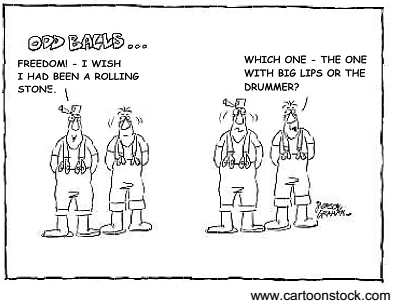
The first boy
Titanic – The Movie
Storyline
In this fiction movie, 84 years later, a 100-year-old woman named Rose DeWitt Bukater tells the story to her granddaughter Lizzy Calvert and others about her life set on April 10th 1912, on a ship called Titanic when young Rose boards the departing ship with the upper-class passengers, her mother Ruth DeWitt Bukater, and her fiancé. Meanwhile, a drifter and artist named Jack Dawson and his best friend Fabrizio De Rossi win third-class tickets to the ship in a game. She explains the whole story from departure until the death of Titanic on its first and last voyage April 15th, 1912 at 2:20 in the morning.
Adapted from http://www.imdb.com/title/tt0120338/
"My Heart Will Go On" is the love theme of the 1997 blockbuster film Titanic. It was recorded by Celine Dion. Originally released in 1997, it went to number 1 all over the world. It became Dion's biggest hit, and one of the best selling of all time, and was the world's best-selling single of 1998.
Adapted from Wikipedia
My Heart Will Go On (Celine Dion)
Soundtrack of Titanic
Every night in my dreams
I see you, I feel you,
That is how I know you go on
Far across the distance
And spaces between us
You have come to show you go on
Near, far, wherever you are
I believe that the heart does go on
Once more you open the door
And you're here in my heart
And my heart will go on and on
[...]
http://www.stlyrics.com/lyrics/titanic/myheartwillgoon
Titanic – The Movie
Storyline
In this fiction movie, 84 years later, a 100-year-old woman named Rose DeWitt Bukater tells the story to her granddaughter Lizzy Calvert and others about her life set on April 10th 1912, on a ship called Titanic when young Rose boards the departing ship with the upper-class passengers, her mother Ruth DeWitt Bukater, and her fiancé. Meanwhile, a drifter and artist named Jack Dawson and his best friend Fabrizio De Rossi win third-class tickets to the ship in a game. She explains the whole story from departure until the death of Titanic on its first and last voyage April 15th, 1912 at 2:20 in the morning.
Adapted from http://www.imdb.com/title/tt0120338/
"My Heart Will Go On" is the love theme of the 1997 blockbuster film Titanic. It was recorded by Celine Dion. Originally released in 1997, it went to number 1 all over the world. It became Dion's biggest hit, and one of the best selling of all time, and was the world's best-selling single of 1998.
Adapted from Wikipedia
My Heart Will Go On (Celine Dion)
Soundtrack of Titanic
Every night in my dreams
I see you, I feel you,
That is how I know you go on
Far across the distance
And spaces between us
You have come to show you go on
Near, far, wherever you are
I believe that the heart does go on
Once more you open the door
And you're here in my heart
And my heart will go on and on
[...]
http://www.stlyrics.com/lyrics/titanic/myheartwillgoon
Titanic – The Movie
Storyline
In this fiction movie, 84 years later, a 100-year-old woman named Rose DeWitt Bukater tells the story to her granddaughter Lizzy Calvert and others about her life set on April 10th 1912, on a ship called Titanic when young Rose boards the departing ship with the upper-class passengers, her mother Ruth DeWitt Bukater, and her fiancé. Meanwhile, a drifter and artist named Jack Dawson and his best friend Fabrizio De Rossi win third-class tickets to the ship in a game. She explains the whole story from departure until the death of Titanic on its first and last voyage April 15th, 1912 at 2:20 in the morning.
Adapted from http://www.imdb.com/title/tt0120338/
"My Heart Will Go On" is the love theme of the 1997 blockbuster film Titanic. It was recorded by Celine Dion. Originally released in 1997, it went to number 1 all over the world. It became Dion's biggest hit, and one of the best selling of all time, and was the world's best-selling single of 1998.
Adapted from Wikipedia
My Heart Will Go On (Celine Dion)
Soundtrack of Titanic
Every night in my dreams
I see you, I feel you,
That is how I know you go on
Far across the distance
And spaces between us
You have come to show you go on
Near, far, wherever you are
I believe that the heart does go on
Once more you open the door
And you're here in my heart
And my heart will go on and on
[...]
http://www.stlyrics.com/lyrics/titanic/myheartwillgoon
Twilight
Twilight is a 2008 American romantic vampire film based ___ Stephenie Meyer’s popular novel of the same name. It is the first film in The Twilight Saga film series. This film focuses on the development of the relationship between Bella Swan and Edward Cullen (a vampire), and the subsequent efforts of Cullen and his family to keep Swan safe ___ a coven of evil vampires.
The project was in development for approximately 3 years ___ Paramount Pictures, during which time a screen adaptation that differed significantly from the novel was written. Principal photography took 44 days and the film was primarily shot in Oregon.
Twilight was theatrically released ___ November 21 2010, grossing over US$392 million worldwide and became the most purchased DVD of the year. The soundtrack was released in the same year. Following the success of the film, New Moon and Eclipse, the next two novels in the series, were produced as films the following year.
Adapted from Wikipedia
The Mona Lisa
Leonardo Da Vinci’s Mona Lisa is widely recognized as the most famous painting of all time. She has aroused admiration, curiosity and suspicion for over 500 years. She can provoke a reaction known as the Mona Lisa Syndrome: the viewer is enchanted by her legendary smile, which becomes increasingly enigmatic the more you look at it.
As it will never be sold, the Mona Lisa is priceless, although for insurance reasons it is believed to be valued at anything up to $ 1 billion.
( Adapted from Move – Intermediate)
GLOSSARY
to arouse – despertar
to enchant – encantar
legendary – fabuloso, lendário
insurance – apólice de seguro
According to the text, the Mona Lisa
Service Animals
A Therapy Dog is a kind of service animal – an animal that helps people. The most common service animal is a seeing eye dog. A seeing eye dog helps blind people. However, dogs help people in many other ways. Hearing ear dogs help people with hearing problems. These dogs listen for specific noises, such as a fire alarm. When the dog hears the sound, the dog touches the owner. However, if it’s an emergency, the dog may pull the owner out of danger. Usually small dogs are hearing ear dogs because they are easy to care for. Wheelchair assistance dogs are much larger because the dog’s main job is pulling the wheelchair. These dogs also open doors and get items for their owners, such as magazines.
(Adapted from Access Reading – Thompson)
EXTRACT 1
Japan’s shipyards remain intact after quake
Japan’s major shipyards escaped the full impact of the March 11 earthquake and tsunami that struck the northeastern coast of the country with full force. An official at the Japan Ship Exporters’ Association said the devastating natural disaster “will have no impact on future export ship orders at all”. Although several small shipyards in the quake-hit areas were affected, major Japanese shipyards that build large vessels for exports are concentrated in western Japan and remain intact, the official said. Mitsui Engineering & Shipbuilding sustained “slight material damages” in the company’s Kasai Center and Chiba Works but did not consider such slight damages would cause serious impact on operations. “The rotational schedule of interruption of power supply due to the earthquake may affect our operation at our works and subsidiaries. However, the degree of the impact is not known now,” the company said in a statement. Japanese export ship orders rose for the 15th consecutive month in February o a year-on-year basis. Japanese shipbuilders received orders for 277 export vessels – 259 bulk carriers, 10 oil tankers and eight general cargo vessels – in the April-February period.
(Adapted from: www.australianmerchantnavy.com, March 2011)
EXTRACT 2
Tsnunami Debris Expected on U.S. Shores in 3 Years
The powerful tsunami triggered by the 9.0 Japanese earthquake destroyed coastal towns near Sendai, washing such things as houses and cars into the ocean. Projections of where this debris might head have been made at the international Pacific Research Center, university of Hawaii at Manoa. What their model predicts about the tsunami debris is that they first spread out eastward from the Japan Coast in the North Pacific Subtropical Gyre. In a year, the Papahanaumokuakea Marine National Monument will see pieces washing up on its shores; in two years, the remaining Hawaiian islands will see some effects; in three years, the plume will reach the US West Coast, dumping debris on Californian beaches and the beaches of British Columbia, Alaska, and Baja California. The debris will then drift into the famous floating junk yard, the North Pacific Garbage Patch, where it will wander around and break into smaller and smaller pieces. In five years, Hawaii shores can expect to see another barrage of debris that is stronger and longer-lasting than the first one. Much of the debris leaving the North Pacific Garbage Patch ends up on Hawaii’s reefs and beaches. These model projections will help to guide clean-up and tracking operations.
(Adapted from: www.geog.ucsb.edu, April 2011)
EXTRACT 1
Japan’s shipyards remain intact after quake
Japan’s major shipyards escaped the full impact of the March 11 earthquake and tsunami that struck the northeastern coast of the country with full force. An official at the Japan Ship Exporters’ Association said the devastating natural disaster “will have no impact on future export ship orders at all”. Although several small shipyards in the quake-hit areas were affected, major Japanese shipyards that build large vessels for exports are concentrated in western Japan and remain intact, the official said. Mitsui Engineering & Shipbuilding sustained “slight material damages” in the company’s Kasai Center and Chiba Works but did not consider such slight damages would cause serious impact on operations. “The rotational schedule of interruption of power supply due to the earthquake may affect our operation at our works and subsidiaries. However, the degree of the impact is not known now,” the company said in a statement. Japanese export ship orders rose for the 15th consecutive month in February o a year-on-year basis. Japanese shipbuilders received orders for 277 export vessels – 259 bulk carriers, 10 oil tankers and eight general cargo vessels – in the April-February period.
(Adapted from: www.australianmerchantnavy.com, March 2011)
EXTRACT 2
Tsnunami Debris Expected on U.S. Shores in 3 Years
The powerful tsunami triggered by the 9.0 Japanese earthquake destroyed coastal towns near Sendai, washing such things as houses and cars into the ocean. Projections of where this debris might head have been made at the international Pacific Research Center, university of Hawaii at Manoa. What their model predicts about the tsunami debris is that they first spread out eastward from the Japan Coast in the North Pacific Subtropical Gyre. In a year, the Papahanaumokuakea Marine National Monument will see pieces washing up on its shores; in two years, the remaining Hawaiian islands will see some effects; in three years, the plume will reach the US West Coast, dumping debris on Californian beaches and the beaches of British Columbia, Alaska, and Baja California. The debris will then drift into the famous floating junk yard, the North Pacific Garbage Patch, where it will wander around and break into smaller and smaller pieces. In five years, Hawaii shores can expect to see another barrage of debris that is stronger and longer-lasting than the first one. Much of the debris leaving the North Pacific Garbage Patch ends up on Hawaii’s reefs and beaches. These model projections will help to guide clean-up and tracking operations.
(Adapted from: www.geog.ucsb.edu, April 2011)
EXTRACT 1
Japan’s shipyards remain intact after quake
Japan’s major shipyards escaped the full impact of the March 11 earthquake and tsunami that struck the northeastern coast of the country with full force. An official at the Japan Ship Exporters’ Association said the devastating natural disaster “will have no impact on future export ship orders at all”. Although several small shipyards in the quake-hit areas were affected, major Japanese shipyards that build large vessels for exports are concentrated in western Japan and remain intact, the official said. Mitsui Engineering & Shipbuilding sustained “slight material damages” in the company’s Kasai Center and Chiba Works but did not consider such slight damages would cause serious impact on operations. “The rotational schedule of interruption of power supply due to the earthquake may affect our operation at our works and subsidiaries. However, the degree of the impact is not known now,” the company said in a statement. Japanese export ship orders rose for the 15th consecutive month in February o a year-on-year basis. Japanese shipbuilders received orders for 277 export vessels – 259 bulk carriers, 10 oil tankers and eight general cargo vessels – in the April-February period.
(Adapted from: www.australianmerchantnavy.com, March 2011)
EXTRACT 2
Tsnunami Debris Expected on U.S. Shores in 3 Years
The powerful tsunami triggered by the 9.0 Japanese earthquake destroyed coastal towns near Sendai, washing such things as houses and cars into the ocean. Projections of where this debris might head have been made at the international Pacific Research Center, university of Hawaii at Manoa. What their model predicts about the tsunami debris is that they first spread out eastward from the Japan Coast in the North Pacific Subtropical Gyre. In a year, the Papahanaumokuakea Marine National Monument will see pieces washing up on its shores; in two years, the remaining Hawaiian islands will see some effects; in three years, the plume will reach the US West Coast, dumping debris on Californian beaches and the beaches of British Columbia, Alaska, and Baja California. The debris will then drift into the famous floating junk yard, the North Pacific Garbage Patch, where it will wander around and break into smaller and smaller pieces. In five years, Hawaii shores can expect to see another barrage of debris that is stronger and longer-lasting than the first one. Much of the debris leaving the North Pacific Garbage Patch ends up on Hawaii’s reefs and beaches. These model projections will help to guide clean-up and tracking operations.
(Adapted from: www.geog.ucsb.edu, April 2011)
EXTRACT 1
Japan’s shipyards remain intact after quake
Japan’s major shipyards escaped the full impact of the March 11 earthquake and tsunami that struck the northeastern coast of the country with full force. An official at the Japan Ship Exporters’ Association said the devastating natural disaster “will have no impact on future export ship orders at all”. Although several small shipyards in the quake-hit areas were affected, major Japanese shipyards that build large vessels for exports are concentrated in western Japan and remain intact, the official said. Mitsui Engineering & Shipbuilding sustained “slight material damages” in the company’s Kasai Center and Chiba Works but did not consider such slight damages would cause serious impact on operations. “The rotational schedule of interruption of power supply due to the earthquake may affect our operation at our works and subsidiaries. However, the degree of the impact is not known now,” the company said in a statement. Japanese export ship orders rose for the 15th consecutive month in February o a year-on-year basis. Japanese shipbuilders received orders for 277 export vessels – 259 bulk carriers, 10 oil tankers and eight general cargo vessels – in the April-February period.
(Adapted from: www.australianmerchantnavy.com, March 2011)
EXTRACT 2
Tsnunami Debris Expected on U.S. Shores in 3 Years
The powerful tsunami triggered by the 9.0 Japanese earthquake destroyed coastal towns near Sendai, washing such things as houses and cars into the ocean. Projections of where this debris might head have been made at the international Pacific Research Center, university of Hawaii at Manoa. What their model predicts about the tsunami debris is that they first spread out eastward from the Japan Coast in the North Pacific Subtropical Gyre. In a year, the Papahanaumokuakea Marine National Monument will see pieces washing up on its shores; in two years, the remaining Hawaiian islands will see some effects; in three years, the plume will reach the US West Coast, dumping debris on Californian beaches and the beaches of British Columbia, Alaska, and Baja California. The debris will then drift into the famous floating junk yard, the North Pacific Garbage Patch, where it will wander around and break into smaller and smaller pieces. In five years, Hawaii shores can expect to see another barrage of debris that is stronger and longer-lasting than the first one. Much of the debris leaving the North Pacific Garbage Patch ends up on Hawaii’s reefs and beaches. These model projections will help to guide clean-up and tracking operations.
(Adapted from: www.geog.ucsb.edu, April 2011)
EXTRACT 1
Japan’s shipyards remain intact after quake
Japan’s major shipyards escaped the full impact of the March 11 earthquake and tsunami that struck the northeastern coast of the country with full force. An official at the Japan Ship Exporters’ Association said the devastating natural disaster “will have no impact on future export ship orders at all”. Although several small shipyards in the quake-hit areas were affected, major Japanese shipyards that build large vessels for exports are concentrated in western Japan and remain intact, the official said. Mitsui Engineering & Shipbuilding sustained “slight material damages” in the company’s Kasai Center and Chiba Works but did not consider such slight damages would cause serious impact on operations. “The rotational schedule of interruption of power supply due to the earthquake may affect our operation at our works and subsidiaries. However, the degree of the impact is not known now,” the company said in a statement. Japanese export ship orders rose for the 15th consecutive month in February o a year-on-year basis. Japanese shipbuilders received orders for 277 export vessels – 259 bulk carriers, 10 oil tankers and eight general cargo vessels – in the April-February period.
(Adapted from: www.australianmerchantnavy.com, March 2011)
EXTRACT 2
Tsnunami Debris Expected on U.S. Shores in 3 Years
The powerful tsunami triggered by the 9.0 Japanese earthquake destroyed coastal towns near Sendai, washing such things as houses and cars into the ocean. Projections of where this debris might head have been made at the international Pacific Research Center, university of Hawaii at Manoa. What their model predicts about the tsunami debris is that they first spread out eastward from the Japan Coast in the North Pacific Subtropical Gyre. In a year, the Papahanaumokuakea Marine National Monument will see pieces washing up on its shores; in two years, the remaining Hawaiian islands will see some effects; in three years, the plume will reach the US West Coast, dumping debris on Californian beaches and the beaches of British Columbia, Alaska, and Baja California. The debris will then drift into the famous floating junk yard, the North Pacific Garbage Patch, where it will wander around and break into smaller and smaller pieces. In five years, Hawaii shores can expect to see another barrage of debris that is stronger and longer-lasting than the first one. Much of the debris leaving the North Pacific Garbage Patch ends up on Hawaii’s reefs and beaches. These model projections will help to guide clean-up and tracking operations.
(Adapted from: www.geog.ucsb.edu, April 2011)
Police and Human Rights – Manual for Police Training
How can respecting human rights help the police?
Respect for human rights by law enforcement agencies actually enhances the effectiveness of those agencies. Where human rights are systematically respected, police officers have developed professionalism in their approaches to solving and preventing crime and maintaining public order. In this sense, respect for human rights by police is, in addition to being a moral, legal and ethical imperative, also a practical requirement for law enforcement. When the police are seen to respect, uphold and defend human rights:
• Public confidence is built and community cooperation fostered.
• Legal prosecutions are successful in court. • Police are seen as part of the community, performing a valuable social function.
• The fair administration of justice is served, and, consequently, confidence in the system.
• An example is set for respect for the law by others in the society.
• Police are able to be closer to the community, and, therefore, in a position to prevent and solve crimes through proactive policing.
• Support is elicited from the media, from the international community, and from higher authorities.
• A contribution is made to the peaceful resolution of conflicts and complaints.
An effective police service is one that serves as the first line of defense in the protection of human rights. Its members carry out their work in a way, which does not rely upon fear and raw power but, on the contrary, is based on regard for the law, honor, and professionalism.
What role does training play in protecting human rights?
The effective training of police in human rights is an essential element in the global efforts to promote and protect human rights in every country. In order to protect human rights, the police must first know and understand them. Furthermore, police officers must be familiar with the various international guidelines and bodies of principles – such as the Code of Conduct for law enforcement officials and the principles on the use of force and firearms – and be able to use them as tools in their everyday work. They must understand the fact that international human rights standards concerning their work were developed to provide invaluable guidance for the performance of their crucial functions in a democratic society. However, police officers in the line of duty should know not only what the rules are, but also how to do their job effectively within the confines of those rules.
Most people have heard the argument that respect for human rights is somehow opposed to effective law enforcement. And effective law enforcement means to capture the criminal. And to secure his conviction, it is necessary to “bend the rules” a little. A tendency to use overwhelming force in controlling demonstrations, physical pressure to extract information from detainees, or excessive force to secure an arrest can be observed now and then. In this way of thinking, law enforcement is a war against crime, and human rights are merely obstacles thrown in the path of the police by lawyers and NGOs. In fact, violations of human rights ––78–––– police only make the already challenging task of law enforcement ––– 79––– . When the law enforcer ––– 80––– the lawbreaker, the result is an assault on human dignity, on the law itself and on all institutions of public authority.
(G. Kalajdziev, et al. www.humanrights.dk. Adaptado.)
Instrução: Na questão, assinale a alternativa que complete corretamente as respectivas lacunas, numeradas no último período do texto.
Police and Human Rights – Manual for Police Training
How can respecting human rights help the police?
Respect for human rights by law enforcement agencies actually enhances the effectiveness of those agencies. Where human rights are systematically respected, police officers have developed professionalism in their approaches to solving and preventing crime and maintaining public order. In this sense, respect for human rights by police is, in addition to being a moral, legal and ethical imperative, also a practical requirement for law enforcement. When the police are seen to respect, uphold and defend human rights:
• Public confidence is built and community cooperation fostered.
• Legal prosecutions are successful in court. • Police are seen as part of the community, performing a valuable social function.
• The fair administration of justice is served, and, consequently, confidence in the system.
• An example is set for respect for the law by others in the society.
• Police are able to be closer to the community, and, therefore, in a position to prevent and solve crimes through proactive policing.
• Support is elicited from the media, from the international community, and from higher authorities.
• A contribution is made to the peaceful resolution of conflicts and complaints.
An effective police service is one that serves as the first line of defense in the protection of human rights. Its members carry out their work in a way, which does not rely upon fear and raw power but, on the contrary, is based on regard for the law, honor, and professionalism.
What role does training play in protecting human rights?
The effective training of police in human rights is an essential element in the global efforts to promote and protect human rights in every country. In order to protect human rights, the police must first know and understand them. Furthermore, police officers must be familiar with the various international guidelines and bodies of principles – such as the Code of Conduct for law enforcement officials and the principles on the use of force and firearms – and be able to use them as tools in their everyday work. They must understand the fact that international human rights standards concerning their work were developed to provide invaluable guidance for the performance of their crucial functions in a democratic society. However, police officers in the line of duty should know not only what the rules are, but also how to do their job effectively within the confines of those rules.
Most people have heard the argument that respect for human rights is somehow opposed to effective law enforcement. And effective law enforcement means to capture the criminal. And to secure his conviction, it is necessary to “bend the rules” a little. A tendency to use overwhelming force in controlling demonstrations, physical pressure to extract information from detainees, or excessive force to secure an arrest can be observed now and then. In this way of thinking, law enforcement is a war against crime, and human rights are merely obstacles thrown in the path of the police by lawyers and NGOs. In fact, violations of human rights ––78–––– police only make the already challenging task of law enforcement ––– 79––– . When the law enforcer ––– 80––– the lawbreaker, the result is an assault on human dignity, on the law itself and on all institutions of public authority.
(G. Kalajdziev, et al. www.humanrights.dk. Adaptado.)
Instrução: Na questão, assinale a alternativa que complete corretamente as respectivas lacunas, numeradas no último período do texto.
Police and Human Rights – Manual for Police Training
How can respecting human rights help the police?
Respect for human rights by law enforcement agencies actually enhances the effectiveness of those agencies. Where human rights are systematically respected, police officers have developed professionalism in their approaches to solving and preventing crime and maintaining public order. In this sense, respect for human rights by police is, in addition to being a moral, legal and ethical imperative, also a practical requirement for law enforcement. When the police are seen to respect, uphold and defend human rights:
• Public confidence is built and community cooperation fostered.
• Legal prosecutions are successful in court. • Police are seen as part of the community, performing a valuable social function.
• The fair administration of justice is served, and, consequently, confidence in the system.
• An example is set for respect for the law by others in the society.
• Police are able to be closer to the community, and, therefore, in a position to prevent and solve crimes through proactive policing.
• Support is elicited from the media, from the international community, and from higher authorities.
• A contribution is made to the peaceful resolution of conflicts and complaints.
An effective police service is one that serves as the first line of defense in the protection of human rights. Its members carry out their work in a way, which does not rely upon fear and raw power but, on the contrary, is based on regard for the law, honor, and professionalism.
What role does training play in protecting human rights?
The effective training of police in human rights is an essential element in the global efforts to promote and protect human rights in every country. In order to protect human rights, the police must first know and understand them. Furthermore, police officers must be familiar with the various international guidelines and bodies of principles – such as the Code of Conduct for law enforcement officials and the principles on the use of force and firearms – and be able to use them as tools in their everyday work. They must understand the fact that international human rights standards concerning their work were developed to provide invaluable guidance for the performance of their crucial functions in a democratic society. However, police officers in the line of duty should know not only what the rules are, but also how to do their job effectively within the confines of those rules.
Most people have heard the argument that respect for human rights is somehow opposed to effective law enforcement. And effective law enforcement means to capture the criminal. And to secure his conviction, it is necessary to “bend the rules” a little. A tendency to use overwhelming force in controlling demonstrations, physical pressure to extract information from detainees, or excessive force to secure an arrest can be observed now and then. In this way of thinking, law enforcement is a war against crime, and human rights are merely obstacles thrown in the path of the police by lawyers and NGOs. In fact, violations of human rights ––78–––– police only make the already challenging task of law enforcement ––– 79––– . When the law enforcer ––– 80––– the lawbreaker, the result is an assault on human dignity, on the law itself and on all institutions of public authority.
(G. Kalajdziev, et al. www.humanrights.dk. Adaptado.)

According to this cartoon, penguins are sort of responsible for
The expression “jump ship” (l. 5) should be understood as
Considering how subordinates should be rated, the text says that
“The first rule of any technology used in a business is that automation applied to an efficient operation will magnify the efficiency. The second is that automation applied to an inefficient operation will magnify the inefficiency.”
GATES, Bill. The first...Disponível em: < http://www.refresher.com/ wwvol1.html >. Acesso em: 30 mar. 2011.
According to the text, automation contributes to
Fill in the parentheses with T(True) or F (False).
The paragraphs from the text, (in brackets on the right), have answers to the following questions:
( ) Why do biologists tag penguins? [par.1]
( ) How long have scientists been following penguins? [par.2]
( ) Where do penguins usually breed? [par.3]
( ) What are scientists worried about? [par.4]
According to the text, the correct sequence, from top to bottom, is

 Conheça nossos planos