Questões Militares
Comentadas sobre advérbios e conjunções | adverbs and conjunctions em inglês
Foram encontradas 116 questões


Read the sentences below.
I- I work hardly every day.
II- My classmates speak French very well.
III- Ana drives incredibly fast.
IV- Our father is a very carefully driver.
Choose the option according to the correct use of the adverbs and modifiers.
Choose the best alternative that completes the blanks with adjectives or adverbs.
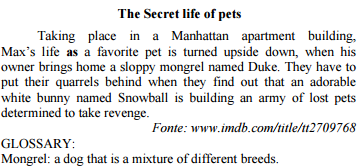
Read the synopsis and answer question.
How things work: 100 scientific explanations
Preservation property has always been important to humans. Historians in the ninth century were the first to record the use of varnish, a protective liquid composed of resins, natural oils, and alcohol, among other ingredients. Furniture makers learned that if they painted coats of the stuff on a piece of furniture or wood floor, it made it impervious to liquids and their damage and shielded it from normal wear and tear. And the makers liked the shine furniture had after it was varnished.
Varnish comes in many formulations. Some are oil based, using linseed or tung oil, while others are water-based. Varnish cures, or dries, on what it’s painted, creating a glossy, clear film on the surface. Some oil-based varnishes can turn to a yellowish color; water-based varieties do not. Wood must be carefully cleaned and sanded before any varnish is applied. Several coats are often required. All varnishes contain resins — terpenes with five-carbon molecules called isoprenes and also include a drying oil or solvent to reduce drying time.
Although furniture and flooors are still the most frequently varnished items, the wooden hulls of boats are also often varnished. Clear nail polish, a type of varnish, can be used for countless small fixes: dab small amounts to keep splintered wood from snagging, prevent ink from running, and stop buttons on clothing or screws on sunglasses from coming loose.
(National Geographic Special Publication “How Things Work” Adapted.)
Read the text and answer question.
Bento boxes
People in offices in Japan often have a bento at lunchtime.
They do not eat a meal in a restaurant; they eat a bento in the
office. They regularly have a menu for the bentos in the office
and they telephone a bento store with their orders. The people at
bento store make the bentos and take them to all the offices at
about 12p.m.
Texto 1
LANDFILLS AND THE INTRODUCTION OF NANOMATERIALS IN WASTE
Waste disposal on land (dumping) and landfilling remain the most prominent waste management techniques used ______. The standards and practices for this type of waste disposal vary greatly ranging from uncontrolled sites to highly specialised and controlled engineered landfills. The potential ______ of contaminants through landfill gas and leachate is largely dependent on landfill design, site conditions and the sophistication of the control measures in place, ______ landfill gas recovery and leachate collection and treatment systems.
Modern engineered landfills use ______ barriers, with few relying on natural barriers, to line the bottom of a landfill and incorporate collection systems for both leachate and landfill gas. The purpose of these collection systems is to capture and treat leachate and landfill gas; ______ preventing the migration of leachate into ground/surface water and the release of untreated landfill gases to the atmosphere. An un-engineered landfill would be considered an uncontrolled system due to the lack of environmental controls, potentially resulting in significant environmental exposure of contaminants.
Because of widespread use of ENMs in a broad range of products, it is possible that some ENMs ______ through landfill gases; however this report will primarily focus on ENMs that may be present in landfill leachate, as this is considered to be the primary means by which ENMs could be transported______ a landfill. Characterisation of landfill gases to identify the presence of ENMs ______ an important area for further research.
Landfill leachate is generated when rain passes through the waste mass and by the liquid generated due to the breakdown of waste ______ the landfill. The composition of leachate is extremely ______ depending on the type of waste landfilled, the quantity of precipitation, the construction and operation of the landfill, the age of the landfill and other factors such as pH, temperature and microbial populations.
(…)
ENMs = engineered nanomaterials.
Organisation for Economic Co-operation and Development. Landfills and the introduction of
nanomaterials in waste. In: Landfilling of waste containing nanomaterials and nanowaste, 2015.
Disponível em:
Texto 1
LANDFILLS AND THE INTRODUCTION OF NANOMATERIALS IN WASTE
Waste disposal on land (dumping) and landfilling remain the most prominent waste management techniques used ______. The standards and practices for this type of waste disposal vary greatly ranging from uncontrolled sites to highly specialised and controlled engineered landfills. The potential ______ of contaminants through landfill gas and leachate is largely dependent on landfill design, site conditions and the sophistication of the control measures in place, ______ landfill gas recovery and leachate collection and treatment systems.
Modern engineered landfills use ______ barriers, with few relying on natural barriers, to line the bottom of a landfill and incorporate collection systems for both leachate and landfill gas. The purpose of these collection systems is to capture and treat leachate and landfill gas; ______ preventing the migration of leachate into ground/surface water and the release of untreated landfill gases to the atmosphere. An un-engineered landfill would be considered an uncontrolled system due to the lack of environmental controls, potentially resulting in significant environmental exposure of contaminants.
Because of widespread use of ENMs in a broad range of products, it is possible that some ENMs ______ through landfill gases; however this report will primarily focus on ENMs that may be present in landfill leachate, as this is considered to be the primary means by which ENMs could be transported______ a landfill. Characterisation of landfill gases to identify the presence of ENMs ______ an important area for further research.
Landfill leachate is generated when rain passes through the waste mass and by the liquid generated due to the breakdown of waste ______ the landfill. The composition of leachate is extremely ______ depending on the type of waste landfilled, the quantity of precipitation, the construction and operation of the landfill, the age of the landfill and other factors such as pH, temperature and microbial populations.
(…)
ENMs = engineered nanomaterials.
Organisation for Economic Co-operation and Development. Landfills and the introduction of
nanomaterials in waste. In: Landfilling of waste containing nanomaterials and nanowaste, 2015.
Disponível em:
Would it be wrong to eradicate mosquitoes?
The mosquito is the most dangerous animal in the world, carrying diseases that kill one million people a year. Now the Zika virus, which is carried by mosquitoes, has been linked with thousands of babies born with brain defects in South America. There are 3,500 known species of mosquitoes, but only the females from just 6% of species draw blood from humans - to help them develop their eggs. Of these, just half carry parasites that cause human diseases.
More than a million people, mostly from poorer nations, die each year from mosquito-borne diseases, including Malaria, Dengue Fever and Yellow Fever. Some mosquitoes also carry the Zika virus, which was first thought to cause only mild fever and rashes. However, scientists are now worried that it can damage babies in the womb. There’s a constant effort to educate people to use nets and other tactics to avoid being bitten. But would it just be simpler to make an entire species of disease-carrying mosquito extinct?
In Britain, scientists at Oxford University and the biotech firm Oxitec have genetically modified (GM) the males of Aedes aegypti - a mosquito species that carries both the Zika and Dengue viruses. These GM males carry a gene that stops their offspring from developing properly. This second generation of mosquitoes then die before they can reproduce and become carriers of disease themselves.
So are there any downsides to removing mosquitoes? Mosquitoes, which mostly feed on plant nectar, are important pollinators. They are also a food source for birds and bats while their young - as larvae - are consumed by fish and frogs. This could have an effect further ahead in the food chain. Mosquitoes also have limited the destructive impact of humanity on nature. Mosquitoes make tropical rainforests, for humans, virtually uninhabitable. Rainforests are home to a large share of our total plant and animal species, and nothing has done more to delay man-made destruction over the past 10,000 years than the mosquito.
Adapted from http://www.bbc.com/news/magazine-35408835


Child: Mom, uncle Tom looks so sleepy and tired.
Mom: He may have stayed up all night.
U.K. Cyclists to Deliver Bikes, Supplies to Calais Refugees
Sarah Morpurgo has no idea how many people will join her on a 65‐mile bike trip this weekend to deliver critical supplies to refugees and migrants living in a camp known as “the New Jungle” in Calais, France, but she’s feeling optimistic.
On Tuesday, the Facebook page for Critical Mass to Calais, an informal bike ride being led by Morpurgo and her friends, said 993 people planned to attend, although she acknowledged that many of those might be “solidarity clicks” in support of the journey.
“It’s going to be a bit of a surprise as to how many people will turn up,” Morpurgo, 25, told Newsweek. “Seven more people really need to hit ‘click.’”
Seven people had done just that a day after Newsweek spoke with Morpurgo, bringing the total number “attending” to 1,000. An Indiegogo campaign for the bike ride, which will take place August 29 to 31, had reached its 1,000‐pound ($1,547) fundraising goal.
Once they get to Calais, the cyclists plan to give refugees and migrants their bikes, a much‐needed form of transportation that will make it easier for the camp’s residents to get to shops and health care clinics. Supplies such as hygiene products, tents, sleeping bags and clothing will be taken to Calais in support vehicles and donated through the Secours Catholique – Caritas France charity.
The port city of Calais has come under intense focus in recent months, becoming a symbol of a staggering global crisis of displacement: 1 out of every 122 people on Earth is either a refugee, an asylum seeker or displaced, the highest such number since World War II, according to the office of the United Nations high commissioner for refugees... (...)
(Available: http://www.newsweek.com/critical‐mass‐uk‐cyclists‐deliver‐bikes‐and‐supplies‐calais‐refugees‐366284. Adapted.)


 Conheça nossos planos