Questões Militares
Comentadas sobre advérbios e conjunções | adverbs and conjunctions em inglês
Foram encontradas 116 questões


“The NCO Academy students ___A___ march ___B___ ___C___ ___D___ ___E___.”
Adverbs:
1. on the parade ground
2. proudly
3. on Independence Day
4. very
5. always
“As we were flying above the canal, we faced a heavy storm. ________, we landed safely.”
Read the text and answer the question.
What is a friend?
Márcio Paulo Barbosa Pena Mascarenhas
Laurie: To me, a friend is someone who stands by you when you need them, someone who cares. Not like your parents, ________. Parents are either picking on you or telling you off, so sometimes it’s a pain. To a friend you can always open up.
Angela: I agree with Laurie but personally, I don’t think a friend has to be physically around all the time. I have friends that I haven’t seen in years, but I know if we get together, we’ll pick up right where we left off.
Fran: I think a friend is that old pal you’ve always gotten on with. I often look back on my schooldays and I think of the funny things my friends and I did together. As I see it, the friends you make in youth are friends to keep for a lifetime.
Gary: If you ask me, a friend is a person you have fun and relax with. My friends and I talk about movies, sports or politics. I don’t go round telling them my troubles and I don’t particularly want to hear theirs. I believe that if you don’t expect too much from people, you won’t be let down.
Grade 1, Student’s book, Belo Horizonte, 14th edition.
"They rarely visit their grandparents, but they plan to do so tomorrow."
Which statement correctly classifies the adverbs used?
Leia o texto para responder à questão.
AI tech products at schools and universities
Every few years, an emerging technology shows up at the doorstep of schools and universities promising to transform education. The most recent? Technologies powered by generative artificial intelligence, also known as GenAI. These technologies are sold on the potential they hold for education. As optimistic as these visions of the future may be, the realities of educational technology over the past few decades have not lived up to their promises, as shown by rigorous investigations of technology after technology – from mechanical machines to computers, from mobile devices to massive open online courses.
Yet, educational technology evangelists forget, remain unaware or simply do not care. Or they may be overly optimistic that the next new technology will be different than before.
Here are four questions I believe should be answered before school officials purchase any technology that relies on AI.
1. Is there evidence that a product works?
Compelling evidence of the effect of GenAI products on educational outcomes does not yet exist. Therefore, and unfortunately, it is the consumer who carries the onus of appraising products. My recommendation is: use multiple means for assessing product effectiveness.
2. [...]
Oftentimes, there is a divide between what entrepreneurs build and educators need. For example, one shortcoming of the One Laptop Per Child program – an ambitious program that sought to put small, cheap but sturdy laptops in the hands of children from families of lesser means – is that the laptops were designed for idealized younger versions of the developers themselves, not so much the children who were actually using them.
Initiatives have been implemented in which entrepreneurs and educators work together to improve educational technology products. Some products are developed with input from students and educators. Questions to ask vendors might be: In what ways were educators and learners included? How did their input influence the final product?
3. What educational beliefs shape this product?
Educational technology is rarely neutral. It is designed by people, and people have beliefs, experiences, ideologies and biases that shape the technologies they develop.
It is important for educational technology products to rely on what educators have experienced as relevant to the students they meet in their real-life classes. Questions to ask include: What pedagogical principles guide this product? What particular learning does it support or discourage?
4. Does the product level the playing field?
Finally, people ought to ask how a product addresses educational inequities. Is this technology going to help reduce the learning gaps between different groups of learners? Or is it one that aids some learners – often those who are already successful or privileged – but not others? Is it adopting an asset-based or a deficit-based approach to addressing inequities?
Educational technology vendors and startups may not have answers to all of these questions. But they should still be asked and considered. Answers could lead to improved products.
(George Veletsianos. https://theconversation.com, 15.04.24. Adaptado)
Observe a palavra destacada em negrito nas duas frases a seguir:
I. “Yet, educational technologist evangelists forget, remain unaware or simply do not care.” (parágrafo 2)
II. “Compelling evidence of the effect of GenAI products on educational outcomes does not yet exist” (parágrafo 5).
O uso da palavra yet está corretamente explicado na alternativa:
The opposite of “often” in “Climate change is often discussed” (2nd paragraph) is
(Adapted from https:/Awww.historyhit.com/undiscovered-shipwrecks)
Read the text and answer the question.
Read the conversation between Carol and Neil.
Neil: What do you do on New Year’s Day?
Carol: Well, we sometimes go downtown. They have fireworks. It’s really pretty. Other people invite friends to their house and they have a party.
Neil: Do you give presents to your friends and family?
Carol: No, we never give presents on New Year’s.
Neil: Do you have a meal with your family?
Carol: No, we do that on Christmas. On New Year’s we just party!
From the Book World English 1A
How facial recognition technology aids police
Police officers’ ability to recognize and locate individuals with a history of committing crime is vital to their work. In fact, it is so important that officers believe possessing it is fundamental to the craft of effective street policing, crime prevention and investigation. However, with the total police workforce falling by almost 20 percent since 2010 and recorded crime rising, police forces are turning to new technological solutions to help enhance their capability and capacity to monitor and track individuals about whom they have concerns.
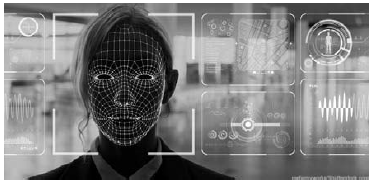
One such technology is Automated Facial Recognition (known as AFR). This works by analyzing key facial features, generating a mathematical representation of them, and then comparing them against known faces in a database, to determine possible matches. While a number of UK and international police forces have been enthusiastically exploring the potential of AFR, some groups have spoken about its legal and ethical status. They are concerned that the technology significantly extends the reach and depth of surveillance by the state.
Until now, however, there has been no robust evidence about what AFR systems can and cannot deliver for policing. Although AFR has become increasingly familiar to the public through its use at airports to help manage passport checks, the environment in such settings is quite controlled. Applying similar procedures to street policing is far more complex. Individuals on the street will be moving and may not look directly towards the camera. Levels of lighting change, too, and the system will have to cope with the vagaries of the British weather.
[…]
As with all innovative policing technologies there are important legal and ethical concerns and issues that still need to be considered. But in order for these to be meaningfully debated and assessed by citizens, regulators and law-makers, we need a detailed understanding of precisely what the technology can realistically accomplish. Sound evidence, rather than references to science fiction technology --- as seen in films such as Minority Report --- is essential.
With this in mind, one of our conclusions is that in terms of describing how AFR is being applied in policing currently, it is more accurate to think of it as “assisted facial recognition,” as opposed to a fully automated system. Unlike border control functions -- where the facial recognition is more of an automated system -- when supporting street policing, the algorithm is not deciding whether there is a match between a person and what is stored in the database. Rather, the system makes suggestions to a police operator about possible similarities. It is then down to the operator to confirm or refute them.
By Bethan Davies, Andrew Dawson, Martin Innes
(Source: https://gcn.com/articles/2018/11/30/facial-recognitionpolicing.aspx, accessed May 30th, 2020)
How facial recognition technology aids police
Police officers’ ability to recognize and locate individuals with a history of committing crime is vital to their work. In fact, it is so important that officers believe possessing it is fundamental to the craft of effective street policing, crime prevention and investigation. However, with the total police workforce falling by almost 20 percent since 2010 and recorded crime rising, police forces are turning to new technological solutions to help enhance their capability and capacity to monitor and track individuals about whom they have concerns.
One such technology is Automated Facial Recognition (known as AFR). This works by analyzing key facial features, generating a mathematical representation of them, and then comparing them against known faces in a database, to determine possible matches. While a number of UK and international police forces have been enthusiastically exploring the potential of AFR, some groups have spoken about its legal and ethical status. They are concerned that the technology significantly extends the reach and depth of surveillance by the state.
Until now, however, there has been no robust evidence about what AFR systems can and cannot deliver for policing. Although AFR has become increasingly familiar to the public through its use at airports to help manage passport checks, the environment in such settings is quite controlled. Applying similar procedures to street policing is far more complex. Individuals on the street will be moving and may not look directly towards the camera. Levels of lighting change, too, and the system will have to cope with the vagaries of the British weather.
[…]
As with all innovative policing technologies there are important legal and ethical concerns and issues that still need to be considered. But in order for these to be meaningfully debated and assessed by citizens, regulators and law-makers, we need a detailed understanding of precisely what the technology can realistically accomplish. Sound evidence, rather than references to science fiction technology --- as seen in films such as Minority Report --- is essential.
With this in mind, one of our conclusions is that in terms of describing how AFR is being applied in policing currently, it is more accurate to think of it as “assisted facial recognition,” as opposed to a fully automated system. Unlike border control functions -- where the facial recognition is more of an automated system -- when supporting street policing, the algorithm is not deciding whether there is a match between a person and what is stored in the database. Rather, the system makes suggestions to a police operator about possible similarities. It is then down to the operator to confirm or refute them.
By Bethan Davies, Andrew Dawson, Martin Innes
(Source: https://gcn.com/articles/2018/11/30/facial-recognitionpolicing.aspx, accessed May 30th, 2020)

 Conheça nossos planos