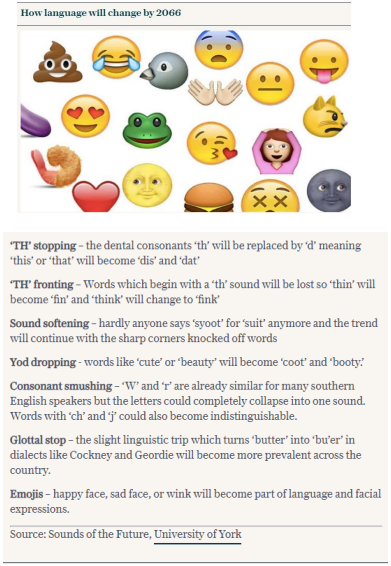
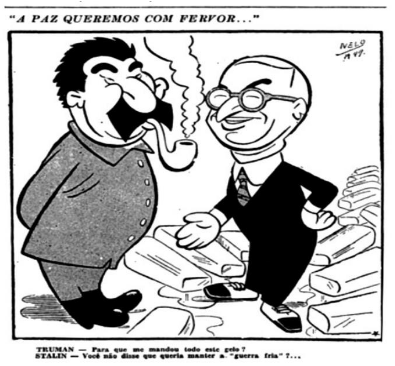
Foram encontradas 75.219 questões

Resolva questões gratuitamente!

Junte-se a mais de 4 milhões de concurseiros!

Q3508159 Inglês
Leia os textos a seguir para responder à questão.


'Th' sound to vanish from English language by 2066 because of multiculturalism, say linguists

Visitors expecting to hear the Queen’s English spoken on the streets of London in 50 years may need to "fink" again.


By 2066, linguists are predicting that the "th" sound will vanish completely in the capital because there are so many foreigners who struggle to pronounce interdental consonants - the term for a sound created by pushing the tongue against the upper teeth. Already Estuary English – a hybrid of Cockney and received pronunciation (RP) which is prevalent in the South East – is being replaced by Multicultural London English (MLE) which is heavily influenced by Caribbean, West African and Asian Communities. But within the next few decades immigration will have fundamentally altered the language, according to experts at the University of York.

The "th" sound – also called the voiced dental nonsibliant fricative – is likely to change to be replaced an "f", "d", or "v" meaning "mother" will be pronounced "muvver" and "thick" will be voiced as "fick". However the ‘h’ that fell silent in Cockney dialect is set to return allowing ‘ere’ to become ‘here’ once more.

Dr Dominic Watt, a sociolinguistics expert from the University of York, said: “Given the status of London as the linguistically most influential city in the English-speaking world, we can expect to see significant changes between now and the middle of the century. The major changes in the way we speak over the next 50 years will involve a simplification of the sound structure of words, they’ll become shorter probably. By looking at how English has changed over the last 50 years we can identify patterns that seem to repeat. British accents seem to be less based on class these days. Languages also change when they come into contact with one another. English has borrowed thousands of words from other languages: mainly French, Latin and Greek, but there are ‘loan words’ from dozens of other languages in the mix.”

The Sounds of The Future report was produced from a study involving analysis of recordings from the last 50 years as well as social media language use.

Other changes likely to become widespread by 2066 include a habit known as "yod dropping" in which the "u" sound is replaced with an "oo". It means that "duke" becomes "dook", "news" is pronounced "nooze" and "beauty" changes to "booty". Consonant "smushing" is also predicted where two sounds collapse together completely so that "wed" and "red" will soon be indistinguishable. Likewise the "l" at the end of words will be dropped so that the words "Paul", "paw" and "pool" all sound the same. Similiarly, "text" will lose the final "t" to become "tex". And, the glottal stop pronunciation of "t" – a brief catch in the throat when the tongue tip closed against the roof of the mouth – will be the default pronunciation.

Brendan Gunn, a voice coach who is currently working with Pierce Brosnan on his new US series said: “The younger generation always wants to be different from the older generation and that process will continue throughout history.“Text speak which is a form of shortening will become ordinary speak, so you may end up saying ‘tagLOL’ or ‘toteschill’ which means hashtag laugh out loud or totally chilled. Even in the Royal family it is probable that Prince George will speak much differently to the Queen. In London I think we will see the ‘th’ becoming an ‘f’ all the time.”

Technology will also change the way people speak, and the experts predict that as artificial intelligence emerges, the computers could begin to invent new words. Dr Watt added: “It is conceivable that some of the words that will come into English in the next 50 years will have been invented by computers because as computers become more intelligent it may be they start creating words of their own and feeding the, [sic] back to us.”

Disponível em: https://www.telegraph.co.uk/science/2016/09/28/. Acesso em: 8 maio 2025. (Adaptado).
Considering the linguistic aspects in the text, it can be verified that 
Alternativas
Q3508158 Inglês
Leia os textos a seguir para responder à questão.


'Th' sound to vanish from English language by 2066 because of multiculturalism, say linguists

Visitors expecting to hear the Queen’s English spoken on the streets of London in 50 years may need to "fink" again.


By 2066, linguists are predicting that the "th" sound will vanish completely in the capital because there are so many foreigners who struggle to pronounce interdental consonants - the term for a sound created by pushing the tongue against the upper teeth. Already Estuary English – a hybrid of Cockney and received pronunciation (RP) which is prevalent in the South East – is being replaced by Multicultural London English (MLE) which is heavily influenced by Caribbean, West African and Asian Communities. But within the next few decades immigration will have fundamentally altered the language, according to experts at the University of York.

The "th" sound – also called the voiced dental nonsibliant fricative – is likely to change to be replaced an "f", "d", or "v" meaning "mother" will be pronounced "muvver" and "thick" will be voiced as "fick". However the ‘h’ that fell silent in Cockney dialect is set to return allowing ‘ere’ to become ‘here’ once more.

Dr Dominic Watt, a sociolinguistics expert from the University of York, said: “Given the status of London as the linguistically most influential city in the English-speaking world, we can expect to see significant changes between now and the middle of the century. The major changes in the way we speak over the next 50 years will involve a simplification of the sound structure of words, they’ll become shorter probably. By looking at how English has changed over the last 50 years we can identify patterns that seem to repeat. British accents seem to be less based on class these days. Languages also change when they come into contact with one another. English has borrowed thousands of words from other languages: mainly French, Latin and Greek, but there are ‘loan words’ from dozens of other languages in the mix.”

The Sounds of The Future report was produced from a study involving analysis of recordings from the last 50 years as well as social media language use.

Other changes likely to become widespread by 2066 include a habit known as "yod dropping" in which the "u" sound is replaced with an "oo". It means that "duke" becomes "dook", "news" is pronounced "nooze" and "beauty" changes to "booty". Consonant "smushing" is also predicted where two sounds collapse together completely so that "wed" and "red" will soon be indistinguishable. Likewise the "l" at the end of words will be dropped so that the words "Paul", "paw" and "pool" all sound the same. Similiarly, "text" will lose the final "t" to become "tex". And, the glottal stop pronunciation of "t" – a brief catch in the throat when the tongue tip closed against the roof of the mouth – will be the default pronunciation.

Brendan Gunn, a voice coach who is currently working with Pierce Brosnan on his new US series said: “The younger generation always wants to be different from the older generation and that process will continue throughout history.“Text speak which is a form of shortening will become ordinary speak, so you may end up saying ‘tagLOL’ or ‘toteschill’ which means hashtag laugh out loud or totally chilled. Even in the Royal family it is probable that Prince George will speak much differently to the Queen. In London I think we will see the ‘th’ becoming an ‘f’ all the time.”

Technology will also change the way people speak, and the experts predict that as artificial intelligence emerges, the computers could begin to invent new words. Dr Watt added: “It is conceivable that some of the words that will come into English in the next 50 years will have been invented by computers because as computers become more intelligent it may be they start creating words of their own and feeding the, [sic] back to us.”

Disponível em: https://www.telegraph.co.uk/science/2016/09/28/. Acesso em: 8 maio 2025. (Adaptado).
According to the text, it can be stated that
Alternativas
Q3508157 Inglês

Leia o cartoon a seguir para responder à questão
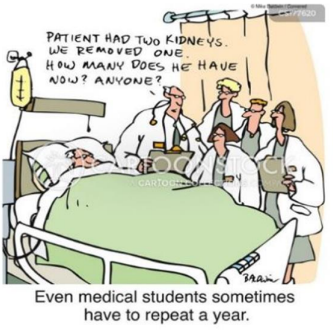

Imagem associada para resolução da questão

Disponível em: https://www.cartoonstock.com/directory/m/medical_student. Acesso em: 7 maio 2025. 


The cartoon shows that

Alternativas
Ano: 2024 Banca: COMVEST - UNICAMP Órgão: UNICAMP Prova: COMVEST - UNICAMP - 2024 - UNICAMP - Vestibular Indígena |
Q3483094 Geografia

Com base em seus conhecimentos sobre a população indígena em território brasileiro e tendo em vista o gráfico a seguir, assinale a alternativa correta.
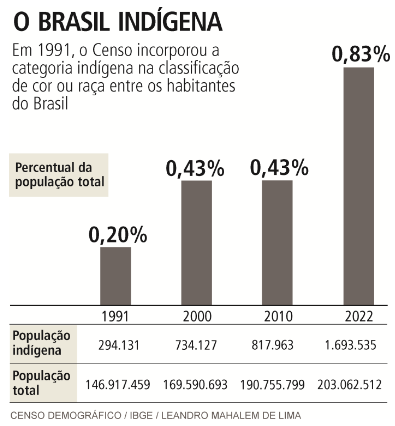

 https://qcon-assets-production.s3.amazonaws.com/images/provas/125910/Q50.png

(Revista Pesquisa Fapesp. Edição 331, setembro 2023.)

Alternativas
Ano: 2024 Banca: COMVEST - UNICAMP Órgão: UNICAMP Prova: COMVEST - UNICAMP - 2024 - UNICAMP - Vestibular Indígena |
Q3483093 História

Em maio de 1977, um mês e um dia depois de fechar o Congresso e decretar o Pacote de Abril, o general presidente Ernesto Geisel disse a jornalistas franceses que o Brasil era uma democracia “relativa”. Na entrevista, Geisel negou a prática de torturas e assassinatos políticos no país.


(Adaptado de http://memorialdademocracia.com.br/card/pais-tem-de mocracia-relativa-diz-geisel. Acesso em: 23/08/20


Tendo em vista seus conhecimentos sobre o regime militar e considerando o texto acima, assinale a alternativa correta.

Alternativas
Ano: 2024 Banca: COMVEST - UNICAMP Órgão: UNICAMP Prova: COMVEST - UNICAMP - 2024 - UNICAMP - Vestibular Indígena |
Q3483092 História

Analise a charge a seguir.


https://qcon-assets-production.s3.amazonaws.com/images/provas/125910/Q48.png


 "A paz queremos com fervor…”


Truman: Para que me mandou todo esse gelo?


Stalin: Você não disse que queria manter a “guerra fria”?...


(Nelo, Folha da manhã, 13 fevereiro de 1949, p. 1. In: SOTANA, E. C. O início da Guerra Fria nas páginas da imprensa escrita brasileira (1946-1949). Diálogos, 18, jan.-abr., p. 350, 2014.)


Sobre a charge e o contexto em que foi produzida, assinale a alternativa correta.

Alternativas
Ano: 2024 Banca: COMVEST - UNICAMP Órgão: UNICAMP Prova: COMVEST - UNICAMP - 2024 - UNICAMP - Vestibular Indígena |
Q3483091 História

Na Lei de Terras de 1850, podia-se ler o seguinte artigo: “Art. 12. O Governo reservará das terras devolutas as que julgar necessárias: 1º, para a colonização dos indígenas; 2º, para a fundação de povoações, abertura de estradas, e quaisquer outras servidões, e assento de estabelecimentos públicos; 3º, para a construção naval”.


A Lei de Terras

Alternativas
Ano: 2024 Banca: COMVEST - UNICAMP Órgão: UNICAMP Prova: COMVEST - UNICAMP - 2024 - UNICAMP - Vestibular Indígena |
Q3483090 História

O trecho a seguir é extraído do “Livro das leis da Siderúrgica Crowley”, Inglaterra, início do século XVIII.


“Nenhuma pessoa deve confiar, para calcular o tempo, em qualquer relógio que não o do supervisor. [...] Toda manhã, às 5 horas, o diretor deve tocar o sino para o início do trabalho; às 8 horas, para o café da manhã; depois de meia hora, para o retorno ao trabalho; ao meio-dia, para o almoço; às 13 horas, para o trabalho; e às 20 horas, para o fim do expediente, quando tudo deve ser trancado”. (Adaptado de THOMPSON, E.P. Costumes em comum. São Paulo: Cia das Letras, p. 290, 1998.)


Sobre a relação com o tempo, que se esperava dos trabalhadores ingleses, a leitura do texto revela que 

Alternativas
Ano: 2024 Banca: COMVEST - UNICAMP Órgão: UNICAMP Prova: COMVEST - UNICAMP - 2024 - UNICAMP - Vestibular Indígena |
Q3483089 História

O jesuíta José de Acosta, no final do século XVI, propôs três métodos de evangelização para o que distinguia como três tipos de bárbaros. Os povos brasis – “sem lei, sem rei, que mudam de casa ou se, a tendo fixa, elas se assemelham a covis de feras” – somente podiam ser convertidos com o auxílio da força. Incas e Astecas – que possuíam cidades, governo, magistrados e leis – podiam ser administradas por um governador cristão. Por fim, somente nas nações civilizadas da Ásia, como a China e o Japão, podiam os religiosos aplicar o mesmo método utilizado – entre os gregos e os romanos – pelos apóstolos: ou seja, a catequese pacífica e racional que não envolvia mudança de governo. (Adaptado de CARVALHO, F. A. L. Imagens dos índios na Amazônia espanhola, nos séculos XVI e XVII. Revista de Indias, vol. LXXVIII, n. 274, p. 695, 2018.) 


No século XVI, a percepção do jesuíta Acosta sobre como deveria ser o governo de povos não europeus

Alternativas
Ano: 2024 Banca: COMVEST - UNICAMP Órgão: UNICAMP Prova: COMVEST - UNICAMP - 2024 - UNICAMP - Vestibular Indígena |
Q3483088 Português

Desde o início de sua série histórica “Conflitos no Campo Brasil”, a Comissão Pastoral da Terra (CPT) registrou 56 massacres no campo, ocorridos em todas as regiões do Brasil. De acordo com sua metodologia, a CPT reconhece como “massacre” os casos nos quais três pessoas ou mais são mortas na mesma data e em uma mesma localidade, numa mesma ocorrência de conflitos pela terra, portanto. Durante esta série histórica, foram registrados diversos “ciclos de violência”. O primeiro, entre 1985 e 1988, fez 112 vítimas fatais. O segundo, entre os anos de 1993 e 1996, teve 56 mortes e se caracterizou por massacres emblemáticos como os de Corumbiara/RO, Haximu/RR e Eldorado dos Carajás/PA.


De 2017 aos dias de hoje, o relatório tem registrado uma nova onda de massacres: neste período, mais de 50 pessoas foram fatalmente vitimadas. (Adaptado de “Massacres no Campo voltam a crescer durante atual crise da democracia no Brasil”. CPT/Massacres no Campo, 14/12/2021; fonte: Centro de Documentação Dom Tomás Balduino - CEDOC/CPT.) 


O texto apresentado faz parte do relatório de 2021 sobre violências no campo, elaborado pela Comissão Pastoral da Terra. Há, nesse excerto, três ideias importantes. Assinale a alternativa que apresenta essas ideias.
Alternativas
Ano: 2024 Banca: COMVEST - UNICAMP Órgão: UNICAMP Prova: COMVEST - UNICAMP - 2024 - UNICAMP - Vestibular Indígena |
Q3483087 Geografia

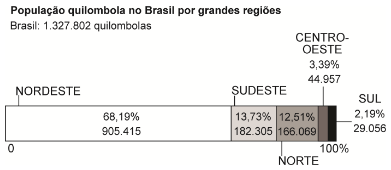
https://qcon-assets-production.s3.amazonaws.com/images/provas/125910/Q43.png

(Censo Demográfico 2022: Quilombolas – Primeiros Resultados do Universo. Adaptado de Agência IBGE: Brasil tem 1,3 milhão de quilombolas em 1.696 municípios (ibge.gov.br). Acesso em: 16/09/2023.)


Tendo em vista seus conhecimentos sobre as populações quilombolas no Brasil e considerando os dados da figura, assinale a alternativa correta. 
Alternativas
Ano: 2024 Banca: COMVEST - UNICAMP Órgão: UNICAMP Prova: COMVEST - UNICAMP - 2024 - UNICAMP - Vestibular Indígena |
Q3483086 Geografia

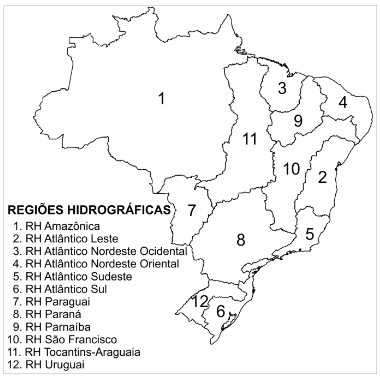
https://qcon-assets-production.s3.amazonaws.com/images/provas/125910/Q42.png

(Agência Nacional de Águas. Disponível em: https://metadados.snirh.gov.br/geonetwork/srv/api/records/0574947a-2c5b-48d2-96a4-b07c4702bbab. Acesso em: 22/11/2023.)


Tendo em vista seus conhecimentos sobre as bacias hidrográficas presentes no território brasileiro e considerando o mapa fornecido, indique a alternativa correta.

Alternativas
Ano: 2024 Banca: COMVEST - UNICAMP Órgão: UNICAMP Prova: COMVEST - UNICAMP - 2024 - UNICAMP - Vestibular Indígena |
Q3483085 Direito Constitucional

“[O STF] tem que votar contra. Estão desrespeitando o que está escrito na Constituição Federal. Não é hora do marco temporal sair como cobra grande para acabar com a gente. Os garimpeiros estão doidos para o Congresso Nacional aprovar essa lei do marco temporal, para eles continuarem a garimpar e botar máquina em terra indígena. [...] [O] marco temporal significa continuar a roubar a terra”. (Trecho de entrevista dada pelo xamã Davi Kopenawa à Folha de S. Paulo em 06/06/2023.)
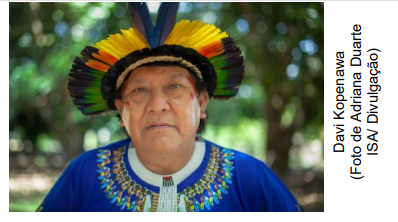

Captura_de tela 2025-07-13 125928.png (398×222)


O Recurso Extraordinário (RE) 1017365, julgado no Supremo Tribunal Federal em 27/09/2023, discute a tese do marco temporal para a demarcação de terras indígenas. Considerando seus conhecimentos e as informações apresentadas, assinale a alternativa correta.

Alternativas
Ano: 2024 Banca: COMVEST - UNICAMP Órgão: UNICAMP Prova: COMVEST - UNICAMP - 2024 - UNICAMP - Vestibular Indígena |
Q3483084 Geografia

O gráfico a seguir retrata a dinâmica populacional e a Transição Demográfica (TD) do Brasil desde 1880, com projeção até 2100. 
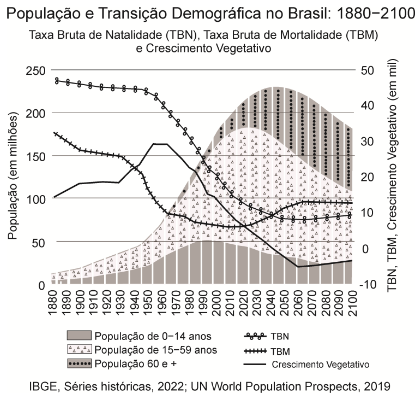

https://qcon-assets-production.s3.amazonaws.com/images/provas/125910/Q40.png

(Adaptado de ALVES, J.E.D. A transição demográfica nos 200 anos da Independência do Brasil.)


Considere o gráfico acima, seus conhecimentos sobre a Taxa Bruta de Natalidade (TBN), a Taxa Bruta de Mortalidade (TBM) e o crescimento Vegetativo ou Natural da população brasileira e indique a alternativa que faz a análise correta do período de 1950 a 2020. 

Alternativas
Ano: 2024 Banca: COMVEST - UNICAMP Órgão: UNICAMP Prova: COMVEST - UNICAMP - 2024 - UNICAMP - Vestibular Indígena |
Q3483083 Geografia

Nos últimos anos, o avanço do garimpo ilegal na Terra Indígena Yanomami, somado ao desmonte de políticas públicas, foram importantes indutores de impactos socioambientais e de mortes junto à população indígena que habita essa terra.


Assinale a alternativa que indica corretamente a região de localização da Terra Indígena Yanomami e os impactos socioambientais resultantes do avanço do garimpo ilegal.

Alternativas
Ano: 2024 Banca: COMVEST - UNICAMP Órgão: UNICAMP Prova: COMVEST - UNICAMP - 2024 - UNICAMP - Vestibular Indígena |
Q3483082 Matemática
Adriana produz barras de sabão que medem 20 cm x 10 cm x 10 cm e precisa embalá-las em caixas de tamanho 40 cm x 30 cm x 30 cm. Qual a quantidade máxima de barras de sabão que caberá na caixa? 
Alternativas
Ano: 2024 Banca: COMVEST - UNICAMP Órgão: UNICAMP Prova: COMVEST - UNICAMP - 2024 - UNICAMP - Vestibular Indígena |
Q3483081 Matemática

A figura a seguir mostra um triângulo e certos ângulos dados em termos de valores reais x e y. 
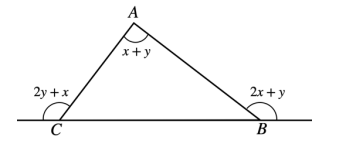

Captura_de tela 2025-07-13 125752.png (339×143)


De acordo com as informações fornecidas pela figura, podese concluir que a medida do ângulo BAC ̂ é de 

Alternativas
Ano: 2024 Banca: COMVEST - UNICAMP Órgão: UNICAMP Prova: COMVEST - UNICAMP - 2024 - UNICAMP - Vestibular Indígena |
Q3483080 Matemática

Uma torneira pingando uma gota a cada 5 segundos representa 140 litros de água desperdiçados em uma semana. Depois de 15 dias com a torneira pingando, podemos afirmar que o volume de água perdido nesse período será de 


Captura_de tela 2025-07-13 125827.png (81×127)

Alternativas
Ano: 2024 Banca: COMVEST - UNICAMP Órgão: UNICAMP Prova: COMVEST - UNICAMP - 2024 - UNICAMP - Vestibular Indígena |
Q3483079 Matemática
Seis amigos se preparam para assistir a um jogo de futebol e vão se sentar numa mesma fileira do estádio. De quantas maneiras eles podem se organizar nas cadeiras escolhidas para se sentar, sabendo que dois deles se sentarão sempre um do lado do outro?
Alternativas
Ano: 2024 Banca: COMVEST - UNICAMP Órgão: UNICAMP Prova: COMVEST - UNICAMP - 2024 - UNICAMP - Vestibular Indígena |
Q3483078 Matemática

Marcos estava estudando matemática e copiou o seguinte gráfico de uma parábola da forma y=-x2 + bx + c: 
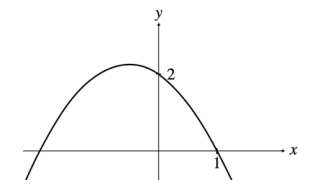

Captura_de tela 2025-07-13 125724.png (319×186)


Qual é o valor de b?

Alternativas
Respostas
5681: D
5682: D
5683: B
5684: C
5685: B
5686: D
5687: B
5688: A
5689: C
5690: D
5691: C
5692: C
5693: D
5694: B
5695: A
5696: C
5697: D
5698: B
5699: B
5700: A