Questões de Vestibular EINSTEIN 2025 para Vestibular - Conhecimentos Gerais e Redação - 2º Semestre
Foram encontradas 50 questões


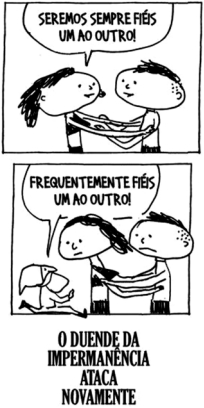
(Gilberto Mendonça Telles. Vanguarda europeia e modernismo brasileiro, 2022. Adaptado.)
Os movimentos de vanguarda, com suas propostas de rompimento com o academicismo e busca por novas experiências artísticas, foram essenciais para a consolidação do Modernismo no Brasil.
As lacunas do excerto são preenchidas, respectivamente, por:
Na passagem selecionada, o narrador descreve
Configura um exemplo explícito de zoomorfismo a passagem:
(Celso Cunha e Luís F. Lindley Cintra. Nova gramática do português contemporâneo, 2001. Adaptado.)
Identifica-se uma palavra formada por derivação imprópria em:
Examine a seguinte campanha da Cruz Vermelha.
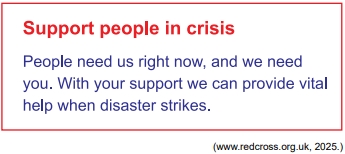
The word “strikes” can be replaced, with no change in meaning, by:
Leia o texto para responder à questão.
The Red Cross
The International Red Cross movement started in 1863 and was inspired by Swiss businessman Henry Dunant. The suffering of thousands of men on both sides of the Battle of Solferino in 1859 upset Dunant. Many were left to die due to lack of care. He proposed creating national relief societies, made up of volunteers, trained in peacetime to provide neutral and impartial help to relieve suffering in times of war.
In response to these ideas, a committee (which later became the International Committee of the Red Cross) was established in Geneva. Dunant also proposed that countries adopt an international agreement, which would recognise the status of medical services and of the injured on the battlefield. This agreement was adopted in 1864.
The formation of the British Red Cross occurred during the war between France and Prussia in July 1870, Colonel Loyd-Lindsay wrote a letter to the newspaper The Times. He called for a National Society to be formed in Britain just like in other European nations. On 4 August 1870, a public meeting was held in London and a resolution passed authorizing the formation of The British National Society for Aid to the Sick and Wounded in War. It gave aid and relief to both warring armies during the Franco-Prussian War and in other wars and campaigns during the 19th century. This was done under the protection of the red cross emblem.
In 1905, the British National Society for Aid to the Sick and Wounded in War was renamed as the British Red Cross. The Red Cross needed many skilled volunteers for its wartime role. The Voluntary Aid Scheme was introduced in 1909 and ensured that Voluntary Aid Detachments were formed across the United Kingdom. Their members would provide aid to the territorial medical forces in times of war.
(www.redcross.org.uk. Adaptado.)
Leia o texto para responder à questão.
The Red Cross
The International Red Cross movement started in 1863 and was inspired by Swiss businessman Henry Dunant. The suffering of thousands of men on both sides of the Battle of Solferino in 1859 upset Dunant. Many were left to die due to lack of care. He proposed creating national relief societies, made up of volunteers, trained in peacetime to provide neutral and impartial help to relieve suffering in times of war.
In response to these ideas, a committee (which later became the International Committee of the Red Cross) was established in Geneva. Dunant also proposed that countries adopt an international agreement, which would recognise the status of medical services and of the injured on the battlefield. This agreement was adopted in 1864.
The formation of the British Red Cross occurred during the war between France and Prussia in July 1870, Colonel Loyd-Lindsay wrote a letter to the newspaper The Times. He called for a National Society to be formed in Britain just like in other European nations. On 4 August 1870, a public meeting was held in London and a resolution passed authorizing the formation of The British National Society for Aid to the Sick and Wounded in War. It gave aid and relief to both warring armies during the Franco-Prussian War and in other wars and campaigns during the 19th century. This was done under the protection of the red cross emblem.
In 1905, the British National Society for Aid to the Sick and Wounded in War was renamed as the British Red Cross. The Red Cross needed many skilled volunteers for its wartime role. The Voluntary Aid Scheme was introduced in 1909 and ensured that Voluntary Aid Detachments were formed across the United Kingdom. Their members would provide aid to the territorial medical forces in times of war.
(www.redcross.org.uk. Adaptado.)
Leia o texto para responder à questão.
The Red Cross
The International Red Cross movement started in 1863 and was inspired by Swiss businessman Henry Dunant. The suffering of thousands of men on both sides of the Battle of Solferino in 1859 upset Dunant. Many were left to die due to lack of care. He proposed creating national relief societies, made up of volunteers, trained in peacetime to provide neutral and impartial help to relieve suffering in times of war.
In response to these ideas, a committee (which later became the International Committee of the Red Cross) was established in Geneva. Dunant also proposed that countries adopt an international agreement, which would recognise the status of medical services and of the injured on the battlefield. This agreement was adopted in 1864.
The formation of the British Red Cross occurred during the war between France and Prussia in July 1870, Colonel Loyd-Lindsay wrote a letter to the newspaper The Times. He called for a National Society to be formed in Britain just like in other European nations. On 4 August 1870, a public meeting was held in London and a resolution passed authorizing the formation of The British National Society for Aid to the Sick and Wounded in War. It gave aid and relief to both warring armies during the Franco-Prussian War and in other wars and campaigns during the 19th century. This was done under the protection of the red cross emblem.
In 1905, the British National Society for Aid to the Sick and Wounded in War was renamed as the British Red Cross. The Red Cross needed many skilled volunteers for its wartime role. The Voluntary Aid Scheme was introduced in 1909 and ensured that Voluntary Aid Detachments were formed across the United Kingdom. Their members would provide aid to the territorial medical forces in times of war.
(www.redcross.org.uk. Adaptado.)
Leia o texto para responder à questão.
The Red Cross
The International Red Cross movement started in 1863 and was inspired by Swiss businessman Henry Dunant. The suffering of thousands of men on both sides of the Battle of Solferino in 1859 upset Dunant. Many were left to die due to lack of care. He proposed creating national relief societies, made up of volunteers, trained in peacetime to provide neutral and impartial help to relieve suffering in times of war.
In response to these ideas, a committee (which later became the International Committee of the Red Cross) was established in Geneva. Dunant also proposed that countries adopt an international agreement, which would recognise the status of medical services and of the injured on the battlefield. This agreement was adopted in 1864.
The formation of the British Red Cross occurred during the war between France and Prussia in July 1870, Colonel Loyd-Lindsay wrote a letter to the newspaper The Times. He called for a National Society to be formed in Britain just like in other European nations. On 4 August 1870, a public meeting was held in London and a resolution passed authorizing the formation of The British National Society for Aid to the Sick and Wounded in War. It gave aid and relief to both warring armies during the Franco-Prussian War and in other wars and campaigns during the 19th century. This was done under the protection of the red cross emblem.
In 1905, the British National Society for Aid to the Sick and Wounded in War was renamed as the British Red Cross. The Red Cross needed many skilled volunteers for its wartime role. The Voluntary Aid Scheme was introduced in 1909 and ensured that Voluntary Aid Detachments were formed across the United Kingdom. Their members would provide aid to the territorial medical forces in times of war.
(www.redcross.org.uk. Adaptado.)
(Luiz Alexandre Solano Rossi. Cultura militar e de violência no mundo antigo: Israel, Assíria, Babilônia, Pérsia e Grécia, 2008. Adaptado.)
O excerto refere-se à época inaugurada pelas conquistas militares de Alexandre Magno, a qual foi caracterizada
(Perry Anderson, 1984. Adaptado.)
O excerto descreve a consolidação, na França,
(Carla Maria Carvalho de Almeida e Mônica Ribeiro de Oliveira. “Conquista do centro-sul”. In: João Luís Roberto Fragoso e Maria de Fátima Gouvêa. O Brasil Colonial, 2018. Adaptado.)
Na América portuguesa, as expedições, como a referida pelo excerto, implicaram a
Se prevejo corretamente, essa poderosa raça avançará sobre o México, a América Central e a do Sul, as ilhas do oceano, a África e mais adiante [...]. Essa raça está predestinada a suplantar raças fracas, assimilar outras e transformar as restantes até toda a Humanidade ser anglo-saxonizada.
(Apud: Adhemar Marques e Luiz Roberto Lopez. Imperialismo: a expansão do capitalismo, 2000.)
As palavras do missionário, apresentadas pelo excerto,
(Lilia M. Schwarcz e Heloisa M. Starling. Brasil: uma biografia, 2015. Adaptado.)
Esse programa de modernização do Brasil estimulava a

 Conheça nossos planos