Questões de Vestibular FEMPAR 2024 para Vestibular - Medicina

Foram encontradas 80 questões

Ano: 2024 Banca: FGV Órgão: FEMPAR Prova: FGV - 2024 - FEMPAR - Vestibular - Medicina |
Q4139990 Inglês
Read Text III and answer the question that follow it.

Text III

How ghost cities in the Amazon are rewriting the story of civilisation

        Try to imagine an environment largely untouched by humans and the Amazon rainforest might spring to mind. After all, large swathes of this South American landscape are blanketed in thick vegetation, suggesting it is one corner of the world that humans never managed to tame. Here, there must have been no deforestation, no agricultural revolution and no cities. It seems like a pristine environment.
    
        Or so we thought. But a very different picture is emerging. Archaeologists working with Indigenous communities have been shown crumbling urban remains and remote sensing technologies such as LiDAR (Light Detection and Ranging) are revealing the footprints of vast ghost cities. With so much evidence of ancient human activity, it is now thought the pre-Columbian Amazon was inhabited by millions of people – some living in large built-up areas complete with road networks, temples and pyramids.
    
        But that’s not all this research reveals. Paradoxically, it also provides evidence that the traditional view of the Amazon isn’t completely wide of the mark. For instance, while the ancient Amazonians managed their landscape intensively, they didn’t deforest it. And although they developed complex societies, they never went through a wholesale agricultural revolution. This might suggest that the pre-Columbian Amazonians broke the mould of human cultural development, which is traditionally seen as a relentless march from hunting and gathering to farming to urban complexity. The truth is more surprising. In fact, we are now coming to understand that there was no such mould – civilisation arose in myriad ways. What looks like an anomaly in the Amazon is actually a shining example of a process that was as vibrant and diverse as the rainforest itself.

Adapted from: https://www.newscientist.com/article/mg26334980-500-how-ghostcities-in-the-amazon-are-rewriting-the-story-of-civilisation/
Based on Text III, mark the statements below as true (T) or false (F).
I. Research has changed the view of how the Amazon was once populated.
II. The forest was respected by Pre-Columbian Amazonians.
III. Archaeologists found out that Amazonian ancient cultures did not erect any buildings.
The statements are, respectively,
Alternativas
Ano: 2024 Banca: FGV Órgão: FEMPAR Prova: FGV - 2024 - FEMPAR - Vestibular - Medicina |
Q4139991 Inglês
Read Text III and answer the question that follow it.

Text III

How ghost cities in the Amazon are rewriting the story of civilisation

        Try to imagine an environment largely untouched by humans and the Amazon rainforest might spring to mind. After all, large swathes of this South American landscape are blanketed in thick vegetation, suggesting it is one corner of the world that humans never managed to tame. Here, there must have been no deforestation, no agricultural revolution and no cities. It seems like a pristine environment.
    
        Or so we thought. But a very different picture is emerging. Archaeologists working with Indigenous communities have been shown crumbling urban remains and remote sensing technologies such as LiDAR (Light Detection and Ranging) are revealing the footprints of vast ghost cities. With so much evidence of ancient human activity, it is now thought the pre-Columbian Amazon was inhabited by millions of people – some living in large built-up areas complete with road networks, temples and pyramids.
    
        But that’s not all this research reveals. Paradoxically, it also provides evidence that the traditional view of the Amazon isn’t completely wide of the mark. For instance, while the ancient Amazonians managed their landscape intensively, they didn’t deforest it. And although they developed complex societies, they never went through a wholesale agricultural revolution. This might suggest that the pre-Columbian Amazonians broke the mould of human cultural development, which is traditionally seen as a relentless march from hunting and gathering to farming to urban complexity. The truth is more surprising. In fact, we are now coming to understand that there was no such mould – civilisation arose in myriad ways. What looks like an anomaly in the Amazon is actually a shining example of a process that was as vibrant and diverse as the rainforest itself.

Adapted from: https://www.newscientist.com/article/mg26334980-500-how-ghostcities-in-the-amazon-are-rewriting-the-story-of-civilisation/
The text concludes that the development of civilization was 
Alternativas
Ano: 2024 Banca: FGV Órgão: FEMPAR Prova: FGV - 2024 - FEMPAR - Vestibular - Medicina |
Q4139992 Inglês
Read Text III and answer the question that follow it.

Text III

How ghost cities in the Amazon are rewriting the story of civilisation

        Try to imagine an environment largely untouched by humans and the Amazon rainforest might spring to mind. After all, large swathes of this South American landscape are blanketed in thick vegetation, suggesting it is one corner of the world that humans never managed to tame. Here, there must have been no deforestation, no agricultural revolution and no cities. It seems like a pristine environment.
    
        Or so we thought. But a very different picture is emerging. Archaeologists working with Indigenous communities have been shown crumbling urban remains and remote sensing technologies such as LiDAR (Light Detection and Ranging) are revealing the footprints of vast ghost cities. With so much evidence of ancient human activity, it is now thought the pre-Columbian Amazon was inhabited by millions of people – some living in large built-up areas complete with road networks, temples and pyramids.
    
        But that’s not all this research reveals. Paradoxically, it also provides evidence that the traditional view of the Amazon isn’t completely wide of the mark. For instance, while the ancient Amazonians managed their landscape intensively, they didn’t deforest it. And although they developed complex societies, they never went through a wholesale agricultural revolution. This might suggest that the pre-Columbian Amazonians broke the mould of human cultural development, which is traditionally seen as a relentless march from hunting and gathering to farming to urban complexity. The truth is more surprising. In fact, we are now coming to understand that there was no such mould – civilisation arose in myriad ways. What looks like an anomaly in the Amazon is actually a shining example of a process that was as vibrant and diverse as the rainforest itself.

Adapted from: https://www.newscientist.com/article/mg26334980-500-how-ghostcities-in-the-amazon-are-rewriting-the-story-of-civilisation/
The phrase ghost cities in the title indicates that they
Alternativas
Ano: 2024 Banca: FGV Órgão: FEMPAR Prova: FGV - 2024 - FEMPAR - Vestibular - Medicina |
Q4139993 Inglês
Read Text III and answer the question that follow it.

Text III

How ghost cities in the Amazon are rewriting the story of civilisation

        Try to imagine an environment largely untouched by humans and the Amazon rainforest might spring to mind. After all, large swathes of this South American landscape are blanketed in thick vegetation, suggesting it is one corner of the world that humans never managed to tame. Here, there must have been no deforestation, no agricultural revolution and no cities. It seems like a pristine environment.
    
        Or so we thought. But a very different picture is emerging. Archaeologists working with Indigenous communities have been shown crumbling urban remains and remote sensing technologies such as LiDAR (Light Detection and Ranging) are revealing the footprints of vast ghost cities. With so much evidence of ancient human activity, it is now thought the pre-Columbian Amazon was inhabited by millions of people – some living in large built-up areas complete with road networks, temples and pyramids.
    
        But that’s not all this research reveals. Paradoxically, it also provides evidence that the traditional view of the Amazon isn’t completely wide of the mark. For instance, while the ancient Amazonians managed their landscape intensively, they didn’t deforest it. And although they developed complex societies, they never went through a wholesale agricultural revolution. This might suggest that the pre-Columbian Amazonians broke the mould of human cultural development, which is traditionally seen as a relentless march from hunting and gathering to farming to urban complexity. The truth is more surprising. In fact, we are now coming to understand that there was no such mould – civilisation arose in myriad ways. What looks like an anomaly in the Amazon is actually a shining example of a process that was as vibrant and diverse as the rainforest itself.

Adapted from: https://www.newscientist.com/article/mg26334980-500-how-ghostcities-in-the-amazon-are-rewriting-the-story-of-civilisation/
The phrase a pristine environment (1st paragraph) means that the area is 
Alternativas
Ano: 2024 Banca: FGV Órgão: FEMPAR Prova: FGV - 2024 - FEMPAR - Vestibular - Medicina |
Q4139994 Inglês
Read Text III and answer the question that follow it.

Text III

How ghost cities in the Amazon are rewriting the story of civilisation

        Try to imagine an environment largely untouched by humans and the Amazon rainforest might spring to mind. After all, large swathes of this South American landscape are blanketed in thick vegetation, suggesting it is one corner of the world that humans never managed to tame. Here, there must have been no deforestation, no agricultural revolution and no cities. It seems like a pristine environment.
    
        Or so we thought. But a very different picture is emerging. Archaeologists working with Indigenous communities have been shown crumbling urban remains and remote sensing technologies such as LiDAR (Light Detection and Ranging) are revealing the footprints of vast ghost cities. With so much evidence of ancient human activity, it is now thought the pre-Columbian Amazon was inhabited by millions of people – some living in large built-up areas complete with road networks, temples and pyramids.
    
        But that’s not all this research reveals. Paradoxically, it also provides evidence that the traditional view of the Amazon isn’t completely wide of the mark. For instance, while the ancient Amazonians managed their landscape intensively, they didn’t deforest it. And although they developed complex societies, they never went through a wholesale agricultural revolution. This might suggest that the pre-Columbian Amazonians broke the mould of human cultural development, which is traditionally seen as a relentless march from hunting and gathering to farming to urban complexity. The truth is more surprising. In fact, we are now coming to understand that there was no such mould – civilisation arose in myriad ways. What looks like an anomaly in the Amazon is actually a shining example of a process that was as vibrant and diverse as the rainforest itself.

Adapted from: https://www.newscientist.com/article/mg26334980-500-how-ghostcities-in-the-amazon-are-rewriting-the-story-of-civilisation/
The extract This might suggest (3rd paragraph) indicates 
Alternativas
Ano: 2024 Banca: FGV Órgão: FEMPAR Prova: FGV - 2024 - FEMPAR - Vestibular - Medicina |
Q4139995 História
O conflito Israel-Palestina tem raízes que remontam à ocupação britânica na região da Palestina, no início do século XX, e se desdobraram até o presente.
Sobre a Questão Palestina, assinale a opção que caracteriza corretamente uma de suas etapas históricas.
Alternativas
Ano: 2024 Banca: FGV Órgão: FEMPAR Prova: FGV - 2024 - FEMPAR - Vestibular - Medicina |
Q4139996 História
Em junho de 1789, os deputados do Terceiro Estado reunidos em Versalhes tomaram uma decisão histórica: separar-se e trancarse na Sala da Pela: Nós daqui sairemos somente pela força das baionetas.
Assinale a opção que indica, corretamente, o que motivou os representantes do Terceiro Estado nesse episódio.
Alternativas
Ano: 2024 Banca: FGV Órgão: FEMPAR Prova: FGV - 2024 - FEMPAR - Vestibular - Medicina |
Q4139997 História
As afirmativas a seguir indicam corretamente características dos regimes totalitários do século XX, à exceção de uma. Assinale-a. 
Alternativas
Ano: 2024 Banca: FGV Órgão: FEMPAR Prova: FGV - 2024 - FEMPAR - Vestibular - Medicina |
Q4139998 História
A respeito do conceito de cidadania no Mundo Antigo, leia o trecho a seguir.
No mundo antigo, ser estrangeiro é o oposto de ser cidadão pois a condição de cidadania materializa-se na integração completa à polis, à comunidade política à qual o indivíduo pertence, não do ponto de vista cultural (pois o estrangeiro pode compartilhar língua e costumes), mas do ponto de vista jurídico: o cidadão usufrui das prerrogativas legais que lhe são garantidas pelo seu direito de cidadania e que mudam em cada sociedade e época histórica.
Com base no trecho, assinale a opção que caracteriza corretamente a experiência da cidadania antiga.
Alternativas
Ano: 2024 Banca: FGV Órgão: FEMPAR Prova: FGV - 2024 - FEMPAR - Vestibular - Medicina |
Q4139999 História
Leia o trecho a seguir. Trata-se de uma legislação relacionada ao processo de extinção do tráfico negreiro no Império brasileiro.
Art. 1º. As embarcações brasileiras encontradas em qualquer parte, e as estrangeiras encontradas nos portos, enseadas, ancoradouros, ou mares territoriais do Brasil, tendo a seu bordo escravos, cuja importação está proibida pela Lei de sete de novembro de mil oitocentos e trinta e um, ou havendo-os desembarcado, serão apreendidas pelas autoridades, ou pelos navios de guerra brasileiros e consideradas importadoras de escravos.
Art. 4º. A importação de escravos no território do Império fica nele considerada como pirataria, e será punida pelos seus tribunais com as penas declaradas no artigo segundo da Lei de sete de novembro de mil oitocentos e trinta e um. A tentativa e a cumplicidade serão punidas segundo as regras dos artigos trinta e quatro e trinta e cinco do Código Criminal.
Adaptado de http://www.historia.seed.pr.gov.br
O trecho se refere ao(à)
Alternativas
Ano: 2024 Banca: FGV Órgão: FEMPAR Prova: FGV - 2024 - FEMPAR - Vestibular - Medicina |
Q4140000 História
Leia o trecho do Alvará Real a seguir, que determinava a punição de negros aquilombados (1741).
Eu, El Rei, faço saber aos que este Alvará em forma de Lei virem: que sendo-me presente os insultos, que no Brasil cometem os escravos fugidos a que vulgarmente chamam de quilombolas, passando a fazer excesso de se juntar em quilombos e sendo preciso acudir com os remédios que evitem esta desordem, hei por bem que a todos os negros, que forem achados em quilombos, estando neles voluntariamente, se lhes ponha com fogo, uma marca em um ombro com a letra F, – que para este efeito haverá nas Câmaras, e se quando se for executar esta pena for achado já com a mesma marca, se lhe cortará uma orelha; tudo por simples mandado do Juiz de Fora ou do Ouvidor da Comarca, sem processo algum e só pela notoriedade do fato, logo que do quilombo for trazido antes de entrar para a Cadeia
Adaptado de GOMES, F. (Org.). Mocambos de Palmares: histórias e fontes (séculos XVI-XIX). Rio de Janeiro: 7letras, 2010, p. 251-5.
Com base no documento, a respeito da repressão aos quilombos na América Portuguesa, assinale a afirmativa correta. 
Alternativas
Ano: 2024 Banca: FGV Órgão: FEMPAR Prova: FGV - 2024 - FEMPAR - Vestibular - Medicina |
Q4140001 Biologia

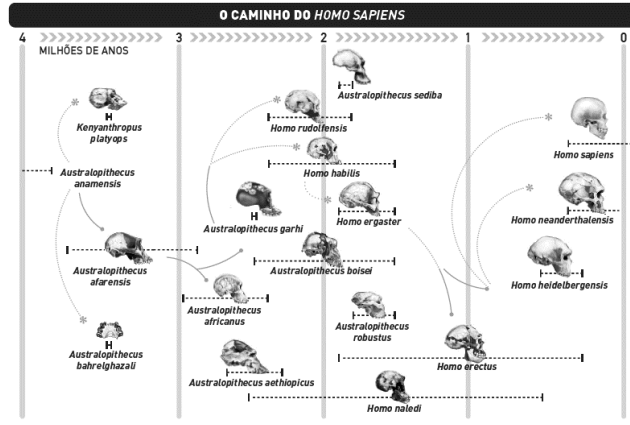
Analise a imagem a seguir em que está representada a evolução que, do primeiro Australopithecus anamensis, conduziu ao Homo sapiens


Imagem associada para resolução da questão


Sobre o processo de hominização, com base na imagem, analise as afirmativas a seguir.


( ) A hominização é um processo de evolução contínuo e linear marcado por etapas em que cada espécie foi substituída por outra, mais evoluída física e intelectualmente.


( ) Homo sapiens é a espécie de primatas a que pertence o ser humano moderno e essa classificação distingue os nossos contemporâneos de outras espécies de macacos e de formas anteriores de seres humanos.


( ) Corpo, cognição e comportamento coevoluíram no processo de hominização em que relações sociais e linguagens desempenham um papel crucial ao contribuir para o desenvolvimento cognitivo, emocional e cultural dos seres humanos.


Está correto o que se afirma em

Alternativas
Ano: 2024 Banca: FGV Órgão: FEMPAR Prova: FGV - 2024 - FEMPAR - Vestibular - Medicina |
Q4140002 História

Analise o mapa do comércio afro-euroasiático, entre 1000 e 1500.
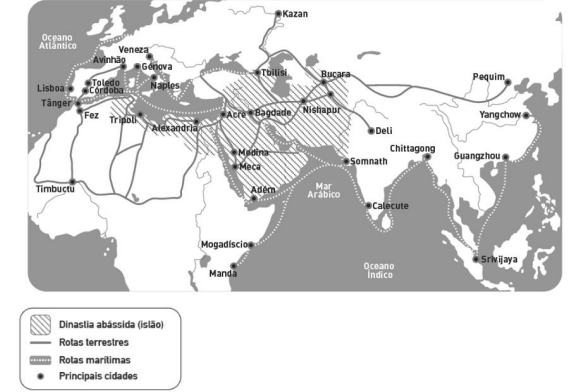
Imagem associada para resolução da questão

As afirmativas a seguir descrevem corretamente a crescente interdependência entre a Eurásia e parte da África entre o século XI e o XV, à exceção de uma. Assinale-a.

Alternativas
Ano: 2024 Banca: FGV Órgão: FEMPAR Prova: FGV - 2024 - FEMPAR - Vestibular - Medicina |
Q4140003 História
O Oeste do Paraná foi a última região geográfica do Estado a ser colonizada e seu processo de ocupação se deu no seio do movimento político-econômico nacional denominado “Marcha para o Oeste”, deflagrado no início da década de 1930, durante o governo de Getúlio Vargas.
Disponível em: https://www.scielo.br/j/soc/a/vggQzcwkRmYz9zNZwBNzQQL/?format=pdf Acesso: 22 jul. 2024.
Sobre as ações governamentais propostas pelo governo Vargas, analise as afirmativas a seguir.
I. Visavam à ocupação do território e à garantia da soberania nacional nas regiões de fronteira que se encontravam abertas à exploração estrangeira.
II. Visavam à incorporação de novas áreas à produção agrícola, para garantir o fornecimento de alimentos, em virtude do aumento do consumo nos centros urbanos.
III. Visavam à criação de um programa de internacionalização da economia, para permitir a entrada de empresas transnacionais ligadas ao agronegócio.
Está correto o que se afirma em
Alternativas
Ano: 2024 Banca: FGV Órgão: FEMPAR Prova: FGV - 2024 - FEMPAR - Vestibular - Medicina |
Q4140004 Não definido
As últimas décadas testemunharam mudanças importantes nas facilidades de transporte, na comunicação e no processamento de dados, com efeitos sobre os processos produtivos, os fluxos comerciais e a movimentação internacional de capitais.
Disponível em: https://ipcig.org/sites/default/files/pub/pt-br/ Acesso: 19 jul. 2024. (Adaptado)
Sobre as consequências decorrentes da dinâmica descrita, analise as afirmativas a seguir.
I. Acarreta uma maior concentração de recursos e de riquezas nos países desenvolvidos, aumentando a desigualdade entre as nações.
II. Promove a reestruturação das linhas de produção e de distribuição de mercadorias, com a transferência de unidades fabris para a periferia capitalista.
III. Intensifica os fluxos financeiros e a circulação de informações, limitando a soberania dos Estados nacionais no sistema político internacional.
Está correto o que se afirma em
Alternativas
Ano: 2024 Banca: FGV Órgão: FEMPAR Prova: FGV - 2024 - FEMPAR - Vestibular - Medicina |
Q4140005 Geografia
Faroeste Caboclo
(...) Aos quinze, foi mandado pro reformatório Onde aumentou seu ódio diante de tanto terror
Não entendia como a vida funcionava Discriminação por causa da sua classe e sua cor Ficou cansado de tentar achar resposta E comprou uma passagem, foi direto a Salvador E lá chegando foi tomar um cafezinho E encontrou um boiadeiro com quem foi falar E o boiadeiro tinha uma passagem e ia perder a viagem Mas João foi lhe salvar
Dizia ele, "estou indo pra Brasília Neste país, lugar melhor não há Tô precisando visitar a minha filha Eu fico aqui e você vai no meu lugar"
E João aceitou sua proposta E num ônibus entrou no Planalto Central Ele ficou bestificado com a cidade Saindo da rodoviária, viu as luzes de Natal (...)
RUSSO, Renato. Faroeste Caboclo. Álbum: Que país é este? EMI, 1986.
Assinale a opção que indica, corretamente, o movimento migratório realizado pelo personagem e a respectiva causa.
Alternativas
Ano: 2024 Banca: FGV Órgão: FEMPAR Prova: FGV - 2024 - FEMPAR - Vestibular - Medicina |
Q4140006 Geografia
Leia o texto a seguir.
A mesorregião do Noroeste Paranaense era, originalmente, recoberta pela floresta estacional semidecidual submontana e sua ocupação está diretamente ligada à expansão das atividades agrícolas. Assim, o conhecimento da origem e da composição do solo é essencial, porque diretamente relacionadas à permeabilidade e à capacidade de infiltração das águas pluviais, e, estas, com a declividade, a cobertura vegetal e o tipo de manejo, que podem levar à degradação ambiental.
Disponível em: http://adema-ong.blogspot.com/solos.html Acesso: 26 jul. 2024.
O texto mostra a conexão conflituosa entre as formas de aproveitamento econômico da região e seu ambiente natural, o que resulta no processo de
Alternativas
Ano: 2024 Banca: FGV Órgão: FEMPAR Prova: FGV - 2024 - FEMPAR - Vestibular - Medicina |
Q4140007 Geografia

IBGE publica o mapa-múndi com o Brasil no centro

O mapa-múndi e a 9ª edição do Atlas Geográfico Escolar foram lançados com a marcação dos países que compõem o G20 e dos que têm representação diplomática brasileira.
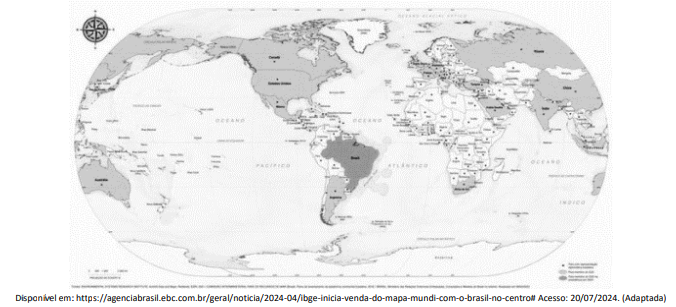

Imagem associada para resolução da questão


Sobre o novo mapa-múndi apresentado pelo IBGE, assinale a afirmativa correta. 

Alternativas
Ano: 2024 Banca: FGV Órgão: FEMPAR Prova: FGV - 2024 - FEMPAR - Vestibular - Medicina |
Q4140008 Geologia

Cuesta é um relevo assimétrico que ocorre em bacias sedimentares quando a inclinação das camadas é monoclinal, ou seja, com mergulho em um único sentido. Desenvolve-se em rochas estratificadas de diferentes resistências e caracteriza-se pela associação de duas vertentes denominadas reverso e front.
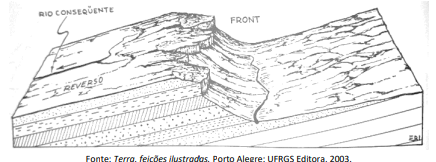

Imagem associada para resolução da questão


No Planalto Meridional, a estratificação dessa forma de relevo ocorre com a superposição das seguintes rochas de diferente resistência: 

Alternativas
Ano: 2024 Banca: FGV Órgão: FEMPAR Prova: FGV - 2024 - FEMPAR - Vestibular - Medicina |
Q4140009 Geografia

Analise a pirâmide etária do Paraná, a seguir.
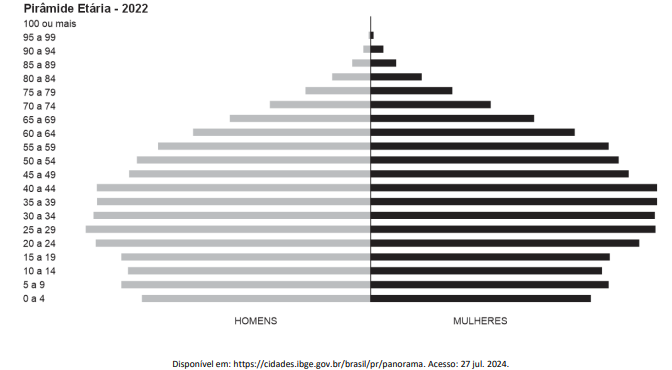
Imagem associada para resolução da questão


A estrutura dessa pirâmide etária remete à necessidade de políticas públicas voltadas para 

Alternativas
Respostas
21: C
22: E
23: D
24: A
25: C
26: A
27: B
28: E
29: A
30: B
31: C
32: D
33: E
34: B
35: E
36: C
37: C
38: B
39: B
40: E